Hogle Zoo Hogle Zoo News

Update from Today's Visit:

Small Animal Building:
  • The Luristan newts (Neurergus kaiseri) in the Desert Zone have gone off-exhibit this month. The zoo's group had been dwindling (the last time I saw them there may have only been one left).
Asian Highlands:
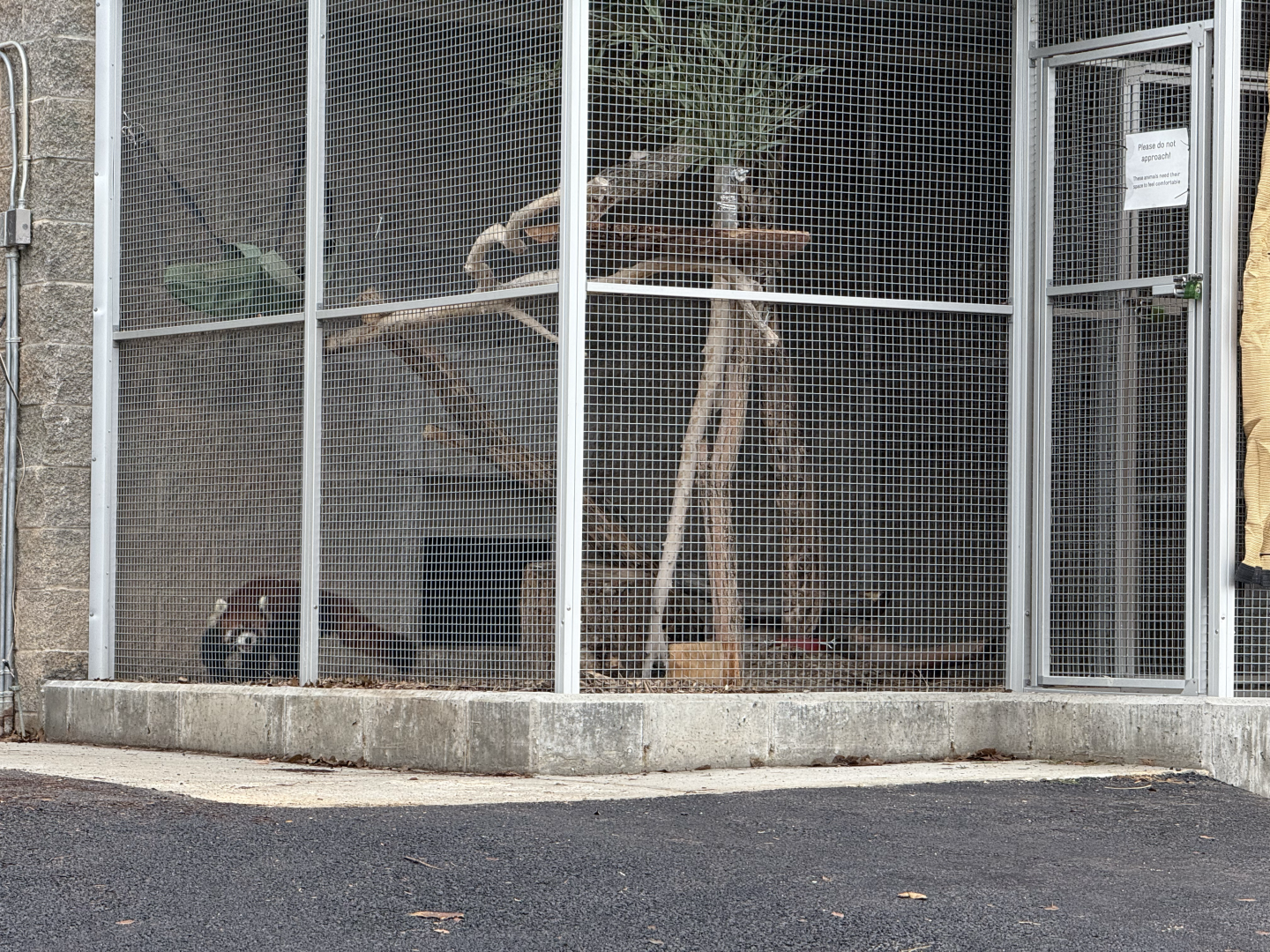
  • A new female Chinese red panda (Ailurus fulgens styani) named Kiaria is currently living behind the scenes (see photo). Kiaria comes from the Toledo Zoo & Aquarium on a breeding recommendation for resident male William. She was born on 6/16/2017 at the Nashville Zoo.
 
A Year in Review:

Major Births:
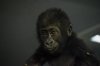
  • 1.0 Western lowland gorilla (Gorilla gorilla gorilla)
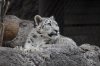
  • 1.1 Snow leopard (Panthera uncia)
  • 0.0.5 Common chuckwalla (Sauromalus ater)
DSC_0719.jpg
DSC_0856.JPG
Major Deaths:
  • 1.1 Snow leopard (Panthera uncia)
  • 1.0 Black-footed cat (Felis nigripes)
  • 1.0 Pallas's cat (Otocolobus manul)
  • 1.1 Cape porcupine (Hystrix africaeaustralis)
  • 1.0 Southern white rhinoceros (Ceratotherium simum simum)
  • 1.0 Rose-ringed parakeet (Alexandrinus krameri)
  • 0.0.1 Turkey vulture (Cathartes aura)
Major Acquisitions:
  • 2.1 Puma (Puma concolor)
  • 0.1 Pallas's cat (Otocolobus manul)
  • 1.1 Chinese red panda (Ailurus fulgens styani)
  • 4.0 Desert bighorn sheep (Ovis canadensis nelsoni)
  • 1.0 Giraffe (Giraffa camelopardalis)
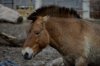
  • 2.0 Przewalski's horse (Equus ferus przewalskii)
  • 1.1 Bactrian camel (Camelus bactrianus)
  • 0.1 Common warthog (Phacochoerus africanus)
  • 0.2 Rock hyrax (Procavia capensis)
  • 0.1 Yellow-bellied marmot (Marmota flaviventer)
  • 0.0.4 Southern giant pouched rat (Cricetomys ansorgei)
  • 0.0.11 Naked mole rat (Heterocephalus glaber)
  • 2.0 Roseate spoonbill (Platalea ajaja)
  • 0.0.1 Argentinean horned frog (Ceratophrys ornata)
  • 0.0.1 Asian forest scorpion (Heterometrus spinifer)
DSC_0804.jpg
DSC_0189.jpg
DSC_0948.jpg
DSC_0011.jpg
DSC_0220.jpg
DSC_0257.jpg
Major Transfers:
  • 1.0 Amur leopard (Panthera pardus orientalis)
  • 0.1 Black-footed cat (Felis nigripes)
  • 2.0 Himalayan red panda (Ailurus fulgens fulgens)
  • 2.0 Hartmann's mountain zebra (Equus zebra hartmannae)
  • 2.0 Burro (Equus asinus)
 

Attachments

  • DSC_0804.jpg
    DSC_0804.jpg
    105 KB · Views: 246
  • DSC_0719.jpg
    DSC_0719.jpg
    67.4 KB · Views: 234
  • DSC_0856.JPG
    DSC_0856.JPG
    121.2 KB · Views: 255
  • DSC_0189.jpg
    DSC_0189.jpg
    143.9 KB · Views: 253
  • DSC_0948.jpg
    DSC_0948.jpg
    106.9 KB · Views: 241
  • DSC_0011.jpg
    DSC_0011.jpg
    83.8 KB · Views: 236
  • DSC_0220.jpg
    DSC_0220.jpg
    196.5 KB · Views: 270
  • DSC_0257.jpg
    DSC_0257.jpg
    146.1 KB · Views: 236
2024 Evolutions:

Wild Utah:

May 2024 saw the opening of the zoo’s first major exhibit in a decade: Aline W. Skaggs Wild Utah. This three-acre expansion to the guest experience uniquely combines the zoo’s efforts towards wildlife education, rescue and rehabilitation, and conservation efforts. Wild Utah saw the return of iconic North American wildlife to the zoo including pumas and bighorn sheep as well as new homes for the zoo’s animal ambassadors. The addition of the Norma W. Matheson Education Animal Center provides a permanent home for the zoo’s western toad conservation efforts in partnership with Wahweap Warm Water Fish Hatchery, Loveland Living Planet Aquarium, Omaha’s Henry Doorly Zoo and Aquarium, and Denver Zoo Conservation Alliance. Despite some inconveniences, like messy sightlines and an overall utilitarian look to the exhibit, I believe Wild Utah has been a successful addition to the zoo. You can find my complete species list and review of Wild Utah here.

High Desert Oasis:

In 2023, Hogle Zoo transferred their female African bush elephants Christie and Zuri to the Kansas City Zoo & Aquarium ensuring them the chance to breed and live in a multi-generational herd. This left the zoo’s 2005 exhibit, Elephant Encounter, without any elephants. This year, Elephant Encounter was rethemed as High Desert Oasis showcasing threatened species from extreme environments. The species include southern white rhinoceros, Hartmann’s mountain zebra, Przewalski’s horse, and Bactrian camel. While some may be irritated by the lack of biogeographical continuity among these species, I argue this exhibit is one of the most successful post-elephant conversions.

The exhibit showcases regions unknown to the common zoogoer including Namibia’s coastal mountain ranges and the steppes of central Asia. New signage in this exhibit highlights the adaptations these animals possess to survive in these “high deserts.” Instead of showcasing these species in generic African savanna or Asian plains exhibits, I believe visitors are more inclined to learn about the animals themselves as well as the threats their wild counterparts face. The desert theme also ties nicely into the adjacent and already existing Oasis Plaza.

Besides having an overall pleasing aesthetic surrounding the theme, High Desert Oasis also has a practical function not only for Utah’s Hogle Zoo, but the overall AZA community. The exhibit offers crucial holding space for non-breeding male Przewalski’s horses and Hartmann’s mountain zebras. I assume after the zoo’s elderly female white rhino passes, non-breeding male rhinos may be moved in as well. Having bachelor space is a key component for these herd animals and their respective Species Survival Plans. What I find most impressive is that this re-theming occurred quickly and with little construction. The only work that needed to take place included the former elephant pool being drained and filled, new shelters and shade structures erected in the East Yard, and new signage. As more zoos across the country phase out their elephant programs, I believe Utah’s Hogle Zoo has set a precedent for what former elephant exhibits can be turned into.

Rainforest Atrium:

This fall, the Rainforest Atrium in the zoo’s Small Animal Building underwent a major renovation for the first time in ages. Renovations included expanding habitat space for the zoo’s tortoise collection, adding USDA required enhancements for the habitat’s birds, as well as new plantings and grow lights. While the average guest would be unaware of these changes, the renovation has greatly improved the well-being of the habitat’s residents. Despite the 1971 Small Animal Building is destined for demolition, it is great to see that its current inhabitants are being thought of and are receiving improved welfare in the meantime.
 
Looking Towards 2025:

This year was overall successful for Utah’s Hogle Zoo. The addition of Wild Utah and the successful births of the zoo’s third ever gorilla and the first snow leopard cubs in over a decade helped drive attendance. The zoo’s collection also expanded, especially that of their ectotherms, through the acquisitions of new species. I am hopeful the zoo can ride this momentum into the new year.

There are many potential births expected in 2025. The zoo has new breeding pairs of red pandas, rock hyraxes, common warthogs, and roseate spoonbills. Breeding males have been introduced to the zoo’s giraffe and mountain zebra herds. The zoo also plans to introduce their Amur tiger and Amur leopard pairs. Kawan, one of the female Bornean orangutans, has also been taken off birth control for the upcoming year. Potential mates for the zoo’s new female Pallas’s cat and resident male sand cat are expected to arrive in 2025. There are always unexpected births that may occur like this year’s common chuckwallas. My hope is that the North American porcupines “accidentally” reproduce. Finally, there is always a possibility that the zoo’s polar bears prove successful.

Utah’s Hogle Zoo has not released plans for any capital projects slated for 2025. After this year’s Wild Utah, it is highly unlikely we will get anything significantly new. However, there is a possibility the new master plan will be released to the public. As mentioned before in this thread, it is rumored the master plan will include new West African, Indonesian, and South American themed exhibits. It has been over a decade now since any long-term planning; therefore, it would be great to have concrete plans that guide the zoo towards its centennial in 2031.

While I am highly anticipating a new master plan, what I am most hopeful for in 2025 is the implementation of a small cat breeding center. The latest plan for the zoo’s former cheetah holding and current quarantine facility is to become a dedicated space for the breeding of black-footed cats, sand cats, and Pallas’s cats. The zoo has been quite successful in breeding each of these species over the last decade, however, this new space will offer easier husbandry for keepers and an undisturbed off-display area for these secretive species. With the combination of these two factors, I have no doubt that the zoo will be even more successful in their efforts to produce offspring.

When thinking about the “best zoos” in the states, they each have an icon for the ex-situ breeding efforts. The San Diego Zoo Safari Park is known for the Nikita Kahn Rhino Rescue Center, the Bronx Zoo is famous for their American bison efforts, and the St. Louis Zoo has the Center for Asian Elephant Conservation. Despite Hogle Zoo’s impressive breeding efforts, the zoo is not widely affiliated with a species or project. I would like to see Utah’s Hogle Zoo become a physical center for the AZA’s Small Cat Alliance and provide expertise in the husbandry and breeding of these threatened felines.

Despite this center being behind the scenes, I think the zoo still has ample opportunity to educate their guests about these efforts. Social media is the obvious choice to reach the most people and put this program on a national or even international level. Gaia, the zoo’s most recent black-footed cat, reached a national audience including being featured in the Smithsonian Magazine, The Washington Post, and USA Today. It would be smart to capitalize on the public and internet’s interest in this species. At the zoo itself, there are plenty of opportunities to advertise the Small Cat Alliance. The “plaza” at the end of Asian Highlands overlooks where this breeding facility is located. Displays and infographics could turn this dead space into a “cat plaza” showcasing the zoo’s ex-situ efforts not only with small cats but the adjacent Asian big cats as well.

From my perspective, the zoo turned over a new leaf this year and is heading in a promising direction. Overall, I am quite excited for what may come in 2025.
 
Last edited:
Update from Today's Visit:

Small Animal Building:
  • After not seeing her for the past couple weeks, I confirmed today with a keeper that the zoo's female rose-ringed parakeet (Alexandrinus krameri) "Lady Amarillo" passed away recently (sometime in December 2024). This means that the species is no longer in the zoo's collection.
  • The tropical girdled lizard (Cordylus tropidosternum) now shares a habitat with the zoo's pancake tortoises (Malacochersus tornieri) in the Desert Zone.
  • Three of the five juvenile common chuckwallas (Sauromalus ater) now occupy the former tropical girdled lizard habitat in the Desert Zone.
Asian Highlands:
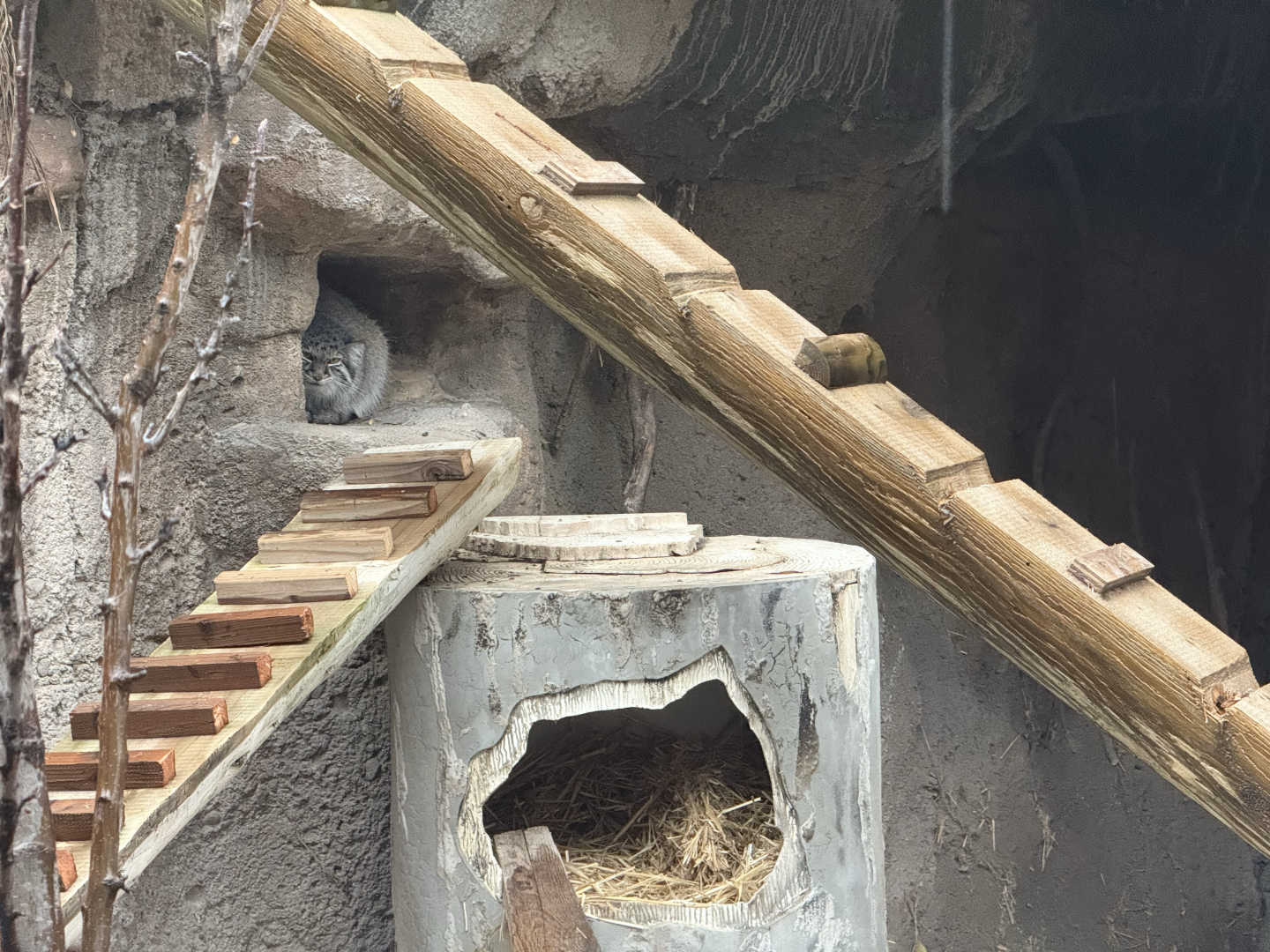
  • The Pallas's cat (Otocolobus manul) was off exhibit today.
 
Updates from Today's Visit:

Cats & Cocoa:
  • The zoo had a picturesque snowy day for their annual Cats & Cocoa event. Guests enjoyed free hot chocolate and keeper talks, while the zoo's felines received enrichment.
Small Animal Building:
  • The Luristan newts (Neurergus kaiseri) are back on exhibit in the Desert Zone. I counted at least seven individuals.
  • In the Temperate Zone, multiple herp habitats are receiving improvements. The Sonoran mountain kingsnake (Lampropeltis pyromelana) is currently off exhibit because of these improvements.
Rocky Shores:
  • Neva, the zoo's female polar bear (Ursus maritimus), was on exhibit today alone (see photo). A formal announcement has yet to be made, but I would assume that she did not produce any offspring this season. Fingers crossed for next year!
Primate Forest:
  • Improvements are being made to the first indoor habitat. As a result, the guereza troop (Colobus guereza) was off exhibit.
DSC_0572.jpg
 

Attachments

  • DSC_0572.jpg
    DSC_0572.jpg
    134.5 KB · Views: 210
Looking Towards 2025:

This year was overall successful for Utah’s Hogle Zoo. The addition of Wild Utah and the successful births of the zoo’s third ever gorilla and the first snow leopard cubs in over a decade helped drive attendance. The zoo’s collection also expanded, especially that of their ectotherms, through the acquisitions of new species. I am hopeful the zoo can ride this momentum into the new year.

There are many potential births expected in 2025. The zoo has new breeding pairs of red pandas, rock hyraxes, common warthogs, and roseate spoonbills. Breeding males have been introduced to the zoo’s giraffe and mountain zebra herds. The zoo also plans to introduce their Amur tiger and Amur leopard pairs. Kawan, one of the female Bornean orangutans, has also been taken off birth control for the upcoming year. Potential mates for the zoo’s new female Pallas’s cat and resident male sand cat are expected to arrive in 2025. There are always unexpected births that may occur like this year’s common chuckwallas. My hope is that the North American porcupines “accidentally” reproduce. Finally, there is always a possibility that the zoo’s polar bears prove successful.

Utah’s Hogle Zoo has not released plans for any capital projects slated for 2025. After this year’s Wild Utah, it is highly unlikely we will get anything significantly new. However, there is a possibility the new master plan will be released to the public. As mentioned before in this thread, it is rumored the master plan will include new West African, Indonesian, and South American themed exhibits. It has been over a decade now since any long-term planning; therefore, it would be great to have concrete plans that guide the zoo towards its centennial in 2031.

While I am highly anticipating a new master plan, what I am most hopeful for in 2025 is the implementation of a small cat breeding center. The latest plan for the zoo’s former cheetah holding and current quarantine facility is to become a dedicated space for the breeding of black-footed cats, sand cats, and Pallas’s cats. The zoo has been quite successful in breeding each of these species over the last decade, however, this new space will offer easier husbandry for keepers and an undisturbed off-display area for these secretive species. With the combination of these two factors, I have no doubt that the zoo will be even more successful in their efforts to produce offspring.

When thinking about the “best zoos” in the states, they each have an icon for the ex-situ breeding efforts. The San Diego Zoo Safari Park is known for the Nikita Kahn Rhino Rescue Center, the Bronx Zoo is famous for their American bison efforts, and the St. Louis Zoo has the Center for Asian Elephant Conservation. Despite Hogle Zoo’s impressive breeding efforts, the zoo is not widely affiliated with a species or project. I would like to see Utah’s Hogle Zoo become a physical center for the AZA’s Small Cat Alliance and provide expertise in the husbandry and breeding of these threatened felines.

Despite this center being behind the scenes, I think the zoo still has ample opportunity to educate their guests about these efforts. Social media is the obvious choice to reach the most people and put this program on a national or even international level. Gaia, the zoo’s most recent black-footed cat, reached a national audience including being featured in the Smithsonian Magazine, The Washington Post, and USA Today. It would be smart to capitalize on the public and internet’s interest in this species. At the zoo itself, there are plenty of opportunities to advertise the Small Cat Alliance. The “plaza” at the end of Asian Highlands overlooks where this breeding facility is located. Displays and infographics could turn this dead space into a “cat plaza” showcasing the zoo’s ex-situ efforts not only with small cats but the adjacent Asian big cats as well.

From my perspective, the zoo turned over a new leaf this year and is heading in a promising direction. Overall, I am quite excited for what may come in 2025.
I may have some information concerning the upcoming masterplan if you would like to send a PM
 
Update from Today's Visit:

Primate Forest:
  • The Bolivian gray titi (Plecturocebus donacophilus) family group (3.1) has moved from the Small Animal Building to Primate Forest. Once they have settled in they will start rotating on-exhibit with the other primate species.

Small Animal Building:
  • The Chinese crocodile lizard (Shinisaurus crocodilurus) has moved from the Tropics Zone into a newly designed terrarium in the Temperate Zone.
  • The Sonoran mountain kingsnake (Lampropeltis pyromelana) is back on display in a larger terrarium.
  • The three helmeted guineafowl (Numida meleagris) have moved from the Tropics Zone into the Rainforest Atrium leaving their former habitat empty.
  • The former Bolivian gray titi habitat is now empty.
  • Two terrariums are being worked on in the Tropics Zone which has resulted in the emerald monitor (Varanus prasinus) being moved into the former Chinese crocodile lizard habitat and one of the Jamaican boas (Chilabothrus subflavus) being off-exhibit.
  • One of the mourning doves (Zenaida macroura) has moved from the Sonoran Desert habitat into the flight cage in the Rainforest Atrium.
 
Update from Today's Visit:

High Desert Oasis:
  • Today, the 4.0 Przewalski's horses (Equus ferus przewalskii) and 1.1 Bactrian camels (Camelus bactrianus) had access to all three guest facing habitats. This is the first time I have seen the two species mixed at HDO.
Small Animal Building:
  • Buffy and Willow, the 0.2 Von der Decken's hornbills (Tockus deckeni), have returned to the Tropics Zone in the former Bolivian gray titi habitat. Their habitat in the Desert Zone is now empty.
  • The three helmeted guineafowl (Numida meleagris) have returned to their former habitat in the Tropics Zone after new climbing structures were installed (see photo). Rumor is the 1.3 rock hyrax (Procavia capensis) will be moved into this habitat.
  • The Brongersma's short-tailed python (Python brongersmai) is off-exhibit while work continues on several terrariums in the Tropics Zone.
DSC_0985.jpg
Asian Highlands:
  • Female snow leopard (Panthera uncia) Babs and her 1.1 cubs Bhutan and Pavlova have moved from their maternity yard (Habitat 1) to Habitat 3 this week.
  • The 1.1 Amur leopards (Panthera pardus orientalis) have begun rotating on-exhibit in Habitat 1.
  • 1.1 Amur tigers (Panthera tigris altaica) Nikolai and Sasha continue to show interest in each other. Behaviors I have seen this winter include continuous chuffing and long periods of the big cats looking at one another (see photo). Hopefully these are good signs as keepers plan to introduce the pair soon.
DSC_0081.jpg
South Hill:
  • Part of the chain-link fence from the upper portion of the former wolf exhibit has been taken down. This is the first time work has been done to this space in a while.
 

Attachments

  • DSC_0985.jpg
    DSC_0985.jpg
    193.6 KB · Views: 136
  • DSC_0081.jpg
    DSC_0081.jpg
    220.4 KB · Views: 143
Last edited:
Update from Today's Visit:

Small Animal Building:
  • The Brongersma's short-tailed python (Python brongersmai) is back on-exhibit (see photo) in a newly renovated and expanded terrarium in the Tropics Zone.
  • 1.1 Siamese crocodiles (Crocodylus siamensis), Bill and Hilary, were off-exhibit today as crews were working on the exhibit's skylights (see photo).
  • Signage for the superb starling (Lamprotornis superbus) has been removed in the Temperate Zone. I did not see the individual on-exhibit.
  • Work continues on the former Von der Decken's hornbill habitat in the Desert Zone and the large terrarium in the Tropics Zone typically home to the zoo's emerald monitor.
  • Zoo officials had a walkthrough of the Small Animal Building today to discuss upcoming major changes/renovations to the exhibit.
South Hill:
  • Work continues on the deconstruction of the former wolf exhibit. Most of the chain-link fencing has been removed and the concrete shelter has been demolished (see photo).
DSC_0177.jpg
IMG_3655.jpg
IMG_3650.jpg
 

Attachments

  • DSC_0177.jpg
    DSC_0177.jpg
    132.5 KB · Views: 119
  • IMG_3655.jpg
    IMG_3655.jpg
    318.3 KB · Views: 116
  • IMG_3650.jpg
    IMG_3650.jpg
    328.8 KB · Views: 119
Update from Today's Visit:

Big Game Pick:
  • Male lion (Panthera leo) Vulcan picked the Philadelphia Eagles to win Super Bowl LIX at this year's Big Game Pick event (see photo).
Small Animal Building:
  • Confirmed today that the lone female superb starling (Lamprotornis superbus) has been transferred to another facility, leaving this species currently absent from the zoo's collection. Her former habitat remains empty in the Temperate Zone.
DSC_0667.jpg
 

Attachments

  • DSC_0667.jpg
    DSC_0667.jpg
    246 KB · Views: 117
Does the zoo have space for a large modern elephant enclosure? They did say they acquired some undeveloped land which should make space for it.
 
Do we know what the plans are for the SAB long term? It seems to get sadder with every visit
The zoo has yet to officially announce their plans for the Small Animal Building. However, I have been told from zoo staff that the master plan calls for an Indonesian themed exhibit featuring Bornean orangutans and Siamese crocodiles on the site of the Small Animal Building. There is no timeline for this project. In the meantime, I would expect some minor to even major projects to take place in the Small Animal Building (e.g. the Rainforest Atrium renovation, new skylights in the crocodile habitat, titis moving to Primate Forest) as the zoo is having their AZA inspection for reaccreditation this summer.

Does the zoo have space for a large modern elephant enclosure? They did say they acquired some undeveloped land which should make space for it.
On the return of elephants, the zoo has stated that it is, "Not likely. Experts evaluated our current exhibit spaces and determined extensive upgrades and shifts would be necessary to be able to house a herd of elephants again. As of now, with the existing space and topography of Utah’s Hogle Zoo, we believe there is no feasible way to house elephants at the level we believe the species deserves."

The zoo's current master plan does not include elephants. The zoo has stated that they want to focus the future of their 42-acre campus on great apes, polar bears, and rhinos.

I would be curious to see your source for the zoo stating they have acquired new land. To my knowledge this has not happened. The only recent land that has been added to the zoo's acreage in the past two decades is an existing parking lot north of the zoo. This land will remain as overflow parking for the zoo.
 
Update from Today's Visit:

Asian Highlands:
  • The main tree in the red panda habitat has been significantly cut back (see photo). This may be because keepers are concerned that young and spry Chinese red panda (Ailurus fulgens styani), William, may be able to climb out of the open-top exhibit. This is why he has not been given access to the outdoor portion of his habitat yet.
  • The zoo is planing on closing Asian Highlands during their Amur tiger (Panthera tigris altaica) introductions as a precaution. Introductions will be taking place on-exhibit (Habitats 4 and 5) instead of behind the scenes. This will also mean that the South Hill will be closed while introductions take place.
Rocky Shores:
  • 1.1 polar bear (Ursus maritimus) pair, Nikita and Neva, were on-exhibit together today after being introduced for their fourth breeding season.
Small Animal Building:
  • The female striped skunk (Mephitis mephitis) has moved into a new habitat in the Temperate Zone (see photo) that most recently held the now gone superb starling. She also has access to the adjacent habitat that the rock hyrax group had access to.
  • Male nine-banded armadillo (Dasypus novemcinctus), Kirby, has moved from the Tropics Zone into the former striped skunk habitat in the Temperate Zone. His former habitat remains empty (see photo).
  • The mourning dove (Zenaida macroura) in the Rainforest Atrium's flight cage has moved back into the Sonoran Desert habitat in the Desert Zone.
Primate Forest:
  • The guereza (Colobus guereza) troop was off-exhibit today.
IMG_4629.jpg
DSC_0186.jpg
DSC_0862.jpg
 

Attachments

  • IMG_4629.jpg
    IMG_4629.jpg
    254.7 KB · Views: 90
  • DSC_0186.jpg
    DSC_0186.jpg
    83.1 KB · Views: 86
  • DSC_0862.jpg
    DSC_0862.jpg
    99.2 KB · Views: 86
On the return of elephants, the zoo has stated that it is, "Not likely. Experts evaluated our current exhibit spaces and determined extensive upgrades and shifts would be necessary to be able to house a herd of elephants again. As of now, with the existing space and topography of Utah’s Hogle Zoo, we believe there is no feasible way to house elephants at the level we believe the species deserves."

The zoo's current master plan does not include elephants. The zoo has stated that they want to focus the future of their 42-acre campus on great apes, polar bears, and rhinos.

I would be curious to see your source for the zoo stating they have acquired new land. To my knowledge this has not happened. The only recent land that has been added to the zoo's acreage in the past two decades is an existing parking lot north of the zoo. This land will remain as overflow parking for the zoo.
I found this comment on this reddit post,
"They told us that they've explored the idea of expanding the elephant enclosure into the parking lot, but the dream would be to purchase some of the undeveloped land (but currently owned) across the road. Long story short, I fully expect elephants to come back to the Hogle, but once they expand the enclosure AND potentially make it compatible with male African elephants."

https://www.reddit.com/r/SaltLakeCi..._no_longer_going_to_have_elephants/?rdt=43581

That last point highlights the fact that all the newer enclosures, and any planned newer facilities, have to be large and reinforced enough house bulls.
 
I found this comment on this reddit post,
"They told us that they've explored the idea of expanding the elephant enclosure into the parking lot, but the dream would be to purchase some of the undeveloped land (but currently owned) across the road. Long story short, I fully expect elephants to come back to the Hogle, but once they expand the enclosure AND potentially make it compatible with male African elephants."

https://www.reddit.com/r/SaltLakeCi..._no_longer_going_to_have_elephants/?rdt=43581

That last point highlights the fact that all the newer enclosures, and any planned newer facilities, have to be large and reinforced enough house bulls.

A previous post on this thread said that the current rumor is that the zoo is planning some sort of South American area where the High Desert Oasis is currently, and given the limited space the zoo has to work with, I think the chances of elephants returning to Hogle are very unlikely.

Not to mention that Reddit post was from a couple of years ago, so things are subject to change...
 
Update from Today's Visit:

Asian Highlands:
  • 1.0 Chinese red panda (Ailurus fulgens styani), William, is off-exhibit as work continues on the red panda exhibit. Today crews were working on refurbishing the outdoor exhibit's walls (see photo).
  • 0.1 Amur leopard, Zeya (Panthera pardus orientalis), is now on-exhibit in Habitat 1 (see photo).
Small Animal Building:
  • Work continues on the former nine-banded armadillo habitat in the Tropics Zone in anticipation for 1.0 kinkajou (Potos flavus), Kilo, to occupy the space.
  • The emerald monitor (Varanus prasinus) has been moved back into its newly refurbished habitat in the Tropics Zone. His former temporary habitat remains empty.
  • The zoo is planning on receiving a mate for their 1.0 Vietnam pheasant (Lophura edwardsi), Enrique. The zoo will most likely receive a female that hatched last year at the Fort Worth Zoo in Texas.
  • The maintenance crew had a walk-through of the Small Animal Building to discuss upcoming changes. The plans include as follows: A breeding pair of black-footed cats (Felis nigripes) will return and occupy three habitats on the north side of the Desert Zone (see photo). A breeding pair of sand cats (Felis margarita) will likewise occupy four habitats on the north side of the Temperate Zone (see photo). The rock hyrax (Procavia capensis) group will move to the cornerstone habitat in the Tropics Zone to make way for the sand cats. The 1.0 Hispaniolan rhinoceros iguana (Cyclura cornuta), Rocco, and African straw-colored fruit-bat (Eidolon helvum) colony will swap habitats in the Tropics Zone (see photo).
DSC_0296.jpg
DSC_0090.jpg
DSC_0242.jpg
DSC_0170.jpg
DSC_0137.jpg
 

Attachments

  • DSC_0296.jpg
    DSC_0296.jpg
    213.8 KB · Views: 69
  • DSC_0090.jpg
    DSC_0090.jpg
    165.9 KB · Views: 70
  • DSC_0242.jpg
    DSC_0242.jpg
    82.5 KB · Views: 66
  • DSC_0170.jpg
    DSC_0170.jpg
    88.2 KB · Views: 69
  • DSC_0137.jpg
    DSC_0137.jpg
    96 KB · Views: 70
Last edited:
Back
Top