Kakapo's Photographic Collection of Endangered Species

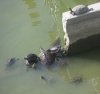
CHINESE STRIPE-NECKED TURTLE - Mauremys sinensis
Mauremys sinensis (Lago de los Lotos 17-XI-06) 1.jpg
Mauremys sinensis (Lago de los Lotos 17-XI-06) 2.jpg

Photos taken at: Lotus lake, Taiwan

Short taxonomy: Sauropsida > Chelonia > Emydidae

Native range: China, Taiwan and Vietnam

Ex-situ frequence: Very common

Danger factors: Same threats that all other Asian turtles: strong poaching for meat, pet trade, and shell (plastron is used as a tool for devination arts, and this species is the most used of all turtles for that). Plus, habitat destruction (wetland conversion into agricultural land) and competence with introduced red-eared sliders.

Other comments: Since the red-eared slider went prohibited into many countries due to invasiveness problem, other turtle species has been chosed for substitution in pet shops and pet trade, and Chinese stripe-necked, formerly a rarity in captiviy, is today one of the most easily seen turtles in pet trade. Only in Vietnam there is about 52 registered turtle farms keeping colonies of this species. The release of captive-bred individuals into nature must be taken with care as the species hybridize very easily with other members of same genus and even other genus. The species is not officially protected in China nor in Vietnam.
 

Attachments

  • Mauremys sinensis (Lago de los Lotos 17-XI-06) 1.jpg
    Mauremys sinensis (Lago de los Lotos 17-XI-06) 1.jpg
    20.4 KB · Views: 24
  • Mauremys sinensis (Lago de los Lotos 17-XI-06) 2.jpg
    Mauremys sinensis (Lago de los Lotos 17-XI-06) 2.jpg
    19.7 KB · Views: 27
COQUEREL'S SIFAKA - Propithecus coquereli
Propithecus coquereli 1 (31-7-19 Bronx zoo).jpg
Propithecus coquereli 2 (31-7-19 Bronx zoo).jpg

Photos taken at: Bronx zoo, New York, USA

Short taxonomy: Synapsida > Primates > Lemuridae

Native range: north Madagascar

Ex-situ frequence: Rare

Danger factors: As always in Madagascar forest liferoms, the fatal slash-and-burn for agricultural expansion, so typical of the country, plus annual burning to generate new pasture for livestock, and forests cut to produce charcoal. The species also faces unsustainable hunting pressure.

Other comments: It experimented a steep decline, passing from Vulnerable to Endangered in 1996 and from Endangered to Critically endangered in 2018. The threats didn't ceased and in a large exent will be almost irreversible. Habitat loss and hunting pressure are high even in two of the three protected areas where the species occurs, a fourth protected space (Bora Special Reserve) was so heavily degraded that the government delisted it as a protected area, and all lemur populations in it have been extirpated from it, including Coquerel's sifaka. There are about 61 individuals in North American zoos (as for 2019) and about 50 captive individuals in Madagascar (as for 2016), elsewhere is basically absent (tough still present at 3 European zoos).

SPANISH MOON TREFOIL - Medicago citrina
Medicago citrina.jpg

Photos taken at: University of Valencia Botanical Garden, Spain

Short taxonomy: Magnoliopsida > Fabales > Fabaceae

Native range: eastern Spain

Ex-situ frequence: Very rare

Danger factors: introduced pest insects, disturbance from domestic animals, seed predation by rats.

Other comments: Localized only in Balearic and Columbretes islands and a small islet in Alicante province, this plant is strictly maritime and insular and hence there is little habitat that allow its expansion. In some islets it disappeared since occupation by lighthouse-keepers and their domestic animals. A plague of the Australian mealybug Icerya purchasi destroyed most of the individuals of various islets in past decade.This mealybug is apparently what also killed the two last individuals of the plant living in continental Spain instead islands or islets. Currently it looks like the biggest threat for the species. Between 2007 and 2014 the populations of some islands/islets decreased very quickly while in others increased a lot due to protection measures. In Columbretes islands for example, the elimination of rats in 2010 and 2011 as a measure for protect the also endangered Silene hifacensis, resulted in a spectacular increase of the population of this plant, as rats collected the trefoil seeds and stored them in their burrows. Then the Silene hifacensis acted as a umbrella species that leaded to recovery of Medicago citrina. There are two germoplasm banks keeping seeds of this species (one of them in the University of Valencia botanical garden, where the photo of the plant was taken), and two live specimen collections near native range used for reintroduction: one in an interpretation center in Denia and other in CIEF (roughly translated as Center for Forestry Investigation and Research), the latter counting with 18 individuals.

In case of considering Medicago citrina as the same species than Medicago arborea, as is considered in some places, then the species would be Least Concern. However, the hexaploid M. citrina is well differenciated from the tetraploid M. arborea from eastern Mediterranean.
 

Attachments

  • Propithecus coquereli 1 (31-7-19 Bronx zoo).jpg
    Propithecus coquereli 1 (31-7-19 Bronx zoo).jpg
    82.5 KB · Views: 22
  • Propithecus coquereli 2 (31-7-19 Bronx zoo).jpg
    Propithecus coquereli 2 (31-7-19 Bronx zoo).jpg
    294.6 KB · Views: 34
  • Medicago citrina.jpg
    Medicago citrina.jpg
    95 KB · Views: 28
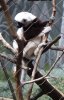
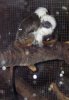
COTTON-TOP TAMARIN - Saguinus oedipus
Saguinus oedipus (16-6-13 Terarium Praha, Dubeč, det yo).jpg
Saguinus oedipus 2 (26-9-18 Pairi Daiza).jpg

Photos taken at: Terrarium Prague, Czech republic and Pairi Daiza, Belgium

Short taxonomy: Synapsida > Primates > Callithricidae

Native range: northern Colombia

Ex-situ frequence: Extremely common

Danger factors: Habitat destruction (ongoing and accelerating), due to agricultural practices, mining activities, illegal logging and urban expansion. In the past, also unsustainable capture for the export of live animals (pet trade, zoo supply and biomedical investigation).

Other comments: The annual rate of forest destruction within native range of this animal in last three years (evaluated in 2019) doubled and even tripled the rate of previous three years. The species is quite sensitive to habitat destruction as it needs large trees for thriving, and large trees are of course directly targeted for timber. The species is protected in Colombia since 1969 and its export is banned since 1974, that diminished a lot the impact of such activity, but it continues illegally in a substantial amount. The wild population of cotton-top tamarins continue decreasing but the rate of disminution diminished and go towards stability of populations, thanks to the strong protecion measures taken by Colombian government and enviromental organizations, especially the Proyecto Titi.
 

Attachments

  • Saguinus oedipus (16-6-13 Terarium Praha, Dubeč, det yo).jpg
    Saguinus oedipus (16-6-13 Terarium Praha, Dubeč, det yo).jpg
    100.4 KB · Views: 28
  • Saguinus oedipus 2 (26-9-18 Pairi Daiza).jpg
    Saguinus oedipus 2 (26-9-18 Pairi Daiza).jpg
    100.1 KB · Views: 23
BLACK AND WHITE RUFFED LEMUR - Varecia variegata
Varecia variegata (20-8-11 Tierpark Berlin).jpg
Varecia variegata subcincta (6-8-17 Zoo Köln).jpg

Photos taken at: Tierpark Friedrichsfelde, Berlin, Germany (variegata), Köln zoo, Germany (subcincta)

Short taxonomy: Synapsida > Primates > Lemuridae

Native range: eastern Madagascar

Ex-situ frequence: Very common

Danger factors: Main factor is again, as in most endangered Malagasy animals, the fatidic slash-and-burn-agriculture, and continuous forest logging for agricultural expansion and mining activities, plus unsustainable hunt pressure for meat. Climatic change can also play a significant role.

Other comments: The threats didn't ceased and many of the destroyed habitat is practically irreversible. The distribution area is extremely fragmented. The threats are interconnected: logging trails that run deep into the forest make the animal easier to reach for poachers. Being large and diurnal, is one of the most heavily hunted of all lemurs (despite being illegal to do that), and it's meat is considered locally as the moist wanted and expensive. More than 800 individuals of this species are kept in zoos globally (as for 2019), and they breed quite well. Some of the captive-bred stock all over the world have been released into the wild, but survival rate is low due mainly to predation by fossas -it's possible that captive-bred specimens are not so suitable for avoid predators as wild-born ones.


KAMALO PALM - Pritchardia munroi
Pritchardia munroi (22-3-15 Palmetum).jpg

Photos taken at: Palmetum Santa Cruz, Canary Islands, Spain

Short taxonomy: Liliopsida > Arecales > Arecaceae

Native range: Molokai, Hawaii islands

Ex-situ frequence: Rare

Danger factors: Goat grazing and pigs eating the seeds

Other comments: There is just only 2 individuals in the wild, one being a young from the other. A fence around them was erected to keep out goats and pigs. The IUCN page for this species is absolutely undetailed (a stub I would say), and it has not been updated since 1998. 22 individuals are cultivated in botanical gardens over the world, all of them coming from seeds collected in 1975 from the last wild individual remaining then, in an effort to save the species sending seeds to botanical institutions.
 

Attachments

  • Varecia variegata (20-8-11 Tierpark Berlin).jpg
    Varecia variegata (20-8-11 Tierpark Berlin).jpg
    54.6 KB · Views: 28
  • Varecia variegata subcincta (6-8-17 Zoo Köln).jpg
    Varecia variegata subcincta (6-8-17 Zoo Köln).jpg
    227.9 KB · Views: 25
  • Pritchardia munroi (22-3-15 Palmetum).jpg
    Pritchardia munroi (22-3-15 Palmetum).jpg
    102.8 KB · Views: 25
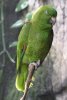
YELLOW-NAPED AMAZON - Amazona auropalliata
Amazona auropalliata.JPG
Amazona auropalliata 2.jpg

Photos taken at: a private state in Lanzarote, Canary Islands, Spain, and Faunia Madrid, Spain

Short taxonomy: Aves > Psittaciformes > Psittacidae

Native range: Central America

Ex-situ frequence: Very common

Danger factors: Deforestation (mainly for agricultural expansion), and capture of nestlings for the pet trade

Other comments: It's the parrot species most frequently decomisated in the Mexican-Texas border, with an average of about 200 parrots/year. It suffered a steep decrease in the conservation status: Least Concern until 2009, Vulnerable until 2016, Endangered in 2017 and now Critically Endangered since 2021. In some places, the very heavy conservation efforts reached the end of poaching locally and the recovery of the population, as in Ometepe Island in Nicaragua and on Guanaja Island in Honduras. However, most if the parrot's range lies in unprotected areas. In Oaxaca is practically vanished and in Chiapas is largely depleted in most of its range.
 

Attachments

  • Amazona auropalliata.JPG
    Amazona auropalliata.JPG
    63.5 KB · Views: 25
  • Amazona auropalliata 2.jpg
    Amazona auropalliata 2.jpg
    78.3 KB · Views: 23
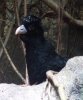
BLUE-BILLED CURASSOW - Crax alberti
Crax alberti.jpg

Photo taken at: Bronx zoo, New York, USA

Short taxonomy: Aves > Galliformes > Cracidae

Native range: northern Colombia

Ex-situ frequence: Very rare

Danger factors: Deforestation

Other comments: Its basically restricted to protected areas, and depleted elsewhere. Deforestation has been extremely heavy from 17th century, for ranching and agricultural expansion, cotton and illegal drug crops, subterranean oil extraction and mining activities. Surveys since 1998 failed to find mature males in the wild. In captivity is susceptible to hybridation. Hybrids between blue-billed curassow and species with yellow bill ceres are recognizable by having green bill cere.

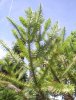
PARANA PINE - Araucaria angustifolia
Araucaria angustifolia.jpg

Photo taken at: Alcala botanical garden, Spain

Short taxonomy: Pinicae > Pinales > Araucariaceae

Native range: southern Brazil, extending very little in nearby countries

Ex-situ frequence: Common

Danger factors: Logging, agricultural expansion and forestry activities

Other comments: About 97% of original habitat ranger has been destroyed in XX century. It's the most important and targeted timber species of all trees in Brazil. The native Parana pine forests are often substituted by quick growing exotic tree plantations in forestry activity (pines and gums) for obtain timber. The pinecones are often seen in markets as the seeds are edible and and important food locally. This can lead to diminish the reproduction of the species. 3400 tonnes of pinecones and seeds are collected yearly for consumption. The species (including live plants, pinecones, seeds and wood) has been banned to export from Brazil since 2001. The tree has been introduced in Chile, South Africa, Australia, Kenya, Madagascar, Spain, Portugal and Zimbabwe.
 

Attachments

  • Crax alberti.jpg
    Crax alberti.jpg
    229.9 KB · Views: 26
  • Araucaria angustifolia.jpg
    Araucaria angustifolia.jpg
    138.9 KB · Views: 24
At the begin of the thread, @ParathePineapple asked if iconic species would be represented also in this thread. So here is it...

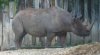
BLACK RHINOCEROS
- Diceros bicornis
Diceros bicornis michaeli (6-8-17 Zoo Köln).jpg

Photo taken at: Cologne zoo, Germany

Short taxonomy: Synapsida > Perissodactyla > Rhinocerotidae

Native range: subsaharian Africa

Ex-situ frequence: Common

Danger factors: Mainly poaching for the horn, as happen in all the other rhinoceros species.

Other comments: Populations of black rhinoceros are severely fragmented and it mainly survives only at protected reserves. It's extinct from about half of its former native range, basically the northern half of it. One of it six subspecies already went extinct as recently as in 2011. In XIX and XX centuries, the rhinoceros hunt turned into a coveted risk sport for the rich western explorers. But not only those people killed the rhinos but also the local population massacred them for their horns, widely used in handcrafts and tool ornamentation. Currently, still the horns are used in the destructive Chinese "traditional medicine".

Fortunately, not all news are so bad. The born and spreading of a worldwide enviromental sensibility amongs mankind (basically absent before XX century) started to have positive consequences for this species. The hunt banning and the measures taken for recuperation of such an iconic species, increased the world population level to about 5600 individuals (as for 2018). Still very low but greater than in past years (about 2000 individuals in the 90's). Some measures for avoid the poaching includes sawing the horns of alive individuals, so they're not targeted by poachers.

A curiosity is that in the recent past (around the 60's), the white rhinoceros was more threatened than the black rhinoceros. Strong conservation efforts downgraded the white rhino to Near Threatened, and currently it's edging the border of Least Concern species. However, the black rhino suffered a very steep decline (still about 100000 individuals remained in mid XX century, compared with the 2000 individuals in the 90's), so now the situation are reversed for the white and black species.
 

Attachments

  • Diceros bicornis michaeli (6-8-17 Zoo Köln).jpg
    Diceros bicornis michaeli (6-8-17 Zoo Köln).jpg
    329.8 KB · Views: 26
AFRICAN WHITE-BACKED VULTURE - Gyps africanus
Gyps africanus.jpg

Photo taken at: Zie-zoo, Netherlands

Short taxonomy: Aves > Accipitriformes > Accipitridae

Native range: subsaharian Africa

Ex-situ frequence: Very common

Danger factors: As seen with other vultures (white-headed) previously treated in this thread, main threat are poisoned carcasses oriented both to kill livestock predators (lions and hyenas especially) and to kill directly the vultures for avoid drawing attention over poaching activities on rhinos, elephants etc. There is also human disturbances in nesting areas, habitat loss, decline of wild ungulates, direct hunt and collisions.

Other comments: Despite being the commonest of the African vulture species, its populations are in quick and strong disminution. The decline was very quick, being considered a species of Least Concern as recently as in 2004, then upgrading steeply to near threatened, endangered, and finally critically endangered since 2015. The decline of the species population in about three vulture generations could be as high as 89%. The species is very popular in captivity worldwide, overall in falconry centers and raptor flight shows.

THORNLESS CROWN-OF-THORNS - Euphorbia geroldii
Euphorbia geroldii (18-8-11 Botánico de Berlín).jpg

Photo taken at: Berlin botanical garden, Germany

Short taxonomy: Magnoliopsida > Malpighiales > Euphorbiaceae

Native range: near Iharana, northeast Madagascar

Ex-situ frequence: Rare to Very rare

Danger factors: Habitat loss by degradation, fires and charcoal production.

Other comments: The species is basically assessed as Critically Endangered based on the very small native distribution area, less than 1 km², so any local disaster could easily whip at once the complete population of the species.
 

Attachments

  • Gyps africanus.jpg
    Gyps africanus.jpg
    256.5 KB · Views: 24
  • Euphorbia geroldii (18-8-11 Botánico de Berlín).jpg
    Euphorbia geroldii (18-8-11 Botánico de Berlín).jpg
    81.4 KB · Views: 24
ELECTRIC BLUE GECKO - Lygodactylus williamsi
Lygodactylus williamsi 1 (27-9-18 Zoo Antwerpen).jpg
Lygodactylus williamsi 2 (27-9-18 Zoo Antwerpen).jpg

Photos taken at: Antwerp zoo, Netherlands

Short taxonomy: Sauropsida > Squamata > Gekkonidae

Native range: Tanzania

Ex-situ frequence: Common

Danger factors: Overall the habitat destruction and fragmentation by illegal logging, clearance for agriculture, fire regime increase and mining activities. Also a heavy collection for international pet trade.

Other comments: It's endemic to an extremely small area, less than 8 km², and populations in it are severely fragmented. It's main subpopulation is in Kimboza Forest, where remains about 15000 blue geckos, the other three subpopulations are quite small and don't contribute significantly to the total numbers. The species inhabits exclusively in the leaf crowns of large specimens of the endangered endemic tree Pandanus rabaiensis. In one of the subpopulations of the gecko, only 14 Pandanus trees are left, the rest have been cutted down for banana plantations. From December 2004 to July 2009, about 30000-40000 blue geckos were taken by a single collecting group for the pet trade - about 15% of total population at the time.
 

Attachments

  • Lygodactylus williamsi 1 (27-9-18 Zoo Antwerpen).jpg
    Lygodactylus williamsi 1 (27-9-18 Zoo Antwerpen).jpg
    438.7 KB · Views: 28
  • Lygodactylus williamsi 2 (27-9-18 Zoo Antwerpen).jpg
    Lygodactylus williamsi 2 (27-9-18 Zoo Antwerpen).jpg
    394.8 KB · Views: 26
THAILAND GIANT CATFISH - Pangasius sanitswongsei
Pangasius sanitwongsei (12-10-16 Acuario Fluvial de Zaragoza).jpg

Photo taken at: Saragossa fluvial aquarium, Spain

Short taxonomy: Osteichthyes > Siluriformes > Pangasiidae

Native range: Mekong and Chao Phraya basins in south-east Asia. Introduced in Malaysia, South Africa and Anatolia.

Ex-situ frequence: Common

Danger factors: Overfishing, dams and water pollution

Other comments: The fishing of this species was banned, but continues illegally and it's traditionally accompanied by ceremonial rituals. It's popular in food markets. The destruction of rapids and reefs for make the rivers navigable also affected severely the species. As a migratory fish, dams make it unable to breed. The species went exinct from about the western half of it's former native range. It's popular in aquarium shops, but few private owners can provide enough room for an adult fish. The young individuals sold at aquarium and pet shops are obtained from enormous fish farms which breeds the species in big pools and that also provides fishes for food.

GOLF BALL CACTUS - Mammillaria herrerae
Mammillaria herrerae en flor (12-4-15 Chema).jpg

Photo taken at: A private collection in Saragossa, Spain

Short taxonomy: Magnoliopsida > Caryophyllales > Cactaceae

Native range: Queretaro, Mexico

Ex-situ frequence: Rare

Danger factors: Illegal collection

Other comments: 97% of it's population have been vanished in 20 years due to overharvesting alone, which is still an ongoing threat. A nearby commercial cactus nursery has almost stripped the place where it grows, and local children collect and offer plants to visitors. The species is extremely attractive for collectors due to unique and neat appareance, however is not common in collection as it's extremely sensitive to excess of watering, that cause easily rotting of the cactus. Cadereyta Regional Botanical Garden is reproducing the cactus with germplasm stock and stabilished a micropropagation technique with great success. A strong captive breeding and captive supply of the species is needed to stop pressure over wild population.
 

Attachments

  • Pangasius sanitwongsei (12-10-16 Acuario Fluvial de Zaragoza).jpg
    Pangasius sanitwongsei (12-10-16 Acuario Fluvial de Zaragoza).jpg
    93.2 KB · Views: 25
  • Mammillaria herrerae en flor (12-4-15 Chema).jpg
    Mammillaria herrerae en flor (12-4-15 Chema).jpg
    73.4 KB · Views: 24
RED-HEADED VULTURE - Sarcogyps calvus
Sarcogyps calvus (21-8-11 Berlin Zoo-Aquarium).jpg

Photo taken at: Berlin zoo-aquarium, Germany

Short taxonomy: Aves > Accipitriformes > Accipitridae

Native range: Indian subcontinent and south east Asia

Ex-situ frequence: Very rare

Danger factors: Poisoning by diclofenac in livestock carcasses. In a much lesser degree, declines on wild ungulates, habitat loss, collisions with electric lines and direct persecution.

Other comments: While for this species the intentional poisoning is not such a threat as in the African vultures, still the birds are poisoned by the use of antiinflamatory drug diclofenac in livestock, a product that is fatal to vultures by causing renal failure. The species suffered a very quick decline recently (being considered as Near Threatened as recently as 2004), and went extinct from about the half of it's former range. In India, diclofenac was banned in 2006 and since then the decrease on population of Pondicherry vultures slowed, and locally even reverted. Diclofenac was banned in Bangladesh in 2010 and is not used in Burma nor in Cambodia.

The drug Meloxicam has recently proved to be a good substitute to diclofenac, with no adverse effects in vultures.
 

Attachments

  • Sarcogyps calvus (21-8-11 Berlin Zoo-Aquarium).jpg
    Sarcogyps calvus (21-8-11 Berlin Zoo-Aquarium).jpg
    84.4 KB · Views: 25
CHINESE GIANT SALAMANDER - Andrias davidianus
Andrias davidianus.jpg

Photo taken at: Cologne zoo, Germany

Short taxonomy: Amphibia > Urodela > Cryptobranchidae

Native range: China and Taiwan

Ex-situ frequence: Rare

Danger factors: Water pollution, mining activities, viral diseases and direct hunt for use in traditional Chinese medicine and for food. The latter is the main threat.

Other comments: Distribution area is severely fragmented. Just inside one single protected natural reserved, a hundred of these salamanders are illegally hunted yearly. The threats to this species made its populations diminish quicky since 1980, with 80% of population vanished in year 2000, and also the animals themselves decreased in size as larger animals are targeted. Chinese giant salamanders are the top predators in the river where they inhabit so their loss would cause ecological disasters with their preys populations. Some groups like EDGE, Shaanxi Normal University, the Zoological Society of London, and the Darwin Initiative are working on spreading public knowledge about conservarion of Chinese giant salamander. There are several giant salamander farms in China that breeds the species, diminishing the impact on wild populations by providing a captive-bred source of them.

Apparently the IUCN page is shutdown now, so I had not much info access for doing this species.

KOYAMA'S SPRUCE - Picea koyamae
Picea koyamai (24-7-19 Arnold Arboretum).jpg

Photo taken at: Arnold arboretum, Boston, USA

Short taxonomy: Pinicae > Pînales > Pinaceae

Native range: central Honshū island, Japan

Ex-situ frequence: Rare

Danger factors: Main threat is lack of regeneration after natural disasters.

Other comments: There is a total of only about 250 mature trees in the wild. It's a narrow endemic, found only at Yatsugadake Mountains in north-facing exposures at 1500-2000 meters over sea. Populations consist only in disperse stands of about 10-20 trees each. When typhoons happen (very often in this place), spruces fall and most often other quick-growing, valuable timber species are planted instead for commercial use.
 

Attachments

  • Andrias davidianus.jpg
    Andrias davidianus.jpg
    261.3 KB · Views: 25
  • Picea koyamai (24-7-19 Arnold Arboretum).jpg
    Picea koyamai (24-7-19 Arnold Arboretum).jpg
    270.8 KB · Views: 26
Last edited:
CHINESE GIANT SALAMANDER - Andrias davidianus
View attachment 537176

Photo taken at: Cologne zoo, Germany

Short taxonomy: Amphibia > Urodela > Cryptobranchidae

Native range: China and Taiwan

Ex-situ frequence: Rare

Danger factors: Water pollution, mining activities, viral diseases and direct hunt for use in traditional Chinese medicine and for food. The latter is the main threat.

Other comments: Distribution area is severely fragmented. Just inside one single protected natural reserved, a hundred of these salamanders are illegally hunted yearly. The threats to this species made its populations diminish quicky since 1980, with 80% of population vanished in year 2000, and also the animals themselves decreased in size as larger animals are targeted. Chinese giant salamanders are the top predators in the river where they inhabit so their loss would cause ecological disasters with their preys populations. Some groups like EDGE, Shaanxi Normal University, the Zoological Society of London, and the Darwin Initiative are working on spreading public knowledge about conservarion of Chinese giant salamander. There are several giant salamander farms in China that breeds the species, diminishing the impact on wild populations by providing a captive-bred source of them.

Apparently the IUCN page is shutdown now, so I had not much info access for doing this species.

KOYAMA'S SPRUCE - Picea koyamae
View attachment 537177

Photo taken at: Arnold arboretum, Boston, USA

Short taxonomy: Pinicae > Pînales > Pinaceae

Native range: central Honshū island, Japan

Ex-situ frequence: Rare

Danger factors: Main threat is lack of regeneration after natural disasters.

Other comments: There is a total of only about 250 mature trees in the wild. It's a narrow endemic, found only at Yatsugadake Mountains in north-facing exposures at 1500-2000 meters over sea. Populations consist only in disperse stands of about 10-20 trees each. When typhoons happen (very often in this place), spruces fall and most often other quick-growing, valuable timber species are planted instead for commercial use.

The IUCN page does seem to be working again now.

IUCN Red List of Threatened Species

In any case, I am continuing to love your very informative species profiles, and I especially appreciate your inclusion of plant profiles, as I am far less, if at all familiar with endangered plants than I am with endangered animal species.

Thank you for your efforts, Kakapo.
 
Many thanks for your very kind words dear Kevin. I'm very grateful to your likes in my posts :) I hope that these informative posts can help to spread knowlegde about these species in the verge of extinction, and maybe this can lead to a better protection of them and more spreading in captivity. A zoobotanical garden consistent only in the already treated species of the thread, would be already a good and representative collection.
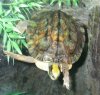

GOLDEN COIN TURTLE - Cuora trifasciata
Cuora trifasciata.jpg

Photo taken at: San Diego zoo, California, USA

Short taxonomy: Sauropsida > Chelonia > Geoemydidae

Native range: southern China and northern Vietnam

Ex-situ frequence: Rare

Danger factors: Poaching for use in Chinese traditional medicine and gastronomy

Other comments: It's one of the most endangered turtles of the world and the reason is again the same main reason that threats every other species of turtle in south-east Asia. This species is the key ingredient of certain Chinese dessert called guīlínggāo and the excessive harvest for it leaded to be in the 25 most endangered turtles and tortoises of the world list, according to Turtle Conservation Coalition. The distribution range of this species shows that it's only extant in Hainan and nearby Hong Kong, being extirpated from the very vast major part of its former native range.

In China there are various turtle farms breeding this species in captivity, with about 200000 individuals of this species held amongst all these facilities, with over 2000 of them in the largest one. Said farms sold 20600 turtles of this species yearly. It's the most expensive species of turtle in the world for be obtained from farm turtles. But an issue with turtle farms is that as they are located in warm lowlands, the higher incubation temperatures make them to be able of produce only females. Another issue with turtle farms is that most individuals of this species are hybridized, and escapes can cause genetic pollution in wild populations. Despite being bred in farms, the hunting pressure over wild populations is still extremely high.
 

Attachments

  • Cuora trifasciata.jpg
    Cuora trifasciata.jpg
    84.2 KB · Views: 23
SIBERIAN CRANE - Grus leucogeranus

Grus leucogeranus (6-8-17 Zoo Köln).jpg
Grus leucogeranus 2.jpg

Photos taken at: Cologne zoo, Germany and Pairi Daiza, Belgium

Short taxonomy: Aves > Gruiformes > Gruidae

Native range: Breeding range formerly in whole Siberia but now reduced to two very far places, one in western Russia and other in eastern Russia, winter range in Iran and south east China respectively (formerly the winter range of western population also included India and Nepal, now exterminated from these countries)

Ex-situ frequence: Rare to Common

Danger factors: Wetland drainage, agricultural expansion, and direct hunt during migratory events. In more recent times, the water flow regime of Poyang lake (home of 95% of wintering population of this species) was affected by the building of the Three Gorges Dam in Yangtze river.

Other comments: No more than about 3200 individuals left in the wild. And the western population consist only in about 10 birds!!! The regeneration rate of this species is the lowest of all cranes, less than a 10% annually.

This crane species is neither common nor rare in captivity, but somewhat in between. Looks like it should be very common as is a very large bird, very spectacular and showy, easy to feed, with not much special needs, very long lived, and critically endangered. Apparently the ideal zoo animal. However the scarcity in captivity is due to its extreme aggressiveness. Much less sociable than other cranes, even out of breeding season, where in the wild, individuals form only loose and low-numbered flocks. In captivity, often males killed females during breeding season. However, is enough common in captivity as for obtain a reasonable breeding success. From 1991 to 2010, 139 captive-bred specimens were released at breeding grounds, migration stopovers and wintering grounds of the species.

CABBAGE PALM - Brighamia insignis
Brighamia insignis.jpg

Photo taken at: Orotava botanical garden, Canary Islands, Spain

Short taxonomy: Magnoliopsida > Asterales > Campanulaceae

Native range: Kaua'i, Hawaii islands

Ex-situ frequence: Common

Danger factors: Extinction of its natural pollinator, a species of hawk moth. Besides that, the plant also must face several non-native plagues introduced by humans: goats, pigs, slugs, rats, mites and various plant speces.

Other comments: Sometimes, the excess of harvest of wild plants for horticultural trade is a severe threat to survival of the species, but in other occasion is exactly the contrary, and Brighamia insignis is the best example of that. In 1994, this plant was reduced to about 50 individuals, as after the extinction of the hawk moth that pollinated the plants, these stopped producing seeds. But the Netherlands plant productors noticed this species, its threat situation and its ornamental potential, and then reproduced it under artificial conditions very intensively as only Dutch nurserymen can do. Thanks to this effort, the plant that was once just in the verge of complete extinction, can be found even in flower shops of big cities (as I did once). Despite being common in cultivation, is still critically endangered in the wild as it needs human assistance for flower fecundation. Currently it only grows in Napali's coast in Kaua'i, being extint in Ha'upu's crest (Kauai's) and Ka'ali's cliff (Ni'ihau) where the plant formerly grew.
 

Attachments

  • Grus leucogeranus (6-8-17 Zoo Köln).jpg
    Grus leucogeranus (6-8-17 Zoo Köln).jpg
    337.1 KB · Views: 24
  • Grus leucogeranus 2.jpg
    Grus leucogeranus 2.jpg
    237.7 KB · Views: 23
  • Brighamia insignis.jpg
    Brighamia insignis.jpg
    144.1 KB · Views: 24
Last edited:
ASIAN GIANT TORTOISE - Manouria emys
Manouria emys.jpg
Manouria emys 2 (26-9-18 Pairi Daiza).jpg

Photos taken at: Barcelona zoo, Spain and Pairi Daiza, Belgium

Short taxonomy: Sauropsida > Chelonia > Testudinidae

Native range: Widely distributed in south east Asia from India to Borneo

Ex-situ frequence: Common

Danger factors: Long-term habitat loss and more recently, strong poaching for food, bot local and for export.

Other comments: Despite its wide distribution area, said area is severely fragmented. Most of the forest where this tortoised lived had been degraded or eliminated. Lowland forests have been logged for timber, cleared for crops, burnt by fires and flooded by dams in increasing way, and still are. This obligated the species to refugiate in more hilly montane forests in rugged terrains. The decline was quick: considered as Vulnerable from 1994, as Endangered from 2000 and as Critically endangered from 2019. The captive colonies are not feasible practically to keep in enough large numbers for mantain enough healthy genetic diversity. One of the largest of said colonies is kept within native range, in Mandalay Zoo (Burma) and it's often restocked with confiscated animals. The species is enough easy to breed in captivity as for be kept relatively often by hobbyist, ans a complete ban to wild source trade should be considered as there is enough captive-bred stock for satisfy demands.
 

Attachments

  • Manouria emys 2 (26-9-18 Pairi Daiza).jpg
    Manouria emys 2 (26-9-18 Pairi Daiza).jpg
    320.3 KB · Views: 23
  • Manouria emys.jpg
    Manouria emys.jpg
    75.5 KB · Views: 22
SHORT-TAILED NURSE SHARK - Pseudoginglymostoma brevicaudatum
Pseudoginglymostoma brevicaudatum (23-7-17 Zoo Madrid).jpg Pseudoginglymostoma brevicaudatum 2 (24-9-18 Artis).jpg

Photos taken at: Madrid zoo-aquarium, Spain and Artis royal zoo, Netherlands

Short taxonomy: Chondrichthyes > Orectolobiformes > Ginglymostomatidae

Native range: shores of Madagascar and Tanzania-Kenya, vagrant in South Africa, possible presence in Mauritius and Seychelles

Ex-situ frequence: Common

Danger factors: Mainly overfishing both as target as bycatch, but also degradation and loss of coral reefs by bleaching (global warming), coral mining, and dynamite fishing.

Other comments: Still common at early 2000's, the species suffered a steep decline after, passing directly from Vulnerable in 2004 to Critically endangered in 2019. It's a strictly coastal species so it very heavily fished in very reachable levels. After extensive visual census of coral reefs in Tanzania, Mozambique and Madagascar, people failed to find alive individuals. In the whole Tanzania coast, dynamite fishing is a common practice. Artis royal zoo in Netherlands (where the second photo was taken) was the first to obtain success in captive breeding, and also held the longest lived captive specimen, a female 33 years old. Many of the European holders of the species got their specimens from Artis. The reproduction is very slow (egg capsules last 165 days for hatching!), what make the species not the easiest to reproduce in captivity.

AMAGRO'S SEA LAVENDER - Limonium sventenii
Limonium stevenii.jpg

Photo taken at: Barcelona botanical garden, Spain

Short taxonomy: Magnoliopsida > Caryophyllales > Plumbaginaceae

Native range: Gran Canaria, Canary Islands

Ex-situ frequence: Rare

Danger factors: Possible invasion by nitrophilous plants, possibility of hybridation with ornamental Limonium species. Grazing by goats and rabbits has not been observed, but it cannot be ruled out.

Other comments: It's present in three subpopulations, only one of them, in the Amagro mountain, is enough large. Said population is situated below a waste place, and the influnence of human waste in the lands below can favour the invasion of competitive nitrophilous plants, that outcompete the Limonium. The other two populations are tiny and one of them (El Sao) is situated near a garden where ornamental Limonium species are cultivated, giving the possibility of hybridation. The Amagro's population lies in a protected reserve, and the Viera and Clavijo botanical garden cultivates successfully the species and stores a germoplasm bank of it.
 

Attachments

  • Pseudoginglymostoma brevicaudatum (23-7-17 Zoo Madrid).jpg
    Pseudoginglymostoma brevicaudatum (23-7-17 Zoo Madrid).jpg
    75.3 KB · Views: 22
  • Pseudoginglymostoma brevicaudatum 2 (24-9-18 Artis).jpg
    Pseudoginglymostoma brevicaudatum 2 (24-9-18 Artis).jpg
    349.7 KB · Views: 24
  • Limonium stevenii.jpg
    Limonium stevenii.jpg
    136.4 KB · Views: 25
Back
Top