Kakapo
Well-Known Member
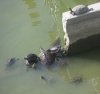
CHINESE STRIPE-NECKED TURTLE - Mauremys sinensis


Photos taken at: Lotus lake, Taiwan
Short taxonomy: Sauropsida > Chelonia > Emydidae
Native range: China, Taiwan and Vietnam
Ex-situ frequence: Very common
Danger factors: Same threats that all other Asian turtles: strong poaching for meat, pet trade, and shell (plastron is used as a tool for devination arts, and this species is the most used of all turtles for that). Plus, habitat destruction (wetland conversion into agricultural land) and competence with introduced red-eared sliders.
Other comments: Since the red-eared slider went prohibited into many countries due to invasiveness problem, other turtle species has been chosed for substitution in pet shops and pet trade, and Chinese stripe-necked, formerly a rarity in captiviy, is today one of the most easily seen turtles in pet trade. Only in Vietnam there is about 52 registered turtle farms keeping colonies of this species. The release of captive-bred individuals into nature must be taken with care as the species hybridize very easily with other members of same genus and even other genus. The species is not officially protected in China nor in Vietnam.
Photos taken at: Lotus lake, Taiwan
Short taxonomy: Sauropsida > Chelonia > Emydidae
Native range: China, Taiwan and Vietnam
Ex-situ frequence: Very common
Danger factors: Same threats that all other Asian turtles: strong poaching for meat, pet trade, and shell (plastron is used as a tool for devination arts, and this species is the most used of all turtles for that). Plus, habitat destruction (wetland conversion into agricultural land) and competence with introduced red-eared sliders.
Other comments: Since the red-eared slider went prohibited into many countries due to invasiveness problem, other turtle species has been chosed for substitution in pet shops and pet trade, and Chinese stripe-necked, formerly a rarity in captiviy, is today one of the most easily seen turtles in pet trade. Only in Vietnam there is about 52 registered turtle farms keeping colonies of this species. The release of captive-bred individuals into nature must be taken with care as the species hybridize very easily with other members of same genus and even other genus. The species is not officially protected in China nor in Vietnam.




































 I hope that these informative posts can help to spread knowlegde about these species in the verge of extinction, and maybe this can lead to a better protection of them and more spreading in captivity. A zoobotanical garden consistent only in the already treated species of the thread, would be already a good and representative collection.