I hope everyone is enjoying exploring London Zoo 1904 themselves! In case you missed it, you can download it here:
Steam Workshop::London Zoo 1904
I have also put together a few different versions of the file - one with animals removed from the South Garden, one with animals removed from the North and Middle Gardens, and one with a lot of the surrounding city removed, which hopefully give you a few options if the original file is a bit too taxing on your machine! All of those can be found on my Steam Workshop page.
Now, on with the tour: following on in the order suggested by the official guide, once we're through the tunnel, we're going to head straight over the bridge, ignoring the Middle Garden for now. The narrow strip of ground to the north of Regent's Canal had been leased to the zoo since 1834, but had only been used as a burial ground for much of its history. The North Gate, and bridge spanning the canal were built in 1872 and opened the following year, mostly to allow easier access to guests arriving from north of Regent's Park.
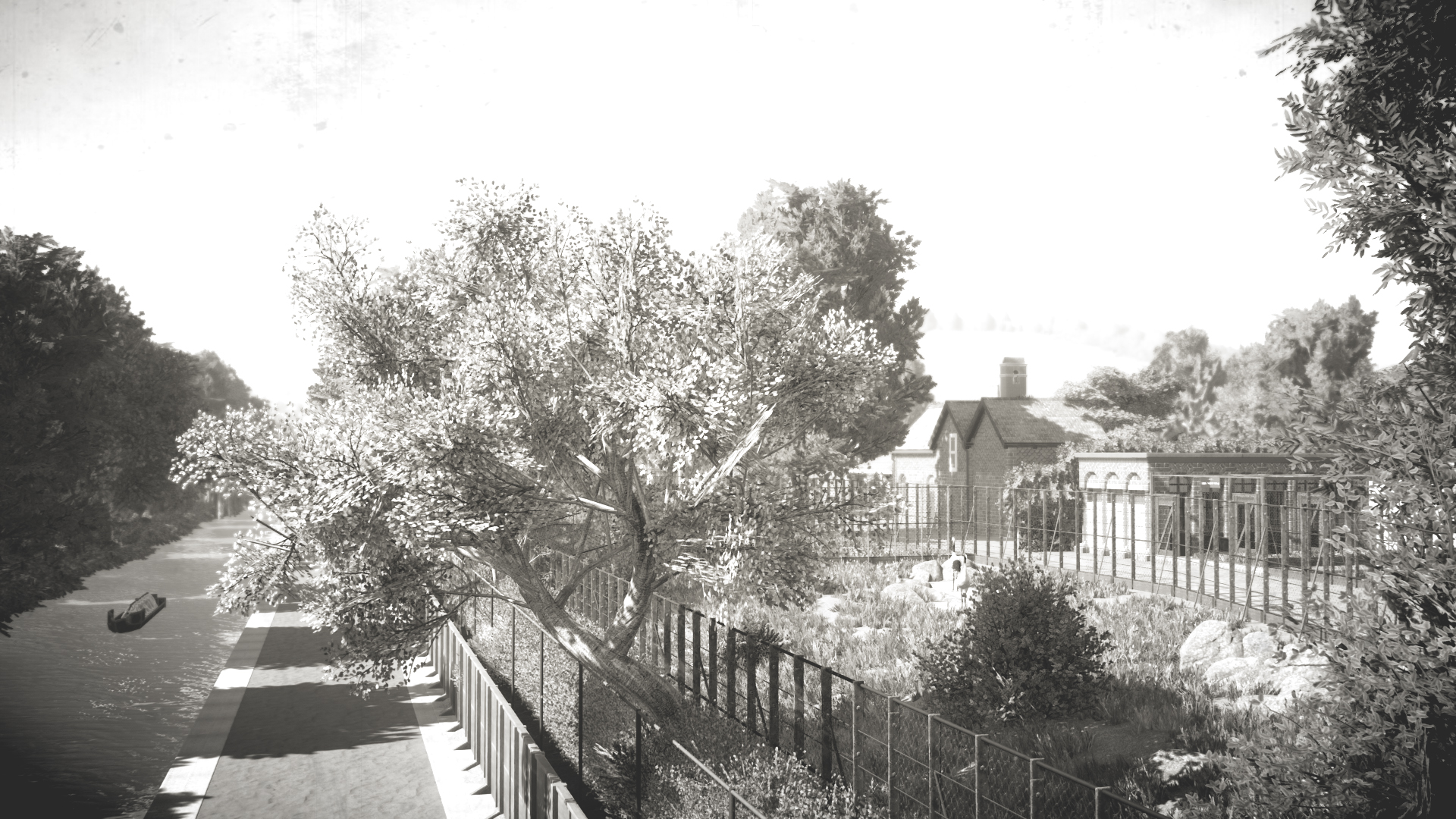
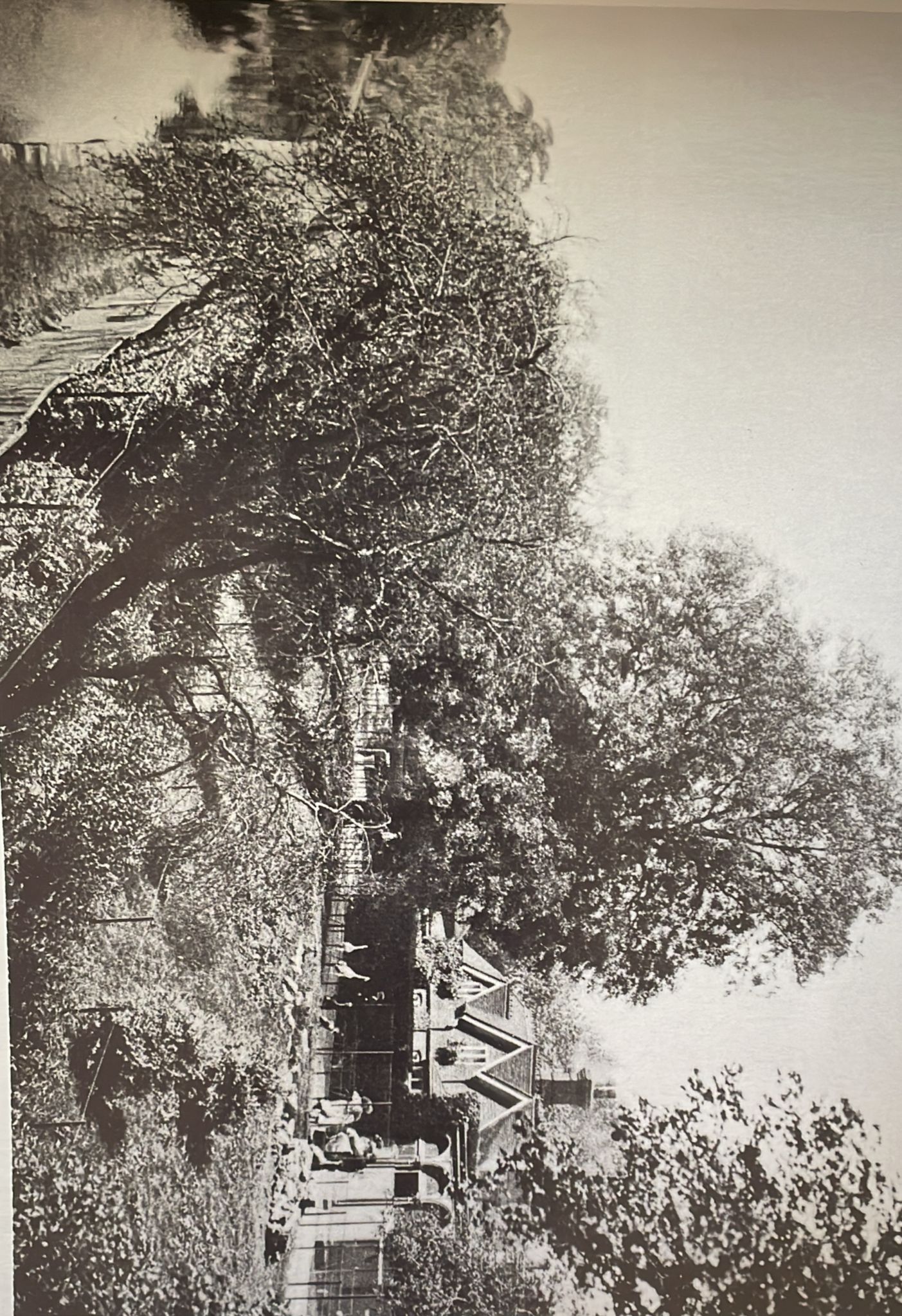
Immediately facing us at the end of the bridge is the Northern Aviary. Built in 1874, this brick structure housed owls and falcons. Around 1905, it was renamed the Civets' House (I have found archive footage of a honey badger living there), as new owl aviaries were built. It was damaged by bombs during World War 2 and, as far as I can tell, was replaced with a different building on the same site housing British owls.
The sloping banks of the canal were set out as paddocks for various cranes in 1903. Compared to pretty much every other animal in the zoo, the cranes have got loads of room - I feel like these paddocks wouldn't raise any eyebrows if they were found in a modern zoo (short of the lack of mesh meaning the cranes would have been pinioned). Across the path from the paddocks is the Cranes' Winter House, providing more sheltered (if much smaller) accommodation over the colder months. I believe this was originally a tortoise house, or at least was built on the same site.
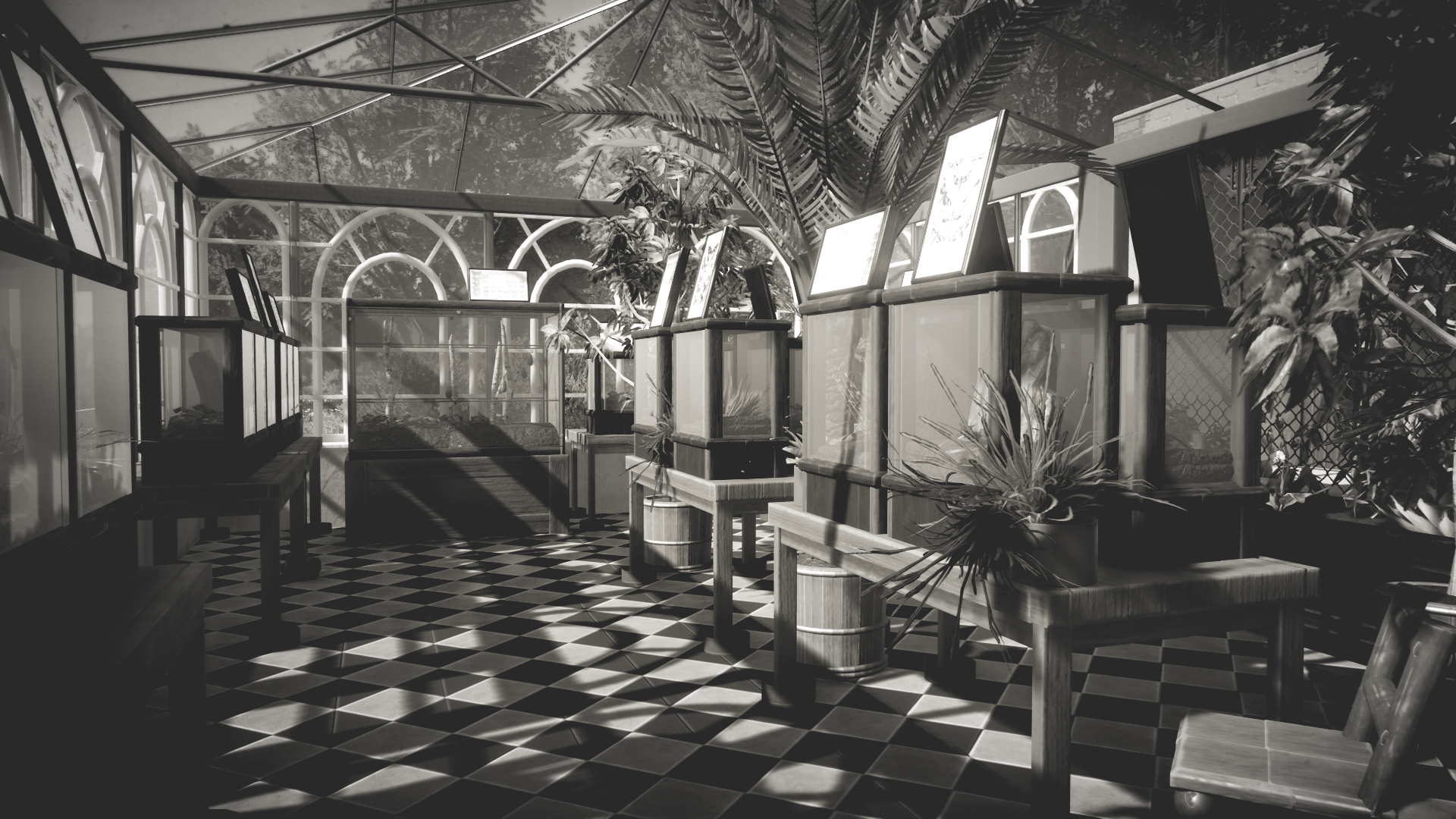
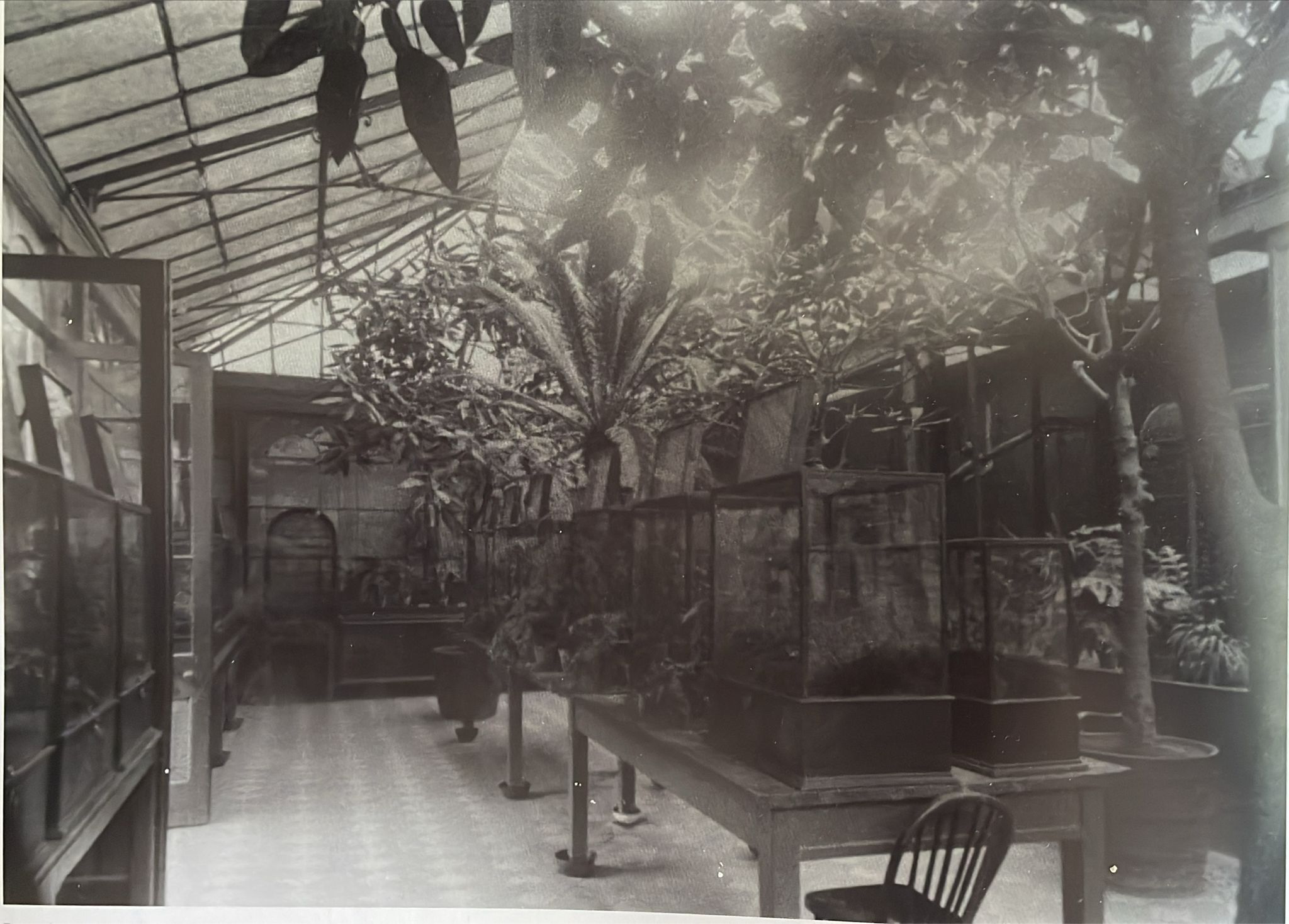
Past the North Gate, we come to the Insect House. Opened in 1881, this is the world's first purpose-built structure for the display of invertebrates (though the structure was moved from the South Garden, where it served as a refreshment building). Humidity was maintained with basins of water placed under the tanks, and on the floor (very scientific), and the consistent high temperatures meant the building also housed small tropical animals, such as hornbills and birds of paradise. A new insect house was built in 1913, and this building was converted for use by small mammals such as rodents (as well as the famously small giant anteater...). This building was also damaged by bombs during World War 2.
A little walk away, we come to the North Pheasantry, built in 1901, and Northern Stables, built in 1904. Both of these were fairly standard 'long row of cages' set-ups for pheasants and equines, respectively, though the stables were originally constructed for 'surplus stock'. The stables seem to have disappeared quite shortly after they were built, and were certainly gone before 1914, when the pheasantry was massively expanded (to be significantly wider than the elephant or giraffe houses). The western part of the pheasantry still survives, though it is not publicly accessible.
Swoop!

