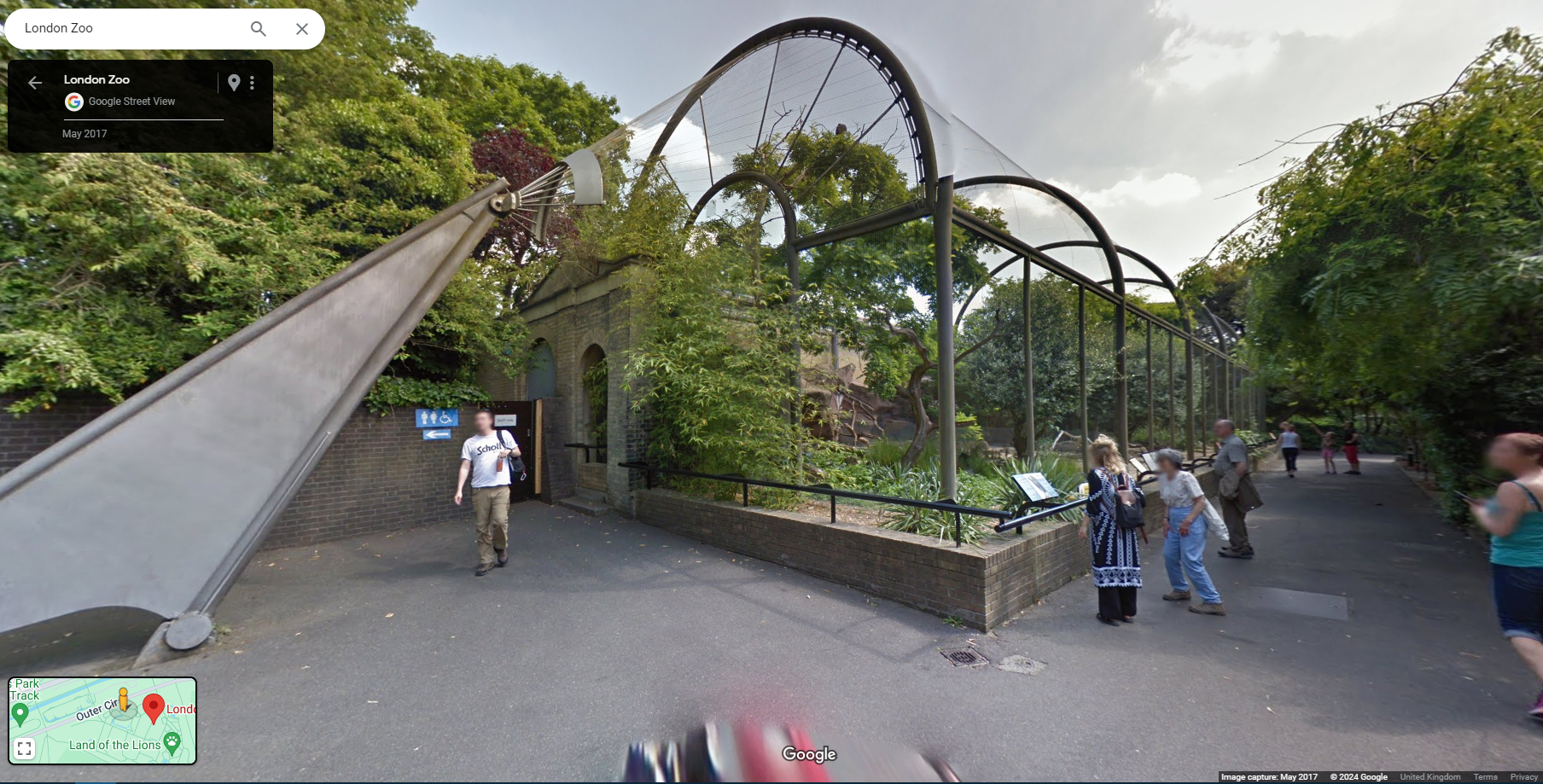
London Zoo 1904

@ralphthestick Just reading through this thread now for the first time. The images and youtube videos are really helping me visualize the Zoo. Can I ask if your copy of the 1904 Illustrated guide is digitized? Or are you working from a physical copy? Here's a link to my member intro and why I'm asking :)
Interesting topic for a thesis - I'm glad my recreation is helpful in visualising the zoo! I'm working from a physical guide I picked up on eBay - I'm not convinced the binding would stand up to a scanner, but I'd be happy to share some photos with you in a DM if there's anything in particular you would be interested in. Hopefully that would be enough to let you know if it has what you need, and tide you over until you can track down a copy yourself or visit the archives?
 
Another building that still stands to this day in this update, plus some exciting new stuff at the end!
The Reptile House
reptile-house-1-jpg.374425

Completed in 1883, this was the zoo's second reptile house, though its first constructed specifically to house them (the first one was originally the home of the large carnivores before the construction of the carnivore terrace). It was occasionally referred to as 'Jumbo's gift' at the time, as a large part of the funds for its construction (£2,000!) came from the sale of the famous elephant Jumbo to P. T. Barnum in 1882 (this will not be the last reference to that particular pachyderm as the recreation continues - he left his mark in more ways than one).
The entry porch to the south housed amphibians (or 'batrachians' as they were sometimes called at the time) which did not require as high a temperature as other residents of the house.
reptile-house-2-jpg.374426

Within the house proper, moveable cases were arranged along the south wall, while cases built into the walls lined the others. The east and west housed lizards and venomous snakes, and the larger cases on the north wall mostly housed constrictors, though there was a tank at each end for interesting fish specimens (electric eels and lungfish in 1904). The built-in cases could only be accessed from a service corridor, and the slides at the backs of the venomous snake cases were set high up to prevent escape.
reptile-house-3-jpg.374427

33-reptile-house-1-gif.374424

Most prominently, the building also contained three pools in the middle of the floor, which housed crocodiles. These were arranged according to size rather than type, with smaller individuals inhabiting the smaller pools to each side, and the large central pool housing adults. The central pool also housed manatees on a few occasions, though I assume the crocodiles were moved out while they were in residence.
reptile-house-4-jpg.374429

33-reptile-house-6-jpg.374423

The building still stands today, though it was converted into a bird house in 1926, when a new reptile house was built (this famous building recently closed, and there are rumblings that it might be converted into a museum of the zoo). The bird house originally followed the basic plan of the reptile house, with cages built into the walls, and central cages corresponding to the old pools, but the layout was reworked when it was reopened as the Blackburn Pavilion in 2008. While the lobby area pays homage to the building's Victorian origins, the back half of the building is now a series of tropical bird walkthroughs. I think there were a few tortoises in there the last time I visited too, so it still houses reptiles to this day!
reptile-house-5-jpg.374430

3-jpg.374422

To play us out today, a longer video tour of the building. Let me know what you think of this one, and I'll try and expand on this sort of thing in the future with similar videos of larger areas of the zoo.
 
Interesting topic for a thesis - I'm glad my recreation is helpful in visualising the zoo! I'm working from a physical guide I picked up on eBay - I'm not convinced the binding would stand up to a scanner, but I'd be happy to share some photos with you in a DM if there's anything in particular you would be interested in. Hopefully that would be enough to let you know if it has what you need, and tide you over until you can track down a copy yourself or visit the archives?
That's very generous, thank you! I have a couple other leads on where to figure out what exactly is in it. Once I figure out what I need, I can DM you and request specifics--- I just don't want to make you do more work than you would need. Thanks again, we'll talk soon.

P.S. The Reptile House looks great!
 
That's very generous, thank you! I have a couple other leads on where to figure out what exactly is in it. Once I figure out what I need, I can DM you and request specifics--- I just don't want to make you do more work than you would need. Thanks again, we'll talk soon.

P.S. The Reptile House looks great!
No problem, just let me know. And thanks!
 
I'm still tinkering away at a snag list for the South Garden, but here's another historical tour video, going back to the first thing I built for the project. Enjoy!
I really did enjoy, I remembered standing on one of those seats on the steps watching the cats at feeding time .I was 11years old in 1966
 
From memory the oblong outdoor cages weren't connected to the domed cages, they were 'stand alones' that stood between them but were smaller and less deep. As I've mentioned elsewhere, in its latter years the Lion House had become very overcrowded with the various species and numbers. By the 1960's the same felines rarely used both the indoor and outdoor cages. Those that were exhibited in the outdoor cages had access to dens indoors. Those that were on exhibit in the indoor exhibit cages also had access to smaller dens at the rear of those cages. There was rarely any movement of animals between the two areas.


The outside 'snow leopard' cage I referred to was either set in the blank wall on the right of the entry door, or just beyond that.(can't remember) It faced the Cattle Sheds opposite the Lion House. It was a conventional covered barred-type cage, but set into the side of the building.
Thank you, I thought that I had imagined that cage with the snow leopard.I was convinced that it held clouded leopards, it was along time ago mind.
 
I'm glad I could bring back some memories! I find it really interesting that it was in use so relatively recently - things have changed so quickly!
Also remembered that according to Clinton Keeling, in the yard at the rear of the lion House was a Wombwell and Bostock beast wagon which had been used to transport Lions to Whipsnade when Whipsnade first opened. As far as I know, nobody knew what happened to it but apparently it was there for years
 
Also remembered that according to Clinton Keeling, in the yard at the rear of the lion House was a Wombwell and Bostock beast wagon which had been used to transport Lions to Whipsnade when Whipsnade first opened. As far as I know, nobody knew what happened to it but apparently it was there for years
That's an excellent little detail which I'll have to include! If no-one knows what happened to it, then I'm sure no-one will mind that it arrived 25 years early to pick up the lions in my version...
 
Really interesting stuff and brings it to life!

The movable bridge is hard to envisage just in pictures you’ve done a great job making it ‘live’.

It’s also such a good snapshot into how zoos have evolved. The noises are also fun.

Also as a gamer (thought not this game)I do love a good mod and this is really cool.
 
Really interesting stuff and brings it to life!

The movable bridge is hard to envisage just in pictures you’ve done a great job making it ‘live’.

It’s also such a good snapshot into how zoos have evolved. The noises are also fun.

Also as a gamer (thought not this game)I do love a good mod and this is really cool.
Thank you - it's very much brought this era of the zoo to life for me too. Very interesting to see how things have changed over the years, and how the different stages of growth and evolution overlap.
 
Spare time has been somewhat elusive lately, so building work has been a bit slow (but currently building one of the big icons of London Zoo, so that's exciting), and I've not had time to put together another building tour video (what will it be? Carnivore terrace and bear pit? Monkey House? Some other thing I've not considered? Let me know!) - with that in mind, you've all been stood by the clock tower for a couple of months, so I think it's time to get the tour on the way again.

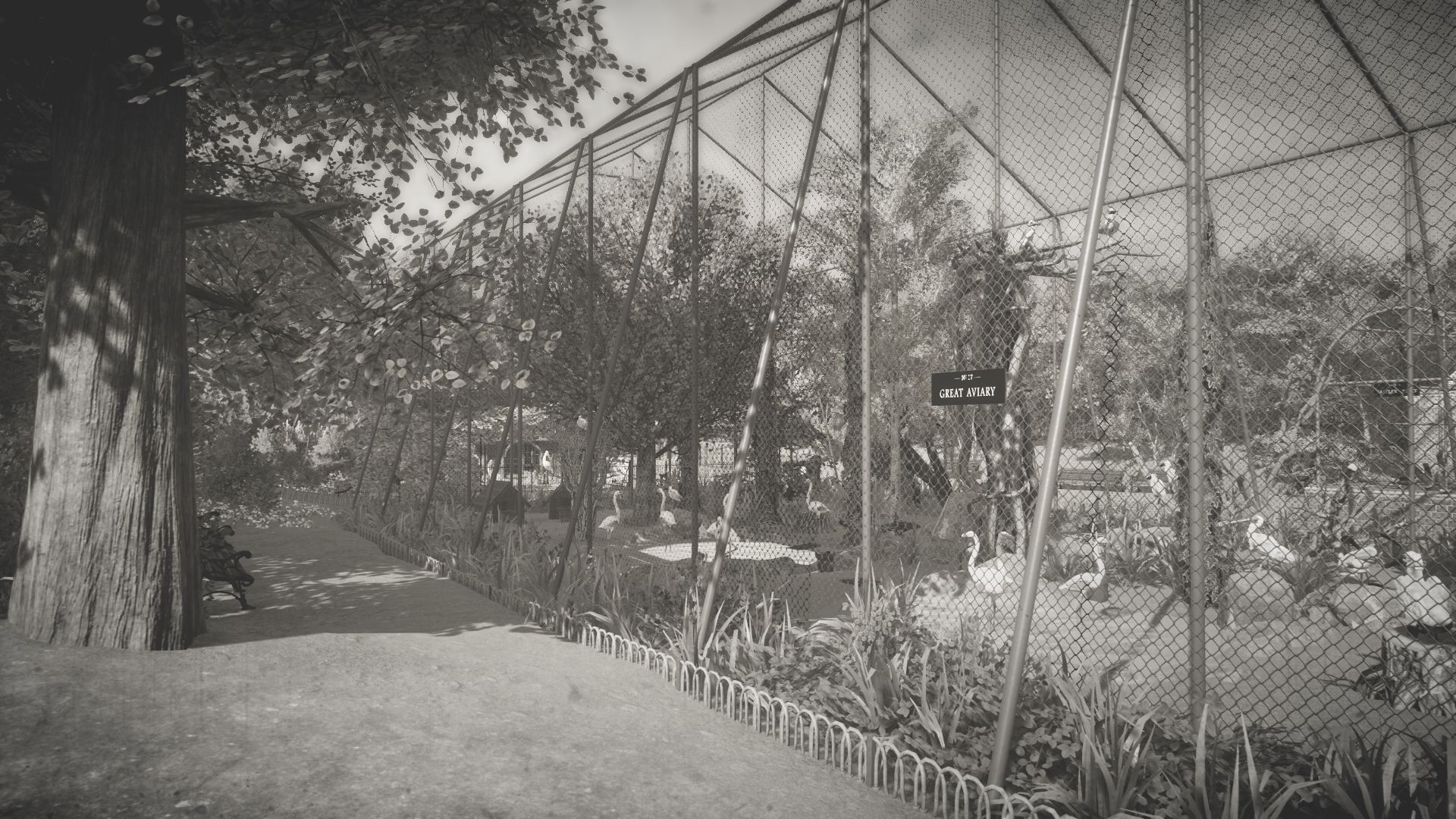
Heading from the Camel House back towards the main entrance, we come to the Great Aviary. This held various species of waders, such as ibis, herons, and flamingos, hence its alternative name 'the night herons' pond'. It was built in 1888, and was a pretty revolutionary way of displaying birds in a relatively naturalistic environment, and with sufficient vertical space to properly exercise their power of flight. F.G. Aflalo, author of A Walk Through the Zoological Gardens was inspired by the idea, and mused whether it would be possible to construct several such cages to rotate other animals through, giving lions run of the cage one day of the week, antelopes the next, and so on - very nearly coming up with the idea of a modern zoo, but just missing the mark... Presumably, The Great Aviary was cleared in 1970 to make way for the Sobell Pavilions.
great-aviary-1-jpg.385949

17-great-aviary-10-jpg.385950

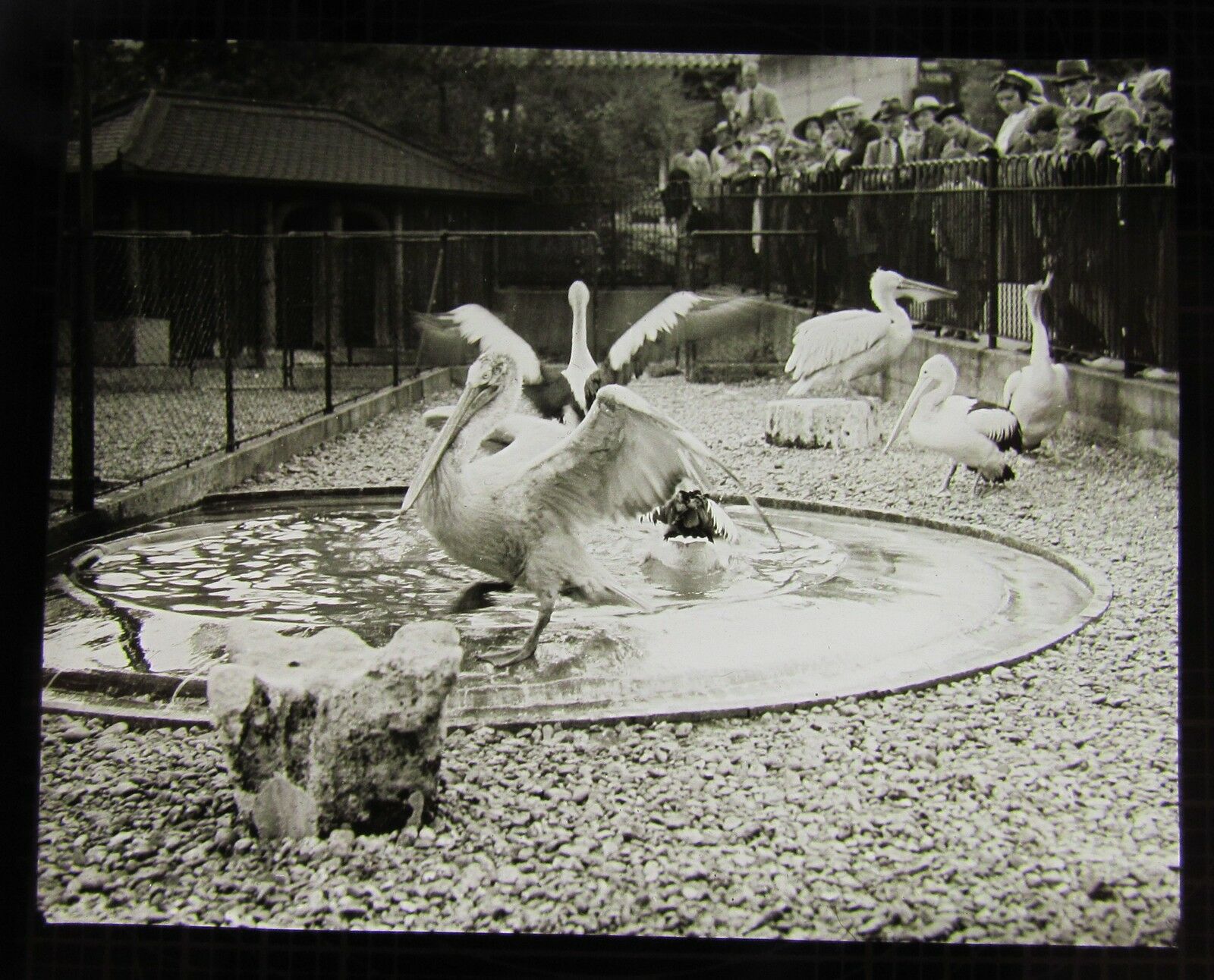
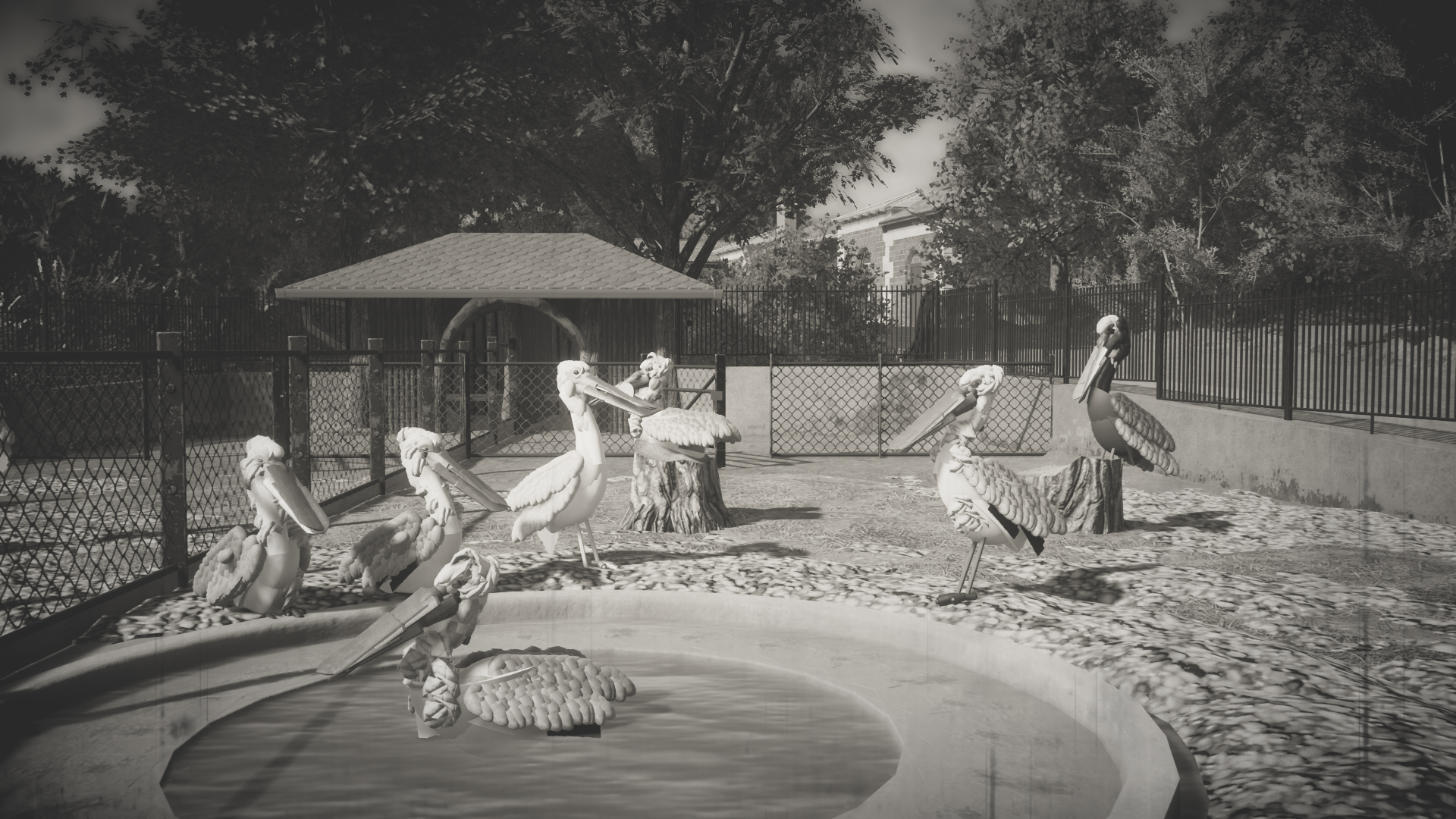
Following the path up, we get to the Pelicans' Enclosure. As far as I can tell, this enclosure existed since the 1850s, though it might have originally been used for different waterfowl. I'm not sure of the reasoning behind giving them such small ponds for the overall space, but I suppose it worked for them, as it was in use for over a century. Pelicans really do feel like a big gap in the roster, as they feel like such an iconic 'ABC' zoo animal. Once again, thanks to Drac and Jaguar_Rx for the birds that feature so heavily in this particular portion of the tour. The enclosure remained in use until it was also cleared in 1970, and was basically unchanged right up to that point.
pelicans-enclosure-2-jpg.385951

18-pelicans-12-jpg.385952

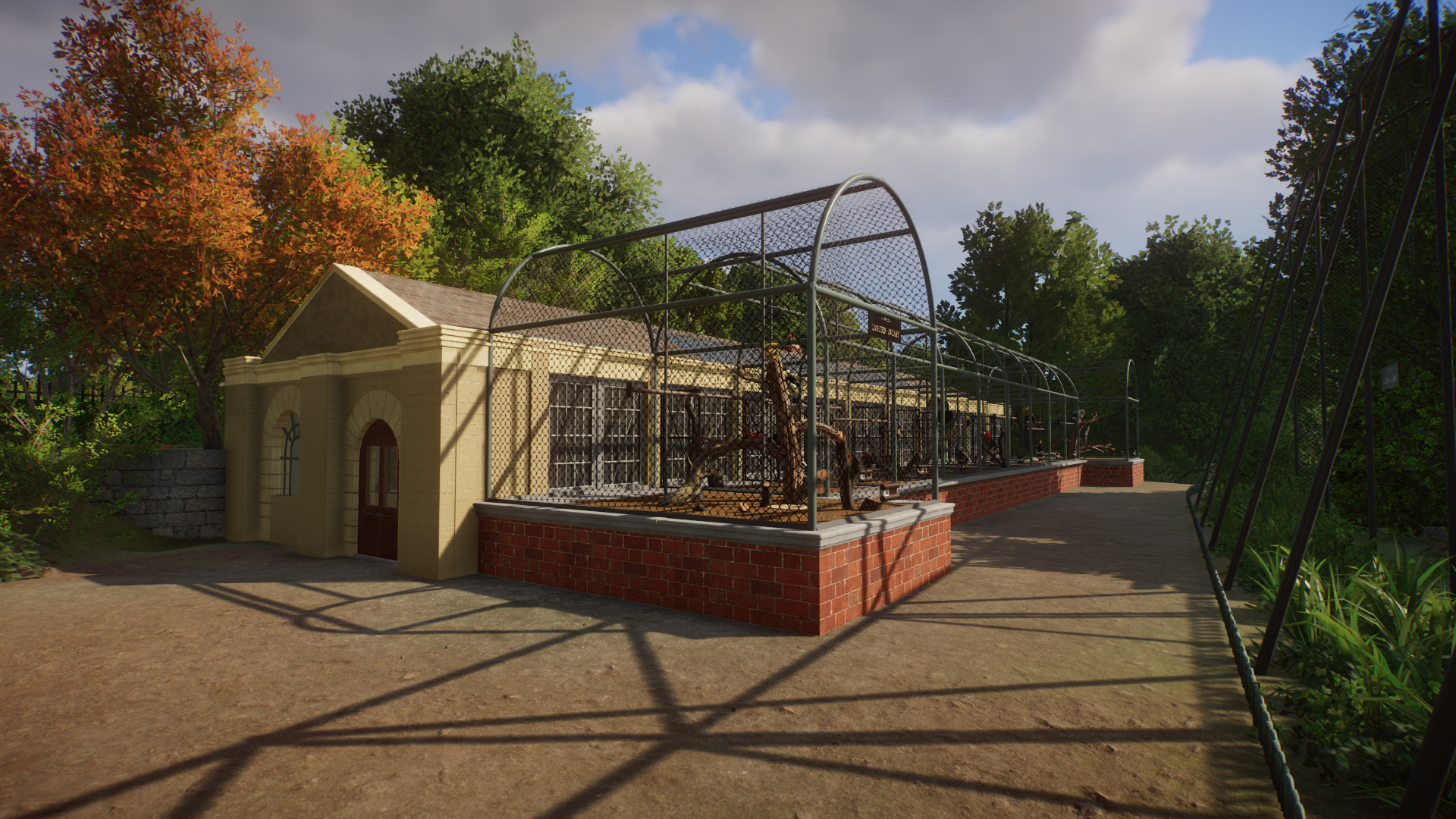
Retracing our steps back down (don't blame me, blame the secretary), but looking to the other side of the path, we see the Eastern Aviary. This structure was built in 1864, and was used to keep tropical birds such as hornbills, seriemas, curassows and, on at least one occasion, a king vulture. As it could be heated, it also served as winter accommodation for the birds that otherwise lived in the Great Aviary just opposite. Apparently, there was public access inside, where there was another row of cages, though it must have been a real squeeze to get in there. The aviary was remodelled in 1990 with larger outdoor cages, and still stands today, holding ibis and storks.
eastern-aviary-2-jpg.385947

eastern-aviary-today-jpg.385948

Just next to the Camel House is the Fellows' Tea Pavilion. This structure, exclusively for the use of fellows of the zoological society and accompanying friends, was built in 1898. It looks like it would be a lovely place to sit down and have a cup of tea and a piece of cake, though I do wonder about its extreme proximity to the smells of the Camel House. I'm not sure when this was removed, but I assume around 1928 to make way for Regent Building (the zoo's current restaurant). Apparently, it was rebuilt in Whipsnade to be used as a parrot house, but I've not been able to find any pictures of it there.
Behind the Tea Pavilion are the Pavilion Pond, which was originally constructed for an elephant seal, though in 1904 held waterfowl, and the Resident Keepers' Lodge, built in 1904 with several apartments for staff (another building which still stands).
fellows-tea-pavilion-1-jpg.385953

20-fellows-tea-pavillion-2-jpg.385954

Continuing on, we get to the Barbary Sheep's Yard. Built in 1891, this appears, as far as I can tell, to be very similar to the Sheep Yard to the south near the Sea Lion Pond.
Just past that, next to the East Tunnel (or, at this point in time, simply the tunnel), is the Llamas' House. This slightly unusual rounded structure was built in 1898 on the site of a very similar bison house which had been there pretty much since the gardens opened. The Barbary Sheep's Yard and Llamas' House were, presumably, also cleared to make way for the Regent Building.
llamas-house-1-jpg.385956

planet-zoo-screenshot-2024-03-07-15-45-32-29-jpg.385957

Swoop time!
 
Spare time has been somewhat elusive lately, so building work has been a bit slow (but currently building one of the big icons of London Zoo, so that's exciting), and I've not had time to put together another building tour video (what will it be? Carnivore terrace and bear pit? Monkey House? Some other thing I've not considered? Let me know!) - with that in mind, you've all been stood by the clock tower for a couple of months, so I think it's time to get the tour on the way again.

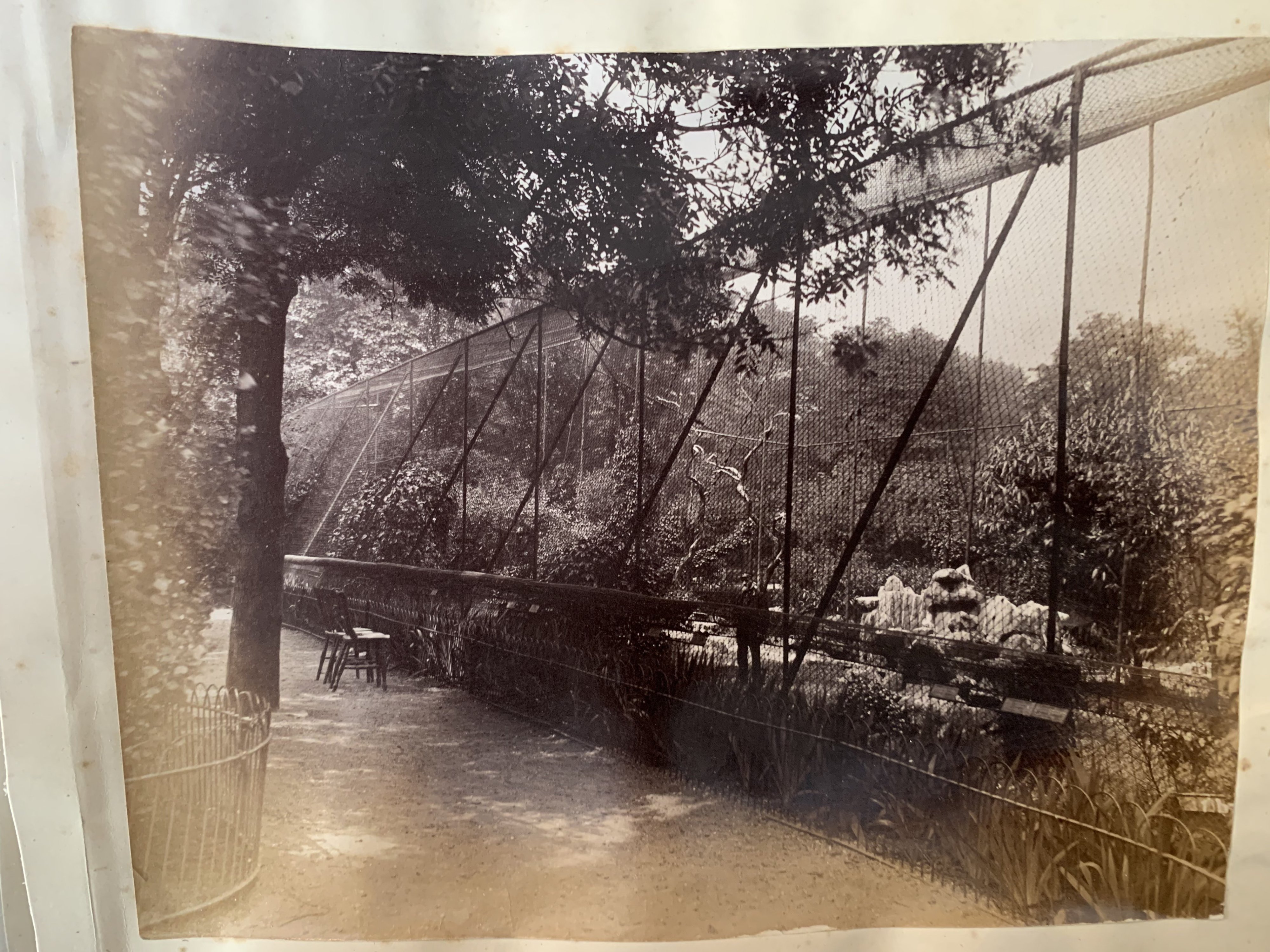
Heading from the Camel House back towards the main entrance, we come to the Great Aviary. This held various species of waders, such as ibis, herons, and flamingos, hence its alternative name 'the night herons' pond'. It was built in 1888, and was a pretty revolutionary way of displaying birds in a relatively naturalistic environment, and with sufficient vertical space to properly exercise their power of flight. F.G. Aflalo, author of A Walk Through the Zoological Gardens was inspired by the idea, and mused whether it would be possible to construct several such cages to rotate other animals through, giving lions run of the cage one day of the week, antelopes the next, and so on - very nearly coming up with the idea of a modern zoo, but just missing the mark... Presumably, The Great Aviary was cleared in 1970 to make way for the Sobell Pavilions.
great-aviary-1-jpg.385949

17-great-aviary-10-jpg.385950

Following the path up, we get to the Pelicans' Enclosure. As far as I can tell, this enclosure existed since the 1850s, though it might have originally been used for different waterfowl. I'm not sure of the reasoning behind giving them such small ponds for the overall space, but I suppose it worked for them, as it was in use for over a century. Pelicans really do feel like a big gap in the roster, as they feel like such an iconic 'ABC' zoo animal. Once again, thanks to Drac and Jaguar_Rx for the birds that feature so heavily in this particular portion of the tour. The enclosure remained in use until it was also cleared in 1970, and was basically unchanged right up to that point.
pelicans-enclosure-2-jpg.385951

18-pelicans-12-jpg.385952

Retracing our steps back down (don't blame me, blame the secretary), but looking to the other side of the path, we see the Eastern Aviary. This structure was built in 1864, and was used to keep tropical birds such as hornbills, seriemas, curassows and, on at least one occasion, a king vulture. As it could be heated, it also served as winter accommodation for the birds that otherwise lived in the Great Aviary just opposite. Apparently, there was public access inside, where there was another row of cages, though it must have been a real squeeze to get in there. The aviary was remodelled in 1990 with larger outdoor cages, and still stands today, holding ibis and storks.
eastern-aviary-2-jpg.385947

eastern-aviary-today-jpg.385948

Just next to the Camel House is the Fellows' Tea Pavilion. This structure, exclusively for the use of fellows of the zoological society and accompanying friends, was built in 1898. It looks like it would be a lovely place to sit down and have a cup of tea and a piece of cake, though I do wonder about its extreme proximity to the smells of the Camel House. I'm not sure when this was removed, but I assume around 1928 to make way for Regent Building (the zoo's current restaurant). Apparently, it was rebuilt in Whipsnade to be used as a parrot house, but I've not been able to find any pictures of it there.
Behind the Tea Pavilion are the Pavilion Pond, which was originally constructed for an elephant seal, though in 1904 held waterfowl, and the Resident Keepers' Lodge, built in 1904 with several apartments for staff (another building which still stands).
fellows-tea-pavilion-1-jpg.385953

20-fellows-tea-pavillion-2-jpg.385954

Continuing on, we get to the Barbary Sheep's Yard. Built in 1891, this appears, as far as I can tell, to be very similar to the Sheep Yard to the south near the Sea Lion Pond.
Just past that, next to the East Tunnel (or, at this point in time, simply the tunnel), is the Llamas' House. This slightly unusual rounded structure was built in 1898 on the site of a very similar bison house which had been there pretty much since the gardens opened. The Barbary Sheep's Yard and Llamas' House were, presumably, also cleared to make way for the Regent Building.
llamas-house-1-jpg.385956

planet-zoo-screenshot-2024-03-07-15-45-32-29-jpg.385957

Swoop time!
I love this thread, anyone who is interested in zoo history can't help but be transported back in time
 
Really enjoyed again . I wonder if there were dens in the back so that cleaning out could be done. Also, after the terrace was demolished, I think part of it was saved and Chi Chi the pandas enclosure was incorporated onto it.
 
Really enjoyed again . I wonder if there were dens in the back so that cleaning out could be done. Also, after the terrace was demolished, I think part of it was saved and Chi Chi the pandas enclosure was incorporated onto it.
Yes to both! I didn't do a great job of explaining it in the video, but my understanding is that the interior dens (two per outer cage) all communicated with each other so the animals could be shifted around, so essentially all 24 of the dens could be linked to form a continuous corridor. How they got enough light to work in there, I don't know...
And yes, after half of the terrace was demolished in 1919, the individual cages were replaced with one 'large' (relatively speaking) bear pit on each side - definitely pandas in one of them at one point, though I'm not sure it was Chi Chi specifically?
 
Back
Top