Brookfield Zoo M. Man's Brookfield Zoo Review

Milwaukee Man

Well-Known Member
10+ year member
On August 27th, I visited the Brookfield Zoo for the second time ever, and, man, is it unbelievable! Milwaukee and Chicago have been rivals in almost any category you can name. But in terms of zoos, this one definitely blows Milwaukee County Zoo out of the water!

Brookfield Zoo Review

Chicago Zoological Society - Zoo Home

The zoo opened in 1934, and has always been known as among the zoos that first attempted creating naturalistic habitats. It began with the bear grottoes, and had since been renovating old buildings into immersive habitat powerhouses. (more info later) In this review, I will once again describe the exhibits in order of what I saw them. Enjoy!

Australia House - The building is divided into two parts. The first part seems to be a day time room. It begins with some small displays for a variety of reptiles and amphibians, ranging from snakes and skinks, to a giant monitor lizard and cane toads. At the end of the room, there's a good mixed species exhibit with bird species and short-nosed echidna. It was pretty neat seeing an egg-laying mammal for only the second time in my life. After this, visitors travel along a boardwalk to the night time room. There are only two species here: wombat and (I think) fruit bats. The wombats have got three exhibits. Two of them are not that great because they're small, have little natural features, and, due to the path that has them almost completely surrounded, it looks like they're given little privacy. The third exhibit is larger and better, with a stream and some sand for digging. Before leaving the building, there is a neat walkthrough bat cave. Surrounding the building are okay exhibits for cassowary, kangaroo, and emu. An above average exhibit for emu and kangaroos to live together complete the Australian area.

Hoofstock Row - Four okay exhibits for Bactrian camel, Mongolian wild horse, zebra, and a large herd of addax (including a cute 1 month old calf) make up this unexciting section.

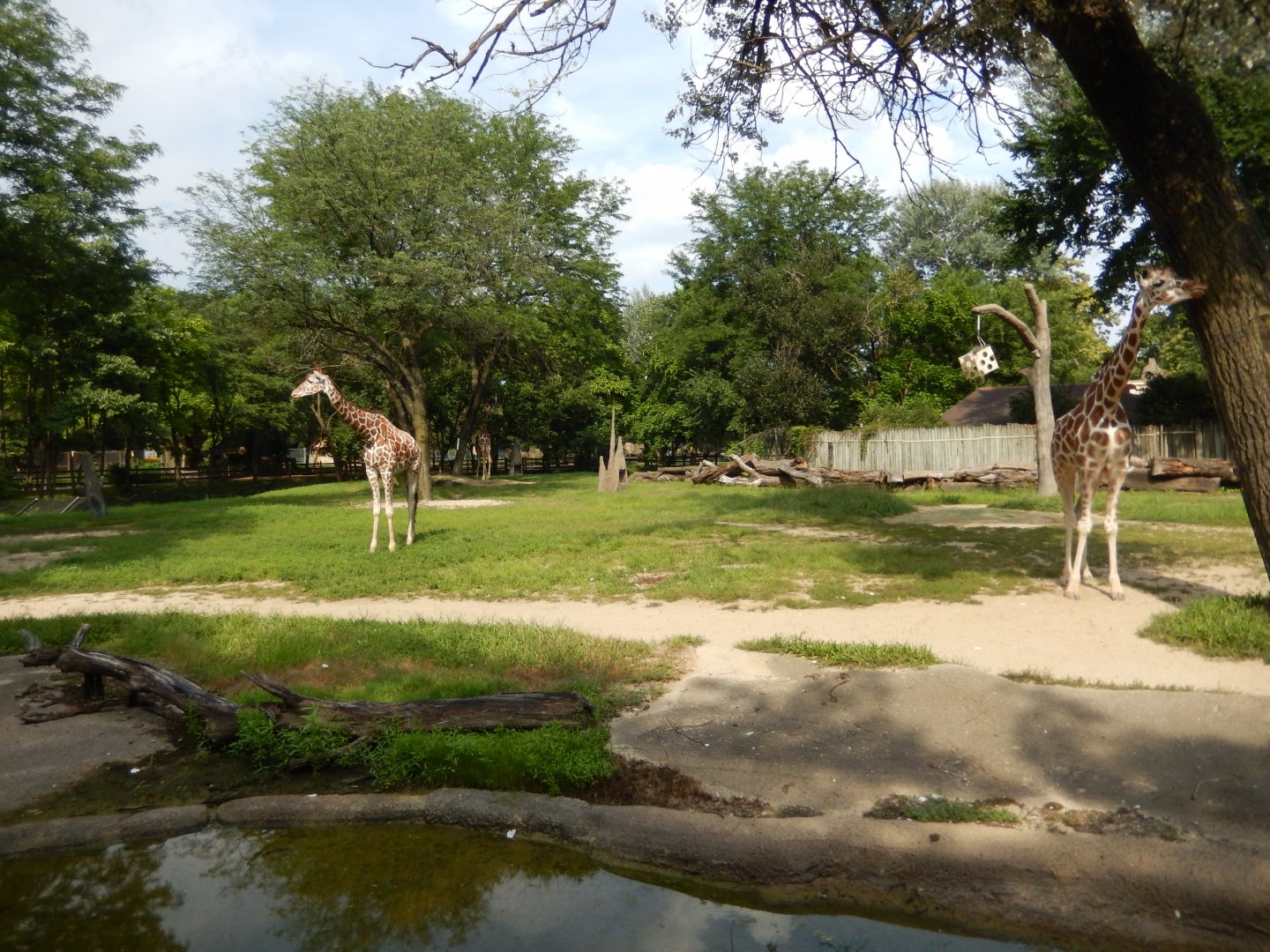
Habitat Africa! The Savannah - I love zoo exhibits with African animals, but, in my opinion, this one is a little disappointing. It starts strong with an excellent savannah for reticulated giraffe and a great scrubland-like exhibit for African wild dog, but then the rest is only of average quality. First, the aardvark house is home to a unique creature (WOW! Those things are HUGE!), but the indoor and outdoor exhibit is on the small side for them. It would be perfect for meerkats, but the aardvarks need a bigger home. Next is the giraffe building, which is uniquely designed to resemble a kopje. The main room serves as a free flight aviary, as well as the place where two corner exhibits for klipspringers are. Both are designed to resemble a mountaintop, and are average quality, but a bit too small in my opinion. A cave-like room is pretty cool and home to dwarf mongoose, pancake tortoise, and a snake (can't remember the species). The final part of the building has the indoor giraffe room and a medium sized yard for tortoises (don't remember the species). Lastly, there's a large grassy exhibit for waterbuck. It is above-average, but I would have liked to see the zebras from the hoofstock area move here. All in all, this exhibit has potential, but is missing out on some things.

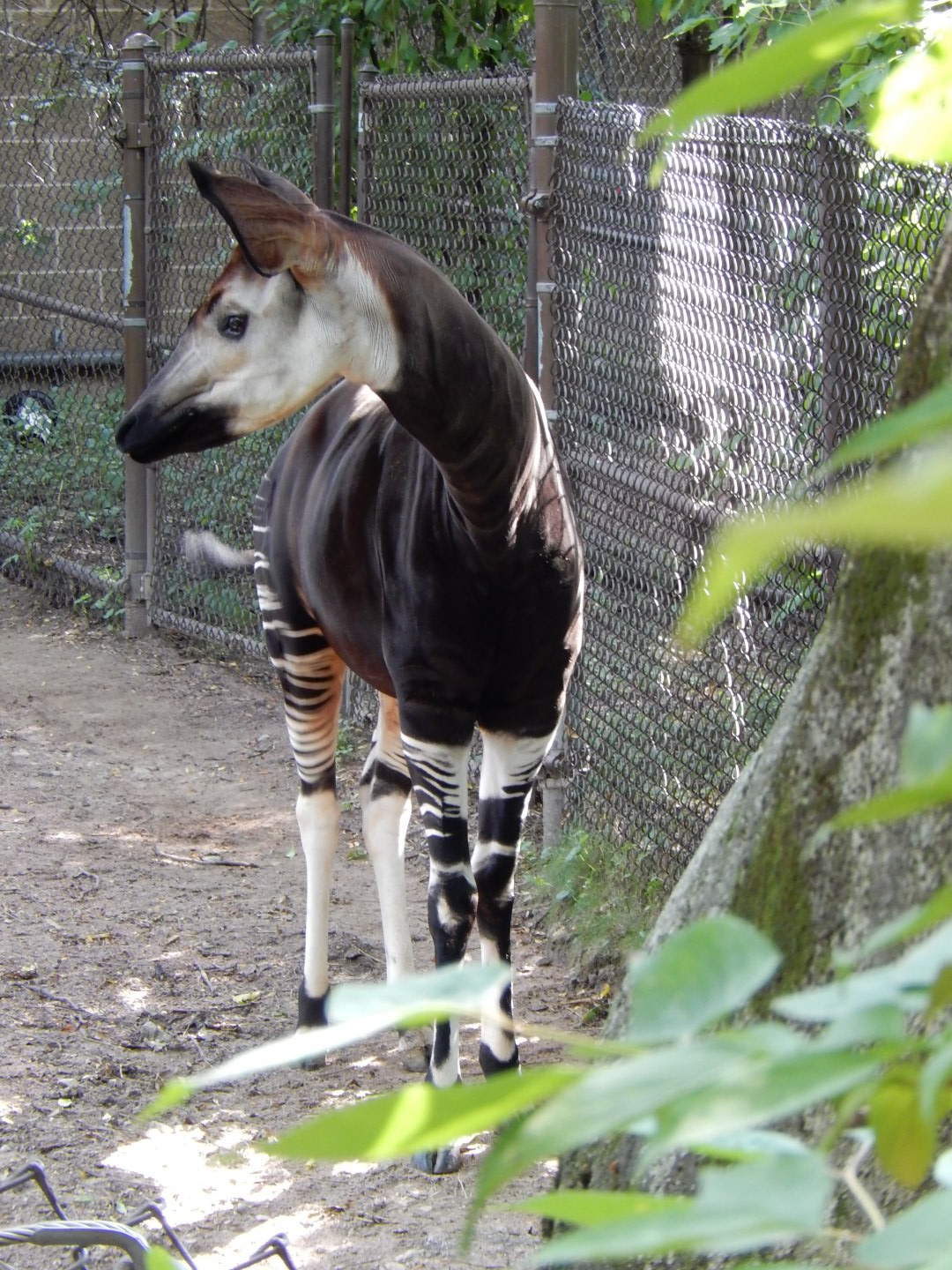
Habitat Africa! The Forest - Across from the savannah is the more successful Habitat Africa! exhibit. You move along a winding path through the "jungle," crossing a river and reading several interesting facts about the forest people. Soon, the first exhibit for the okapi is seen. With the exception of the visible chainlink fence, it is a great exhibit. Next door is a duiker exhibit of the same quality as the okapi exhibit. You then enter an immersive African rainforest building. Exhibits for dwarf crocodile, red duiker, chameleon, and snakes are seen here. The indoor okapi pen can be seen too. Once outside, you come across a second okapi exhibit. It is the same quality as the first enclosure, but a bit smaller. I believe I saw a third exhibit behind this enclosure as well. You then go down a path that leads to the end of the Forest. Originally, there was a path that took you to the forest buffalo and red river hog facilities, but it was closed down. The buffalo went to a different zoo, and the hogs were relocated to a different exhibit in the zoo, but I couldn't find them.

Great Bear Wilderness - This brand-new complex opened in 2010, but is overall average. Once again, the exhibit starts strong with a spacious American bison meadow. The neat thing about this single enclosure is that it goes over the visitor pathway (and entrance to the area), forming a sort of bridge to another part of the exhibit. And an added bonus, the sound of a bison stampede can be heard underneath the bridge! Before going down the main trail, there's a village with the Bison Prairie Grill restaurant, and the Bear Crossing gift shop. You then leave the village behind as make your way down the path. The first exhibit to be seen is a small bald eagle aviary, which is grassy and has a large tree in the middle. A decent exhibit. Next, is a really good gray wolf exhibit. The woodland habitat is large, and makes you feel like you're truly in the world of the wolf. There are plenty of cool interactive stations that are wolf-related, too, like the room where you listen to constant howling in the dark. Then, comes the namesake bears. Three identical exhibits have got grass, a few trees, rocky walls, and deep pools, two of which have underwater viewing. The other exhibit has an up close view into a den, like a hibernating bear would have. The exhibits are an improvement over the concrete grottoes (never saw them, but looked bad), but could've been better. It was a thrill to be there during the bear feeding, however - they came right up to the glass! Overall, "Great Bear Wilderness" is probably more like "Good Bear Canyon."

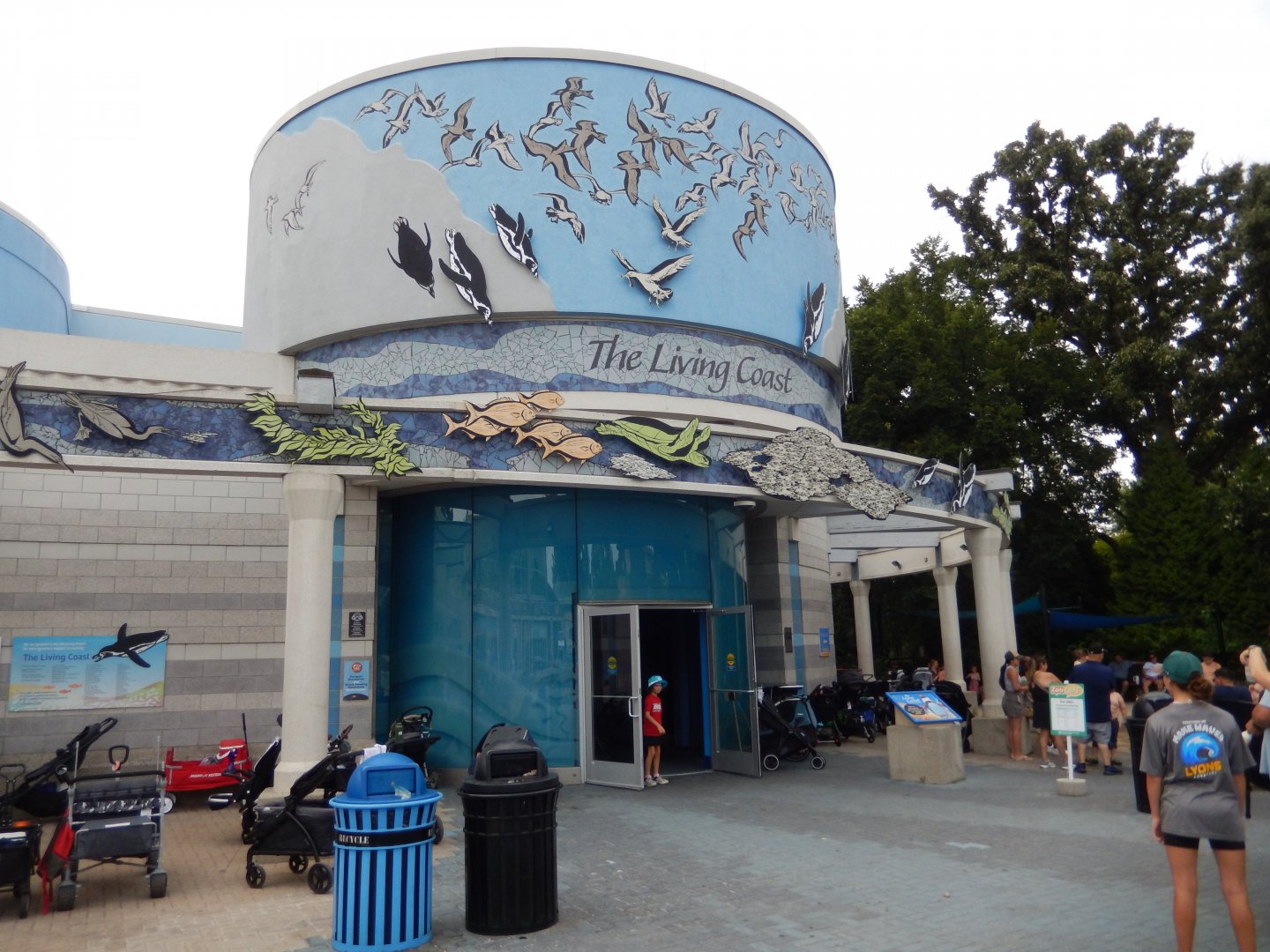
The Living Coast - This is one of four major immersive buildings (ones that have been drastically transformed from their original form). People walk along on a squishy floor (nice touch!) for most of the trip through the building. The first tank is home to freshwater fish, like large and smallmouth bass, among others. Then, a focus on the ocean begins to take shape. It begins with a barren tank for rays and some more fish, followed by a jellyfish display, and another tank for leopard shark and some more fish. It is the best fish tank with enormous rocks and tall seaweed plants growing. Then, the coast comes into view with a neat bird display. Species include Humboldt penguins, terns, and more species that I don't recall. The habitat has a large rocky wall with holes for the flying birds to nest in. Though the exhibit is good for these birds, the penguins are reduced to a small amount of land and a somewhat small pool. Perhaps the best part of the exhibit is that people view the birds from a shipwrecked boat. The exhibit finishes with a cave full of tarantulas, snakes, and vampire bats.

Baboon Island - Guinea baboons have a good-sized exhibit, but the fact that it's all concrete for the surface, except for some large logs, doesn't really appeal to me in my opinion. If there was some grass on the flat parts of the exhibit, then it would be better.

The Swamp - The original primate house. In 1996, it got a massive renovation. And now, it is what it is today: an immersive powerhouse. People walk on another squishy pathway as they wind their way through the wetlands. The first habitat is home to some birds (little help with the species), and some displays of venomous snakes. Next, a boardwalk overlooks a pond of ibis, and one of two American alligator pools. This gator pool, along with the other next door one, are identical in quality (average) and size (between small and medium). After that, a shack designed area has a multitude of invertebrates, such as the walking stick, black widow spider, and grasshoppers, some amphibians, and two exhibits for rats. I'm not sure how I would rate these individual exhibits. The last display of The Swamp is more Illinois based. The first exhibit has an average exhibit for ducks, followed by a rocky below-average river otter exhibit, and a too-small snapping turtle pond. Of the four immersion powerhouses, this one is the best one in my opinion.

Tropic World - Ah, the infamous rainforest house! This enormous indoor primate display opened in the 80's. The first display is the smallest of the three and is for South American wildlife. Species here include capuchin monkeys, spider monkeys, squirrel monkeys, a Brazilian tapir, and a giant anteater. The second area of the building is the home of Asian animals. Gibbons and small-clawed otters occupy a much bigger space in the room compared to the small, horrible island for orangutans. The last room is the best one. One side of the room has mandrills, colobus monkeys, a pygmy hippo, and a couple of other monkey species. The other side is where the notorious gorilla exhibit is. Here's what I say about this great ape exhibit: if this is just the indoor area and there's an outdoor exhibit too, then this exhibit's average. However, because this all the gorillas have to live in, then it's below average. At least it's much better than Buffalo's all-indoor room. Tropic World, like some other exhibits in the zoo, has potential. It just needs to replace the concrete ground with something like wood chips, and probably make the fake trees have some vegetation.

Pachyderms - Black rhinos have a nice exhibit that is half grass, half dirt, along with a mud wallow. A pygmy hippo has a small not-so-great exhibit with only a mud wallow for entertainment. The Nile hippos have the best exhibit of the animals here, with a large pool, and a nice grassy shore to rest on. Lastly, a Brazilian tapir has the lushest exhibit of all the residents in this area. African elephants used to live here as well. When I came here last year, the single female, Joyce, looked like she had an average exhibit. The indoor part of the pachyderm house is now open, but I didn't have time to take a look inside.

Fragile Desert - This is one of three sections of the Fragile Kingdom part of the zoo, and another immersion powerhouse. You travel underneath a white tent-like ceiling for most of the journey. The first exhibit is for a colony of meerkats. It may be all indoors, but its quality makes up for it. There is a fake termite mound, a whole lot of space, and a rock mound with holes in it, so the critters could get some privacy. Next door is a mixed species exhibit for bat-eared fox and African crested porcupine. A neat thing about the exhibit is that it seems to rise up, and the visitor path slopes down. Underneath that exhibit is the area for a naked mole rat colony. What a nice touch! In the next room, you cross a bridge that separates two species: the rock hyrax and the caracal (not on exhibit due to the birth of kittens). The exhibits have a rocky wall with ledges to rest on, along with a concrete floor - identical and average. Now the pathway converts into a cave like setting. The first exhibit has a facility for aging and injured meerkats. It was the former home of the dwarf mongoose. Next is a roomy excellent display for fennec fox. The final exhibits are black-footed cat.

Fragile Hunters - It may house the most popular animals in the Fragile Kingdom, but the exhibits are below-average to me. An Amur leopard, African lions, sloth bears, an Amur tiger, and a snow leopard all have grassy grottoes with little detail to them.

Fragile Rainforest - The weakest of the four immersive powerhouses. You start off with an above-average display for binturong (those animals stink!), small-clawed otters, and Prevost's squirrel. An okay exhibit for burmese python is around the corner, along with two cat exhibits. The first is an average one for clouded leopard, and the other is a weak one for fishing cat. The exhibit finishes off with a snake and bird exhibit.

Pinniped Point - I wasn't a big fan of this exhibit. Gray seals, harbor seals, and California sea lions have horrid exhibits above the water, but when you go to the underwater viewing, everything is uphill. The visitor area looks a lot like the dock of a harbor, and the sea lions frolic and play right by the glass!

The Seven Seas - The bottlenose dolphin aquarium. I have no opinion about the exhibit quality, but I will point out that is a little small for seven dolphins (and one on the way) to live in.

NOTE: There are two areas of the zoo I didn't see due to time restraints: the Feathers and Scales building, and the Reptile and Bird building.

Overall: Brookfield Zoo is definitely among the best in the country! Of the 12 zoos I visited, this one is #2 on the list; only Columbus beats Brookfield. The future of the zoo looks very bright as well. With the new additions of an outdoor gorilla exhibit, a new elephant center, and a new Asian section, among others, this is a zoo to look out for!
 
I really enjoyed your review, as it was well-written and extremely informative. Thanks for posting it! Brookfield is a huge facility that takes many hours to see and I personally rank it in America's top 15 zoos. The collection is massive and there is a great representation of many continents and species, but I feel that the exhibitry is not as impressive as it should be for a zoo of its size and fame.

A few comments:

- Is there a sign where the red river hog/forest buffalo trail was? Is there not another species in that exhibit?

- Did you see the old concrete grottoes for the bears? Is that area closed off to the public or are there any animals in the old bear grottoes?

- Did you also skip the children's zoo?

- How long was your visit?
 
Great review. I just visited this zoo for the first time in early July, and think you descibed it perfectly.

I also have a few comments:

- I enjoyed the hoofstock exhibits mainly for one reason, they have two zebra species right next to each other. Maybe you didn't notice, but I think it makes for a fairly interesting exhibit.

- I think you desribed the feel of Habitat Africa The Savannah pretty accuratly, except that the aardvark exhibit was poor. I though it was pretty nice, especially with an outdoor area. I don't think they are extremely active creatures. Lincoln Park's is better though.

- When I was there, the duiker inside Habitat Africa The Forest was a blue duiker, instead of red.

- Birds in the Humboldt penguin exhibit were Inca tern and grey gull.

- I think the first swamp exhibit had snowy egrets, little blue herons, and a third heron (green heron?)

-I believe that alligator snapping turtles prefer tight spaces, so I think the exhibit is actually decent for them.

-There were dwarf mongooses in there when I went! I like this idea better, as it was too small for the mongooses, but probably better for elderly meerkats.

-The only reason you should have gon in Perching Birds building would be for the red bird-of-paradise. Other than that, pretty boring.

These comments were not meant to detract from this excellent and well-writted review. Did you go to the Lincoln Park zoo or Shedd Aquarium while in Chicago?

@snowleopard: When I went, the old bear grottos were open to the public, but empty. ([ame="http://www.flickr.com/photos/nvarvel/5947795652/in/set-72157627217387844"]Unused Grotto | Flickr - Photo Sharing!@@AMEPARAM@@http://farm7.static.flickr.com/6123/5947795652_e717e00a1d_m.jpg@@AMEPARAM@@5947795652@@AMEPARAM@@e717e00a1d[/ame])
 
Thanks for the replies, guys!

@snowleopard: There were no signs at all. The trail to the exhibits was just barricaded off. I didn't purchase a pass for the zoo extras (Children's Zoo, Dolphin Show, etc.), so I didn't go to the children's zoo. My visit lasted for about seven hours.

@KCZooFan: Yeah, I understand there's both Grevy's zebra and Grant's zebra there, but only Grant's zebra were on display. As for the duikers, it said on the sign that the female red duiker is new and getting used to her new habitat for breeding. A male is supposed to arrive soon. The blue duiker was outside, however. You think they may rotate? Thanks a lot for all the species list too! I didn't have time to visit Lincoln Park Zoo or Shedd Aquarium during the weekend. I do want to go sometime in the future however!

@Team Tapir: Too bad about the bear grottoes being demolished eventually. I understand they may take up space, but they could be a nice historic element to show off.
 
@KCZooFan: Yeah, I understand there's both Grevy's zebra and Grant's zebra there, but only Grant's zebra were on display. As for the duikers, it said on the sign that the female red duiker is new and getting used to her new habitat for breeding. A male is supposed to arrive soon. The blue duiker was outside, however. You think they may rotate? Thanks a lot for all the species list too! I didn't have time to visit Lincoln Park Zoo or Shedd Aquarium during the weekend. I do want to go sometime in the future however!

I didn't see a red duiker outside, just yellow-backed. I am a little angry that I missed that, as I've never seen one before! Brookfield was a good choice, as, while both Lincoln Park and Shedd are great institutions, Brookfield is just miles ahead of both of them. As you live only 2 hours? from Chicago, I'd think you'd be able to make it down there somewhat often. Great review though!
 
A great review matey,

Tell me was the silverback still on display, when l was lats there a couple of years back he was suffering terribly from arthritis and on allot of medication for pain ect.
 
Yesterday was my 3rd visit (the others being 2010 and 2011) to Brookfield Zoo, and it certainly was a blast! A lot has changed at the facility in the last couple of years. I realize that most of these have been described in the regular Brookfield Zoo thread, but I thought I'd just gather them in one place again, along with some of my opinions. The updates will be described in the order of my review.

Australia House - New decks were added in front of two of the four outdoor habitats: the wallaby/kangaroo enclosure, and the awesome kangaroo/emu open woodland habitat. Inside, the lighting for the wombat and bat enclosures changed from dim regular lighting to pink and dark blue in color. My favorite part of this complex was seeing an active wombat just inches away as it climbed on some rock next to the wall were I was looking. Also, I saw four echidnas in their habitat; last couple times I saw just a pair that would waddle the perimeter of the exhibit, but this time the four monotremes were climbing on logs and rocks - the most active I've ever seen them.

Hoofstock Row - This area is the same as the previous two visits: a row of similar size and quality enclosures that are average at best. The species count on my visit was: two Bactrian camels, two Przewalski's wild horses, a single Grant's zebra, and a herd of six addax; two of which were a couple months old.

Habitat Africa! The Savannah - In my review, I considered this complex average, mostly because of some of its unfulfilled potential. However, since my visit, this area seemed to receive the most changes. First, the kopje (klipspringers and indoor giraffe pens) was closed for renovation, then the African wild dog habitat was being renovated, set for completion sometime in September. Unfortunately, the renovation consists of a natural hill that sloped down towards the public now being replaced by a brick wall to form a deep moat. A decrease in quality and space for such a unique carnivore:(! Next door, the waterbuck have been joined once again by ostriches and warthogs (both of which I saw in 2010, but not 2011). However, the ostriches were nowhere to be seen, and the warthogs were in a separate exhibit behind the aardvark house. I did, however, find another interesting new resident in the waterbuck habitat: a red river hog.

Habitat Africa! The Forest - As reported on here, there has been an okapi calf born a couple months ago (the latest in the Zoo's baby-boom); however, the calf won't be on display for another month because, according to a person I talked to, the mother has died and the calf is being hand-reared. Inside the building, the former red duiker exhibit is now home to red-billed hornbill, and royal antelope are due to join the exhibit soon. Back outside, the path to the buffalo and red river hog exhibits has been reopened. The forest buffalo exhibit now holds a yellow-backed duiker, and the red river hog exhibit remains just the same as I last saw it in 2010.

Great Bear Wilderness - While their home is being renovated, the African wild dogs are staying in what is normally an off-display area for the Mexican gray wolves. I know the wild dogs aren't part of North America, but boy do I wish they could stay there - the exhibit is much better than what awaits them back at the Savannah. Other than that, I didn't notice any other major changes here.

The Swamp - Whether it's just to add diversity to the animal collection or the beginning of a new South American complex, either way this building has seen some of its Florida species replaced by South American wildlife. Orinoco crocodiles have replaced American alligators, piranhas were added, and a row of tanks that once held venomous snakes from the Southeast U.S. are now home to lizards and snakes from South America. Unfortunately, I don't recall the species besides some cobra species and a large monitor lizard. Also, most of the shack, which holds invertebrates, was closed down; only about 5 tiny tanks for black widow spiders, centipedes, and others remain. The rest of the building still maintains its Florida-theme.

Tropic World - Many animals have moved out of here: the lowland tapir and pygmy hippo have moved to new homes in the Pachyderm House (a big improvement:D), and I believe the mandrills went to a different facility. In South America, the giant anteater and capuchin monkeys now rotate everyday because they don't get along; the capuchins were out on my visit. Also, a small island right in front of the viewing area holds a pair of cottontop tamarins - they were just a few feet away from the crowd! Then, they climbed all the way to the top of their tree to rest. In Africa, the mixed-monkey habitat is down to just two species: colobus and (I believe) red-capped mangabey.

Pachyderm House - As stated above, the lowland tapir and pygmy hippo have moved from their previous Tropic World homes to the habitats that border this building. One hippo occupies the habitat that used to be home to a Nile hippo, and the other still lives in the tiny poor pen next door. It was, however, a thrill to be just a few feet away from the little hippo as it walked along the edge of the pen:D! Finally, a breeding pair of Baird's tapir now occupies the habitat in between the lowland tapir and pygmy hippo.

Fragile Desert - The mixed-species habitat that held African crested porcupines and bat-eared foxes now holds just a porcupine. The bat-eared fox was found in the excellent fennec fox habitat, and the fennec fox could be seen in a small den. Also, the cave that held sick and injured meerkats on my last visit was being renovated; dwarf mongoose will live in there once again. Lastly, the caracal pit (across from the hyraxes) was empty again - anyone know if the caracals were shipped out?

Fragile Hunters - Nothing new here, besides the birth of sloth bear cubs in January (who weren't out :() and a snow leopard cub (who will be on exhibit next month).

Fragile Rainforest - The mixed-species habitat that features binturongs, Asian small-clawed otters, and Prevost's squirrel is still the best habitat in what is, in my opinion, a weak complex. This time, the otters and squirrels were out and about, and the binturongs weren't around. Ironically, on my last two visits, the binturong was always out, but not the otters and squirrels. Lastly, the aviary at the end of the complex (drat - forgot the species again!) was being renovated.

Pinniped Point - Nothing new here - same old same old.

Seven Seas - Besides the birth of two dolphin calves soon, no news.

NOTE - I didn't get a chance to see The Living Coast, Baboon Island (I thought I heard that it's under renovation for Hamadryas baboons to replace Guinea baboons), the Reptile and Bird building, or Feathers and Scales.

HIGHLIGHT OF THE DAY: After missing out on seeing okapis in St. Louis, it was thrill to see my favorite animal once again! At first, I got nervous when the first habitat was empty, and the gate to the habitat behind it was opened. But then, in strolled the awesome okapi! It stood for a while browsing from the trees before it strolled back the way it came.
 
Thanks jusko88. :)

Good to hear about the caracal kittens. The caracals were off-display on my 2011 visit as well due to the birth of kittens.
 
For the first time in 4.5 years, I returned to Brookfield Zoo a couple weeks ago! :D I had a great visit, seeing the establishment in a different season other than summer, noting the various changes, and of course, seeing some cool animals. Here's a little trip report:

Australia House - I've always adored this complex. Not only is the collection of Aussie animals very impressive, but the attention to details are superb. From the signage to the theming of the visitor walkways, this is some of Brookfield's best immersive detailing. The first room is brightly lit, and is home to various reptiles and amphibians in solid exhibits (a couple standouts I remember are cane toad, water dragon, and woma python), and an aviary at one end of the room that features colorful birds (no more echidnas) and a naturalistic outback-like appearance - I enjoyed trying to find all six species. Things get even better in the nocturnal section, with the large, nice wombat habitat (featuring a specimen trying to get comfortable in its nest box), the pair of sandy pit-like exhibits for five or six(!) echidnas (formerly home to some of the wombats), a large kookaburra/tawny frogmouth habitat, and a cool walkthrough bat habitat. Outside, the only major change was the unfortunate loss of the cassowary, but it was nice to see its replacement species (burrowing geese) for the first time ever.

Hoofed Animals
- To be honest, I'm not a huge fan of this row of paddocks. By no means awful, just adequate, generic, and nothing more. The only notable changes from my previous visit were no more Grant's zebra (the last one passed one some time ago, and now addax occupy the exhibit), addax were off-display due to the cold, and I did venture further down the path and saw the Grevy's zebras for the first time. On a side note, the Bactrian camels and Przewalski's wild horses looked cool in their thick, winter coats.

Habitat Africa! The Savannah
- I used to think of this complex as average. However, going through here again, I actually am starting to see it in a little better light. The giraffe and African wild dog habitats are still excellent, but the kopje building really grabbed my attention this time around. Not only are the educational and immersive features well-done, but I found the exhibits generally better than I recall before. The cave featuring dwarf mongoose, lizards, and two tortoise species is pretty cool, the free flight aviary is impressive, the klipspringer habitats look fairly natural though a bit too small, and even the average-sized indoor giraffe pens look nicely designed. Recent changes include no more warthogs, the closing of the aardvark house, which despite being too small for them, is still an unfortunate loss; and apparently the mixed-species habitat no longer houses waterbuck. It'll be neat to see what becomes of the exhibit, though I personally see this as an opportunity to move the zebras down here along with mixing in the gerenuk and dik-dik (both yet to be seen by me) and maybe adding a bird species or two, an improvement over their current exhibits and fulfilling this exhibit's full potential.

Habitat Africa! The Forest
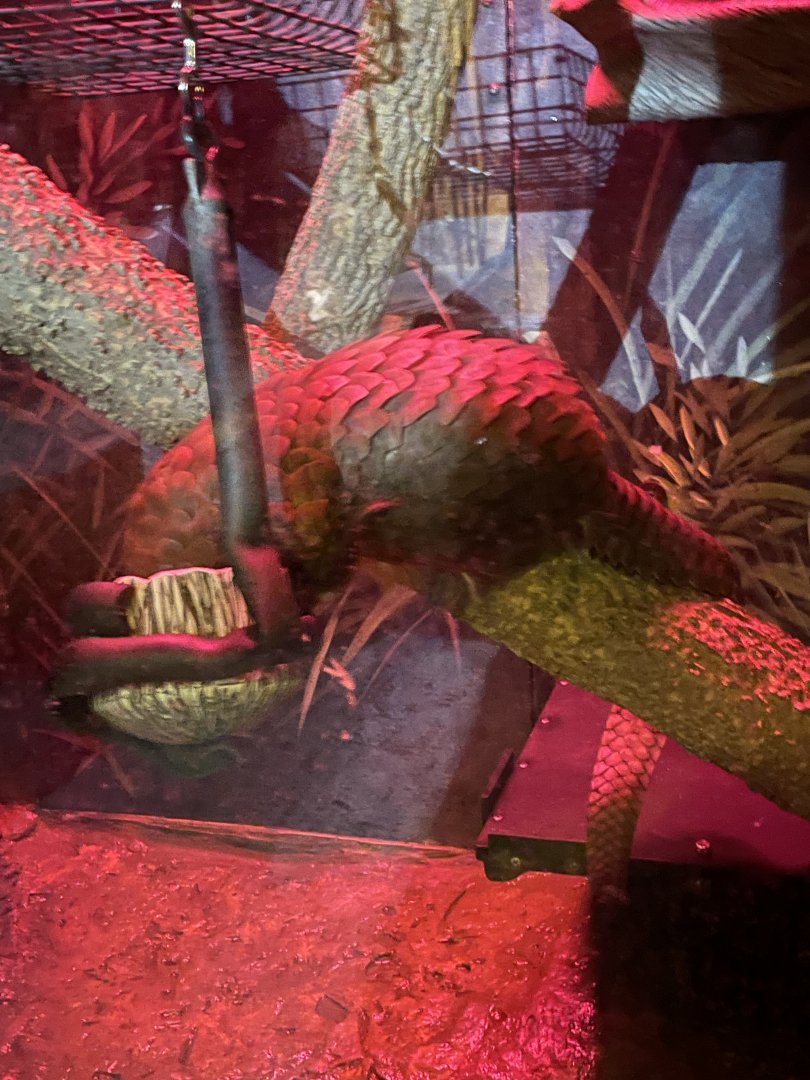
- Ah, my first sighting of the pangolin! It was a real treat to finally see this recently-introduced species - probably the highlight of the entire visit. Another nice change I saw was the addition of an outdoor red-flanked duiker exhibit, and it looks like it would be a nice, lush habitat during the warmer months. There were a few disappointments I noticed though. Thanks to the bare winter trees, I could now see the full outline of the first okapi exhibit, and it's quite smaller than I remember; the pangolin exhibit is also a bit on the small side and so-so quality in my opinion; the trail to the red river hog and duiker exhibits was closed (to be fair this could've just been a seasonal happening); and the new outdoor duiker exhibit is completely enclosed in chain-link. So, while my opinion on this area has decreased a bit, I still feel it's a nice section. After all, what other zoo exhibit complex highlights okapi (my favorite animal) as its star? :p

Great Bear Wilderness
- The main update I noticed is one of the bear exhibits was undergoing renovations during my visit. The grizzlies were dozing by the window in one habitat, and the polar bears were in the waterfall habitat. Hudson and Nan the polar bears were put together for the day, and it was interesting to watch the tense meeting between the bears, as they eventually tolerated one another's space in the exhibit. This 2010 addition seems to get a bit of a mixed response on here. Personally I'm kind of stuck in the middle in terms of opinions on this complex. Most of this complex is nice as on one hand, the large bison habitat is solid, and the up-close views and the way the space goes over the visitors is cool; the bald eagle aviary is nice though small; Wolf Woods, the Mexican gray wolf habitat, is a fantastic, naturalistic habitat and featured an active pack that seemed to be digging a new den; and the educational signage is impressive with its ties to Native American cultures. However, what brings this complex down is the trio of bear habitats - they're generally described as just modern-day grottoes, and I agree - they looked especially disappointing and barren on a wet winter's day.

Tropic World
- There were a few nice additions and memorable moments I saw here. In South America (this is now the best of the three rooms in my opinion), a sloth has a resting area on the back wall, along with a vine to climb over to the Goeldi's monkey island next to the visitor path; a pair of giant anteaters was wandering the ground area - I'm always so intrigued by those creatures; and several monkey species were climbing and jumping all around the fake trees. In Asia (probably the weakest area), there is a new slow loris habitat that was mostly covered, but looked nice from what I could see. Finally in Africa, the spot-nosed guenons and colobus monkeys were sticking together in their troops and were a joy to watch. Next door, there were two young gorillas that were pretty active. One even climbed wadded through the water and climbed on the mesh below the bridge, while the colobus watched. I admit, I do feel bad for this indoor rainforest complex. I am always amazed by the size and scope of the building, the climbing opportunities and space for most of the primates, and the social interactions between the large groups of monkeys. However, I certainly agree that it is unnatural in appearance and the lack of outdoor access especially for the great apes (the unnatural orangutan island, where I saw no red apes, along with that tiny side exhibit for the old male gorilla are especially terrible) are significant detriments to the facility; but, with the right renovation job like adding mulch, greenery that is artificial and/or able to thrive somehow, and adding outdoor spaces for its occupants especially the apes, I get the feeling that this could be a return to glory.

Pachyderms
- My visit marked the first time I ventured inside the building and saw the interior exhibits for the black rhinos and pygmy hippos. I liked the details that were provided such as the murals, fake rocks, pools, and even a few fake trees or stumps, though the exhibits were pretty cramped especially for the rhinos. Half of the building was closed off due to construction; according to a sign I saw, the building will eventually be dedicated to being a black rhino breeding facility.

Fragile Hunters
- I never was real crazy about these grottos, and they looked worse in the winter season. While I didn't see any tigers or sloth bears, I did see a snow leopard, a pair of lions relaxing by the window, and a fairly active Amur leopard.

Seven Seas
- Nothing of note here, except it's always great to see the playful, aquatic mammals cruising through their tank.

Pinniped Point - I only went to the underwater viewing part of this complex. Nothing new to report.

Clouded Leopard Rain Forest
- Once known as the Fragile Rainforest, this was another exhibit I noticed a lot of changes. To begin with, the mixed-species habitat that featured binturongs, Asian small-clawed otters, and Prevost's squirrels now holds a clouded leopard. If I remember the previous exhibit right, this is a step-up with more space and variety in terrain. The binturongs are now in the former leopard exhibit, otters are no longer in the area, and squirrels are found in the last exhibit before exiting. Another bonus is the addition of tunnels above visitors' heads for the squirrels to wander through - a clever idea for enrichment! Like the African Savannah complex, this is another exhibit complex I have a better outlook on now.

NOTE
- I unfortunately did not have time to see Wild Encounters (the newest exhibit to open since my last visit), The Living Coast, The Swamp, and Fragile Desert. I also still have never been in the Reptiles and Birds building (though I did see terrariums for Galapagos tortoises and Argus monitors from outside windows, along with a walkthrough aviary with macaw when peeking through further) and the Feathers and Scales building (though I did see the attached massive Andean condor aviary outside). On a side note, it was pretty eerie walking along the massive, mock-rock, empty Baboon Island. I look forward to finding out what its replacement will be.
 
Well long time no see, Brookfield!

It's been about 7.5 years since I last stepped foot in Chicago's younger but larger major zoo, and with everything going on lately, it's about time I made it back down to the Windy City, and see what all the commotion is. I've previously visited Brookfield in 2010, 2011, 2013, and 2018, and cherished each and every time seeing the unique species, and marveling at the blend of modern and historic areas. Until recently, it sat comfortably in my Top 10, but has since slid down a bit partly due to visiting some other impressive zoos. It's also because the Zoo has recently had a rough go of it lately, from losing a number of notable creatures with not as many replacements to compensate, to opening some new areas that didn't turn out as successful as hoped for. As much as I had great visits, I couldn't help but notice some of that decline too. However, as I'll explain below, the last few years have seen something of a renaissance for the facility.

Ever since he took the helm in late 2021, Dr. Mike Adkesson has set the stage for revitalizing the once prolific zoological park. He has introduced a number of new animals to admire, debuted a few notable projects (some of which will be covered), and brought forth a new emphasis on conservation and research ethos. All of this cumulated into July 2024 when the "Next Century Plan" was unleashed, promising the return of some iconic animals (elephants and hippos anyone?;)), and capitalizing on naturalistic habitats with creative concepts and approaches that have been seen very few times before. For me, this was almost parallel to the progression accomplished at places like Omaha, Houston, and Fresno. This was my fifth time touring the establishment, and if what I saw was any indication of what's to come, then I see a promising future and return to glory for the newly and recently renamed Brookfield Zoo Chicago.
This trip report will be rather lengthy, so I'll be splitting it into two parts. And to start out with, let's see how the new stuff (both newly opened and those I finally got around to) stacks up...


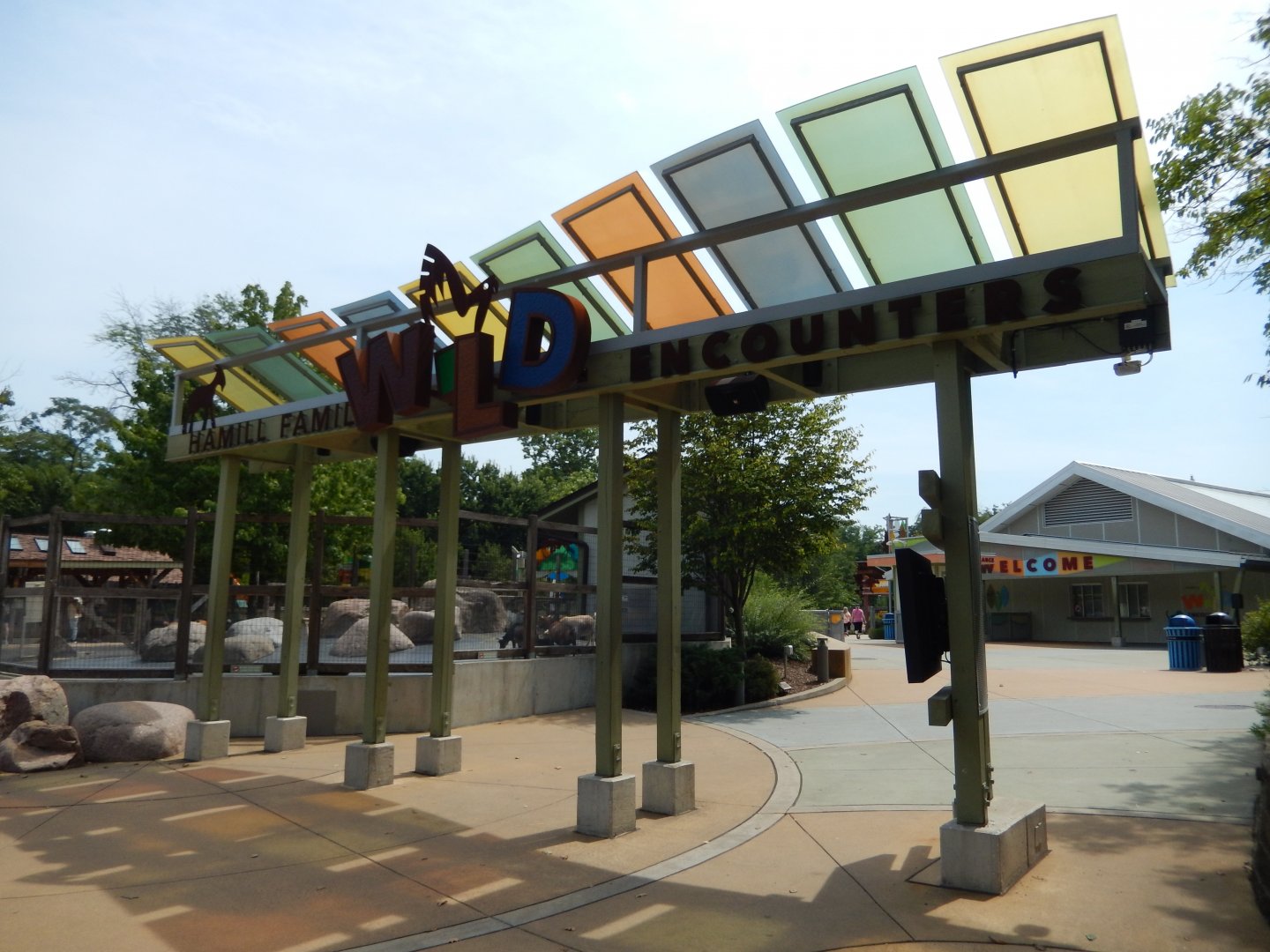
Hamill Family Wild Encounters
- This children's zoo opened in 2015, and after running out of time to see it in 2018, I got my chance this time around. I'll admit I wasn't expecting much partly based on what I've heard and seen in photos in the past. But upon strolling around this interactive complex, I found it to be a cute little area. Some components could use a few adjustments, but there were several parts I'd consider decent. The complex's main theme is, as you'd expect from the name, interactive experiences; this especially shows in the wallaby walkabout, budgie feeding aviary, and goat pen. The best feature is the walkthrough habitat for Bennett's wallabies, balancing the overgrown, bushland-like environment with a large common area for guests to congregate without overwhelming the marsupials. Other highlights include a nice enclosure for coati (formerly red pandas) with an array of branches, the signage is mostly vibrant and eye-catching, and shady pens for reindeer and llamas (though more space would be nice). On the opposite end of the spectrum, I found the goat pen to be rather small, and the budgie aviary to be minimally detailed; I understand it's easier to clean/manage with the latter, but I feel like there could be other ways around this. Also, the concrete seems pretty dominant throughout the complex, whether it be the visitor plaza or the aforementioned goat and budgie habitats.


Hamill Family Play Zoo
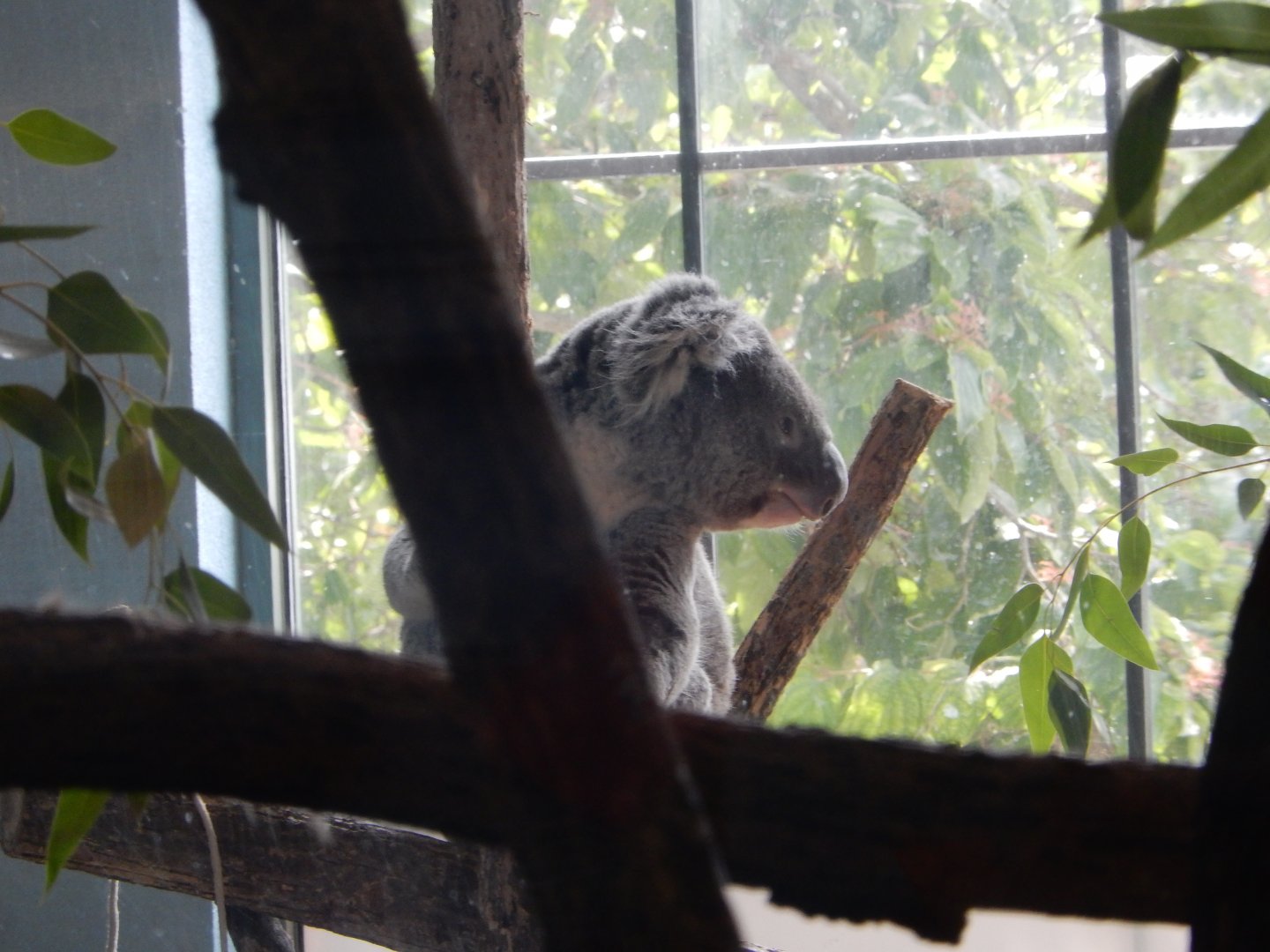
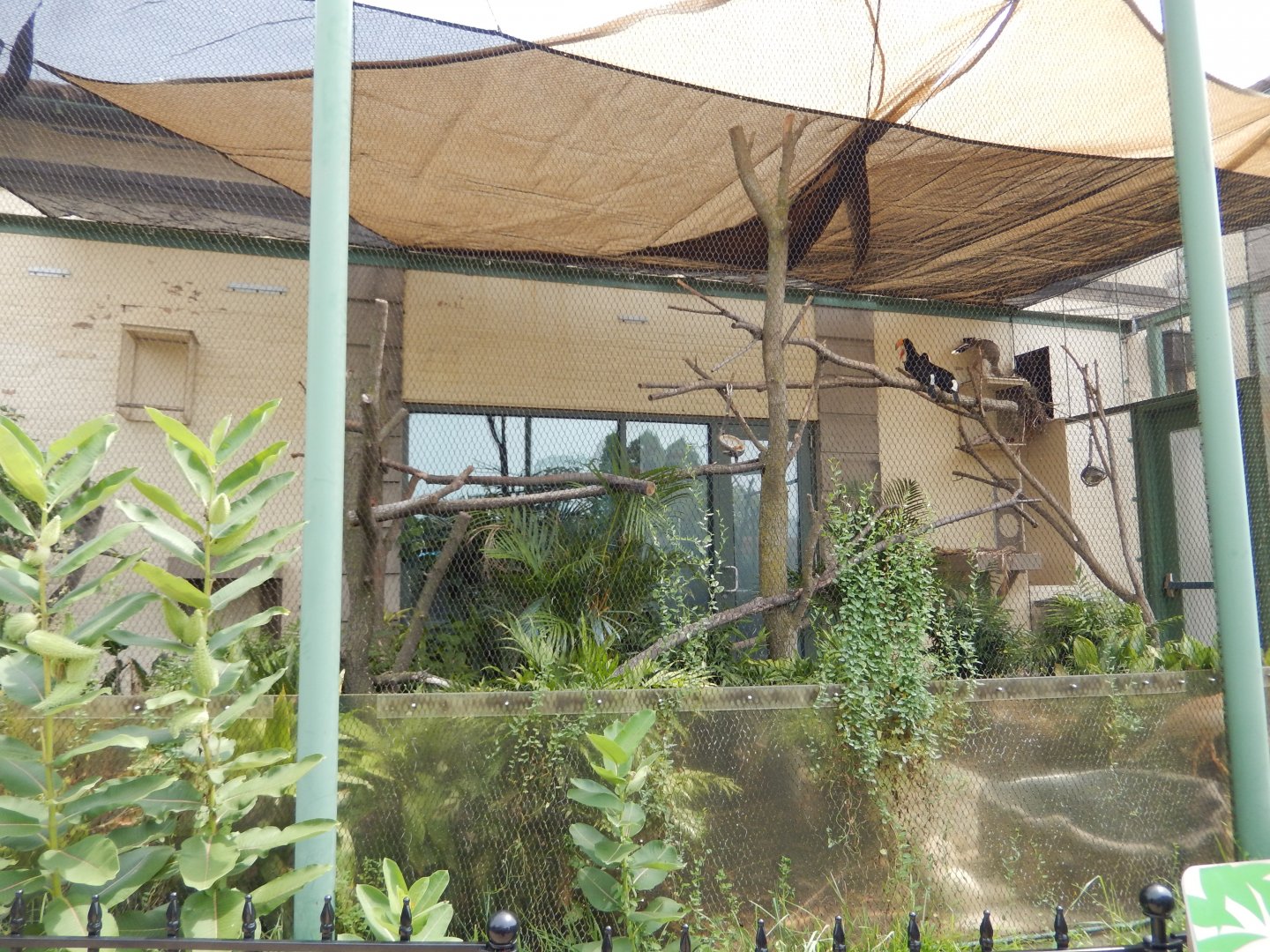
- Of the two children's zones that the establishment has to offer, I'd say this one is the less successful of the two. Of course, this is not to put it down at all, as the elements that work are solid. Here, kids are encouraged to play/learn alongside nature; for example, they can dig in the sand outside, or weave through a tree trunk to spot some fascinating odd creatures. There are also several interactive stations inside the historic building (it used to be the "Small Mammals Building" before opening in its current form in 2000), including a greenhouse, a kid-oriented animal hospital, a tiny gathering area for animal encounters (where I saw a volunteer present a rooster), and more. As for the exhibitry, it's mostly basic without much that sticks out, from the small terrariums in the tree trunk (screaming hairy armadillo, genet, and invertebrates), to a hallway with larger reptile terrariums with large species like Burmese python and turtles. Although, two stick out as quite worthwhile - the most notable being the Zoo's temporary koala visitors. Males Willum and Brumby came last year as part of the 90th anniversary celebration, and they share a pair of habitats both inside and out. Brookfield has mentioned that if this tenure goes well, then koalas will become a permanent addition - part of the upcoming Australian expansion to be precise. Outside the building, an aviary was newly renovated in 2023; this is the home of two toco toucans and a pair of red-legged seriemas. It's nicely-sized, lushly planted, and the species of choice is unique and spot-on. I had fun watching one seriema patrolling through the ferns, while the toucans were perching and grooming overhead. Correct me if I'm wrong, but was this the former raven exhibit? And since I saw one inside, do the birds rotate regularly or seasonally at all?


Hamill Family Nature Plaza
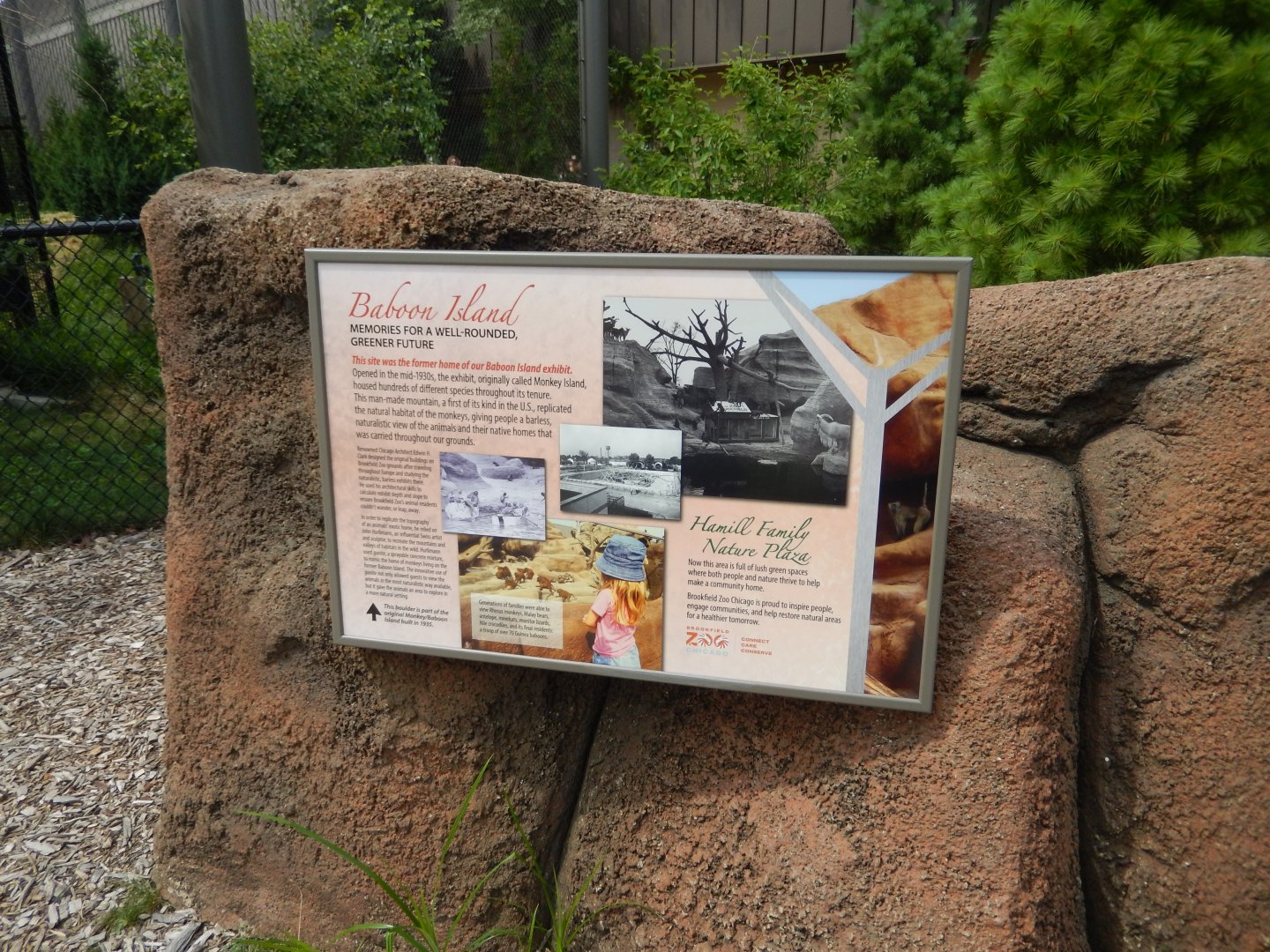
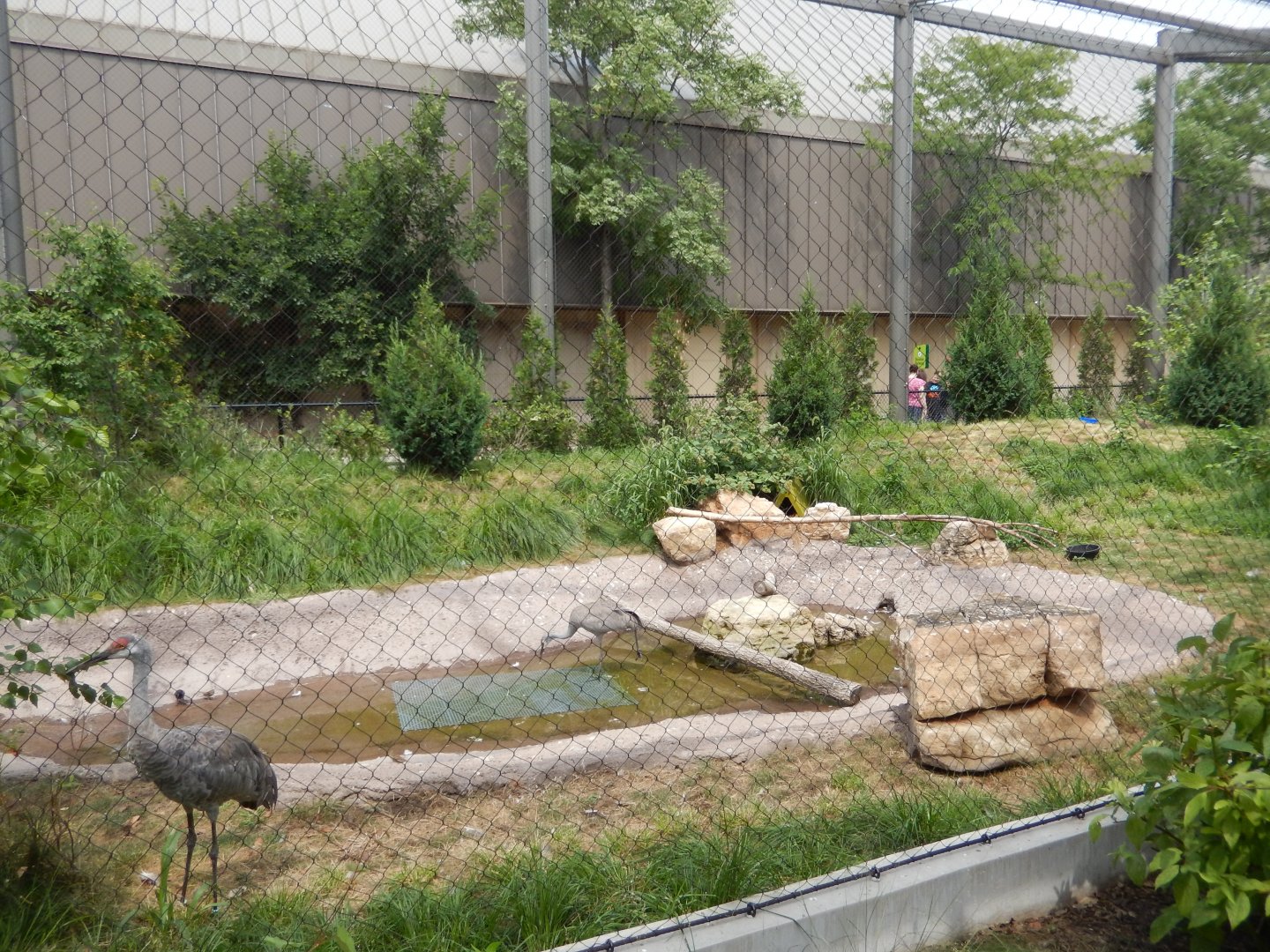
- Once upon a time, the facility maintained a huge mock-rock structure called "Baboon Island." Tons of species resided here over the years like crocodiles and sun bears, but the most iconic were the Guinea baboons, who were the last residents. I only got to see the exhibit properly twice - once in 2011 with monkeys roaming about, and 2018 when the quiet winter's day made the empty habitat rather eerie to walk past. Shortly after that, it was dismantled and replaced the following year by (drumroll :p)...a native plant garden. Though the replacement didn't exactly match watching the antics of crazy primates, it fortunately only remained like this for a few years. Starting a couple years ago, some animal enclosures were added to spice things up. In summer 2023, a series of outdoor native turtle tanks were added, and in 2024, a new aviary for North American birds was erected. Due to some circumstances, I sadly didn't get to see this section at its fullest potential, with only the aviary getting a proper analysis from me. With that said, what I did see was well-done - while the habitat looked smaller than I expected, it was naturalistic with lush grass, a few shrubs dotted throughout, a small wading pool, and even a little hill in the center to vary the terrain. Sandhill cranes, cattle egrets, and my very first greater prairie chickens share this little gem of an exhibit. It was the cherry on top that revitalized a once quiet section of the Zoo, and I'm glad it delivered!


Tropic World & Tropical Forests
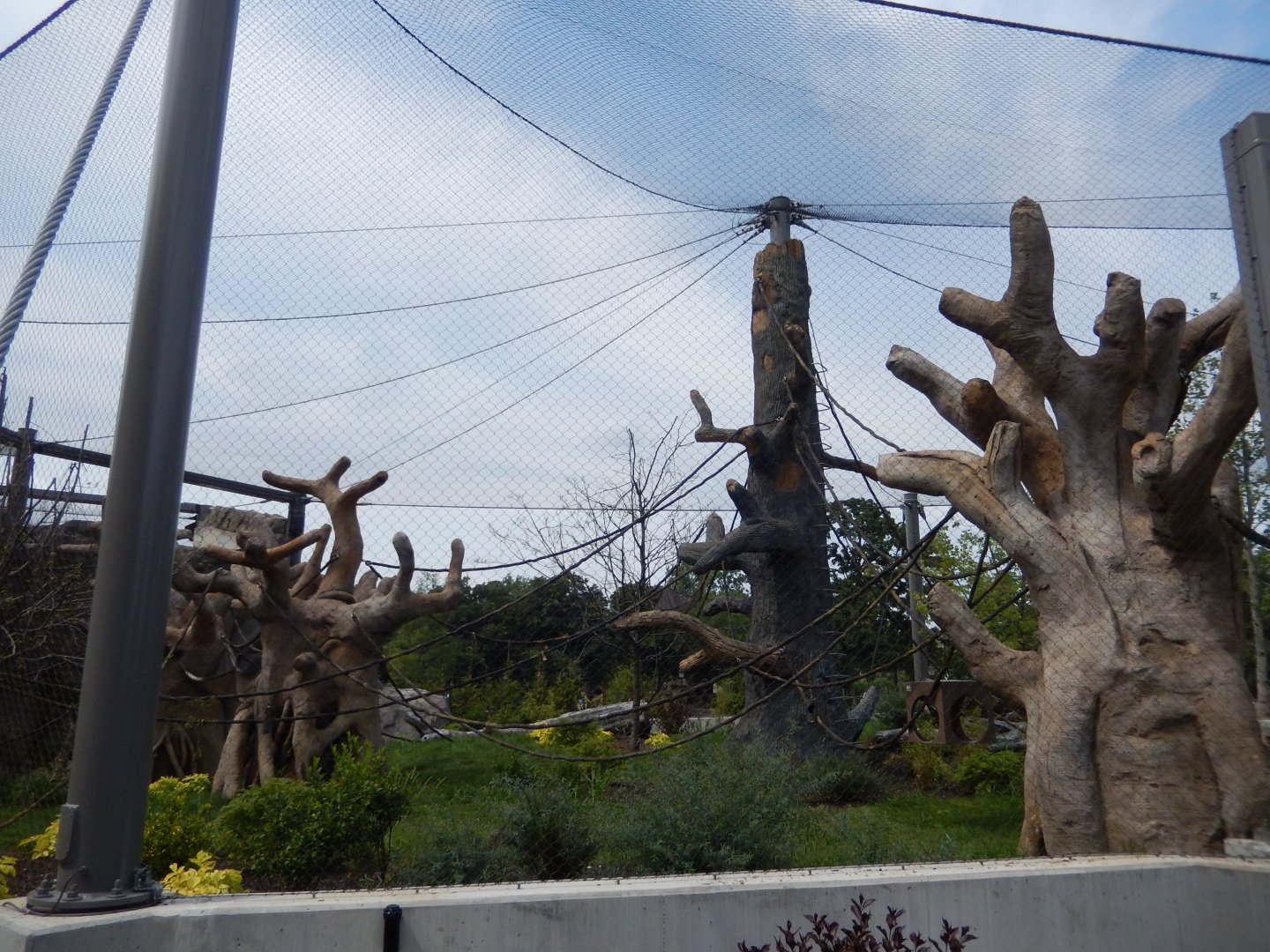
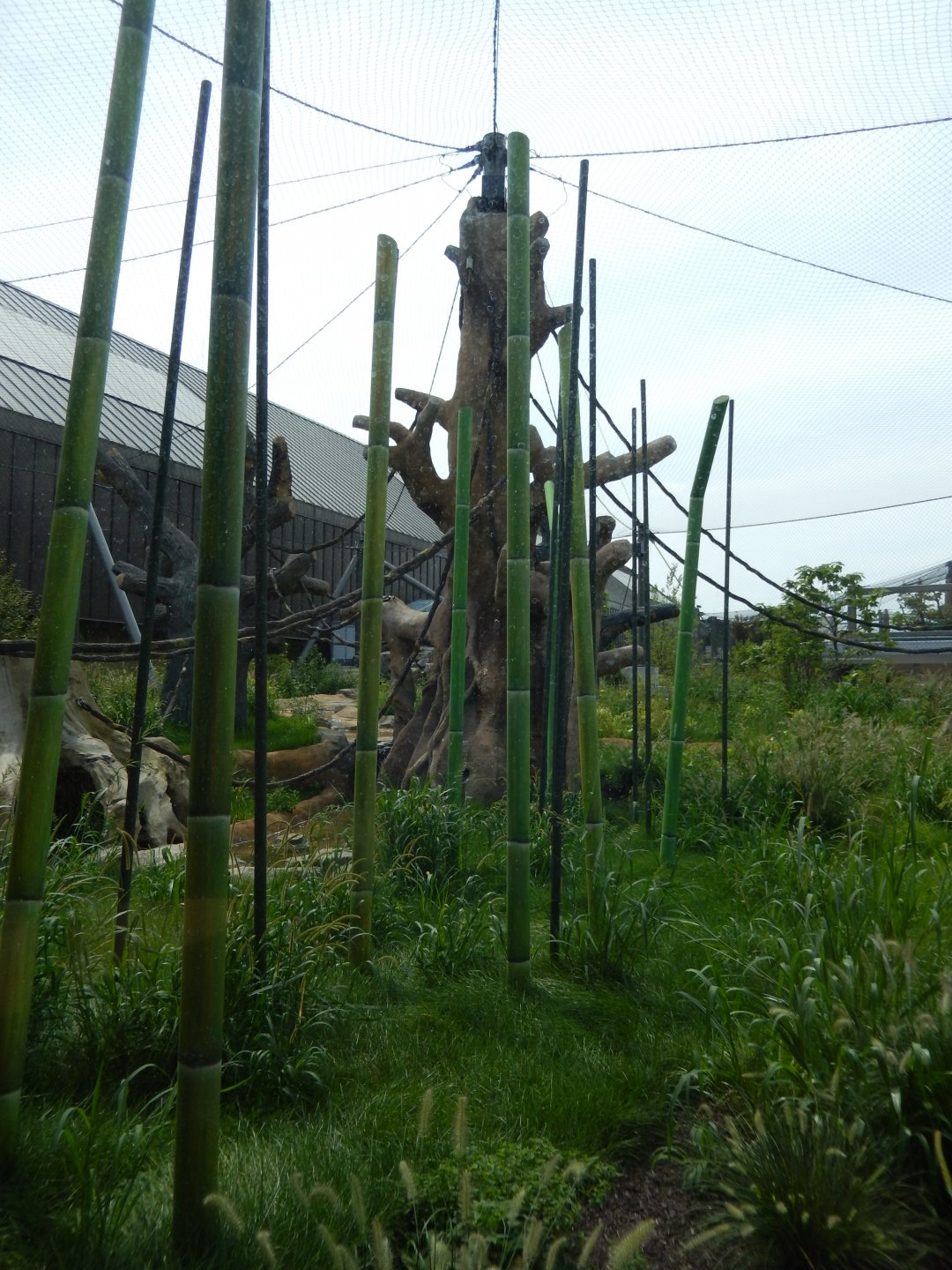
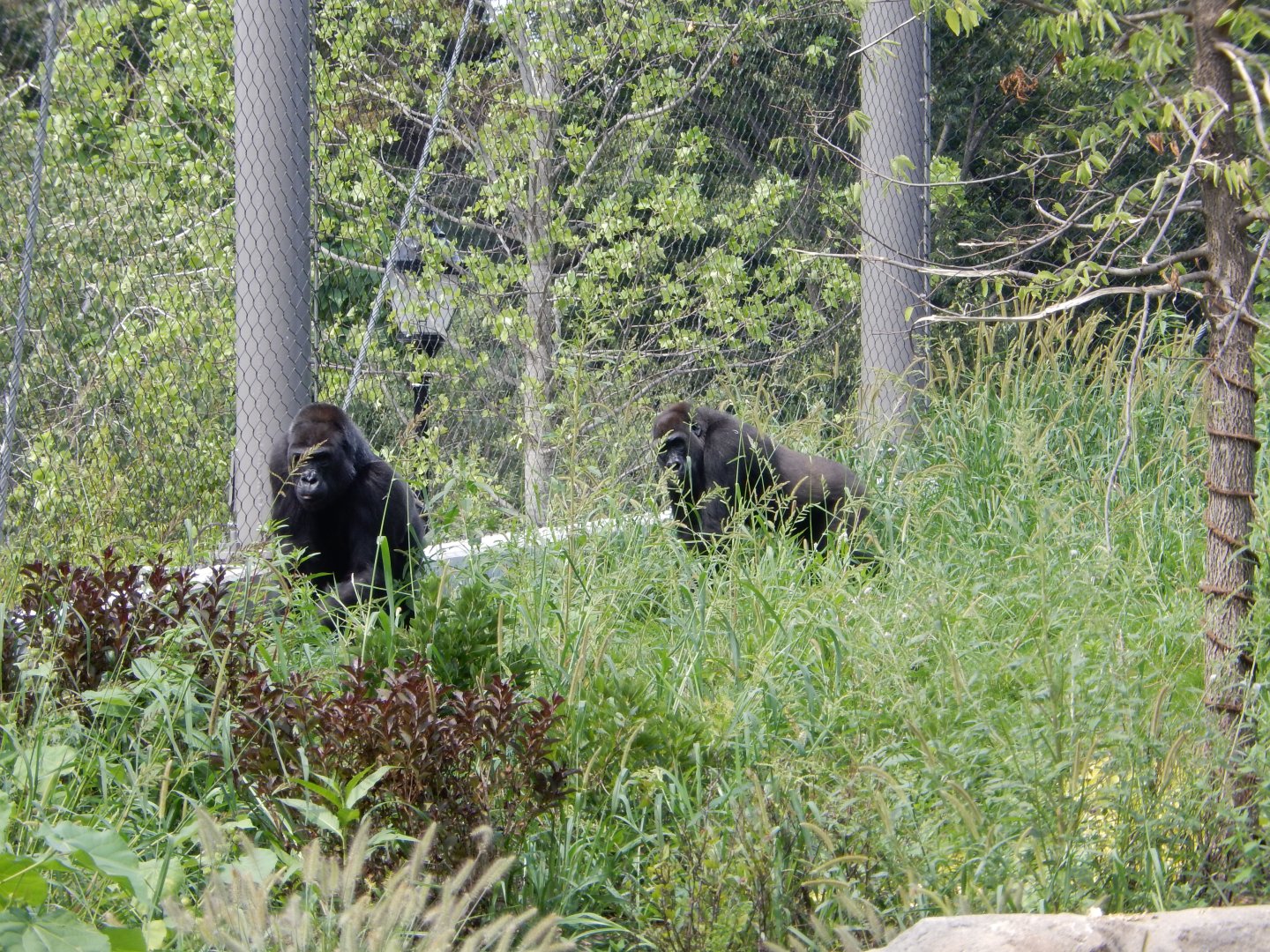
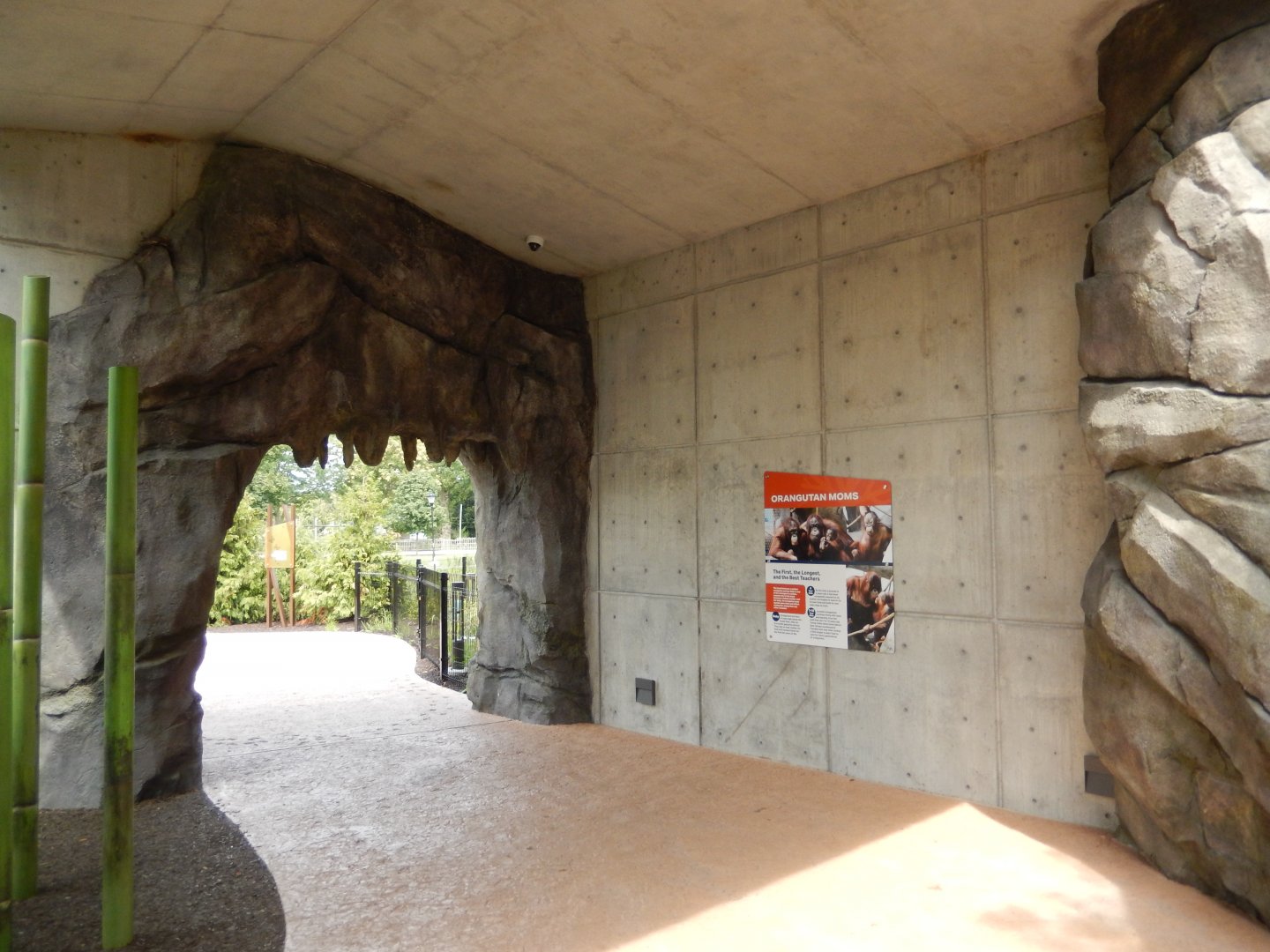
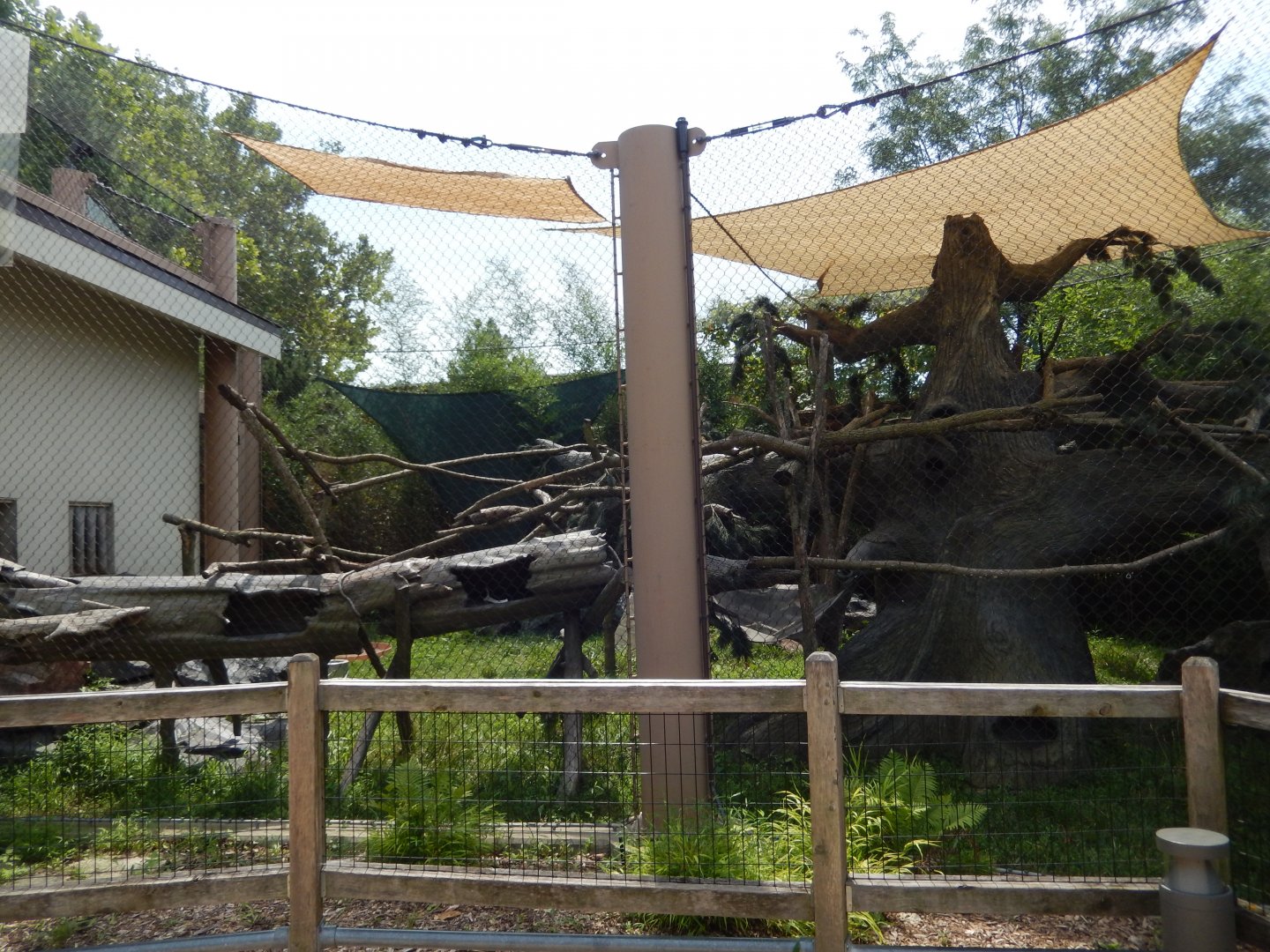
- Technically, the latter is an expansion on what was already existing prior. However, because of how significant this project is and how it's somewhat treated as a separate entity, I thought I'd compromise and lump the two together into this section. Anywho, this is the big new addition I was most excited for upon returning to Brookfield. After around 45 years of living entirely within what was the world's largest zoo building at the time, the monkeys and apes could finally breathe fresh air, feel the warm sunshine, and walk on soft grass via a quartet of outdoor habitats that just opened in July. "Tropical Forests" begins off to the side of "Tropic World" under an archway, and follows the exact same order as one would in "Tropic World;" South American monkeys are seen first (only spiders at the time of my visit), followed by orangutans and gibbons (though no one was out at that point), the pair of gorilla habitats (one for bachelors, the other a family troop), and finally the "Gorilla Conservation Center," a structure that doubles as both the gorilla holding and an educational center. All four habitats share a very similar approach - they are enclosed in mesh, provide a plethora of viewing opportunities, are quite spacious, packed with foliage, accessible via overhead chutes, and offer loads of climbing opportunities from the bamboo sway poles for Asian apes to the fake trees for South American monkeys. I can imagine once the plants grow in more (at least the ones that are protected), these spaces will look magnificent - hopefully more can be added over the course of time as long as the animals don't get too adventurous.


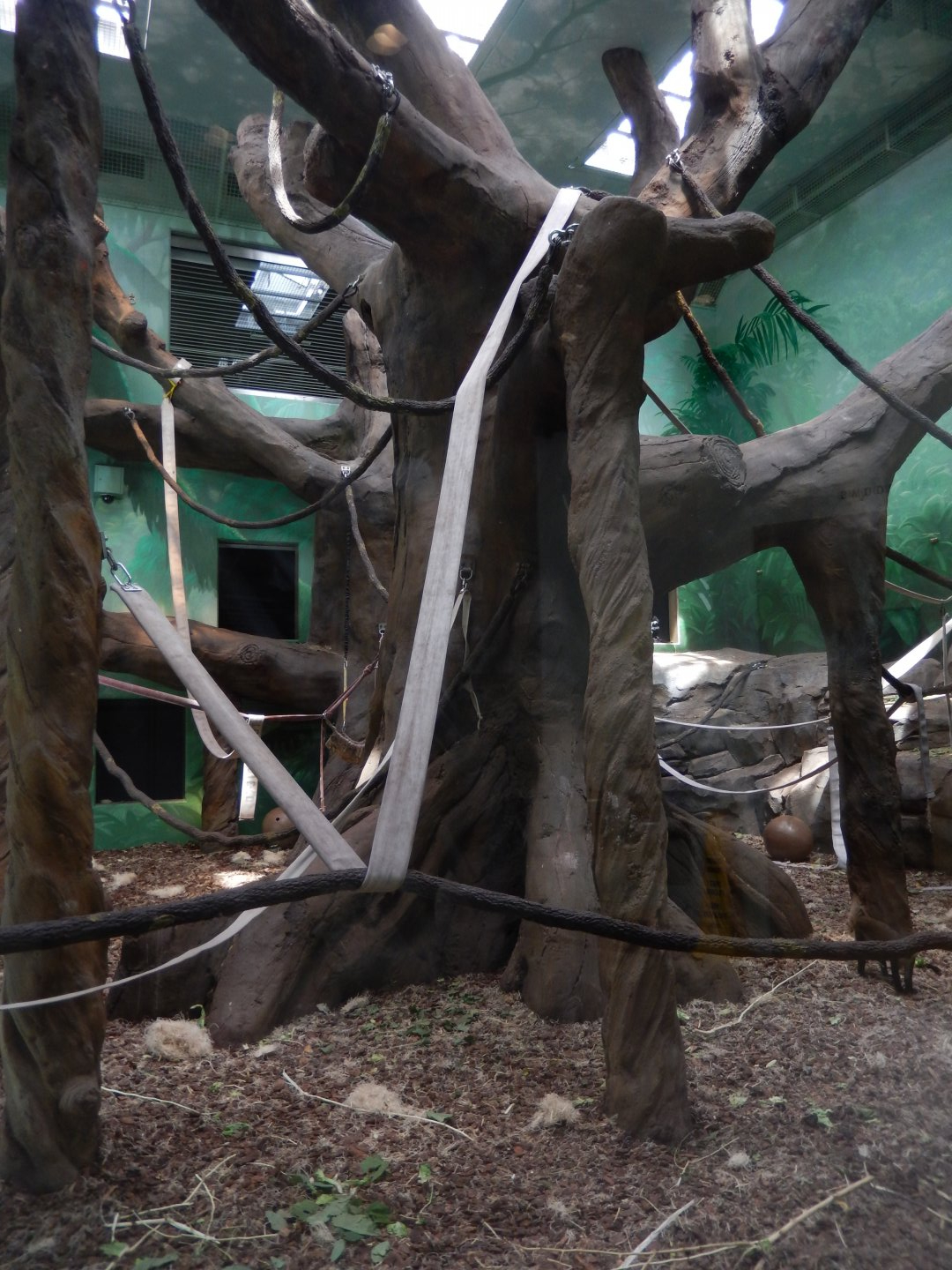
For me, the strongest habitats would have to be for the gorillas, with the varied landscapes, the keeper interactive wall, the enrichment, etc., it's easy to see that a lot of effort went into showcasing these apes to the best of the Zoo's ability. I'll even say it was almost a little emotional for me to see these apes patrolling through the grass after years of staring at concrete. As for their new indoor digs, it's an improvement over the previous space in "Tropic World." I liked the up-close viewing windows, the wood chip substrate, and especially the ability to climb real high. On my visit, an Angolan colobus and a couple of Schmidt's red-tailed guenons were on display. Not only is it nice to see these monkeys get an additional change in scenery, but I do wonder if the Zoo will consider mixing them with the gorillas down the line like in Europe?


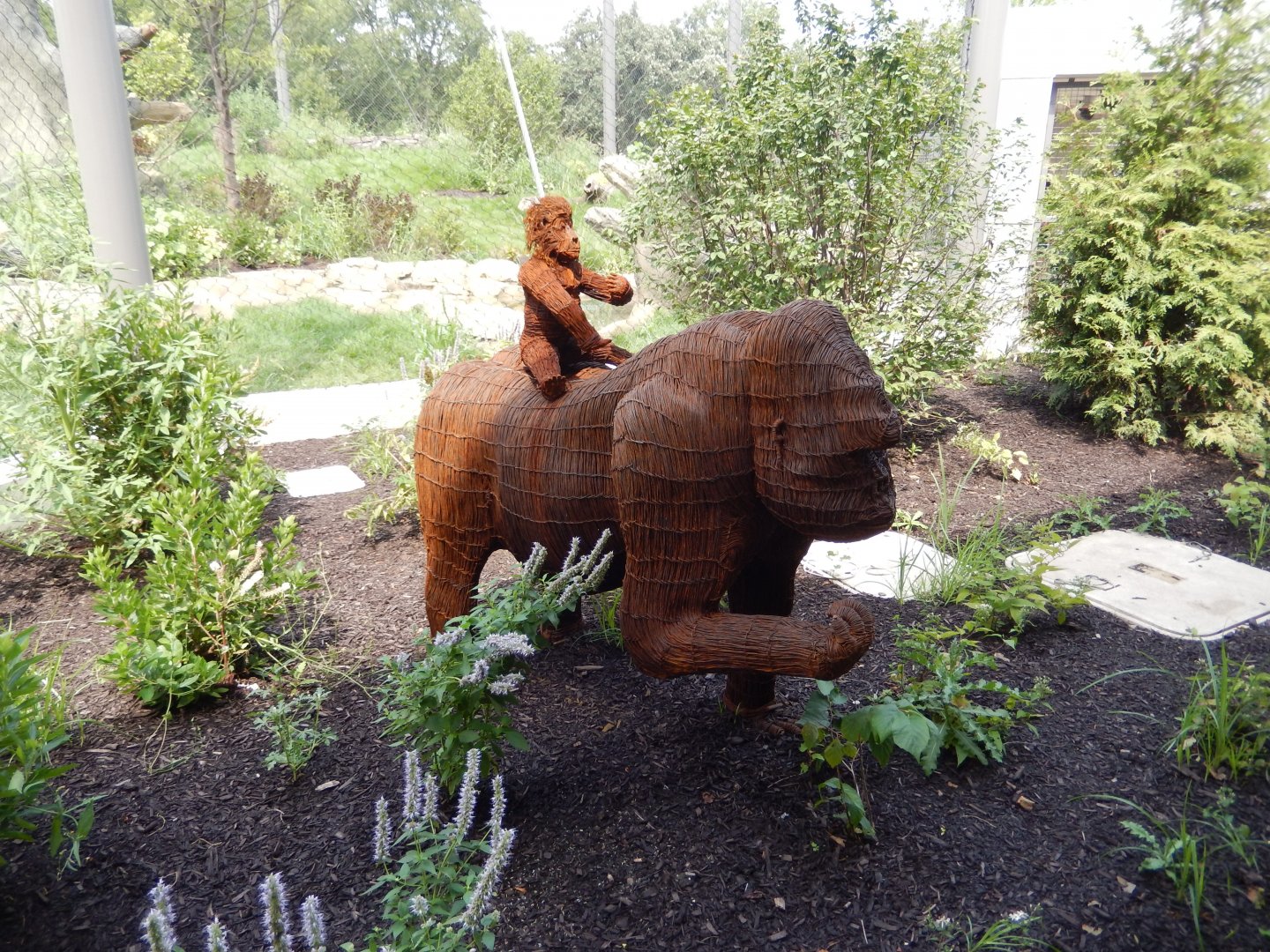
On the visitor side of things, as stated before, there are tons of ways to see the primates. As guests wind their way through the complex, they can see animals at various angles via glass, mesh, and even a walkthrough tunnel in the form of a log at one point. Dotted throughout is a plethora of signage focusing on all sorts of topics, from a primate comparison chart with sculpted hands, to conservation impacts. Other details offer good support as well, such as a squishy floor and sway poles by the orangs, a shaded grove that surrounds a preserved tree with the gorilla chute overhead, pollinator gardens that form a barrier between this and the Pachyderm Building, and even a sculpture made out of poacher snares. The general atmosphere is a nice blend of modern architecture and nature slowly taking over as the dominant force - right now I'd say the concrete is a bit heavy, but I imagine this will change overtime. Adding to this, it's currently easy to see the habitats from around the Zoo thanks to its central location; I could see gorillas strolling along from Great Bear Wilderness, and spider monkeys swinging on the mesh while by the rhino. If I did have to pick one element against this complex, it would have to be that visitors are forced to go through the trail one-way, meaning that if one wanted to see one or the other first, then they'd have to back-track all the way to the other side of the gargantuan building. Maybe it's just a temporary thing for crowd control as the complex only just reopened, but this caused an unplanned route change on my end, and I can see how it can be a nuisance for others. It would also help if some doors were added in order to quickly access the respective indoor spaces. This way, one doesn't have to wait until looping all the way back to see an animal, only to potentially miss it. Other than that, this expansion was a long time coming, well worth the wait, and I'd confidently classify this one of Brookfield's best animals areas. :D


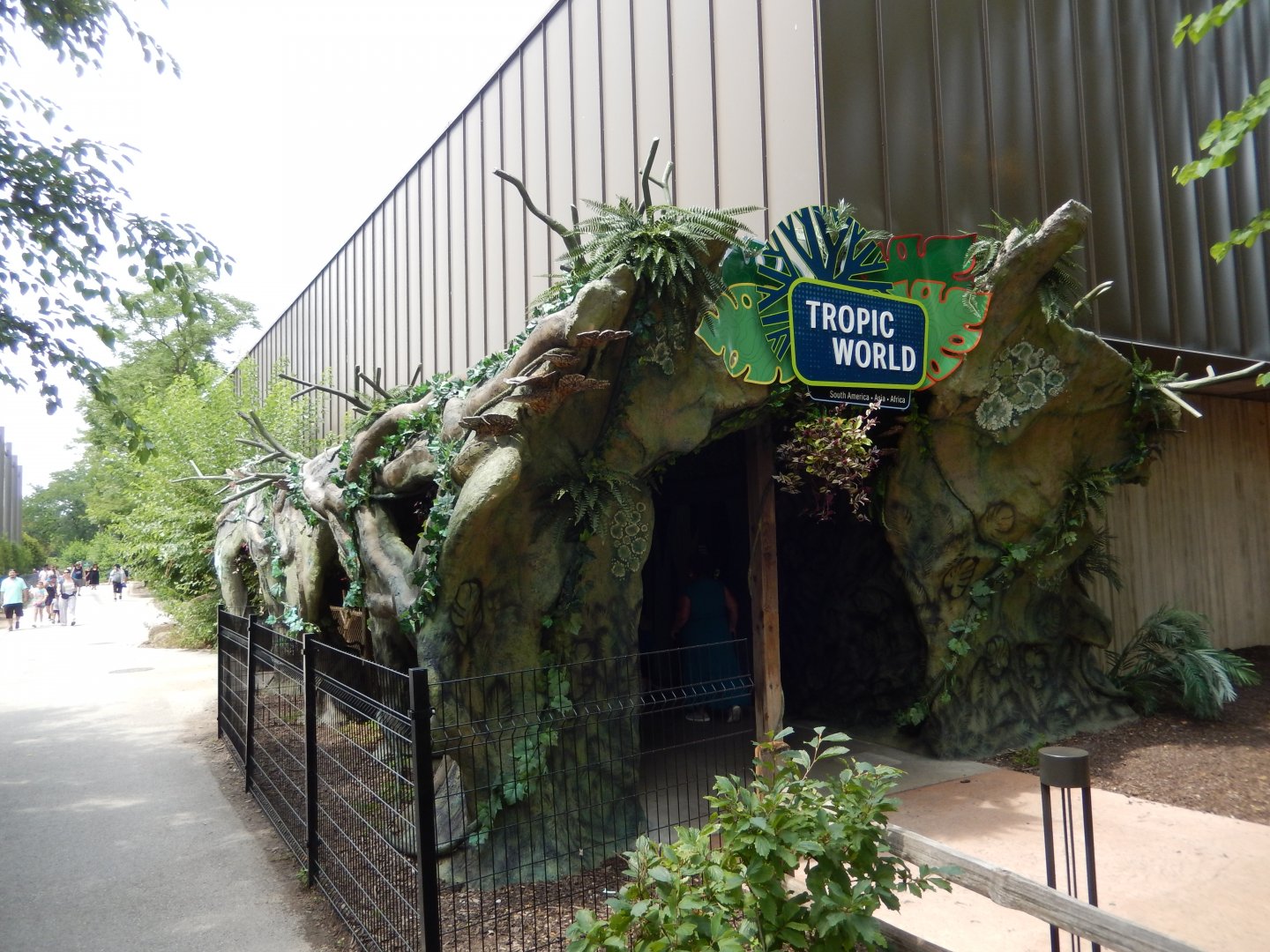
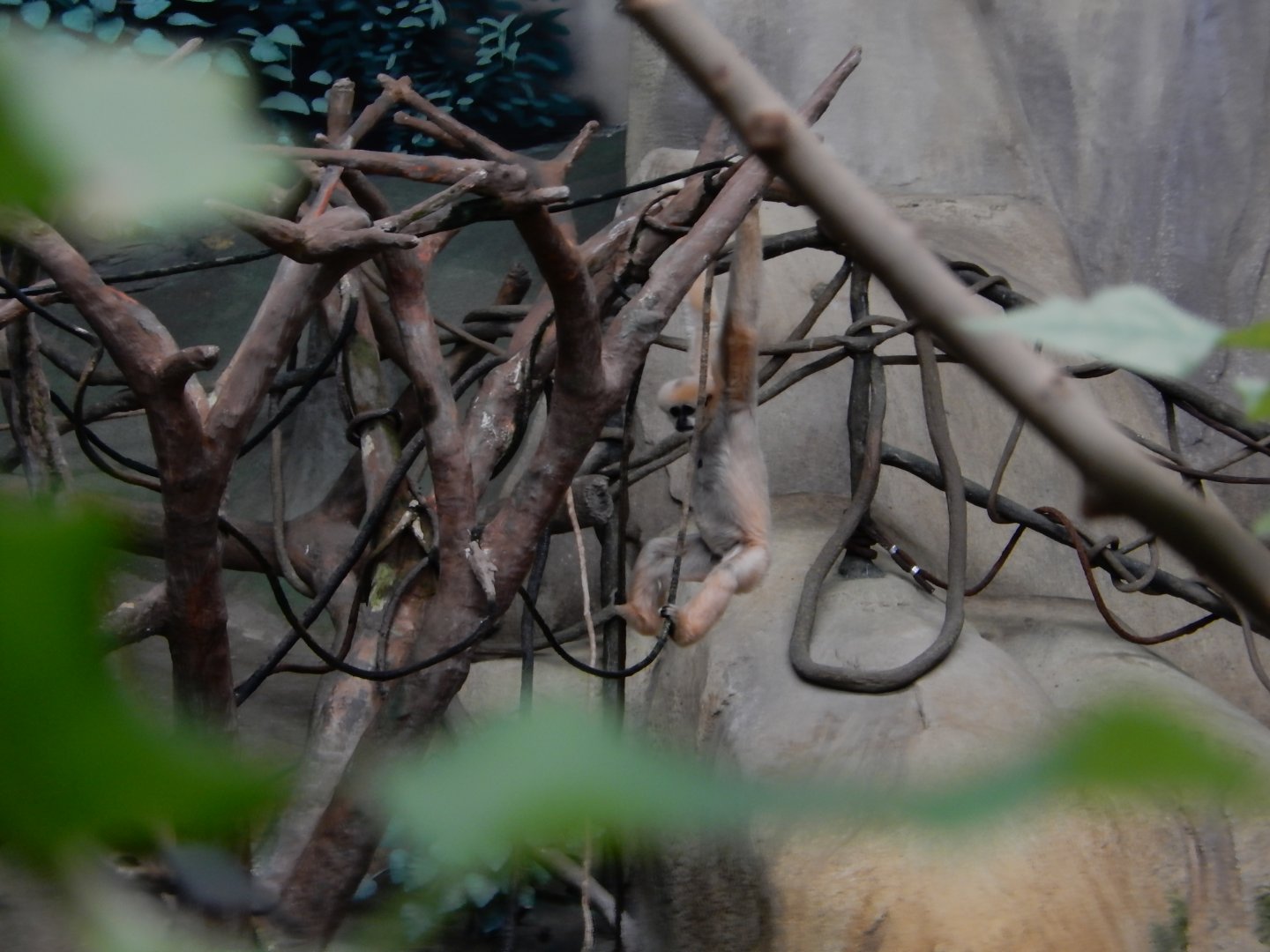
Heading inside, "Tropic World" is still the same exact iconic/notorious concrete jungle we all know. Other than entering through an excellently detailed hollowed-out tree trunk, a dark zig-zagging hallway with nature noises playing in the background (which replaces the storybook aesthetic of the past), the former gorilla space being blocked off, and Guam kingfishers replacing the slow loris, very little has changed. This was unfortunate because with how much work has gone into incorporating the new stuff and how long the building was closed, I was hoping the opportunity to improve in areas would've been taken advantage of. It could've been amazing to see some more artificial foliage, substrate, some additional viewing areas, or updating the rock work to be more realistic - just something to go with the modern outdoor spaces. Aside from the South American monkeys and gibbons, most of the primates were lounging on the wet concrete or far away to get a good look at. Speaking of which, the indoor orangutan habitat is the same as it always has been - a tiny, artificial island that is 90% dominated by a concrete tree, and often hard to see into. It would've been great to see a renovation to this area, or find a way to provide permanent access to the rest of the room. Supposedly there were ropes added in the past - did this not work out? To finish on some positives, the exhibits themselves still work wonders to accommodate the primates' swinging and brachiating abilities, they are large and varied, the free-flying birds are always a treat to see swooping down and out, and the signage is attention-grabbing and informative. Other memorable moments include a baby squirrel monkey pestering its fellow troop members, a wading giant anteater, a female gibbon scaling one of the artificial trees with ease, and watch a pair of Asian small-clawed otters scurry far below the ridge.


And that does it for Part 1 - hope you enjoyed my look at Brookfield Zoo Chicago's newest additions. Stay tuned for Part 2, as I revisit the facility's other veteran complexes...
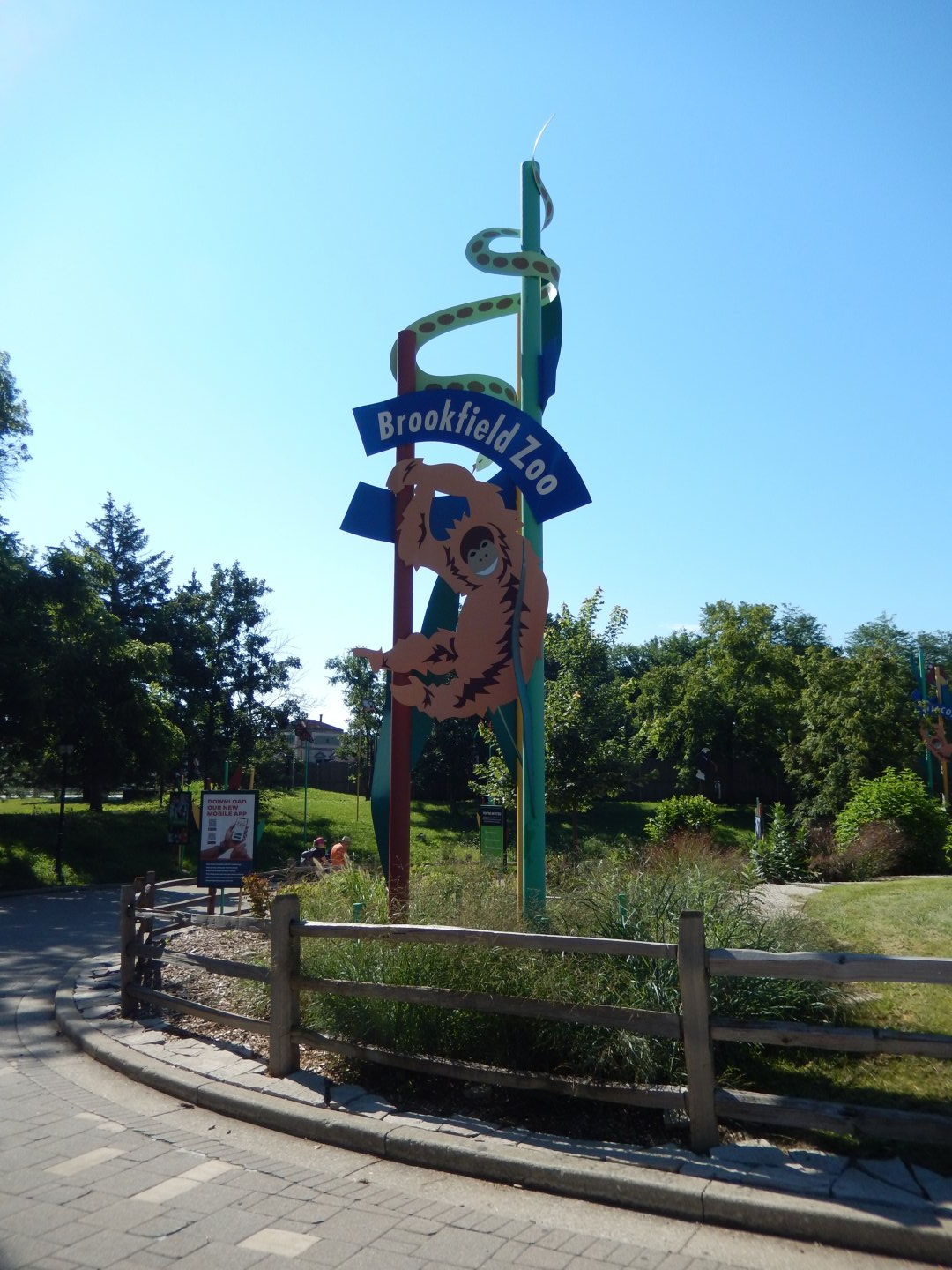
8-16-2025-entrance-sign.824700


Nice to see an update to your previous reviews. Always enjoy hearing what others have to say about the Chicago collections.
Correct me if I'm wrong, but was this the former raven exhibit? And since I saw one inside, do the birds rotate regularly or seasonally at all?
Correct. The raven has bounced around to different parts of the zoo since the toucans and seriemas arrived, temporarily inhabiting the outdoor aviary and the coati exhibit during the cooler months, being to moved off-show aviaries during the summer, and now indoors. Now it seems like the birds will switch off between the indoor and outdoor spaces depending on the season.
In summer 2023, a series of outdoor native turtle tanks were added, and in 2024, a new aviary for North American birds was erected. Due to some circumstances, I sadly didn't get to see this section at its fullest potential, with only the aviary getting a proper analysis from me
Let me guess, you went through the area after 3:00 PM when the turtles are brought in and the outdoor exhibit is closed for the day. :rolleyes: I get keepers have routines, but it’s a shame these very nice displays have rather limited opening hours.
 
Nice to see an update to your previous reviews. Always enjoy hearing what others have to say about the Chicago collections.

Let me guess, you went through the area after 3:00 PM when the turtles are brought in and the outdoor exhibit is closed for the day. :rolleyes: I get keepers have routines, but it’s a shame these very nice displays have rather limited opening hours.

Thanks a lot. :)

Actually no - I tried planning my route to avoid exactly this! It was around 1:45 that I arrived at the Nature Plaza, but they were closed off at that point. It was quite hot in the low 90’s at that point of the day, so I’m guessing it’s due to this.
 
Now that I've covered some of Brookfield Zoo Chicago's newest features, it's time to revisit some old favorites in Part 2! We'll be going in the order of how I structured my original review (even though I went in pretty much the exact opposite direction this time around :p):

Australia -
This has always been one of, if not the, favorite complex of mine at this Zoo, and even with a few switches and one notable loss, it hasn't lost its luster. The herp terrariums are all still nice with some species swaps from last time, and the aviary at the end of the hall (now with kookaburra) is just as eye-catching as before. On a side note, I was surprised to find a single echidna waddling around - breeding pair separated I imagine? Going up the boardwalk leads towards the nocturnal room, and the highlight of the whole complex. The last Southern hairy-nosed wombat sadly passed away earlier this year, so it was a shame to lose out on those fascinating marsupials. The rest of the area is still excellent, from the newly arrived brush-tailed bettong (didn't see) occupying a large habitat that once held kookaburra and tawny frogmouth, to the sandy echidna pits that guests encircle, to the semi-walkthrough bat habitat. I was thrilled and startled when a bat zoomed past me just inches away! :eek: Heading outside, the outdoor habitats are nicely detailed to look like the Aussie brush for the most part, but seemed to be smaller than I remember. The exception is the largest one on the east side, and that habitat I've always considered to be fantastic. Bennett's wallabies appeared to have all moved out in favor of Wild Encounters, with gray kangaroos, emu, and Cape barren geese being the remaining occupants.
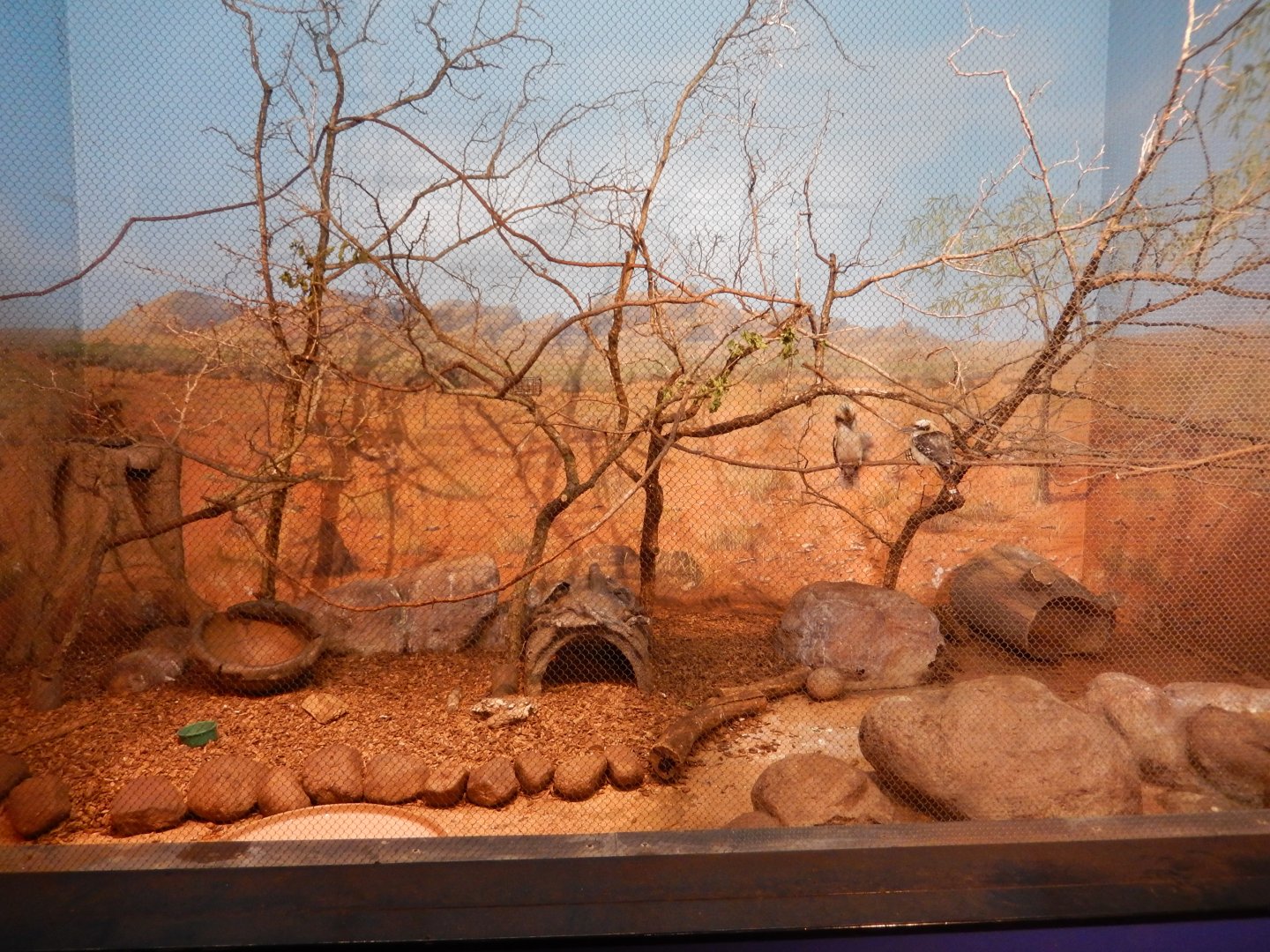
Hoofed Animals - Likely in preparation for the upcoming African and Australian expansions, this area was less populated than before. I saw no addax, and the only animals on display were a pair of Grevy's zebras (including a younger one) and a Bactrian camel laying in its shelter. These paddocks are rather basic in presentation, being average-sized, grassy, and maybe the occasional furnishing. One of the facility's less impressive complexes in my opinion.

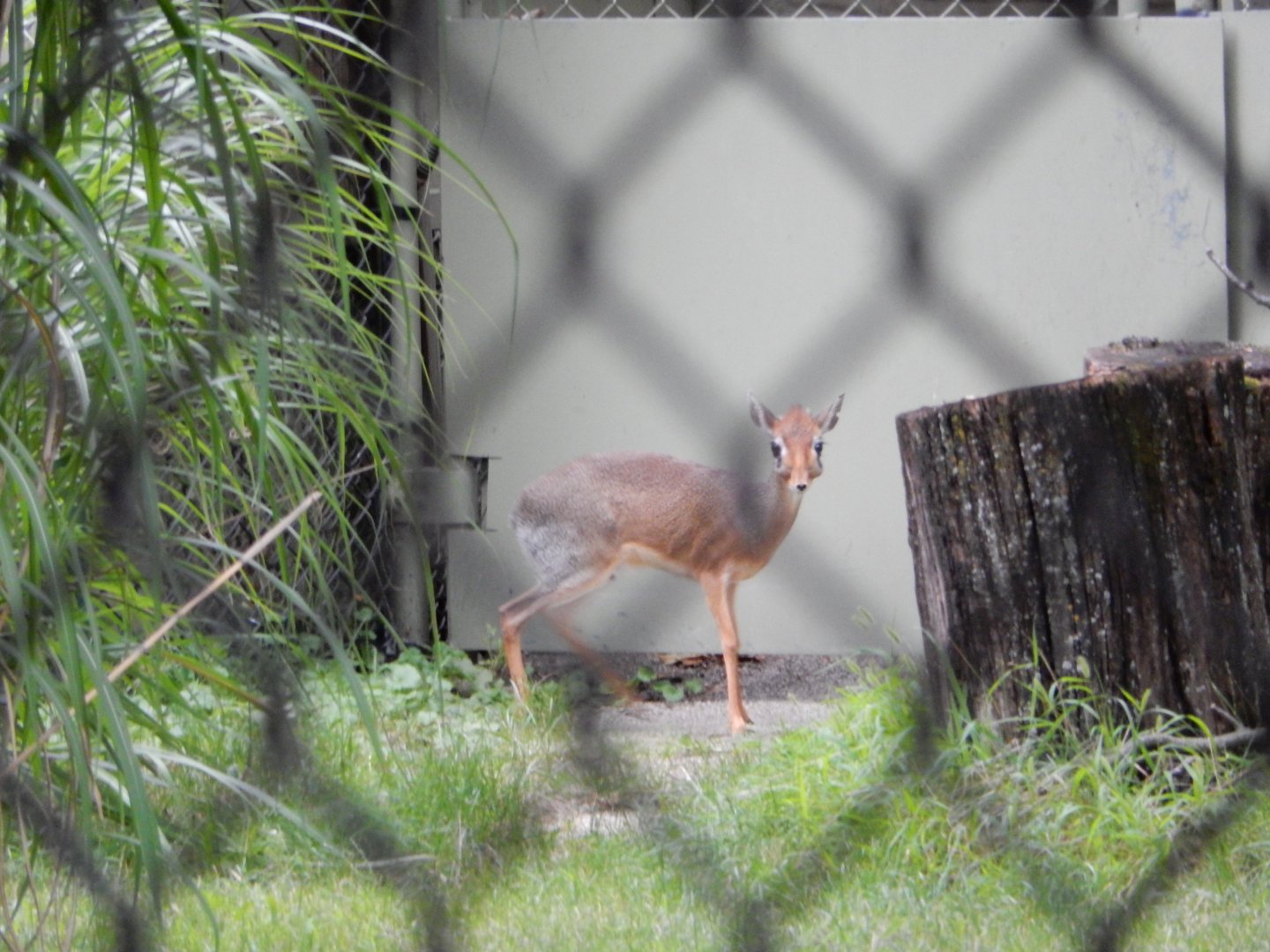
Habitat Africa! The Savannah - It was kind of bittersweet walking through this complex for a couple reasons. First, it's highly likely that it will be significantly altered once construction begins for the multi-phase "Gateway to Africa." As great as all the new animals and habitat improvements will be, a part of me will miss seeing the space as I did since 2010 - almost in a nostalgic way. Second, after labelling it as mainly average at first, I found myself liking it more and more with each visit. The outdoor giraffe habitat is still excellent, with a good amount of space, a beautiful water moat, a feeding station (new since my 2018 visit), and it's a good blend of the African bush and open savannah areas. The African wild dogs (didn't see) are mainly seen through an African mud hut with up-close windows, and have a cool habitat with a big kopje-like boulder as the main attraction, even if it is a little tight on space. Lastly, the kopje building is superb - I enjoyed all the free-flying birds darting through the air, the crevices where white-throated monitor and a band of dwarf mongooses (including some recently born and rambunctious pups) were found, and all the intriguing signage focusing on kopje life and adaptations. The only changes I noticed were no more spurred tortoises in that narrow pen in front of the giraffes, and (unless I just didn't look hard enough) I didn't see any klipspringers. The remaining outdoor habitats is where I saw the most updates. One is the mixed-species savanna, which is lush with grass and decently-sized but nothing spectacular, now only holds a small herd of lowland nyala and grey crowned cranes. The other turned out to be one of the visit's biggest surprises; the smaller hoofstock pens tucked to the side used to hold warthogs, gerenuks, and other small species. This time around, the space has been combined into one, and furnished with a good balance of shrubs, tall grasses, etc. for an active Kirk's dik-dik. Aside from viewing through chain-link the whole time, I have to confess this was a bit of a hidden gem of an exhibit - it's simple, yet well-designed and quite effective for a species that one normally wouldn't focus too much on. On the whole, as nice as it will be to see the expansions come to life, I'm glad I got to see this complex for what will likely be the last time, and that I got to leave with a good, newfound appreciation for it. :)


Habitat Africa! The Forest - The fact that okapis are the spotlight species in this complex alone makes this a worthwhile complex for me, even if it isn't quite as successful as I remember it being. The three okapi habitats, for instance, are naturalistic but all smaller than I remember; there is a fair amount of walking at the beginning and end without seeing a lot; and, probably the biggie, there is quite a lot of chain-link fencing utilized here. I feel like if some of it were replaced by mudbanks, hot grass, or even just disguised better/planted in front of, then this would be mitigated. To finish on a high, the immersive and cultural touches, from the dry riverbed to the Congo huts, point to great attention to detail; the red river hog (excellent use of hot grass!) and two outdoor duiker habitats are well-done; and again, the fact that cool and unusual species like the okapi and pangolin is admirable. Overall, while its Savannah counterpart has overtaken this complex now, I still find it to be a neat section, and I hope not much of its uniqueness and set-up is taken away with the Master Plan.


Great Bear Wilderness - Nothing to really report for this North American complex. The bear rotation set-up was the two younger brown bear brothers in one underwater viewing habitat; the late Axhi in the waterfall habitat; and the third being surprising empty, so no polar bear sightings for me. The American bison habitat (no almost entirely dusty) seemed smaller than I remember, as did the bald eagle aviary. As for the bears' roaming space, I won't deny that they do more resemble modern day grottos, and could use more space, but the vegetation has grown in well, and the wide variety of viewing opportunities is great for visitors. The only difference I noticed was that the bear den was sealed off. Other than that, some other positives for the complex include the various Native American and cultural references, and signage pertaining to the Zoo's successful polar bear history, climate change, and more. Also, I can't forget the one habitat that shines above all, and that is "Wolf Woods," the exemplary Mexican gray wolf habitat. From the viewing variety, to the size and naturalistic scope, to the educational and interactive opportunities (the howling room and kill site being particular stand-outs), this is without question one of the best wolf habitats I've come across.

The Living Coast - I'll confess that this was only my second time in the building despite exploring Brookfield five times, and my memory of the first walkthrough is a little fuzzy. I found most of it to be either slightly unfocused or more comparable to what other aquariums present. For instance, there's only one freshwater tank based on some more native fish that sticks out amongst all the other oceanic life. In addition, the habitat design is rather run-of-the-mill, with the usual colorful mini-reef tanks and smaller open ocean tank being the primary presentation. Again, what's done here is fine, but very little that truly stands out from others. The main saving grace of the building is the finale where after a simulated crashing wave (not working during my time), there's an amazing free-flying aviary with Inca terns and gray gulls fluttering this way and that, while Humboldt penguins linger on the rocky shores or swim in their shallow pool. Along the cave wall there's small terrariums with axolotls (recent arrivals), blind cave tetras, tailless whip scorpion, among others. Other than the minimal amount of space for the penguins, this final area is awesome.


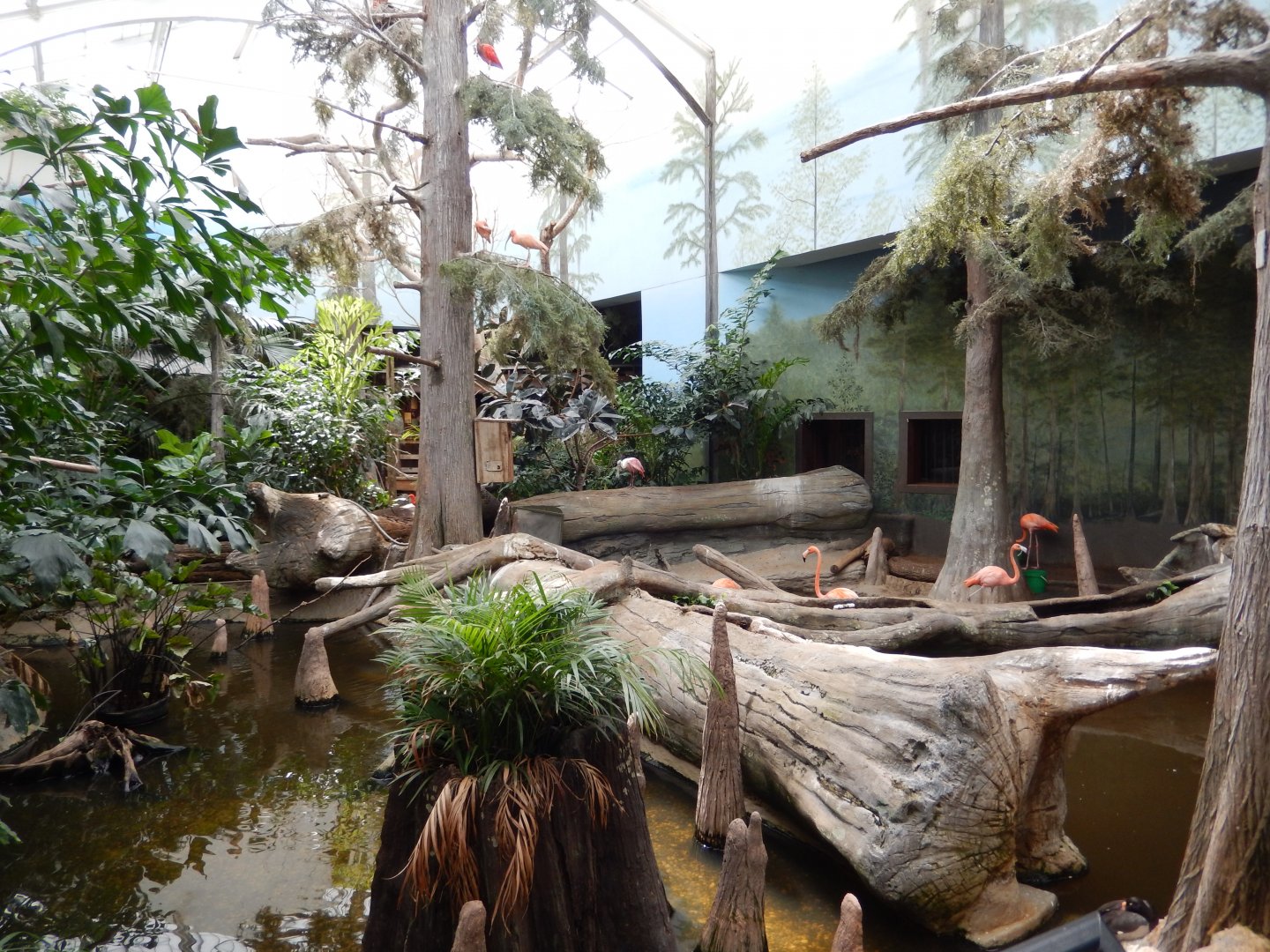
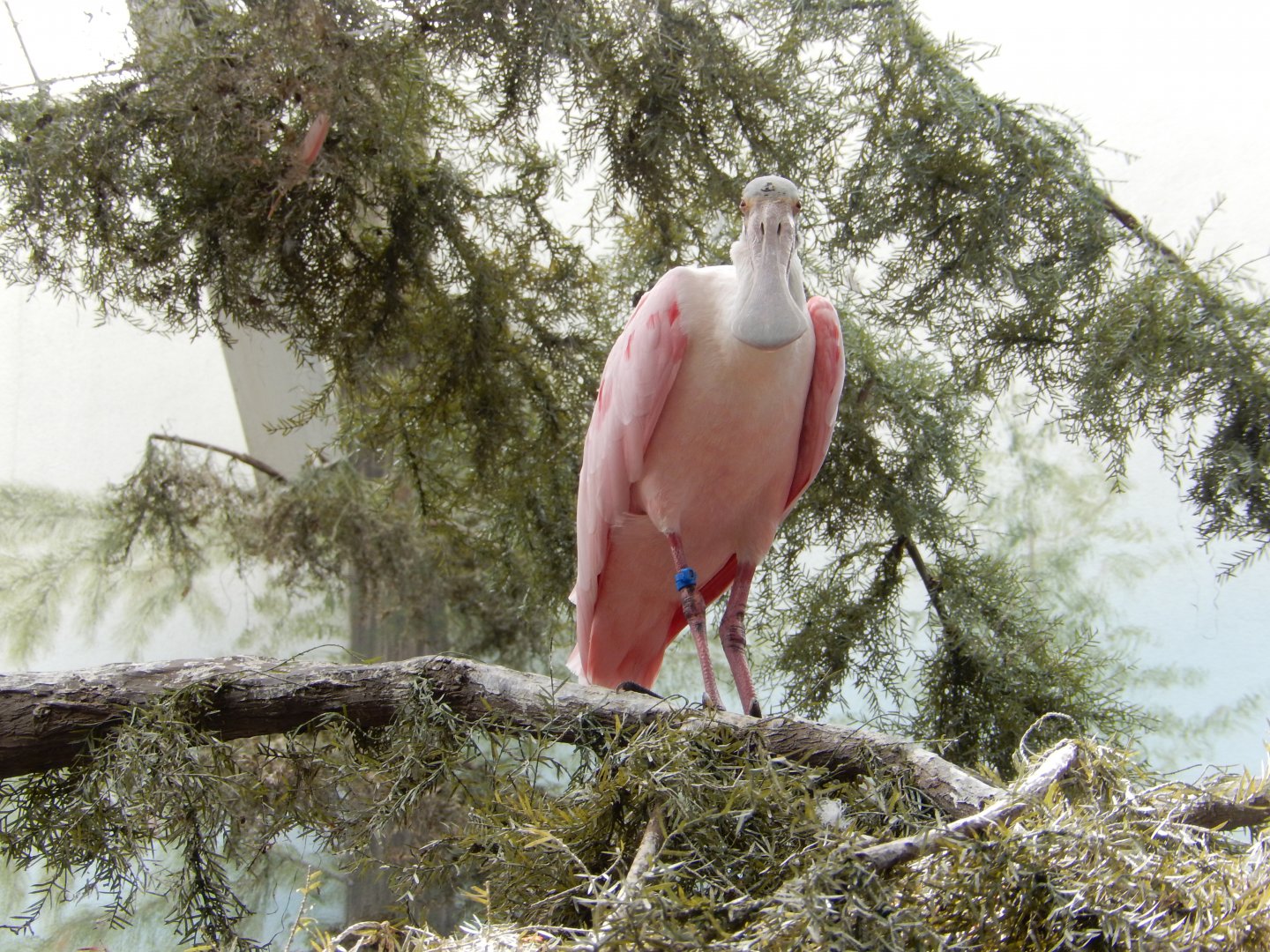
The Swamp - Of the Zoo's four mini-immersion buildings (the others being The Living Coast, Desert's Edge, and Clouded Leopard Rainforest), I'd consider this to be the best of the quartet. Not only is it a concept that is not often seen in zoos, but the choice of species, attention to detail, and overall exhibitry is fantastic. Though some of the immersion pieces such has the research shack have been removed, some like the bird viewing blind and squishy floors are still present and just as effective. The building has seen a shift from a mostly Southern U.S. focus, to more of a blend between North, Central, and South America; however, it flows together well. It gives a look at mostly exotic species, before shifting towards a final section that (literally) hits a little closer to home with the story of river otters and turtles in the state of Illinois. The terrariums for reptiles like eyelash viper, eastern massasauga, Kaiser's spotted newt, etc. are mostly spacious and naturalistic, and the introductory bird habitat (sunbittern, black-faced ibis, among others) makes for a solid first impression. With that said, they don't compare to what is without question the biggest change. Front and center of the building, what used to be a pair of shallow crocodilian pools (American alligator, then Orinoco croc) has been overhauled into a colossal, free flight aviary for tons of avian creatures, like American flamingo, roseate spoonbill, yellow-billed stork, scarlet ibis, chiloe wigeon, fulvous whistling duck, and many more, some of which I'm not sure I've even seen before. The massive reptiles were cool to see, and I have some reservations about some of the larger birds being held entirely indoors, but I think this turned out to be an awesome replacement - it's more colorful, lively, and the naturalism seams flawlessly with the rest of the complex. Other than the last few enclosures ranging from smaller and artificial (otters and a couple larger turtle species), this building is magnificent, and just as I remember it to be. :D


Pachyderms - Similar to the row of hoofstock paddocks, this area has also seen some of its inhabitants moved out to prepare for the master plan. Gone are the pygmy hippos and tapirs, and the only residents left are a single female black rhinoceros, some Galapagos giant tortoises, and at least one capybara. Much of the complex is inaccessible, with the building being closed off, and even most of the north side habitats are blocked off. On the bright side, the habitats that can still be seen are mostly decent. The rhino has a trio of paddocks she can roam between on the south side, offering a good amount of space and a nice mix of grassy pasture and shady trees; the capybara had a nice large pool to soak in - in an enclosure that admittedly I'm not sure I knew even existed; and the tortoises have some nice mud holes to cool off in. It's the beginning of the end for this section, and it clearly shows, yet it remains as one of the better "old school" pachyderm houses (in name at this point) I've come across.

Desert's Edge - Previously known as "Fragile Desert." While nothing has changed in terms of its animal habitats, about half of the inhabitants have been swapped out. I'm happy to say that most of these have been for the better, whether that is making better use of their respective spaces or being just as unique/engaging as the former residents (take note Milwaukee). To start out with, the cliffsides that rock hyrax and caracal once clambered about on is now home to a pair of Pallas' cats. While strange that they're both all-indoors (especially for the northern climate the Zoo is in) and that they're in a desert-themed complex, this set-up works well for the fluffy felines. As this species has part of its range in the deserts of Mongolia, it actually does make sense. Also, they can take advantage of the steep habitats to their advantage much more so than the caracals. Next, small-spotted genets (another first) now reside in the small cave-like environment towards the end of the hallway. Then, bat-eared foxes have full access to both the den and the "moonlit" habitat - no more fennec foxes. Lastly, Arabian sand cats have taken the place of black-footed cats as part of the complex's finale. Beyond that, the meerkat mob was fun to watch as they wrecked havoc in their small habitat; and the overall sense of immersion still intrigues me to this day - I love the desert tent draping overhead, and the sloping design of that porcupine/mole rat set-up!


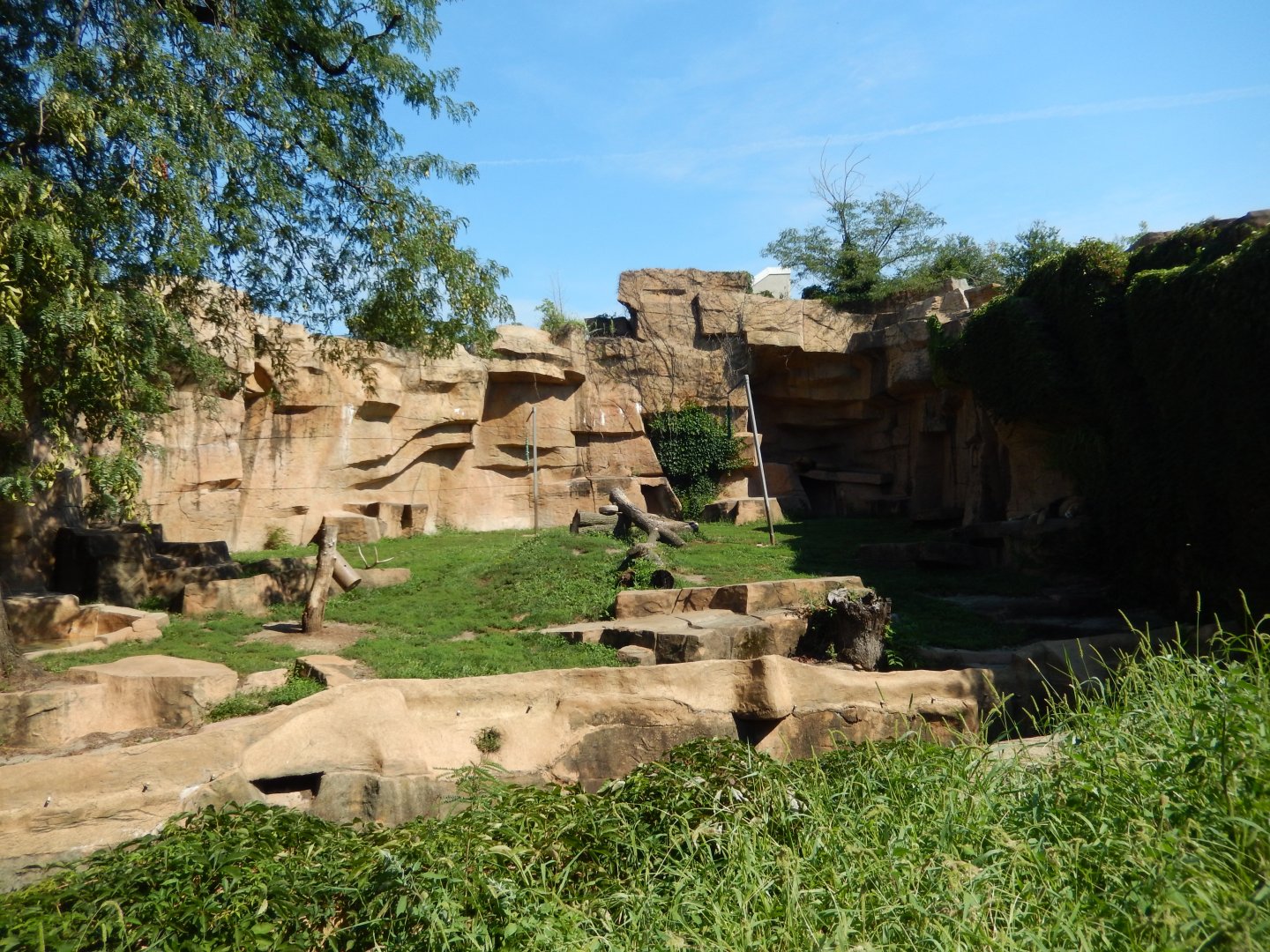
Big Cats - Nothing new to report here. For me, these grottos have been among Brookfield's least successful areas. They're rather small for large predators, are minimally detailed, and apart from a few windows, viewing across the wide moat can be a bit awkward at times. Current roster is: Amur leopard, a pair of African lion brothers, sloth bear (nowhere to be seen), a female Amur tiger, and snow leopard (didn't see).


Clouded Leopard Rainforest - There isn't much to report on this Southeast Asian themed complex except for two elements. One is that I had one of, if not the, best viewing of binturongs in my life. On my visit, I think I counted six of the popcorn-smelling creatures on-exhibit, whether they were lounging, pacing the floor, or scaling their artificial tree branches. The sweet bonus was watching a bintlet as it followed and pestered its mother the entire time I watched - what fun! The other update was right next-door - fishing cats have made way for the Zoo's troop of ring-tailed lemurs; the prosimians have been temporarily displaced the koalas in the Hamill Family Play Zoo. As disappointing as it was to see fishing cats get seemingly phased out, I'll be honest and say that this is an improvement. To me, it was one of the less successful parts of the complex, for the cats were sometimes difficult to see properly, and the rocky landscape with minimal water clashed with the lush surroundings and species' behavior. On the other hand, the lemurs, though geographically out of place, are a stronger fit for this habitat - they can take advantage of the height and terrain of the area more effectively. Bringing back fishing cats where they once were would be the obvious step after the fact; but, if the habitat were to remain as is, I think it would be cool to try another tropical Asian arboreal animal like the banded palm civet, which seem to be branching out to more zoos lately. Other than those two notes, the complex is more or less the same as I recall - not spectacular, but still a decent little jungle section.

Sea Lion Cove - Once known as "Pinniped Point," I've always found this set of pools to have an interesting contrast. The habitats aren't the most naturalistic ones I've seen, with smooth concrete being the main attraction here. Also, aside from having some very deep and refreshing bodies of water, they are more on the small side. But to flip things around, I really like the underwater viewing area. There are wide, tall windows to get great views into the slippery animals' deep pools, and the whole area is designed to look like a shipyard or harbor with its wooden decor and netting. The only update I have is that there are no more harbor seals; only their larger gray cousins and California sea lions reside here now. It's a good compromise since the species can be seen in downtown Lincoln Park Zoo.

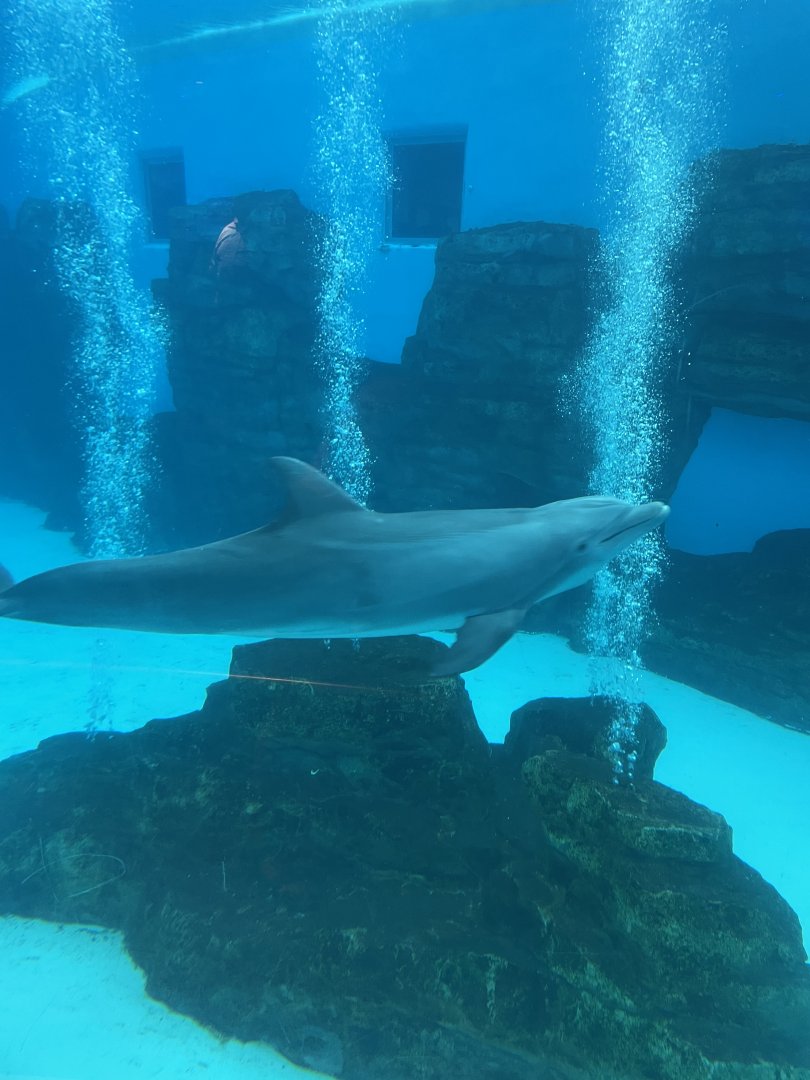
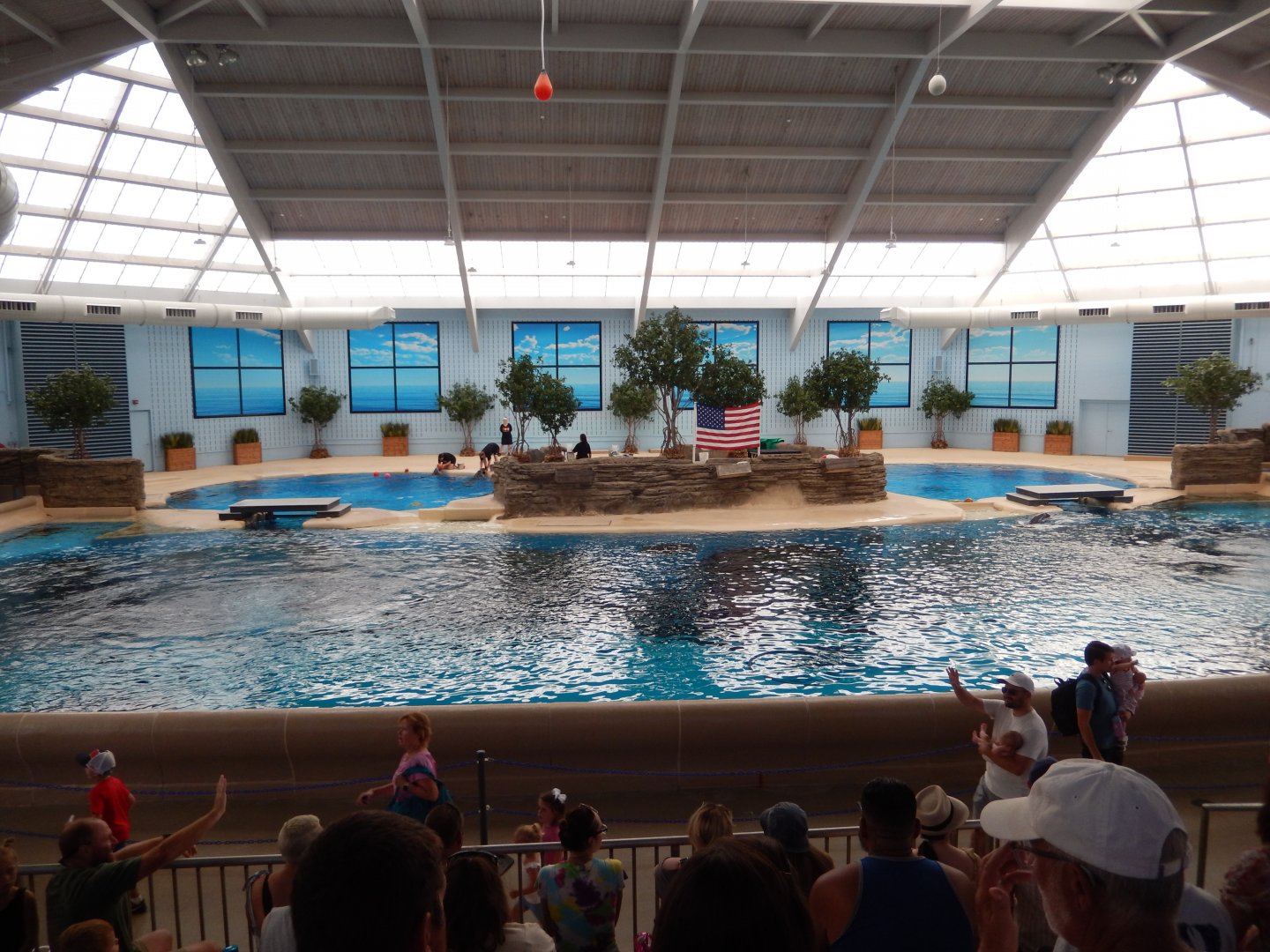
The Seven Seas - It's always a delight to see dolphins, especially since Indy is the only other Zoo that currently holds them! First thing's first, the main habitat got a major update from late 2022 to early 2024. A good chunk of the money went towards building quality-of-life stuff, but what's presented to the public has mostly changed for the better. There are now coral reef-like rock structures around the back part and sides of the tank, and bubble streams were added, making for a more dynamic space for the cetaceans than before. The dolphin habitat is still slightly small, but the additions have helped to somewhat overlook this and improved the habitat quality. As for the guest area, it's primarily changed to various blue hues to represent being underwater; most of the Sarasota conservation references have been removed, which is a shame as this is something that Brookfield has represented very well throughout the Zoo. In this case, it's mainly reserved for the daily shows that take place, which I took time to sit down and watch.


NOTE: Due to a variety of circumstances, I once again missed out on the Reptiles and Birds building (including the fairly new macaw expansion) and the Feathers and Scales building (though I did see the attached massive Andean condor aviary outside). I really gotta try and prioritize those sections in the future! :confused:

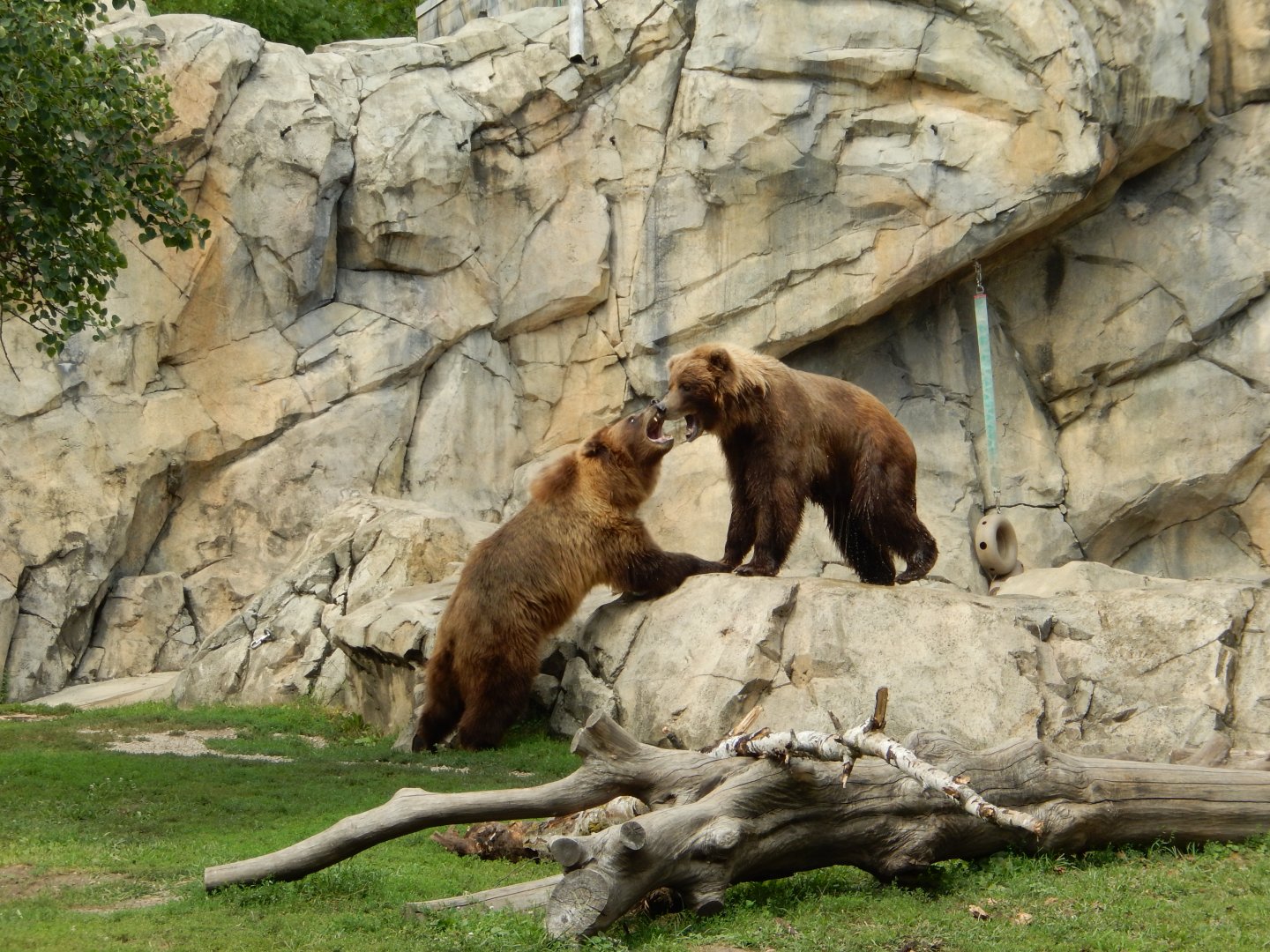
HIGHLIGHT OF THE DAY: For all the amazing new discoveries made and the number of rarities encountered, nothing can compare to the brown bear brothers I watched. One bear was soaking and chilling in its pool, while the other would taunt its sibling, running back and forth from the shoreline, hoping to instigate a brawl. He eventually did, causing his bro to haul his massive frame out of the water and cause an intense stand-off and dominating show of size. Things eventually calmed down between the two, and the bear eventually went to cool down (literally and figuratively), swimming along the glass for a long while, basking in the spotlight of the amazed crowds.

 
Great to see a fresh review of my home zoo! We visited only about two weeks apart. You've posted some great photos, too!

On the opposite end of the spectrum, I found the goat pen to be rather small, and the budgie aviary to be minimally detailed; I understand it's easier to clean/manage with the latter, but I feel like there could be other ways around this.
The budgie aviary is one of my least favorite parts of the zoo and it doesn't help for my first several visits, the budgies just sat on branches and did nothing. The lack of detailing is part of the problem as if the birds aren't active there's very little to do in there.

Of the two children's zones that the establishment has to offer, I'd say this one is the less successful of the two. Of course, this is not to put it down at all, as the elements that work are solid. Here, kids are encouraged to play/learn alongside nature; for example, they can dig in the sand outside, or weave through a tree trunk to spot some fascinating odd creatures.
I do think it's an exhibit that's undergone some decline. I remember it feeling a lot more lively as a child, with face painting and more activity-based elements, and I think some of the activities were dialed back over the years. It's a bit less documented, unfortunately, because it was an upcharge attraction for so long. I believe it was also said at some point that Hamill Family Play Zoo was more aimed at younger children relative to the then-Children's Zoo.

As for the exhibitry, it's mostly basic without much that sticks out, from the small terrariums in the tree trunk (screaming hairy armadillo, genet, and invertebrates), to a hallway with larger reptile terrariums with large species like Burmese python and turtles. Although, two stick out as quite worthwhile - the most notable being the Zoo's temporary koala visitors. Males Willum and Brumby came last year as part of the 90th anniversary celebration, and they share a pair of habitats both inside and out. Brookfield has mentioned that if this tenure goes well, then koalas will become a permanent addition - part of the upcoming Australian expansion to be precise. Outside the building, an aviary was newly renovated in 2023; this is the home of two toco toucans and a pair of red-legged seriemas. It's nicely-sized, lushly planted, and the species of choice is unique and spot-on. I had fun watching one seriema patrolling through the ferns, while the toucans were perching and grooming overhead. Correct me if I'm wrong, but was this the former raven exhibit? And since I saw one inside, do the birds rotate regularly or seasonally at all?
Yes, that is the former raven exhibit. The koalas and toucan/seirema aviary definitely really elevated the building for me from a usually skip to something of a must-stop, although I really look forward to the koalas' hopefully becoming part of the Australia House permanent collection and hopefully the lemurs returning here. We'll see about the recent tamandua announcement.

In summer 2023, a series of outdoor native turtle tanks were added, and in 2024, a new aviary for North American birds was erected. Due to some circumstances, I sadly didn't get to see this section at its fullest potential, with only the aviary getting a proper analysis from me. With that said, what I did see was well-done - while the habitat looked smaller than I expected, it was naturalistic with lush grass, a few shrubs dotted throughout, a small wading pool, and even a little hill in the center to vary the terrain. Sandhill cranes, cattle egrets, and my very first greater prairie chickens share this little gem of an exhibit. It was the cherry on top that revitalized a once quiet section of the Zoo, and I'm glad it delivered!
Agreed that it's a real cherry on top! I'm a bit sorry you weren't able to see the turtle habitats - I've only seen them with turtles in them once successfully, but they're positively delightful when they can be there. I will always miss Baboon Island a bit though, not only that for so long it was guaranteed animal activity but it was often the 'half-way' stop for visits during my childhood.

Not only is it nice to see these monkeys get an additional change in scenery, but I do wonder if the Zoo will consider mixing them with the gorillas down the line like in Europe?
Pulling really hard that they attempt this at some point, and I do wonder if the rotations are playing a role in acclimating the species to the same space over time. It would allow the African monkeys outdoor access they otherwise won't have and bring Tropical Forests a little closer to Tropic World's original vibe of feeling more like an ecosystem recreation.

If I did have to pick one element against this complex, it would have to be that visitors are forced to go through the trail one-way, meaning that if one wanted to see one or the other first, then they'd have to back-track all the way to the other side of the gargantuan building. Maybe it's just a temporary thing for crowd control as the complex only just reopened, but this caused an unplanned route change on my end, and I can see how it can be a nuisance for others.
It's a crowd control tactic and it seems to have ended - on Sunday 8/31, I went through Tropical Forests once and then shortly later ended up threaded backward through Tropical Forests a second time. It was a bit awkward as this way you immediately go through the narrow, crowded hallway by the larger gorilla habitat, but it saved us from passing F&S/Pool/Nature Plaza/Reptile House/B&R a fourth time (my own fault) but definitely we were able to do it and not stopped by staff. Consequently, my biggest complaint is said narrow area!

Aside from the South American monkeys and gibbons, most of the primates were lounging on the wet concrete or far away to get a good look at.
This is a huge reason why Tropic World doesn't "work" well anymore. When they were well-populated with larger groups and more species the scale was incredible, but now that Asia and Africa have dwindled to a handful of individual animals, they often congregate in the back of the exhibit where they are hard to see, and from such a distance it's very hard to appreciate what makes these individual species unique. Helen Brach Primate House at Lincoln Park is outdated in terms of exhibit standards but it does an excellent job at showcasing each species.

If the remaining South American and Asian primates get the outdoor access they deserve, the indoor canopies will be completely empty. Hopefully the zoo bring in a couple additional primates and rotate, especially in Asia, but it's part of why a TW renovation is such an inevitability in my eyes.

Speaking of which, the indoor orangutan habitat is the same as it always has been - a tiny, artificial island that is 90% dominated by a concrete tree, and often hard to see into. It would've been great to see a renovation to this area, or find a way to provide permanent access to the rest of the room. Supposedly there were ropes added in the past - did this not work out?
I think those ropes were only there for a couple weeks, unfortunately.

Although the indoor gorilla exhibit at Tropic World was always the greater focus of complaints, I've always found the orangutan exhibit far worse, to the point that as a child I wasn't aware the zoo even had orangutan onsite and thought the signage was educational in nature. Both exhibits are well behind the current standards of care, but I'm not sure there are flaws to the gorilla habitat that don't apply to the smaller orangutan habitat, and as much as people often called the gorilla habitat a "pit" the verticality was probably an improvement on the orangutan's weird concrete island.

Australia - This has always been one of, if not the, favorite complex of mine at this Zoo, and even with a few switches and one notable loss, it hasn't lost its luster. The herp terrariums are all still nice with some species swaps from last time, and the aviary at the end of the hall (now with kookaburra) is just as eye-catching as before. On a side note, I was surprised to find a single echidna waddling around - breeding pair separated I imagine?
This has been going on a couple years and I've sometimes seen two echidnas in the aviary as well, so I'm not sure it's for separation reasons and how it's organized. Something I'd love to ask an Australia keeper sometime, especially since we have two echidna subspecies.

Going up the boardwalk leads towards the nocturnal room, and the highlight of the whole complex. The last Southern hairy-nosed wombat sadly passed away earlier this year, so it was a shame to lose out on those fascinating marsupials. The rest of the area is still excellent, from the newly arrived brush-tailed bettong (didn't see) occupying a large habitat that once held kookaburra and tawny frogmouth, to the sandy echidna pits that guests encircle, to the semi-walkthrough bat habitat. I was thrilled and startled when a bat zoomed past me just inches away! :eek: Heading outside, the outdoor habitats are nicely detailed to look like the Aussie brush for the most part, but seemed to be smaller than I remember. The exception is the largest one on the east side, and that habitat I've always considered to be fantastic. Bennett's wallabies appeared to have all moved out in favor of Wild Encounters, with gray kangaroos, emu, and Cape barren geese being the remaining occupants.
Hoofed Animals - Likely in preparation for the upcoming African and Australian expansions, this area was less populated than before. I saw no addax, and the only animals on display were a pair of Grevy's zebras (including a younger one) and a Bactrian camel laying in its shelter. These paddocks are rather basic in presentation, being average-sized, grassy, and maybe the occasional furnishing. One of the facility's less impressive complexes in my opinion.
I did see a wallaby at Australia House and addax at the Hoofstock area, both on August 31, so neither species has left their former habitat completely so far. The wallaby numbers at the former exhibit have dwindled significantly though so I do think you're correct in spirit and that the zoo is trying to move them out / empty the old habitat.

The only changes I noticed were no more spurred tortoises in that narrow pen in front of the giraffes, and (unless I just didn't look hard enough) I didn't see any klipspringers.
Did you check outside for the klipspringers? I imagine you did but double checking since you seemed to mention them while discussing the indoor section. The last time I saw a spurred tortoise it seemed to have access to the whole giraffe yard and it was from a huge distance, but this was a few years ago. I'm not sure their current status but I am very curious if they simply rotated access to the small area versus the full yard for a while or if one succeeded the other.

The remaining outdoor habitats is where I saw the most updates. One is the mixed-species savanna, which is lush with grass and decently-sized but nothing spectacular, now only holds a small herd of lowland nyala and grey crowned cranes. The other turned out to be one of the visit's biggest surprises; the smaller hoofstock pens tucked to the side used to hold warthogs, gerenuks, and other small species. This time around, the space has been combined into one, and furnished with a good balance of shrubs, tall grasses, etc. for an active Kirk's dik-dik.
Yes, the dik-dik even mixed with the gerenuk for a little while I believe. It's a great little space. I also appreciate the confirmation that it used to hold warthog as I remember as a child.

Habitat Africa! The Forest - The fact that okapis are the spotlight species in this complex alone makes this a worthwhile complex for me, even if it isn't quite as successful as I remember it being. The three okapi habitats, for instance, are naturalistic but all smaller than I remember; there is a fair amount of walking at the beginning and end without seeing a lot; and, probably the biggie, there is quite a lot of chain-link fencing utilized here. I feel like if some of it were replaced by mudbanks, hot grass, or even just disguised better/planted in front of, then this would be mitigated.
I believe the walking at the beginning, which used to hold mudskippers at one point, is where the zoo intends to develop new outdoor habitats for Bongo and Pygmy Hippo in the Master Plan, which will be a great augmentation to the existing exhibit. I definitely agree the chain-link fencing hurts the excellent immersion and that future renovations could hopefully cut back some of it. There is a much larger Okapi habitat facing Salt Creek Wilderness - it's almost a shame this isn't the one you see from the Habitat Africa trail, as it's definitely the best enclosure, but I imagine the smaller ones do guarantee guests going through the complex have a closer encounter.

Great Bear Wilderness - Nothing to really report for this North American complex. The bear rotation set-up was the two younger brown bear brothers in one underwater viewing habitat; the late Axhi in the waterfall habitat; and the third being surprising empty, so no polar bear sightings for me. The American bison habitat (no almost entirely dusty) seemed smaller than I remember, as did the bald eagle aviary. As for the bears' roaming space, I won't deny that they do more resemble modern day grottos, and could use more space, but the vegetation has grown in well, and the wide variety of viewing opportunities is great for visitors. The only difference I noticed was that the bear den was sealed off.
The new brown bear cubs are brother and sister, named Tim and Jess :) The bear den was open again on my 8/31 visit, and I did see sone of the new bears venture inside and out briefly. I think the bison yard feels a lot smaller than it is because some of the area on the Africa side of the tunnel is blocked off from viewing and a good amount of it is only viewable from outside the trail, too. It's a fun irony that the vegetation has grown better with the bears but died with the bison.

The Living Coast - I'll confess that this was only my second time in the building despite exploring Brookfield five times, and my memory of the first walkthrough is a little fuzzy. I found most of it to be either slightly unfocused or more comparable to what other aquariums present. For instance, there's only one freshwater tank based on some more native fish that sticks out amongst all the other oceanic life.
The Living Coast has definitely become unfocused over the years. It originally had some strong messaging about the connections of the South American coast, from the oceans to the shores, with the Vampire Bat cave and Penguin aviary acting as a climax for how water connects life, but over time it's become more of a generalized aquarium. I believe the freshwater tank was one of those that changed over the years, and the bat cave was filled in a decade or so ago now.

Other than the minimal amount of space for the penguins, this final area is awesome.
The penguins used to sometimes have access to what is now the leopard shark tank, which both enabled underwater viewing and gave them a lot more space. :)

Pachyderms - Similar to the row of hoofstock paddocks, this area has also seen some of its inhabitants moved out to prepare for the master plan. Gone are the pygmy hippos and tapirs, and the only residents left are a single female black rhinoceros, some Galapagos giant tortoises, and at least one capybara. Much of the complex is inaccessible, with the building being closed off, and even most of the north side habitats are blocked off. On the bright side, the habitats that can still be seen are mostly decent. The rhino has a trio of paddocks she can roam between on the south side, offering a good amount of space and a nice mix of grassy pasture and shady trees; the capybara had a nice large pool to soak in - in an enclosure that admittedly I'm not sure I knew even existed; and the tortoises have some nice mud holes to cool off in. It's the beginning of the end for this section, and it clearly shows, yet it remains as one of the better "old school" pachyderm houses (in name at this point) I've come across.
I think it's remarkable how well the outdoor Pachyderm exhibits holds up for the building's age of almost ninety years. The building interior is very out of date but I'm glad it's unique architectural character can be preserved. Many of the old tapir, hippo and rhino yards still feel roomy and surpass exhibits a third the complex's age, and while the former elephant exhibit is too small for a social group of elephants, it still feels like a fairly large habitat for a singleton rhinoceros. The building is dated but not nearly as much as you'd expect. I think it's transformation into a hippopotamus/crocodile habitat is going to be something special.

To start out with, the cliffsides that rock hyrax and caracal once clambered about on is now home to a pair of Pallas' cats. While strange that they're both all-indoors (especially for the northern climate the Zoo is in) and that they're in a desert-themed complex, this set-up works well for the fluffy felines. As this species has part of its range in the deserts of Mongolia, it actually does make sense. Also, they can take advantage of the steep habitats to their advantage much more so than the caracals.
One side of the Pallas' cat exhibit held Ocelot until this summer. I personally wish they'd bring Hyrax back. I definitely agree it was good to stop keeping caracal on the cliffside habitats.

Big Cats - Nothing new to report here. For me, these grottos have been among Brookfield's least successful areas. They're rather small for large predators, are minimally detailed, and apart from a few windows, viewing across the wide moat can be a bit awkward at times. Current roster is: Amur leopard, a pair of African lion brothers, sloth bear (nowhere to be seen), a female Amur tiger, and snow leopard (didn't see).
The sloth bear is particularly elusive, and I usually only see them towards the first hour of the zoo opening and the end of the day. Shame because they are such a fun species, and while Brookfield actually holds three species of bear, it feels like I never manage all three in a single visit.

As disappointing as it was to see fishing cats get seemingly phased out, I'll be honest and say that this is an improvement. To me, it was one of the less successful parts of the complex, for the cats were sometimes difficult to see properly, and the rocky landscape with minimal water clashed with the lush surroundings and species' behavior. On the other hand, the lemurs, though geographically out of place, are a stronger fit for this habitat - they can take advantage of the height and terrain of the area more effectively. Bringing back fishing cats where they once were would be the obvious step after the fact; but, if the habitat were to remain as is, I think it would be cool to try another tropical Asian arboreal animal like the banded palm civet, which seem to be branching out to more zoos lately. Other than those two notes, the complex is more or less the same as I recall - not spectacular, but still a decent little jungle section.
The fishing cat almost never were visible unfortunately, I think I saw one at Brookfield for the first time right before they left the zoo. Banded Palm Civet are a great concept for a species that can tie the exhibit back to theme.

The only update I have is that there are no more harbor seals; only their larger gray cousins and California sea lions reside here now. It's a good compromise since the species can be seen in downtown Lincoln Park Zoo.
There are still harbor seals and I did see two or three of them on 8/31.
 
Great to see a fresh review of my home zoo! We visited only about two weeks apart. You've posted some great photos, too!


The budgie aviary is one of my least favorite parts of the zoo and it doesn't help for my first several visits, the budgies just sat on branches and did nothing. The lack of detailing is part of the problem as if the birds aren't active there's very little to do in there.


I do think it's an exhibit that's undergone some decline. I remember it feeling a lot more lively as a child, with face painting and more activity-based elements, and I think some of the activities were dialed back over the years. It's a bit less documented, unfortunately, because it was an upcharge attraction for so long. I believe it was also said at some point that Hamill Family Play Zoo was more aimed at younger children relative to the then-Children's Zoo.


Yes, that is the former raven exhibit. The koalas and toucan/seirema aviary definitely really elevated the building for me from a usually skip to something of a must-stop, although I really look forward to the koalas' hopefully becoming part of the Australia House permanent collection and hopefully the lemurs returning here. We'll see about the recent tamandua announcement.


Agreed that it's a real cherry on top! I'm a bit sorry you weren't able to see the turtle habitats - I've only seen them with turtles in them once successfully, but they're positively delightful when they can be there. I will always miss Baboon Island a bit though, not only that for so long it was guaranteed animal activity but it was often the 'half-way' stop for visits during my childhood.


Pulling really hard that they attempt this at some point, and I do wonder if the rotations are playing a role in acclimating the species to the same space over time. It would allow the African monkeys outdoor access they otherwise won't have and bring Tropical Forests a little closer to Tropic World's original vibe of feeling more like an ecosystem recreation.


It's a crowd control tactic and it seems to have ended - on Sunday 8/31, I went through Tropical Forests once and then shortly later ended up threaded backward through Tropical Forests a second time. It was a bit awkward as this way you immediately go through the narrow, crowded hallway by the larger gorilla habitat, but it saved us from passing F&S/Pool/Nature Plaza/Reptile House/B&R a fourth time (my own fault) but definitely we were able to do it and not stopped by staff. Consequently, my biggest complaint is said narrow area!


This is a huge reason why Tropic World doesn't "work" well anymore. When they were well-populated with larger groups and more species the scale was incredible, but now that Asia and Africa have dwindled to a handful of individual animals, they often congregate in the back of the exhibit where they are hard to see, and from such a distance it's very hard to appreciate what makes these individual species unique. Helen Brach Primate House at Lincoln Park is outdated in terms of exhibit standards but it does an excellent job at showcasing each species.

If the remaining South American and Asian primates get the outdoor access they deserve, the indoor canopies will be completely empty. Hopefully the zoo bring in a couple additional primates and rotate, especially in Asia, but it's part of why a TW renovation is such an inevitability in my eyes.


I think those ropes were only there for a couple weeks, unfortunately.

Although the indoor gorilla exhibit at Tropic World was always the greater focus of complaints, I've always found the orangutan exhibit far worse, to the point that as a child I wasn't aware the zoo even had orangutan onsite and thought the signage was educational in nature. Both exhibits are well behind the current standards of care, but I'm not sure there are flaws to the gorilla habitat that don't apply to the smaller orangutan habitat, and as much as people often called the gorilla habitat a "pit" the verticality was probably an improvement on the orangutan's weird concrete island.


This has been going on a couple years and I've sometimes seen two echidnas in the aviary as well, so I'm not sure it's for separation reasons and how it's organized. Something I'd love to ask an Australia keeper sometime, especially since we have two echidna subspecies.


I did see a wallaby at Australia House and addax at the Hoofstock area, both on August 31, so neither species has left their former habitat completely so far. The wallaby numbers at the former exhibit have dwindled significantly though so I do think you're correct in spirit and that the zoo is trying to move them out / empty the old habitat.


Did you check outside for the klipspringers? I imagine you did but double checking since you seemed to mention them while discussing the indoor section. The last time I saw a spurred tortoise it seemed to have access to the whole giraffe yard and it was from a huge distance, but this was a few years ago. I'm not sure their current status but I am very curious if they simply rotated access to the small area versus the full yard for a while or if one succeeded the other.


Yes, the dik-dik even mixed with the gerenuk for a little while I believe. It's a great little space. I also appreciate the confirmation that it used to hold warthog as I remember as a child.


I believe the walking at the beginning, which used to hold mudskippers at one point, is where the zoo intends to develop new outdoor habitats for Bongo and Pygmy Hippo in the Master Plan, which will be a great augmentation to the existing exhibit. I definitely agree the chain-link fencing hurts the excellent immersion and that future renovations could hopefully cut back some of it. There is a much larger Okapi habitat facing Salt Creek Wilderness - it's almost a shame this isn't the one you see from the Habitat Africa trail, as it's definitely the best enclosure, but I imagine the smaller ones do guarantee guests going through the complex have a closer encounter.


The new brown bear cubs are brother and sister, named Tim and Jess :) The bear den was open again on my 8/31 visit, and I did see sone of the new bears venture inside and out briefly. I think the bison yard feels a lot smaller than it is because some of the area on the Africa side of the tunnel is blocked off from viewing and a good amount of it is only viewable from outside the trail, too. It's a fun irony that the vegetation has grown better with the bears but died with the bison.


The Living Coast has definitely become unfocused over the years. It originally had some strong messaging about the connections of the South American coast, from the oceans to the shores, with the Vampire Bat cave and Penguin aviary acting as a climax for how water connects life, but over time it's become more of a generalized aquarium. I believe the freshwater tank was one of those that changed over the years, and the bat cave was filled in a decade or so ago now.


The penguins used to sometimes have access to what is now the leopard shark tank, which both enabled underwater viewing and gave them a lot more space. :)


I think it's remarkable how well the outdoor Pachyderm exhibits holds up for the building's age of almost ninety years. The building interior is very out of date but I'm glad it's unique architectural character can be preserved. Many of the old tapir, hippo and rhino yards still feel roomy and surpass exhibits a third the complex's age, and while the former elephant exhibit is too small for a social group of elephants, it still feels like a fairly large habitat for a singleton rhinoceros. The building is dated but not nearly as much as you'd expect. I think it's transformation into a hippopotamus/crocodile habitat is going to be something special.


One side of the Pallas' cat exhibit held Ocelot until this summer. I personally wish they'd bring Hyrax back. I definitely agree it was good to stop keeping caracal on the cliffside habitats.


The sloth bear is particularly elusive, and I usually only see them towards the first hour of the zoo opening and the end of the day. Shame because they are such a fun species, and while Brookfield actually holds three species of bear, it feels like I never manage all three in a single visit.


The fishing cat almost never were visible unfortunately, I think I saw one at Brookfield for the first time right before they left the zoo. Banded Palm Civet are a great concept for a species that can tie the exhibit back to theme.


There are still harbor seals and I did see two or three of them on 8/31.

The zoo has been without harbor seals for at least a decade or so now. You’re probably talking about grey seals.
 
@Milwaukee Man, JVM, and whoever else wants to chime in:

I enjoyed reading through your series of reviews and seeing how Brookfield Zoo has changed over the years. I visited it in 2016 and liked some things a lot (the Swamp House, the Australia House, the wolf exhibits), and was unimpressed with others (the ape exhibits in the tropical house, the concrete salad bowl that the dolphins lived in). The zoo had a sense of stagnation and decrepitude with the empty former baboon island in the middle of the zoo, the mostly empty pachyderm house, the post-apocalyptic vibe of the concrete jungle in the tropic house.

It seems like new management is making a real effort to rejuvenate the zoo with the outdoor primate complex expansion of the tropic house, the native turtle and bird exhibits replacing the concrete baboon island, etc. Their new master plan caused a lot of excitement here last year.

When you visit the zoo in 2036 and compare the state of Brookfield Zoo then to now, what do you realistically think that you will see? Will they have created the massive African savanna complex in their plan and brought elephants and hippos back to the zoo? Will they have a dolphin complex that is more like an enriching tropical lagoon than a concrete salad bowl? Does it seem like they will follow through on their bold master plan and keep going with renovation efforts beyond the outdoor primate exhibits?
 
I appreciate the replies!

@JVM: Glad to hear about the Tropical Forests' crowd control changes. I had a feeling that was the case, and this'll help with less backtracking and a more efficient route in the future.

I may have walked the area a little too fast, but I only remember seeing the nyala/crowned crane savanna and the dik-dik habitat outside. I was also under the impression that the klipspringers are mainly/entirely confined to the kopje building. Perhaps they and the dik-dik rotate? That sounds very interesting about the mudskippers - I'm intrigued to know how that worked out with maintaining the fish in the area and such. At least that entrance trail will be getting new habitats to bring some additional new life soon.

Oh, I stand corrected about the brown bears - I tried looking around online but couldn't find much on specifics. :oops:

@DavidBrown: You're right in that the changing of the guard was a great thing for Brookfield. It's amazing what a simple change in vision, priorities, and ambition can do for a facility; it's parallel to what Milwaukee is undergoing as well, albeit not quite to the extension that Chicago is. Seeing how the Zoo has for the most part delivered on what it has promised so far, I think it's safe to have some optimism for the Zoo's master plan. The new director has only recently taken charge, and right off the bat proposed some small changes along with pipeline dreams. Not only have these come to fruition very quickly (except for a couple standalone exhibits that I feel will probably be absorbed into the bigger projects down the line), but via the revealed plans, the attempt at making this a reality is genuine. Personally, I'm pretty confident in the African complex, including the return of elephants and Nile hippos. The former has seen a population boom lately, and the upcoming bulls and/or smaller herds will need somewhere extra to go. The dolphin lagoon is something that I have more reservations about, mainly because of the recent controversy surrounding cetacean captivity. As Brookfield has been eluding and defying the activists though, along with a promise to potentially set a new exhibitry standard, I'll be the optimist that roots for the complex coming to life. :)
 
Back
Top