Memphis Zoo Memphis Zoo News

A woman has been banned from the zoo for life for trying to feed the lions cookies for the second time in two weeks. She crossed the barrier, climbed through thorny bushes and then tried to feed the lions while singing a song she made up.

Some people are so stupid. I mean, come on, lions do not eat cookies. She should have fed them meatballs! ;)
 
The zoo's only adult male bonobo, Mofana, has passed away. He passed in his sleep due to a heart condition he has been dealing with. In connection with the sad news comes a ray of hope. Female Gilda is pregnant meaning Mofana will have one last offspring.

Memphis Zoo’s only adult male bonobo passes away | WREG.com

This is so sad. I read about this as I was on my way to visit the bonobos in Memphis. San Diego also lost their breeding male, Yenge, to a massive heart attack 2 years ago. Yenge was only 30 years old. Mofana was only 35 years old. The docent said the vets were aware of his heart problem and he was on a special diet.
 
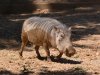
Does anyone know what species of warthog is on display at the Memphis Zoo? I forgot to look at the sign when I was there a few weeks ago.

I am not aware of any visible differences between Phacochoerus aethiopicus and Phacochoerus africanus, but I attached a photo just in case it helps.

On a related note, about eight or ten years ago I received an email from a scientist whose name I can't recall telling me that regardless of the signs I see in the zoo, there is actually only a single species of warthog on display in the U.S. Have any of you heard this? I have seen africanus in ten zoos and aethiopicus in seven according to their signs, and I tend to trust 17 zoos over one random email, but I've always been curious if that claim had any merits.
 

Attachments

  • aawartD71_8233.JPG
    aawartD71_8233.JPG
    442 KB · Views: 2
Phacochoerus africanus and P. a. sundevalli are kept but they are managed as a single population. As far as the AZA is concerned they are all common warthogs. The gene pool is just too shallow for both populations to be maintained separately.
 
Back
Top