Mixed species enclosures and other changes for Burgers Zoo

Wow that is quite detailed thank you. I would suggest checking out the Australian exhibits at the Living Desert and Cinncinati zoo both show how to do a proper kangaroo walkthrough. Now my worry is with the emus and that is don't emmus attack people. They have terrifyingly sharp claws, are like living dinosoars, and have had documented cases of attacking people. So besides the walk through killer bird exhibit (I'm Joking) this area is really cool

It's been done surprisingly often. And even then, the emus will also be able to go to the inside area
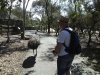
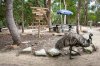
emu-on-pathjpeg.jpg Emu.jpg australia-walkabout-wildlife-park-3.jpg
 

Attachments

  • emu-on-pathjpeg.jpg
    emu-on-pathjpeg.jpg
    120.5 KB · Views: 27
  • australia-walkabout-wildlife-park-3.jpg
    australia-walkabout-wildlife-park-3.jpg
    258.8 KB · Views: 26
  • Emu.jpg
    Emu.jpg
    33.1 KB · Views: 27
I am also assuming you have no plans for Ocean

Both the rimba and Ocean are already set, there's no more room for expansion and if there were, there isn't any needed. Which is also my reason not to include gharials, they would better fit the rimba (Although I could do it next to the inside area for the monkeys... nah...)
 
None of this animals would work in a walk trough (Prairie dogs/praire chicken would only work in a hall, similar hall to Burgers Desert) and from you africa hall Marabu storks and goliath herons shoudn't be keept in walktrough exhibits either, because of their aggrasivness

The prairie dogs, etc. will be kept in an aviary surrounded by rock walls. All species can be kept outside, and walkthrough enclosures with prairie dogs have been done a lot of times before. Plus, if people can keep turkeys at home I'm sure they'll be fit for a walkthrough

The marabou storks won't be in a walkthrough, but if they were it has also been done multiple times before. Same with the goliath heron
 
It's been done surprisingly often. And even then, the emus will also be able to go to the inside area
View attachment 458332 View attachment 458334 View attachment 458333
Ok I think I'm starting to understand why European zoos have walkthroughs that could be dangerous for people/animals. It's because European people aren't as stupid as Americans. Throughout the rest of this I will try to stop thinking about every person who could mess up at the zoo and try to remember that Europeans won't make those decisions that Americans do.
 
Ok I think I'm starting to understand why European zoos have walkthroughs that could be dangerous for people/animals. It's because European people aren't as stupid as Americans. Throughout the rest of this I will try to stop thinking about every person who could mess up at the zoo and try to remember that Europeans won't make those decisions that Americans do.

Most of those were in Australia, actually. But indeed, children might sometimes chase after animals but their parents will probably hold them back. Unlike Americans (No offence), people in Europe won't often try to grab animals to take selfies with them. (I've seen a lot of videos and news articles of Americans picking up dangerous animals for selfies).

Either way, there will be a sign saying not to approach or feed the animals
 
Most of those were in Australia, actually. But indeed, children might sometimes chase after animals but their parents will probably hold them back. Unlike Americans (No offence), people in Europe won't often try to grab animals to take selfies with them. (I've seen a lot of videos and news articles of Americans picking up dangerous animals for selfies).

Either way, there will be a sign saying not to approach or feed the animals
No offense taken Americans are idiots and a great example of how stupid they are is the state of Florida, one of the few states goven an abundance of fauna like alligators, and some of the things they do with them are crazy. Just in case try to educate people on the dangers of Emus by using placards around the exhibit.
 
No offense taken Americans are idiots and a great example of how stupid they are is the state of Florida, one of the few states goven an abundance of fauna like alligators, and some of the things they do with them are crazy. Just in case try to educate people on the dangers of Emus by using placards around the exhibit.

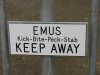
Well, definitely those typical Australian wildlife warning signs, along with general warning signs
Emu warn.jpg Emu warning.jpg
 

Attachments

  • Emu warn.jpg
    Emu warn.jpg
    10.3 KB · Views: 24
  • Emu warning.jpg
    Emu warning.jpg
    137.6 KB · Views: 26
Why would you waste space with a species like Coyotes. Zoos should focous on endangered species over all other kind of animal
Well, then I should let you know that every other animal except for the prairie chickens is least concern on the ICUN species list. Also, Americans considers Oppossums, Raccoons and, Skunks more invasive than coyotes. Coyotes can be found all over the continental United States they are more widespread than any other animal on this list. The only other reason I didn't pick a more endangered animal is European zoos don't really carry animals like fishers, red wolves, or ringtails.
 
Well, then I should let you know that every other animal except for the prairie chickens is least concern on the ICUN species list. Also, Americans considers Oppossums, Raccoons and, Skunks more invasive than coyotes. Coyotes can be found all over the continental United States they are more widespread than any other animal on this list. The only other reason I didn't pick a more endangered animal is European zoos don't really carry animals like fishers, red wolves, or ringtails.

Fun fact: Burger's zoo is actually the only zoo in mainland Europe that has a pair of ringtails and they recently had kits!

Here's their page on it: I'm guessing you can't read Dutch but there's videos attached
Bijzonder! Drie Noord-Amerikaanse katfretten geboren

They're also one of two zoos in europe that have the Califonia big horned sheep
 
Last edited:
No, I wanted to at first, but I decided to go for African islands and South American islands. So I had to had to take out the komodo dragons, babyrusa and other Indonesian island animals
Ok so what are your ideas for the other night house, not the south American one we already covered
 
Should we maybe discuss the woods, night, or island regions? Just to be sure
Maybe some questions may be allready answered.

Woods: What's your species list for this part? European bison are off the table? On your map i see (Brown?) bears and wolves. Are you planning to have them in a enclosure together or separate?

Night: I suppose you have two separate night houses because they are of different regions. But why not combine those into one? Just like the bush wich is not specified to a region. And, on your map, i see tapirs, giant anteaters and a deer species(?) in the night houses, why? They are not nocturnal animals.

Islands: Which regions are the two islands parts based on? Madagascar and South america?
 
Maybe some questions may be allready answered.

Woods: What's your species list for this part? European bison are off the table? On your map i see (Brown?) bears and wolves. Are you planning to have them in a enclosure together or separate?

Night: I suppose you have two separate night houses because they are of different regions. But why not combine those into one? Just like the bush wich is not specified to a region. And, on your map, i see tapirs, giant anteaters and a deer species(?) in the night houses, why? They are not nocturnal animals.

Islands: Which regions are the two islands parts based on? Madagascar and South america?

Brown bears and wolves are seperate, European bison are still in but seperate from the others

Brazilian tapirs, Giant anteaters and bongo are all nocturnal. But they are nocturnal because of temperature, they are active in the cold and rest in the heat. So in the wild that's during the night but in captivity in colder European countries that's by day.

Islands will be devided into South American (Cuba, Cayman islands, Galapagos) and African (Madagascar and Seychelles)

I'll upload the species lists and explenations later, gimme a sec to type out the Night (Central Africa)
 
Brazilian tapirs, Giant anteaters and bongo are all nocturnal. But they are nocturnal because of temperature, they are active in the cold and rest in the heat. So in the wild that's during the night but in captivity in colder European countries that's by day.
Ah, didn't know that. I learnt something today!
 
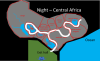
You enter the night house through the exit hall of the Ocean and Bush (The original exit to the outside will be moved to face sideways)
The path in the entire night house (both of them) are slightly elevated bridges. Glass and aviary nets will make seperations for most of the animals, and false roots and rocks will seperate the enclosures.
The Aardvarks and Bongos don't have glass or net seperations, for the aardvarks the ground is lower so they just can't get onto the path. Similar for the bongos, but there's also a fence around the path. The potto monkeys can roam freely between the Aardvarks and the Bongos as they please
Everything is in low light and lower temperature (as explained before, active in colder climate). A similar thing is in Aquazoo Friesland, they have a "colder" (around 20 degrees (celcius)) for armadillos and giant otters. They're very active and go to sleep in the evening, when the temperature goes up to 25 to 30.

The white bellied pangolins are a risk, and they will only have three to five smaller viewing windows to reduce stress while hopefully still being visible.
The "turtle" is the Nile softshell turtle. The rest of the species are speciefied

Night.png
 

Attachments

  • Night.png
    Night.png
    311.1 KB · Views: 27
Does anyone see any problems, otherwise I'll move on to the second Night house and then the islands
 
Back
Top