Mixed species enclosures and other changes for Burgers Zoo

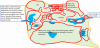
You could move the vulture aviary next to the path between the monkey islands and the white pelican enclosure. The hornbill aviary could be moved opposite of the old vulture aviary, this way you should have enough room to make a second aviary for the wading birds.

I'm afraid there's one problem with that

Google Maps

It's seven meters off the ground
 
I'm afraid there's one problem with that

Google Maps

It's seven meters off the ground

Good point, forgot about that....
You could try to put the hornbill aviary next to the cheetah enclosure, so in the small space left underneath the squirrel enclosure.
Maybe you could make a new aviary at the old hornbill aviary which extends towards the savannah.
 
Good point, forgot about that....
You could try to put the hornbill aviary next to the cheetah enclosure, so in the small space left underneath the squirrel enclosure.
Maybe you could make a new aviary at the old hornbill aviary which extends towards the savannah.

Moving the hornbill is actually a great idea!

Safari.png

But what birds will go in this one? I was thinking definitely the kori bustard, since they don't need the water as much. Maybe the smaller flying birds (Lilac-breasted roller and white-browed coucal) can fly between the both aviaries?
 

Attachments

  • Safari.png
    Safari.png
    366.1 KB · Views: 13
@Jarne, what's your opinion on this? You seem to be the most critical of us all. Which of the birds would bother either each other or the guests the most and should be seperated?
 
Moving the hornbill is actually a great idea!

View attachment 472494

But what birds will go in this one? I was thinking definitely the kori bustard, since they don't need the water as much. Maybe the smaller flying birds (Lilac-breasted roller and white-browed coucal) can fly between the both aviaries?
I think the kori bustard and the crowned crane should be the main species with the rollers and coucals having access to both exhibits.
 
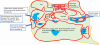
How about this?

With two seperated shoebill couples to increase breeding chances

The middle box has the birds that can go between both aviaries

Safari.png
 

Attachments

  • Safari.png
    Safari.png
    341.5 KB · Views: 13
@Jarne, what's your opinion on this? You seem to be the most critical of us all. Which of the birds would bother either each other or the guests the most and should be seperated?
I think the Kori-bustard are indeed a good species to move out of the big aviary, they might otherwise interfere with the lapwings. As the rollers and coucal are also not so dependent on water, they would make good species as well. You could maybe add some other smaller species like sparrows and pigeons. By removing these smaller species, you are also able to increase the mesh-width for the large aviary to make it cheaper.

Personally I still think shoebill is a very risky species to keep in a walk-through aviary, but shoebill + kori-bustard also seems risky.
 
How about this?

With two seperated shoebill couples to increase breeding chances

The middle box has the birds that can go between both aviaries

View attachment 472495
Your bottom aviary has a very high density of aggressive and territorial species. I think the cranes are better placed in the larger aviary, they don't pose a problem with any of those birds except maybe the shoebill which are already a risk with those flamingoes.
 
Personally I still think shoebill is a very risky species to keep in a walk-through aviary, but shoebill + kori-bustard also seems risky.
I agree I think that the shoebill should stay in the large aviary. Also maybe add a bit more water space for the goliath heron.
 
Your bottom aviary has a very high density of aggressive and territorial species. I think the cranes are better placed in the larger aviary, they don't pose a problem with any of those birds except maybe the shoebill which are already a risk with those flamingoes.
Actually, you could probably put the marabou storks with the pelicans as that is a mix that has been done before and is proven safe.
 
Actually, you could probably put the marabou storks with the pelicans as that is a mix that has been done before and is proven safe.

The white pelican habitat isn't an aviary. Nor is it visible at all. I genuinely have no idea why they put it there
 
Personally I still think shoebill is a very risky species to keep in a walk-through aviary

Well, as I've shown, it's been done before. Besides, it's a HUGE aviary. I think you underestimate the size of both aviaries. The bigger aviary is nearly as large as the entire magrove dome
 
The white pelican habitat isn't an aviary. Nor is it visible at all. I genuinely have no idea why they put it there
It's visible from the terrace next to the bush, they put it there because their old enclosure was demolished when building the mangrove. Maybe you could put try putting them in the large aviary as well?
Well, as I've shown, it's been done before. Besides, it's a HUGE aviary. I think you underestimate the size of both aviaries
I have my idea about their size, surely quite large aviaries.
 
It's visible from the terrace next to the bush, they put it there because their old enclosure was demolished when building the mangrove. Maybe you could put try putting them in the large aviary as well?

I thought about it. Don't know why I didn't, as I did move the crowned cranes. Which aviary would they best fit in?

And along with that, is there anything we could put into the open space of the pelican enclosure?
 
Last edited:
I thought about it. Don't know why I didn't, as I did move the crowned cranes. Which aviary would they best fit in?

And along with that, is there anything we could put into the open space of the pelican enclosure?
The large aviary I think. If it's really that huge, maybe also consider adding more species like Abdim's stork and yellow-billed stork.

I don't think you can put much in the pelican's space, it's only a small land area and people are looking down so most species will easily feel unsettled. This could in theory be partially countered by excessive vegetation, but then you don't see a thing.
 
Would the saddle-billed stork also work?
Just as with the rest I have my doubt how well they will get along with the shoebill, but besides that I think they shouldn't be a serious problem. African openbills are an interesting option as well.
 
Back
Top