MOG2012's Spec Exhibit Thread

MOG2012

Well-Known Member
While I work on my analysis thread, I'll also occasionally post on here. This thread will be for exhibits that I've thought about in the past, some for spec zoos that I stopped working on (not Las Vegas Spec Zoo).

  • This meant to be realistic to an extent; ie. some animals might be rarer than others albeit that they are accessible with some ambitious plans (ie. an underwater walkthrough tunnel for a "River" exhibit).
  • Please have feedback and suggestions as I want to make these zoos the best they can be.
  • Posts will be posted every month or so
  • I might draw maps for some of them but I'm still getting used to drawing on Procreate and a lot of my exhibit ideas aren't exactly easy to draw.
Expect the next post in the coming days (today or tomorrow) with a review of an old exhibit concept "Rainforest Revealed" and making it more realistic and plausible.
 
Rainforest Revealed: Part 1
This concept is really old, inspired mainly by Amazonia at Smithsonian National Zoo and Rainforest Revealed at Brevard Zoo. I'm first going to change the title as I want it to be unique so it's now going to be the Unseen Forest focusing on mainland Southeast Asian rainforests, cloud forests, and rivers (near forests) compared to my concept which was focusing on the Amazon, Central America, Southeast Asia, and Central Africa. Let's start off with the entrance. This was for my overall Zoo which would be in a humid location (likely Florida or Charlotte)

Original Description: "Before entering the 1-story building, there are 5 enclosures outdoors. The first is a solitary Royal Antelope (Neotragus pygmaeus) and a solitary White-bellied Pangolin (Phataginus tricuspis) which represents the jungles of Central Africa. On the opposite side of the pathway, there is a mixed enclosure with a family of Javan Gibbon (Hylobates moloch) and a family of Lar Gibbon (Hylobates lar). If you go down the pathway a bit more, there are 3 enclosures directly next to the entrance, 2 on the left side with 1 on the right side.

The most far left enclosure is a walkthrough aviary with a flight of 10-15 Imperial Pigeons (Ducula sp.), a flock of 50+ Metallic Starling Aplonis metallica, a flock of Salmon-crested Cockatoo (Cacatua moluccensis), and several pairs of Victoria Crowned-Pigeon (Goura victoria). Immediately left to the door is a large aviary with a breeding pair of Harpy Eagle (Harpia harpyja) with a slightly larger aviary on the right side of the door with a breeding pair of Philippine Eagle (Pithecophaga jefferyi)."

My Review and Thought Process of Changing It:
  • Having the building being 1-story was incredibly unrealistic as the eagle aviaries would tower over it. If I had the building be 2-3 stories tall, it would have more room for species)
  • Royal antelopes and pangolins were ambitious and also aren't found in Southeast Asia so maybe having an aviary with chevrotain which occupies a similar niche to those antelopes instead. Pangolins aren't realistic at all so I wouldn't try and replace them. With the enclosure outside, pangolins wouldn't be an option either as visitors wouldn't likely see them often.
  • I don't know why I thought having two different gibbons would work so maybe I can keep the lar gibbon. Having gibbons in front of the entrance would mess up the view so maybe I can have a trail near the exit of the building with the,
  • For the Australasian aviary, I can probably keep an aviary next to the entrance with having 3 large ones messing up the view of it. I can probably have pigeons (Nicobar?), tortoises, and some smaller species too with the chevrotain.
  • Harpy eagles were ambitious but they aren't unrealistic. However, they don't fit the theme and along with Philippine eagles which are incredibly unrealistic, there aren't any large raptor species that are realistic to obtain from Southeast Asia

New Version: Before entering the tall "Unseen Forest" building, there is an aviary to the left of the entrance. It's 72 sq. m with a height of 4 m. The viewing side is made out of glass panels with the top netted. The main entrance of the aviary is outside with 1.2 m wide double doors with 1 m tall wooden rails. There are various trees that make up 50% of the aviary with a 2 m large and 0.5 m deep pond that helps provide humidity and drinking water though there is an automated misting system. There are lots of plants with several nesting boxes, perches, leaf flitter, shaded areas, etc. There is a 30 m deep underground barrier to prevent predators from entering.

On the ground level and understory of the enclosure, you can see several species:
  • 2 breeding pairs of 2.2 Asian Emerald Dove (Chalcophaps indica)
  • A solitary 0.1 Greater Oriental Chevrotain (Tragulus napu)
  • A breeding pair of 1.1 Sunda Hooded Pitta (Pitta sordida mulleri)
In the midstory and canopy, you can see two more bird species:
  • A breeding group of 1.2 Asian Fairy-Bluebird (Irena puella)
  • A flock of 3.3 Nicobar Pigeon (Caloenas nicobarica)

full

Asian Emerald Dove, Image Credit -> @Zooish
full

Greater Oriental Chevrotain, Image Credit -> @CMZman
full

Sunda Hooded Pitta, Image Credit -> @KevinB
full

Asian Fairy-Bluebird, Image Credit -> @Nadchew_
full

Nicobar Pigeon, Image Credit -> @Zoofan15

What do you think so far? I'll continue the exhibit this week as this is only part 1 out of 5+.

Coming Soon
full

Image Credit -> @snowleopard
 
Rainforest Revealed: Part 2
Original Description: "When you enter the building, there is a center enclosure in the middle of the atrium with several enclosures on all sides. The center enclosure is an aviary where you can see: Golden-tailed Sapphire (Chrysuronia oenone), Pygmy Three-toed Sloth (Bradypus pygmaeus), Silky Anteater (Cyclopes sp.), Southern Tamandua (Tamandua tetradactyla), and White-nosed Coati (Nasua narica). On the close left side of the atrium, there are 3 enclosures. In a circular aviary with very small mesh-netting, it has various Southeast Asian island species: Atlas Moth (Attacus atlas), Philippine Tarsier (Carlito syrichta), Queen Alexandra's Birdwing (Ornithoptera alexandrae), and Sunda Slow Loris (Nycticebus coucang). On the left wall, the remaining two enclosures has a solitary Olinguito (Bassaricyon neblina) in one and a Northern Olingo (Bassaricyon gabbii) in the other."

My Review and Thought Process of Changing It:
  • Having hummingbirds, tarsier, pygmy sloths, and silky anteaters are very unrealistic, especially for an American zoo. However, making this area a nocturnal area could work as a majority of the species are nocturnal.
  • Sunda slow loris are not that common in the USA so pygmy slow loris could replace it
  • Binturongs and northern treeshrew are both less-known species like coatis, olinguitos, northern olingo, and tamandua
  • Having some terrariums would help make the species diversity
  • Bats are a must have in nocturnal zones so they could also be there, likely some flying fox

New Version: When you enter the building, there is an open atrium on the left side of the room with several enclosures. This area is lit up by a dim red light. The first enclosure there is a two-floors, 48 sq. m large and 8 m tall. There are several branches, ropes, platforms, nesting boxes, plants, and leaf litter which provides home to a bachelor group of 0.3 Pygmy Slow Loris (Xanthonycticebus pygmaeus). The next enclosure is also two-floors, but is 30 sq. m large and 6 m tall. It has branches, vines, ropes, enclosed dens, foraging zones, leaf litter, and plants with a breeding pair of 1.1 Northern Treeshrew (Tupaia belangeri). The third enclosure is 150 sq. m large with a height of 16 m being 2 floors large. It has open areas, nesting zones, roosting platforms, plants, and a colony of 0.0.35 Large Flying-Fox (Pteropus vampyrus). The final two-story enclosure is 80 sq. m large with a height of 10 m with branches, ropes, logs, nesting areas, foraging areas, and plants being home to a breeding pair of 1.1 Binturong (Arctictis binturong).

On the first floor between the treeshrew and flying fox enclosure is a terrarium that is 120 cm long, 60 cm wide, and 60 cm tall. There are multiple shelters such as cork bark, rocks, and logs with a shallow water dish and plants. It's home to a solitary 0.0.1 Asian Forest Scorpion (Heterometrus longimanus). Also on the first floor, after the binturong enclosure is an aquarium that is 150 cm long, 80 cm wide and 80 cm tall. It's a shallow pool with 2/5 of it being land area with rocks, plants, logs, and a solitary 0.1 Tentacled Snake (Erpeton tentaculatum).

full

Pygmy Slow Loris, Image Credit -> @Andrew_NZP
full

Northern Treeshrew, Image Credit -> @Ding Lingwei
full

Binturong, Image Credit -> @snowleopard
full

Large Flying-Fox, Image Credit -> @Austin the Sengi
full

Asian Forest Scorpion, Image Credit -> @SusScrofa
full

Tentacled Snake, Image Credit -> @Coelacanth18

Before entering the tall "Unseen Forest" building, there is an aviary to the left of the entrance. It's 72 sq. m with a height of 4 m. The viewing side is made out of glass panels with the top netted. The main entrance of the aviary is outside with 1.2 m wide double doors with 1 m tall wooden rails. There are various trees that make up 50% of the aviary with a 2 m large and 0.5 m deep pond that helps provide humidity and drinking water though there is an automated misting system. There are lots of plants with several nesting boxes, perches, leaf flitter, shaded areas, etc. There is a 30 m deep underground barrier to prevent predators from entering.
On the ground level and understory of the enclosure, you can see several species:
  • 2 breeding pairs of 2.2 Asian Emerald Dove (Chalcophaps indica)
  • A solitary 0.1 Greater Oriental Chevrotain (Tragulus napu)
  • A breeding pair of 1.1 Sunda Hooded Pitta (Pitta sordida mulleri)
In the midstory and canopy, you can see two more bird species:
  • A breeding group of 1.2 Asian Fairy-Bluebird (Irena puella)
  • A flock of 3.3 Nicobar Pigeon (Caloenas nicobarica)
Current Species: 11
Mammals: 5
Birds: 4
Reptiles: 1
Invertebrates: 1

What do you think so far? I'll continue the exhibit on Monday-Wednesday

Coming Soon:
full

Image Credit -> @RatioTile
full

Image Credit -> @Giant Eland
 
I'm going to take a quick pause on the Southeast Asia exhibit to talk about how I design my exhibits and the thinking put into it. This will be a two-post ordeal.

Step 1: First, I usually come up with a theme that isn't that common, or isn't even present in zoos. Sometimes they're cultural based (like my Land of the Pharaohs and Caesar's Menagerie exhibits from my spec Zoo), based on the animals traits (like my City of Lights exhibit), or purely from biogeographical habitats. For the purpose of this explanation (both posts), I will design an exhibit featuring animals from East Asia (location) with the theme of dragons focusing mainly on herps, calling it "Land of the Dragons"

Step 2: Then, I would find a headliner (s) species. Something (s) to base this exhibit around which would draw in crowds. From the top of my mind, Chinese Alligator (Alligator sinensis) and Chinese Giant Salamander (Andrias davidianus) would work.
full

Chinese Alligator, Image Credit -> @Astrotom3000
full

Chinese Giant Salamander, Image Credit -> @JigerofLemuria

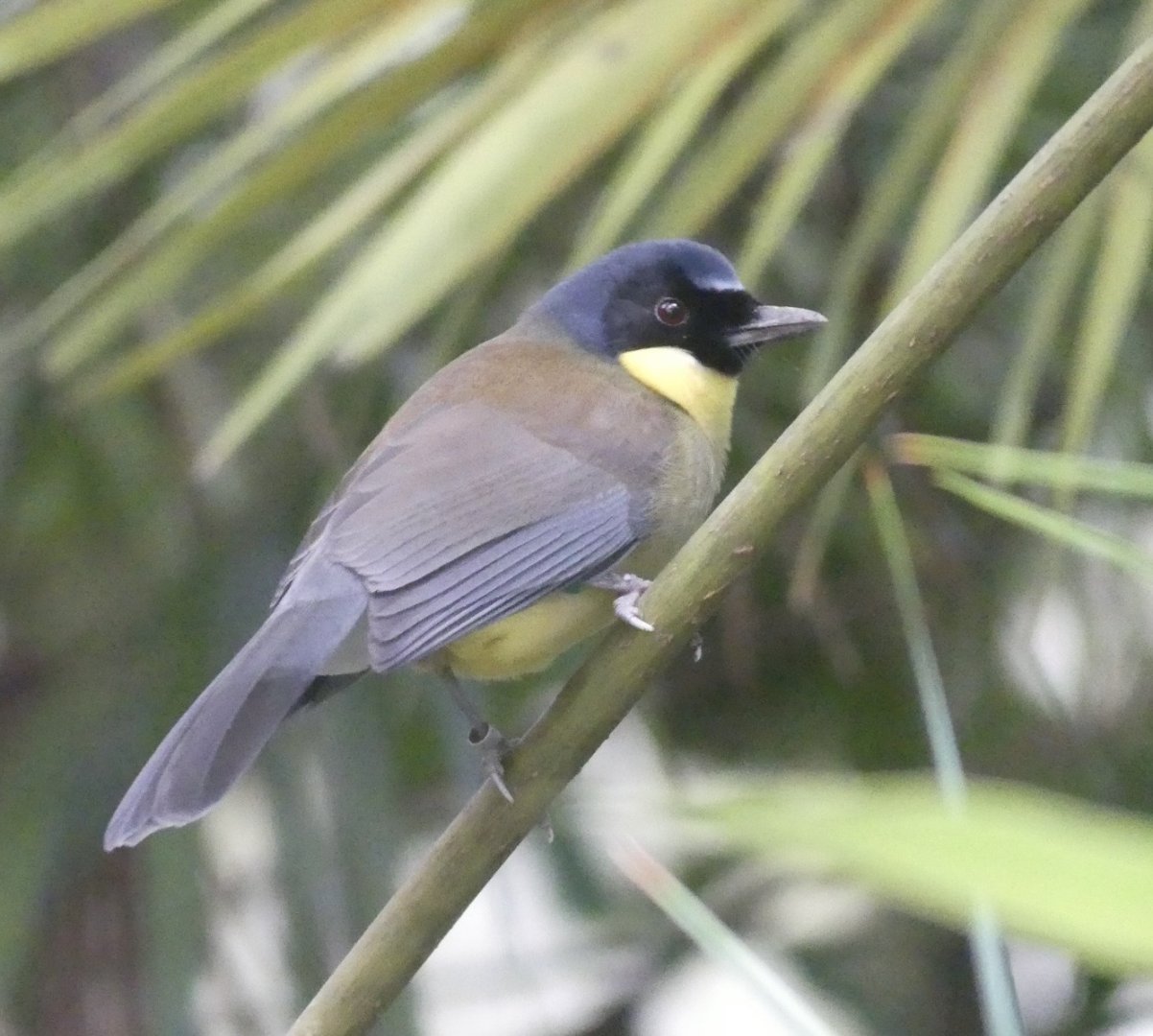
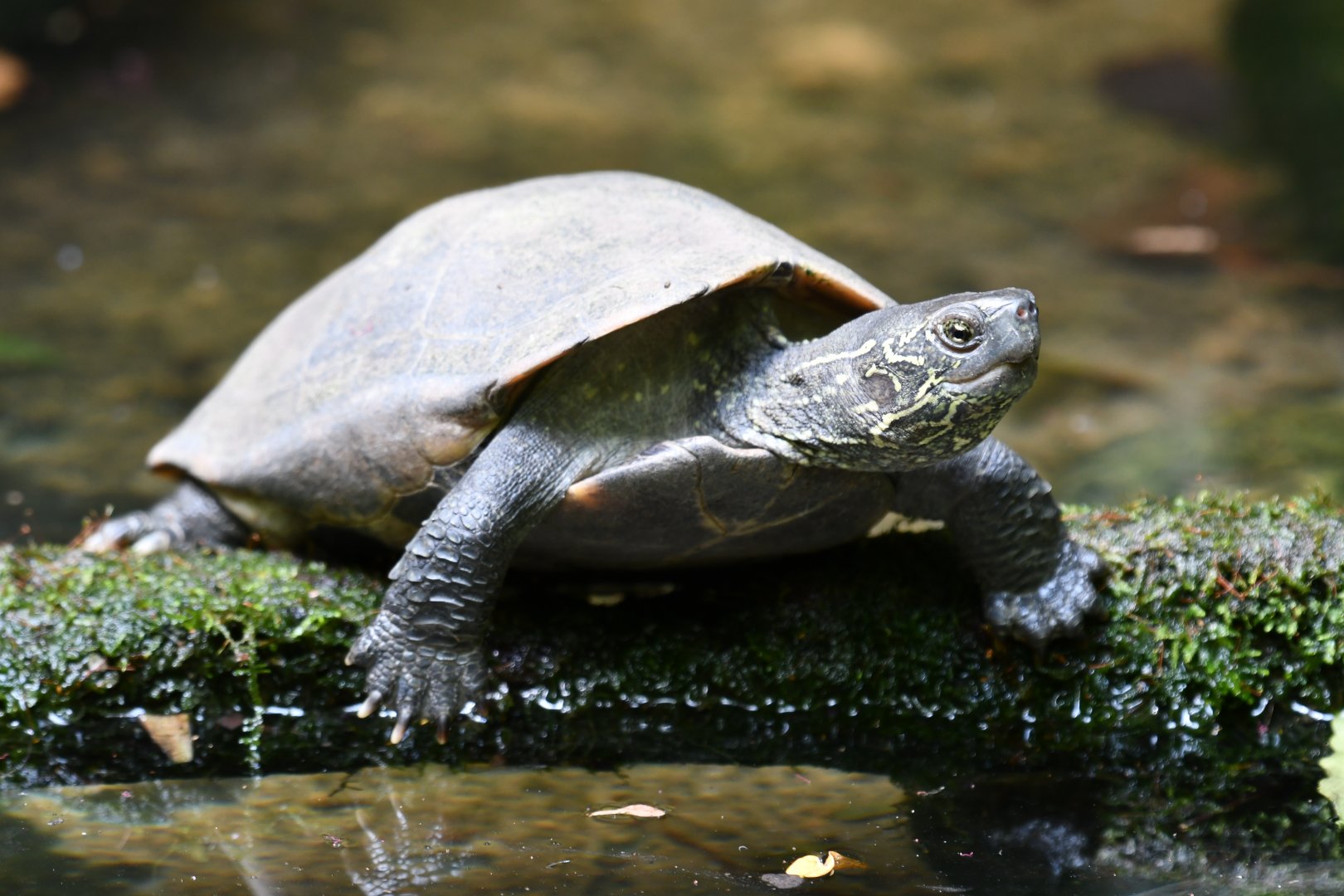
Step 3: What are some species that would go well near the headliners (ie. predator-prey relationships, animal opposites (ie. Nile crocodiles and Nile hippos), etc.) Well I would diversify the reptiles and amphibians so that would mean I would have a snake, lizard, turtle, and frog/toad. For snakes, Mang Mountain Pitviper (Protobothrops mangshanensis) and Burmese Python (Python bivittatus) which would showcase the two main "types" of snakes (constrictors and ones with venom) with pythons also being thought to be a possible cause of the dragon myth (ancient Greco-Romans described the dragons as being from India and being able to eat elephants whole which is likely an exaggerated description of reticulated pythons. For lizards, Chinese Crocodile Lizard (Shinisaurus crocodilurus) and Chinese Water Dragon (Physignathus cocincinus) would work well, with the later having the name "dragon" and both having crocodilian like traits Both species use camouflage and/or speed to get their prey which the salamanders and alligator do. For turtles, maybe I can have a land tortoise and a pond turtle so Impressed Tortoise (Manouria impressa) would be a conservation priority tortoise with the following being the most common, Endangered East Asian turtles (in AZA) that would fit in this Zoo exhibit: Black-breasted Hill Turtle (Geoemyda splengeri), Chinese Big-headed Turtle (Platysternon megacephalum megacephalum), Chinese Three-striped Box Turtle (Cuora trifasciata), Common Thread Turtle (Mauremys sinensis), and McCord's Box Turtle (Cuora mccordi). Finally, for amphibians I’m choosing Oriental Fire-bellied Toad (Bombina orientalis) and Anderson’s Crocodile Newt (Echinotriton andersoni).

full

Mang Mountain Viper, Image Credit -> @lintworm
full

Burmese Python, Image Credit -> @pachyderm pro
full

Asian Water Dragon, Image Credit -> @TheGerenuk
full

Chinese Crocodile Lizard, Image Credit -> @PangolinLover0514
full

Impressed Tortoise, Image Credit -> @Jakub
full

Black-Breasted Hill Turtle, Image Credit -> @ro6ca66
full

Chinese Big-Headed Turtle, Image Credit -> @olhl.animal.photography
full

Chinese Three-Striped Box Turtle, Image Credit -> @Zoofan15
full

Common Thread Turtle, Image Credit -> @Ituri
full

McCord's Box Turtle, Image Credit -> @NNM.
full

Oriental Fire-Bellied Toad, Image Credit -> @vogelcommando
full

Anderson's Crocodile Newt, Image Credit -> @RatioTile

Step 4: After having a core set of species, I typically start trying to diversify the roster. As this is a herpetarium(ish), having another lizard, snake, some birds, fish, and inverts could fit. For lizards, a nocturnal smaller one would fit as it would show the diversity of lizards so a Chinese Cave Gecko (Goniurosaurus hainanensis), I was also thinking about the possibility of having Asian water monitors but as there is already enough large-ish reptiles, I decided to nix it. For snakes, maybe an island living one could work showing how island life has both significant similarities and differences so maybe a Tokara Habu (Protobothrops tokarensis) which is from a group of Japanese islands could work. For birds, passerines are one of the most common types of East Asian birds (other than waterfowl) so Chinese Hwamei (Garrulax canorus), and Red-billed Leiothrix (Leiothrix lutea) work as they are both SSP program animals with breeding programs. For fish, larger fish could work so Northern Snakeheads (Channa argus) and Grass Carps (Ctenopharyngodon idella). Finally, finding some inverts for this exhibit was hard but I found the Chinese Mantis (Tenodera sinensis) which are the most common species of mantis in captivity.

There was a photo of Chinese Cave Geckos but I couldn't fit it entirely on (image count), Image Credit -> @vogelcommando
full

Tokara Habu, Image Credit -> @TinoPup
full

Chinese Hwamei, Image Credit -> @Leo K.
full

Red-billed Leiothrix, Image Credit -> @KevinB
full

Northern Snakehead, Image Credit -> @Astrotom3000
full

Grass Carp, Image Credit -> @German Zoo World
full

Chinese Mantis, Image Credit -> @CMP

As I didn't expect for this post to have so many photos already, I'll continue with the rest of this explanation (2+ parts) on Friday/the weekend with the mixed species step. What do you think so far?

Notes: A lot of the inspiration for the roster were from various existing Asian oriented Zoo exhibits such as Bronx Zoo, Omaha Zoo, and San Diego Zoo. Also, as I was looking up photos for the exhibit, I didn't intentionally mean for the roster to be similar to @Aardwolf 's and @Mr Gharial 's similar East Asian themed exhibits. Another thing I wanted to mention is that this exhibit was planned for a temperate Zoo, likely in New England.
 
Step 5: At this step, I try to find out different mixed species possibilities while still being in the realm of possibility. To make this shorter, I decided to make each animal in spoilers with their mixed species information.
Birds​
Notes:
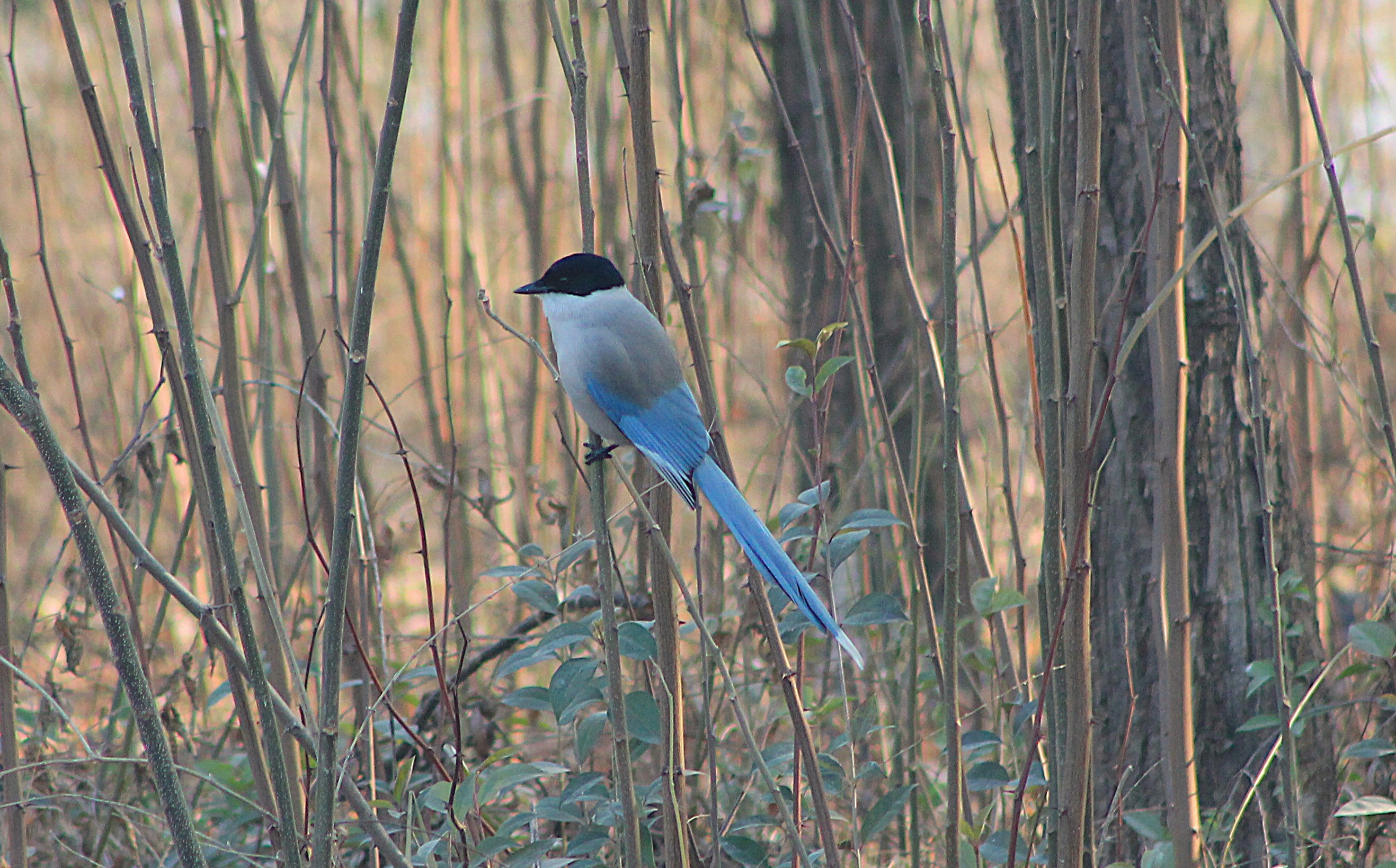
  • I decided to add Azure-Winged Magpie to diversify the passerines.
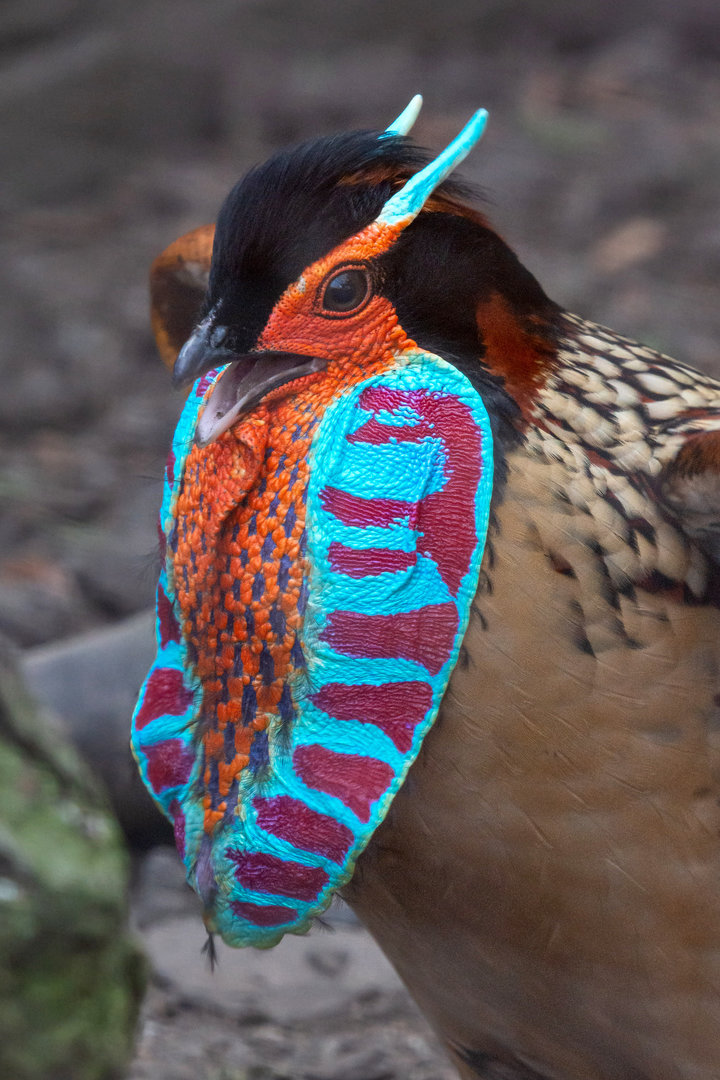
With my home zoo (Franklin Park Zoo) being inspiration, ground birds could be in the enclosure so Cabot's Tragopan (Tragopan caboti) and Golden Pheasant (Chrysolophus pictus) would work.
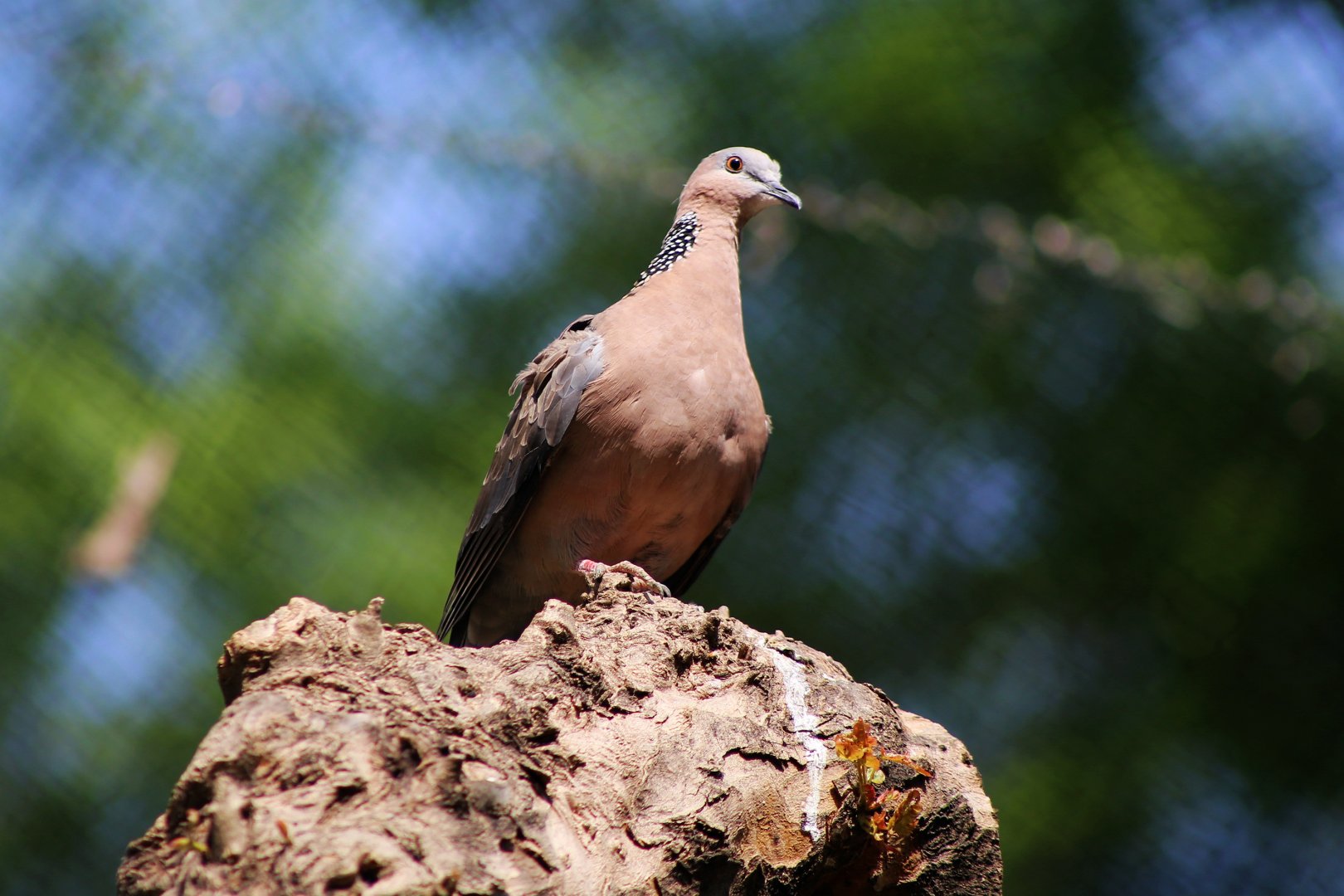
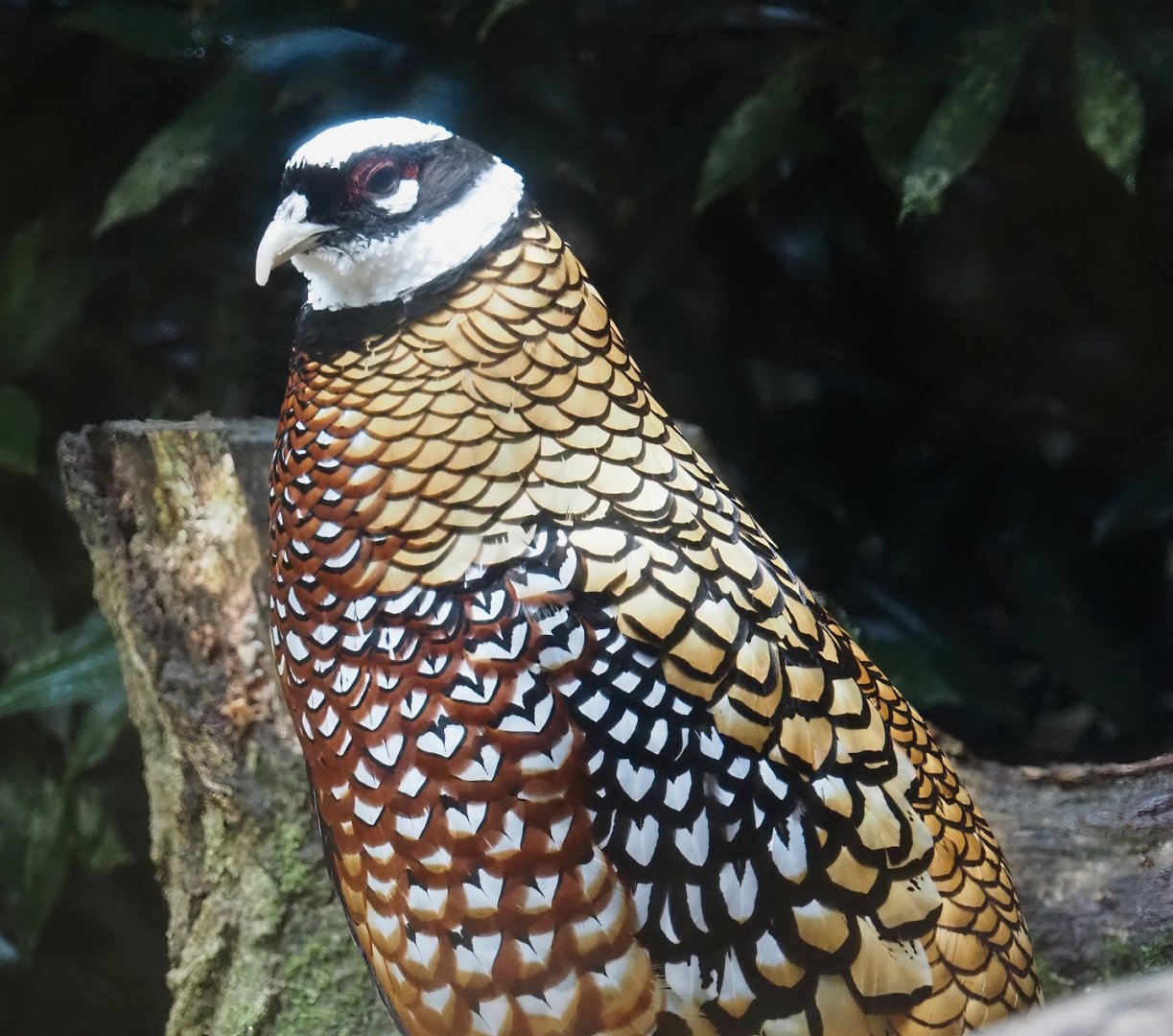
Both species could be housed in a walkthrough aviary but I want to focus on land birds so generic Spotted Doves (Spilopelia chinensis), Reeves's Pheasant (Syrmaticus reevesii), and Blue-crowned Laughingthrush (Pterorhinus courtoisi) would allow the enclosure to have a decent amount of species while focusing on more conservation priority ones. Also in this walkthrough aviary could be the Impressed Tortoise though this would be seasonal (due to this Zoo being in a temperate location)

I'll post the reptile section in a couple days due to being busy (maybe on Monday). Feel free to give suggestions, criticism, feedback, etc.
 
Reptiles​
Notes:
  • I couldn't find any information about Chinese Cave Geckos being in mixed species enclosures in captivity so they will be only in their enclosure.

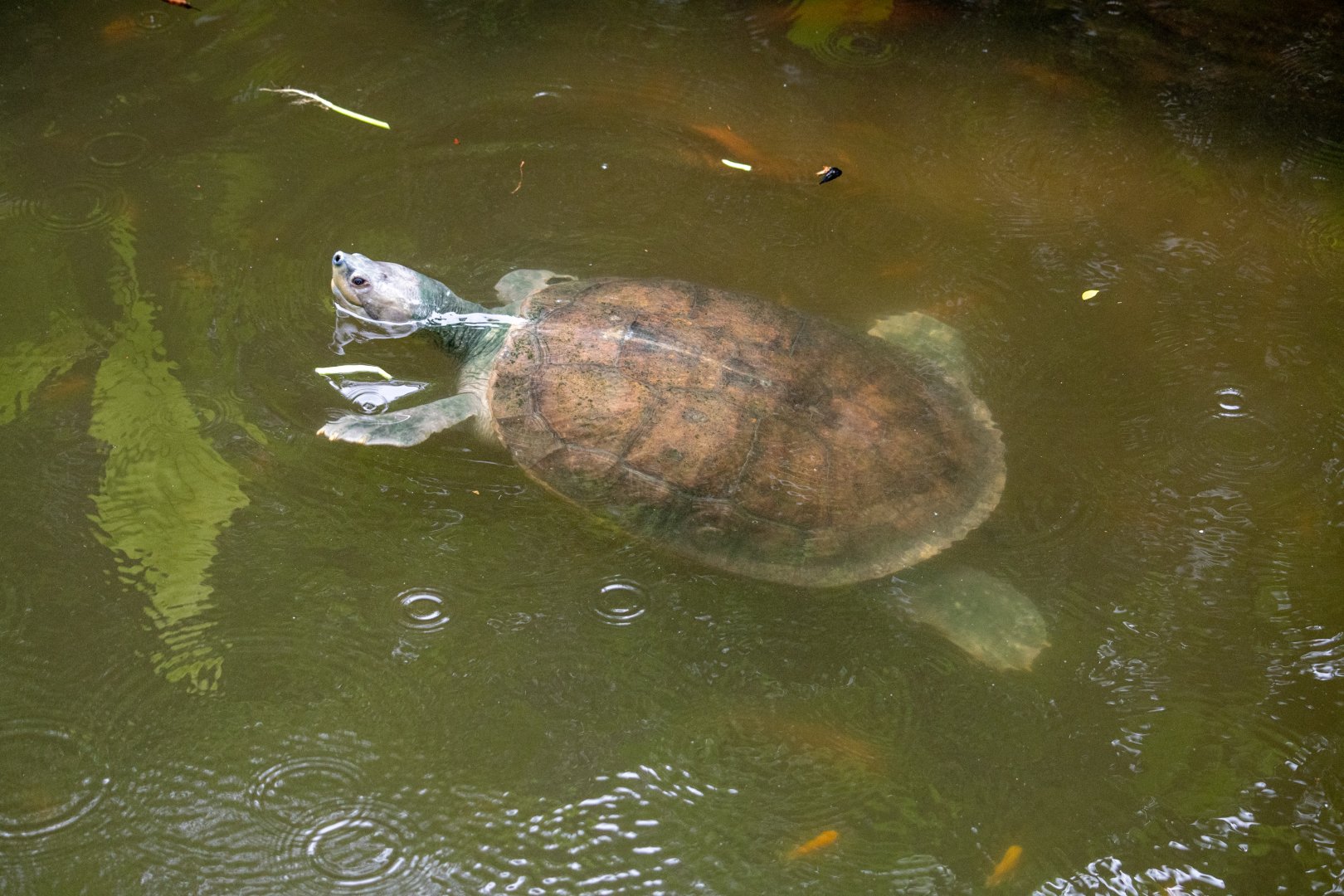
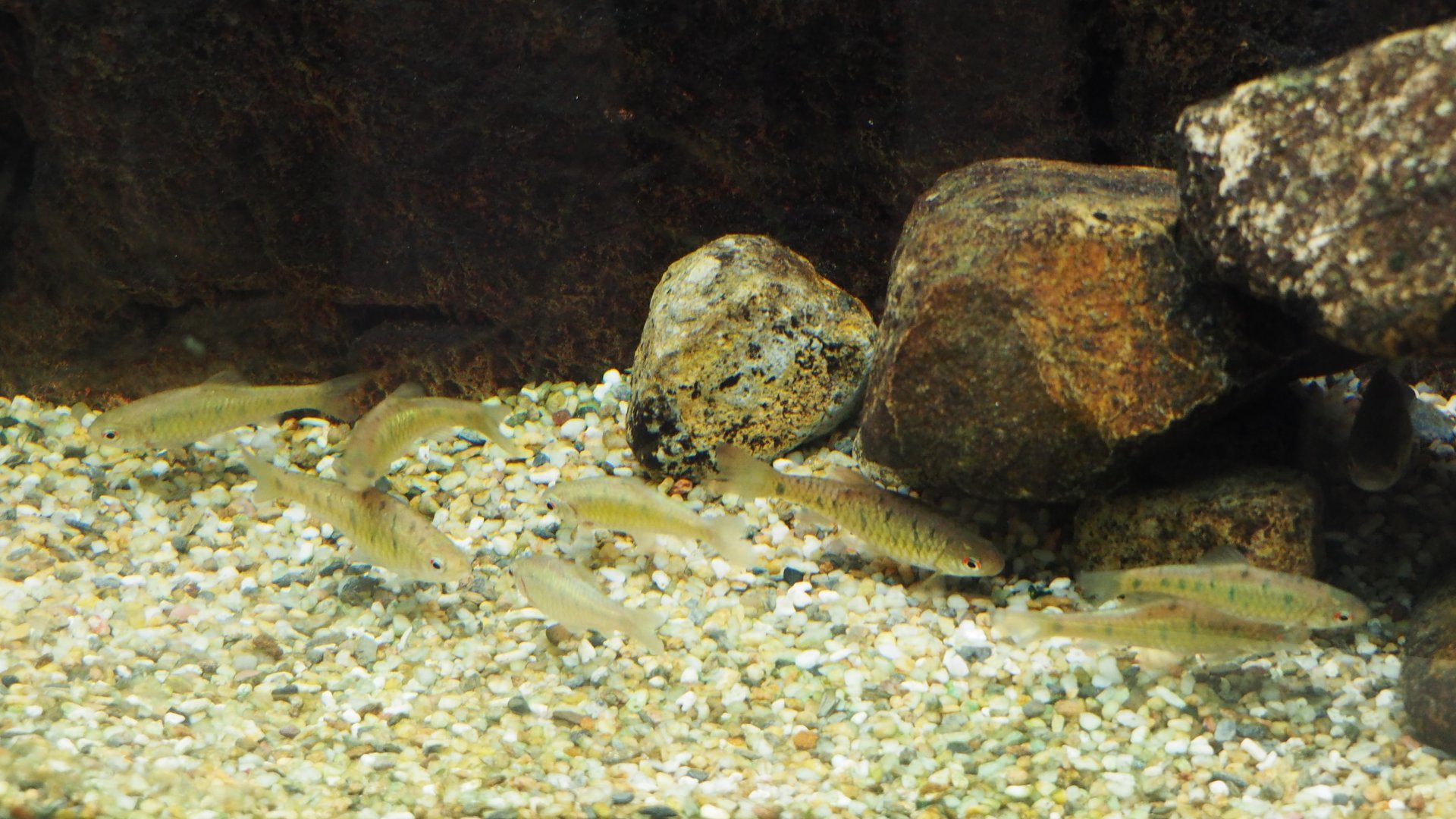
This species is from the Southern China and Indochina region so a turtle like Southern River Terrapin (Batagur affinis) could work with the Black-Breasted Hill Turtle from before. Fish would add more movement in the enclosure so Chinese Barb (Barbodes semifasciolatus) would work.

Like most snakes, it isn't really advised to house them with other species due to their carnivorous diet.
Like the American Alligator, Chinese alligators can be housed with fish and turtles so the Chinese Big-headed turtles, Common thread turtles, and Chinese three-striped box turtle from before, would work
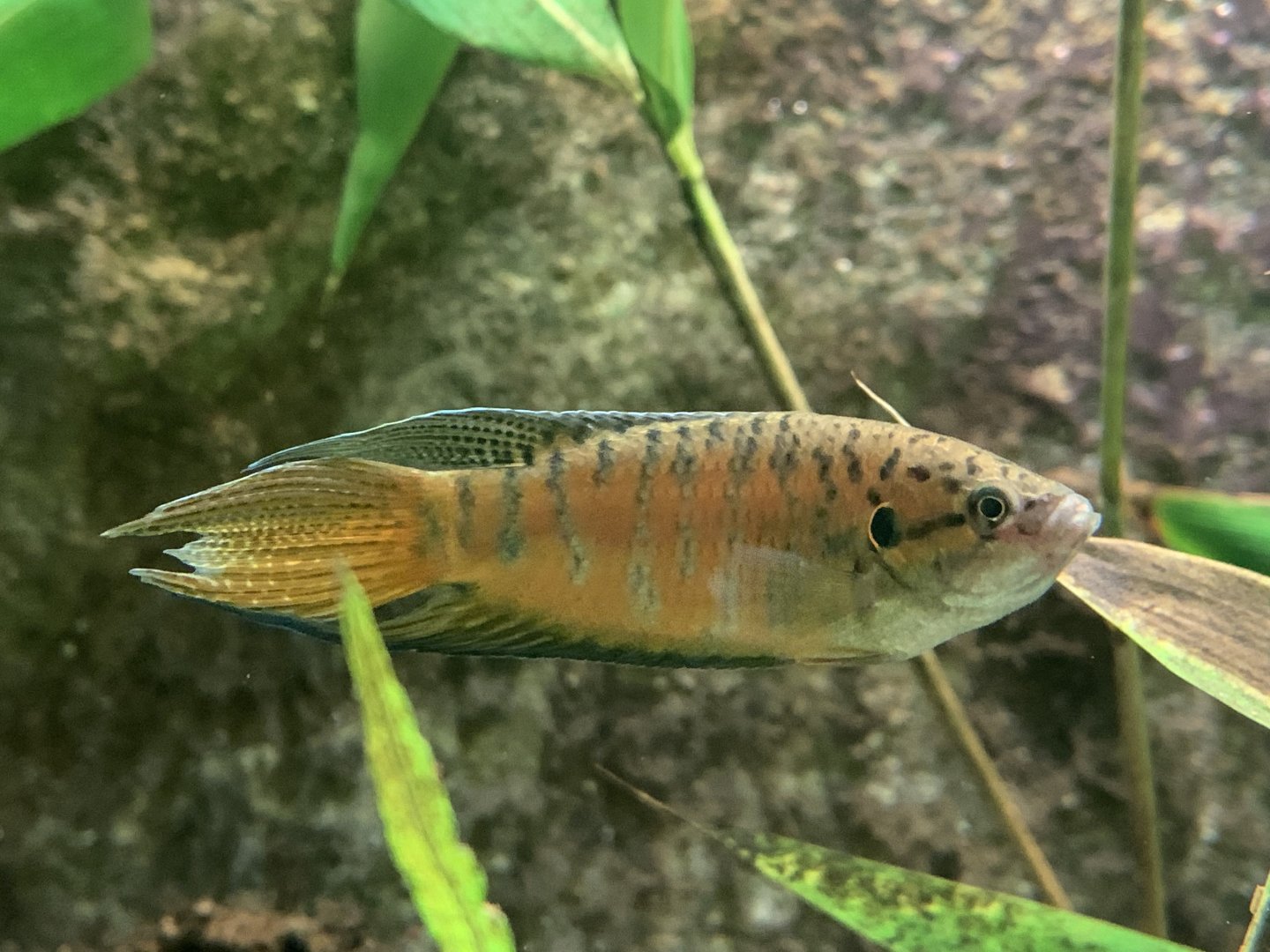
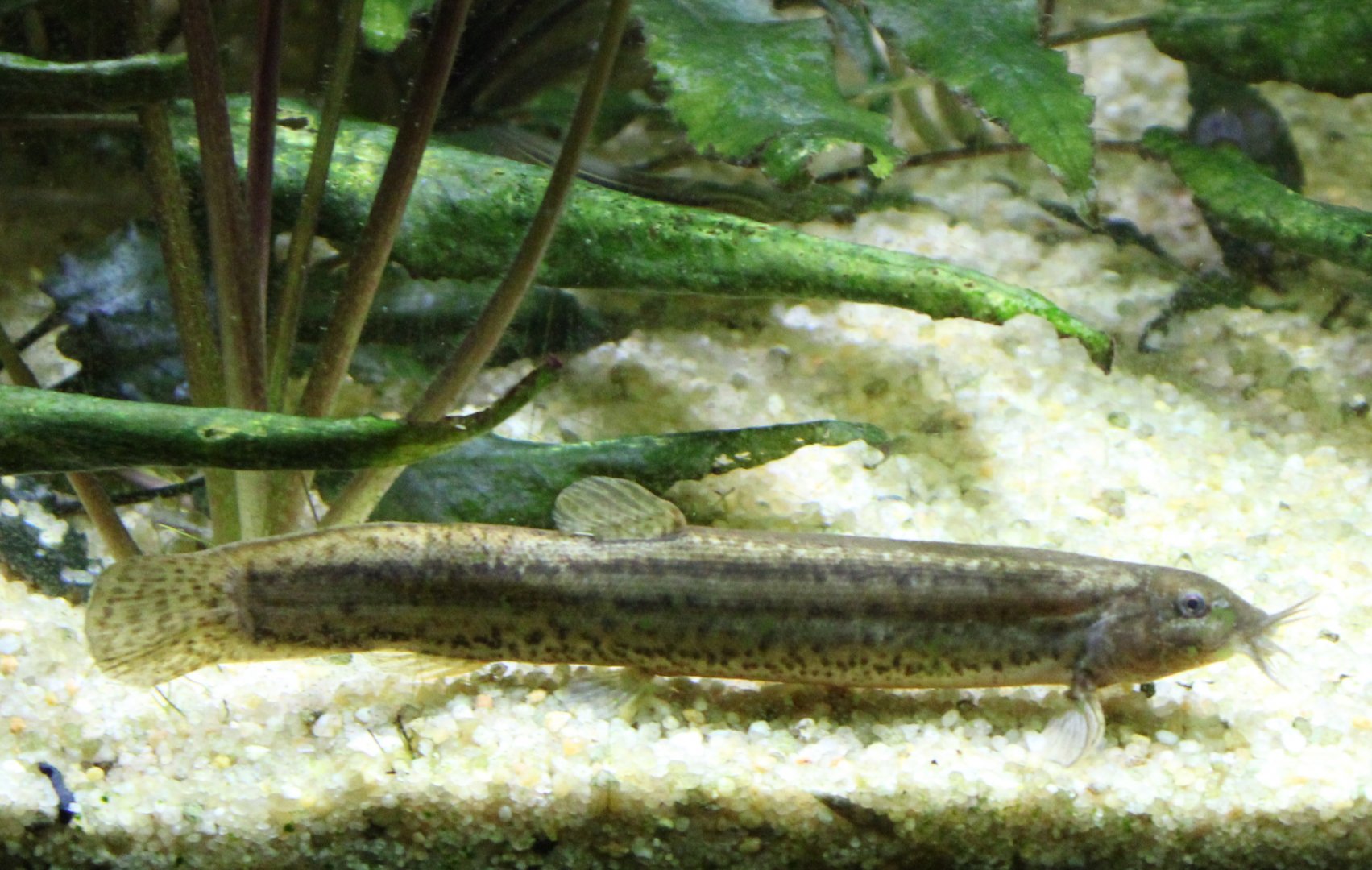
Similar to Asian Water dragons, these lizards have also been kept with turtles and fish. Chinese Pond Turtles (Mauremys reevesi) would work along with McCord's Box turtle from before with Fork Tailed Paradisefish (Macropodus opercularis) and Oriental Weatherfish (Misgurnus anguillicaudatus) fulfilling the fish aspect.


I'll post the last mixed species step part (amphibians, fish, and inverts) next Monday-Wednesday. What do you think so far?
 
Mixed Species Enclosures Final Group​
Notes:
  • Northern snakeheads are too aggressive to be housed in mixed species enclosures in my opinion
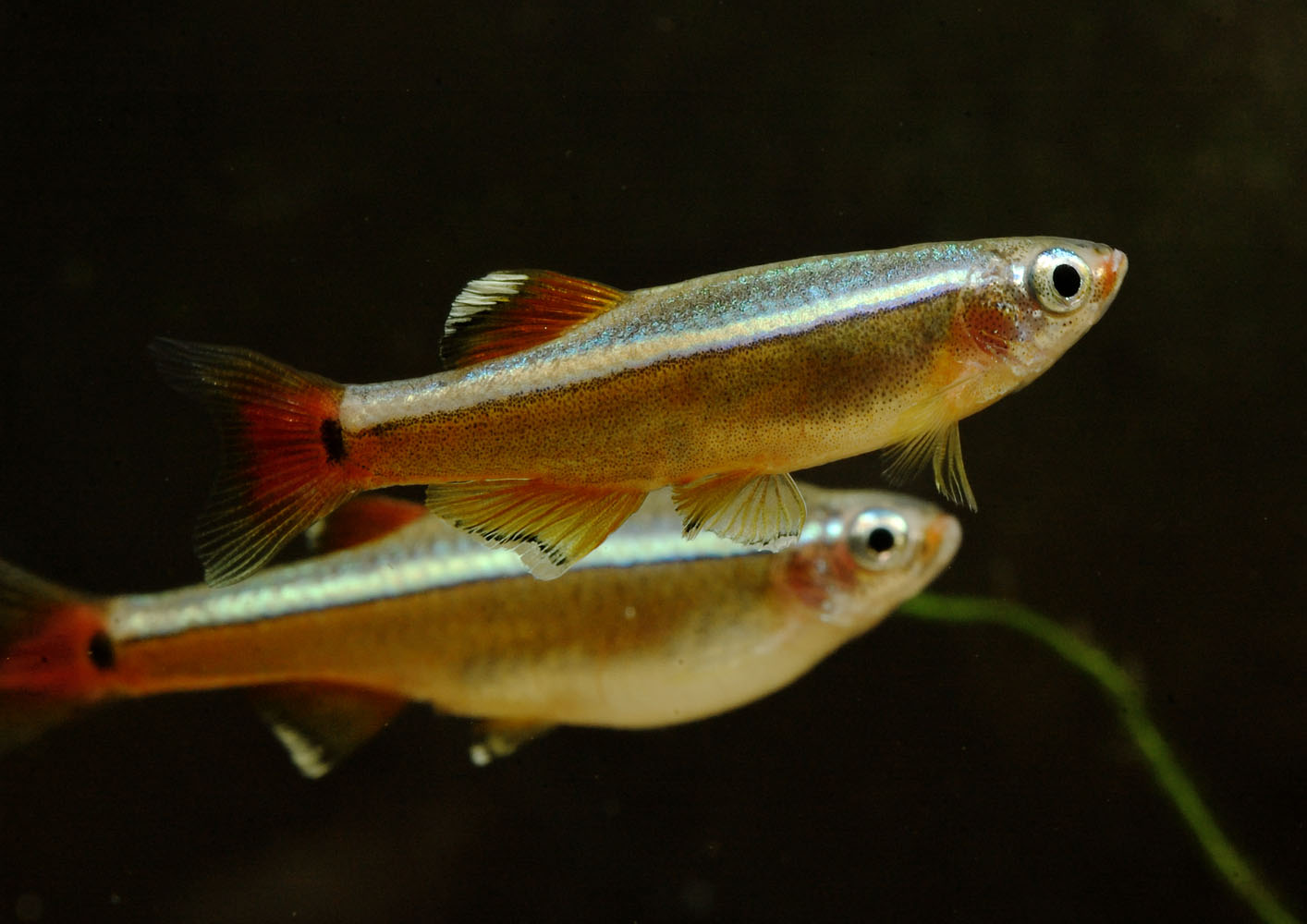
  • I'm going to add White Cloud Mountain Minnow Tanichthys albonubes to the Chinese Crocodile Lizard's enclosure

Giant salamanders can be kept with fish however they can't be prey (the right size for them to suction them up). The grass carps from before could work as they are large enough that the Salamander can't eat it.
Amphibians tend to not be housed in mixed species enclosures unless there's some fish usually so the newt and toad will be in separate enclosures.
I haven't seen praying mantises in mixed species enclosures ever so I don't think I'll have them mixed. I think I'll add Joro Spider Trichonephila clavata which are becoming invasive in the Northeast (they started being invasive in the South).
View media item 682157
 
Step 6: Now, I assess the enclosures of the animals such as type (terrarium, Aquarium, riparium, etc.), group size, outdoors or indoors, etc.

This enclosure has Chinese Alligator (Alligator sinensis), Chinese Big-headed Turtle (Platysternon megacephalum), Common Thread Turtle (Mauremys sinensis), and Chinese Three-striped Box Turtle (Cuora trifasciata).
  • Enclosure Basis: I tend to find an area where all of the animals are from so this enclosure would look like the Yangtze River floodplain
  • Enclosure Type: As all animals are aquatic but also use land area, a large, riparium enclosure would fit
  • Water to Land Ratio: 65% aquatic and 35% terrestrial as the animals mostly spend their time in the water and usually bask on land
  • Zonings & Barriers: This is good for aggressive and/or timid species so there would be deep pools, submerged logs, basking islands, sandbanks, rock formations, aquatic plants, etc.
  • Indoor/Outdoor: As these animals are cold-blooded, they need a warm environment so the enclosure would primarily be indoors with an adjacent outdoor space in the summer
  • Chinese Alligator: A breeding pair could work so isolated basking areas and raised land sections/water barriers would be needed
  • Chinese Big-Headed Turtles: 1.1 or 1.2 would be good as multiple males would lead to aggression. They don't bask much so shaded rock crevices would work
  • Common Thread Turtle: These animals are mostly social so 1.2 to 1.4 would work, with semi-open areas for basking needed
  • Chinese Three-striped Box Turtle: 1.1 or 1.2 would also work similar to the big-headed turtle but they would need deep shelters so they wouldn't get stressed
  • All of the animals swim so underwater viewing should be possible
Has Chinese Giant Salamander (Andrias davidianus) and Grass Carp (Ctenopharyngodon idella)

  • Enclosure Basis: A mountain stream
  • Enclosure Type: The animals mostly spend their time in the water but the salamanders could go on land rarely so it would be a riparium enclosure
  • Water to Land Ratio: 85% aquatic and 15% terrestial with the water varying in depth from very deep (for the grass carp) and shallower water for the giant salamanders
  • Zonings & Barriers: The animals aren't likely to go into conflict but there would be dense riparian vegetation, and large submerged rock caves & crevices to prevent tension
  • Indoor/Outdoor: Giant salamanders are sensitive to the temperature (fluctuations mainly) so they would have seasonal outdoor access (like how Smithsonian Zoo used to have it)
  • Chinese Giant Salamander: To prevent aggression, there would only be a solitary individual with the tank needing fast-moving, well-oxygenated waters and low disturbance areas
  • Grass Carp: They are a social species so having a moderate number of individuals such as 3-6 would work as they are very large fish. They are also active swimmers. They constantly forage on aquatic vegetation so maybe a fast-reproducing/growing aquatic plants would work. They are also active swimmers so they need large open spaces
Has Mang Mountain Viper (Protobothrops mangshanensis)
  • Enclosure Basis: This enclosure would be based on the montane forests of Hunan and Guangdong, China
  • Enclosure Type: This species is somewhat large for venomous snakes but they don't need that large of an enclosure so a large terrarium/enclosure mix would work. It would also have to be very cool, humid, and misty
  • Water to Land Ratio: This animal isn't aquatic so only misting and a shallow pool for drinking is needed
  • Indoor/Outdoor: This animal would be in a fully indoor, climate-controlled enclosure including a fog/mist system
  • The enclosure would have driftwood/branches for climbing, cork bark/rock crevices for hiding, and elevated platforms
  • There would also be various live plants with a breeding pair of them
  • Lighting would be dim with the snake being mostly nocturnal/crepuscular
It only has Burmese Python (Python bivittatus).

  • Enclosure Basis: This enclosure would be based off of the wetlands of South China and Indochina
  • Enclosure Type: This would also be a terrarium/enclosure mix as they are an incredibly large snake
  • Water to Land Ratio: This is a semi-aquatic animal so the ratio would be 70% land and 30% water due to a deep pool
  • Indoor/Outdoor: This animal would be in a fully indoor, climate-controlled enclosure. However I'm debating if there should be seasonal outdoor access for enrichment during the humid summers
  • Some things in the enclosure could be various plants, rockwork, basking sites, tree trunks, logs, etc.
  • These animals are solitary in the wild so only a solitary female individual would be housed due to the females being larger
It's a mixed species enclosures with Asian Water Dragon (Physignathus cocincinus), Southern River Terrapin (Batagur affinis), Black-breasted Hill Turtle (Geoemyda spengleri), and Chinese Barb (Puntius semifasciolatus)

  • Enclosure Basis: Indochinese riverbanks
  • Enclosure Type: This would be a riparium-styled terrarium as there are both semi-aquatic animals (the lizards) and aquatic animals (fish and turtles)
  • Water to Land Ratio: 60% aquatic and 40% land due to the turtles and lizards going on water
  • Zoning & Barriers: There would be various floating islands, hiding spots, elevated logs, and rock formations for basking, hiding, etc.
  • Indoor/Outdoor: These animals would be fully indoors
  • Asian Water Dragon: These animals would be housed 1.2 with breeding in place which would need dense vegetation, misted areas, and elevated areas
  • Southern River Terrapin: There would be 1.2 to 1.3 individuals as males can be territorial. These animals need deep, slow-moving water but also large space such as basking areas and nesting sites to reduce competition
  • Black-Breasted Hill Turtle: A simple breeding pair would work with them being nocturnal, and shy so shaded areas, and leaf litter would help them not be stressed
  • Chinese Barbs: These animals are schooling species so in my opinion, 10 would be the minimum amount. They need open swimming spaces, and vegetated zones with enough individuals to prevent over predation (the animals might predate)

This is all I'm going to do but I'll finish the next quarter later this week as this is a more lengthy post. What do you think so far?
 
I got this out earlier than I expected.

It has Chinese Crocodile Lizard (Shinisaurus crocodilurus), Chinese Pond Turtle (Mauremys reevesii), McCord’s Box Turtle (Cuora mccordi), Fork-tailed Paradise Fish (Macropodus opercularis), Oriental Weather Loach (Misgurnus anguillicaudatus), and White Cloud Mountain Minnow (Tanichthys albonubes)

  • Enclosure Basis: Slow-moving streams of South China
  • Enclosure Type: A riparium but like a forest-edge
  • Water to Land Ratio: 70% Aquatic and 30% terrestrial as crocodile lizards are semi-aquatic
  • Zonings & Barriers: Aquatic plants, root tangles, and logs
  • Indoor/Outdoor: Mainly indoors
  • Chinese Crocodile Lizard: A breeding pair could work so elevated perches would be needed
  • Chinese Pond Turtle: 1.2 to 1.3 would work as they can be territorial with them being active swimmers
  • McCord's Box Turtle: They can be a pair of 1.1 with moist, heavily vegetated hiding zones so they need a soft substrate for burrowing
  • Fork-tailed Paradise Fish: 3-5 individuals as they are mostly social, preferring dense plants and slow-moving water
  • Oriental Weather Loach: 5+ as they are social and they need a sandy substrate for burrowing
  • White Cloud Mountain Minnow: They are schooling species and they prefer oxygen-rich water and shaded areas
Has Tokara Habu (Protobothrops tokarensis)

  • Enclosure Basis: Subtropical montane forests of the Tokara Islands
  • Enclosure Type: A terrarium as this is a smaller snake
  • Water to Land Ratio: The habu isn't aquatic so it only needs a water basin for drinking, and soaking
  • Indoors/Outdoors: It would be fully indoors
  • There are various hollow logs and burrows for hiding
  • Overhanging branches and thick vines for semi-arboreal behaviors
  • Various plants
  • Rock crevices for thermoregulation
  • Only one individual as they are solitary with dim lighting due to their nocturnal behavior
Has Hainan Cave Gecko (Goniurosaurus hainanensis)
  • Enclosure Basis: The limestone caves of Hainan
  • Enclosure Type: A terrarium as these geckos are small
  • Water to Land Ratio: They only need a very small shallow water dish for drinking as they are terrestial
  • Indoors/Outdoors: It has to be indoors to mimic the caves
  • There is various rocky terrain and limestone rock formations for climbing and hiding
  • Moss-covered logs and bark slabs for moisted areas
  • Shaded burrows and crevices to reduce stress with some plants
  • Only a breeding pair with the lighting also be dim as they are strictly nocturnal

This is all I'm going to do but I'll finish the next quarter next week as this is a more lengthy post. What do you think so far? The next quarter will be birds, amphibians and some new reptiles with the final quarter being the remaining fish and invertebrates
 
Reptiles, and Birds

I decided that I would do amphibians later as I had some more ideas.
This one is a new addition with King Rat Snake (Elaphe carinata)
  • Enclosure Basis: Temperate, montane forests of East China
  • Enclosure Type: A terrarium
  • Water to Land Ratio: Like most snakes, they only need soaking pools
  • Indoors/Outdoors: Outdoor enclosures for snakes are rare with this only being indoors
  • There will be rocky formations, large logs, branches, and various plants
  • Like most snakes, they should be housed individually

Also a new addition, this enclosure has Sakishima Grass Lizard (Takydromus dorsalis)
  • Enclosure Basis: Grasslands of Japan
  • Enclosure Type: A terrarium
  • Water to Land Ratio: A small water dish is only needed but there is high humidity
  • Indoors/Outdoors: Fully indoors
  • There is leaf litter and small rocks for burrowing
  • Rock surfaces for sunning with tall grass-like plants for shelter
  • Cork bark for resting
  • They are somewhat social so a breeding pair could work
This enclosure is the only walkthrough section of this entire exhibit with Impressed Tortoise (Manouria impressa), Chinese Hwamei (Garrulax canorus), Red-Billed Leiothrix (Leiothrix lutea), Spotted Dove (Spilopelia chinensis), Blue-Crowned Laughingthrush (Pterorhinus courtoisi), and Reeve’s Pheasant (Syrmaticus reevesii)
  • This simulates the subtropical forests of South China
  • Enclosure Type: A walk-through aviary that's spacious and tall
  • Water to Land Ratio: 90% land and 10% water with shallow ponds for drinking
  • Indoors/Outdoors: Fully outdoors with tortoises going indoors for winter
  • Zonings & Barriers: Dense shrubs which would serve as hiding spots for the terrestrial animals. There would also be tall trees, logs, and rock formations
  • Impressed Tortoise: They would be breeding in a group of 1.2. They need deep leaf litter, hiding spaces, and a small drinking pool
  • Chinese Hwamei: There is a breeding program so a flock of 3.3 with monogamous pairs could work
  • Red-Billed Leiothrix: They are extremely social, so a breeding flock of 6-10 could work. They need shrubby areas for cover
  • Spotted Dove: They are also social, needing 4-8 individuals. There would need to be open areas and trees for roosting and foraging
  • Blue-Crowned Laughingthrush: They are social and active, needing 4-8 individuals with mid-canopy perches
  • Reeve's Pheasant: 1.2 could work as males can be aggresive
Has Azure-Winged Magpie (Cyanopica cyanus), Cabot’s Tragopan (Tragopan caboti), and Golden Pheasant (Chrysolophus pictus)

  • Enclosure Basis: Temperate montane forests of Southeastern China
  • Enclosure Type: An outdoor aviary
  • Water to Land Ratio: Only 5% water with a shallow stream and pool for drinking
  • Indoors/Outdoors: It would be fully outdoors
  • Zonings & Barriers: There would be multiple perching levels, rocky outcrops, shrubs, trees, and logs
  • Azure-Winged Magpie: They are social so a group for 4-8 could work. They also need enrichment so maybe live insect feeders and also mixed perching heights
  • Cabot's Tragopan: Males are territorial so 1.2 could work with rock formations and dense vegetation to reduce stress levels
  • Golden Pheasant: Males again are territorial so 1.3 or a bachelor flock could work. They would need room for a dust-bathing area and also need low branches for roosting
This is my final new addition bird-wise with Red-Crowned Crane (Grus japonensis)
  • Enclosure Basis: Wetlands of Japan
  • Enclosure Type: Outdoor Aviary
  • Water to Land Ratio: 75% land, 25% water with ponds, marshy inlets and wading zones
  • There would be slow-moving streams, grasses, reeds, sand patches, tree trunks, and scattered plants
  • A breeding pair would work

What do you think so far? The final quarter will be amphibians, inverts, and fish
 
This enclosure is the only walkthrough section of this entire exhibit with Impressed Tortoise (Manouria impressa), Chinese Hwamei (Garrulax canorus), Red-Billed Leiothrix (Leiothrix lutea), Spotted Dove (Spilopelia chinensis), Blue-Crowned Laughingthrush (Pterorhinus courtoisi), and Reeve’s Pheasant (Syrmaticus reevesii)
The laughingthrushes would fight against the other laughingthrushes and the leiothrix
Reeve's Pheasants would attack people and the leiothrix
 
The laughingthrushes would fight against the other laughingthrushes and the leiothrix
Reeve's Pheasants would attack people and the leiothrix
So how should this aviary be change? Can any of the animals be added to the magpie aviary? Does the aviary have to not be a walkthrough?
 
So how should this aviary be change? Can any of the animals be added to the magpie aviary? Does the aviary have to not be a walkthrough?
One laughingthrush species could be added to the magpie aviary
Maybe you change the Reeve's Pheasant with Cabot's Tragopan and Golden Pheasant
You could add Collared Finchbills to the walkthrough
 
the Land of the Dragons: Final Version: Part 1 out of 2
I was originally going to draw a map of this area but I still haven't figured out the best way to do that on Procreate. I was inspired by @Mr Gharial 's spec Zoo, @Aardwolf 's exhibit ideas, @Van Beal 's spec zoo and mostly Asian myths.

The Land of the Dragons exhibit is located in the Wild Asia complex in an unspecified New England Zoo. It’s a complex of several pagoda-styled buildings with a dragon statue surrounding each side of the door.

Once you enter the building, there is a gallery with 3 terrariums on both sides of the area, along with an aquarium in the central part of the gallery.

The aquarium is 44,800 litres topped with tempered glass panels. It goes as deep as 1.4 m. The substrate is a mix between river gravel and scattered smooth stones, with varied slopes. There are also rocky outcrops and bog wood pieces, along with submerged and floating plants. It's home to a school of 15.15 Koi Cyprinus rubrofuscus var. koi.


On the left side of the wall, the first enclosure is 120 cm long, 60 cm wide, and 90 cm tall. The substrate is 50% coconut fibre, 25% orchid bark and 25% sterile topsoil with leaf litter on top. There is a basking lamp along with rocks and a shallow water dish. There are bamboo sticks, grass, cork bark tubes, and a half log along with sphagnum moss, and vines. Living here is a trio of 1.2 Sakishima Grass Lizard Takydromus dorsalis.

full

Possible Look of Lizard Terrarium | @KevinB

Next, there is a 240 cm long 150 cm wide and 120 cm tall terrarium housing a solitary 1.0 Mang Mountain Pitviper Protobothrops mangshanensis. The substrate is 40% coconut coir, 30% orchid bark, 20% sterile topsoil, and 10% leaf litter. There are large logs & branches, a cork bark cave, a hollow log, a shallow water tub and several plants.

full

Possible Look of Pitviper Enclosure | @Maguari

The final enclosure on the left side is 45 cm long, 45 cm wide and 70 cm tall, housing a solitary 0.0.1 Chinese Mantis Tenodera sinensis. The substrate is mostly coco fibre, potting soil, and dry leaf litter. There are sturdy branches, a vertical bark slab, grasses, and vines.

full

Possible Look of Mantis Terrarium | @Moebelle

On the right side of the wall, the first enclosure is 120 cm long, 60 cm wide, and 60 cm tall. The substrate is a mix between coco coir, potting soil, and sphagnum moss with a thin layer of leaf litter. There are plants, rock structures, and cork bark flats. 50% of the area is water with a 10 cm deep pond with plants and river stones. Living here is a knot of 2.4 Oriental Fire-bellied Toad Bombina orientalis.

full

Possible Look of Toad Terrarium | @Philipine eagle

Next, there is a 150 cm long, 75 cm wide, and 120 cm terrarium which houses a solitary 1.0 Tokara Habu Protobothrops tokarensis. The substrate is 70% coco fibre, 20% orchid bark, and 10% decomposed leaf litter. There are sturdy branches, a cork bark “cave”, leaf litter, sphagnum moss, and several plants.

full

Possible Look of Habu Enclosure | @Philipine eagle

The final enclosure is 60 cm long, 45 cm wide, and 75 cm tall, housing a solitary 0.0.1 Joro Spider Trichonephila clavata. The substrate is 60% coconut fibre, 20% fine orchid bark, and 20% leaf litter with various patches of sphagnum moss. There are thin branches, horizontal twigs, and plants.

full

Possible Look of Spider Enclosure | @TinoPup

Then, there is a double-door system which opens into a netted, 375 sq. m large walk-through aviary that’s 7 m tall. It varies in terrain, having several plants, shallow basins, and a waterfall which connects to a stream. There are trees, nesting boxes, infrared heating lamps, and humid hides. During the warmer months, the roof retracts allowing the enclosure to be semi-outdoors. On the forest floor of the enclosure, you will likely see a nye of 1.4 Golden Pheasant Chrysolophus pictus and a trio of 1.2 Impressed Tortoise Manouria impressa while in the higher parts of the aviary, there is a breeding pair of 1.1 Blue-crowned Laughingthrush Pterorhinus courtoisi, a breeding flock of 5.5 Red-billed Leiothrix Leiothrix lutea, and a pair of 1.1 Spotted Dove Spilopelia chinensis.

full

Possible Look Into Aviary | @WhistlingKite24

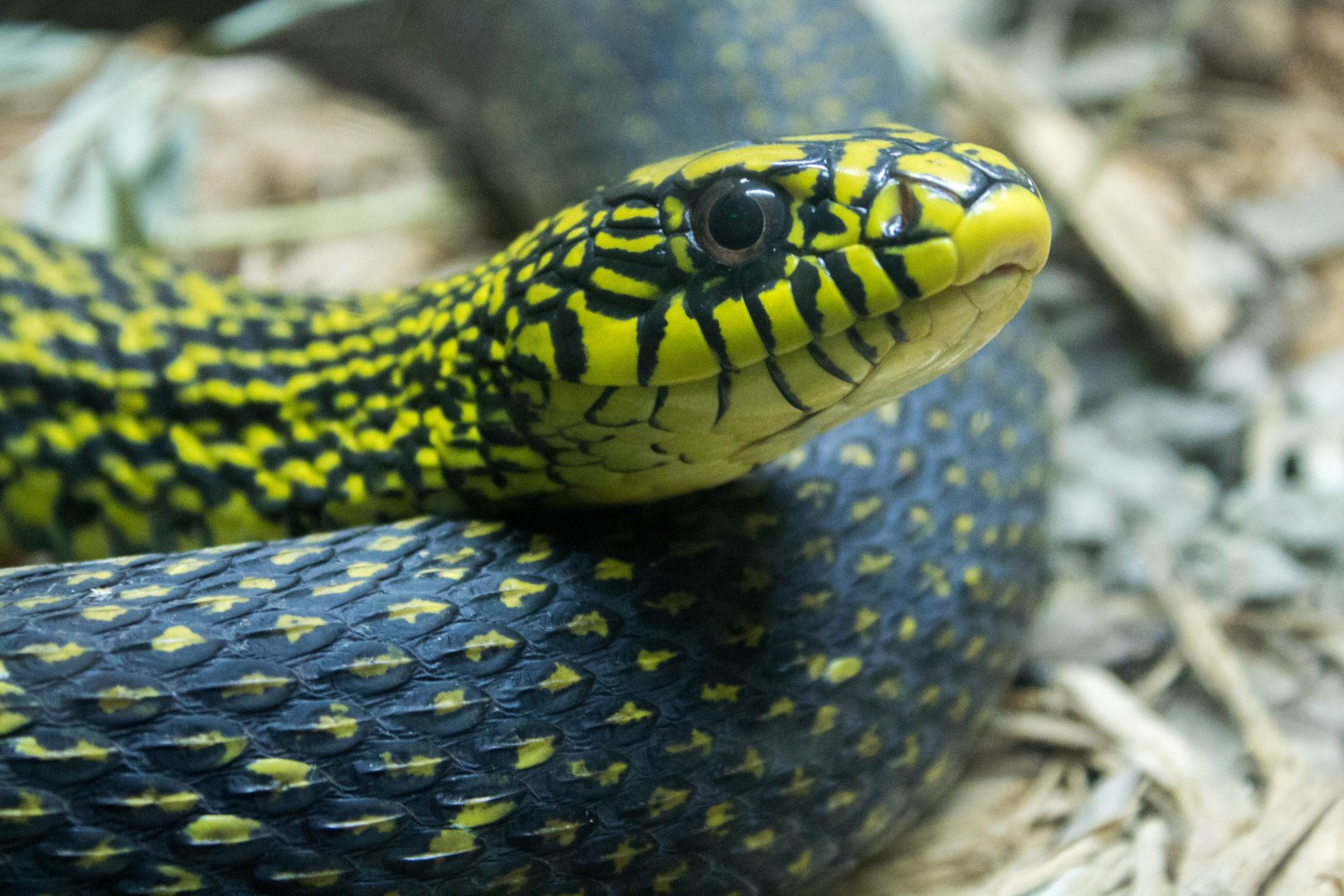
Once visitors exit the aviary, there is another gallery with 6 enclosures. On the left, the first enclosure is a 180 cm long, 80 cm wide, and 100 cm tall terrarium housing a solitary 1.0 King Ratsnake Elaphe carinata. The substrate is 50% coconut coir, 30% cypress mulch and 20% topsoil with leaf litter scattered. There are thick branches, several hide boxes, a water dish, and several live plants.

full

Possible Look of Ratsnake Enclosure (minus backdrop) | @MagpieGoose

Then, the next enclosure is a 6 m long, 3 m wide, and 2.5 m tall terrarium with a solitary 1.0 King Cobra Ophiophagus hannah. The substrate is 40% coconut coir, 30% cypress mulch, 20% topsoil, and 10% leaf litter. There is a sturdy tree trunk, vines, leaf litters, rocks, hollow logs, and a large water dish with live plants.

full

Possible Look of Cobra Terrarium | @amur leopard

The final enclosure on the right side is 75 cm long, 45 cm wide and 45 cm tall with a solitary 1.0 Anderson's Crocodile Newt Echinotriton andersoni. The land area is 70% of the enclosure with leaf litter, logs, hides, rocks, and plants while 30% of the enclosure is a shallow pool.

full

Possible Look of Newt Enclosure | @akasha

The first enclosure on the right side is 75 cm long, 45 cm wide, and 60 cm tall with dim-lighting. It simulates a limestone cave with several hides, mosses, branches, and a water bowl with some ferns in the background. It houses a pair of 1.1 Chinese Cave Gecko Goniurosaurus hainanensis.

chinese-cave-gecko-enclosure-update-v0-wyqdi9vwl8vd1.jpg

Possible Look of Cave Gecko Enclosure | Reddit

Next, the enclosure is 5 m long, 3 m wide, and 2 m tall with a solitary 0.1 Burmese Python Python bivittatus. 70% of the enclosure is more terrestrial with leaf litter, thick logs, a hide box, plants, and rocks. The remaining 30% of the enclosure is a shallow pool with plants.

full

Possible Look of Python Enclosure | @pachyderm pro

The final enclosure on the right side is 80 cm long, 50 cm wide, and 45 cm tall. The substrate is 40% coconut fibre, 20% aged leaf litter, 20% composted organic soil, 10% rotted wood pieces, and 10% orchid mulch. There are rotting hardwood logs, a shallow water dish, and several plants. It’s home to a tangle of 0.0.8 Shocking Pink Millipede Desmoxytes purpurosea.

Screenshot 2025-03-04 3.40.47 PM.png Screenshot 2025-03-04 3.40.51 PM.png
Animal Photos | @Mr Gharial , in a style inspired by @Austin the Sengi

BIRDS: 4 taxa
REPTILES: 8 taxa
AMPHIBIANS: 2 taxa
FISH: 1 taxa
INVERTEBRATES: 3 taxa
TOTAL: 18 taxa

Animal Choice:
  • In Chinese mythology, koi that leapt over "the Dragon Gate" were rewarded by becoming dragons after being perseverent
  • While toads aren't connected to dragons, they still are symbolic in myths such as the lunar toad with Chang'e and the three-legged "money" toad
  • There are a lot of snakes as they are often treated as "lesser dragons" in East Asian traditions
  • Joro Spiders were meant to represent the Japanese yokai, Jorōgumo
  • The lizards and the newts were mentioned as they are like "mini-dragons" and had similar appearance traits to them
  • I had golden pheasants as they were sometimes paired with the Feng Huang which is the feminine counterpart to the dragon in imperial symbolism
  • The Impressed Tortoise was meant to represent Xuanwu (the Black Tortoise) which is on of the four celestial symbols though the Yangtze Softshell Turtle represents it better (it isn't a realistic animal to have in a Zoo)
  • The Shocking Pink Millipede is also known as dragon millipedes so I had them
  • Pythons are thought to be one of the inspirations for the dragon myth, specifically in South Asia

What do you think so far? I'm going to post the final half later.
 

Attachments

  • Screenshot 2025-03-04 3.40.47 PM.png
    Screenshot 2025-03-04 3.40.47 PM.png
    293.3 KB · Views: 133
  • Screenshot 2025-03-04 3.40.51 PM.png
    Screenshot 2025-03-04 3.40.51 PM.png
    400.1 KB · Views: 135
Rotational Enclosures and Exhibits:

One thing that I heard about recently were rotational enclosures. They have both positive and negative benefits for the animals. There is a risk of stress, disease transfer, etc. but that can be prevented with careful monitoring and extended periods before rotation. It’s sometimes beneficial for the animals to be able to have the scent of another animal in their enclosure (ie. the scent of musk deer in an Amur leopard enclosure) but that can still be stressful.

full

@Astrotom3000 | Small cat rotational exhibit at Elmwood Park Zoo


This only works if the enclosures can be used for both/all of the species which typically means they have similar care needs, behavioral, and physical traits. One idea I had was to have a rotational exhibit that travels from Australia to Asia, every 2-3 months.

So some enclosures would transfer like this;

Koala -> Matschie’s Tree-Kangaroo -> Palawan Binturong -> Himalayan Red Panda
Carpet Python -> Green Tree Python -> Timor Python -> Beauty Rat Snake
An aviary

full

@SwampDonkey | General rotational habitat at Louisville Zoo

But this idea only works for mammals, birds, and reptiles as most amphibians, fish, and invertebrates are sensitive/easily stressed out. Could rotational enclosures/exhibits be the new “thing”? Not likely but they could be used more.

full

@snowleopard | Phoenix Zoo

It’s more likely that an animal will get replaced and not be switched back, ie. in a retheming of an African exhibit to an Asian exhibit (see below)
African Elephant -> Asian Elephant
African Lion -> Tiger
White/Black Rhino - Greater One-Horned Rhino
Zebras -> Przewalski’s Horse

full

@zoocentral | Rotating hoofstock enclosure for Hogle Zoo

Rotational exhibits can make the exhibit feel different but it also usually means that there will be the same amount of enclosures or that there will be an animal (s) constantly behind-the-scenes (which might be good).

Rotational enclosures and exhibits can likely only work if the animals aren’t easily prone to stress and if they cohabit in the wild. I’m using them in my spec zoo so I’m designing very “generalistic” enclosures which are easily adapted for their inhabitants (ie. a rotational nocturnal house which has a general “owl” aviary). What are your opinions/ideas for rotational exhibits?
 
Koala -> Matschie’s Tree-Kangaroo -> Palawan Binturong -> Himalayan Red Panda
Carpet Python -> Green Tree Python -> Timor Python -> Beauty Rat Snake
I forgot to add the Sulawesi Bear Cuscus and Banded Palm Civet to the first one and Reticulated Python and Burmese Python to the second one
 
It’s more likely that an animal will get replaced and not be switched back, ie. in a retheming of an African exhibit to an Asian exhibit (see below)
In terms of large animals, ZooTampa has done a dance in the large habitat at the entrance of the Asian Gardens/Domain with minimal changes between species. It has gone from: gaur>Asian Elephant>Indian Rhino>Malaysian tapir. It was always under-sized for elephants as it was.
 
After finding some ideas for exhibits, I’ll start with a couple with my home, New England natives. This exhibit stars animals that are underrepresented and in need for conservation projects. This would be for a “Rare Species Conservation Center” located in Hartford, Connecticut.
  1. New England Conservation Center: - (6 exhibits)
Before entering the center, there is a 144 sq. m large and 12 m tall aviary which currently houses a solitary 1.0 Bald Eagle Haliaeetus leucocephalus who is a rescue. The enclosure is designed so that it can house any rescued bird-of-prey. There is a 7,540 litre pool, white-oak trunk sections, perches, flight poles, a shelter box, and misters. Additionally, there is eastern white pine, dwarf eastern hemlock, bear oak, inkberry holly, lowbush blueberry, and big bluestem grass.

full

Possible Look | @Astrotom3000

Once visitors enter, they are met with a theater room where a short, 5-minute long informational video about New England conservation is played. After they pass that, there is a circular gallery with 5 separate enclosures. From left to right, the first enclosure is a 2,640 litres aquarium with a breeding bed of 0.0.100 Eastern Oyster Crassostrea virginica. There is eelgrass, sea-lettuce, and sugar kelp along with magnifying glass panels.

full

Possible Look | @TinoPup

Then, there is a 320 cm long, 160 cm wide, and 160 cm tall paludarium. The aquatic section is 0.6 m deep with a river sand and laterite-rich clay mix substrate. Also, there is wild celery, and white water-lily with a basking dock and a floating log. On the terrestrial zone, there are nest boxes, broadleaf arrowhead, pickerelweed, winterberry, cinnamon fern, and tussock sedge. It’s home to a breeding bale of 1.2 Blanding’s Turtle Emydoidea blandingii and a breeding bale of 1.2 Spotted Turtle Clemmys guttata.

full

Possible Look | @Dhole dude

After that, there is a 220 cm long, 130 cm wide, and 205 cm tall terrarium with a solitary 0.1 Timber Rattlesnake Crotalus horridus. The substrate is 40% shredded pine needles, 40% oak leaf-litter, 15% washed play-sand, and 5% charcoal. There is a basking rock, weathered gneiss rocks, cork-oak log tubes, and a 140 cm long dead pine branch. Additionally, there is a 19 litre pond, pine cones, wintergreen, Canada mayflower, and Christmas fern.

full

Possible Look | @biggiesmalls

Then, are 5 separated red-lit enclosures which are 60 cm long, 50 cm wide, and 60 cm tall. It appears to be just one, connected enclosure. The substrate is LECA pellets, 70% washed sand, 25% loam, and 5% pulverised leaf litter along with pine needles. Every month, there is a frozen-thawed laboratory rat or quail chick carcass. There is sheet moss, poverty oat-grass, and oyster mushrooms which each provides a home for a breeding pair of beetles with a breeding swarm of 5.5 American Burying Beetle Nicrophorus americanus as a whole.

full

Possible Look | @Moebelle

Finally, a hallway leads to an exit with viewing into the final enclosure’s red-lit burrows and tunnels. Once outside, there is a netted, 13.5 sq. m large enclosure that’s 2.4 m tall with a 1 m deep underground barrier. The substrate is crushed granite, sand, silt-loam, compost, shredded oak, and pine needles. Additionally, there are artificial tunnels and a chamber with a camera. The plants include black chokeberry, pussy willow, red raspberry, little bluestem, rough goldenrod, and red clover. There are also pergola slats, basking logs, and a water trough. It’s home to a breeding pair of 1.1 New England Cottontail Sylvilagus transitionalis.

Screenshot 2025-06-05 7.40.10 AM.png
Animal Photos | @Mr Gharial , style of @Austin the Sengi

Next, I'm going to post a realistic version of a "polar dome"
 

Attachments

  • Screenshot 2025-06-05 7.40.10 AM.png
    Screenshot 2025-06-05 7.40.10 AM.png
    431.9 KB · Views: 76
Back
Top