Mo’s Zoo Chronicles: A 20-Year Photographic Retrospective

Mo Hassan

Well-Known Member
Premium Member
5+ year member
Welcome fellow Zoochatters to my new thread, where I’ll be sharing some of my favourite photos taken at zoos and wildlife parks over the past 20 years or so, various locations across the UK as well as from my travels abroad.

I’ll be sharing some of my fondest memories—five per year—including unique experiences, notable firsts, sightings of species no longer held in captivity in certain countries or at all, and other memorable moments.

My mostly digital photos are organised by year, with this collection starting in earnest in 2004. It feels like the right time for a retrospective, reflecting on how my zoo visits have evolved and how my photography skills have improved. I hope this sparks conversation among other Zoochatters, perhaps drawing parallels with your own experiences and careers—and maybe even inspires some of you to embark on a similar retrospective journey.

I plan to post every other day, beginning with a sort of prologue and wrapping up by the end of the year.
 
I’ll start with a sort of prologue: pre-2004.

As I mentioned above, my photographic collection began in 2004, when I got my first digital camera—a simple 2 MP Kodak point-and-shoot. Before that, I had been using the family camcorder to take videos, all still in tape format and yet to be digitised (if I ever get around to it...). I also have some film camera shots from before 2004, a few of which I digitised years ago. I’ll share one from each of five zoos I visited as a child, taken sometime in the mid to late 1990s.

0-5.jpg

Zorilla (Ictonyx striatus) at London Zoo


London Zoo was, and still is, my home zoo. Growing up, I visited on family trips and school excursions alike, always leaving with a deeper passion for zoology. I can remember seeing the giant pandas in the 90s and even catching a glimpse of the Barton’s long-beaked echidna in Moonlight World on a school trip. My chosen photo is a blurry one of a zorilla, seemingly floating over a giant pot. I’ve always loved mustelids, a fascination that began with books from my local library and grew with characters like silly Weasel and grumpy Badger from The Animals of Farthing Wood (both the books and the animated series). I don’t remember my exact reaction on seeing this zorilla, but I must have been thrilled.

London Zoo will feature many more times in this thread…

0-4.jpg

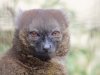
White-fronted lemur (Eulemur albifrons) at Paradise Wildlife Park


Growing up in North London, my family would sometimes make the trip to Broxbourne to visit what was, until very recently, known as Paradise Wildlife Park. I have a fond memory of my dad—who had a knack for making us laugh unintentionally—offering food to a deer there and, instead of saying “Film me!”, saying, “Feed me!” I was likely pleased to see this male white-fronted lemur, signed then as “Brown Lemur (Fulvus)”, along with a female. As a child, I loved lemurs and other primates almost as much as I did mustelids and other carnivorans.

0-1.jpg

Marsh mongoose (Atilax paludinosus) at Colchester Zoo


I have very fond memories of Colchester Zoo. I first discovered it through leaflets at my local library and begged my dad to take me a few times. My first visit was eye-opening as a young carnivore-lover; I remember being amazed to see four mongoose species (dwarf, marsh, yellow, and meerkat) in one zoo. The marsh mongoose remained one of my favourite animals at Colchester, narrowly edging out the Syrian brown bear for this post. Today, it’s almost gone from Europe, with only two public holdings left, according to Zootierliste.

0-2.jpg

Meerkats (Suricata suricatta) at Longleat Safari Park


I remember my dad’s excitement to take us to Windsor Safari Park, only to find out it had closed—probably years earlier—after we’d driven all the way to Windsor! We still had Woburn, but I don’t have any childhood photos from there. We visited Longleat once, combining the trip with a quick stop at Stonehenge. I took this rather good (even by today’s standards) photo of the meerkats there; they were a relative novelty for me at the time.

0-3.jpg

Western sitatungas (Tragelaphus spekii gratus) at Chester Zoo


Even in the pre-Internet days, Chester Zoo was known to me as one of the UK’s best, if not the best, zoos. I don’t remember how I knew this, but it soon became a destination I’d visit semi-regularly throughout my life. I took this photo of a female sitatunga nursing her calf during one of my earliest visits, and I’m still particularly proud of it over two decades later.


Next up, a tiny tree shrew, canines at Colchester, and a lost heron in London.
 

Attachments

  • 0-1.jpg
    0-1.jpg
    403.5 KB · Views: 228
  • 0-2.jpg
    0-2.jpg
    342.9 KB · Views: 233
  • 0-3.jpg
    0-3.jpg
    351.4 KB · Views: 252
  • 0-4.jpg
    0-4.jpg
    372.4 KB · Views: 229
  • 0-5.jpg
    0-5.jpg
    297.6 KB · Views: 254
This has the potential to be a truly fascinating thread. Even though I've visited more than 600 zoos, in your first few photos I see a Zorilla and a Marsh Mongoose, neither of which I've ever seen! Congratulations on the images and I'll be sure to follow this thread with interest.
 
In 2004, at 19, I started university. It wasn’t a big year for zoo visits, as I was likely preoccupied with finishing my A-levels and then transitioning to my Bachelor’s degree. I managed just two documented zoo visits that year, though it’s possible I made others that went unrecorded, as I wasn’t yet consistently photographing my trips (or was only using video or analogue photography).

2004-1.JPG

Black-backed jackals (Lupulella mesomelas) at Colchester Zoo


In April 2004, I visited Colchester Zoo armed with my new digital camera—which, unbelievably, could only store 12 photos at a time! I vividly remember walking around the zoo, deleting photos to make space before taking another. This photo was the fifth one I managed to save on the camera’s internal memory that day. It features one of my favourite canids, and a species I wouldn’t see well again for another 20 years.

It’s a shame there are some reflections visible in the upper left corner of the image and that the resolution is so poor on these early photos. Still, it holds a special place in my collection as a snapshot of that time.

2004-2.JPG

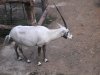
Arabian oryx (Oryx leucoryx) at London Zoo


The other four photos in this set were taken at London Zoo using a “digital” camcorder borrowed from my parents. Frustrated with my camera’s fixed zoom and minimal internal storage, I opted for the camcorder instead. It allowed me to shoot video onto tape and still images onto a memory card.

With this setup, I managed to take over 200 images—most of which were of poor quality. However, they captured some of the diversity of animals and exhibits that the Zoo has lost over the past two decades, for better or worse.

The Arabian oryx in this photo lived in what is now the African wild dog enclosure within “Into Africa.” The oryx later left the collection entirely and, as of today, can only be found in the UK at Marwell Zoo.

2004-3.JPG

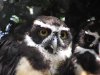
Spectacled owls (Pulsatrix perspicillata) at London Zoo

I miss being able to explore the North Bank of London Zoo, with its charming row of owl and pheasant aviaries. Over the years, I had the chance to observe many species there, with a particular favourite being this pair of spectacled owls. Hopefully, the Zoo will restore access to this part of the grounds before too long.

2004-4.JPG

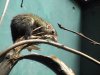
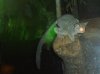
Lesser tree shrew (Tupaia minor) at London Zoo

I have deeply mixed feelings about the former and current state of the exhibits in the Clore Pavilion, now divided between “Rainforest Life” and “Night Life.” On my visit in September 2004, it was home to some extraordinary animals, including three species of tree shrew that I was fortunate enough to see and photograph. That day marked my first sighting of a northern tree shrew (Tupaia belangeri), as well as my first and last sightings of both the large tree shrew (T. tana) and the lesser tree shrew. I’m truly thankful for the opportunity to experience this.

While the exhibits in the Clore Pavilion were much smaller than they are today—undoubtedly meaning better welfare for its current inhabitants—part of me still misses the incredible diversity of the house. In those days, there was an unmatched excitement in not knowing what wonders you might stumble upon.

2004-5.JPG

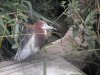
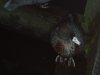
Chinese pond heron (Ardeola bacchus) at London Zoo

Another species lost to European collections is the Chinese pond heron, which I photographed in an aviary that, after renovation, now houses Rüppell’s griffon vultures and black kites. I’m still quite proud of this photo, even with its modest resolution of 1280 x 960 pixels.

Other animals I saw and photographed on this visit that are no longer part of the Zoo’s collection include: purple-tailed imperial pigeon, rusty-barred owl, dark cusimanse, Amur leopard, toco toucan, seven-coloured tanager, Bornean bearded pig, owl-faced guenon, boomslang, and Palestine viper.

Coming next, Pallas’ cat in Paradise, a gorgeous galago, and merry marmosets.
 

Attachments

  • 2004-1.JPG
    2004-1.JPG
    184.4 KB · Views: 214
  • 2004-2.JPG
    2004-2.JPG
    155.5 KB · Views: 222
  • 2004-3.JPG
    2004-3.JPG
    122.4 KB · Views: 214
  • 2004-4.JPG
    2004-4.JPG
    122.2 KB · Views: 221
  • 2004-5.JPG
    2004-5.JPG
    156.6 KB · Views: 221
In 2005, I embarked on my first zoo-tourism trip to Scotland. The trip was inspired by my university field trip to the Isle of Rum the previous year, which left me eager to explore more of Scotland. Over the course of the year, I made six visits to four different zoos.

2005-1.JPG

Pallas’ cat (Otocolobus manul) at Paradise Wildlife Park
Late in 2004, I upgraded my camera—possibly a Christmas present—to an Olympus point-and-shoot. It offered slightly better resolution and marginally improved storage compared to my previous camera. My first zoo visit with this new camera was in February 2005, to my closest zoo at the time, Paradise Wildlife Park.

During the visit, I captured photos of their cheetahs, jaguars, meerkats, red panda, and more. This Pallas’ cat was a particular highlight, marking my first sighting of the species. Although there’s a fair bit of glare in the image, the cat itself is visible and well-focused. Over the years, I would take better photos of the individuals kept at the park, but this one remains memorable as the first.

2005-2.JPG

Arctic fox (Vulpes lagopus) at Highland Wildlife Park
In June 2005, I was thrilled to visit Highland Wildlife Park for the first time, eager to see a variety of British native species in a unique captive setting. At the time, the park had not yet expanded to include cold-climate fauna from other parts of the world. The most “exotic” species on display was the arctic fox, seen here in its transitional coat.

Despite some glare on the left-hand side and suboptimal contrast, I’m quite pleased with how this photo turned out.

2005-3.JPG

Polar bear (Ursus maritimus) at Edinburgh Zoo

From one Arctic mammal to another, and from one Royal Zoological Society of Scotland collection to the other, here’s Mercedes, the polar bear at Edinburgh Zoo. At the time, Mercedes was the only polar bear in the UK.

During the visit, I also saw my first southern cassowary, Siberian musk deer, babirusa, and greater bamboo lemur. However, the most intriguing memory was of the so-called “Malayan civet.” I’m 100% sure it wasn’t a Malayan civet. My photos of the two individuals on display aren’t great, but they look more like palm civets—possibly Paradoxurus hermaphroditus or even P. philippinensis.

2005-4.JPG

Silvery marmosets (Mico argentatus) at Paradise Wildlife Park
Back on familiar ground, I revisited Broxbourne in August, where I captured this photo of a silvery marmoset grooming a youngster, who is looking directly into the camera. I have fond memories of watching the marmosets and tamarins at Paradise Wildlife Park, including the red-bellied tamarins and golden lion tamarins that were housed there.

2005-5.JPG

Senegal bushbaby (Galago senegalensis sensu lato) at London Zoo

My final zoo visit of 2005, before diving back into academia, was to London Zoo. During this visit, I took my camera into the Moonlight World, regrettably using flash to photograph the nocturnal mammals. These days, I avoid using flash in any situation, especially in nocturnal houses, but there are still a few good photos in my collection that were taken with flash—this one being one of them.

I’m not entirely sure whether this is a Senegal bushbaby (Galago senegalensis) or a Moholi bushbaby (G. moholi), as they look quite similar without a clear point of reference for scale. The Zoo has kept both species (and still does), and my photo file is labelled “Senegal bushbaby,” so I’ve gone with that identification.

On the topic of night photography, I recall having access to an excellent camcorder in the late 90s that had superb night vision—one of those with the green tint, capable of capturing footage in near-complete darkness. I’ve yet to find a digital camera that can take photos in low light as well as that camcorder could record video.


Coming next, something blue, something black, something black-necked, something else black.
 

Attachments

  • 2005-1.JPG
    2005-1.JPG
    190.3 KB · Views: 216
  • 2005-2.JPG
    2005-2.JPG
    182.5 KB · Views: 197
  • 2005-3.JPG
    2005-3.JPG
    152.4 KB · Views: 199
  • 2005-4.JPG
    2005-4.JPG
    209.7 KB · Views: 204
  • 2005-5.JPG
    2005-5.JPG
    92.3 KB · Views: 218
In 2006, the main shift in my zoo visiting habits was starting to frequent the WWT London Wetland Centre (from here on abbreviated to LWC). I had visited once the previous year for a course assignment, and instantly fell in love with the place and its wildfowl collections. I soon became a member, then a volunteer, and eventually even a staff member. While I didn’t visit many other collections that year, I managed to make six visits to LWC. For the purposes of this retrospective, I’ll only include photos of their captive collections from any of the WWT reserves.

2006-1.JPG

Blue ducks (Hymenolaimus malacorhynchus) at London Wetland Centre

On my first visit to LWC in 2006, I was almost overwhelmed by the variety of wildfowl species on display. At the time, the collection exclusively contained wildfowl, with around 30 species on show, which varied over the years. For those unfamiliar with the layout, the captive collection was arranged according to various wetlands, countries, and archipelagos around the world.

New Zealand was represented by the brown teal (Anas chlorotis) and blue duck, both of which are now absent from European collections. I saw both species several times during my visits, though I don’t have particularly good photos of the blue duck. I have fond memories of the New Zealand exhibit, which was eventually converted into an enclosure for Asian short-clawed otters.

2006-2.JPG

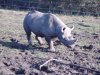
Eastern black rhinoceros (Diceros bicornis michaeli) at Port Lympne Wild Animal Park


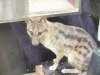
In January 2006, I visited Port Lympne for the first and only time. I remember enjoying the collection, seeing animals such as jungle cat, Guinea baboon, and drill for the first time. Most of my photos from that visit are quite poor due to distant animals, difficult fences, or dim lighting. However, this photo of a black rhino turned out to be one of the better ones.

2006-3.JPG

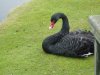
Black swan (Cygnus atratus) at London Wetland Centre


In April, I made my third visit of the year to LWC, where I captured this photo of a black swan. These striking birds are typically quite bold and tolerant of people, as evident from how close this one is to the path. The black swans shared their enclosure with other Australian wildfowl, including magpie geese and maned ducks.

2006-4.JPG

Black-necked aracari (Pteroglossus aracari) at Newquay Zoo


In July, I took a summer trip to Cornwall, staying in Falmouth while visiting the Eden Project and Newquay Zoo. Having recently studied rockpool fauna, flora, and botany, I was eager to go rockpooling and explore unique plant species. At Newquay Zoo, I encountered a fascinating array of animals, including western black-and-white colobus, Kafue lechwe, Prévost’s squirrels, and fossa. One highlight was this stunning black-necked aracari, a striking bird that stood out among the collection.

2006-5.JPG

Magpie geese (Anseranas semipalmata), chestnut teals (Anas castanea), and black swans at London Wetland Centre


This photo was taken a week before Christmas during my final visit of the year, showing the Australian habitat and some of its residents. The magpie goose in the foreground had quite the personality—occasionally nipping at my shoes and even my camera!


Coming next, a Mappin bear, a parthenogenetic dragon, and beautiful birds
 

Attachments

  • 2006-1.JPG
    2006-1.JPG
    82 KB · Views: 203
  • 2006-2.JPG
    2006-2.JPG
    230.1 KB · Views: 194
  • 2006-3.JPG
    2006-3.JPG
    173.4 KB · Views: 208
  • 2006-4.JPG
    2006-4.JPG
    142.3 KB · Views: 196
  • 2006-5.JPG
    2006-5.JPG
    146.3 KB · Views: 196
2007 was a year of significant milestones for me personally—I graduated from university, began postgraduate education, and even travelled abroad for the first time in five years. While I enjoyed birdwatching in the Everglades during my trip to Florida, I didn’t visit any zoos outside of London this year.

2007-1.JPG

Black-necked swan (Cygnus melancoryphus) at London Wetland Centre


Taken during a January visit to the Falklands exhibit at LWC, this action shot of a pinioned black-necked swan, with a tufted duck in the background, remains one of my best. Sharing their exhibit with Chiloë wigeons and red shovelers, this pair of swans were particularly vocal and fiercely territorial. On several occasions, they tried to bite me through the fence. The black-necked swan is still one of my favourite species, both for its striking appearance and its bold character.

2007-2.JPG

Sri Lankan sloth bear (Melursus ursinus inornatus) at London Zoo


By the time of my April visit to London Zoo, the Arabian oryxes had been replaced by African hunting dogs, and the Clore Pavilion had been transformed to Rainforest Life and Night Life. One of my favourite stops that day was the Mappin Terraces, where the sloth bears lived. This particular photo stands out because I rarely managed to get close enough for a good shot during my visits.

2007-3.JPG

Juvenile Komodo dragon (Varanus komodoensis) at London Zoo


The next three photos were all taken on the same day in June 2007, when I captured this photo of a juvenile Komodo dragon. This individual may have been one of the offspring produced by parthenogenesis. Whether or not that’s the case, I’m pleased with how this photo turned out, as it highlights the reptile’s charismatic presence.

2007-4.JPG

Toco toucan (Ramphastos toco) at London Zoo


Toucans have always been one of my favourite groups of birds; for a while, this species was my favourite bird. Toco toucans were present in the owl/pheasant aviaries in the North Bank for a while and I got this half-decent shot of one with a mediocre camera.

2007-5.JPG

Pygmy hippopotamus (Choeropsis liberiensis) at London Zoo


I’ve always enjoyed watching the pygmy hippos at London. This individual was wallowing contentedly in a puddle at the previous exhibit close to Three Island Pond.

Coming next: Vietnamese viverrids, a curious cervid, and a punky penguin.
 

Attachments

  • 2007-1.JPG
    2007-1.JPG
    147.3 KB · Views: 180
  • 2007-2.JPG
    2007-2.JPG
    146.6 KB · Views: 195
  • 2007-3.JPG
    2007-3.JPG
    156.1 KB · Views: 185
  • 2007-4.JPG
    2007-4.JPG
    175.1 KB · Views: 182
  • 2007-5.JPG
    2007-5.JPG
    182.5 KB · Views: 183
I must say I'm really enjoying the thread @Mo Hassan I always enjoy seeing others photographic collections. I also find it interesting when they started and also their experiences with all sorts of species they have encountered being where/when etc. It also makes it very fascinating when people have been doing this a long time and it highlights the treasures that the zoo world had to offer in the not so distant past. Keep up the good work. :)
 
2008 wasn’t packed with zoo visits, but I managed to fit in three trips to the London Wetland Centre (LWC), a visit to the London Aquarium, and revisits to four other British collections.

2008-1.JPG

Owston’s civets (Chrotogale owstoni) at Paradise Wildlife Park


In May, I was incredibly fortunate to see the then-resident pair of these rare viverrids. Housed in an off-show area, they were only visible via a mirror positioned in their secluded holding area. It felt like stumbling upon a hidden treasure, as even some of the keepers weren’t aware these civets were viewable. Despite multiple attempts on subsequent visits, this remains the only time I’ve ever seen these elusive creatures, solidifying this encounter as one of my most cherished wildlife memories.

2008-2.JPG

Asian short-clawed otters (Aonyx cinereus) at Longleat Safari Park


With my newly upgraded Fujifilm FinePix camera, I could capture better images of zoo animals, like these otters. This camera became a trusted tool, perfect for everything from macro shots of insects and flowers to zoomed-in photos of distant animals. It served me faithfully for years, before I upgraded to another Fujifilm bridge camera with an even more impressive zoom—one I still rely on for the vast majority of my photography today.

2008-3.JPG

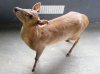
Reeves’ muntjac (Muntiacus reevesi) at Shepreth Wildlife Park


Returning to Shepreth Wildlife Park after several years, I ventured into the nocturnal house to observe spiny mice, Egyptian rousettes, and long-nosed potoroos. To my surprise, I turned around to find myself face-to-face with a very friendly female Reeves’ muntjac. She was far too approachable to be a wild (naturalised) deer, leading me to conclude she was part of the collection, albeit free-ranging around the park. This unexpected encounter was one of the highlights of my visit.

2008-4.JPG

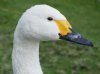
Bewick’s swan (Cygnus columbianus bewickii) at London Wetland Centre


During one of my trips to LWC, I captured this photo of a Bewick’s swan in the Iceland exhibit within World Wetlands, where they shared space with Barrow’s goldeneye. Swans and geese at LWC tend to be particularly photogenic and tolerant of people, making them a joy to observe and photograph. This shot remains one of my favourites, thanks to its clarity and the elegance of the swan.

2008-5.JPG

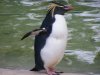
Northern rockhopper penguin (Eudyptes moseleyi) at London Zoo


Penguins became one of my favourite bird families after studying their phylogeny at university, and the northern rockhopper, newly recognised as its own species at the time, claimed the top spot as my favourite. London Zoo’s Penguin Beach exhibit housed African penguins alongside southern rockhoppers back then (today, it exclusively exhibits Humboldt penguins). Spotting this floppy-crested individual mingling with the Africans was a delight, given their rarity and charm.

Coming in the next post, cheeky cheetahs, a floppy-eared fossa, and West Country wandering.
 

Attachments

  • 2008-1.JPG
    2008-1.JPG
    148.3 KB · Views: 171
  • 2008-2.JPG
    2008-2.JPG
    142.3 KB · Views: 168
  • 2008-3.JPG
    2008-3.JPG
    145.7 KB · Views: 162
  • 2008-4.JPG
    2008-4.JPG
    79.4 KB · Views: 153
  • 2008-5.JPG
    2008-5.JPG
    121 KB · Views: 164
However, the most intriguing memory was of the so-called “Malayan civet.” I’m 100% sure it wasn’t a Malayan civet. My photos of the two individuals on display aren’t great, but they look more like palm civets—possibly Paradoxurus hermaphroditus or even P. philippinensis.

The Malayan Civet population in European collections throughout the 2000s and early 2010s - including the Edinburgh animals - all originated from the same import into Rotterdam; having seen the animals at Tierpark Berlin myself, they were definitely Malayan Civet.

Quality notwithstanding, I'd be interested to see your photographs!
 
The Malayan Civet population in European collections throughout the 2000s and early 2010s - including the Edinburgh animals - all originated from the same import into Rotterdam; having seen the animals at Tierpark Berlin myself, they were definitely Malayan Civet.

Quality notwithstanding, I'd be interested to see your photographs!

Here they are:

56_common palm civet.JPG 57_common palm civet.JPG

I don't doubt Edinburgh had Malayan civet at one point, but I think these individuals* are palm civets. I tried reaching out to the Zoo at the time by email but got no response, and although they apparently keep them now, there's no record on ZTL from 2005.

*If you're struggling to see two, which I did for many years, the one of the right has a dark ear towards the right of the image.
 

Attachments

  • 56_common palm civet.JPG
    56_common palm civet.JPG
    141.9 KB · Views: 159
  • 57_common palm civet.JPG
    57_common palm civet.JPG
    105.4 KB · Views: 153
Here they are:

View attachment 751296 View attachment 751297

I don't doubt Edinburgh had Malayan civet at one point, but I think these individuals* are palm civets. I tried reaching out to the Zoo at the time by email but got no response, and although they apparently keep them now, there's no record on ZTL from 2005.

*If you're struggling to see two, which I did for many years, the one of the right has a dark ear towards the right of the image.

Those are indeed palm civets.
 
In 2009, I finally ticked off a few long-standing entries on my zoo wish list. I visited WWT Slimbridge for the first time, and I made my first and only visit to Bristol Zoo Gardens. Closer to home, I returned to Whipsnade Wild Animal Park and Chessington World of Adventures after many years away. Other familiar collections, like Linton and Colchester Zoos, didn’t quite make it into my top five highlights for the year.

2009-1.jpg

Ethiopian cheetahs (Acinonyx jubatus soemmerringi) at Whipsnade Wild Animal Park


Though I have vague memories of visiting Whipsnade as a child, my trip in 2009 remains the only time I’ve been back as an adult—a visit I’ve been meaning to repeat but haven’t yet managed, as it’s not easy to reach without a car. This photo of the northeast African subspecies of cheetah stands out, particularly for the cheeky expression on one of the individuals.

2009-2.jpg

Fossa (Cryptoprocta ferox) at Chessington World of Adventures


My sole adult visit to Chessington took place in September 2009. During this trip, I managed to capture a photo of a fossa with its ears folded back, giving it a rather peculiar look. While I don’t recall much from my childhood visits, I’ve seen old home videos that confirm I was there. This return trip offered a fascinating mix of nostalgia and novelty.

2009-3.jpg

Black lion tamarin (Leontopithecus chrysopygus) at Bristol Zoo Gardens


In September, I finally made it to Bristol Zoo Gardens, a collection that had been on my radar for years. The zoo left a strong impression, with highlights like Livingstone’s flying foxes, American paddlefish, fairy penguins, South American sea lions, and agile gibbons. However, the undoubted highlight was seeing black lion tamarins. This was my first and only encounter with this critically endangered species, now exclusively housed at Jersey Zoo.

2009-4.jpg

Southern screamer (Chauna torquata) at Slimbridge Wetland Centre


As much as I adore the London Wetland Centre, Slimbridge proved to be in a league of its own, boasting a larger and more diverse collection of captive birds. My first visit in 2009 was unforgettable, and encountering southern screamers for the first time was a particular thrill. Their striking, dinosaur-like appearance never fails to captivate me.

2009-5.jpg

Aardvark (Orycteropus afer) at London Zoo


I wrapped up the year with a visit to London Zoo on 28th December. This visit offered my best-ever views of the Zoo’s aardvarks, catching them at feeding time. At the time, the aardvarks were mixed with meerkats in the Animal Adventure exhibit. Tragically, one of the pair perished in a fire in 2017, and the species is no longer exhibited at the Zoo.

Next up, a Parisian pilgrimage, a toddler tapir, and Rare Species galore.
 

Attachments

  • 2009-1.jpg
    2009-1.jpg
    154 KB · Views: 147
  • 2009-2.jpg
    2009-2.jpg
    152 KB · Views: 152
  • 2009-3.jpg
    2009-3.jpg
    137.5 KB · Views: 150
  • 2009-4.jpg
    2009-4.jpg
    250.1 KB · Views: 142
  • 2009-5.jpg
    2009-5.jpg
    214.8 KB · Views: 154
2010 was a big year for me. I visited the Rare Species Conservation Centre in Kent for the first time and explored another new (to me) collection, Hamerton Zoo. I travelled to Paris for the first time since a child, and made a memorable visit to the historic Ménagerie at Jardin des Plantes.

2010-1.jpg

Binturong (Arctictis binturong) at Jardin des Plantes


In January, I organised my first fully self-planned trip abroad, taking my mum to Paris. This trip was a turning point in building my travel confidence. Visiting the Jardin des Plantes was a must, given its rich history. Despite the aging enclosures, I saw an impressive array of species, including red-headed and palm-nut vultures, Indian python, Rocky Mountain goat, Sichuan takin, and my first ever kagu. While most photos turned out poorly, I managed a clear shot of a binturong, sitting lazily at eye level in bright daylight—a rare sight for this peculiar species.

2010-2.jpg

Siberian weasel (Mustela sibirica) at Hamerton Zoo


In May, I made my first trip to Hamerton Zoo on a drizzly day during a tough period of mental illness. Exploring a new collection with unique animals felt therapeutic. Hamerton’s landscape was very different back then, with few of the Australian species that dominate today. Some of the birds not present today but that I saw and photographed that day were brown and white eared-pheasants, Andean goose, northern spur-winged goose, and striped owl. But two unique mammals present at the time were northern mountain viscacha and Siberian weasel. I was lucky to capture a weasel in action during feeding time—a truly beautiful animal.

2010-3.jpg

Eastern aardwolf (Proteles cristatus septentrionalis) at Rare Species Conservation Centre


As soon as I heard about the existence of this place, I knew I had to drop everything and make a visit. I was incredibly impressed with what I saw on this, my first visit, in June 2010. Not only did I see and photograph Hamerton’s southern aardwolf (not known to me at the subspecific level at the time), but I would also see the other species/subspecies the following month very well at RSCC.

2010-4.jpg

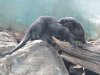
Smooth-coated otter (Lutrogale perspicillata perspicillata) at Rare Species Conservation
Centre

Among the other rarities at RSCC were Palawan binturong, pygmy slow loris, Brazilian ocelot, pileated gibbon, Sambirano bamboo lemur, New Guinea singing dog, and a pair of smooth-coated otters. These were easily the most memorable animals of the day, their boundless energy and antics leaving a lasting impression.

2010-5.jpg

Brazilian tapir (Tapirus terrestris) at Paradise Wildlife Park


This young Brazilian tapir, still sporting its juvenile stripes, stood out during a visit to Paradise Wildlife Park. Although not this animal in particular, as it was a few years before, but I have a fond memory of stroking a tapir and being surprised to know it felt like a broom’s bristles, especially on the mane. This individual looked a lot fluffier, though.

Next up, a rare fox in Rotterdam, an Antwerpian ape, and a Devonian dog.
 

Attachments

  • 2010-1.jpg
    2010-1.jpg
    195.8 KB · Views: 139
  • 2010-2.jpg
    2010-2.jpg
    121.2 KB · Views: 132
  • 2010-3.jpg
    2010-3.jpg
    164.7 KB · Views: 128
  • 2010-4.jpg
    2010-4.jpg
    145.9 KB · Views: 132
  • 2010-5.jpg
    2010-5.jpg
    212.8 KB · Views: 128
2011 marked another year of exciting zoo trips, including my first visit to the Low Countries, where I explored three renowned collections. I also ventured into the southwest of England, discovering two new places. This was also the year I started volunteering as a Learning Explainer at the LWC, having taken photos there on twenty occasions through the year. I also visited Crocodiles of the World for the first time, although this didn’t make my top 5.

2011-1.jpg

Ural owl (Strix uralensis) at the International Centre for Birds of Prey


When my sister moved to the Forest of Dean in 2010, I started exploring collections within and en route to the area. One of those was the now closed ICBP, where I saw an astonishing variety of hawks, falcons, eagles, vultures, owls, and other “raptors,” including this Ural owl. As I took its photo, the owl shrieked and flew towards me—possibly alarmed by my bright red coat. Whether it mistook me for a keeper or felt threatened, the encounter made for an unforgettable memory and a striking shot.

2011-2.jpg

Yellow-throated marten (Martes flavigula borealis) at Artis, Amsterdam


In March, I took my mum on a European zoo tour, starting in Amsterdam before heading to Rotterdam and Antwerp. I used a travel agent for the first and last time, seeing as I ended up getting a knack for foreign travel booking myself after this trip. At Artis, I saw the parthenogenetic white-bellied lizard (Darevskia unisexualis – no longer kept in captivity), a huge false gharial, Alpine ibex, black wildebeest, springbok, Yucatan margay, and this beautiful yellow-throated marten. True to form for mustelids, this individual was running and flitting about its enclosure, making it difficult to photograph. My mum, just visible on the right, distracted it for just long enough for me to get this shot.

2011-3.jpg

Swift fox (Vulpes velox) at Diergaarde Blijdorp, Rotterdam


The zoo in Rotterdam was on my radar for a while for its rare carnivores. While I missed out on the Malayan civet, I was treated to an excellent view of Asiatic golden cat and swift fox, the latter only kept in one collection in Spain within Europe. I also enjoyed watching Timor and Bismarck ringed pythons feeding in Blijdorp’s impressive tropical house.

2011-4.jpg

Eastern lowland gorilla (Gorilla beringei graueri) at Antwerp Zoo


A few individual animals are so special in being the last of their kind in captivity, that their name is instantly familiar. One of those is Amahoro, the last eastern lowland gorilla to remain in captivity. She is a hand-reared female born in the wild in 1989, currently living with a troop of western lowland gorillas. During my visit to Antwerp Zoo, I was lucky to capture a few photos of her, despite the challenging lighting. Although I returned to Antwerp later, I didn’t see Amahoro again, making this encounter all the more special.

2011-5.jpg

Raccoon dog (Nyctereutes procyonoides) at Axe Valley Park


In September, while attending a conference in the area, I visited Axe Valley Park for the first time. I was impressed with some of its unusual species on display, including puna ibis, bare-eyed pigeon, western roe deer, common palm civet, and Hokkaido red squirrel. I also saw my first raccoon dogs, including this photogenic individual.

Coming next, an Irish inhabitant, a shabby strigiform, and Cotswoldian creatures
 

Attachments

  • 2011-1.jpg
    2011-1.jpg
    130.5 KB · Views: 115
  • 2011-2.jpg
    2011-2.jpg
    263.3 KB · Views: 109
  • 2011-3.jpg
    2011-3.jpg
    164.6 KB · Views: 107
  • 2011-4.jpg
    2011-4.jpg
    163.9 KB · Views: 109
  • 2011-5.jpg
    2011-5.jpg
    143.1 KB · Views: 117
A few individual animals are so special in being the last of their kind in captivity, that their name is instantly familiar. One of those is Amahoro, the last eastern lowland gorilla to remain in captivity. She is a hand-reared female born in the wild in 1989, currently living with a troop of western lowland gorillas. During my visit to Antwerp Zoo, I was lucky to capture a few photos of her, despite the challenging lighting. Although I returned to Antwerp later, I didn’t see Amahoro again, making this encounter all the more special.

Given the timespan you could have seen Victoria - an Eastern born at the zoo - too!
 
In 2012, I visited Ireland for the first time, and moved from north London to Hertfordshire. Throughout the year, I continued volunteering and working as a learning assistant at the London Wetland Centre, while also discovering a couple of new zoos. Here are my top five highlights from that year.

2012-1.jpg

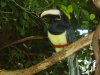
Great Indian hornbill (Buceros bicornis) at Cotswold Wildlife Park


One of the new collections I discovered was Cotswold Wildlife Park in Oxfordshire, conveniently en route to visit my sister in Gloucestershire. My visits here have been brief, never exceeding a couple of hours, but I’ve always been impressed by what I saw. This photo of a great Indian hornbill, taken on a January 2012 visit, is a particular favourite, due to its relative clarity and focus. I love how the bird’s “eyelashes” can be clearly seen.

2012-2.jpg

Western purple-faced langur (Semnopithecus vetulus nestor) at Cotswold Wildlife Park


Other animals I saw and photographed at CWP include great blue turaco, greater bamboo lemur, spotted laughingthrush, crowned sifaka, wolverine, and Morelet’s crocodile. However, this male western purple-faced langur stood out as a real rarity. He was the last of his kind in Europe, passing away in 2015. I feel privileged to have seen this Sri Lankan endemic primate before it went extinct in Europe.

2012-3.jpg

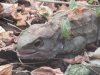
West African crocodile (Crocodylus suchus) at Dublin Zoo


I visited Dublin Zoo in June 2012, which was a good visit but not very fruitful in new taxa for me. This species, signed as Nile crocodile, would eventually be new to me, after these individuals were identified as belonging to the West African population, then species, of crocodile.

2012-4.jpg

Asian small-clawed otter (Aonyx cinereus) at WWT London Wetland Centre


LWC’s first captive mammal species arrived in 2012, being the ubiquitous but still darned cute Asian small-clawed otter. They fitted in very well in the former New Zealand habitat, formerly occupied by blue ducks, brown teals, and, later, New Zealand shovelers. Being an employee there, I was privileged to be one of the first people to see the animals in their new habitat.

2012-5.jpg

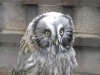
Great grey owl (Strix nebulosa lapponica) at Hawk Conservancy Trust


I saw this dishevelled-looking bird, normally so distinguished, on my first and so far only visit to the Hawk Conservancy Trust in Hampshire in September 2012. On that visit, I also saw several other owl and bird of prey species, as well as my first good views of the great bustards that the Trust keeps.

Next up, a bully at Blackbrook, pretty primates, and a righteous rhynchocephalian.
 

Attachments

  • 2012-1.jpg
    2012-1.jpg
    88.3 KB · Views: 107
  • 2012-2.jpg
    2012-2.jpg
    102.7 KB · Views: 100
  • 2012-3.jpg
    2012-3.jpg
    175.5 KB · Views: 105
  • 2012-4.jpg
    2012-4.jpg
    233.5 KB · Views: 99
  • 2012-5.jpg
    2012-5.jpg
    147.9 KB · Views: 100
2013 was a challenging year for me, marked by a lapse in my mental health. To lift my spirits, I planned a rewarding trip around the UK, visiting several new collections in England and Scotland, as well as revisiting a few old favourites. I would also visit Edinburgh Zoo again while staying in the city for a conference.

2013-1.JPG

Greater bamboo lemur (Prolemur simus) at Cotswold Wildlife Park


In April, I returned to Cotswold Wildlife Park for another brief visit. While I enjoyed seeing a purple-crested turaco and crowned sifaka, this encounter with a greater bamboo lemur stood out. Getting a good photo of such a rare and elusive species felt especially rewarding.

2013-2.JPG

Crowned guenon (Cercopithecus pogonias nigripes) at Twycross Zoo


Twycross Zoo, with its reputation as a primate haven, was the first stop on my summer zoo tour. I was particularly impressed by the array of guenons on display, including Europe’s only crowned guenons of this subspecies at the time. It was my first and, so far, only visit to Twycross, making this a cherished memory.

2013-3.JPG

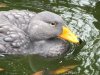
Flying steamer duck (Tachyeres patachonicus) at Blackbrook Zoo


I made my first and only visit to what is now called Peak Wildlife Park in Staffordshire in 2013, where I saw a stunning variety of wildfowl, many for the first time, even for someone used to WWT centres. This was my first ever steamer duck, then unlabelled, and tentatively identified as another species (T. brachypterus), until checking Zootierliste, where it appears to be T. patachonicus. I still mourn the loss of this collection to this day.

2013-4.JPG

Tuatara (Sphenodon punctatus) at Chester Zoo


Chester Zoo was the third stop on my summer trip, where I had the privilege of seeing one of their tuataras. Such an iconic “living fossil.”

2013-5.JPG

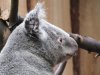
Koala (Phascolarctos cinereus) at Edinburgh Zoo


On my September 2013 trip to Edinburgh Zoo, I saw and photographed my first ever koala. Although the giant pandas were present at the Zoo at the time, I do not have photos so must not have managed to see them. Perhaps they were offshow at the time, I don’t recall.

Coming next, an enigmatic euplerid, an African amphibian in America, and transatlantic travels.
 

Attachments

  • 2013-1.JPG
    2013-1.JPG
    116.6 KB · Views: 86
  • 2013-2.JPG
    2013-2.JPG
    177.9 KB · Views: 93
  • 2013-3.JPG
    2013-3.JPG
    172.3 KB · Views: 96
  • 2013-4.JPG
    2013-4.JPG
    132 KB · Views: 91
  • 2013-5.JPG
    2013-5.JPG
    157.8 KB · Views: 95
In 2014, my family and I made a trip to Ontario, Canada—my first in over a decade—to visit relatives. While there, I spent a couple of days in Toronto before heading to New York City for about a week, during which I visited the city’s many zoos. I also revisited the RSCC, which had introduced several new species of Malagasy carnivores since my last visit.

2014-1.JPG

Fanaloka (Fossa fossana) at Rare Species Conservation Centre


The RSCC had closed to the public shortly after my first visit, so I was thrilled when it reopened in 2014. I immediately planned a return trip, and it didn’t disappoint. On this visit, I saw ring-tailed vontsira, narrow-striped boky, and fanaloka, all for the first time. While I’ve since encountered vontsira and boky in other collections, I’ve yet to see fanaloka again. Seeing such a rare carnivore up close remains an unforgettable experience.

2014-2.JPG

Spotted-necked otter (Hydrictis maculicollis) at Toronto Zoo


I’ve visited Toronto Zoo many times in the past, as it’s close to family in Ontario. This trip was special, as I managed to photograph several species not commonly seen in British collections, including black-footed ferret, Huon tree kangaroo, southern hairy-nosed wombat, Geoffroy’s spider monkey, olive baboon, and wood bison. My personal highlight, however, was the spotted-necked otters—a mustelid I’ve only ever seen here, despite later attempts at another collection.

2014-3.JPG

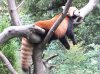
Eastern red panda (Ailurus styani) at Prospect Park Zoo


My first solo trip to another country was exhilarating, and exploring New York City and its zoos independently was a dream come true. During one packed day in June 2014, I visited Prospect Park Zoo, the Aquarium, and Central Park Zoo back-to-back. At Prospect Park, I encountered species like big-headed turtle, Geoffroy’s tamarin, and eastern red panda for the first time.
2014-4.JPG

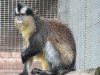
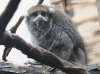
White-eared titi (Plecturocebus donacophilus) at Central Park Zoo

I Having only seen coppery titis in European zoos, I was excited to encounter this different species at Central Park Zoo. Until relatively recently, both would have been classified as Callicebus moloch. Other than this beautiful monkey, I also saw fishing snake, Texas tortoise, chinstrap penguin, red bird-of-paradise, and harlequin duck for the first time.

2014-5.JPG

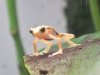
Kihansi spray toad (Nectophrynoides asperginis) at Bronx Zoo


I was so impressed with Bronx Zoo, with its absolutely massive footprint. I got to the zoo too late, and also ran out of camera batteries, and had to leave the zoo to find some (nowhere in the zoo sold AA batteries!), and was kicked out of their huge reptile house before I had a chance to see many exhibits. One of the last animals I saw before I had to leave was this Extinct In The Wild amphibian, currently held at only three American zoos. My list of zoo firsts from this day though was huge, including maleo, Storm’s stork, Micronesian kingfisher, Magellanic penguin, Coquerel’s sifaka, Harris’s antelope squirrel, Wolf’s guenon, Montezuma oropendola, Indian muntjac, Sitka brown bear, and greater chevrotain, just to name a few.

Coming next: a unicornuate ungulate, cool crocodilians, and a proud Papuan.
 

Attachments

  • 2014-1.JPG
    2014-1.JPG
    133.1 KB · Views: 79
  • 2014-2.JPG
    2014-2.JPG
    155.4 KB · Views: 80
  • 2014-3.JPG
    2014-3.JPG
    223.5 KB · Views: 80
  • 2014-4.JPG
    2014-4.JPG
    154 KB · Views: 78
  • 2014-5.JPG
    2014-5.JPG
    112.5 KB · Views: 80
Back
Top