Mother natures insane gallery.

CheeseChameleon1945

Well-Known Member
5+ year member
Ah, the natural world. Some may say its extravagant, and some might say its messed up. On this thread, we can discuss some of the most curious abominations that have set foot, wing, or fin on this planet. Some of these animals may be well-known animals that have some crazy lifestyles, or some unknown beauties that we have only begun to explore.


Here are some animals that I think of.

Xenodermus
Dragon-Snake-e1584174244698.png

I can truly understand why the Dragon snake is one of the largely referred to common names of this snake. Its scales on the top of its body are truly strange. This Indonesian reptile has a face that almost looks like a dog in my opinion, and I have always wanted to see one in the wild.

Sea vomit:
220px-Tunicate_colony_of_Didemnum_vexillum_overgrowing_gravel.JPG

Tunicates are some of the coolest animals in the ocean In my opinion, but my favorite has to be The Sea vomit. Its appearance is just as crazy as its lifestyle, being a suspension feeder. However, this species is invasive, and can be found in truly gigantic colonies.

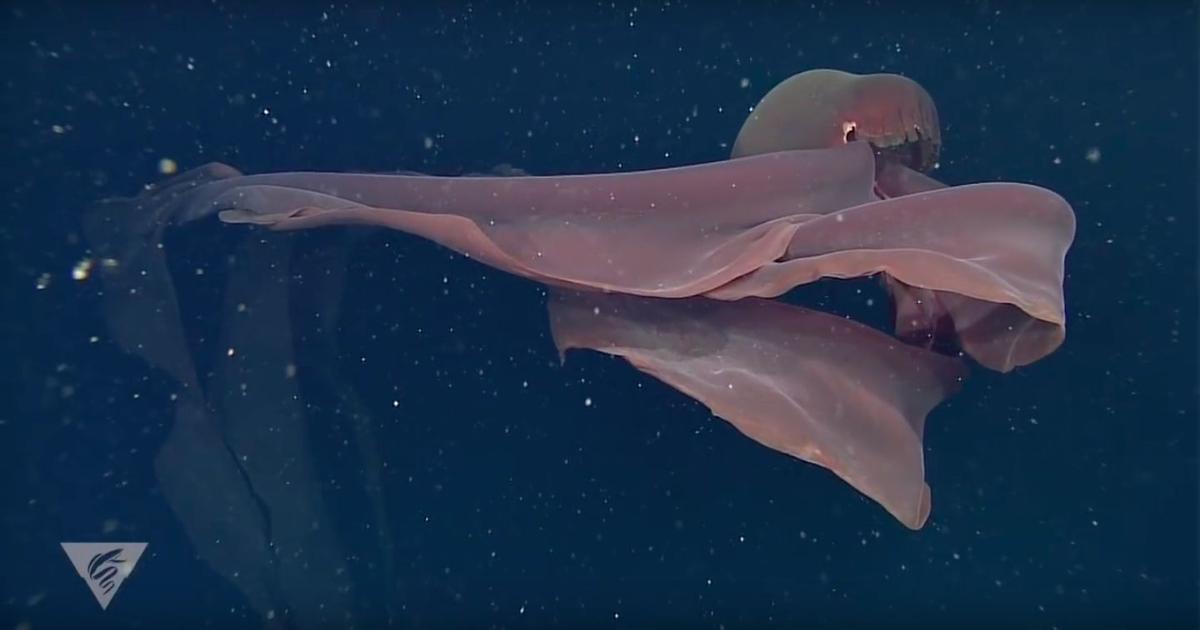
Stygiomedusa
130400-zdyruodbca-1572938682.jpeg

This crazy animal that was filmed by MBARI, is a mysterious very Large infamous creature of the deep. I personally think it looks like a large blanket stretching outward to obscure itself, but thats just my thoughts. It is in fact, one of the largest Invertabrete predators of the Marine deep-sea ecosystem.

So what monstrosities can you shed light on? I am excited to hear your replies below.
 
Not a picture for your gallery but I thought I would add this fascinating video considering what we were discussing regarding parasites on another thread. A jewel wasp zombifying an unfortunate cockroach.

Thanks for sharing! The jewel wasp is a beautiful-looking creature nonetheless. To see them "zombify" this cockroach is a pretty amazing sight, something you don't see every day. But very cool! Actually, my goal with this thread is for everyone to share some species that are pretty insane, so if anyone else could share an interesting animal that would be great!
 
Educating children in Randers in Denmark. It is interesting that it is perfectly normal in Scandinavia, but would be incredibly controversial e.g. in the U.S.


Fascinating, and I agree it would be incredibly controversial in the U.S. but I would also think that it would be in most places (unfortunately).
 
Educating children in Randers in Denmark. It is interesting that it is perfectly normal in Scandinavia, but would be incredibly controversial e.g. in the U.S.

That is so crazy yet cool! Honestly. I might sound a little weird saying this but I sort of want to see that done in United states zoos. It sort of lets you get a better look on actually how these wild animals act, since most of the time there is normally signs that actually tell the visitors what these animals do.
 
The headless chicken monster! Something that you probably wouldn't think was an animal.
Scientific name is actually Enypinastes. Scientists aren't quite sure how many species there are, but one thing is certain. This is an abomination of an animal.
23oz-seamonster-articleLarge.jpg

It is a species of sea cucumber that weirdly enough, swims through the ocean, instead of crawling on surfaces that most sea cucumbers do. The animal moves in an interesting way, and can seem to even flap its tentacles backwards! They do feed however, on the floor, but only for a very short period of time. And, this species is bioluminescent! What a creature!
 
The headless chicken monster! Something that you probably wouldn't think was an animal.
Scientific name is actually Enypinastes. Scientists aren't quite sure how many species there are, but one thing is certain. This is an abomination of an animal.
23oz-seamonster-articleLarge.jpg

It is a species of sea cucumber that weirdly enough, swims through the ocean, instead of crawling on surfaces that most sea cucumbers do. The animal moves in an interesting way, and can seem to even flap its tentacles backwards! They do feed however, on the floor, but only for a very short period of time. And, this species is bioluminescent! What a creature!

Very strange creature indeed.
 
I think the wrinkle-faced bat should be better known. I once wrote an article/multiple choice quiz called 'Everything you wanted to know about wrinkle-faced bats, but were too afraid to ask'.

Here is a video:

A few things not mentioned in the article are
The Latin name 'Centurio senex' means 'Old man of 100 years old'
There is a lump on top of the head for the skin fold to hold onto after it covers the face
According to Dr David Pye, the bat has a wrinkled face because it has a high alcohol diet and is almost permanently drunk
 
Another one that I thought was interesting.
Rhinolithodes!
Crab or piece of seaweed, you decide. This strange animal is a species of king crab.
RhinolithodesWosnessenskii1RhinocerosCrab.jpg

Its claws and legs are covered with spines, helping it blend in with its surrounding environment. Its called the Rhinoceros crab because of the rostrum having a distinct rhinoceros-like horn. It is a monotypic genus, with Rhinolithodes wosenessenskii being the only species. It is found from Alaska to California, and its depth range is usually 6-73 m. Interestingly enough, the back of the eye spots actually have small spines.

Source: Rhinolithodes wosnessenskii
 
I think the wrinkle-faced bat should be better known. I once wrote an article/multiple choice quiz called 'Everything you wanted to know about wrinkle-faced bats, but were too afraid to ask'.

Here is a video:

A few things not mentioned in the article are
The Latin name 'Centurio senex' means 'Old man of 100 years old'
There is a lump on top of the head for the skin fold to hold onto after it covers the face
According to Dr David Pye, the bat has a wrinkled face because it has a high alcohol diet and is almost permanently drunk
Weirdly enough, I sort of find this animal cute. Like an old grouchy elf or something. Its facial features are otherworldly yes, but enlightening. They interest me, and I think a large poster of its face is in order! :p
 
Here's a video of Stygiomedusa Gigantea if anyone's interested.

And here's a video of the Headless chicken monster.

:)
 
I think the wrinkle-faced bat should be better known. I once wrote an article/multiple choice quiz called 'Everything you wanted to know about wrinkle-faced bats, but were too afraid to ask'.

Here is a video:

A few things not mentioned in the article are
The Latin name 'Centurio senex' means 'Old man of 100 years old'
There is a lump on top of the head for the skin fold to hold onto after it covers the face
According to Dr David Pye, the bat has a wrinkled face because it has a high alcohol diet and is almost permanently drunk

Imagine being on a night out permanently :p
 

This is a truly bizarre invertebrate. The Kinabalu giant red leech, Mimobdella buettikoferi.

It can grow over a length of 50 cm! There are many interesting endemic animals of Mount kinabalu of borneo, but none is more enthralling than this Giant red leech. Ironically, it eats another large annelid, the Kinabalu giant earthworm, another borneo endemic. These animals are usually known to appear after a large downpour, as the moist environment is perfect for hunting giant earthworms. It actually finds its prey by sniffing out mucus trails that its prey leaves behind, and despite its simplicity as an animal, its still a fascinating one at that.


Magnapinna squids

tumblr_pj9e43dway1x8q01eo1_400.gifv


This creature has a close resemblance to something that you might find on an alien planet, or like a genetically disproportionate piece of spaghetti. There are supposedly 4 species in Magnapinna, but only 2 are thoroughly described, M. Atlantica and M. Pacifica. One of the most defining features in my opinion is their astoundingly long tentacles, which can grow to 4-8 M long! Yikes!
This species is rarely seen, and only robotic cameras can actually take pictures and videos of this animal alive. The few washed up specimens we have give us only a few details about their anatomy. In fact, the very first sighting was only in 1988. How they feed is mostly unknown, but what they eat is most likely zooplankton.
 
Giant siphonophores (Praya and Apolemia) are colonial hydrozoans spanning over a hundred feet in length and some of the longest species known to man. Living in the depths of the ocean, some are bioluminescent or use lures to attract prey. Each individual of a siphonophore has its own role to play, as flotation bladders, stinging tentacles, and even reproductive parts. Due to their hydrostatic skeleton, they collapse into a leaky gelatinous blob when brought to the surface. As far as we know, almost nothing eats them besides leatherback turtles on Apolemia, although this may be because they are digested quickly.

screen_shot_2020-04-10_at_105506_am.png


Antechinus, this one an agile antechinus, are small insectovorous marsupials most well-known for their reproduction. This occurs annually, and the males only get to experience one breeding season. During mating season, the male's body literally pumps itself full of steroids, driving itself to mate. A lot. Apparently, the mating can occur up to 12-14 hours (sources differ on this, 12 hours is from Wikipedia), and shortly after the males die due to being full of hormones causing a rapid decrease in healthiness. Then, the females pump out a ton of young and the circle of life begins again. Antechinus are also capable of undergoing torpor, and are most threatened by habitat loss.
Agile_Antechinus_%28Antechinus_agilis%29_on_cloth%2C_close-up_from_front.jpg
 
Giant siphonophores (Praya and Apolemia) are colonial hydrozoans spanning over a hundred feet in length and some of the longest species known to man. Living in the depths of the ocean, some are bioluminescent or use lures to attract prey. Each individual of a siphonophore has its own role to play, as flotation bladders, stinging tentacles, and even reproductive parts. Due to their hydrostatic skeleton, they collapse into a leaky gelatinous blob when brought to the surface. As far as we know, almost nothing eats them besides leatherback turtles on Apolemia, although this may be because they are digested quickly.

screen_shot_2020-04-10_at_105506_am.png


Antechinus, this one an agile antechinus, are small insectovorous marsupials most well-known for their reproduction. This occurs annually, and the males only get to experience one breeding season. During mating season, the male's body literally pumps itself full of steroids, driving itself to mate. A lot. Apparently, the mating can occur up to 12-14 hours (sources differ on this, 12 hours is from Wikipedia), and shortly after the males die due to being full of hormones causing a rapid decrease in healthiness. Then, the females pump out a ton of young and the circle of life begins again. Antechinus are also capable of undergoing torpor, and are most threatened by habitat loss.
Agile_Antechinus_%28Antechinus_agilis%29_on_cloth%2C_close-up_from_front.jpg
Thanks for sharing these awesome animals! Siphonophores are easily my favorite hydrozoans, as many different varieties are out there. Praya dubia, the giant siphonophore, may hold the record for the longest animal, 150 ft! So they are intimidating creatures. I personally find them very graceful creatures, something that you could stare at for hours. I feel like the beauty of the siphonophore isn't appreciated as much when brought from the surface, as they just turn in to beach jelly. The Antechinus's are also pretty cool animals that I have always enjoyed, (besides mulgaras). Mating for 12-14 hours! That's pretty insane, and sounds stressful. But some very cool animals that you showed us, thanks!
 
This next animal is a very pretty animal, but not one that I've heard much people talk about before.
This is the Tukutuku.

harlequin.png

This curious little gecko was only discovered in 1969, and judging by its range it is the most south most gecko in the world. I personally think that it looks stunningly beautiful, but I feel like there's something off, like a Mad scientist mashed bits and pieces from other things to create the patterns for the gecko. I don't know, that's just what I think. This gecko can only be found on Stewart island near New Zealand. Its patterns camouflage the area around them nicely, which is maybe because they weren't discovered until the 60s, but also because the specific island where they are endemic to wasn't explored much prior to this animals discovery. The tukutuku is called this because of the scales on its back, which are reminiscent to the artistic ornamental lattice that decorates houses. This animal is usually found in marshes/wetlands, and It is listed as endangered by IUCN due to habitat destruction.
 
Tardigrades are surely one of the most wondrous species on this planet, that don't really look like they belong on this planet however. Maybe its their ability to survive in space, or maybe its their remarkable ability to survive in an inactive state for 2000 years, and come back to life again. But one thing is for sure, they are not something that definitely does not seem like they belong on this planet.

One of the more interesting species (out of the 1,300 known species) is Macrobiotus shonaicus.

i_YlHiAEF9dTa9FvGT4gXpXUGdrj28_Iwuc3FelE35HC7m2Wc_O4YtQcgVFl7hoYCQNOG9YkecUWF1Xmx2XwmeBaXHyjfGOyC9xUJEg1Q1w1avVQsvrwn-ZsEpQmKwjUM_H9i0A

Image source: Sci-news.com.
This interesting species of tardigrade was described in 2018. This species was discovered on a moss-covered piece of concrete surface of a Japanese Garage, Or Carpark. Its not strange for tardigrades to be hanging out on or near moss. What is unique about this species is its eggs, which have a hard solid shell around them but flexible appendages protruding outwards. Something else that's unique is that these tardigrades are not Herbivores feeding on algae, they are vicious carnivores, feeding on rotifers. And, To top it all off, this species has 2 sexes, something that sets apart other tardigrades from them, where the females just reproduce asexually.
 
Antechinus, this one an agile antechinus, are small insectovorous marsupials most well-known for their reproduction. This occurs annually, and the males only get to experience one breeding season. During mating season, the male's body literally pumps itself full of steroids, driving itself to mate. A lot. Apparently, the mating can occur up to 12-14 hours (sources differ on this, 12 hours is from Wikipedia), and shortly after the males die due to being full of hormones causing a rapid decrease in healthiness. Then, the females pump out a ton of young and the circle of life begins again. Antechinus are also capable of undergoing torpor, and are most threatened by habitat loss.
Agile_Antechinus_%28Antechinus_agilis%29_on_cloth%2C_close-up_from_front.jpg

Regarding the Antechinus, I'm sure that when most guys hear about this they think "sounds like a good death to me, going out with a bang", I certainly did.

The reality though is that the rapid decline in healthiness that dinosauria refers to is absolutely horrific and is anything but a good death.

The male Antechinus goes through a massive immune collapse. It loses all its fur, the skin begins to peel off in flakes, it develops ulcers and gangrene and is eventually just the walking dead.

They dont typically actually die in the act of getting laid either and actually usually have collapsed by the point of death.

I suppose a predator dispatching them at that point would almost put them out of their misery.
 
Back
Top