What Will We See?
Uganda is a wildlife-rich country, obviously the reason we are going there. However, watching wildlife is different from going to an art gallery or even a zoo. There are no guarantees as to what you will see or even if you will see anything. On a recent short wildlife cruise on the Daintree River in tropical Queensland I only saw one species of bird, and we missed altogether the saltwater crocodiles that are abundant there. I could tell the guide was embarrassed.
On the other hand, being in the field for any length of time will result in surprise sightings of unique and rare wildlife. In Sri Lanka while out one day I turned around and found a shieldtail snake (Uropeltidae) at my feet. This family of small snakes live underground and feed on earthworms so are rarely seen. I certainly do no expect to see another member of that family in my lifetime and had no idea I would see it on that trip.
Mammals
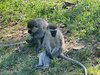
During my trip to southern Africa, I saw 19 species of mammal. Eleven of these species are possible in Uganda.
There are a little over three hundred mammal species recorded in Uganda. Reading trip reports, it seems that around 115 of these are possible. Of these, 42 are conspicuous enough and common enough to be considered probable. Almost half of these are primates with most of the remaining the megafauna that one expects to see in Africa.
As for the rest, a bit of luck and skill will be required. I do have Giant Eland and other members of the mammalwatching.com group to thank for encouraging Harriet to build mammal watching skills in her team. Indeed, she wrote to me: “I decided to do something different mostly on the nocturnal life of mammals and primates and indeed we have been seeing a lot”. So, I am encouraged to think that we might see quite a variety of mammal species.
Birds
I saw 83 species of bird during my trip to southern Africa. 53 of these species are possibilities in Uganda, and as well there would be a similar number possible that I have seen in Europe or Sri Lanka.
There are 1062 bird species currently recognised as being found in Uganda, and as we are visiting almost all habitats and are there when northern migrants are present, most of these are possible. Reading trip reports it seems we will almost certainly see something over 600 species.
With such numbers we will mostly be satisfied with watching and recording everything we see. If we were to prioritise, it would be members of the more than 20 families found in Uganda that are only or mostly found in Africa. Families such as the flufftails, hylias, shoebill and the secretary bird.
One such family I am keen to see more of is the touraco family. In southern Africa I only saw the rather plain grey go-away bird. On this trip up to ten species of touraco are possible, and I look forward to seeing magnificent birds such as the great blue touraco in the wild.
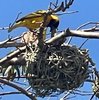
Sadly, one species we almost certainly will not see is Uganda’s only endemic, the Fox’s weaver, as it is extremely hard to find and confined to obscure wetlands.
Reptiles, Amphibians and Fish
In southern Africa, the only herps I saw were the Nile crocodile and the Nile water monitor, and I would expect to see both again as they are very common around rivers. We will also see the West African crocodile, and I will be keeping an eye out for either of the two land monitors found in Uganda.
I am not a herper so I don’t expect much else. Red-headed rock amagas are common and easily seen and there are a few other species possible, so I expect we will see them. Indigo says she wants to see chameleons, as I do. Uganda has a number of species so hopefully with the assistance of guides we will see two or three species.
Otherwise, anything else will very much be the result of luck, but no doubt a few geckos, skinks and frogs will appear. From reports I’ve read the most likely snake to be seen is the puff adder. I am also hoping we can see a lungfish when we look for the shoebills.
Invertebrates
Watching a dung beetle roll it’s ball up a mound, an army ant column on the march, and a giant centipede “swim” across a sandy track were all great memories from my time in Botswana. Again, I am no entomologist, and most of the inverts I record are either big, colourful or weird or somehow land on me. Even so, I’m sure we will see a number but the difficulty will be in getting them identified.
One group I am confident I will be able to record a number of are butterflies. I have a guidebook to the common species, and I know that as more travellers express interest in them the guides are becoming more knowledgeable about them.
Taxonomy
With the rapid advances in genetics, taxonomies can change fast. Guide books are out of date the day they are sent to the printers so I use Wikipedia and iNaturalist to double check while travelling. I don’t record sub-species but do record location and in most cases that is enough to determine sub-species if that becomes important. When it comes to splits, I do tend to go with the split if there is disagreement as I do have a Life List to feed!
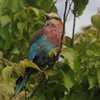
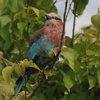
Six roller species are possible during our safari (Lilac-breasted roller, Chobe NP Botswana)