MRJ Does Uganda - a travel blog

Day 18 = Impenetrable Forest National Park - Bohoma

Habitat: Tropical rain forest

Weather: Noticeably cooler

I headed out early in the morning with local guide Solomon, as Sam and William stayed back in case Graeme needed transport or any other assistance. Solomon was an excellent guide and very enthusiastic. It got to 2.20pm and I asked how long it would take to get back to the lodge, as we were due at about 3. He said about 2 hours and I said maybe we should get back as we were expected at 3 and of course I was worried (at least a little) about Graeme. Solomon was insistent that we continue to the Point, wherever that was, for another species. I was firm on returning which he eventually agreed to so long as we went slowly to bird on the way! In the end we arrived back about 3.45pm.

Graeme was sitting in the lodge shop buying gifts to take home. With the aid of liberal doses of pain killers, he had been given the all clear to do the gorilla trek the next day. The core issue, however, would have to wait for attention when he got home.

I had a fantastic birding day, seeing 52 species of which 39 were new. There were many highlights, but Bird of the Day would have to be the African broadbill, which was a total surprise. Two mammals were seen, the L’Hoest’s monkey and the Black-fronted duiker. Again, being unexpected and a very desirable sighting, Mammal of the Day was the duiker.

Our lodge for Buhoma was Ride 4 Wemen, a charity that assists physically and sexually abused women. The lodging is run as a commercial operation to support the charity and so is not much different from other lodges. However the women are given work and training in the lodge as well as a sewing workshop which produces items for sale. The charity started by hiring out mountain bikes to tourists, and still does., thus the name.

Given our situation we could not have stayed at a better spot. The people were so friendly and helpful. We owe them a debt of gratitude. Anyway the next day I made a number of purchases for gifts myself, and they even made some items to order.

Thee of the women who made some of my purchases:
Ladies.jpg
 

Attachments

  • Ladies.jpg
    Ladies.jpg
    126.8 KB · Views: 38
Days 8, 9 and 10 - Murchison Falls National Park.


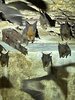
Next were smaller bats roosting in older buildings. Sam took us first to a couple of sheds at the airstrip then a derelct lime kiln. He bravely entered first to check for leopards, not unexpected as there were signs one had been there in the last couple of weeks.

Fortunately Sam survived. That night we did a night drive, encountering several species, including most surprisingly two porcupines. The next day we were looking a thicket for birds I noticed a mongoose at the bottom. It turned out to be the rarely-seen Pousargues's mongoose, and that was certainly the mammal of the location.
.

Always love reading about Uganda! Sounds like a fantastic trip so far!! That building that Sam checked for Leopards looks like the same one we saw bats in from afar (because we had just seen a leopard minutes earlier) What bat species did you see inside?

And wow about the mongoose! We didn't know this species was around Murchison when we went, but our friend Jon Hall ended up seeing them there a few months later. Did you get any photos!?
 
Always love reading about Uganda! Sounds like a fantastic trip so far!! That building that Sam checked for Leopards looks like the same one we saw bats in from afar (because we had just seen a leopard minutes earlier) What bat species did you see inside?

And wow about the mongoose! We didn't know this species was around Murchison when we went, but our friend Jon Hall ended up seeing them there a few months later. Did you get any photos!?
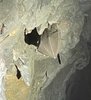
From memory the bats were two species of leafnosed bats. See the report for Murchison here: Zoochat Big Year 2023. Iphone picture below.

Re the mongoose: honestly can't remember as I have not been through my camera photos at all yet. But unlikely as it would have been dificult to focus on. Sam and I went through a diagnostic discussion to get there though. I had no idea it was there either.

Leopards: this is the third time I have been in leopard territory and failed to see one.
bat.jpg
 

Attachments

  • bat.jpg
    bat.jpg
    104.7 KB · Views: 30
You saw African Broadbill (Same family as Asian Green Broadbills), African Green Broadbill is the only African species in the Asian Broadbill family which doesn’t include the Asian Greens! Scientifically, Calyptomenidae is Calyptomena (Asian Greens) and Smithornis (Africans); Eurylaimidae is 6 genera from Asia, plus Pseudocalyptomena (African Green or Grauer’s), the specialty at The Point. Confused yet?
 
You saw African Broadbill (Same family as Asian Green Broadbills), African Green Broadbill is the only African species in the Asian Broadbill family which doesn’t include the Asian Greens! Scientifically, Calyptomenidae is Calyptomena (Asian Greens) and Smithornis (Africans); Eurylaimidae is 6 genera from Asia, plus Pseudocalyptomena (African Green or Grauer’s), the specialty at The Point. Confused yet?
Totally.

No I thin I see what you mean. But sadly we ran out of time. which was the real issue.
 
Day 18 - Impenetrable Forest National Park - Bohoma (second day)

This day was gorilla day.

Right from the start you could see that gorillas meant money, both to the Ugandan Wildlife Authority and the local community. The visitor centre buildings were very impressive and even the entry gate was remotely operated, compared with the manually operated gates at all other parks.

The event started with the customary song and dance routine by local women. I hope they get paid and are not doing it solely for the good of the community. After that there were a few do and dont’s, then finally we were divided into groups. We were put with a family of four French people who then proceeded to ignore Indigo although she is also French. The French are just not rude to others, they are also rude to each other.

We went up the same path we had used the previous day for birding, however while we heard birds, we never saw any. Because of Graeme we were given the closest group and soon we were heading off into the forest to find the gorillas.

The world seems to be divided between those who take a porter and those who don’t. I would tend to take one whatever. Basically putting that extra money into the community must increase the value of the National Park and the gorillas to the locals. In any case Graeme needed one, and I found mine a great help as well.

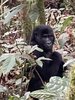
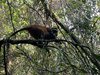
We found the gorillas, and they were lazing around after their morning breakfast in the trees. Much inter-gorilla grooming and nit-picking was taking place. This continued for about three-quarters of an hour till the silverback put on a demonstration of dominance. This was very impressive and at one point he came within two metres from me. Show over and our time was up and we started back to the visitor centre.

At the visitor centre in a short ceremony we received our certificates, as Graeme said a Doctorate in Gorillaology to add to our Doctorate in Chimpology.

The rest of the day was spent around Ride 4 Women, as Graeme had further appointments at the hospital.'

Note: I'm writing this on our last evening in the bush. Tomorrow we travel to the airport for our flights home. The last day certainly was not a letdown, in fact quite exciting. But overall it has been an outstanding trip. I'll continue the blog when I get home and plan to finish over the next couple of weeks.

gorilla.jpg
 

Attachments

  • gorilla.jpg
    gorilla.jpg
    115.7 KB · Views: 41
Bwindi Impenetrable Forest National Park on route to Ruhiga, via The Neck.

Bwindi Impenetrable Forest National Park consists of two large sections, both somewhat circular in shape joined by a serpentine strip of land known as The Neck, which has quite a reputation for birding. Of course, we birded along the entire route from the vehicle, but when we got to The Neck we got out and walked down the road for a kilometre or more to a swamp at the bottom. Later we had lunch next to a stream where we saw the Casson’s grey flycatcher, a delightful bird. Within minutes of stopping somebody had set up a souvenir stand.

The only new mammal was the silver monkey, a beautiful monkey which is a recent split from the blue monkey. We saw quite a number beside the road at one point, then saw a parade of monkeys, firstly L’Horst, then silver and finally a solitary black and white colobus, cross the road via branches above us. Each had to make a jump of about a metre, which was great to watch.

Birding was quite good, but The Neck did not live up to it’s reputation, and I could see that William and Sam were disappointed. However, we did see 44 species for the day, of which 11 were new. Bird of the Day was the beautiful little Casson’s grey flycatcher.

Getting to Ruhinga, we discovered we were losing Sam, who with William, made up our dynamic duo guiding team. He had to leave to lead another tour because the guide allocated to that tour was no longer available. Sam is a fantastic person and a stunningly good guide, dedicated to the conservation and study of Ugandan wildlife. Very sorry to see him go. Poor fellow, he had to be taken 1.5 hours to the highway, where he was to catch an overnight bus to Kampala, then the next morning make his way to Murchison Falls National Park, where he would pick up the tour.

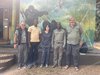
Farewell to Sam group photo. L to R: Graeme, Sam, Indigo, William, me.
group.jpg
 

Attachments

  • group.jpg
    group.jpg
    86.8 KB · Views: 28
Days 20 - 21 Ruhiga - Bwindi Impenetrable Forest National Park.

Ruhinga is another gorilla trekking location. While Buhoma has 11 habituated gorilla families, Ruhinga only has four. Driving into town one has the impression of a wild west town in that many buildings look like they have just been thrown together very quickly. There were lots of stands selling a very similar line of souvenirs, with gorillas of course dominating.

Ruhinga is substantially higher than Buhoma and was noticeably cooler. In fact, we welcomed the fire that was laid for us in the dining room of the lodge. We had the lodge to ourselves. Each of the cottages had local mammals and birds painted on walls both inside and out.

We were there for the birding, and had both morning and evening drives with William and local guide Gordan (Sam having left us). The birding was excellent, and we saw 58 species of which 33 were new. Obviously, the species represented montane habitat and some were Albertine Rift endemics. My favourite was the northern puffback, that gave an excellent rendition of it’s “puffing”, and that was indeed my bird of the stop.

We also saw three new mammals, two bats and a squirrel. One of the bats was in what effectively was a very large crack in the rock, located besides the road. We had to peer down into it. The second was much more civilised, the tunnel of an abandoned tin mine bored into the rock. It fortunately had ample height, even for somebody as tall as me. The squirrel was one of the cutest I had seen and was my mammal of the day.

On the way out the next day, we had to stope at the exit gate for the necessary paperwork. There was a sign for a coffee shop 300 metres down the road. Ugandan coffee is excellent, so we decided to stop there. We found a shack perched on the side of an extremely steep and high hill. “Is this the coffee shop?” “Yes, it is” Can we have three coffees?” “We don’t have any coffee”. Nor any other refreshments, apparently.

Into the bat cave
bat cave.jpg

Geoffroy's horseshoe bat
bat 1.jpg
 

Attachments

  • bat cave.jpg
    bat cave.jpg
    120.1 KB · Views: 34
  • bat 1.jpg
    bat 1.jpg
    78.7 KB · Views: 34
Day 23 - Mghahinge National Park

Mgahinga National Park was all about golden monkeys. The national park covers the Ugandan slopes of the Virguna Vocanoes, which Uganda shares with Rwunda and the Congo. At 33 sq km it is the smallest of the Ugandan national parks. Mgahinga does have gorilla trekking however has only one habituated group. It was actually recommended to me as a less commercial option for gorillas, and that is certainly the case.

We arrived just as the gorilla briefing was finishing and were then given our own briefing. There was a French family of three as well as the three of us.

I found the trek itself to be the most demanding of the three primate treks we completed, as it involved an eight kilometre trek up the side of the Mgahinga Volcano, then back again (downhill being more problematic for me due to some balance issues). According to my Apple app, we went up about 48 floors.

Once again, we spent about an hour with the monkeys, and they were a delight. We were with a group of over 100 in total, and there were monkeys around all the time. They were more of a bronze than gold colour. On the trek we saw several bushbuck, as well as a buffalo that came a bit close for comfort.

We stayed a fair way away from Mgahinga , at the Mucho Riverside Lodge in Kisoro. I would say this was the closest to a western hotel that we experienced in Uganda. The lodge was tucked away on the edge of the town, fronting a fast running stream and agricultural land. There were lots of birds, and the management made a feature of them. Netherless we only saw six new bird species in this sector.

Golden monkey
golden monkey.jpg
 

Attachments

  • golden monkey.jpg
    golden monkey.jpg
    176.1 KB · Views: 30
Days 24 &25, the last days. Lake Mburo National Park

Habitat: Moist mixed savanna

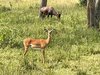
This park has had a mixed history as it was a pawn in Uganda's sometimes turbulent political history. It was our fifth savanna park and the last stop of our trip. With impala, lilac-breasted rollers, vervet monkeys and a southern red bishop, it reminded me of Chobe, far to the south.

Our accommodation was situated high on a rock kopje. After dinner we were making our way back to our rooms with a member of staff, Elijah, who was going to fix an electrical fault in my room. Just we got to our house we saw a 2.5 metre rock python stretched along the base of a stone wall. As I tried to get a photo of it Elijah called the manager, who is a snake enthusiast and keeps track of the larger snakes that inhabit the area. The python turned and makes a rapid exit, and then Elijah saw a tiny snake curled up on the wall. Extended, it would probably have been the size of a pencil. The manager arrived and identified it as a very young black mamba. An excellent start to our visit.

The next morning we had a game drive. There are no elephants or lions so things were a bit more relaxed. We saw people riding bikes and horses (in supervised groups) while one party had disembarked from their vehicles to walk about 100 metres to get a better view of some giraffes. Still there were buffalos and leopards. However it must be said we had excellent view of giraffes and zebras, who seemed to be much tamer and more numerous than those in other parks.

The highlight for me were the dwarf mongoose, who live in colonies in termite mounds. They were very active and very cute. In my mind they make a better exhibit than meerkats (Adelaide Zoo used to have them).

In the afternoon we had a boat trip on Lake Mburo. About half way there we noticed a couple of vehicles pulled over. Joining them we saw, resting under a small tree about 40 metres away, a very large leopard! I was ecstatic. Leopards had became something of a bogey animal to me, I had been in their presence several times without seen them.
  • I'd failed to see them in four days in Chobe National Park. We sat for half an hour outside a corpse of trees we knew contained a female with cubs.
  • Spotlighting near Candi in Sri Lanka I picked up the eyeshine of what I was sure was a leopard but could not identify it.
  • We spent three days in Yala National Park with excellent leopard guides. We missed one by three minutes, and another was clearly in some forest, as the monkeys and peafowl told us so.
  • We had already been in four savanna parks on this trip without seeing anything.
As so often happens, on our last afternoon we saw one.

Lake Mburo is a volcanic crater, so was very scenic, and we had a very pleasant boat trip. With great depth and steep sides it was not very suitable for waterbirds, and the number of birds seen was quite small. However it does have finfoots. These unusual birds are reputed to be difficult to see, but we managed to see three.

In all we had a fantastic last stop, rounding the trip off on a real high. The mammal of the stop had to be the leopard and the bird the finfoot.

We saw 102 bird species, of which 15 were new for the year.

Antelope
antelope.jpg
 

Attachments

  • antelope.jpg
    antelope.jpg
    137.5 KB · Views: 36
The Journey Home

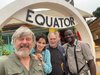
Leaving Lake Mburo. we were headed to the airport for our flight, still a five hour drive away. We continued to see birds, but only one new species, a hooded vulture. We stopped at the equator for lunch. This location was the only genuine toursim precinct we encountered.

The flight went well, and we got back to Melbourne after 10om local time, a day later. My heart sank when I saw a queue of people lined up to go into quarantine. I did not want to spend most of the night standing in line to explain a couple of wooden souvenirs and have my boots inspected. Fortunately we encounter a roving quarantine official who asked a few questions then stamped our form and we were through into the outside world. Catching an uber, we were home within three hours of landing.

In all, we saw 80 mammal species, 529 birds and 13 reptiles.

As I look though my photos, I'll continue to post them as well as share thoughts about what we saw and did.

Eq.jpg
 

Attachments

  • Eq.jpg
    Eq.jpg
    99.2 KB · Views: 35
I have now finalised my species list for the trip. In summary:

Total 648 species seen.
Mammals: 82 species seen, 71 new species, 6 new Families, 1 new Order.
Birds: 551 species seen, 473 new species, 17 new Families, 3 new Orders.
Reptiles: 14 species seen, 12 new species, 2 new Families.
Lobe-finned fish: 1 species seen, 1 new species, Family, Order and Class.

I saw one frog, but could not identify it. Invertebrates will come later.

A full systematic list is available for download here:
 

Attachments

It has been fantastic to read about your travels.And the species list is beyond amazing.The Ugandans seem like some wonderful people who truly cherish their nature.
MRJ does Uganda,and he does it with a bang!
 
Last edited:
What did I miss?

Of course there will always be species you miss, nobody can ever see everything. But was there anything special I missed?

With 82 species, I saw more mammals than I expected. There were two families that I was particularly interested in seeing that I missed, the Sengis and the Anomaluras. Sam actually saw one Amomalura and three Sengis but on each occasion I was too far back and too slow getting to him. Bad luck, but looking at the families I did see, I was more that satisfied.

Having missed out on leopards on two previous trips, I would have been disappointed not to see one this time. That I had to wait till the afternoon of the last day seems to be a story that repeats itself in trip reports, that is something special not seen till the very last moment.

Bird wise, I saw 551 species, a little less than the 600 I predicted was possible prior to departure. Even so I saw one and a half times more species that I have seen in a lifetime in Australia. Family wise, we saw pretty much all the families available. We did miss both Cettid warblers and Asian broadbills, but both these families can be seen in South-east Asia, which of course is much closer to home.

One family I did regret missing was the Flufftails. At Bigodi Swamp we stood listening to a white-spotted flufftail call from behind a bush n response to the calls being broadcast by our local guide, however it never showed. Both Graeme and I felt it had been over-called and was not going to fall for that one again.

Lastly I would have loved to look for the Rwenzori turaco we heard calling on the trek down from seeing the golden monkeys. But the other group on the trek had no intention of stopping just to see a bird! A reminder of the importance of travelling with like minded people.

But these are all minor issues in what was an amazing and unforgettable trip.
 
I'm starting to upload photos to the media section so will repeat them here as well.

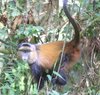
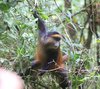
First off is the golden monkey (Cercopithecus kandti),This is a recent split from the blue monkey, and there are certainly many people who do not accept the split, and consider it a subspecies. Either way, it is quite distinct in it's appearance and the taxa is classified as Endangered.

As far as I am aware, the only way to see them is on a Uganda Wildlife Authority trek in the Mgahinga National Park, on which you have an hour with the animals, I also did both the gorilla and chimpanzee treks and for me this trek was the toughest of the three.

golden monkey good.JPG golden monkey action.JPG
 

Attachments

  • golden monkey good.JPG
    golden monkey good.JPG
    142.3 KB · Views: 15
  • golden monkey action.JPG
    golden monkey action.JPG
    152 KB · Views: 15
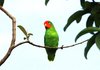
Red-headed lovebird Agapornis pullarius, the only Old World parrot we saw. We saw a small group in the car park area at Mabamba Swamp, and that was the only place we saw them. Interestingly, the red-headed is the only lovebird never to enter the birdkeeping trade. Apparently it is too difficult to keep.

Red faced lovebird.JPG
 

Attachments

  • Red faced lovebird.JPG
    Red faced lovebird.JPG
    67.1 KB · Views: 15
Back
Top