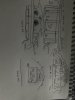
My Zoo Concept

also aligning with the land viewing for the Chinstrap Penguin (Pygoscelis antarcticus). Their exhibit alone is around 3.6 acres in total. In order to provide the most natural exhibit possible, deep analysis and research is required. Based on habitat, geographical location and environmental preferences, we designed a penguin habitat featuring ice, snow, coastal rocks, accurate air temperature and natural underwater range

A 3.6 acre exhibit, while nice from a realistic point of view, will be exorbitantly expensive to chill both the air and the water to the required temperatures. There is a reason subantarctic penguins are primarily centered at large and well off institutions. Also, per the AZA standards 15 Chinstraps only require 135 square feet of space. This is roughly 11x12 feet.

the exhibits can get to as low as -4 degrees fahrenheit, or -20 degrees celsius.

This is not within the recommended parameters for Chinstraps - minimum recommended temperature is 24F. Seawater begins to freeze at 28.4F so -4 and you might start having issues with ice. Remember Chinstraps move north onto the open ocean in winter where it stays notably warmer.

zoo is home to 5 male chinstrap penguins and 10 female chinstrap penguins.

It is recommended for mixed sex flocks to be close to an even sex ratio, as during the breeding season unpaired birds often cause aggression by attempting to steal mates, nesting material, or just picking a fight.

During the fishing season, males and females may alternate between the off-display habitat to provide a more realistic approach to how chinstrap penguins live outside of zoos and aquariums.

Given there are no external differences between sexes, what exactly is the point here? Also removal of birds from the colony during the breeding season has been reported to cause stress and depression in mates. Aggression can also arise from it if a dominant bird is removed.

I think if I were to add any of those species, it would be gentoos. However, chinstraps are known for being an aggressive species, and I’m not sure what species they have been mixed with in other zoos.

All penguins are generally aggressive. Chinstraps have been successfully mixed with many of the other subantarctics without any real problems. I've seen them with Emperor, King, Gentoo, Adelie, Rockhoppers, and the Macaroni.

As for Adelies, I feel that their captive requirements are too hard to meet for a brand new zoo, but it’s good speculation.

Your exhibit already exceeds the requirements for Adelie, and they are fairly similar in range to the Chinstrap. There is very little difference between keeping the two. Quite frankly this penguin house would sink most small zoos just on sheer cost of cooling it.
 
A 3.6 acre exhibit, while nice from a realistic point of view, will be exorbitantly expensive to chill both the air and the water to the required temperatures. There is a reason subantarctic penguins are primarily centered at large and well off institutions. Also, per the AZA standards 15 Chinstraps only require 135 square feet of space. This is roughly 11x12 feet.


This is not within the recommended parameters for Chinstraps - minimum recommended temperature is 24F. Seawater begins to freeze at 28.4F so -4 and you might start having issues with ice. Remember Chinstraps move north onto the open ocean in winter where it stays notably warmer.


It is recommended for mixed sex flocks to be close to an even sex ratio, as during the breeding season unpaired birds often cause aggression by attempting to steal mates, nesting material, or just picking a fight.


Given there are no external differences between sexes, what exactly is the point here? Also removal of birds from the colony during the breeding season has been reported to cause stress and depression in mates. Aggression can also arise from it if a dominant bird is removed.


All penguins are generally aggressive. Chinstraps have been successfully mixed with many of the other subantarctics without any real problems. I've seen them with Emperor, King, Gentoo, Adelie, Rockhoppers, and the Macaroni.


Your exhibit already exceeds the requirements for Adelie, and they are fairly similar in range to the Chinstrap. There is very little difference between keeping the two. Quite frankly this penguin house would sink most small zoos just on sheer cost of cooling it.
You made a lot of good points, I will take all of this into account when I remake the Penguin Museum concept.
 
Penguin Museum
Update #1

Huge thank you to @Great Argus for informing me on information I struggled to find.
- Temperature has been reconsidered and adjusted due to issues with habitat realism and stress levels. It has been raised by a good 20 degrees (in terms of fahrenheit) to match a more accurate temperature of northern Antarctic waters.
- The amount of birds based on sex has been evened out, with eight males and eight females to avoid unwanted provocation between those of the same sex.
- The idea of alternating penguins between exhibits has been expelled, but they do still have an exhibit off display to help add a change of scenery for the birds.
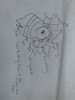
- The exhibits have been modified to be much smaller than originally planned due to expenses raising too high. Habitat #1 (Main habitat for public viewing) is 167 square feet and Habitat #2 (Off-display area) is 138 square feet.

Attached is an updated version of the Penguin Museum.
 

Attachments

  • image.jpg
    image.jpg
    48.7 KB · Views: 12
Size: Around 5 acres, not including off-display habitats.

Quite frankly if I walked into a gigantic tropical building and only found four species on display I would be extremely disappointed. And really all four species here can be comfortably and spaciously housed on less than a 1/4 acre.

Hoffmann’s Two-toed Sloth (Choloepus hoffmanni). Virtually all animal enclosures in this exhibit have very similar design, areas of land pasture are available but it’s mostly marshes with over-hanging canopies above the water.

An interesting and relatively unique idea, but how do you get the sloths to come over to you for food and daily inspection?

Next, we will find a similar looking habitat home to three of the Sunbittern (Eurypyga helias). One of our sunbitterns is male, and the other two are females

Worth noting Sunbittern are typically only housable in pairs or singly due to aggression - though for the sheer size you could probably get away with it.

There is a pond region for 13 of the Suckermouth Catfish (Hypostomus plecostomus) and a smaller exhibit for some of the Spiny Lobster (Palinurus elephas). I struggled to find a common name for that exact species, so that is the one I went for.

Plecostomus are territorial and will fight if food and/or space is limited. Also true Hypostomus plecostomus are not found in Colombia, if that is something you're sticking to.
 
Quite frankly if I walked into a gigantic tropical building and only found four species on display I would be extremely disappointed. And really all four species here can be comfortably and spaciously housed on less than a 1/4 acre.


An interesting and relatively unique idea, but how do you get the sloths to come over to you for food and daily inspection?


Worth noting Sunbittern are typically only housable in pairs or singly due to aggression - though for the sheer size you could probably get away with it.


Plecostomus are territorial and will fight if food and/or space is limited. Also true Hypostomus plecostomus are not found in Colombia, if that is something you're sticking to.
For my boardwalk I was thinking of making it more of like a “journey” to Colombia or a journey out of Colombia, however one wants to think of it. Also the Colombian Boardwalk isn’t a building. It’s a trial going through a man-made river. I think you are right about size though, so I might decrease the total zoo size to be much smaller.

Also, for your sloth comment, I should’ve mentioned that the water is very, very shallow. It’s a little under a foot deep, so any staff member could simply walk over to wherever the sloth is and feed them, along with daily inspections (which will be elaborated with species requirements).

Along with your suckermouth comment, I have done a little bit more digging and have concluded that they are very solitary from other ones of their species. So, in the time being, since I currently have no idea what to do with them, they will be an off display animal. Same can be said for the extra sunbittern female, or she just may be moved to her own habitat.

Thank you for giving me comments!
 
Last edited:
Daily Update

I do want to thank several other users who have been active on this thread for giving me more realistic ideas and ideas for the future. So here is the daily update!
- The zoo has been cut down to just 13 acres, a much more realistic size for a small, brand new zoo.
- Renovations to the Penguin Museum include more realistic and ideal temperatures, better habitat improvement and more accessible exhibit viewing.
- Due to their solitary lifestyle, exhibit ideas are being planned for our suckermouth catfishes. In the meantime, they will be off display from public viewing, along with one of our sunbittern females.
 
For my boardwalk I was thinking of making it more of like a “journey” to Colombia or a journey out of Colombia, however one wants to think of it. Also the Colombian Boardwalk isn’t a building. It’s a trial going through a man-made river. I think you are right about size though, so I might decrease the total zoo size to be much smaller.

Also, for your sloth comment, I should’ve mentioned that the water is very, very shallow. It’s a little under a foot deep, so any staff member could simply walk over to wherever the sloth is and feed them, along with daily inspections (which will be elaborated with species requirements).

Along with your suckermouth comment, I have done a little bit more digging and have concluded that they are very solitary from other ones of their species. So, in the time being, since I currently have no idea what to do with them, they will be an off display animal. Same can be said for the extra sunbittern female, or she just may be moved to her own habitat.

Thank you for giving me comments!

Sloths are really good swimmers, they're better in water than they are on the ground.
 
Sloths are really good swimmers, they're better in water than they are on the ground.
You’re right but in captivity that isn’t an essential skill. But I think i’ll consider making the water deeper to help boost mental health and increase enrichment possibilities.

Or possibly a different exhibit off display for the sloths when they need to be away from guests.

Thanks!:)
 
Also the Colombian Boardwalk isn’t a building. It’s a trial going through a man-made river.

Ah okay. I assumed it was a building as none of the four species living there are winter hardy in Michigan, nor would any tropical plants involved.

Along with your suckermouth comment, I have done a little bit more digging and have concluded that they are very solitary from other ones of their species.

Most plecostomus are other than breeding pairs - I've seen a lot of scuffles between large specimens in aquarium stores, both with their own kind and different species of pleco. The photos of the swarms of them in Florida are a phenomenon of them being highly successful and largely uncontrolled, it is not the norm.
 
Chinstrap Penguin
Pygoscelis antarcticus
Complete Zoo Catalog


Geographic Range - Antarctic Peninsula as well as coastal islands around the continent.
Habitat - Swarms of colonies on icebergs and small islands.
Class - Aves
Order - Sphenisciformes
Family - Spheniscidae
Genus - Pygoscelis
Height - 72 cm/28”
Weight - 12 lbs
Lifespan - 15-20 years
IUCN Conservation Status - Least Concern

Captive Requirements
Feeding: All penguins in my facility are hand-fed to ensure that all penguins have been fed properly for the day. However, they may occasionally be fed separately if part of the enrichment process. In the wild, Chinstraps will eat species of Antarctic krill and fish, but here they are fed herring. Around two pounds of fish are fed to all of our penguins per day, to keep them energized for forms of enrichments.
Enrichment: Penguins are curious but also very cautious of their surroundings, and they do require forms of entertainment. That’s why enrichment is important. Likewise, forms of entertainment to keep them curious, such as bubbles or spinning disco balls. Food is also a great opportunity to enhance enrichment, such as making them work or look for their food. Doing enrichment forms in water also helps stimulate penguins and triggers their exploratory nature.
Cleaning: It’s our job to ensure that a penguins feathers are cleaned daily to allow them to be in the best health possible. Enrichment may be a good time to take closer looks at them, but closer looks will also be done behind-the-scenes. Along with daily cleaning of the birds themselves, includes daily cleaning of the habitat. The water must be kept in good condition, making sure the filter is working properly, but also doing hand cleaning, especially on the rock walls and internal glass.
Health: Daily inspections will be done by full-time veterinarians. These people are responsible for ensuring that our penguins are reaching all essential nutritional needs, their physical and mental health are in check, and they are free of disease and infections.
 
  • Like
Reactions: Gil
Ah okay. I assumed it was a building as none of the four species living there are winter hardy in Michigan, nor would any tropical plants involved.


Most plecostomus are other than breeding pairs - I've seen a lot of scuffles between large specimens in aquarium stores, both with their own kind and different species of pleco. The photos of the swarms of them in Florida are a phenomenon of them being highly successful and largely uncontrolled, it is not the norm.
You have a good point about the environment. I don’t want to change it to be indoors, since several of my zoo exhibits are already indoors, so I may just have to make altercations depending on the habitat of the region in Michigan I choose, preferably in the south of the state with lots of wetland habitat and a more lush environment.

Regarding your pleco comment, I’m confused because you said they were territorial, so I’m not sure what I should do with them currently. Do you have any ideas?
 
You have a good point about the environment. I don’t want to change it to be indoors, since several of my zoo exhibits are already indoors, so I may just have to make altercations depending on the habitat of the region in Michigan I choose, preferably in the south of the state with lots of wetland habitat and a more lush environment.

None of the four species are capable of overwintering outside anywhere in Michigan. It is far too cold. You could have them outdoors in summer, but you'd have to house them indoors in winter. Sloths have slow metabolisms, they are not cold hardy in any sense. Sunbittern is highly tropical and cannot tolerate freezing temperatures.

Regarding your pleco comment, I’m confused because you said they were territorial, so I’m not sure what I should do with them currently. Do you have any ideas?

Either split up one or two into each pool under the sloths, bitterns, and the current pool (need deeper water though) or sub them out for something else.
 
There is a reason subantarctic penguins are primarily centered at large and well off institutions.
I would not imagine that Birdland is the wealthiest collection on the planet, though they have been successfully keeping and breeding King Penguin for many years...
 
I would not imagine that Birdland is the wealthiest collection on the planet, though they have been successfully keeping and breeding King Penguin for many years...

Unlike North American collections, Birdland has the convient ability to keep their King Penguins outside and thus lack the air conditioning costs. ;)
 
None of the four species are capable of overwintering outside anywhere in Michigan. It is far too cold. You could have them outdoors in summer, but you'd have to house them indoors in winter. Sloths have slow metabolisms, they are not cold hardy in any sense. Sunbittern is highly tropical and cannot tolerate freezing temperatures.


Either split up one or two into each pool under the sloths, bitterns, and the current pool (need deeper water though) or sub them out for something else.
I mean it’s the United States, the weather is out of control here, so I kinda plan on doing that anyway. Most animals at my local zoo go inside during winter so I will probably do the same. Hence the reason Colombian Boardwalk is closed during the off season.

I will probably make the waters deeper in the Colombian Boardwalk, so that the suckermouthes can life properly, and the overhanging trees won’t occur in the sloth exhibit and will instead be replaced by man-made forms of enrichment.
 
Exhibit Designs: Colombian Boardwalk

Off-Display
0.1 Sunbittern (E. h.)
3.3 Suckermouth Catfish (H. p.) (all pairs live separately)

Habitat #1:
Species Amount: 2
Species: Choloepus hoffmanni, Hypostomus plecostomus
Amount Per Species: 1.1 C. h., 1.1 H. p.
Exhibit Description: Exhibit barriers include natural rock wall designs and the elevated boardwalk is aligned with rock walls below to prevent the H. p. from escaping the water. The pond side of the exhibit is right near the boardwalk. The exhibit has grass on the ground and two small trees with thick trunks for the sloths to climb on. The bottom of the water contains mudflat.
Water Depth: 23 feet
Exhibit Temperature Needed: 25 degrees celsius (a.k.a. 77 degrees fahrenheit) (Anything lower or higher than 20-30 degrees celsius, H. p. will be brought to their off-display exhibit. Anything below 23 degrees celsius, the sloths will also be brought to their indoor habitat).

Habitat #2:
Species Amount: 2
Species: Eurypyga helias
Amount Per Species: 1.1 E. h.
Exhibit Description: Very similar to the sloth exhibit with much shallower water and more bush-like plants, along with more dirt and mulch chips, as well as more shade.
Water Depth: 2 feet
Exhibit Temperature Needed: Around the same as the sloths and catfishes, very warm and tropical.

Habitat #3
Species Amount: 1
Species: Panulirus guttatus
Amount Per Species: 1.1 P. g.
Exhibit Description: These guys are found in a tank at the end of the boardwalk. The tank has rocks, corals, sand and rock bottoms, water filtration, controlled climate and of course, forms of enrichment.
Exhibit Temperature Needed: 26-30 degrees celsius, or within the high 70’s to 80’s in terms of fahrenheit. During days that are too cold, the lobsters and coral will be moved.

Brief sketches of each (ignore how the trees look like stegosaurus plates).


Attachments

  • image.jpg
    image.jpg
    69.7 KB · Views: 10
Guinea Chick Lobster
Panulirus guttatus
Complete Zoo Catalog

Geographic Range - West Atlantic, Caribbean Sea and the Gulf of Mexico.
Habitat - Shallow, rocky reef habitats.
Class - Malacostraca
Order - Decapoda
Family - Palinuridae
Genus - Panulirus
Length - 15 cm/6 in
Lifespan - Possibly 50 years!
IUCN Conservation Status - Least Concern

Captive Requirements
Feeding: In the wild, spiny lobsters will eat sea urchins, algae, and a lot of other omnivorous foods. Here at the zoo they will be fed mussels and pellet food twice a day.
Enrichment: Since our lobsters are generally small, enrichment may include exhibit decorations, such as small regions to explore, toys to play with, and searching for food.
Cleaning: The tank needs to be scrubbed and cleaned daily. Along with that, the lobsters need to be examined closely, making sure they are in good shape, but with precaution since some species of lobsters can inflict damage to people.
Health: For precaution of the lobsters, mesh screens will be used if necessary, since many lobsters prefer solitary lifestyles. Daily inspections need to be done to ensure that they are in the best health possible, they are eating all that they need to and they are physically and mentally stable.
 
  • Like
Reactions: Gil
Thank you @TinoPup :p

So far 2/10 species catalogs are submitted, going over what needs to be done daily for our animals. Throughout the next few days, I will focus on exhibit designs, species requirements and after that will be more map and park developing.
 
Hartlaub’s Turaco
Tauraco hartlaubi
Complete Zoo Catalog

Geographic Range - Eastern Africa in the countries of Tanzania, Uganda and Kenya.
Habitat - Mountainous tropical forests and woodlands.
Class - Aves
Order - Musophagiformes
Family - Musophagidae
Genus - Tauraco
Length - 43 cm
Weight - 190-270 g
Lifespan - A very hardy bird, able to live up to 30 years.
IUCN Conservation Status - Least Concern

Captive Requirements
Feeding: The turacos are fed a variety of fruits daily, including bananas, melons, papayas and grapes. Vegetables and soft-bird pellets are also a part of their diet.
Enrichment: Enrichment includes using ladders and other forms of transportation to reach food, or using foraging trays and toys.
Cleaning: Everyday, our staff uses sprinklers to clean the exhibit for the species. We make sure all the plants in the exhibit are clean, all the grounds, the windows, the lights, everything. Along with that, we get closer looks at our turacos to make sure that they are in the best physical state of comfort level.
Health: Compared to other species, the H. t. can be rather aggressive to females, meaning that seasonal segregation for the species may be vital to keeping the breeding of them successful. Along with that, daily inspections are given to our turacos by a full-time veterinarian who ensures that the turacos are in their best health possible.
 
Back
Top