American Museum of Natural History New insectarium opening at AMNH in May 2023

This article from the New York Times details how the new leaf-cutter ant exhibit was developed at the American Museum of Natural History in their new insectarium, opening in May 2023.

Do we have any NYC-based or adjacent Zoochatters who might give us a review when they visit?

Inside the Scramble to Make a Half-Million Ants Feel at Home
Certainly looks like an impressive facility. I know @ZooElephantsMan frequents some of the WCS Zoos, so he might be able to go to the museum and review this exhibit. I'd also appreciate a review to read if anyone does go to visit this exhibit. The museum itself is awesome and I visited probably six years ago now, before there were any live animal exhibits.
 
Certainly looks like an impressive facility. I know @ZooElephantsMan frequents some of the WCS Zoos, so he might be able to go to the museum and review this exhibit. I'd also appreciate a review to read if anyone does go to visit this exhibit. The museum itself is awesome and I visited probably six years ago now, before there were any live animal exhibits.

As someone who used to go to the AMNH several times a year, the museum has had live animal exhibits in the past. Lizards and Snakes: Alive! was a special exhibit back in 2011, and Spiders Alive! was in 2012. Both were traveling exhibits. The museum also has a seasonal butterfly conservatory that the new butterfly vivarium is replacing.

This is the first addition to the AMNH in a long time! I'm really excited to hear what it's like (unfortunately I've moved away from NY).
 
Apparently the new addition is not only for an insectarium, but also includes a whole new building with a public library and an immersive theater with a "360-degree film screen". This will also be the second place in New York City to see Leafcutter Ants, as a modest exhibit for them also exists in the Central Park Zoo's tropical building. I've always enjoyed Central Park's exhibit, but it definitely looks like AMNH's new insectarium will blow it out of the water! The building opens on May 4th (Star Wars Day :p), and I will hopefully check it out and report back next month.

AMNH’s New 230,000-Square-Foot Science Center Will Open Next Month
 
I visited the Insectarium today, and just uploaded a ton of pictures to the gallery. I tried my best to capture what it was like, but it was crowded and I had to avoid uploading photos that contained people’s faces, so I did the best I could.

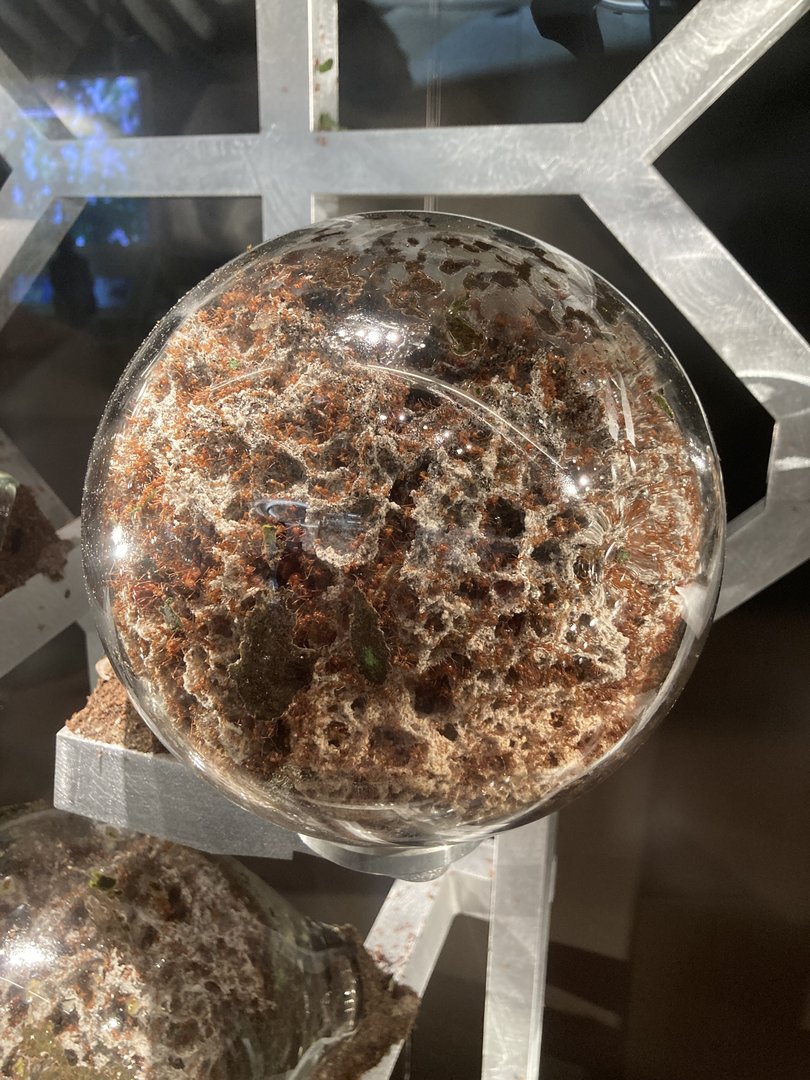
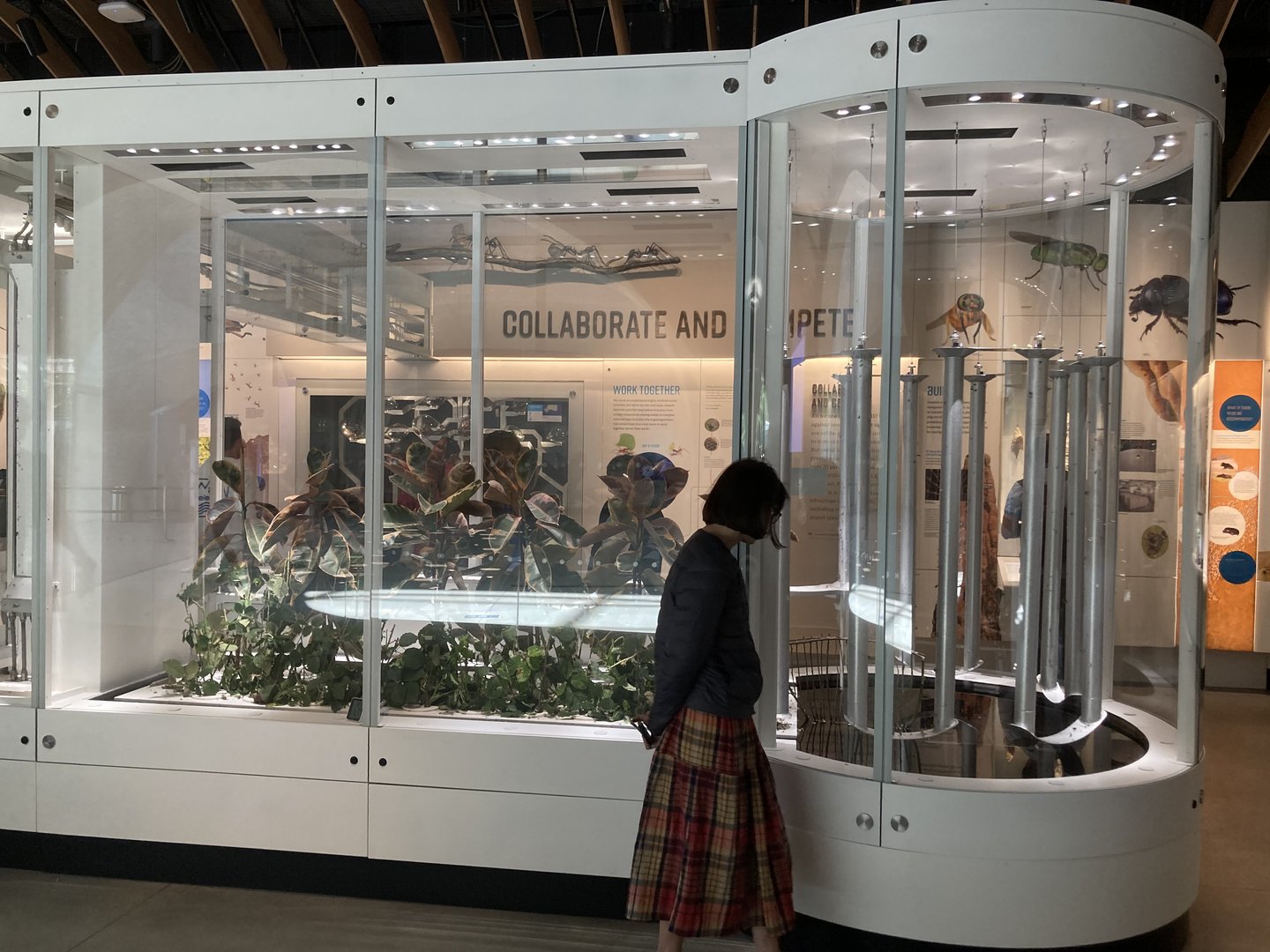
Overall the insectarium is very well done, and the part that is getting the most publicity is the leafcutter ant colony which may contain up to 1 million ants. The ants have a very engaging exhibit, which stretches between two sides of the guest pathway. On one side of the path is the ant nest, which is visible through a glass wall. Inside there are around 20 glass bottles, where the ants bring their leaves to grow and harvest fungus. The fungus grows in very interesting shapes, in a pattern of holes that reminded me of a meteorite. I have seen leafcutter ant exhibits before (like at Central Park), but while those exhibits were still engaging, this exhibit does the best job I’ve seen at showing what the ants actually do with the leaves that they harvest.


On the other side of the path is the place where the ants harvest the leaves from. The ants have an incredible obstacle course that takes them from the nest to the harvest-area, from one side of the visitor path to the other. Along the way the ants must crawl up and down vertical walls for great distances, and there is also a section where the ants walk through a glass tunnel over visitors’ heads.


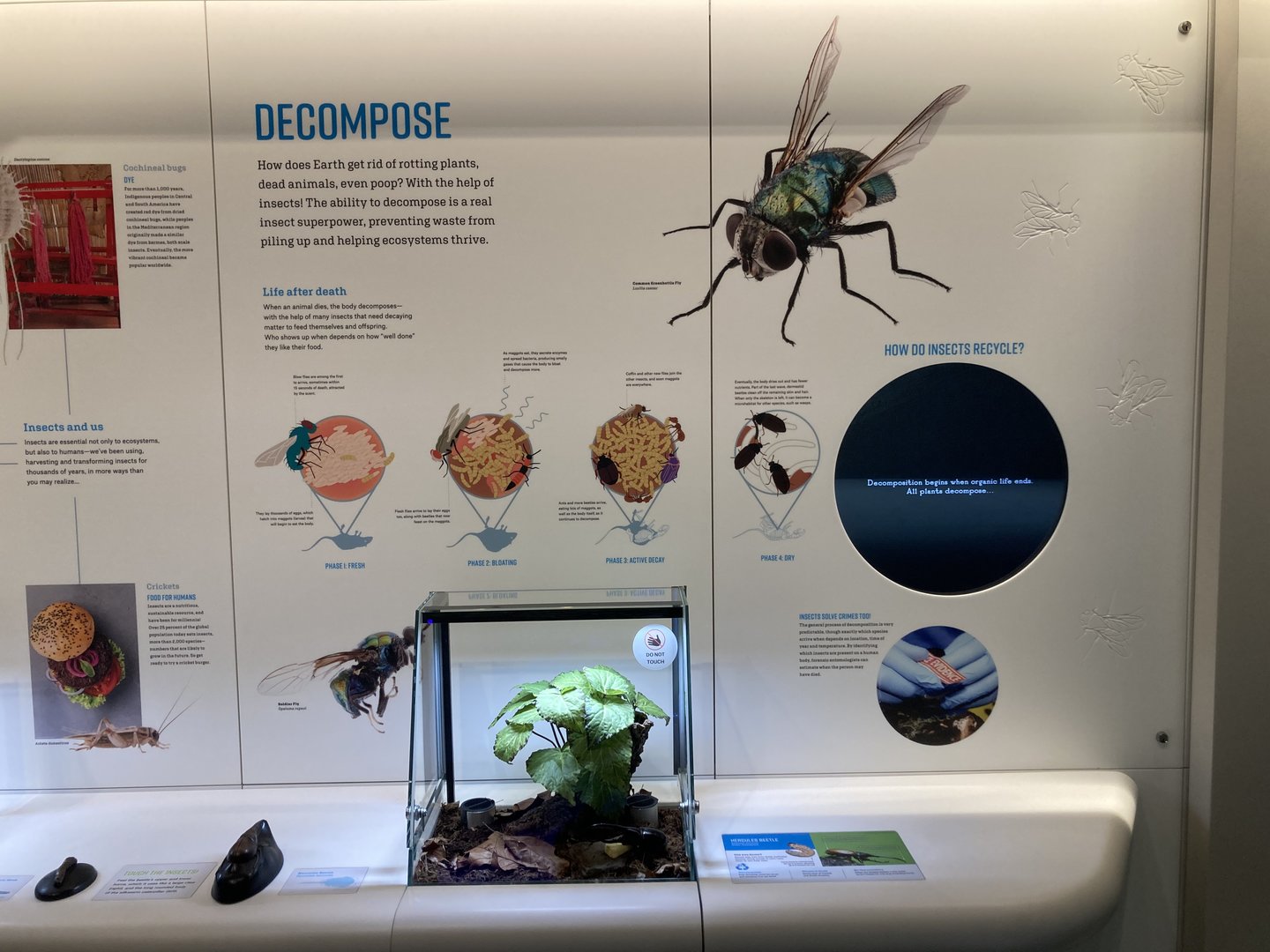
Beyond the leaf cutter ant colony, there are tons of interpretive graphics as you would expect from a museum display. There are walls talking about all kinds of adaptations that insects have, like how they help with decomposing, and how they build all kinds of structures. There are also walls talking about the value of insects and why they should not be demonized, and there are giant photographs of some beautiful insect species to show that they aren’t as “gross” as most people say. There is even a section on insects’ relationships with carnivorous plants. And there is also an indoor butterfly walkthrough, although that section was unfortunately closed today but you can read more about it here: https://www.amnh.org/exhibitions/butterflies


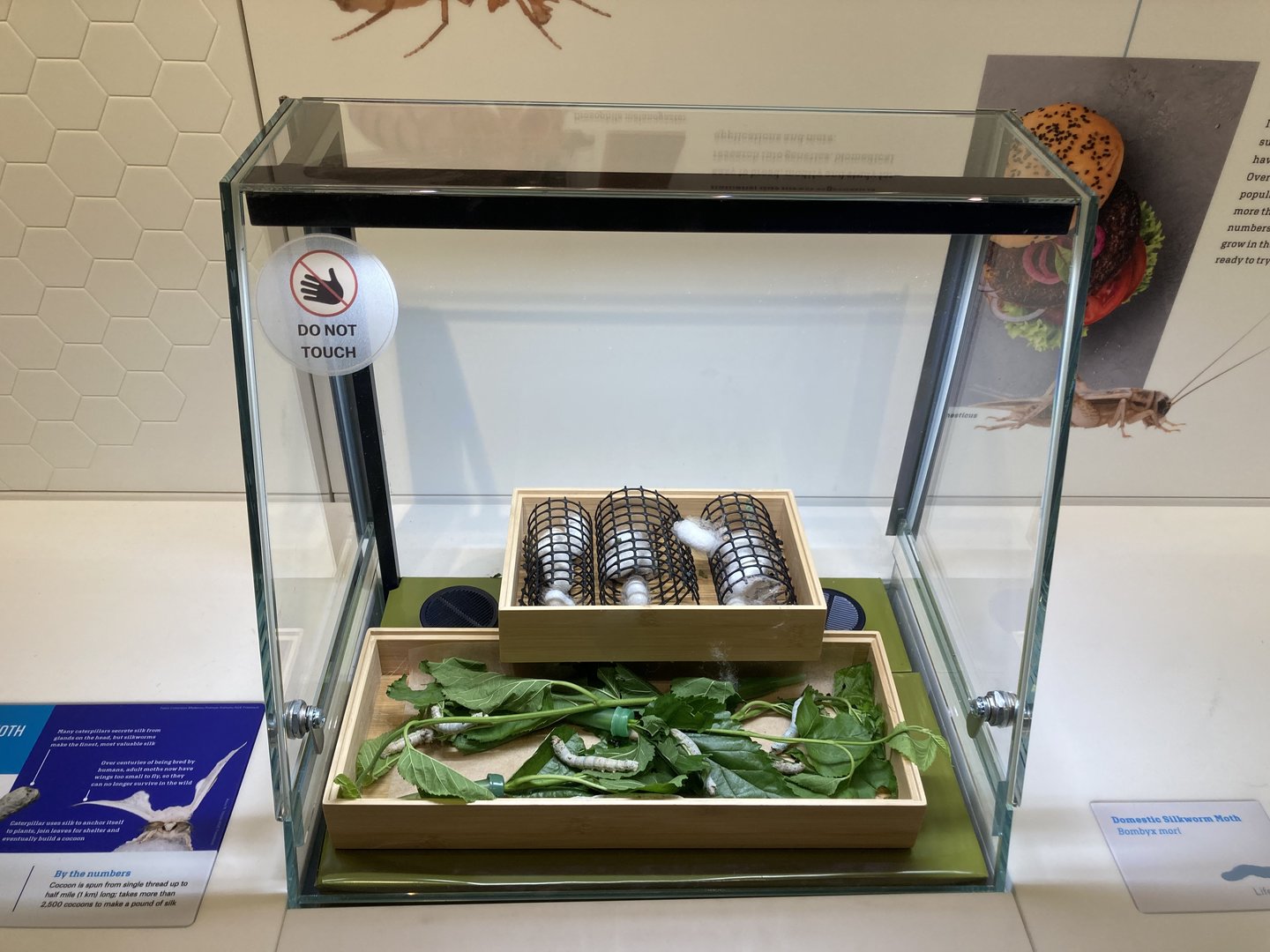
The insectarium also had a few other live animal exhibits that I particularly enjoyed. One that I really liked was for Domestic Silk Worms, and you could actually see the silk that the silkworms produced in the exhibit itself. There were also nice exhibits for Hercules Beetles and Blue Death Feigning Beetles, which were very cool looking species. But probably the biggest unexpected highlight for me was a colony of a different type of ants—Honeypot Ants. For those who don’t know, Honeypot Ants are a species of ant in which there are specialized workers who eat so much food that their abdomen swells to a disproportionate size, making them much less mobile. These workers then provide food to fellow ants, through mouth-to-mouth feeding. This was a very cool adaptation, and I was completely blown away seeing the Honeypot Ants in action. The swollen ants were beautiful, and they almost looked like drops of honey or like amber marbles. Before coming, I had already known about the Leafcutter Ant exhibit, but the Honeypot Ants were a complete surprise, and so perhaps that is why the exhibit made an even bigger impact.


Overall, the American Museum of Natural History is already one of the premier natural history museums in the country (certainly better than the Smithsonian Museum of Natural History in DC, in my opinion). Some of the taxidermy exhibits at the American Museum of Natural History are unbelievable, with murals that are particularly beautifully painted. There are also some rare species here, including taxidermy Tuataras, taxidermy Proboscis Monkeys, and taxidermy Sumatran Rhinos, and so this museum should be a destination for any animal nerd even without the insectarium or live animal exhibits included. I am not a big insect person, but I enjoyed the insectarium, and I definitely learned about a few new species with some very cool adaptations that I would not have appreciated otherwise. So I would say this is a strong addition to an already strong museum, and I would recommend people come for the insectarium, but also for all the great things this museum has to offer.
 
Last edited:
Here is a species list for the insectarium:

Insects:
  1. Leaf Cutter Ant (Atta cephalotes)
  2. Hercules Beetle (Dynastes hercules)
  3. Domestic Silk Worm Moth (Bombyx mori)
  4. Taxicab Beetle (Pachnoda marginata peregrina)
  5. Golden Eyed Stick Insect (Peruphasma schultei)
  6. Blue Death Feigning Beetle (Asbotus verrucosus)
  7. Red Spotted Assassin (Platymeris rhadamanthus)
  8. Eastern Lubber (Romalea guttata)
  9. Leaf Insect (Cryptophyllium sp.)
  10. Annam Walking Stick (Medauroidea extradentata)
  11. Orchid Mantis (Hymenopus coronatus)
  12. Tobacco Hornworm (Manduca sexta)
  13. Large Milkweed Bug (Oncopeltus fasciatus)
  14. Domino Roach (Therea petiveriana)
  15. Giant Cave Cockroach (Blaberus giganteus)
  16. Honeypot ant (Myrmecocystus mexicanus)

Carnivorous Plants (I normally wouldn't add plants to a species list, but these two were signed and were very cool so I thought it would be worthwhile):
  1. Cape Sundew (Drosera capensis)
  2. Tropical Pitcher Plant (Nepenthes sp.)
 
Last edited:
Thanks @ZooElephantsMan for the detailed review. The architecture of the brand-new $465 million building looks stunning, and the leafcutter ant display is obviously very impressive, but one flaw is that 16 species is a puny amount to have for an Insectarium. The indoor butterfly walk-through isn't yet open, so it will be interesting to see if there are any more displays within that structure.

Even relatively unknown Canadian Insectariums such as the Victoria Bug Zoo (Victoria, B.C.) and the new-ish Royal Alberta Museum (which opened in 2018 in Edmonton, Alberta) each have approximately 45 species and 40 exhibits at their facilities. I was honestly expecting the American Museum of Natural History, with all that space and money, to have FAR more than 16 exhibits containing live animals. The interpretative graphics and design look tremendous, but I'm struggling to think of a single Insectarium in North America with such a small number of species.
 
@ZooElephantsMan Thank you very much for your great review of the new AMNH museum insectarium. Much appreciated! It looks like a worthy addition to one of the zoo world's great museums.

Thanks @ZooElephantsMan for the detailed review. The architecture of the brand-new $465 million building looks stunning, and the leafcutter ant display is obviously very impressive, but one flaw is that 16 species is a puny amount to have for an Insectarium. The indoor butterfly walk-through isn't yet open, so it will be interesting to see if there are any more displays within that structure.

Even relatively unknown Canadian Insectariums such as the Victoria Bug Zoo (Victoria, B.C.) and the new-ish Royal Alberta Museum (which opened in 2018 in Edmonton, Alberta) each have approximately 45 species and 40 exhibits at their facilities. I was honestly expecting the American Museum of Natural History, with all that space and money, to have FAR more than 16 exhibits containing live animals. The interpretative graphics and design look tremendous, but I'm struggling to think of a single Insectarium in North America with such a small number of species.

Thank you both for your comments! I agree, I was surprised about the low species count in the insectarium itself. I at least expected to see some bee species, as the insectarium contains a large fake hive with all sorts of interactive educational bee materials, but I saw no live animals in that section. On the upside, the museum website says that the butterfly walkthrough is supposed to have up to 80 species of butterflies, which will up the insectarium's total to 96 live animal species! So that will improve things a lot when it is accessible.
 
Here is a species list for the insectarium:

Insects:
  1. Leaf Cutter Ant (Atta cephalotes)
  2. Hercules Beetle (Dynastes hercules)
  3. Domestic Silk Worm Moth (Bombyx mori)
  4. Taxicab Beetle (Pachnoda marginata peregrina)
  5. Golden Eyed Stick Insect (Peruphasma schultei)
  6. Blue Death Feigning Beetle (Asbotus verrucosus)
  7. Red Spotted Assassin (Platymeris rhadamanthus)
  8. Eastern Lubber (Romalea guttata)
  9. Leaf Insect (Cryptophyllium sp.)
  10. Annam Walking Stick (Medauroidea extradentata)
  11. Orchid Mantis (Hymenopus coronatus)
  12. Tobacco Hornworm (Manduca sexta)
  13. Large Milkweed Bug (Oncopeltus fasciatus)
  14. Domino Roach (Therea petiveriana)
  15. Giant Cave Cockroach (Blaberus giganteus)
  16. Honeypot ant (Myrmecocystus mexicanus)

Carnivorous Plants (I normally wouldn't add plants to a species list, but these two were signed and were very cool so I thought it would be worthwhile):
  1. Cape Sundew (Drosera capensis)
  2. Tropical Pitcher Plant (Nepenthes sp.)

Visited the AMNH today. The Taxicab beetle has been replaced with stag beetles (Prosopocoilus sp.) and the orchid mantis has been replaced with a spiny flower mantis (Pseudocreobota wahlbergi).

The spiny flower mantis was a highlight, such a cool-looking insect.
 
Back
Top