I visited the Insectarium today, and just uploaded a ton of pictures to the gallery. I tried my best to capture what it was like, but it was crowded and I had to avoid uploading photos that contained people’s faces, so I did the best I could.
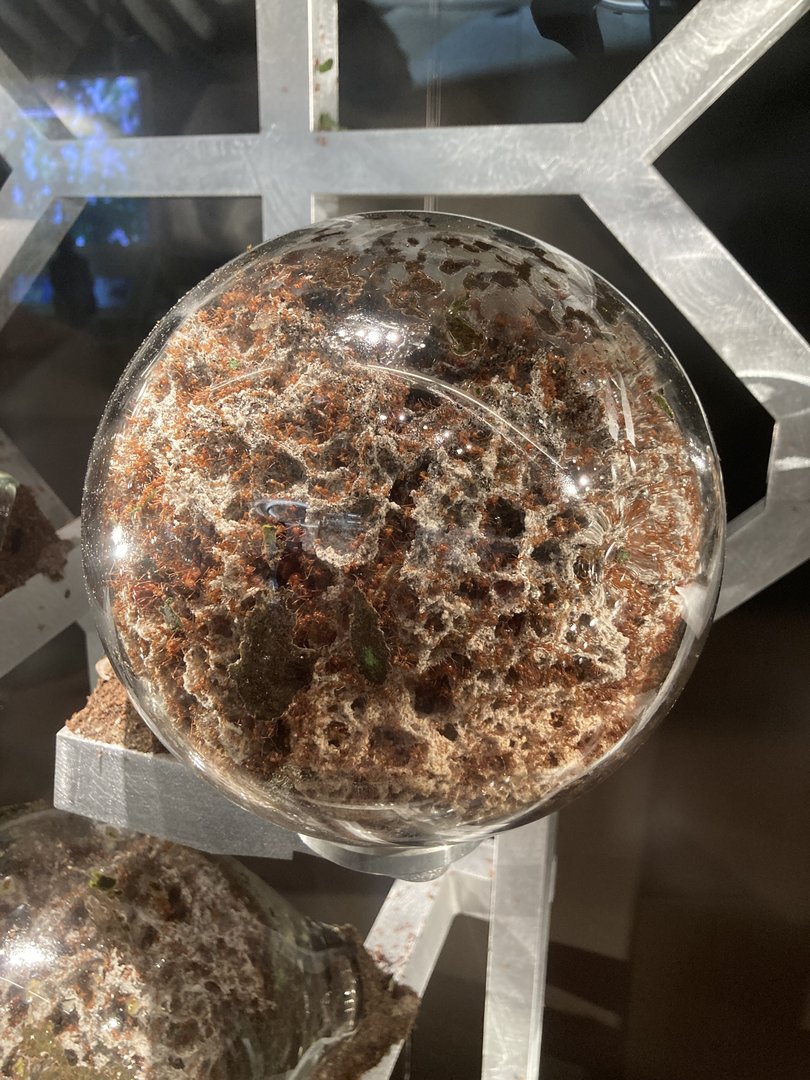
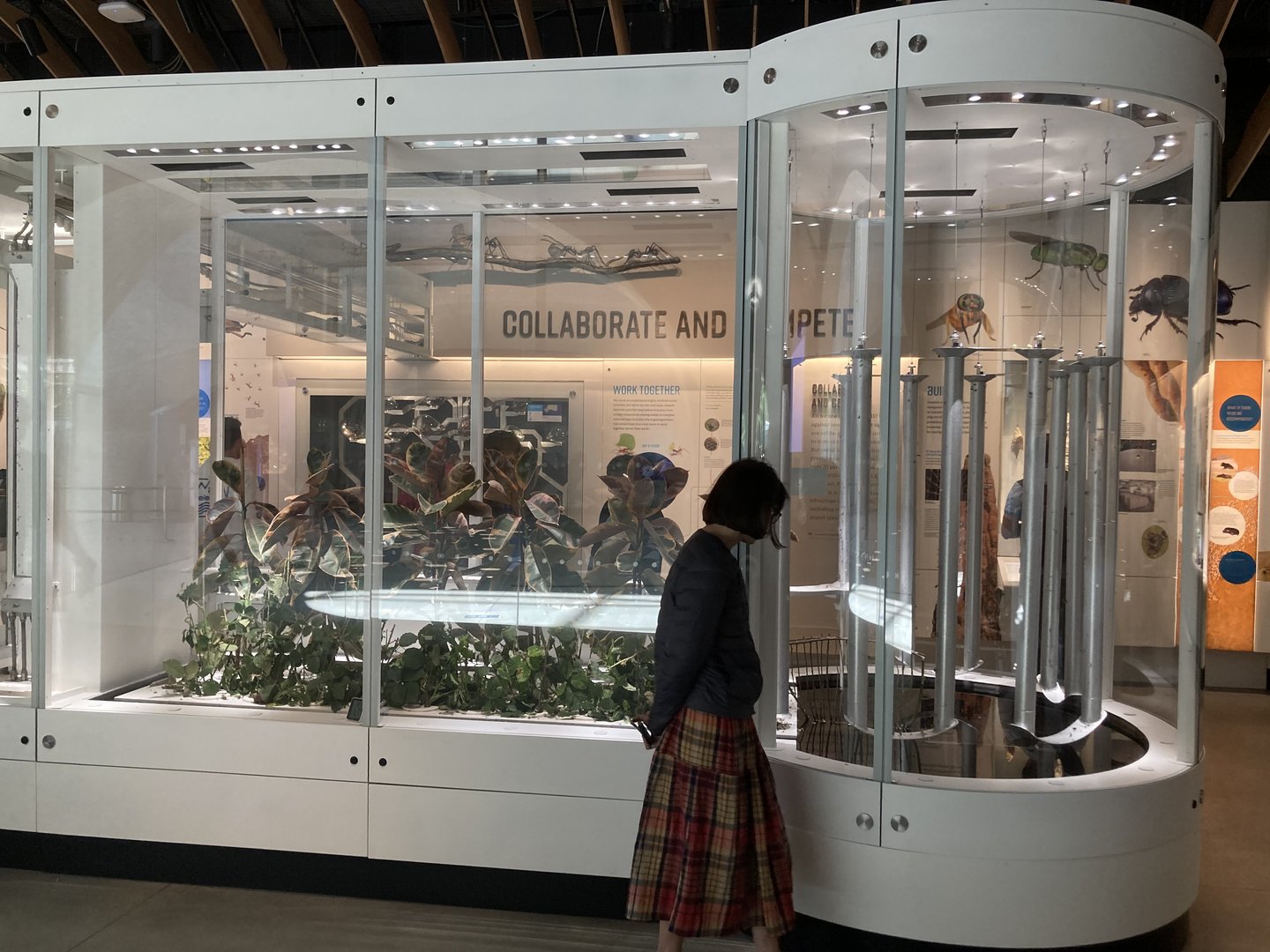
Overall the insectarium is very well done, and the part that is getting the most publicity is the leafcutter ant colony which may contain up to 1 million ants. The ants have a very engaging exhibit, which stretches between two sides of the guest pathway. On one side of the path is the ant nest, which is visible through a glass wall. Inside there are around 20 glass bottles, where the ants bring their leaves to grow and harvest fungus. The fungus grows in very interesting shapes, in a pattern of holes that reminded me of a meteorite. I have seen leafcutter ant exhibits before (like at Central Park), but while those exhibits were still engaging, this exhibit does the best job I’ve seen at showing what the ants actually do with the leaves that they harvest.
On the other side of the path is the place where the ants harvest the leaves from. The ants have an incredible obstacle course that takes them from the nest to the harvest-area, from one side of the visitor path to the other. Along the way the ants must crawl up and down vertical walls for great distances, and there is also a section where the ants walk through a glass tunnel over visitors’ heads.
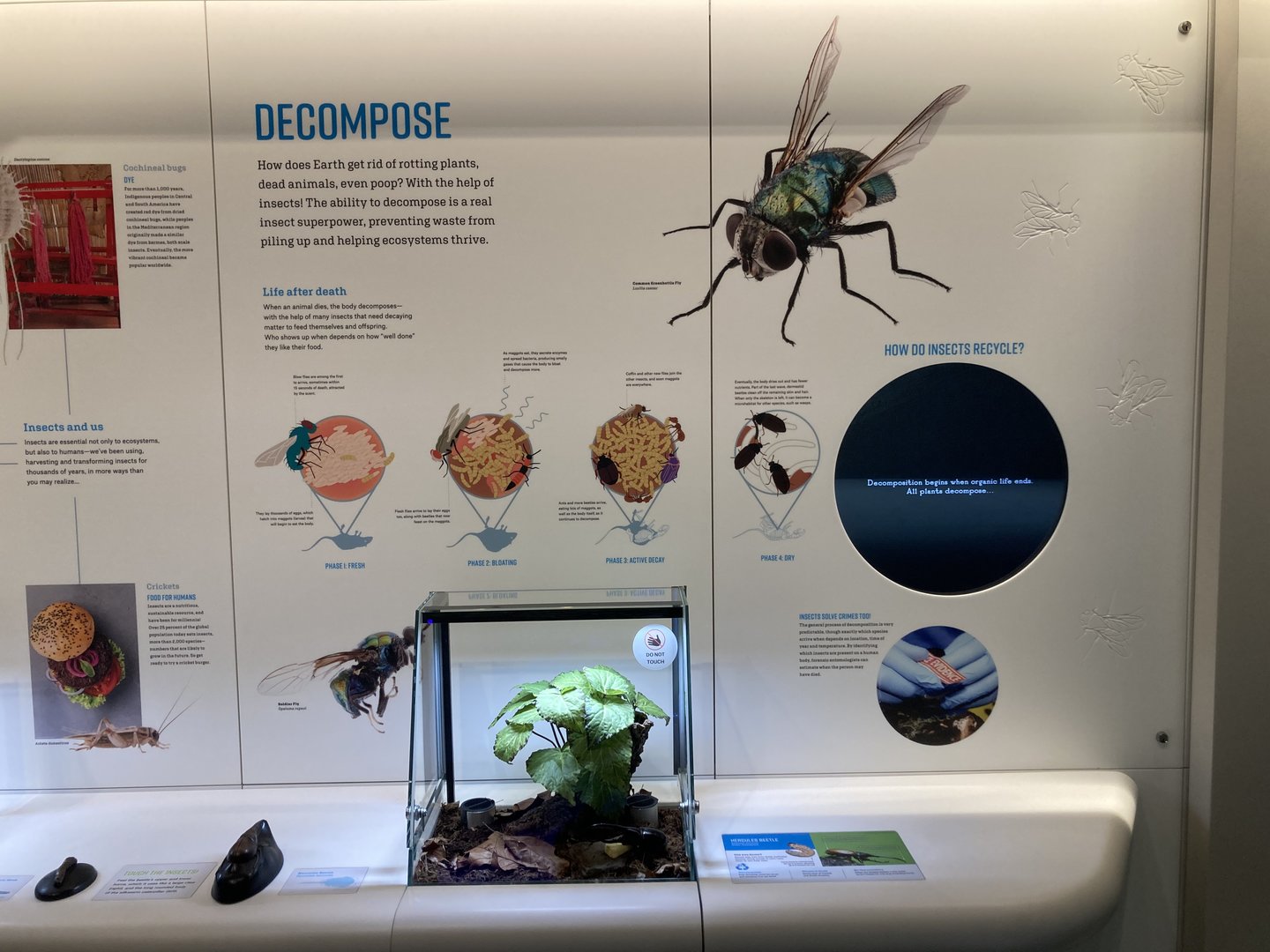
Beyond the leaf cutter ant colony, there are tons of interpretive graphics as you would expect from a museum display. There are walls talking about all kinds of adaptations that insects have, like how they help with decomposing, and how they build all kinds of structures. There are also walls talking about the value of insects and why they should not be demonized, and there are giant photographs of some beautiful insect species to show that they aren’t as “gross” as most people say. There is even a section on insects’ relationships with carnivorous plants. And there is also an indoor butterfly walkthrough, although that section was unfortunately closed today but you can read more about it here:
https://www.amnh.org/exhibitions/butterflies
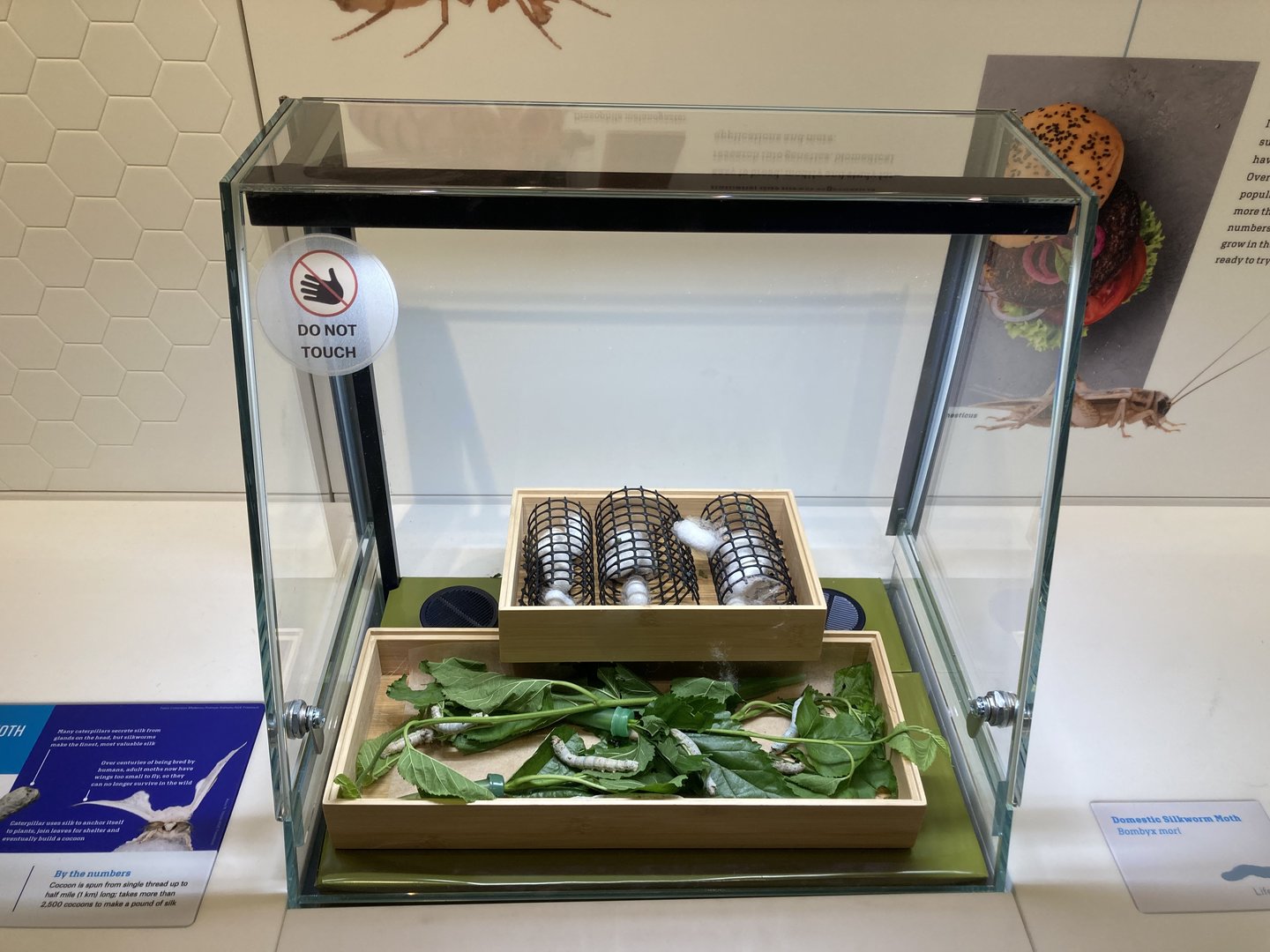
The insectarium also had a few other live animal exhibits that I particularly enjoyed. One that I really liked was for Domestic Silk Worms, and you could actually see the silk that the silkworms produced in the exhibit itself. There were also nice exhibits for Hercules Beetles and Blue Death Feigning Beetles, which were very cool looking species. But probably the biggest unexpected highlight for me was a colony of a different type of ants—Honeypot Ants. For those who don’t know, Honeypot Ants are a species of ant in which there are specialized workers who eat so much food that their abdomen swells to a disproportionate size, making them much less mobile. These workers then provide food to fellow ants, through mouth-to-mouth feeding. This was a very cool adaptation, and I was completely blown away seeing the Honeypot Ants in action. The swollen ants were beautiful, and they almost looked like drops of honey or like amber marbles. Before coming, I had already known about the Leafcutter Ant exhibit, but the Honeypot Ants were a complete surprise, and so perhaps that is why the exhibit made an even bigger impact.
Overall, the American Museum of Natural History is already one of the premier natural history museums in the country (certainly better than the Smithsonian Museum of Natural History in DC, in my opinion). Some of the taxidermy exhibits at the American Museum of Natural History are unbelievable, with murals that are particularly beautifully painted. There are also some rare species here, including taxidermy Tuataras, taxidermy Proboscis Monkeys, and taxidermy Sumatran Rhinos, and so this museum should be a destination for any animal nerd even without the insectarium or live animal exhibits included. I am not a big insect person, but I enjoyed the insectarium, and I definitely learned about a few new species with some very cool adaptations that I would not have appreciated otherwise. So I would say this is a strong addition to an already strong museum, and I would recommend people come for the insectarium, but also for all the great things this museum has to offer.


 ), and I will hopefully check it out and report back next month.