So, what's going to happen now with the old Rhinoceros enclosure? Would be a shame to leave such a big space empty...

It’s a really pertinent question. As far as I know, they want to bring more rhino in, but I understand that they are obliged to make improvements first to meet the new zoo licensing regulations, such as underfloor heating? The zoo is skint, so it’s difficult to know how they’ll proceed? I think it could be adapted to make a fantastic Okapi exhibit. As it’s in the centre of the zoo and they’ve used construction barriers it stands out like a sore thumb. Maybe an inter-zoo loan of camel or llama could work until they get some funds, but another empty area isn’t a good look!So, what's going to happen now with the old Rhinoceros enclosure? Would be a shame to leave such a big space empty...

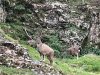
I’m told they can be mixed, Zootierliste will show which zoos have MarkhorThe acquisition of Markhor is brilliant and I like how Paignton have marketed their arrival. I used to love watching the Tur and the Barbary Sheep in there.
Questions for anyone who may know: Can Takin & Markhor be mixed and are Markhor more common in EU zoos, for eventual breeding arrangements?
Yes, it appears they have gone. I’m not sure, but they were an older group - perhaps they’ve died out or been PTS on welfare grounds? They were moved to a small paddock on the hillside near the wallaby and mostly went unnoticed in recent times. I dearly hope it’s nothing g tragic like a disease that has caused so much heartache & strife in recent times!Does anyone know what's happened with the Collared peccaries? They've been removed from the current holding which means Amazona zoo are now the only British holder of this species.

 Over the next six months, her fur will transform into the dramatic black-and-white coat that makes king colobus monkeys so striking, complete with a flowing white shoulder cape and fluffy facial fringes.
RARE ‘GHOST-WHITE’ MONKEY BABY MAKES HALLOWEEN DEBUT AT PAIGNTON ZOO • Paignton ZooSome much needed good news from Paignton
Spotted at Paignton Zoo this Halloween... a ghost-white baby monkey!
Say hello to Limba, our newest arrival – a rare king colobus infant born in the early hours of 22 October to proud mum Lola! With her snowy white fur and jet-black eyes, Limba is stealing the show in Monkey Heights this half term.
King colobus babies are born completely white, a clever trick of nature that helps mums keep track of them as they’re passed around the family group. You’ll likely spot Limba being cuddled by both Lola and grandma Ivy!
Native to the rainforests of West Africa, king colobus monkeys are classified as Endangered, with wild populations dropping by over 50% in the last 30 years due to habitat loss and hunting. Paignton Zoo is one of just 13 European zoos helping protect this incredible species.
Limba is named in honour of her late father, Limbali, who sadly passed away earlier this month. Her birth is a beacon of hope for the future of her species and a testament to the importance of conservation breeding programmes.
Yes, it’s fantastic to see & gives the exhibit a whole new dimension. The squirrel monkeys are due to move onto the old Swamp Monkey island near the gorillas, freeing that enclosure up, potentially, for the Pied Tamarin’s that are mostly off show in the small monkey house between lemur island and the Orangs.According to their FB page, the Diana Monkeys have been given access to the large plane tree in their enclosure at 'Monkey Heights' ThIs is an innovative step, made possible by adding some connecting ropes to the tree. Great idea as long as there are no escapes. I often thought it was a pity the Monkeys are prevented access to those big trees in their enclosures, but at least there is one group that can now.

I agree: it's an excellent move, but I wonder whether the Dianas will need to be kept off in the spring to prevent them destroying the leaf buds. I doubt whether the same could be done for the colobus as I think they might try to eat every leaf, but they might try it with the crested macacques.I often thought it was a pity the Monkeys are prevented access to those big trees in their enclosures, but at least there is one group that can now.
I agree: it's an excellent move, but I wonder whether the Dianas will need to be kept off in the spring to prevent them destroying the leaf buds. I doubt whether the same could be done for the colobus as I think they might try to eat every leaf, but they might try it with the crested macacques.
The guard wires around the trunk of the Diana's tree are still in place. If I remember correctly, they get access to the branches by a thick rope running across from a climbing frame, so I presume this could be removed if required. The mangabey's enclosure has no tree, just a couple of old palm stumps.I too thought about the leaf-bud damage in Spring. But once thy have had access to the tree, will it be so easy to stop them again now they've got the habit? . . . From memory there are three Plane trees in four enclosures (Dianas, Mangabeys, Crested Macaques,Colobus) so one enclosure hasn't got a tree anyway?

The remaining Kune Kune pig has been moved to the Pygmy goat enclosure. Persumably this is in preparation of the arrival of the Markhor into the quarry?
The Markhor were already in the quarry on our visit last week, as mentioned by others in this thread.