Philippine eagle spotted above the Alpes

Day 6 # 12 Tiergarten Wels

The night is short and full of horrors. It comes from George R.R. Martin, but it applied equally well to my stay in one of the only hotel chains on this trip.

Today is hornbill day and the first leg is immediately the most important.

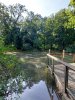
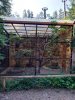
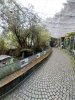
In Wels's city park lies the only 2.8ha Welser Tiergarten, Austria's oldest remaining zoo after Schonbrünn (1930). Entry is free, but I would have gladly paid for it. The park is bisected by the little river Mühlbach, and together with the ponds, this provided a pleasant coolness against the heat that was already hitting in the morning. The park has many old aviaries and cages, but that didn't really bother me: most of them had a lot of charm and fitted perfectly into the park landscape with its old trees and shrubs.

upload_2023-12-25_13-14-9.jpeg
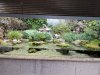
Park view - Pelican pond

The zoo has almost no large animals, fallow deer and Eurasian lynx, that's about it.

But that doesn't matter at all because the zoo has a wonderful collection of monkeys, probably the best of this trip, and a lot of birds.

When you visit many zoos, there is always the risk that everything is weighed against what can be seen in the biggest and financially strongest zoos. That would be an unfair battle that can never be won by the smaller zoos. Being able to put everything in the right perspective is therefore important, don't expect Masoala in a small country zoo, don't expect Munich's 'Welt der Affen' in a garden of only several hectares. On this trip, I repeatedly found it proven that even smaller zoos can excel in exhibits or collections. That is certainly the case here in Wels as far as primates are concerned. Wels showcases 11 species on barely 3 hectares, all but 1 (squirrel monkeys) in acceptable enclosures.

The monkey house dates from 2012 and is not open to the public. It has only 3 species (soon to be 4) but that cannot spoil the fun when it comes to mantled guereza, lion-tailed macaque and howler monkey. At the front side, all indoor enclosures can be viewed through large windows. However, visitors can walk around the building, reaching the roof at the back via a wooden footbridge.

For instance, not only do the mantled colobuses have a recent large outdoor cage with plenty of climbing opportunities, their almost extravagant indoor enclosure is not at all inferior to this, and it even has a water feature.

upload_2023-12-25_13-13-10.jpeg
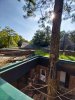
Mantled colobus enclosure and wooden walkway

You walk up the back of the building via a wooden walkway to a terrace where a tall tree towers above the roof. Along the way, you pass the colobuses, look in on them through windows and walk across the enclosure to the howler monkey enclosure. The three howler monkeys seem to have been pretty badly off considering the shape and surface area of their enclosure. This appears to be, and is, a deep pit, with little direct sunlight, no vegetation and views everywhere. So not the best enclosure, but the animals can climb via climbing ropes high up the only tree in their enclosure, up to 5 m above the visitors. I think for their welfare that tree is their life savior.

upload_2023-12-25_13-12-49.jpeg
Black and gold howler monkey enclosure

The path then descends again past 2 aviaries for a large group of +15 lion-tailed macaques.

At the front of the building, you still have the chance to see all the winter enclosures. Howler monkeys live there together with Azare's agoutis. The indoor enclosures seemed excellent, and although none of the outdoor cages are really big, the quality seemed fine to me there too.

A little further on are 4 small aviaries for marmosets: cotton-top tamarin, goeldi’s monkey, golden lion and red-bellied tamarin. In the same area are the Bolivian squirrel monkeys and Diana guenons. The latter will soon move to the Monkey House and join the mantled colobuses there.

Elsewhere in the garden, we also find pygmy marmosets and a ring-tailed maki gang is waging a territorial fight with a group of vulture guinea fowl. The lemurs were a little sneaky, the guinea fowls loudly indignant at so much audacity. This battle was undecided when I left the zoo.

upload_2023-12-25_13-13-42.jpeg

In case you think that 1 surprise will suffice one morning, this is wrong thinking. Not only does the zoo have a magnificent monkey collection, it does the same thing over again with hornbills.
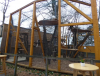
No less than eight species it has in its collection. They are kept in a cluster of aviaries located in the forest: 5-6 aviaries fan out from 2 buildings. Among the birds I saw there were wreathed hornbill, African grey hornbill, black-casqued hornbill, crowned hornbill, silvery-cheeked hornbill, trumpeter hornbill and Von der Decken's hornbill. Absent was the red-billed hornbill but the species is indicated on the brand new zoowebsite. All African species are housed in a single building from which 6 aviaries fan out. These are not especially large or tall, but seem adequate for the birds. They are well planted and equipped with perches. The very active black-casqued hornbills lived together with a pair of Reeve’s muntjacs, while other’s had vulturine guinea fowl or Buffon’s turaco as co-inhabitants.
upload_2023-12-25_13-13-29.jpeg

The Blyth’s hornbills have left the zoo as part of a pairing programme.The rear building also has an Australia aviary with kookaburras and rufous rat kangaroos, and a wetland aviary with oystercatchers, among others.


Elsewhere in the garden there is a very spacious wetland enclosure for marabous, Manchurian cranes and white storks, a large pond for pink pelicans and aviaries for black stork, nutcracker, macaws, kea and giant toucans. An ibis aviary houses African gaber, demoiselle cranes, cattle egret and sacred ibis. These birds can also be seen in their winter enclosure.

upload_2023-12-25_13-14-33.jpeg
Aviary for Eurasian nutcracker

So this garden also excels in birds, usually not in dazzling aviaries, but that doesn't bother here at all.

It is the sometimes small and unexpected discoveries that give this kind of trip extra pigment. Wels Tiergarten is small, green and free. It is centrally located in the city and there is free parking. Lovers of primates and hornbills are sure to get their money's worth here. There are many somewhat outdated wooden buildings, but they all have some charm and are well planted. The park itself is ideal for cooling off under the old deciduous trees. They also have a zoo association here that runs a cosy cafeteria near the monkey house. I had a lovely morning there and would return in a moment.
 

Attachments

  • upload_2023-12-25_13-12-49.jpeg
    upload_2023-12-25_13-12-49.jpeg
    129.4 KB · Views: 215
  • upload_2023-12-25_13-13-10.jpeg
    upload_2023-12-25_13-13-10.jpeg
    188.1 KB · Views: 223
  • upload_2023-12-25_13-13-29.jpeg
    upload_2023-12-25_13-13-29.jpeg
    185.7 KB · Views: 216
  • upload_2023-12-25_13-13-42.jpeg
    upload_2023-12-25_13-13-42.jpeg
    171.4 KB · Views: 221
  • upload_2023-12-25_13-14-9.jpeg
    upload_2023-12-25_13-14-9.jpeg
    176.8 KB · Views: 209
  • upload_2023-12-25_13-14-33.jpeg
    upload_2023-12-25_13-14-33.jpeg
    162.1 KB · Views: 209
I had a lovely morning there and would return in a moment.

I was also very much taken with it when I visited in March 2023 :) by happenstance I was there for the official opening of the new guereza outdoor exhibit *and* the birth mere hours before my arrival of an additional inhabitant.

I think your photograph slightly downplays the scale and quality of the guereza exhibit incidentally, so here is one of mine:

Screenshot_20231225-132254.png
 

Attachments

  • Screenshot_20231225-132254.png
    Screenshot_20231225-132254.png
    387.7 KB · Views: 222
I was also very much taken with it when I visited in March 2023 :) by happenstance I was there for the official opening of the new guereza outdoor exhibit *and* the birth mere hours before my arrival of an additional inhabitant.

I think your photograph slightly downplays the scale and quality of the guereza exhibit incidentally, so here is one of mine:

View attachment 674597

Certainly agree with that. I actually desperately need a more professional device.

The monkey house was, for such a small garden, absolutely wonderfull. I came across a similar building later on the trip, but the collection in Wels was better.
 
Day 6 # 13 Schmiding Zoo

A 15-minute drive from Wels, in the small village of Krenglbach, is Schmiding Zoo, Austria's second-largest zoo. It is a privately run zoo with some great enclosures and concepts, many of which are a bit outdated, but that certainly didn't spoil my fun.

After the very modern entrance building, the zoo opens with a row of densely planted aviaries for waldrap, black and white ruffed lemur and hornbills (Great Indian and Javan rhinoceros hornbill), and enclosures for secretary birds and red panda.

The visitors path continues past a cage for collared mangabey and an aviary for red-crowned amazon, a good enclosure for giraffes, goes right through the Giraffe House (with meerkat and the more interesting savannah monitor), along Japanese cranes to a truly sublime dry riverbed enclosure for western sitatunga, red-crowned cranes, white storks and grey crowned cranes. Beautiful enclosures for ungulates is one of the areas in which this zoo consistently excels.

upload_2023-12-27_11-27-49.jpeg
Western sitatunga enclosure

At the Gibbon house there are aviaries for kea, Themminks tragopan and lesser sulphur-crested cockatoo.

Another excellent enclosure is that for South American tapir and capybara which have superb swimming opportunities. Opposite that are the country’s only western gorilla’s and they live in the Gorilla bai, one of the many excellent ideas in this zoo. They have a richly structured outside enclosure which is connected to the interior space by tunnels.

A row of aviaries is home to Bolivian squirrel monkeys, Central American aguti, red-billed blue magpie, silver-cheeked hornbills and wrinkled hornbills. The enclosures with the red river hog and South African cheetah are the prelude to one of the zoo's best enclosures, the South African savannah. This one shines in all its simplicity: it is nothing more than a walled clearing, lined with trees, with just a few trees and some boggy spots. Forget fake baobab trees and so-called authentic African villages. Nothing more is needed to give the black-horse antelopes, Grant zebras and white rhinos a great home. Creating the impression of an African savannah is not that difficult and yet few zoos succeed in this. Enough space and the absence of atypical objects (such as conifers), and the job is almost done. I loved this place, which you could view from an elevated terrace.

upload_2023-12-27_11-30-9.jpeg
South African savannah

The Gorilla bai is a great idea that might have its peak in the future in Zurich where the master plan envisages a similar enclosure. Here in Krengelbach, unfortunately, it is too much of a dusty brown rock that does not fit the jungle theme. With the right money, this could become something great. Nevertheless, from a visitor's point of view, this is a particularly attractive part of the zoo, with large information panels and surprising vistas to both the outdoor area and the impressive gorilla bai.

upload_2023-12-27_11-31-2.jpeg
The rocky gorilla bai interior

Besides excellent enclosures for ungulates, this zoo also excels in birds of prey: 8 species of vultures and 4 species of eagles, in addition to secretary birds and kites. In 2023, it has become rare to find so many species of birds of prey in a regular zoo.

After the bai, visitors step into a new cave corridor that takes them directly into the 25,000m² aviary. It is divided into three sections: vultures, Steller's sea eagles and wading birds. Each of these aviaries looks good in its own way: the vulture aviary resembles a wooded gorge valley, the Steller's aviary has an excellent depth view and the birds can be easily seen thanks to some strategically placed trees, while the aviary for wading and water birds looks like a dense swamp forest between which small streams provide swampy spots. This aviary could just use some new and clean species signs, but otherwise it is a fantastic place.

upload_2023-12-27_11-31-42.jpeg
Wooded gorge for vultures

upload_2023-12-27_11-32-39.jpeg
Swamp forest for wading birds

After this impressive aviary, the loop provisionally ends at a large square with a snack bar and a playground. It is surrounded by enclosures and the starting point of a new loop.

No more than 10 European institutions hold martial eagles and Schmiding is, together with the Berlin Tierpark, the only real zoo. They keep it with palm-nut and lappet-faced vultures in a large aviary on the way to the tiger holding.

upload_2023-12-27_11-34-2.jpeg
Martial eagle aviary

The latter is especially spectacular due to its underground tunnel with viewpoints on both sides into both tiger enclosures. There are also higher vantage points that give a good view of these spacious enclosures for Siberian tigers.

upload_2023-12-27_11-34-53.jpeg
Tiger holding seen from visitor tunnel

The zoo's newest addition is the Himalayan area for blue sheep and Mishmi takins, on a hill that rises steeply and is best seen from an observation tower. It is always a delight to be in such a place where stereotypical theming is kept to a minimum (and especially the earworm music is omitted).

upload_2023-12-27_11-35-38.jpeg
Himalaya enclosure

The last stop of this loop is not the least: the Tropenhaus does not look particularly appealing from the outside with its shabby aviaries for white-headed vultures and black and white variants.

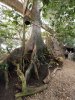
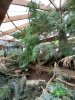
I saw about 20 tropical conservatories during this trip and I loved them all. It is always fun to search among the dense vegetation for the different inhabitants that can (hopefully) be found in that kind of building. This tropical dome in Schmiding is no exception. It has 3 entrances and if you start at the bottom, you walk up through the rainforest on a winding path, passing 3 different sections. The dome is held up by 1 simple but impressive artificial tree, through which the main roof beam runs. A thin net forms the dividing line between the first 2 sections. This tree is so naturalistic and the mesh of the net is so fine that, optically, both sections form a single entity.

upload_2023-12-27_11-36-44.jpeg
Beautifull artificial tree

Below are too-small cages for golden-eared and white-eared monkeys and some terrariums. According to the species signs, various amazons, loris, lilac-breasted roller and tyrants live here. I saw only Victoria crowned pigeons, New Guinea eclectus parrot and a mongoz lemur. I cannot rule out the presence of other species, but it seems unlikely given the free-living lemurs. The second section starts with a spacious cage for macaws, mainly blue-and-yellow and green-winged macaws. Free-roaming species here including sunbittern, red-billed hornbill, violet turaco, gould's amadine, and Nicobar pigeons. A pond is home to spectacled caiman and river cooters. Black-capped lory, white-headed bulbul, red-winged starling, Bali mynah and textor weaver are also indicated but I did not see them.

For the third section, you have to go outside for a few steps and when re-entering the dome, it starts with some terrariums for boa constrictor, plumed basilisk and knight anole. The best thing here, however, are the views between the rocks to the lower rainforest.

upload_2023-12-27_11-37-15.jpeg
Magnificent view on the 2nd section - macaw aviary on the background

This rainforest house is as fascinating as a rainforest should be. It is a bit dark, visibility is limited and everywhere there is something rustling, some movement noticed or something heard. Too bad the indicated bird collection is not lived up to, but this is definitely a building to cherish.

This was the last stop of this loop and the visit continues past certain habitats, such as the desert (enclosures for Arabian oryx and scimitar-horned oryx), a pampa (ofcourse), an outback (certainly) and a row of aviaries for hawk-headed parrot, yellow-necked francolin, red-tailed amazon, African grey parrot leads you to the zoo restaurant and the entrance area.

Schmiding Zoo is a very pleasant place with some very good ideas, but it lacks just the right amount of money to take them to the top. It certainly excels in well-kept enclosures for ungulates, has an outstanding raptor collection and is equally interesting for hornbills and parrots. With the adjacent aquazoo and evolution museum, it’s a full day’s out.
 

Attachments

  • upload_2023-12-27_11-27-49.jpeg
    upload_2023-12-27_11-27-49.jpeg
    218.6 KB · Views: 196
  • upload_2023-12-27_11-30-9.jpeg
    upload_2023-12-27_11-30-9.jpeg
    155 KB · Views: 193
  • upload_2023-12-27_11-31-2.jpeg
    upload_2023-12-27_11-31-2.jpeg
    178.3 KB · Views: 191
  • upload_2023-12-27_11-31-42.jpeg
    upload_2023-12-27_11-31-42.jpeg
    176 KB · Views: 200
  • upload_2023-12-27_11-32-39.jpeg
    upload_2023-12-27_11-32-39.jpeg
    222.5 KB · Views: 196
  • upload_2023-12-27_11-34-2.jpeg
    upload_2023-12-27_11-34-2.jpeg
    147.9 KB · Views: 189
  • upload_2023-12-27_11-34-53.jpeg
    upload_2023-12-27_11-34-53.jpeg
    217.8 KB · Views: 204
  • upload_2023-12-27_11-35-38.jpeg
    upload_2023-12-27_11-35-38.jpeg
    242.7 KB · Views: 190
  • upload_2023-12-27_11-36-44.jpeg
    upload_2023-12-27_11-36-44.jpeg
    155.4 KB · Views: 196
  • upload_2023-12-27_11-37-15.jpeg
    upload_2023-12-27_11-37-15.jpeg
    170.5 KB · Views: 195
Day 6 # 13 Schmiding Zoo

A 15-minute drive from Wels, in the small village of Krenglbach, is Schmiding Zoo, Austria's second-largest zoo. It is a privately run zoo with some great enclosures and concepts, many of which are a bit outdated, but that certainly didn't spoil my fun.

After the very modern entrance building, the zoo opens with a row of densely planted aviaries for waldrap, black and white ruffed lemur and hornbills (Great Indian and Javan rhinoceros hornbill), and enclosures for secretary birds and red panda.

The visitors path continues past a cage for collared mangabey and an aviary for red-crowned amazon, a good enclosure for giraffes, goes right through the Giraffe House (with meerkat and the more interesting savannah monitor), along Japanese cranes to a truly sublime dry riverbed enclosure for western sitatunga, red-crowned cranes, white storks and grey crowned cranes. Beautiful enclosures for ungulates is one of the areas in which this zoo consistently excels.

View attachment 675314
Western sitatunga enclosure

At the Gibbon house there are aviaries for kea, Themminks tragopan and lesser sulphur-crested cockatoo.

Another excellent enclosure is that for South American tapir and capybara which have superb swimming opportunities. Opposite that are the country’s only western gorilla’s and they live in the Gorilla bai, one of the many excellent ideas in this zoo. They have a richly structured outside enclosure which is connected to the interior space by tunnels.

A row of aviaries is home to Bolivian squirrel monkeys, Central American aguti, red-billed blue magpie, silver-cheeked hornbills and wrinkled hornbills. The enclosures with the red river hog and South African cheetah are the prelude to one of the zoo's best enclosures, the South African savannah. This one shines in all its simplicity: it is nothing more than a walled clearing, lined with trees, with just a few trees and some boggy spots. Forget fake baobab trees and so-called authentic African villages. Nothing more is needed to give the black-horse antelopes, Grant zebras and white rhinos a great home. Creating the impression of an African savannah is not that difficult and yet few zoos succeed in this. Enough space and the absence of atypical objects (such as conifers), and the job is almost done. I loved this place, which you could view from an elevated terrace.

View attachment 675315
South African savannah

The Gorilla bai is a great idea that might have its peak in the future in Zurich where the master plan envisages a similar enclosure. Here in Krengelbach, unfortunately, it is too much of a dusty brown rock that does not fit the jungle theme. With the right money, this could become something great. Nevertheless, from a visitor's point of view, this is a particularly attractive part of the zoo, with large information panels and surprising vistas to both the outdoor area and the impressive gorilla bai.

View attachment 675316
The rocky gorilla bai interior

Besides excellent enclosures for ungulates, this zoo also excels in birds of prey: 8 species of vultures and 4 species of eagles, in addition to secretary birds and kites. In 2023, it has become rare to find so many species of birds of prey in a regular zoo.

After the bai, visitors step into a new cave corridor that takes them directly into the 25,000m² aviary. It is divided into three sections: vultures, Steller's sea eagles and wading birds. Each of these aviaries looks good in its own way: the vulture aviary resembles a wooded gorge valley, the Steller's aviary has an excellent depth view and the birds can be easily seen thanks to some strategically placed trees, while the aviary for wading and water birds looks like a dense swamp forest between which small streams provide swampy spots. This aviary could just use some new and clean species signs, but otherwise it is a fantastic place.

View attachment 675317
Wooded gorge for vultures

View attachment 675318
Swamp forest for wading birds

After this impressive aviary, the loop provisionally ends at a large square with a snack bar and a playground. It is surrounded by enclosures and the starting point of a new loop.

No more than 10 European institutions hold martial eagles and Schmiding is, together with the Berlin Tierpark, the only real zoo. They keep it with palm-nut and lappet-faced vultures in a large aviary on the way to the tiger holding.

View attachment 675319
Martial eagle aviary

The latter is especially spectacular due to its underground tunnel with viewpoints on both sides into both tiger enclosures. There are also higher vantage points that give a good view of these spacious enclosures for Siberian tigers.

View attachment 675320
Tiger holding seen from visitor tunnel

The zoo's newest addition is the Himalayan area for blue sheep and Mishmi takins, on a hill that rises steeply and is best seen from an observation tower. It is always a delight to be in such a place where stereotypical theming is kept to a minimum (and especially the earworm music is omitted).

View attachment 675321
Himalaya enclosure

The last stop of this loop is not the least: the Tropenhaus does not look particularly appealing from the outside with its shabby aviaries for white-headed vultures and black and white variants.

I saw about 20 tropical conservatories during this trip and I loved them all. It is always fun to search among the dense vegetation for the different inhabitants that can (hopefully) be found in that kind of building. This tropical dome in Schmiding is no exception. It has 3 entrances and if you start at the bottom, you walk up through the rainforest on a winding path, passing 3 different sections. The dome is held up by 1 simple but impressive artificial tree, through which the main roof beam runs. A thin net forms the dividing line between the first 2 sections. This tree is so naturalistic and the mesh of the net is so fine that, optically, both sections form a single entity.

View attachment 675322
Beautifull artificial tree

Below are too-small cages for golden-eared and white-eared monkeys and some terrariums. According to the species signs, various amazons, loris, lilac-breasted roller and tyrants live here. I saw only Victoria crowned pigeons, New Guinea eclectus parrot and a mongoz lemur. I cannot rule out the presence of other species, but it seems unlikely given the free-living lemurs. The second section starts with a spacious cage for macaws, mainly blue-and-yellow and green-winged macaws. Free-roaming species here including sunbittern, red-billed hornbill, violet turaco, gould's amadine, and Nicobar pigeons. A pond is home to spectacled caiman and river cooters. Black-capped lory, white-headed bulbul, red-winged starling, Bali mynah and textor weaver are also indicated but I did not see them.

For the third section, you have to go outside for a few steps and when re-entering the dome, it starts with some terrariums for boa constrictor, plumed basilisk and knight anole. The best thing here, however, are the views between the rocks to the lower rainforest.

View attachment 675323
Magnificent view on the 2nd section - macaw aviary on the background

This rainforest house is as fascinating as a rainforest should be. It is a bit dark, visibility is limited and everywhere there is something rustling, some movement noticed or something heard. Too bad the indicated bird collection is not lived up to, but this is definitely a building to cherish.

This was the last stop of this loop and the visit continues past certain habitats, such as the desert (enclosures for Arabian oryx and scimitar-horned oryx), a pampa (ofcourse), an outback (certainly) and a row of aviaries for hawk-headed parrot, yellow-necked francolin, red-tailed amazon, African grey parrot leads you to the zoo restaurant and the entrance area.

Schmiding Zoo is a very pleasant place with some very good ideas, but it lacks just the right amount of money to take them to the top. It certainly excels in well-kept enclosures for ungulates, has an outstanding raptor collection and is equally interesting for hornbills and parrots. With the adjacent aquazoo and evolution museum, it’s a full day’s out.

Interesting that you are so positive about Schmiding, I didn't really like the zoo. Though I would have loved to love it all the bad maintenance, cheap mock rock and the disappointing Aquazoo , didn't make a good impression. I prefer bare concrete to the mock rock monstrosities that are visible there.... Give me nearby Wels anytime :)

Btw the aviary is 2500 square metres, the zoo loves to add an extra 0, but that would make it Europe's largest, where it is anything but ;)
 
Interesting that you are so positive about Schmiding, I didn't really like the zoo. Though I would have loved to love it all the bad maintenance, cheap mock rock and the disappointing Aquazoo , didn't make a good impression. I prefer bare concrete to the mock rock monstrosities that are visible there.... Give me nearby Wels anytime :)

Btw the aviary is 2500 square metres, the zoo loves to add an extra 0, but that would make it Europe's largest, where it is anything but ;)


The aquazoo was definitely a disappointment, I'll come back to that tomorrow.

But the zoo itself, well, plenty of good and original ideas. It is clear that this zoo does not have the financial resources (not that difficult: both car parks e.g. did not give me the impression that this is a well-visited place) to give e.g. the gorilla bai and the tropical house a solid upgrade.

But for me, I thought the gorilla bai is a pretty original idea (How old is that building?), albeit, of course, that the fake rock work in no way approximates a clearing in the Congolese jungle. And I really liked the tropical house, except for the cages for callithrids. But I thought it was well laid out, with its upward-sloping path along one of the best artificial trees I have ever seen.

But even so, I must confess that you do me a lot of favours with fake rocks and tropical houses. :)

I think the enclosures for ungulates are super, I would have to think hard to find one that doesn't deliver.

That aviary, when I stood in it I was sure it wasn't 2.5 acres :). it does seem bigger than 2500 sq m, and then they did a good job there, at least I thought it was very spacious.
 
First of all @Philipine eagle, i'm enjoying this thread more and more. I'm always interested about thoughts and impressions from other people to my well known zoos.

Btw the aviary is 2500 square metres, the zoo loves to add an extra 0, but that would make it Europe's largest, where it is anything but ;)

Sorry @lintworm, but that is not true. The zoo is claiming 25000 cubic meter. You can look this up at their homepage here: Highlights im Zoo und Aquazoo Schmiding – Zoo und Aquazoo Schmiding And the 25000 cubic meters seems plausible for me.

The signs at the tropical house are really outdated. There are indeed more free roamers than the mentioned one, but many of them prefer to hide somewhere.

The Gorilla Bai was opened back in 2004.
 
First of all @Philipine eagle, i'm enjoying this thread more and more. I'm always interested about thoughts and impressions from other people to my well known zoos.


Sorry @lintworm, but that is not true. The zoo is claiming 25000 cubic meter. You can look this up at their homepage here: Highlights im Zoo und Aquazoo Schmiding – Zoo und Aquazoo Schmiding And the 25000 cubic meters seems plausible for me.

The signs at the tropical house are really outdated. There are indeed more free roamers than the mentioned one, but many of them prefer to hide somewhere.

The Gorilla Bai was opened back in 2004.

Thank you @remar .

The m² was my mistake, @lintworm is probably right with his 2500 m²: add a height of 10m and you get 25000 m³, which is indeed what the zoo's homepage states.
 
Day 6 #14 Schmidings Aquazoo and Evolutionmuseum


Next to the Schmiding zoo is the Aquazoo and both are served by the same entrance and, of course, a combination ticket can be bought.

The Aquazoo and Evolution Museum is a bit of a confusing name and actually consists of four different parts:
- an evolution museum describing life in the Paleozoic, one of the most important periods in the evolution of life, from the Cambrian explosion to the Permian-Triassic mass extinctions. This era includes the run-up to fish and reptiles.
- The aquazoo: a sea aquarium and a room with freshwater fish and reptiles;
- the 'official' Evolution Museum, which is essentially an ethnographic museum because it not only depicts the genesis of man, but also has huge collections of art and utensils from the Egythians to modern man in the 21st century. It describes the development of man and different cultures, starting with the Australopithecus to arrive at modern man through numerous halls.
- biodiversity museum: a somewhat tucked away hall along the path to the aquazoo. This section is not marked on the map, so I unfortunately missed the only grey wool monkeys in Europe.

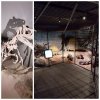
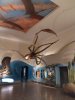
It starts rather good with a nice room with panoramic displays about how primitive life is started. You then walk through some halls with dinosaurs from different eras. The trail is conceived as a Jurassic Park style visit where latticework keeps the dinosaurs at bay. I found it only moderately done, although the impression on small children will no doubt be different. The whole idea is (or should be) that the dino's are the lead-up to the reptiles and later the birds, and that’s is obviously a good one, but the aquarium with the fish come to disrupt that idea.

upload_2023-12-28_10-29-54.jpeg

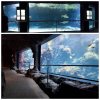
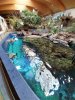
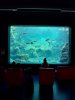
There are only 3 marine aquariums but they are all of good quality. The tank for sea turtles, dolphinfish, blacktip reef sharks and doctor fish is impressive but a bit blandly decorated. The same absolutely cannot be said of the stunning 15-metre-wide tropical reef aquarium that is the next stop. It is rich in living corals and dozens of fish of all colours provide the spectacle.

upload_2023-12-28_10-31-54.jpeg

Quasi imperceptibly, it goes up in the building and, passing a smaller reef tank, visitors enter the Amazon hall, right above the walking circuit of a moment ago.

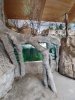
This hall is a disappointment. It is not a rainforest and it is not a freshwateraquarium aka reptile house, because it wants to be both and it is not. On one side is a series of aquariums with Amazonian fish: characidae, scalare, discus fish, catfish. An attempt was made to integrate the aquaria into the hall by fake rocks and some trees, but that failed.

upload_2023-12-28_10-36-47.jpeg
Very bad mock rockwork

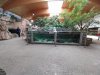
The middle section consists of an open area with the sea turtle aquarium, some spectacled caimans and other reptiles. Goeldi monkeys roam among the vegetation and at the end is a large aquarium for some freshwater giants: black pacu, arowana, red-tailed catfish and a huge araipaima. It is far too small for the huge fish.

upload_2023-12-28_10-37-57.jpeg
The largest freshwater tank for giants of the Amazon

The reptiles are on the other side. The hall also has a café and little effort has been made to create a natural-looking environment. A lot happens for a hall of this size and therefore nothing is done really right.

upload_2023-12-28_10-38-14.jpeg
Sea turtle aquarium

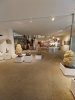
Next is the truly huge evolution museum, which takes an ethnocultural journey through the anthropological history of man in a maze of halls, staircases and interstitial spaces. It is a very modern museum with beautiful high-quality displays, superb collections and a seemingly endless trail. I don't know how many of the artefacts are real or merely fake.

upload_2023-12-28_10-39-3.jpeg
upload_2023-12-28_10-38-46.jpeg

It goes through caves with primitive paintings, past giant deer and saber-toothed tigers, through Egyptian tombs with mummies, to the indigenous peoples of Asia, South America and Africa. There are halls dedicated to world religions, the great philosophical questions of our time, modern inventions, ancient cults and the godfathers of evolutionary theory.

upload_2023-12-28_10-40-32.jpeg

Together with the zoo, Schmidings Aquazoo and the Museum of Evolution are a full-day excursion, although certainly the Aquazoo is rather disappointing.


After this wonderful day, I drove to Salzburg and the Alps. Unfortunately, I was the only visitor booked for the Welt der Gifte, while the minimum number of visitors for a tour is 2. So I should have got married after all. I took a look around the place, not too long in case someone calls the police 'because of a suspicious car with strange plates'. It is in an industrial area and it remained a mystery to me. In the evening, I had a lovely stay at a hotel near the airport that served excellent Asian food in the adjoining restaurant. It was only then that I realised I had missed the woolly monkeys in Schmiding.
 

Attachments

  • upload_2023-12-28_10-29-54.jpeg
    upload_2023-12-28_10-29-54.jpeg
    135.9 KB · Views: 184
  • upload_2023-12-28_10-31-54.jpeg
    upload_2023-12-28_10-31-54.jpeg
    137.1 KB · Views: 182
  • upload_2023-12-28_10-36-47.jpeg
    upload_2023-12-28_10-36-47.jpeg
    108.7 KB · Views: 174
  • upload_2023-12-28_10-37-57.jpeg
    upload_2023-12-28_10-37-57.jpeg
    171.3 KB · Views: 177
  • upload_2023-12-28_10-38-14.jpeg
    upload_2023-12-28_10-38-14.jpeg
    129.1 KB · Views: 182
  • upload_2023-12-28_10-38-46.jpeg
    upload_2023-12-28_10-38-46.jpeg
    67.1 KB · Views: 183
  • upload_2023-12-28_10-39-3.jpeg
    upload_2023-12-28_10-39-3.jpeg
    71.3 KB · Views: 173
  • upload_2023-12-28_10-40-32.jpeg
    upload_2023-12-28_10-40-32.jpeg
    63 KB · Views: 178
Day 7 #15 Haus der Natur (Salzburg)


The Haus der Natur on the banks of the river Salz is a very large natural history and science museum, which also has large collections of living animals: reptiles and fish. The reptile section was closed due to renovations, but the aquarium certainly pleased me. No giant tanks here, but a thorough arrangement of freshwater and saltwater fish.

I also visited some of the upper floors, including the one dedicated to the universe and our solar system.

upload_2023-12-29_12-9-23.jpeg
As dark and interesting the universe can be

There are exhibits and displays dedicated to glaciers, alpine and primeval forests, hunting, biodiversity in Austria, the cycle of a watercourse from the glacial source to the estuary, etc. I particularly liked the exhibition on strange creatures in human fables and legends. The main building also has a dinosaur hall, expositions on the ice ages and climate change, geothermal sciences and numerous halls on evolution, animals and humans.

Although this was the 3rd museum in a short time (after Herbertstein's Biodiversitätsmuseum and Schmiddings Evolutionsmuseum) to focus on nature, biodiversity, etc., this one too was able to fascinate me greatly. I certainly preferred it over the other 2. Unlike the other 2, this is a real science museum, which also devotes an entire building to energy, medical science, mathematics, mechanics, physics and chemistry. It has very well-themed rooms that you can pick and choose based on your interests.


upload_2023-12-29_12-8-41.jpeg
Dinosaur hall

The aquarium goes from freshwater to saltwater along a large number of rather small tanks with a good range of species. Species signs here are amongst the best anywhere (although not for taking photos, reflection is horrible): they were readable and bright, providing good and correct info.

upload_2023-12-29_12-8-58.jpeg
Easy to read, difficult to photograph

Most freshwater aquaria are not large and the landscaping is very mediocre. It shows many native species but also fish from other continents. There’s often a theme, e.g. 'living fossils' (gars), diversity (Lake Malawi ciclids) and electric fish (tapirfish).

upload_2023-12-29_12-9-48.jpeg

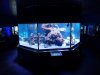
Most tropical saltwater fish are in a separate room with an octagonal aquarium in the middle, including greater amberjack and bluespotted ribbontail ray. Against the walls there are smaller aquariums with gobies, octopuses, live corals, anemone fish, invertebrates, etc.

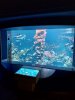
And the tour ends at the largest tank, an Indo-pacific coral reef. This one include surgeonfish, blacktip reef shark, Banggai cardinalfish, anemonefish and many others.

upload_2023-12-29_12-11-1.jpeg
Room dedicated to tropical coral reefs

upload_2023-12-29_12-12-43.jpeg
No good landscaping in Salzburg, this small tank was an exception

upload_2023-12-29_12-12-8.jpeg
60.000l Indopacific coral reef


The Haus of Natur is a great place to spend many hours, although I would prefer to visit it a few times a year, so that you can delve into a particular part of the collection on each visit. It covers a lot of interesting topics explained in a very visual way, with lots of interactive displays, beautiful showcases, objects, maps and photos.
 

Attachments

  • upload_2023-12-29_12-8-41.jpeg
    upload_2023-12-29_12-8-41.jpeg
    85.3 KB · Views: 167
  • upload_2023-12-29_12-8-58.jpeg
    upload_2023-12-29_12-8-58.jpeg
    71.2 KB · Views: 162
  • upload_2023-12-29_12-9-23.jpeg
    upload_2023-12-29_12-9-23.jpeg
    74.2 KB · Views: 162
  • upload_2023-12-29_12-9-48.jpeg
    upload_2023-12-29_12-9-48.jpeg
    50.9 KB · Views: 175
  • upload_2023-12-29_12-11-1.jpeg
    upload_2023-12-29_12-11-1.jpeg
    89.4 KB · Views: 171
  • upload_2023-12-29_12-12-8.jpeg
    upload_2023-12-29_12-12-8.jpeg
    83.3 KB · Views: 165
  • upload_2023-12-29_12-12-43.jpeg
    upload_2023-12-29_12-12-43.jpeg
    142 KB · Views: 168
Day 7 #15a Salzburg Hellbrunn Zoo

Due to a tragic accident in which a zookeeper died, Hellbrun zoo was closed. However, I had been there last year while travelling through southern Germany. So I include my visit of 2022 in this trip report.

The zoo only opened in 1961, but as early as 1425, the prince bishops of Salzburg established a game park on this site that served as a hunting ground. When the construction of Hellbrunn Castle began in 1612, landscape gardens were immediately added, and as early as 1619, there were enclosures for wolves, bears, lynxes, red deer and a pheasantry.

upload_2023-12-30_12-53-26.jpeg
Entrance

Some places have a very simple layout. This is certainly the case at the Salzburg geo Zoo: the ground plan is nothing more than a giant donut on a stick. The stick consists of 1 single walkway that runs along a row of enclosures leaning against high cliffs, the Hellbruner mountain, home to (introduced) griffon vultures and European eagle owls. This is still said to be the northernmost breeding site of the griffon vulture in Europe. The path is bordered by an impressive old castle wall overgrown with roses and other climbing plants, adding a lot of charm to the zoo. The donnut is all about Africa, with the famous savannah at its centre.

upload_2023-12-30_12-37-39.jpeg
A wall, a visitor path, an exhibit and high cliffs

It is not a big zoo, 14 hectares and 150 animal species, but there are no less than eight buildings to visit, often no more than a stable with a few enclosures, but it certainly increases the appeal of a visit. Personally, I prefer these kinds of buildings where you can pop in and out, they add a certain excitement to a visit, which cannot be obtained when you only walk past large enclosures for ungulates. Some will certainly criticise the small size of these buildings and the exhibits inside.

There’s the Gibbonhaus, with white-handed gibbon, emperor tamarin, aquaria for red piranha, banded archerfish, four-eyed fish and Pearse’s mudskippers, and terraria for Fiji banded iguana.

The tiny Südamerikahaus is a very small walk-through rainforest with green iguanas, cotton-top tamarins and Seba's short-tailed bats. I believe it is now closed for renovation.

The Jaguarhaus overlooks 1 of the - not so successful - styled indoor cat enclosures. In reality, there are 4, 2 on each side and they give access to 1 outdoor area per 2. The zoo has 2 such buildings, each 5x7m in size, and because they are built into the mountainside they have excellent acoustics. Light is ensured by skylights. Each building housed 2 species in 1963, with the females getting the rear and largest enclosure. The animals access the outdoor enclosures through tunnels. They are perfectly described in Natascha Meuser' Zoo Buildings. Construction and design manual'. There is an enclosure for smooth-fronted caiman and, further on, boa constrictor, plumed basilisk and ciclids.


upload_2023-12-30_12-39-0.jpeg
Jaguar enclosure - The house is on the right side in the background

Besides jaguars, the zoo also has pumas and snow leopards, at that’s least 1 species too many in my opinion (given the number of outside enclosures).

The Alpakahaus is nothing more than a small walk-through stable with Patagonian maras and greater rhea in addition to the alpacas.

The Südamerikahaus provides access to the winter quarters of the black capped capuchin and Bolivian squirrel monkeys, pygmy marmosets and a few other species (Europe's only fire-throated anolis, poison dart frogs, carp salmon and pufferfish). The monkeys are separated from the visitors by a half-height glass wall and a space-consuming water party. Again, it's in and out in no time.

There’s also a (closed) house for maned wolf and a walk-in aviary for budgericar and diamond doves. I didn't like the latter for sure, as I saw budgerigars escape because the sluice open too long as some idiots wanted to get in the aviary with a tank sized pram. Visiting zoos unfortunately is also about observing that the human race does not always excel.

The Nashornhaus, of course, houses the southern white rhinos. It's that simple sometimes. Ring-tailed lemurs also live there, on the roof. I did not see these, but since they can move freely anywhere in the zoo, they were probably relaxing somewhere out of sight.

upload_2023-12-30_12-40-32.jpeg
In the same area, we find the African penguins in their 300m² enclosure, which opened in 2020. Their winter quarters are heated and, in doing so, it is not clear to me whether this also applies to the 70m² outdoor pool (which seems like an expensive thing to do in these days).


While the indoor facilities so far have been a welcome change without really impressing, the building on the far side of the visitors’s path is of a different class: it’s a walk through building along mammals and reptiles, and with some free roaming species. The Löwenhaus, is built on the foundations of the former seal enclosure. It consists primarily of the lions' winter quarters, but also provides a vista on the savannah, contains several terraria and a walk-through enclosure for Williams electric blue gecko, round eared elephant shrews, African spurred tortoises and Taranta lovebirds, among others. Besides the lions, there is another large indoor enclosure here, for Diana guenons and red river hogs. You can view the outdoor exhibit of all mammals on two levels, as the visitors walkway simply continues on the roof of the building.

upload_2023-12-30_12-41-12.jpeg
Lion house and visitor platform

And from here you really have that stunning view of a white rhino and a (sometimes) white mountain in the background. The mountain in question is Germany's barely 1973m-high Untersberg, a limestone table mountain massif that is part of the Berechtesgaden Alps . Known among zoochatters for 'that view', among movie fans for the opening and closing scenes from The Sound of Music. Behind it are higher snow-capped mountains.

upload_2023-12-30_12-42-10.jpeg
African savanna with the Untersberg in the background

And yes, it is just as beautiful in real life as in photos. Only 3 species live on the savannah, white rhino, black sable antelope and Kafue lechwe, in total no more than 20 animals in an area of more than 15000 square metres, so it is certainly not overcrowded. The savannah slopes slightly at the edges, so visitors walk somewhat sunken at most points. Here and there, the grassy plain is interrupted by solitary trees, forest and tall grass. Nearby, there are good enclosures for Grèvy zebras and South African cheetahs.

But the best enclosure in Salzburg, in my opinion, is not even the magnificent savannah, but the only remaining enclosure on the visitor trail. It is officially called 'Vogelwiesse', but it is actually the nec plus ultra for the antelope species kept here. It consists of the most beautiful floodplain a sitatunga antelope can dream of. Deep and shallow water, streams and ponds, lots of grass, fallen trees, scattered mature trees, some co-inhabitants (pelicans, guinea fowl, Japanese cranes), please don't ever let anyone construct a huge elephant enclosure here to attract more visitors. This is by far the best (and biggest) sitatoenga enclosure I have ever seen. I know that @lintworm has picked up another one in Odense in his ‘Europe’s 100 must see exhibits’ and that is probably a better one, given the amount of cover provided (my last visit there was in 2010 and I don't think it existed then). Covered reedbeds are probably the only thing the Salzburg stay lacks.

upload_2023-12-30_12-44-27.jpeg
Floodplain enclosure for western sitatunga

Salzburg zoo is a remarkable zoo where a lot of abc species are absent. For instance, there are no tigers, elephants, giraffes or great apes. It has no spectacular tropical greenhouses or other impressive buildings, but that is completely made up for by its beautiful location. Thereby, the 80m high rock faces of Mount Hellbrunner play an important role and every visitor is blown away by the 'Kilimanjaro picture' its savannah offers.
 

Attachments

  • upload_2023-12-30_12-37-39.jpeg
    upload_2023-12-30_12-37-39.jpeg
    216.6 KB · Views: 156
  • upload_2023-12-30_12-39-0.jpeg
    upload_2023-12-30_12-39-0.jpeg
    297.8 KB · Views: 158
  • upload_2023-12-30_12-40-32.jpeg
    upload_2023-12-30_12-40-32.jpeg
    267.3 KB · Views: 161
  • upload_2023-12-30_12-41-12.jpeg
    upload_2023-12-30_12-41-12.jpeg
    215.1 KB · Views: 150
  • upload_2023-12-30_12-42-10.jpeg
    upload_2023-12-30_12-42-10.jpeg
    146.2 KB · Views: 155
  • upload_2023-12-30_12-44-27.jpeg
    upload_2023-12-30_12-44-27.jpeg
    285.1 KB · Views: 161
  • upload_2023-12-30_12-53-26.jpeg
    upload_2023-12-30_12-53-26.jpeg
    212.3 KB · Views: 159
Last edited:
Day 7 #16 Ebbs Raritätenzoo

Since I had some extra time, I decided to take the scenic German 305 road which, is part of the Deutsche Alpenstrasse, to my next destination. I greatly enjoy driving through the mountains, forests and the - by European and certainly by Belgian standards - solitude of the Alps.

Near the fortified town of Kufstein is the tiny town of Ebbs, home to a zoo that certainly did not suffer from modesty when coming up with a name.

A little warning for those in a hurry: it requires considerable walking to the actual entrance.

upload_2023-12-30_17-14-40.jpeg
From the parking lot to the entrance, hidden in the woodland

The Ebbs raritatenzoo is definitely not a place packed with rarities. The mammal lover certainly comes off worst; the common red-rumped agoeti is just about the least found species in Europe, but with 25 zoos according to ZTL, it isn’t certainly that rare.

Our well-known faithful friends are present in large numbers: ringtailed lemur, bennett kangaroo, barbary macaque, meerkat, Asian small-clawed otter and South American coati: if you never have seen them, then this is a good place. A four-year-old does not care at all what zoonerds think about the collection.

The bird section is a bit more interesting with grey trumpeter, silvery-cheeked hornbill, black casqued hornbill, yellow-billed stork, Victoria crowned pigeon, bateleur eagle and vultures (king, palm nut and griffon vulture). Unfortunately the white-crowned hornbill and plush-crested jay were absent and not signed.

upload_2023-12-30_17-15-53.jpeg
Aviaries for yellow-billed stork and eastern grey-crowned crane

That said, the zoo is extremely well cared for and neatly maintained. It is definitely a destination to visit with small children. The ring-tailed lemurs can freely roaming the zoo, there’s a house for the 3 largest of African tortoise species, and certainly the crane and stork aviaries and the enclosure for rhesus macaques are very decent.

upload_2023-12-30_17-17-48.jpeg
Ring-tailed lemur (left) and Giant African tortoises (right)
 

Attachments

  • upload_2023-12-30_17-14-40.jpeg
    upload_2023-12-30_17-14-40.jpeg
    121.3 KB · Views: 152
  • upload_2023-12-30_17-15-53.jpeg
    upload_2023-12-30_17-15-53.jpeg
    224.9 KB · Views: 155
  • upload_2023-12-30_17-17-48.jpeg
    upload_2023-12-30_17-17-48.jpeg
    192.8 KB · Views: 160
And also the knobbed hornbill :p The are was only opened shortly after the last map was printed.

My biggest critic on Salzburg Zoo is the badly executed geo zoo, even in newly opened areas.

Ok, I knew it was there, but I simply forgot it. Looking on google maps, it looks like quite a large area, are there more species than the woolly's and the knobbed hornbill?

About Salzburgs geo lay out: it's not that bad, is it? Only the snowleopards and some bird species at the Vogelwiesse are wrong according to that geo-concept, the rest seem more or less ok to me. maned wolves are erroneously placed with Australia on the map, but in the zoo they are with America.

I've seen much worse :)
 
Last edited:
Grey woolly monkeys also in Zoo Zlin, the same source as Schmiding;)

I wouldn't bet on that one. The latest breeding group was imported 2022, so after they sent the animals to Zlin. It still is unclear weather the former holding in Schmiding were also pure grey wolley monkeys.

Ok, I knew it was there, but I simply forgot it. Looking on google maps, it looks like quite a large area, are there more species than the woolly's and the knobbed hornbill?

There are 3 exhibits:
1. Golden takin, blackbuck
2. Knobbed hornbill, golden pheasant
3. Grey wolley monkey, white faced saki, night monkey, guianan toucanet

The latter two have superb indoor enclosures. The rest of the part are museum stuff. By the way. Many of the artifacts at the museum are real.

About Salzburgs geo lay out: it's not that bad, is it? Only the snowleopards and some bird species at the Vogelwiesse are wrong according to that geo-concept, the rest seem more or less ok to me. maned wolves are erroneously placed with Australia on the map, but in the zoo they are with America.

"That bad" is a harsh wording. Let's say unnecessary. The gibbon house (2015) and the African farm (2019) are quite new. They were build long after they decided to be a Geo zoo. They already have 3 South american houses. Another example would be the arctic wolves at the eurasian part of the zoo.
 
Day 7 # 17 Alpenzoo Innsbruck

The last zoo I will include a review of in 2023 is the magnificent Alpenzoo in Innsbruck. Together with Schönbrunn, I think this zoo is or should be part of Austria's cultural heritage. Even in bad weather, with clouds hiding the spectacular views downwards to the city, it’s a breachtaking place.

upload_2023-12-31_14-33-33.jpeg
View from the zoo - the Olympic Bergisel ski jump in the background

No other zoo has remained as faithful to its own concept as the Alpenzoo in Innsbruck. Countless are the bird parks, wildlife parks, reptile zoos, etc. that add meerkats or other species to their collection at some point.

Not so in Innsbruch. You won’t find a sudden exotic here, nor the traditional cuddly species for children. They are convinced there is enough to show within the theme of native alpine animals. They are convinced that with beautifully decorated enclosures, you can reflect the natural beauty of the region, and attract visitors. They cannot be praised enough for it.

It starts with an aquarium building with superbly landscaped tanks and paludaria, and ending with a masterclass aquarium for local fish. It’s the Fröschl-Haus and each tank is wonderfully naturally decorated using rocks, tree trunks and plants. Landscaping with a perfect application of the golden ratio theory, which is an essential rule for an aquarium owner. There is a wonderful collection of native fish on display, in addition to fire-bellied toads and Alpine salamanders.

The highlight in the Hans Psenner Saal is a metre-high aquarium connected to an outdoor pond. From the visitor's point of view, you stand at the bottom and look up to the banks of a river with a frankly amazing depth perspective.

upload_2023-12-31_14-34-12.jpeg
Hans Psenner Saal - The magnificent cold freshwater aquarium

The first part of the visitors' tour means considerable climbing. It really is 'running up that hill', past the beautiful Marderhaus (pine marten) and a dense wolf enclosure. The zoo's proficiency in landscaping culminates in an open-air terrarium with 5 amazingly decorated landscape terrariums for native reptiles.

upload_2023-12-31_14-40-50.jpeg
One of two enclosures in the Marderhaus (Pine Marten House)

upload_2023-12-31_14-44-1.jpeg
Open-air terrarium for Alpine newt and yellow-bellied toad

The first aviaries show again how well the zoo understands the principles of design. Hats off to those who designed the waldrapp aviary (with Eurasian pygmy owls, common starling and hoopoe) and the griffon vulture aviary (with Egyptian vultures and Alpine crows). Hardly a single object has been laid out just like that, although it seems so, and nowhere is there any hint of an unnatural arrangement.

upload_2023-12-31_14-45-14.jpeg
Inside the griffon vulture aviary

At the highest point, European bison, Alpine ibex and new enclosures for foxes and badgers can be seen.

What goes up must also go down. It is 'down down' in a seemingly endless descent past a series of brilliant aviaries, all clinging to the mountainside and where visitors zig-zag from one aviary to the next.

The first aviary is a brilliant one for bearded vultures and alpine marmots which can be viewed from different levels.

upload_2023-12-31_14-50-20.jpeg
Bearded vulture aviary

There is also a beautiful enclosure for Alpine chamois that can be viewed both from above and below. There are aviaries for grouse, woodpeckers, woodland songbirds and golden eagle, in addition to a bat tower and enclosures for Eurasian lynxes and moose.

upload_2023-12-31_14-46-14.jpeg
Alpine chamois enclosure

upload_2023-12-31_14-51-14.jpeg
Viewing balcony into the golden eagle aviary

And it continues downhill (Status Quo's song has been turned grey by now), and the path dips between 2 new aviaries. On the right live the ravens in the Paul Flora Rabenturm (an Austrian illustrator and cartoonist), on the left a state of the art aviary for cinereous vultures, Ural owls and European honey buzzard. This aviary is a truly masterpiece. It is natural, subtle, mysterious and exciting. There could be a bird anywhere. Needless to say, even the perches here are not arranged symmetrically.

upload_2023-12-31_14-52-36.jpeg
Inside the cinereous vulture aviary

Finally downstairs you would think? Nope.

The Auwald aviary is a small but again intriguing aviary. It shows bird of the alluvial forest. So it is a wet place. On one side of the visitor path is a flooded forest, on the other side are small aviaries with songbirds. Living in the aviary are barn swallows, bittern and little grebe, among others. In the small aviaries we find goldfinches, crested tits, lesser spotted woodpecker, citril finch and goldfinch. Again, it is the attention to detail and to small songbirds that makes Innsbruck so special.

upload_2023-12-31_14-54-52.jpeg
Auwald aviary with songbirds, woodpeckers and little bittern

Next come the beavers (their pond is the oldest relic in the zoo) and the heavily forested brown bear enclosure. On the other side is the enclosure for European wildcats. This is also the roof of the bear shelter viewing point. The wildcats can climb by logs to the lower section.

With this, visitors have finally arrived at the lowest point of the zoo, exactly 750m above sea level. And still a few 100m above the town from where the zoo can be reached by cable lift.

You don't have to be a zoo lover not to enjoy some places intensely. The alpenzoo is one such place. It has taken advantage of its geographical location like no other by turning its slopes into a true mountain zoo. Although the focus is only on animals found in the Alps now and in a very recent past, the zoo stands miles above the many wildlife parks in this region. It is a unique place, partly because of a thoughtful focus on the smaller stuff. It is not a big zoo, neither in area (barely 5 hectares are developed) or in species (150), but it is nothing short of a masterpiece.

It was my fifth visit and this zoo has gotten better each time.

I wish you all a very Happy New Year. As of tomorrow, this trip is in another country.
 

Attachments

  • upload_2023-12-31_14-33-33.jpeg
    upload_2023-12-31_14-33-33.jpeg
    111.6 KB · Views: 139
  • upload_2023-12-31_14-34-12.jpeg
    upload_2023-12-31_14-34-12.jpeg
    63.8 KB · Views: 140
  • upload_2023-12-31_14-40-50.jpeg
    upload_2023-12-31_14-40-50.jpeg
    217.9 KB · Views: 136
  • upload_2023-12-31_14-44-1.jpeg
    upload_2023-12-31_14-44-1.jpeg
    282.4 KB · Views: 140
  • upload_2023-12-31_14-45-14.jpeg
    upload_2023-12-31_14-45-14.jpeg
    128.7 KB · Views: 141
  • upload_2023-12-31_14-46-14.jpeg
    upload_2023-12-31_14-46-14.jpeg
    139.3 KB · Views: 141
  • upload_2023-12-31_14-50-20.jpeg
    upload_2023-12-31_14-50-20.jpeg
    162.7 KB · Views: 139
  • upload_2023-12-31_14-51-14.jpeg
    upload_2023-12-31_14-51-14.jpeg
    309 KB · Views: 136
  • upload_2023-12-31_14-52-36.jpeg
    upload_2023-12-31_14-52-36.jpeg
    229.3 KB · Views: 139
  • upload_2023-12-31_14-54-52.jpeg
    upload_2023-12-31_14-54-52.jpeg
    158.7 KB · Views: 138
Back
Top