Philippine eagle spotted above the Alpes

With the first section of your message, I meant removing the comment after I had posted it (in the 5 minute gap) not that it had been pointed out. This is my mistake if it does not sound this way.

This is *also* frowned upon if there is no reason for it... as is posting multiple times in a row in a single thread within minutes to "lead on from the [posts] above" rather than posting a single longer response.
 
Just when I had assumed that a progressive nation such as Switzerland was devoid of roadside zoos, up pops a review of a small facility in Frauenfeld. The Mountain Lion exhibit is way too small and that Chimpanzee cage is ghastly and more appropriate for a few Squirrel Monkeys. Are the chimps a couple of rescued circus apes or are they elderly? Does anyone know their story? For a zoo to be this poor and only 30 minutes from Zurich is a shock, but it shows that every country has at least some inadequate zoos.
 
This is *also* frowned upon if there is no reason for it... as is posting multiple times in a row in a single thread within minutes to "lead on from the [posts] above" rather than posting a single longer response.
I didn’t mean to do this, my device died and I had to switch devices.
 
Day 8 #20 Stadtvolière Lindengut - Winterthur

There is a great wealth in Europe in places where birds can be viewed and admired. Traditional city zoos often have a building dedicated to tropical birds and a lot of aviaries, newer zoos often build large free flight aviaries or large domes with free-living birds, there are the big well-known bird parks with hundreds of species, birds of prey centres and falconries, and innumerable mini bird parks, sanctuaries and petting zoos where birds of all sizes and colours are displayed.

Ornithological societies were formed in many cities to take care of neglected and confiscated birds. Often they developed into a bird sanctuary, but some had impressive aviaries built right in the city centre.

In no other country is this expressed so well as in Switzerland, where more than 15 such urban public city aviaries can be found.

All are concerned with the care of tropical birds and run by an ornithological society (with or without financial intervention from the city), but it is a mystery to me why they are so numerous just in this country (there are more than 15), while these are completely absent in f.e. Austria.

Before this trip, I only know them from Berlin's aviary in the Neuen Kranzler Eck, near the zoo. And a member on the Belgian forum pointed out to me that they also occur sporadically elsewhere in Germany, e.g. in Bietigheim-Bissingen.

In the Winterthur’s city centre, in the stately Lindengut park, there has been an aviary complex since 1955, financed and maintained to this day by the Winterthur Ornithological Society.

upload_2024-1-5_12-8-33.jpeg

It consists of eight aviaries concentrated around a heated building, and serves as a shelter for tropical birds. Unlike other city aviaries, there were quite interesting species here: peacock pheasants, glossy starlings, crowned lapwings, barbets, etc. The aviaries are by no means comparable to the larger ones found in zoos, but they are well planted and neatly maintained. A current species list is displayed at the door of the building, a good initiative.


The largest aviary has a small pond and I saw water birds (red-shouldered teal and mandarin duck) as well as Regent and Australian king parakeets, vinaceous-breasted amazons, golden pheasants and a pair of greater hill mynas.

upload_2024-1-5_12-10-30.jpeg
The 'Entengehege', the largest of the aviaries

upload_2024-1-5_12-15-5.jpeg
The 'Entengehege' with greater hill myna and others


The densely planted aviaries for tropical birds are home to purple glossy and superb starlings, crowned lapwings, bearded barbets, red-billed leiothrix, grey and Palawan peacock pheasants, white-eared bulbul and snowy-crowned robin-chat. Key species are the pair of rufous-collard sparrow (I saw one bird), the only specimen of this species in Europe.

upload_2024-1-5_12-13-2.jpeg
Aviary for rufous-collared sparrow, crowned lapwings, red leiothrix and others

The smaller aviaries include red-crested and red cardinals, blue-winged macaw, Chinese painted quails, Princess of Wales and Malabar parakeets.

upload_2024-1-5_12-12-5.jpeg
Aviary for blue-winged macaw

Finding a parking space can be difficult in Winterthur’s city centre but I certainly enjoyed my stop here. Also in this city (in the museum Sammlung Oskar Reinhart 'Am Römerholz') hangs a work by Bruegel, but the museum already closed at 5pm. A bearded barbet or the adoration of the magi in a winter landscape, a tough choice, so I will definitely have to come back here again.
 

Attachments

  • upload_2024-1-5_12-8-33.jpeg
    upload_2024-1-5_12-8-33.jpeg
    106.4 KB · Views: 223
  • upload_2024-1-5_12-10-30.jpeg
    upload_2024-1-5_12-10-30.jpeg
    235.4 KB · Views: 229
  • upload_2024-1-5_12-12-5.jpeg
    upload_2024-1-5_12-12-5.jpeg
    148 KB · Views: 224
  • upload_2024-1-5_12-13-2.jpeg
    upload_2024-1-5_12-13-2.jpeg
    162.2 KB · Views: 229
  • upload_2024-1-5_12-15-5.jpeg
    upload_2024-1-5_12-15-5.jpeg
    173.3 KB · Views: 232
I will embarrassingly admit that I read the title of this thread, thought it was real, and excitedly clicked on it only to realise that I had fallen for ZooChat's version of clickbait. :p But this is far better - amazingly well-written reviews of lovely collections, many of which I wouldn't have heard of otherwise, for a very enjoyable read. :) Loving the thread so far and can't wait to see what comes next!
 
I will embarrassingly admit that I read the title of this thread, thought it was real, and excitedly clicked on it only to realise that I had fallen for ZooChat's version of clickbait. :p But this is far better - amazingly well-written reviews of lovely collections, many of which I wouldn't have heard of otherwise, for a very enjoyable read. :) Loving the thread so far and can't wait to see what comes next!

The first sentence of your comment makes me smile secretly. After all, I can't deny that I wrote the title that way for that very reason, curious to see if anyone would take it literally, and with the necessary inner fun. :D

Thanks for the rest of your (and others') responses, and I can reassure you that we are only but not yet halfway through the journey. So there is much more to come, from wellknown institutions to rather unknown zoos, past amazing exhibits and tropical domes, including one of the finest rainforest halls in the zoo world and an unknown but truly vibrant little rainforest gem.
 
Interesting read!
Out of all these, I've only visited Schönbrunn (+ desert house) and Haus des Meeres, so there are a lot of unknown zoos in this thread for me.
If all goes well, I should visit Innsbruck this year. Your review has really added to my anticipation.

Keep up the good work!
 
Day 9 #21 Zurich zoo

What else can I write here that has not already been described by others about this fantastic zoo?

There’s f.e. @Kalaw brilliant report of his visit to this zoo, which I can fully endorse: Zoo Zurich Walkthrough/Review [Zurich Zoo] - ZooChat. It contains very detailed descriptions and species lists of every area in the zoo and I won't go through that again. His visit was only a few months earlier than mine and little has changed in the meantime, and I can fully agree with what he writes.

It took a while to prepare this post, because this zoo is very well known among zoochatters and I don't want to repeat again what others besides Kalaw have already written. But since this is a travelogue, some repetitions are inevitable.

It literally took me only a few steps to get from my hotel to the entrance and decided to visit the new habitats first.

I think the essence of Zurich is its attention to detail, more detail and ultimately even more detail. And this by not overdoing it or adding annoying music, background noises or any other very irritating stuff. This zoo is all about creating a tremendous and impressive immersion into mother nature's habitats, from the rainforest to the grasslands and the mountainous areas. Less IS more when you think of all those zoos that ruin the intended effect by mixing too many things, ideas and so-called authentic artefacts in one exhibit.

In Zurich, the habitats speak for themselves, and that’s what it excels at.

Masoala

The Masoala Hall opened its doors in 2003 and has since become possibly Europe's best rainforest hall. In fact, I dare say it is still the only major real rainforest hall in Europe, along with Burgers' Bush. It is not full of animal enclosures (there is only 1) like many other new tropical domes. There are many mid-sized (f.e. Vienna’s Regenwaldhaus) and smaller halls that do fit this description, as this trip will also prove later, but not of this size. It is 1.1 ha in size, up to 30 m high and heated by heat pumps via geothermal probes 250 m deep in the ground. Large water reservoirs ensure a constant water supply (the hall consumes up to 140,000 l per day in hot summers).

upload_2024-1-13_12-15-11.jpeg
Rainforest view

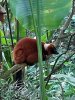
The choice to dedicate an entire exhibit to 1 region also entails risks: at some point, species diversity threatens to dry up. Anno 2023, this hall is still rich enough in rarities: Pitta-liked ground-roller, wattled jassana, crested coua, M partridge, M turtle dove and grey-headed lovebird are certainly not common in zoos. Just like the Goodman's mouse lemurs, but unless you can attend an evening visit, the 30-plus specimens can hardly be seen. Other species also make a visit more than worthwhile, but a duck-and-pigeon-colonisation lurks around the corner: red-billed teal, African pygmy geese, Bernier's duck and white-cheeked duck seemed more numerous to me than 10 years ago. With luck, hamerkop and red rufted lemurs provide some excitement. But it is mainly the many Madagacar fody that really bring this hall to life: there must be dozens of them, and they can be found all along the visitors' main (and only) path. Many reptiles live freely and are quite easy to spot, even now that rainforest is fully grown. The spectacular up to 18-metre-high treetop walkway is the perfect place to spot birds above the canopy. Both stair towers are covered with lianas and epiphytes, providing other perfect opportunities to spot birds in the tree and shrub layer of the rainforest. Shaped like an insect cocoon, they blend perfectly with the vegetation.

upload_2024-1-13_12-15-35.jpeg
Red rufted lemur

It could always be better, but I doubt very much that anyone will dare to do so.

So, in terms of species, Masoala is increasingly becoming a Madagascar exhibit, rather than a rainforest one. There’re small stocks of Madagascar blue pigeon, blue coua, crested coua elsewhere (Walsrode) but it is clear that certainly Madagascar's perching birds are very difficult to source. In that respect, I think that Burger’s Bush is the better of the two (take look at @Mr. Gharial excellent Burgers Bush guide Dutch zoo guides - Page 13 - ZooChat). However, that does not diminish the importance of this hall and its place among the top European (and world) exhibits of this kind.

Lewa Savanna

The Lewa savannah landscape includes 3,2 ha of grasslands interspersed with groves, dry riverbeds, boulders, waterholes and fake but impressive baobab trees. 4 of these giants hide feeding stations for the reticulated giraffes, white rhino and grèvy zebra’s which roam over the savannah together with a large herd of impala en flocks of helmeted guineafowl. To be honest, I’m not that impressed by the naturalistic quality of these trees, they don’t come close to the real tree (Adansonia digitata) and I think they’re the weakest link in this stunning exhibit.
Along it’s long side a local village has another giant baobab, visitable from inside, viewing terraces, a suricate enclosure, a snackbar and school buildings.

But the real gems of the Lewa savanna lie at either end: both kopjes are an immersion masterclass. On the Masoala side visitors walk through large boulder formations while hidden inside are porcupines, lizards and tortoises. In the far corner lies the spotted hyena den with adjacent enclosure. All this zone needs is an aviary for, let’s say a hornbill or a turaco, species loved by everyone.

upload_2024-1-13_12-17-35.jpeg
Kopje view on Masoala side

upload_2024-1-13_12-19-5.jpeg
Spotted hyena

On the other side the large giraffe/rhino stables are equally hidden by large rock formations. The stable is spacious and green. Next to the building is a large and magnificent multi-store aviary for African grey parrots. The more than a dozen birds have plenty of space for flying, arguing and breeding. On the ground floor there’s another access to the building for eye-level rhino watching.

upload_2024-1-13_12-19-43.jpeg
Lewa savanna with feeding station baobab


With the Lewa savannah, the zoo continues its masterplan relentlessly with another impressive addition. It is understandable why the zoo sometimes takes longer to start a new phase: not only are the financial resources even here not unlimited, but the zoo also conducts extensive studies on what is technically possible before actually starting the construction. It's called the 2050 masterplan, which means I might just be able to see it fully finished.

Krahan Kaeng

Krahan Kaeng is not the best elephant enclosure in Europe when it comes to surface area, at least on the outside. In fact, it’s hardly bigger than the inner enclosures. In contrast to many other zoos, it consist not of 1 large enclosure which can be overviewed at once, but instead of several sub-areas that can all be connected or used in rotation. These areas are separated with rock and water features, so the animals cannot always see each other (but they can hear and smell each other).

For visitors, it is a real feast to walk slowly up the winding path along the outside enclosures, where beautiful views have been created at various points. As you get higher and higher, these views are always different. They overlook multiple ponds and streams that in turn feed waterfalls and the swimming ponds for the elephants.

upload_2024-1-13_12-20-19.jpeg
Seen from one of the highest vantage points

The building, imposing on the outside, surprisingly intimate inside, intrigues with its curved roof in which nearly 300 skylights made from UV-permeable EFTE filim provide filtered light, thus perfectly imitating the luminous intensity on the jungle floor, the habitat of the Asian elephant. Even inside, there’re 3 enclosures (of which the bull enclosure isn’t open for the public) and they too are packed with enrichment, feeding stations, waterholes, etc. Visitors pass along an underwater view (it was the first visit that I noticed fish here, I may have overlooked it the previous times), a hidden aviary (sadly no Java mouse deer anymore) and a terrarium. It is a fantastic place for those who love these grey giants, and even for someone like me who loves a small rodent or, why not, a hornbill, more than an elephant, it is a fascinating building.

upload_2024-1-13_12-28-20.jpeg
Bali myna forest aviary

Afrikanisches Gebirge

African Highlands is a spacious and steep mountain meadow with 2 troops of baboons while Nubian ibex and rock hyrax wander through the enclosure. The large man-made giant lobelia represent the typical montane vegetation of the Ethiopean highlands.

The fact that the upper end of the enclosure is not visible, the excellent mock rock formations, and a stunning visitor path that winds up from the lower viewing point along the enclosure to a beautiful African-themed lookout where additional information about the habitat of these primates inform the visitor, makes this an exceptional enclosure. It's been to long that I have seen Bronx Zoo's Gelada reserve, but I think the Zurich exhibit is steeper but only half the size.

upload_2024-1-13_12-21-53.jpeg
Enclosure for gelada baboon, Nubian ibex and rock hyrax
 

Attachments

  • upload_2024-1-13_12-15-11.jpeg
    upload_2024-1-13_12-15-11.jpeg
    170.7 KB · Views: 176
  • upload_2024-1-13_12-15-35.jpeg
    upload_2024-1-13_12-15-35.jpeg
    123 KB · Views: 171
  • upload_2024-1-13_12-17-35.jpeg
    upload_2024-1-13_12-17-35.jpeg
    103.3 KB · Views: 175
  • upload_2024-1-13_12-19-5.jpeg
    upload_2024-1-13_12-19-5.jpeg
    162.5 KB · Views: 175
  • upload_2024-1-13_12-19-43.jpeg
    upload_2024-1-13_12-19-43.jpeg
    121.8 KB · Views: 180
  • upload_2024-1-13_12-20-19.jpeg
    upload_2024-1-13_12-20-19.jpeg
    192.6 KB · Views: 178
  • upload_2024-1-13_12-21-53.jpeg
    upload_2024-1-13_12-21-53.jpeg
    132 KB · Views: 181
  • upload_2024-1-13_12-28-20.jpeg
    upload_2024-1-13_12-28-20.jpeg
    95.4 KB · Views: 180
Exotarium

The old zoo grounds have an impressive old-school building packed with tropical birds, herps and fishes and even some mammals. I do like these concrete brutalist multispecies buildings. They can certainly be attributed to a certain era that has since passed. Personally, I love them, both for their architectural style and their multi-purpose use. Visitors walk in darkness while in the enclosures light is seeping in through skylights. So give me more of that, like Antwerp's little monkey building, Frankfurt's birdhouse and this amazing building in Zurich. One can argue that not all species have outdoor enclosures in these sort of buildings, and that is correct, but they embrace a certain atmosphere not found in buildings of later date.

upload_2024-1-13_12-36-55.jpeg
First floor with bird aviaries

The exotarium in Zurich has extra pigment because it's a three-storey building which abled them to create multi-storied enclosures. From the waters of the mangrove forest over the jungle floor to the forest canopy, I do like the idea. In Zurich, certainly the enclosures on the first (birds and mammals) and top floor (birds, mammals, reptiles and amphibians) are of high quality. The aquarium lags a bit behind in this respect although the Indo-pacific mangrove and the coral reef aquarium are both beautifully decorated. The other six aquariums are good but not exceptional. Stars are the king penguins in an enclosure that has seen better days, but from that point the long corridor that follows is the lead-up to one of the best and most spectacular parts of the old garden.

upload_2024-1-13_12-37-22.jpeg
Golden lion tamarin

I could spend hours in this zoo-in-the-zoo, searching for all those little creatures hidden in dense vegetation.

Pantanal

Water is the key element here. The area consists of a stunning maze of (peninsular) islands and water features. It should give visitors the feeling of walking through dense gallery forests with here and there open grassland in between. It is criss-crossed by paths, bridges and viewing points. Tapirs, giant anteaters, capybaras and Chilean flamingos can be seen in a communal enclosure. Three islands are home to Bolivian squirrel monkeys and yellow-breasted capuchin monkeys. In the water we find screamers, black-necked swans and various (diving) ducks. The place is just under a hectare and has been further beautified with a number of buildings.

upload_2024-1-13_12-38-14.jpeg
Main enclosure

I wonder how many new elements the zoo will add when building the Pantanal aviary, as this section is already one of the best of its kind and I hope they won't change anything about the layout.

Given their sponsorship page of the project, there will definitely be a building for (Hyacinth and green-winged macaws and the exotarium will be hidden behind large artificial rock walls. Large flocks of birds will fly through the aviary. Maybe there will be giant otters and maybe some other species of callitrichids. It should be ready around 2028.

Sangay Nebelwald

The Sangay cloud forest is a world class spectacled bear exhibit which has aged exceptionally well back from 1995. I can’t think of any other spectacled bear enclosure, or even no matter what bear species, that approached the quality of this exhibit. All three enclosures are peppered with tall trees, rock walls, mountain streams and climbing trees with sleeping platforms. The vegetation makes the edges invisible, while the Zuricher Berg provides natural slopes. It may take a while to spot an animal, as there are many hiding places, but the moment you see a bear appear from among the dense vegetation is a stunning perception. While there are more zoos that have inventively used their natural location to build magnificent enclosures, there is hardly one that possesses the same mastery in immersion as here in Zurich.

upload_2024-1-13_12-38-40.jpeg
Spectacled bear

Australia

Founded as a small-scale imitation of Sydney's Operahouse, this building with its two shell-like roofs was initially built to house African rhinos.

So in a way, it fits better now than before, as it has now been turned into a fascinating Australia home for koalas, Savu pythons and Exuma Island iguanas. Few zoonerds get exited by emu and our Bennett friends, but the former rhino enclosure has become a superbly landscaped Australian bush walk-through with sparse vegetation, a few termite mounds and just the right amount of man-made objects. I can hardly believe that I am writing this about something that is essentially a giant enclosure for red-necked wallabys.

upload_2024-1-13_12-40-57.jpeg
Bennett's and emu, impossible not to like


Great ape House


The Great Ape House again has an interesting architecture, but it is too small for its occupants. It consists of several concrete chambers stacked next to and on top of each other on the slope. Small cages are built in the coves and against the front and back façade, and it is surrounded by dense forest. Few here will share my enthusiasm, but there is much in this building that pleases me. The visitor route is constantly changing direction, past various entrances and exits, past indoor and outdoor enclosures for gibbons, western lowland gorillas and Sumatran orangs. New sights, enclosures and information panels lurk around every corner. All enclosures for the great apes are unacceptable today, but it will take at least until 2030 and probably even later, when the Congo exhibit is finished, before the necessary changes can be made.

Given the scale of funding the zoo is currently collecting for the Pantanal aviary (Spendenobjekte Pantanal Voliere | Zoo Zürich), it seems almost unreal what the Congo Habitat will cost. And only then can the lowland gorillas move, and there will be more space for the Sumatra orang utans (who in turn will have to wait many more years for the Sumatra Regenwald project).

In a way, I would prefer that the great apes leave the zoo earlier (right now) so that the building can accommodate smaller monkeys.

upload_2024-1-13_12-42-46.jpeg
Sumatran orangutan - Nowhere is it just perfect

Panterra and other nearby projects

I can be brief on the ongoing feline construction project, Pantera : like the Pantanal aviary, I don't think this should be the zoo's top priority (great apes), but probably financially and technically the zoo isn’t ready for the construction of the Congo Habitat.

Of course, connecting enclosures so that the animals have more (exciting) freedom of movement sounds good (and is) to the general public. In reality, it will mainly revolve around spectacular confrontations with the big cats as they stand on the bridges above the visitors, something that appeals hugely to visitors and seems to be the latest toy in zoo world.

In any case, I hope they do not change anything, but nothing at all, about the snow leopard gorge, for me still the best enclosure for this species I have ever seen. However, in its present condition I cannot see how tigers or lions would fit in there.

I have no doubt that it will be damn spectacular, in line with the other projects. I am actually even more excited about the fact that there will be a walk-through insect house (in the lion house); unfortunately the once-announced aviary for pheasants and laughing-thrushes no longer seems to planned.
 

Attachments

  • upload_2024-1-13_12-36-55.jpeg
    upload_2024-1-13_12-36-55.jpeg
    112 KB · Views: 179
  • upload_2024-1-13_12-37-22.jpeg
    upload_2024-1-13_12-37-22.jpeg
    193.8 KB · Views: 176
  • upload_2024-1-13_12-38-14.jpeg
    upload_2024-1-13_12-38-14.jpeg
    325.8 KB · Views: 175
  • upload_2024-1-13_12-38-40.jpeg
    upload_2024-1-13_12-38-40.jpeg
    200.4 KB · Views: 177
  • upload_2024-1-13_12-40-57.jpeg
    upload_2024-1-13_12-40-57.jpeg
    183.1 KB · Views: 173
  • upload_2024-1-13_12-42-46.jpeg
    upload_2024-1-13_12-42-46.jpeg
    133.4 KB · Views: 172
Exotarium

The old zoo grounds have an impressive old-school building packed with tropical birds, herps and fishes and even some mammals. I do like these concrete brutalist multispecies buildings. They can certainly be attributed to a certain era that has since passed. Personally, I love them, both for their architectural style and their multi-purpose use. Visitors walk in darkness while in the enclosures light is seeping in through skylights. So give me more of that, like Antwerp's little monkey building, Frankfurt's birdhouse and this amazing building in Zurich. One can argue that not all species have outdoor enclosures in these sort of buildings, and that is correct, but they embrace a certain atmosphere not found in buildings of later date.

View attachment 679141
First floor with bird aviaries

The exotarium in Zurich has extra pigment because it's a three-storey building which abled them to create multi-storied enclosures. From the waters of the mangrove forest over the jungle floor to the forest canopy, I do like the idea. In Zurich, certainly the enclosures on the first (birds and mammals) and top floor (birds, mammals, reptiles and amphibians) are of high quality. The aquarium lags a bit behind in this respect although the Indo-pacific mangrove and the coral reef aquarium are both beautifully decorated. The other six aquariums are good but not exceptional. Stars are the king penguins in an enclosure that has seen better days, but from that point the long corridor that follows is the lead-up to one of the best and most spectacular parts of the old garden.

View attachment 679142
Golden lion tamarin

I could spend hours in this zoo-in-the-zoo, searching for all those little creatures hidden in dense vegetation.

Pantanal

Water is the key element here. The area consists of a stunning maze of (peninsular) islands and water features. It should give visitors the feeling of walking through dense gallery forests with here and there open grassland in between. It is criss-crossed by paths, bridges and viewing points. Tapirs, giant anteaters, capybaras and Chilean flamingos can be seen in a communal enclosure. Three islands are home to Bolivian squirrel monkeys and yellow-breasted capuchin monkeys. In the water we find screamers, black-necked swans and various (diving) ducks. The place is just under a hectare and has been further beautified with a number of buildings.

View attachment 679143
Main enclosure

I wonder how many new elements the zoo will add when building the Pantanal aviary, as this section is already one of the best of its kind and I hope they won't change anything about the layout.

Given their sponsorship page of the project, there will definitely be a building for (Hyacinth and green-winged macaws and the exotarium will be hidden behind large artificial rock walls. Large flocks of birds will fly through the aviary. Maybe there will be giant otters and maybe some other species of callitrichids. It should be ready around 2028.

Sangay Nebelwald

The Sangay cloud forest is a world class spectacled bear exhibit which has aged exceptionally well back from 1995. I can’t think of any other spectacled bear enclosure, or even no matter what bear species, that approached the quality of this exhibit. All three enclosures are peppered with tall trees, rock walls, mountain streams and climbing trees with sleeping platforms. The vegetation makes the edges invisible, while the Zuricher Berg provides natural slopes. It may take a while to spot an animal, as there are many hiding places, but the moment you see a bear appear from among the dense vegetation is a stunning perception. While there are more zoos that have inventively used their natural location to build magnificent enclosures, there is hardly one that possesses the same mastery in immersion as here in Zurich.

View attachment 679144
Spectacled bear

Australia

Founded as a small-scale imitation of Sydney's Operahouse, this building with its two shell-like roofs was initially built to house African rhinos.

So in a way, it fits better now than before, as it has now been turned into a fascinating Australia home for koalas, Savu pythons and Exuma Island iguanas. Few zoonerds get exited by emu and our Bennett friends, but the former rhino enclosure has become a superbly landscaped Australian bush walk-through with sparse vegetation, a few termite mounds and just the right amount of man-made objects. I can hardly believe that I am writing this about something that is essentially a giant enclosure for red-necked wallabys.

View attachment 679145
Bennett's and emu, impossible not to like


Great ape House


The Great Ape House again has an interesting architecture, but it is too small for its occupants. It consists of several concrete chambers stacked next to and on top of each other on the slope. Small cages are built in the coves and against the front and back façade, and it is surrounded by dense forest. Few here will share my enthusiasm, but there is much in this building that pleases me. The visitor route is constantly changing direction, past various entrances and exits, past indoor and outdoor enclosures for gibbons, western lowland gorillas and Sumatran orangs. New sights, enclosures and information panels lurk around every corner. All enclosures for the great apes are unacceptable today, but it will take at least until 2030 and probably even later, when the Congo exhibit is finished, before the necessary changes can be made.

Given the scale of funding the zoo is currently collecting for the Pantanal aviary (Spendenobjekte Pantanal Voliere | Zoo Zürich), it seems almost unreal what the Congo Habitat will cost. And only then can the lowland gorillas move, and there will be more space for the Sumatra orang utans (who in turn will have to wait many more years for the Sumatra Regenwald project).

In a way, I would prefer that the great apes leave the zoo earlier (right now) so that the building can accommodate smaller monkeys.

View attachment 679146
Sumatran orangutan - Nowhere is it just perfect

Panterra and other nearby projects

I can be brief on the ongoing feline construction project, Pantera : like the Pantanal aviary, I don't think this should be the zoo's top priority (great apes), but probably financially and technically the zoo isn’t ready for the construction of the Congo Habitat.

Of course, connecting enclosures so that the animals have more (exciting) freedom of movement sounds good (and is) to the general public. In reality, it will mainly revolve around spectacular confrontations with the big cats as they stand on the bridges above the visitors, something that appeals hugely to visitors and seems to be the latest toy in zoo world.

In any case, I hope they do not change anything, but nothing at all, about the snow leopard gorge, for me still the best enclosure for this species I have ever seen. However, in its present condition I cannot see how tigers or lions would fit in there.

I have no doubt that it will be damn spectacular, in line with the other projects. I am actually even more excited about the fact that there will be a walk-through insect house (in the lion house); unfortunately the once-announced aviary for pheasants and laughing-thrushes no longer seems to planned.
Two things that stand out for me on my only visit so far to Zurich Zoo:
*Free roaming Red Junglefowl in the Elephant house
*Eyeballing Red Panda in a tree, turning 180 degrees on the spot to see the Snow Leopard family on a natural looking cliff ledge. Superb zoo experience!
 
I love reading this thread! It makes me dream to visit these zoos someday.
Quick note, to be fair:
In a way, I would prefer that the great apes leave the zoo earlier (right now) so that the building can accommodate smaller monkeys.
Sadly there are not enough holders for great apes right now. Current facilities already hold more then they would like to deal with the surplus. I'm at least happy they are scheduled to get a better enclosure in the future.
Keep up the thread!
 
Two things that stand out for me on my only visit so far to Zurich Zoo:
*Free roaming Red Junglefowl in the Elephant house
*Eyeballing Red Panda in a tree, turning 180 degrees on the spot to see the Snow Leopard family on a natural looking cliff ledge. Superb zoo experience!

Agreed. These are little things that make a visit extra fun.

The red panda / snowleopard view will return in Panterra.
 
Thanks for continuing with all these terrific reviews. Where would you place Zurich Zoo if you were to come up with a list of the all-time greatest zoos that you've visited? Is it your favourite? :)
 
Day 9 #21 Zurich zoo

What else can I write here that has not already been described by others about this fantastic zoo?

There’s f.e. @Kalaw brilliant report of his visit to this zoo, which I can fully endorse: Zoo Zurich Walkthrough/Review [Zurich Zoo] - ZooChat. It contains very detailed descriptions and species lists of every area in the zoo and I won't go through that again. His visit was only a few months earlier than mine and little has changed in the meantime, and I can fully agree with what he writes.

It took a while to prepare this post, because this zoo is very well known among zoochatters and I don't want to repeat again what others besides Kalaw have already written. But since this is a travelogue, some repetitions are inevitable.

It literally took me only a few steps to get from my hotel to the entrance and decided to visit the new habitats first.

I think the essence of Zurich is its attention to detail, more detail and ultimately even more detail. And this by not overdoing it or adding annoying music, background noises or any other very irritating stuff. This zoo is all about creating a tremendous and impressive immersion into mother nature's habitats, from the rainforest to the grasslands and the mountainous areas. Less IS more when you think of all those zoos that ruin the intended effect by mixing too many things, ideas and so-called authentic artefacts in one exhibit.

In Zurich, the habitats speak for themselves, and that’s what it excels at.

Masoala

The Masoala Hall opened its doors in 2003 and has since become possibly Europe's best rainforest hall. In fact, I dare say it is still the only major real rainforest hall in Europe, along with Burgers' Bush. It is not full of animal enclosures (there is only 1) like many other new tropical domes. There are many mid-sized (f.e. Vienna’s Regenwaldhaus) and smaller halls that do fit this description, as this trip will also prove later, but not of this size. It is 1.1 ha in size, up to 30 m high and heated by heat pumps via geothermal probes 250 m deep in the ground. Large water reservoirs ensure a constant water supply (the hall consumes up to 140,000 l per day in hot summers).

View attachment 679132
Rainforest view

The choice to dedicate an entire exhibit to 1 region also entails risks: at some point, species diversity threatens to dry up. Anno 2023, this hall is still rich enough in rarities: Pitta-liked ground-roller, wattled jassana, crested coua, M partridge, M turtle dove and grey-headed lovebird are certainly not common in zoos. Just like the Goodman's mouse lemurs, but unless you can attend an evening visit, the 30-plus specimens can hardly be seen. Other species also make a visit more than worthwhile, but a duck-and-pigeon-colonisation lurks around the corner: red-billed teal, African pygmy geese, Bernier's duck and white-cheeked duck seemed more numerous to me than 10 years ago. With luck, hamerkop and red rufted lemurs provide some excitement. But it is mainly the many Madagacar fody that really bring this hall to life: there must be dozens of them, and they can be found all along the visitors' main (and only) path. Many reptiles live freely and are quite easy to spot, even now that rainforest is fully grown. The spectacular up to 18-metre-high treetop walkway is the perfect place to spot birds above the canopy. Both stair towers are covered with lianas and epiphytes, providing other perfect opportunities to spot birds in the tree and shrub layer of the rainforest. Shaped like an insect cocoon, they blend perfectly with the vegetation.

View attachment 679133
Red rufted lemur

It could always be better, but I doubt very much that anyone will dare to do so.

So, in terms of species, Masoala is increasingly becoming a Madagascar exhibit, rather than a rainforest one. There’re small stocks of Madagascar blue pigeon, blue coua, crested coua elsewhere (Walsrode) but it is clear that certainly Madagascar's perching birds are very difficult to source. In that respect, I think that Burger’s Bush is the better of the two (take look at @Mr. Gharial excellent Burgers Bush guide Dutch zoo guides - Page 13 - ZooChat). However, that does not diminish the importance of this hall and its place among the top European (and world) exhibits of this kind.

Lewa Savanna

The Lewa savannah landscape includes 3,2 ha of grasslands interspersed with groves, dry riverbeds, boulders, waterholes and fake but impressive baobab trees. 4 of these giants hide feeding stations for the reticulated giraffes, white rhino and grèvy zebra’s which roam over the savannah together with a large herd of impala en flocks of helmeted guineafowl. To be honest, I’m not that impressed by the naturalistic quality of these trees, they don’t come close to the real tree (Adansonia digitata) and I think they’re the weakest link in this stunning exhibit.
Along it’s long side a local village has another giant baobab, visitable from inside, viewing terraces, a suricate enclosure, a snackbar and school buildings.

But the real gems of the Lewa savanna lie at either end: both kopjes are an immersion masterclass. On the Masoala side visitors walk through large boulder formations while hidden inside are porcupines, lizards and tortoises. In the far corner lies the spotted hyena den with adjacent enclosure. All this zone needs is an aviary for, let’s say a hornbill or a turaco, species loved by everyone.

View attachment 679135
Kopje view on Masoala side

View attachment 679136
Spotted hyena

On the other side the large giraffe/rhino stables are equally hidden by large rock formations. The stable is spacious and green. Next to the building is a large and magnificent multi-store aviary for African grey parrots. The more than a dozen birds have plenty of space for flying, arguing and breeding. On the ground floor there’s another access to the building for eye-level rhino watching.

View attachment 679137
Lewa savanna with feeding station baobab


With the Lewa savannah, the zoo continues its masterplan relentlessly with another impressive addition. It is understandable why the zoo sometimes takes longer to start a new phase: not only are the financial resources even here not unlimited, but the zoo also conducts extensive studies on what is technically possible before actually starting the construction. It's called the 2050 masterplan, which means I might just be able to see it fully finished.

Krahan Kaeng

Krahan Kaeng is not the best elephant enclosure in Europe when it comes to surface area, at least on the outside. In fact, it’s hardly bigger than the inner enclosures. In contrast to many other zoos, it consist not of 1 large enclosure which can be overviewed at once, but instead of several sub-areas that can all be connected or used in rotation. These areas are separated with rock and water features, so the animals cannot always see each other (but they can hear and smell each other).

For visitors, it is a real feast to walk slowly up the winding path along the outside enclosures, where beautiful views have been created at various points. As you get higher and higher, these views are always different. They overlook multiple ponds and streams that in turn feed waterfalls and the swimming ponds for the elephants.

View attachment 679138
Seen from one of the highest vantage points

The building, imposing on the outside, surprisingly intimate inside, intrigues with its curved roof in which nearly 300 skylights made from UV-permeable EFTE filim provide filtered light, thus perfectly imitating the luminous intensity on the jungle floor, the habitat of the Asian elephant. Even inside, there’re 3 enclosures (of which the bull enclosure isn’t open for the public) and they too are packed with enrichment, feeding stations, waterholes, etc. Visitors pass along an underwater view (it was the first visit that I noticed fish here, I may have overlooked it the previous times), a hidden aviary (sadly no Java mouse deer anymore) and a terrarium. It is a fantastic place for those who love these grey giants, and even for someone like me who loves a small rodent or, why not, a hornbill, more than an elephant, it is a fascinating building.

View attachment 679140
Bali myna forest aviary

Afrikanisches Gebirge

African Highlands is a spacious and steep mountain meadow with 2 troops of baboons while Nubian ibex and rock hyrax wander through the enclosure. The large man-made giant lobelia represent the typical montane vegetation of the Ethiopean highlands.

The fact that the upper end of the enclosure is not visible, the excellent mock rock formations, and a stunning visitor path that winds up from the lower viewing point along the enclosure to a beautiful African-themed lookout where additional information about the habitat of these primates inform the visitor, makes this an exceptional enclosure. It's been to long that I have seen Bronx Zoo's Gelada reserve, but I think the Zurich exhibit is steeper but only half the size.

View attachment 679139
Enclosure for gelada baboon, Nubian ibex and rock hyrax

Another very enjoyable review, and the first (likely only) zoo in this thread that I have visited myself, which makes it interesting to compare our thoughts. We seem to agree on many points regarding Zurich (and thanks for mentioning my review :)), both in terms of its strengths and its weaknesses. I too find some joy in the Ape House, which I think is well-designed in terms of enrichment, and although aesthetically poor, could be good for the animals if it wasn't for its abysmally small footprint. Were it ten times the size, then it could be excellent! :p I will say that I am shocked that I have never noticed the obvious links in design between the Sydney Opera House and the Australia House, which seems very obvious now that it has been mentioned. Have the snow leopard, lion and wolf enclosures all now closed for the construction of Panterra (on my visit, only the tiger enclosure had closed)?
 
upload_2024-1-13_12-42-46-jpeg.679146

Sumatran orangutan - Nowhere is it just perfect

Not that the main cage is much better, this enclosure only held a single female "Oceh" who couldn't be part of the main group due to a chromosomal disorder. No other zoo wanted her after the old female with which she was kept passed away and Oceh herself also passed away not long after your visit. So no orang utans here anymore.

I still find it a bizarre planning to first construct a giant aviary on top of an exhibit less than 10 years old which is still fit for purpose instead of finally doing something for their apes...

Founded as a small-scale imitation of Sydney's Operahouse, this building with its two shell-like roofs was initially built to house African rhinos.

I would actually be surprised if the design is any more than "convergent evolution". When the Africa house opened in 1965 the Sydney Opera House was still under construction and would not open until 1972.
 
Not that the main cage is much better, this enclosure only held a single female "Oceh" who couldn't be part of the main group due to a chromosomal disorder. No other zoo wanted her after the old female with which she was kept passed away and Oceh herself also passed away not long after your visit. So no orang utans here anymore.

I still find it a bizarre planning to first construct a giant aviary on top of an exhibit less than 10 years old which is still fit for purpose instead of finally doing something for their apes...

Absolutely agree with that. The Pantanal exhibit is already of high quality.Could the reason be that they already have a large stock of macaws in Ornis Center for Species Protection? And that they are not ready yet, technically nor financially, getting started on the congo project, clearly the first necessary step to tackle the great apes building.

I would actually be surprised if the design is any more than "convergent evolution". When the Africa house opened in 1965 the Sydney Opera House was still under construction and would not open until 1972.

You are right in this and I should have worded this differently as the zoo states on its website "the house is reminiscent of the iconic Sydney Opera House"
 
Another very enjoyable review, and the first (likely only) zoo in this thread that I have visited myself, which makes it interesting to compare our thoughts. We seem to agree on many points regarding Zurich (and thanks for mentioning my review :)), both in terms of its strengths and its weaknesses. I too find some joy in the Ape House, which I think is well-designed in terms of enrichment, and although aesthetically poor, could be good for the animals if it wasn't for its abysmally small footprint. Were it ten times the size, then it could be excellent! :p I will say that I am shocked that I have never noticed the obvious links in design between the Sydney Opera House and the Australia House, which seems very obvious now that it has been mentioned. Have the snow leopard, lion and wolf enclosures all now closed for the construction of Panterra (on my visit, only the tiger enclosure had closed)?
As Lintworm noted, I didn't quite use the right wording, regarding the Africa House. I am not a native English speaker and I don't use this language that often, so unfortunately mistakes creep in (no matter how many times I reread it before posting).

All carnivore enclosures were closed in september. The path ended at the waldrapp/vulture aviaries, although I didn't check the other side
 
Day 10 #22 Volière Seebach

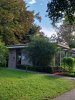
Far to the north of the city, within walking distance from the terminus of tram line 14 is an unknown public aviary in the Seebach district.

upload_2024-1-15_19-5-6.jpeg

It was established in 1967 through a private initiative to care for neglected native and exotic birds. In 1998, the city decided to discontinue financial contributions to its aviaries and threatened closure. A new private association came to the rescue. However, the following decades continued to be characterised by constant financial upsets, threatened shutdowns and benefit campaigns. In recent years, the situation seems to have improved somewhat and in 2019, a commercial hall was even rented to house large parrots and which is, afaik, not open to the public. Perhaps also for this reason, the species list in Seebach is not impressive.

upload_2024-1-15_19-5-37.jpeg

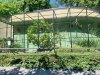
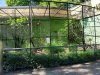
The sleek building has 6 aviaries on the outside. 4 are small, one a bit larger and the largest is on the side of the building.

upload_2024-1-15_19-5-58.jpeg

The collection is equally modest, but still with a turaco: white-cheeked turaco, green-tighed caique, festive and yellow-naped amazon and (probably) yellow-billed duck. Unfortunately I didn’t see the African golden weaver and since there were no species signs, it is unclear whether it is still present.

upload_2024-1-15_19-6-35.jpeg
Southern festive amazon

It was not clear to me why the turaco, for example, was kept in a small aviary when there were wider ones available.

The visit took no more than 10 minutes.

Taking advantage of the city's dense tram network, I then visited the Kunsthaus Zurich, an art museum with fantastic collections of Munch, Van Gogh, Monet and many other painters. I had a wonderfull morning seeing all those famous masterpieces.
 

Attachments

  • upload_2024-1-15_19-5-6.jpeg
    upload_2024-1-15_19-5-6.jpeg
    180 KB · Views: 144
  • upload_2024-1-15_19-5-37.jpeg
    upload_2024-1-15_19-5-37.jpeg
    180.1 KB · Views: 142
  • upload_2024-1-15_19-5-58.jpeg
    upload_2024-1-15_19-5-58.jpeg
    263.9 KB · Views: 140
  • upload_2024-1-15_19-6-35.jpeg
    upload_2024-1-15_19-6-35.jpeg
    174.2 KB · Views: 149
Thanks for continuing with all these terrific reviews. Where would you place Zurich Zoo if you were to come up with a list of the all-time greatest zoos that you've visited? Is it your favourite? :)

I had not forgotten your question, but I doubted whether a zoo that does not have a turaco or hornbill can ever get a top rating? :)

No doubt Zurich is among the top zoos in Europe (and the world), and there's a lot to love with their large-scale stunning habitats, superbly planted and with just the right amount of theming.

But there are a few other things missing, some of them which do matter to me personally.

Imo, the collection lags behind the absolute quality of the exhibits. The latter is superior and in that respect Zurich is probably one of the best zoos the world (and certainly those I've seen).
Much depends on one's personal interests, but in general, Zurich is not the best zoo when it comes to species, neither in numbers nor rarities.

Primates are good but not exceptional, while cats are only moderately represented, with me particularly regretting the absence of a small tropical species. Canids, tropical bovids, duikers, suids, insectivora are completely absent while marsupials are very poor represented.
For birds, I think we are left waiting for the 2050 master plan to be filled in: I am already eagerly awaiting the arrival of the Congo Habitat and the free-flight aviaries for hornbills in the Kaeng Krachan, Islands and Sumatra sections.

Many of the rarities @amur leopard mentioned in his thread ‘a guide to the rarities of europe’ seems to be gone: Mongolion wolf, plush-crested jay, red and white crake, green-backed trogon, as are other interesting species: blue-crowned motmot, purple honeycreeper, Javan chevrotain, western pygmy marmoset, southern lapwing, Reisingers tree monitor, etc.

Historic buildings and beautiful gardens always do it for me too, but they are not essential in this place, and I didn't really miss them.

I wouldn't say it's my favourite (I'm not even sure I have one), but like probably the majority here on Zoochat, I would definitely put Zurich in the top 20.
But no zoo meets all my criteria, which is exactly why I keep visiting zoos.
 
Day 10 #23 Mythenquai aviary

When I was a teenager and started getting interested in zoos around the age of 15-16, I first heard about the Mythenquai aviary. At the time, I did not know any better than that 'Mythen' stood for the almost mythical allure this aviary had amongst zoonerds. Only later did I realise that this was simply the name of the location on the shores of Lake Zurich.

upload_2024-1-17_18-21-6.jpeg

It’s small, cramped and nowhere near modern zoo standaards, but it got history and a good range of species. Probably the most famous of the country’s public aviaries, looking at the astonishing past species list at ZTL, one cannot help but dream away about the trogons, tangare (13 species + the currently kept bay capped tangare), sunbirds, etc. that have given this place its fame.

Nowadays there’re certainly interesting species like bay-headed tanager, red-legged honeycreeper, lorikeets, robin-chats, etc.

Since this is a sanctuary for native and tropical birds, efforts are first made to rehabilitate the animals before releasing them or rehoming them in zoos. This explains the (very) small aviaries in which the birds are kept and the highly variable composition. Fortunately, the species signs here were fairly accurate.

The Mythenquai aviary consists of 4 outdoor aviaries that can be visited at any time.

upload_2024-1-17_18-21-52.jpeg
The largest of the aviaries, with a small water feature

upload_2024-1-17_18-22-55.jpeg
Turaco mixed species aviary

These aviaries are in turn connected to 6 indoor aviaries.

The building itself is modest and is open for a few hours every day.

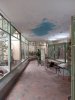
Inside, it is no gymnasium: besides the 6 aforementioned aviaries, there are 5 more that are more showcases than aviaries, and they are all extremely small.

upload_2024-1-17_18-24-11.jpeg
General view

The 4 against the wall (on the right in the picture) contain parrots: blue-crowned hanging parrot, dusky lory, red-collared lorikeet and ornate lorikeet. I saw 4 bluecrowns and 2 birds each of the other species. The last showcase had 2 red-legged honeycreepers and 1 bay-headed tanager.

upload_2024-1-17_18-24-53.jpeg
Red-legged honeycreeper and bay-headed tanager

The 6 aviaries at the other side of the room contained a variety of species. The aviaries at either end were the largest. The middle aviaries had ornate lori and crowned hornbill.

In the aviary giving access to the largest outdoor aviary, I saw Barlett's bleeding-heart, crested partridge, swift parrot, goldfinch, red pileated finch, red-vented bulbul, red-billed leiothrix, snowy-crowned robin-chat, avocet, chestnut-breasted mannikin, green sandpiper, Chinese dwarf quail, star finch, green cardinal, among others. I was unable to find the chestnut-backed thrush mentioned.

upload_2024-1-17_18-25-55.jpeg
Aviary for crowned hornbill

The other 'large' aviary had grey-capped emerald dove, superb fruit dove, Barhminy starling, Guinea green turaco, bearded barbet, red pileated finch, white-eared bulbul, crowned lapwing, crested partridge, snowy-crowned robin-chat, masked lapwing, yellow cardinal, red-billed leiothrix, among others. Quite a bit of overlap, then, not unusual in this kind of location.

upload_2024-1-17_18-27-55.jpeg
Yellow cardinal, snowy-crowned robin-chat and superb fruitdove

I thoroughly enjoyed my visit to this famous aviary.

Those who don't want to eat too fancy can go to the charming and tasty Hafen Enge Beiz, only 50m from the aviary. A curry sausage never tasted better than here, on the shores of the lake. I could have spent a whole afternoon there enjoying the peace and quiet and people passing by.

The heat was still beating mercilessly and for a moment I doubted whether I would trek to my next destination. Spending the afternoon further in this place with some fresh beers was particularly appealing. But the Saalsporthalle railway station is nearby and the prospect of the cool forests at my next destination won me over.
 

Attachments

  • upload_2024-1-17_18-21-6.jpeg
    upload_2024-1-17_18-21-6.jpeg
    167.5 KB · Views: 122
  • upload_2024-1-17_18-21-52.jpeg
    upload_2024-1-17_18-21-52.jpeg
    358.9 KB · Views: 119
  • upload_2024-1-17_18-22-55.jpeg
    upload_2024-1-17_18-22-55.jpeg
    328.6 KB · Views: 115
  • upload_2024-1-17_18-24-11.jpeg
    upload_2024-1-17_18-24-11.jpeg
    95.2 KB · Views: 121
  • upload_2024-1-17_18-24-53.jpeg
    upload_2024-1-17_18-24-53.jpeg
    90 KB · Views: 116
  • upload_2024-1-17_18-25-55.jpeg
    upload_2024-1-17_18-25-55.jpeg
    157 KB · Views: 113
  • upload_2024-1-17_18-27-55.jpeg
    upload_2024-1-17_18-27-55.jpeg
    168.1 KB · Views: 117
Back
Top