Day 9 #21 Zurich zoo
What else can I write here that has not already been described by others about this fantastic zoo?
There’s f.e.
@Kalaw brilliant report of his visit to this zoo, which I can fully endorse:
Zoo Zurich Walkthrough/Review [Zurich Zoo] - ZooChat. It contains very detailed descriptions and species lists of every area in the zoo and I won't go through that again. His visit was only a few months earlier than mine and little has changed in the meantime, and I can fully agree with what he writes.
It took a while to prepare this post, because this zoo is very well known among zoochatters and I don't want to repeat again what others besides Kalaw have already written. But since this is a travelogue, some repetitions are inevitable.
It literally took me only a few steps to get from my hotel to the entrance and decided to visit the new habitats first.
I think the essence of Zurich is its attention to detail, more detail and ultimately even more detail. And this by not overdoing it or adding annoying music, background noises or any other very irritating stuff. This zoo is all about creating a tremendous and impressive immersion into mother nature's habitats, from the rainforest to the grasslands and the mountainous areas. Less IS more when you think of all those zoos that ruin the intended effect by mixing too many things, ideas and so-called authentic artefacts in one exhibit.
In Zurich, the habitats speak for themselves, and that’s what it excels at.
Masoala
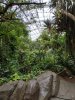
The Masoala Hall opened its doors in 2003 and has since become possibly Europe's best rainforest hall. In fact, I dare say it is still the only major real rainforest hall in Europe, along with Burgers' Bush. It is not full of animal enclosures (there is only 1) like many other new tropical domes. There are many mid-sized (f.e. Vienna’s Regenwaldhaus) and smaller halls that do fit this description, as this trip will also prove later, but not of this size. It is 1.1 ha in size, up to 30 m high and heated by heat pumps via geothermal probes 250 m deep in the ground. Large water reservoirs ensure a constant water supply (the hall consumes up to 140,000 l per day in hot summers).
View attachment 679132
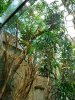
Rainforest view
The choice to dedicate an entire exhibit to 1 region also entails risks: at some point, species diversity threatens to dry up. Anno 2023, this hall is still rich enough in rarities: Pitta-liked ground-roller, wattled jassana, crested coua, M partridge, M turtle dove and grey-headed lovebird are certainly not common in zoos. Just like the Goodman's mouse lemurs, but unless you can attend an evening visit, the 30-plus specimens can hardly be seen. Other species also make a visit more than worthwhile, but a duck-and-pigeon-colonisation lurks around the corner: red-billed teal, African pygmy geese, Bernier's duck and white-cheeked duck seemed more numerous to me than 10 years ago. With luck, hamerkop and red rufted lemurs provide some excitement. But it is mainly the many Madagacar fody that really bring this hall to life: there must be dozens of them, and they can be found all along the visitors' main (and only) path. Many reptiles live freely and are quite easy to spot, even now that rainforest is fully grown. The spectacular up to 18-metre-high treetop walkway is the perfect place to spot birds above the canopy. Both stair towers are covered with lianas and epiphytes, providing other perfect opportunities to spot birds in the tree and shrub layer of the rainforest. Shaped like an insect cocoon, they blend perfectly with the vegetation.
View attachment 679133
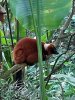
Red rufted lemur
It could always be better, but I doubt very much that anyone will dare to do so.
So, in terms of species, Masoala is increasingly becoming a Madagascar exhibit, rather than a rainforest one. There’re small stocks of Madagascar blue pigeon, blue coua, crested coua elsewhere (Walsrode) but it is clear that certainly Madagascar's perching birds are very difficult to source. In that respect, I think that Burger’s Bush is the better of the two (take look at @Mr. Gharial excellent Burgers Bush guide Dutch zoo guides - Page 13 - ZooChat). However, that does not diminish the importance of this hall and its place among the top European (and world) exhibits of this kind.
Lewa Savanna
The Lewa savannah landscape includes 3,2 ha of grasslands interspersed with groves, dry riverbeds, boulders, waterholes and fake but impressive baobab trees. 4 of these giants hide feeding stations for the reticulated giraffes, white rhino and grèvy zebra’s which roam over the savannah together with a large herd of impala en flocks of helmeted guineafowl. To be honest, I’m not that impressed by the naturalistic quality of these trees, they don’t come close to the real tree (Adansonia digitata) and I think they’re the weakest link in this stunning exhibit.
Along it’s long side a local village has another giant baobab, visitable from inside, viewing terraces, a suricate enclosure, a snackbar and school buildings.
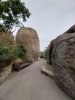
But the real gems of the Lewa savanna lie at either end: both kopjes are an immersion masterclass. On the Masoala side visitors walk through large boulder formations while hidden inside are porcupines, lizards and tortoises. In the far corner lies the spotted hyena den with adjacent enclosure. All this zone needs is an aviary for, let’s say a hornbill or a turaco, species loved by everyone.
View attachment 679135
Kopje view on Masoala side
View attachment 679136
Spotted hyena
On the other side the large giraffe/rhino stables are equally hidden by large rock formations. The stable is spacious and green. Next to the building is a large and magnificent multi-store aviary for African grey parrots. The more than a dozen birds have plenty of space for flying, arguing and breeding. On the ground floor there’s another access to the building for eye-level rhino watching.
View attachment 679137
Lewa savanna with feeding station baobab
With the Lewa savannah, the zoo continues its masterplan relentlessly with another impressive addition. It is understandable why the zoo sometimes takes longer to start a new phase: not only are the financial resources even here not unlimited, but the zoo also conducts extensive studies on what is technically possible before actually starting the construction. It's called the 2050 masterplan, which means I might just be able to see it fully finished.
Krahan Kaeng
Krahan Kaeng is not the best elephant enclosure in Europe when it comes to surface area, at least on the outside. In fact, it’s hardly bigger than the inner enclosures. In contrast to many other zoos, it consist not of 1 large enclosure which can be overviewed at once, but instead of several sub-areas that can all be connected or used in rotation. These areas are separated with rock and water features, so the animals cannot always see each other (but they can hear and smell each other).
For visitors, it is a real feast to walk slowly up the winding path along the outside enclosures, where beautiful views have been created at various points. As you get higher and higher, these views are always different. They overlook multiple ponds and streams that in turn feed waterfalls and the swimming ponds for the elephants.
View attachment 679138
Seen from one of the highest vantage points
The building, imposing on the outside, surprisingly intimate inside, intrigues with its curved roof in which nearly 300 skylights made from UV-permeable EFTE filim provide filtered light, thus perfectly imitating the luminous intensity on the jungle floor, the habitat of the Asian elephant. Even inside, there’re 3 enclosures (of which the bull enclosure isn’t open for the public) and they too are packed with enrichment, feeding stations, waterholes, etc. Visitors pass along an underwater view (it was the first visit that I noticed fish here, I may have overlooked it the previous times), a hidden aviary (sadly no Java mouse deer anymore) and a terrarium. It is a fantastic place for those who love these grey giants, and even for someone like me who loves a small rodent or, why not, a hornbill, more than an elephant, it is a fascinating building.
View attachment 679140
Bali myna forest aviary
Afrikanisches Gebirge
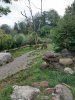
African Highlands is a spacious and steep mountain meadow with 2 troops of baboons while Nubian ibex and rock hyrax wander through the enclosure. The large man-made giant lobelia represent the typical montane vegetation of the Ethiopean highlands.
The fact that the upper end of the enclosure is not visible, the excellent mock rock formations, and a stunning visitor path that winds up from the lower viewing point along the enclosure to a beautiful African-themed lookout where additional information about the habitat of these primates inform the visitor, makes this an exceptional enclosure. It's been to long that I have seen Bronx Zoo's Gelada reserve, but I think the Zurich exhibit is steeper but only half the size.
View attachment 679139
Enclosure for gelada baboon, Nubian ibex and rock hyrax



 But this is far better - amazingly well-written reviews of lovely collections, many of which I wouldn't have heard of otherwise, for a very enjoyable read.
  Loving the thread so far and can't wait to see what comes next!