Philippine eagle spotted above the Alpes

A few reasons; firstly, at that time of year there is likely to still be some snow up at the top of the mountain, and although it's safe to walk around up there at such times (and even more beautiful) it's best to get up there before the heat of the day has caused things to melt and get a little slippery; secondly, I've always found that the most noteworthy species at Alpenzoo (wallcreeper, various grouse, occupants of the outdoor terraria) are actually most active in the afternoon. As far as the ptarmigan are concerned I've only seen them in the hour or two before closing, in fact.


As @Batto can attest, I actually did do all three in a single day as a day trip from Munich, and that was when the reptile house at HdN was open :p given the current closure of the reptile exhibits at HdN it'll not take you long to see, if you visit it at all.

Thanks for the tip. Wallcreeper and grouse are definitely target species, so this is helpful information. For the reptiles it makes sense to visit later. So yes, I think I'll do the mountain first (any indication of how much time it will approx. take?)

I haven't decided yet if I'm gonna do HdN or WdG, both, or neither. HdN is much more practical, but since half of the animal section is gonna be closed, it moved down on my priorities list.
 
Day 14 #35 Aquatis Aquarium-Vivarium Lausanne

After a beautiful morning in Servion, I drove to Lausanne, Switzerland's fourth largest city.

On the outskirts of the city, at a transport hub with the A9 motorway, a P+R and metroline 2 all around, this 2017 public aquarium is the youngest of the Swiss zoos. A combination of an aquarium and a vivarium, it focuses on our planet's freshwater ecosystems (with a few sidesteps to saltwater). It offers an excellent tour along 20+ themes and 5 continents, and has a total of 46 exhibits, most of which are well to beautifully decorated. They all offer plenty of space for the animals and some have a very high level of naturalistic design.

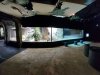
Visitors in the dark, exhibits in bright light, we see it often in other zoo buildings, from the idea that this is how the animals and their enclosure are best shown off. This also has other advantages, in this case to hide the industrial character of the building or bad fake rock work. However, when poorly executed, the disadvantages also immediately emerge. The use of shiny floor tiles causes headaches for those who want to take good photos, and as a result, the windows also often reflect off other visitors. Several exhibits have multiple vantage points, but these are sometimes mispositioned so that you can see other visitors, always a real bummer for me.

The information boards are trilingual, very accurate and easy to navigate. Furthermore, there are not an excessive number of multitech displays present, which might be expected given the young age of the zoo, but which is fine by me (as I often find them too much of a distraction anyway).

The collection is broad and excells in crocodiles, venomous snakes and perchlikes.

Europe

The European section is all about the river Rhône, from its glacial source to its mouth in the Mediterranean. Surprisingly, hardly any attention is paid to the Camargue, arguably France's most famous natural park.

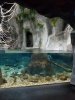
The visit begins with some exhibits on the Alpine headwaters of the river. Biodiversity there is poor. Trout, grayling, Asp viper and Italian Alpine newt are the key species here.

upload_2024-2-11_14-48-51.jpeg
Glacial water of the Rhône

Where the river leaves the mountains, the waters become calmer and we find completely different ecosystems. Themes like 'the lakes', 'the calm waters of the rhône' and 'the rhône at night' show the rich river life with carp, European eels, zander and minnow.

Apart from a small terrarium for fire salamander, this section ends with the river delta exhibit where fresh and salt water meet (lesser spotted dogfish, mediterranean rainbow wrasse, small red scorpionfish, mediterranean red sea star).

North America

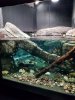
The Nearctic region is represented with only a single exhibit, but the largest in the zoo. The two-storey evolution aquarium has an underwater tunnel on the ground floor and several viewing points on the first floor. It is a rather austere mega aquarium for alligator gar, Mississipi paddlefish, longnose gar, perch, barbel, leather carp and common carp. The filtered light makes for an eerie sight, especially when viewing the fish from below.

upload_2024-2-11_14-49-30.jpeg
Evolution aquarium

Africa

Venomous snakes are a strong point in the zoo’s reptile collection and this is no different in the African zone, with both Western green mamba & rhinoceros viper in a single ‘African forests’ exhibit.

Large rivers of Africa is a two-part exhibit with dwarf mongoose, West African Nile crocodile and several fish (tilapia, Congo tetra, yellow-tailed African tetra, Bijou cichlid and moonfish (Citharinus citharus).

upload_2024-2-11_14-50-3.jpeg
Dwarf mongoose (rights the passage to the crocodiles)

The latest aquarium is not surprisingly about Lake Malawi with sand castle building lekking fish (Mchenga eucinostomus), Mbuna cichlids (Elongate mbuna and maingano), lemon yellow lab and hump-head.

Asia

Again this section has interesting snakes like the Taiwan beauty snake that lives with the Mangshan pitviper, the rarely shown Taiwan habu or pitviper and the monocled cobra. The latter two are part of the Rice fields exhibits which include also an open aquarium (three spot gourami, snakeskin gourami, skunk botia, Kapuas river glass catfish (probably ghost catfish), bamboo shrimp, Yamato shrimp)

Both the Mekong river tank (pangasius, elephant ear gourami, Indonesion tiger perch, fire eel) and the Mangroves exhibit (green spotted pufferfish, four-eyed fish, corsula, knight goby (stigmatogobius sadanundio), spotted scat, blue-legged hermit crab, orange-spotted spinefoot, clouded archerfish) are among the least impressive exhibits in the zoo, at least in terms of décor.

upload_2024-2-11_14-51-14.jpeg
Mangroves exhibit

The Rare animals from Asia exhibit is a combination of the both CR Indian gharial and Malaysian painted terrapin, EN dwarf botia and Red line torpedo or denison barb, and the beautiful Odessa barb.

upload_2024-2-11_14-51-40.jpeg
Indian Gharial (Gavialis gangeticus)

Oceania

The New Guinea rainbow fish is imo one of the zoo’s most attractive exhibits. This naturalistic aquarium has a fine selection of often-endangered rainbow fish ( Sentani rainbow fish, Kutubu rainbow fish, Sepik rainbowfish, Parkinsons rainbow fish), among others such as Australian red claw crayfish, Cobalt blue stiphodon, and empire gudgeon.

upload_2024-2-11_14-53-16.jpeg
New Guinea tank

Sheashores, mangroves and rivers (Australian lungfish, African moony, banded scat, silver moony; fly-specked hardyhead) and the Great Barrier Reef (Lori’s anthias, madarinfish, scarlet cleaner shrimp, royal dottyback, fairy basslet, banded goby, two-spined anglefish, canary wrasse) are 2 impressive marine aquariums, yet I’ve seen the latter far better in older institutions (the tropical reef aquariums in both Bern’s vivarium and Schmidding’s aquazoo are exceptionally good).

Blue-tongued skink and central bearded lizard, especially the latter, are very well represented in European institutions, while the shingleback skink (no subspecific indication) is much rarer. All these live in the stunningly decorated Australian lizards exhibit.

upload_2024-2-11_14-56-19.jpeg
Oceania main hall (fltr Australian lizard - taipan - Great Barrier reef)

Not surprisingly, we also find venomous animals in this section. Australia now has the reputation of being the country with the most poisonous species, wrongly so, as Brazil, for example, has more. But no one will care about the numbers if bitten by an inland taipan, whose venom is by far the most poisonous of all snakes. Fortunately, there are only a handful of documented attacks by this snake, partly because it lives remotely in semi-arid areas.

Komodo dragons inhabit the largest exhibit in this section; living together with Gouldian finches, one of only two birds in this zoo. Not bad, but this enclosure looks more like a holiday resort somewhere in the South Pacific, rather than their habitat.

upload_2024-2-11_14-53-48.jpeg
Komodo dragon exhibit

South America

The last part of the tour leads through a large South American rainforest with several enclosures. A two-storey tank ‘Giants of the Amazon’ (arapaima, black pacu, Xingu river stingray, redtail catfish, Teles pires royal pleco) seemed a bit on the small side imo, which cannot be said of the electric eel aquarium which was huge for the animals.

upload_2024-2-11_14-54-29.jpeg
Amazon hall

The visitor trail continu past a pool for the zoo’s third crocodilean, the Cuvier’s dwarf caiman, and an open terrarium for Anthony’s poison arrow frog. Passing again the Giants of the Amazon tank and the enclosure for white-faced saki, it leads to a large Amazon river aquarium with a selection of stingray, large cichlids and pleco’s (Xingu river stingray, smooth back river stingray, Itaituba river stingray, ocellate river stingray, parrot ciclid, silver hemiodus, red tail hemiodus, tucan fish, flagtail butterfly tetra, black barred characin, Uaru ciclid, Teles pires royal pleco, jaguar catfish, black ghost knifefish, apple snail).

A mixied species terrarium for Yellow-banded poison dart frog, Mission golden-eyed tree frog and eyelash mountain viper heralds the end of the visit as all that follows is a beautiful aquarium for red piranha.

upload_2024-2-11_14-54-56.jpeg
Red piranha tank

Aquatis is expensive, like most such venues, but has no weaknesses in terms of animals and exhibits. Personal preferences in terms of design are of course beyond that.
 

Attachments

  • upload_2024-2-11_14-48-51.jpeg
    upload_2024-2-11_14-48-51.jpeg
    101 KB · Views: 213
  • upload_2024-2-11_14-49-30.jpeg
    upload_2024-2-11_14-49-30.jpeg
    47.7 KB · Views: 211
  • upload_2024-2-11_14-50-3.jpeg
    upload_2024-2-11_14-50-3.jpeg
    120.1 KB · Views: 219
  • upload_2024-2-11_14-51-14.jpeg
    upload_2024-2-11_14-51-14.jpeg
    163.4 KB · Views: 220
  • upload_2024-2-11_14-51-40.jpeg
    upload_2024-2-11_14-51-40.jpeg
    84.7 KB · Views: 213
  • upload_2024-2-11_14-53-16.jpeg
    upload_2024-2-11_14-53-16.jpeg
    120.8 KB · Views: 226
  • upload_2024-2-11_14-53-48.jpeg
    upload_2024-2-11_14-53-48.jpeg
    256.2 KB · Views: 217
  • upload_2024-2-11_14-54-29.jpeg
    upload_2024-2-11_14-54-29.jpeg
    251.9 KB · Views: 216
  • upload_2024-2-11_14-54-56.jpeg
    upload_2024-2-11_14-54-56.jpeg
    183.2 KB · Views: 222
  • upload_2024-2-11_14-56-19.jpeg
    upload_2024-2-11_14-56-19.jpeg
    135.2 KB · Views: 224
What
Day 14 #35 Aquatis Aquarium-Vivarium Lausanne

After a beautiful morning in Servion, I drove to Lausanne, Switzerland's fourth largest city.

On the outskirts of the city, at a transport hub with the A9 motorway, a P+R and metroline 2 all around, this 2017 public aquarium is the youngest of the Swiss zoos. A combination of an aquarium and a vivarium, it focuses on our planet's freshwater ecosystems (with a few sidesteps to saltwater). It offers an excellent tour along 20+ themes and 5 continents, and has a total of 46 exhibits, most of which are well to beautifully decorated. They all offer plenty of space for the animals and some have a very high level of naturalistic design.

Visitors in the dark, exhibits in bright light, we see it often in other zoo buildings, from the idea that this is how the animals and their enclosure are best shown off. This also has other advantages, in this case to hide the industrial character of the building or bad fake rock work. However, when poorly executed, the disadvantages also immediately emerge. The use of shiny floor tiles causes headaches for those who want to take good photos, and as a result, the windows also often reflect off other visitors. Several exhibits have multiple vantage points, but these are sometimes mispositioned so that you can see other visitors, always a real bummer for me.

The information boards are trilingual, very accurate and easy to navigate. Furthermore, there are not an excessive number of multitech displays present, which might be expected given the young age of the zoo, but which is fine by me (as I often find them too much of a distraction anyway).

The collection is broad and excells in crocodiles, venomous snakes and perchlikes.

Europe

The European section is all about the river Rhône, from its glacial source to its mouth in the Mediterranean. Surprisingly, hardly any attention is paid to the Camargue, arguably France's most famous natural park.

The visit begins with some exhibits on the Alpine headwaters of the river. Biodiversity there is poor. Trout, grayling, Asp viper and Italian Alpine newt are the key species here.

View attachment 684982
Glacial water of the Rhône

Where the river leaves the mountains, the waters become calmer and we find completely different ecosystems. Themes like 'the lakes', 'the calm waters of the rhône' and 'the rhône at night' show the rich river life with carp, European eels, zander and minnow.

Apart from a small terrarium for fire salamander, this section ends with the river delta exhibit where fresh and salt water meet (lesser spotted dogfish, mediterranean rainbow wrasse, small red scorpionfish, mediterranean red sea star).

North America

The Nearctic region is represented with only a single exhibit, but the largest in the zoo. The two-storey evolution aquarium has an underwater tunnel on the ground floor and several viewing points on the first floor. It is a rather austere mega aquarium for alligator gar, Mississipi paddlefish, longnose gar, perch, barbel, leather carp and common carp. The filtered light makes for an eerie sight, especially when viewing the fish from below.

View attachment 684983
Evolution aquarium

Africa

Venomous snakes are a strong point in the zoo’s reptile collection and this is no different in the African zone, with both Western green mamba & rhinoceros viper in a single ‘African forests’ exhibit.

Large rivers of Africa is a two-part exhibit with dwarf mongoose, West African Nile crocodile and several fish (tilapia, Congo tetra, yellow-tailed African tetra, Bijou cichlid and moonfish (Citharinus citharus).

View attachment 684984
Dwarf mongoose (rights the passage to the crocodiles)

The latest aquarium is not surprisingly about Lake Malawi with sand castle building lekking fish (Mchenga eucinostomus), Mbuna cichlids (Elongate mbuna and maingano), lemon yellow lab and hump-head.

Asia

Again this section has interesting snakes like the Taiwan beauty snake that lives with the Mangshan pitviper, the rarely shown Taiwan habu or pitviper and the monocled cobra. The latter two are part of the Rice fields exhibits which include also an open aquarium (three spot gourami, snakeskin gourami, skunk botia, Kapuas river glass catfish (probably ghost catfish), bamboo shrimp, Yamato shrimp)

Both the Mekong river tank (pangasius, elephant ear gourami, Indonesion tiger perch, fire eel) and the Mangroves exhibit (green spotted pufferfish, four-eyed fish, corsula, knight goby (stigmatogobius sadanundio), spotted scat, blue-legged hermit crab, orange-spotted spinefoot, clouded archerfish) are among the least impressive exhibits in the zoo, at least in terms of décor.

View attachment 684985
Mangroves exhibit

The Rare animals from Asia exhibit is a combination of the both CR Indian gharial and Malaysian painted terrapin, EN dwarf botia and Red line torpedo or denison barb, and the beautiful Odessa barb.

View attachment 684986
Indian Gharial (Gavialis gangeticus)

Oceania

The New Guinea rainbow fish is imo one of the zoo’s most attractive exhibits. This naturalistic aquarium has a fine selection of often-endangered rainbow fish ( Sentani rainbow fish, Kutubu rainbow fish, Sepik rainbowfish, Parkinsons rainbow fish), among others such as Australian red claw crayfish, Cobalt blue stiphodon, and empire gudgeon.

View attachment 684987
New Guinea tank

Sheashores, mangroves and rivers (Australian lungfish, African moony, banded scat, silver moony; fly-specked hardyhead) and the Great Barrier Reef (Lori’s anthias, madarinfish, scarlet cleaner shrimp, royal dottyback, fairy basslet, banded goby, two-spined anglefish, canary wrasse) are 2 impressive marine aquariums, yet I’ve seen the latter far better in older institutions (the tropical reef aquariums in both Bern’s vivarium and Schmidding’s aquazoo are exceptionally good).

Blue-tongued skink and central bearded lizard, especially the latter, are very well represented in European institutions, while the shingleback skink (no subspecific indication) is much rarer. All these live in the stunningly decorated Australian lizards exhibit.

View attachment 684991
Oceania main hall (fltr Australian lizard - taipan - Great Barrier reef)

Not surprisingly, we also find venomous animals in this section. Australia now has the reputation of being the country with the most poisonous species, wrongly so, as Brazil, for example, has more. But no one will care about the numbers if bitten by an inland taipan, whose venom is by far the most poisonous of all snakes. Fortunately, there are only a handful of documented attacks by this snake, partly because it lives remotely in semi-arid areas.

Komodo dragons inhabit the largest exhibit in this section; living together with Gouldian finches, one of only two birds in this zoo. Not bad, but this enclosure looks more like a holiday resort somewhere in the South Pacific, rather than their habitat.

View attachment 684988
Komodo dragon exhibit

South America

The last part of the tour leads through a large South American rainforest with several enclosures. A two-storey tank ‘Giants of the Amazon’ (arapaima, black pacu, Xingu river stingray, redtail catfish, Teles pires royal pleco) seemed a bit on the small side imo, which cannot be said of the electric eel aquarium which was huge for the animals.

View attachment 684989
Amazon hall

The visitor trail continu past a pool for the zoo’s third crocodilean, the Cuvier’s dwarf caiman, and an open terrarium for Anthony’s poison arrow frog. Passing again the Giants of the Amazon tank and the enclosure for white-faced saki, it leads to a large Amazon river aquarium with a selection of stingray, large cichlids and pleco’s (Xingu river stingray, smooth back river stingray, Itaituba river stingray, ocellate river stingray, parrot ciclid, silver hemiodus, red tail hemiodus, tucan fish, flagtail butterfly tetra, black barred characin, Uaru ciclid, Teles pires royal pleco, jaguar catfish, black ghost knifefish, apple snail).

A mixied species terrarium for Yellow-banded poison dart frog, Mission golden-eyed tree frog and eyelash mountain viper heralds the end of the visit as all that follows is a beautiful aquarium for red piranha.

View attachment 684990
Red piranha tank

Aquatis is expensive, like most such venues, but has no weaknesses in terms of animals and exhibits. Personal preferences in terms of design are of course beyond that.
What’s the other bird species?
 
Not surprisingly, we also find venomous animals in this section. Australia now has the reputation of being the country with the most poisonous species, wrongly so, as Brazil, for example, has more. But no one will care about the numbers if bitten by an inland taipan, whose venom is by far the most poisonous of all snakes. Fortunately, there are only a handful of documented attacks by this snake, partly because it lives remotely in semi-arid areas.
Poisonous =/= venomous. ;)
And none of the inland taipan "attacks" have been fatal, at least not in the last 100 years.
 
I’m sure most snake ‘attacks’ are actually defence
It depends on the situation. In captivity, snake bites can also occur due to human carelessness (not using adequate pincers / petting a prey item before touching the snake etc.) and ophibian error (among others, due to blind gluttony from the snake's part).
 
It depends on the situation. In captivity, snake bites can also occur due to human carelessness (not using adequate pincers / petting a prey item before touching the snake etc.) and ophibian error (among others, due to blind gluttony from the snake's part).
My snake experience is very limited, but I did get bitten by a Corn Snake I was looking after for a friend.
I made the mistake of letting him think every time I opened his viv, he would get a mouse. No mouse on this occasion, so he got me. Entirely my fault
 
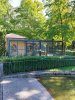
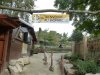
Day 14 #36 Volière du Parc de Mon Repos - Lausanne

Since there is a metro station right below Aquatis, I was happy to travel to the city centre to visit the public aviary at Parc de Mon Repos.

This park is particularly famous because the centrally located villa 'la Maison de Mon-Repos' was the headquarters of the International Olympic Committee from 1922 to 1967.

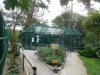
Next to the villa is a stately horseshoe-shaped building with 2 aviary complexes built in front.

upload_2024-2-14_19-5-53.jpeg

upload_2024-2-14_19-6-8.jpeg

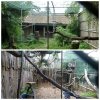
Both the architecture and the collection have little importance. This was the least of all the public aviaries I visited. It had the usual collection of exotic and domesticated species, with no outliers, except the crimson-fronted parakeet (Psittacara finschi), which was signed but I did not see it.

upload_2024-2-14_19-6-25.jpeg
 

Attachments

  • upload_2024-2-14_19-5-53.jpeg
    upload_2024-2-14_19-5-53.jpeg
    144.8 KB · Views: 177
  • upload_2024-2-14_19-6-8.jpeg
    upload_2024-2-14_19-6-8.jpeg
    240.1 KB · Views: 190
  • upload_2024-2-14_19-6-25.jpeg
    upload_2024-2-14_19-6-25.jpeg
    204.7 KB · Views: 188
Day 15 #37 Bioparc Genève

This place is one of the country's many sanctuaries for tropical and endemic wildlife. It came into sight only late in the pre-planning of this trip (long live ZTL). Since I was leaving for Basel the same day, it came down to being on site by the opening hour.

upload_2024-2-17_11-47-51.jpeg

The bioparc houses some 85 different species of native and exotic animals and works around 4 objectives: conservation, research, awareness and education. So nothing new. There is certainly no shortage of staff with a governing body, some 15 professional staff members and an enthusiastic association of volunteers, 'L'Association des Amis du Parc Challandes'. Parc Challandes is the name by which the place is also known locally, named after the zoo's founder Pierre Challandes, who is currently still a member of the board of directors.

The current location is right below the airport runway. At the time I was there, it was apparently rush hour, because every few minutes a smaller plane or a large passenger jet would skim by at a height of a few dozen metres.

upload_2024-2-17_11-48-12.jpeg
Saimiri boliviensis and British Airways

The constant roar of planes only masks the roar of car traffic on the nearby highway and is a constant scourge to humans and animals. This place rightly begs for a new location. The plan is to move to a new site in Thônex, away from the current Bellevue suburb, on the other side of town, by 2027. The new site would include aviaries, a biodome, a laboratory and all other support services.

But for now, it is here in this spot, close to the French border. Perhaps because of the desired relocation, the place looked pretty neglected.

While the aviaries for callitrichidae, Vietnam pheasants, macaws and cockatoos are still fairly decent, after that it is clearly downhill with too-small aviaries for many of the species kept (amazon parrots, turaco). Maintenance seems overdue and it is a mishmash of structures and aviaries.

upload_2024-2-17_12-3-40.jpeg
Cockatoos and laughing kookaburra

Among the mammals, it only gets worse. A particularly narrow path takes visitors past a row of cages for katta, fossa, lynx, genetcat, raccoon, serval and owls. Even taking into account that this is primarily a sanctuary, it is particularly bad for serval and lynx. I saw all species, except the Dongola small spotted genet (which was signed) and I missed the white-tailed tree rat (that would be a first for me), even the volunteer couldn’t tell me where to look.

upload_2024-2-17_12-6-14.jpeg
Cats on the right, raccoons and eagles on the left

upload_2024-2-17_12-9-3.jpeg
Fossa enclosure

The enclosures for ringtailed lemur, bald eagle and Eurasian wildcat are only slightly better.

upload_2024-2-17_12-4-48.jpeg
Bald eagle and ringtailed lemur

upload_2024-2-17_12-6-57.jpeg
Visitor tour

It is the red-necked wallaby that are the real prize winners, with a spacious walk-through exhibit.

upload_2024-2-17_12-7-36.jpeg
Red-necked wallaby enclosure

It occurred to me that I always tend to regard some enclosures as good, no matter how bad the place is. While I immediately consider those same enclosures in another zoo as substandard. Somehow, my mind seems to take the location and setup into account. So here, I could appreciate the enclosure for the crab-eating raccoons: with its tangle of bushes and branches, it just seemed realistic and naturalistic, even if it lacked running water.

upload_2024-2-17_12-5-16.jpeg
Crab-eating raccoon enclosure

Anyway, I would not immediately recommend this zoo for a visit.
 

Attachments

  • upload_2024-2-17_11-47-51.jpeg
    upload_2024-2-17_11-47-51.jpeg
    227.6 KB · Views: 156
  • upload_2024-2-17_11-48-12.jpeg
    upload_2024-2-17_11-48-12.jpeg
    116.5 KB · Views: 152
  • upload_2024-2-17_12-3-40.jpeg
    upload_2024-2-17_12-3-40.jpeg
    270.4 KB · Views: 150
  • upload_2024-2-17_12-4-48.jpeg
    upload_2024-2-17_12-4-48.jpeg
    221.4 KB · Views: 155
  • upload_2024-2-17_12-5-16.jpeg
    upload_2024-2-17_12-5-16.jpeg
    219.7 KB · Views: 154
  • upload_2024-2-17_12-6-14.jpeg
    upload_2024-2-17_12-6-14.jpeg
    281.3 KB · Views: 157
  • upload_2024-2-17_12-6-57.jpeg
    upload_2024-2-17_12-6-57.jpeg
    170.8 KB · Views: 158
  • upload_2024-2-17_12-7-36.jpeg
    upload_2024-2-17_12-7-36.jpeg
    287.2 KB · Views: 155
  • upload_2024-2-17_12-9-3.jpeg
    upload_2024-2-17_12-9-3.jpeg
    268.9 KB · Views: 144
Day 15 #38 Zoo La Garenne

After Geneva, I headed inland to the first foothills of the Jura Mountains, where a narrow road took me high above the shores of Lake Geneva, with stunning views of the Valais Alps and the Mont Blanc massif across the lake.

Here lies the tiny village of Le Vaud, deeply cut into the landscape, where the La Garenne zoo is the big crowd puller (although, with only 90,000 visitors a year).

The zoo originated in 1965 from a private initiative and was later supported by an association of friends. In 1998 everything was transferred to a foundation, La Fondation La Garenne, but it took another two decades before the zoo benefited noticeably.

In 2016, the park moved to a completely new location and this is still very noticeable in 2023: there is great uniformity in the exhibits, which clearly all date from the same period. The contemporary entrance building, also shop and restaurant, means an unexpectedly modern welcome to this somewhat quiet and friendly place.
Public Pavilion of New Zoological Park La Garenne / LOCALARCHITECTURE | ArchDaily

This tiny 3 ha zoo specialises in the conservation of Swiss faune, both local and wild. It is also a wildlife rehabilitation center. It claims to have the tallest aviary in Europe, at a maximum height of 28m.

upload_2024-2-19_18-0-20.jpeg
General park view

I had a pleasant visit but the zoo is small and it took me no longer than a good hour to see everything. Unfortunately I couldn’t find a series of rodent species that particulary interested me: bank vole, fat dormouse, long-tailed field mouse, and the more common hazel mouse. These were the main reason for my visit, as well as the large aviary. The latter is an impressive structure and one of the few walk-through for Alpine ibex, which are kept together with griffon vulture, waldrapp and Alpine marmot.

upload_2024-2-19_17-43-50.jpeg
Alpine ibex walk-through
upload_2024-2-19_17-44-36.jpeg
Alpine ibex

Bearded vultures can be seen in a adjacent aviary.

upload_2024-2-19_17-44-11.jpeg
Bearded vulture

The best enclosure is probably the one for Eurasian wolves. It is densely planted, but unlike many other enclosures for this species, it is not a dense forest, but rather a forest edge with lots of scrub and tall grass. The moment one emerges among the vegetation is always the highlight of such an enclosure.

upload_2024-2-19_17-43-6.jpeg
Eurasian wolf enclosure

There is a nice focus on smaller predators but, as the collection does not count any special features, at this stage of a long zoo trip, a certain fatigue does occur: I had no longer any desire to wait in the sweltering heat for a long time for an animal to possibly emerge.

upload_2024-2-19_17-58-45.jpeg
European red fox enclosure

The Cabane des pics towers above the European wildcat enclosure. Inside is a small exhibition on native woodpeckers.

upload_2024-2-19_18-4-14.jpeg

European wildcat enclosure & Cabane des pics

I was already familiar with this zoo, which certainly did not disappoint me but, all in all, has a bit too little quality in its collection to make a special detour.

upload_2024-2-19_17-50-0.jpeg
Eurasian eagle owl, large aviary and wolf enclosure

Then I drove more than 200 km north to visit a weird place that I had serious doubts about beforehand.
 

Attachments

  • upload_2024-2-19_17-43-6.jpeg
    upload_2024-2-19_17-43-6.jpeg
    243.7 KB · Views: 117
  • upload_2024-2-19_17-43-50.jpeg
    upload_2024-2-19_17-43-50.jpeg
    239.3 KB · Views: 124
  • upload_2024-2-19_17-44-11.jpeg
    upload_2024-2-19_17-44-11.jpeg
    208.2 KB · Views: 121
  • upload_2024-2-19_17-44-36.jpeg
    upload_2024-2-19_17-44-36.jpeg
    215.8 KB · Views: 122
  • upload_2024-2-19_17-50-0.jpeg
    upload_2024-2-19_17-50-0.jpeg
    132.9 KB · Views: 121
  • upload_2024-2-19_17-57-33.jpeg
    upload_2024-2-19_17-57-33.jpeg
    171.9 KB · Views: 6
  • upload_2024-2-19_17-58-45.jpeg
    upload_2024-2-19_17-58-45.jpeg
    286.6 KB · Views: 117
  • upload_2024-2-19_18-0-20.jpeg
    upload_2024-2-19_18-0-20.jpeg
    178.7 KB · Views: 125
  • upload_2024-2-19_18-4-14.jpeg
    upload_2024-2-19_18-4-14.jpeg
    314.4 KB · Views: 128
Thanks for you review! Sadly, the only small rodents left in the collection are harvest mouses and fat dormouses, in the Micro'Garenne.
 
Thanks for you review! Sadly, the only small rodents left in the collection are harvest mouses and fat dormouses, in the Micro'Garenne.

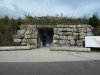
I'm afraid I missed this exhibit. It's probably this one, right after the entrance?

upload_2024-2-20_11-22-13.jpeg

For some inexplicable reason, I thought these were toilets.:oops:
 

Attachments

  • upload_2024-2-20_11-22-13.jpeg
    upload_2024-2-20_11-22-13.jpeg
    177.4 KB · Views: 107
Back
Top