Alright so my definition of week might be a slightly curious one, but I've finally found the time to get a rough guide written for Tierpark Berlin. If this one isn't lampooned too hard I'll get one written for the Zoo as well. I'm sure all us regular (and not-so-regular) visitors have different habits when it comes to visiting, but this is the approximate route I've found myself doing on all of my visits. Just something to note - many zoos, especially in Europe it must be said, suffer from a great deal of backtracking to see everything. Well, suffer is one word - personally, it's a good excuse to make a travel partner let me see something again. Tierpark is a particularly strong case of this, so be prepared for some slightly erratic meandering.
So with the completely unnecessary preface out the way...
Tierpark Berlin:
Presumably you'll be getting the U-bahn in from the city centre, which is directly outside the zoo gates. Enter through the Bärenschaufenster entrance, easily spotted from the distinct lack of black bears that used to give the entrance its name (presumably eaten by the giganotosaurus that now calls it home).
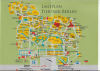
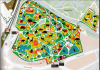
Once inside, you will have both species of bison - European and Wood - on either side of you, and the ground squirrels and NA porcupine to the right. I'd take the first left, along the wisent paddock, which will lead you onto the long path next to the Tierpark School on the map. Following this along will take you along the series of deer paddocks, which should provide you with some very active animals early in the morning.
Next I'd head through the house gardens, where you'll see red-and-white giant squirrels. Following on from this is the pheasantry, which is almost always incredibly quiet early in the morning. I would then work your way back past the gibbons, to the area marked as "Dinoworld" on the map. Here a bit of the aforementioned meandering will be needed to see the pelicans, the peccaries and any deer you have missed, but it's a contender for my favourite part of the zoo for purely how beautiful it is year-round.
Once you end up in front of the café, head for the bears - you should get there after the polar bear feeding so both bears will be active, but without the crowds. After this, take the path right at the eurasian elk, which will lead you to the owls and aviaries. The dead end on the map houses southern tamandua and spider monkeys. After this, you'll have the domestics section which is very much worth a visit (second to Vienna in terms of quality of breeds held). The main reason for this route is to take you to the front of the Alfred-Brehm house, or more accurately the small section housing reindeer and honey badgers before it.
Regarding the ABH: I do the outside-left section first, covering the golden cats, Javan leopard and outside bear section before doubling back to do the inside section. Once you've done the inside of the house, head right of the main entrance to do the penguins, cheetah, clouded leopard and tree kangaroo walk-through. If you continue around this path shown on the map, you'll reach the vulture walk-through and should be next to the elephant house.
I'd then do the savannah section as it's a dead end. Usually by this point, I'm considering food - if you're packing a lunch then there's plenty of picnic areas, if not Restaurant Patagona is my preferred place and also lets you do another chunk of the zoo. The path there takes you past the maned wolves, shown on the map, as well as the first red panda exhibit. Looking at the map, you'll want to take the path between the hyenas and the elephant house, as there are no exhibits the other side. This knocks off the hyenas, Pallas' cats and dholes, but it's inescapable to loop back on yourself there. However, there's nothing held in the section of the dhole area next to the train tracks on the map so you can skip that. Reconnecting onto that main road will give you a fantastic view of the camel pastures.
My next step would be to go the lemurs, followed by the giraffe/okapi area - take the path following the elephant construction again to save going back on yourself. From there on, it's just a case of looping around the paths shown in that section on the map until you get to the cattle area.
Next you're best off doing the Hymalaya section, which is quite a walk and can take around an hour if you're taking your time. It's all very well signposted however. Once you've done that, do the Monkey House next, followed by the aviaries denoted by an eagle on the map. There's lots of rarities in this area, such as harpy eagle, so it's worth taking a bit of time to see everything. Following that, the Otter Island is the next best stop, before taking the perimeter path up past the musk ox and Père-David's deer bringing you back to the gibbons. Personally, I'd take the path along the Chacoan peccaries and camel pastures to give you better views of them as well as being able to view the nilgai/hog deer (this is unmarked on the map, between the deer and camels).
That route should cover everything Tierpark has to offer, but obviously it's quite a full-on day. On my most recent visit, admittedly with a lot of double-backing to ensure I saw species that were hidden earlier in the day, I arrived at 10am and left at 6pm. A good option may be to decide on your must-sees, and try to modify the route around that. The best advice (and this stands for all zoos, of course, but especially the Berlin collections, Leipzig and Prague) is to ask any specific collections on their respective news threads, and it's worth keeping an eye on the Tierpark one as there's several currently empty exhibits that will hopefully soon be filled.
Hopefully this can be of some use to you, but if in doubt - try and take a vaguely anti-clockwise route.

 .
.