Point Defiance Zoo & Aquarium Point Defiance Zoo & Aquarium Species List (updated)

Northwest_FIsh_Keeping

Well-Known Member
One last species list to end off the year, recently the facility has seen a couple changes within the last few months and since I've gotten the hang of doing species lists now, I thought I would go back and redo the species list for PDZA with the updated information and all of the scientific names this time (especially since last time I got quite a lot of the Fish ID wrong so I'm here to correct myself lol)

I didn't list any of the Ambassador animals as it's hard to keep track but thankfully, the Zoo lists them all right here on the website
  • Species in Green are those who ARE NOT signed, but are on exhibit
  • Species in Red are those ARE signed, but are not on exhibit
  • A space between each species indicates that it's a separate enclosure

The Kid's Zone | As it's name suggests, this is the Zoo's children area, but it is jam packed with a variety of species. It's split up into two areas (one closer to the entrance / exit, and one a little further towards the back)
(Area 1)
  • Black and White Ruffed Lemurs | Varecia variegata
  • African Meerkats | Suricata suricatta
  • Damaraland Mole Rats | Fukomys damarensis
  • Corn Snake | Pantherophis guttatus
  • Madagascar Hissing Cockroaches | Gromphadorhina portentosa
  • Solomon Island Leaf Frog | Cornufer guentheri
  • Emerald Tree Boa | Corallus caninus
  • New Caledonia Giant Gecko | Rhacodactylus leachianus
  • Vinegarroon / Tailless Whip Scorpion | Acanthophrynus coronatus
  • Lake Malawi Peacock Cichlids | Aulonocara sp.
  • Kenya Sand Boa | Eryx colubrinus
  • Giant Leaf Insects | Pulchriphyllium giganteum
  • Chacoan Horned Frog | Ceratophrys cranwelli
  • Magnificent Tree Frogs | Ranoidea splendida
  • White's Tree Frogs | Ranoidea caerulea
  • Home's Hingeback Tortoise | Kinixys homeana
  • Pancake Tortoise | Malacochersus tornieri
(Area 2)
  • Red Belly Pirahna | Pygocentrus nattereri
  • Green Tree Python | Morelia viridis
  • Prehensile Tailed Skink | Corucia zebrata
  • Black Breasted Leaf Turtle | Geoemyda spengleri
  • Golden Poison Dart Frogs | Phyllobates terribilis
  • Blue Poison Dart Frogs | Dendrobates azureus 'maculatus'
  • Nigerian Dwarf Goats | Capra aegagrus hircus
Red Wolf Woods | Home to the Zoo's population of North American Red Wolves
  • North American Red Wolves (4 individuals, not sure if they're both pairs) | Canis rufus
Arctic Tundra | Based off of the terrain near Point Hope, Alaska. This is where some of the rarest species in the Zoo live
  • Muskox (Adult pair + two calves) | Ovibos moschatus (The only ones in the mainland US)
  • Polar Bears (Twin Sister Duo) | Ursus maritimus
  • Arctic Foxes (Young Male + Female pair) | Vulpes lagopus
Rocky Shores | Showcasing the variety of life that can be found up and down the coast of the Northwest and it's waters
  • Southern Sea Otters (3 females) | Enhydra lutris nereis
  • California Sea Lions (Adult pair + 1 pup) | Zalophus californianus
  • Harbor Seals (2 females) | Phoca vitulina
  • Horned Puffins | Fratercula corniculata
  • Tufted Puffins | Fratercula cirrhata
  • Common Murres | Uria aalge
  • Pacific Walrus (2 males) | Odobenus rosmarus (Some of the only in the US)
Penguin Point | Outdoor penguin habitat home to the Zoo's breeding colony of Magellanic Penguins
  • Magellanic Penguins | Spheniscus magellanicus
Asian Forest Sanctuary | This area uses a unique "rotation system" where many of the animals rotate to a different exhibit area each day for enrichment purposes. The only exceptions are the Clouded Leopards and Sumatran Tigers who stay in their designated exhibits.
  • Sumatran Tigers | Felis tigris sondaicus
  • Clouded Leopards | Neofelis nebulosa
  • Malayan Tapirs | Tapirus indicus
  • Asian Small Clawed Otters | Aonyx cinereus
  • Lowland Anoa | Bubalus depressicornis
  • Lar Gibbons | Hylobates lar
  • Siamangs | Symphalangus syndactylus
  • Wrinkled Hornbill | Aceros corrugatus
(RIP Suki, the famous and last remaining Asian Elephant (only Elephant in fact) in Washington who passed away at the age of 60 back in August)

Discovery Hut | What's meant to simulate a rundown building in a ghost town that's been taken over by various animals. Sometimes they also bring out the smaller ambassador animals in this area
  • Barn Owl | Tyto alba
Tropical Reef Aquarium | Based off of the Coral Triangle in the Indo-Pacific, this Aquarium is home to a majority of the Zoo's Sharks, Rays, and tropical fish species. Along with a tropical touch pool which isn't that common to see. The aquariums are made up many smaller exhibits who each have their own theme so these sections will work a little different.

'Shallow Beach Lagoon' is a simulated beach with fake mangroves that is home to a few species of Stingray
  • Blue Spotted Ribbontail Rays | Taeniura lymma (3 total)
  • Australian Reticulated Ray (juvenile) | Himantura australis (1 total) alleged since it's too young to tell exactly what species since their pattern isn't developed yet but that's what I've been told by volunteers
'Shallow Fish Lagoon' is the tank next to the touch pool that is home to a variety of smaller Reef Fish who would either be lost or eaten if put into the main Lagoon
  • Green Spotted Puffer | Dichotomyctere nigroviridis
  • Blue-Green Chromis | Chromis viridis
  • Zebra Dartfishes | Ptereleotris zebra
  • Longspine Cardinalfishes | Zoramia leptacantha
  • Orange Stripe Cardinalfishes | Ostorhinchus cyanosoma
  • Coral Catfishes| Plotosus lineatus
  • Checkerboard Wrasse | Halichoeres hortulanus
  • Shrimpfishes / Razorfishes | Aeoliscus strigatus
'Tropical Touch Pool' is home to a variety of Tropical Inverts that you're able to touch, which surprisingly isn't too common in Aquariums since most opt for a Coldwater Touch Pool and species
  • Skunk Cleaner Shrimps | Lysmata amboinensis
  • Cerith Snails | Cerith sp.
  • Blue Linkia Seastars | Linckia laevigata
  • Yellow Mesh Seastars | Fromia monilis
  • Burrowing Urchins | Echinometra mathaei
  • Decorator Urchins | Tripneustes gratilla
  • Prickly Black Sea Cucumbers | Thelenota ananas
  • Black & Pink Sea Cucumbers | Holothuria edulis
'The Lagoon' is home to the medium sized Reef Fish, also featuring some of the smaller Shark species
  • Australian Epaulette Sharks | Hemiscyllium ocellatum (2 total)
  • White Spotted Bamboo Sharks | Chiloscyllium plagiosum (2 total)
  • Scrawled Filefish | Aluterus scriptus
  • Oriental Sweetlips | Plectorhinchus vittatus
  • Fivestripe Wrasses | Thalassoma quinquevittatum
  • Bluehead Wrasses | Thalassoma amblycephalum
  • Red Coris Wrasses | Coris gaimard
  • Blue Streak Cleaner Wrasses | Labroides dimidiatus
  • Orange Lined Triggerfish | Balistapus undulatus
  • Wedgetail Triggerfish | Rhinecanthus rectangulus
  • Clown Triggerfish | Balistoides conspicillum
  • Porcupine Pufferfish | Diodon holocanthus
  • Naso Tangs | Naso lituratus
  • Yellow Tangs | Zebrasoma flavescens
  • Blue Hippo Tangs | Paracanthurus hepatus
  • Coral Rabbitfishes | Siganus corallinus
  • Foxface Rabbitfishes | Siganus vulpinus
  • Tomato Clownfishes | Amphiprion frenatus
  • Bicolor Goatfishes | Parupeneus barberinoides
  • Manybar Goatfishes | Parupeneus multifasciatus
  • Monocle Breams | Scolopsis bilineata
  • Threadfin Butterflyfishes | Chaetodon auriga
  • Pearl Scale Butterflyfishes | Chaetodon xanthurus
  • Racoon Butterflyfishes | Chaetodon lunula
  • Lattice Butterflyfishes | Chaetodon rafflesii
  • Dusky Butterflyfishes | Chaetodon flavirostris
  • Scribbled Angelfish | Chaetodontoplus duboulayi
  • Bicolor Angelfishes | Centropyge bicolor
  • Emperor Angelfish | Pomacanthus imperator
  • Tuskfish species | Choerodon sp.
'The Blue Hole' is meant to mimic a Reef Slope / drop off on the Reef. There's no signage for this tank so this is all ID'd by hand besides for a couple species that were listed on the site. I may've missed a few species but this should cover a majority of what you'll see on exhibit
  • Caribbean Spiny Lobster | Panulirus argus
  • Bigscale Soldierfishes | Myripristis berndti
  • Sabre Squirrelfishes | Sargocentron spiniferum
  • Blackfin Squirrelfishes | Neoniphon opercularis
  • Purple Square Anthias (Males and Females) | Pseudanthias pleurotaenia
  • Porcupine Pufferfish | Diodon holocanthus
  • Annularis Angelfish | Pomacanthus annularis
  • Paddlefin Wrasse | Thalassoma lucasanum
  • Longfin Bannerfishes | Heniochus acuminatus
  • Racoon Butteflyfishes | Chaetodon lunula
  • Powder Brown Tang | Acanthurus japonicus
  • Sailfin Tang | Zebrasoma velifer
  • Harlequin Tusk Wrasse | Choerodon fasciatus
  • Birdnose Wrasse | Gomphosus caeruleus
  • Red Breasted Wrasse | Cheilinus fasciatus
  • Blackbar Wrasse | Thalassoma nigrofasciatum
'The Outer Reef' is a 240,000 gallon tank that is meant to mimic the outer shelf of a Coral Reef, home to many of the Aquarium's large sharks, rays, and larger reef fishes. With a total of 18 sharks (and counting with more being added down the road the Zoo says, this tank isn't large enough for all of them long term. My tinfoil hat theory is that once the sharks mature in a couple years, specifically some of the Black Tips and Grey Reef Sharks, they will move from PDZA to our 500,000 Gallon Tank at the Seattle Aquarium where we do have the room)
  • Black Tip Reef Sharks | Carcharhinus melanopterus (5 total)
  • Grey Reef Sharks | Carcharhinus amblyrhynchos (3 total)
  • Zebra Sharks | Stegostoma tigrinum (3 total)
  • Tawny Nurse Sharks | Nebrius ferrugineus (4 total, been at the Zoo since the 70's I was told)
  • White Tip Reef Sharks | Triaenodon obesus (2 total)
  • Tasseled Wobbegong Shark | Eucrossorhinus dasypogon (1 total)
  • Black Blotched Fantail Ray | Taeniurops meyeni (1 total)
  • Australian Whiptail Ray | Himantura australis (alleged, signed as H. australis but there's a possibility it is a different Himantura species due to it's pattern)
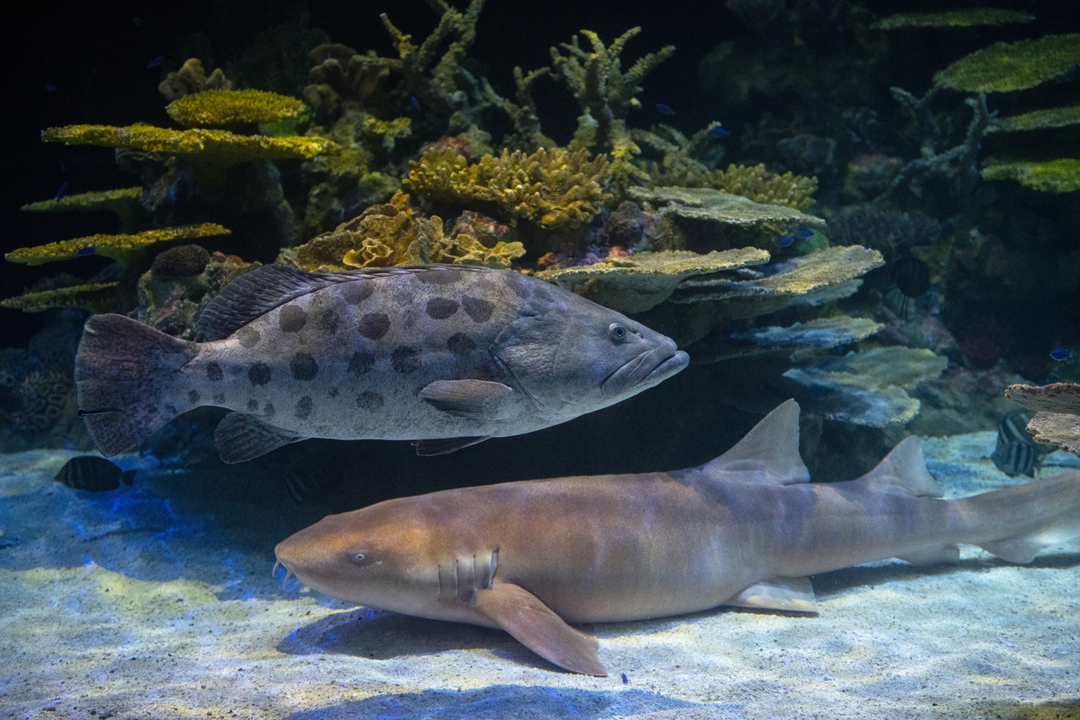
  • Potato Grouper | Epinephelus tukula (they call him 'Tater' for short)
  • Napoleon Wrasse | Cheilinus undulatus
  • Red Emperor Snapper | Lutjanus sebae
  • Yellowtail Fusiliers | Caseio cuning
  • Orbicular Batfishes | Platax orbicularis
  • Golden Trevally's | Gnathanodon speciosus
  • Bluefin Trevally's | Caranx melampygus
  • Unicorn Tangs | Naso unicornis
  • Humphead Unicorn Tangs | Naso tuberosus
  • Sailfin Tangs | Zebrasoma velifer
  • Red Sea Sailfin Tangs | Zebrasoma desjardini
  • Eyestripe Tangs | Acanthurus dussumieri
  • Chocolate Tangs | Acanthurus pyroferus
  • Clown Tangs | Acanthurus lineatus
  • Blue Streak Cleaner Wrasses | Labroides dimidiatus'
  • Pink Tail Triggerfishes | Melichthys vidua
  • Barrier Reef Chomis' | Chromis nitida
  • Monocle Breams | Scolopsis bilineata
  • Indo-Pacific Sergeant Major Damselfishes | Abudefduf vaigiensis
  • Orange Tail Damselfishes | Chrysiptera cyanea
  • Sapphire Damselfishes | Chrysiptera springeri
'Coral Reef Close-Up' won't be opening up until Spring 2025 but consists of 3 tanks (1 large rectangular tank and 2 medium sized cube tanks)

Pacific Seas Aquarium | The Second Aquarium on the property, this Aquarium highlights habitats along the Pacific Coast such as our local waters (Puget Sound), California, Japan, and Baja. The more diverse of the 2 Aquariums in terms of species, this is home to some of the Zoo's most iconic Aquarium species.

'Crashing Waves' Tank
is the wave simulator tank that's outside of the entrance to the Pacific Seas Aquarium. Home to juvenile Coho Salmon and various algae

'Japanese Spider Crab' Tank
is home to the Aquarium's group of Japanese Giant Spider Crabs along with a few species of Coldwater Fish from Japan which are pretty uncommon to find in US aquaria
  • Japanese Giant Spider Crabs | Macrocheira kaempferi
  • Longspine Snipefishes | Macroramphosus scolopax
  • Deepwater Scorpionfish | Neomerinthe sp.
  • Japanese Codlings | Physiculus japonicus
'Schooling Fish' Tank is home to a school of Pacific Herring.
  • Pacific Herrings | Clupea pallasii
'Jellies Gallery' contains 4 in-wall tanks + the Moon Jelly Globe which is 1 of 3 in the country to my knowledge (the other 2 being at the Oregon Coast Aquarium & Florida Aquarium). The smaller circular tank is to highlight Local Species which is why it's a mixed display
  • Egg-Yolk Jellies | Phacellophora camtschatica
  • Cross Jellies | Mitrocoma cellularia
  • Pacific Sea Gooseberries | Pleurobrachia bachei
  • Canadian Comb Jellies | Bolinopsis microptera
  • Japanese Sea Nettles | Chrysaora pacifica
  • Upside-Down Jellies | Cassiopea sp.
  • Greater Moon Jellies | Aurelia labiata
'Coastal Kelp Forest' Tank is a replica of a California Kelp Forest. I haven't seen the California Moray in YEARS but considering it's still signed even after they updated the signage, it's probably somewhere BTS
  • California Sheephead | Bodianus pulcher
  • Flag Rockfish | Sebastes rubrivinctus
  • Tree Rockfish | Sebastes serriceps
  • Halfmoons | Medialuna californiensis
  • Opaleyes | Girella nigricans
  • Blacksmith Chromis' | Chromis punctipinnis
  • Garibaldis | Hypsypops rubicundus
  • Kelp Bass | Paralabrax clathratus
  • Rock Wrasses | Halichoeres semicinctus
  • California Moray Eel | Gymnothorax mordax
'Northwest Waters' Tank is a replica of a Pier featuring life you'd see a bit farther out from the shores here in Washington
  • Spotted Ratfish / Chimeras | Hydrolagus colliei (2 total)
  • White Sturgeon | Acipenser transmontanus
  • Yellowtail Rockfishes | Sebastes flavidus
  • Canary Rockfishes | Sebastes pinniger
  • China Rockfishes | Sebastes nebulosus
  • Black Rockfishes | Sebastes melanops
  • Tiger Rockfishes | Sebastes nigrocinctus
  • Striped Surfperches | Embiotoca lateralis
  • Starry Flounders | Platichthys stellatus
  • Sablefishes | Anoplopoma fimbria
  • Fish-eating Anemones | Urticina piscivora
  • Giant Green Anemones | Anthopleura xanthogrammica
  • Beaded Anemones | Urticina coriacea
  • Giant Plumose Anemones | Metridium farcimen
  • Ochre Stars | Pisaster ochraceus
This wall of tanks represents various habitats you can find throughout the Sound, going from Right to Left as you'd see it in person;
  • Wolf Eels | Anarrhichthys ocellatus
  • Kelp Greenlings | Hexagrammos decagrammus
  • Quillback Rockfishes | Sebastes maliger
  • Black Rockfishes | Sebastes melanops
  • Red Irish Lord | Hemilepidotus hemilepidotus
  • Painted Anemones | Urticina crassicornis
  • Ochre Stars | Pisaster ochraceus
  • Sunflower Stars | Pycnopodia helianthoides
  • Fish-Eating Anemones | Urticina piscivora
  • Basket Stars | Gorgonocephalus eucnemis
  • Feather Stars | Florometra serratissima
  • Pacific Spiny Lumpsuckers | Eumicrotremus orbis
  • Mosshead Warbonnets | Chirolophis nugator
  • Sailfin Sculpins | Nautichthys oculofasciatus
  • Grunt Sculpins | Rhamphocottus richardsonii
  • Orange Sea Cucumbers | Cucumaria miniata
  • Lined Chitons | Tonicella lineata
  • Tubesnouts | Aulorhynchus flavidus
  • Dock Shrimps | Pandalus danae
  • Striped Sun Stars | Solaster stimpsoni
  • Giant Plumose Anemones | Metridium farcimen
  • Northern Feather Duster Worms | Eudistylia vancouveri
  • California Mussels | Mytilus californianus
  • Pacific Acorn Barnacles | Balanus glandula
  • Giant Pacific Octopus | Enteroctopus dofleini
  • Sunflower Stars | Pycnopodia helianthoides
  • Fish-Eating Anemones | Urticina piscivora
  • California Spot Prawns | Pandalus platyceros
  • California Sea Cucumbers | Apostichopus californicus
  • Yellow Boring Sponges | Cliona celata
  • Blood Stars | Henricia leviuscula
  • Swimming Scallops | Chlamys hastata
  • Strawberry Anemones | Corynactis californica
  • Blackeye Goby | Rhinogobiops nicholsii
  • Puget Sound Rockfishes | Sebastes emphaeus
  • Roughback Sculpins | Chitonotus pugetensis
  • Sand Dollars | Dendraster excentricus
  • Orange Sea Pens | Ptilosarcus gurneyi
  • Slender Sea Pens | Stylatula elongata
  • Burrowing Tube Anemones | Pachycerianthus fimbriatus
'Tidepool Touch Zone' is the Zoo's only coldwater touch tank. Features a mix of species you'd find here at low tide
  • Fish Eating Anemones | Urticina piscivora
  • Giant Green Anemones | Anthopleura xanthogrammica
  • Beaded Anemones | Urticina coriacea
  • Giant Plumose Anemones | Metridium farcimen
  • Northern Kelp Crab | Pugettia producta
  • Ochre Stars | Pisaster ochraceus
  • California Sea Cucumbers | Apostichopus californicus
  • Black Eye Hermit Crab | Pagurus armatus
  • Purple Sea Urchins | Strongylocentrotus droebachiensis
'Baja Bay' is the largest tank in the Zoo containing 280,000 gallons. This is home to the largest Elasmobranchs, Green Sea Turtles, and fish species from the Gulf of Baja. (Unfortunately as of 22/12/24, the Zoo no longer exhibits the Scalloped Hammerheads. More info the notes section)
  • Ocellated Eagle Rays | Aetobatus ocellatus (4 of them)
  • Green Sea Turtles | Chelonia mydas (3 of them)
  • Moorish Idols | Zanclus cornutus
  • Cortez Angelfishes | Pomacanthus zonipectus
  • Clarion Angelfish | Holacanthus clarionensis (Uncommon CITES II fish)
  • Lookdowns | Selene vomer
  • Convict Tangs | Acanthurus triostegus
  • Bigscale Soldierfishes | Myripristis berndti
  • Panamic Porkfishes | Anisotremus taeniatus
  • King Angelfishes | Holacanthus passer
  • Blue & Gold Snappers | Lutjanus viridis
  • Barred Pargo | Hoplopagrus guentherii
That concludes the species list for PDZA. The future of the Zoo is in an interesting spot. Here are a couple key notes and updates that should be highlighted:
  • 'Budgie Buddies' has been permanently closed for the past few months due to the Budgies old age. There has been no mention of what this space will turn into, hopefully they'll keep the walk-through Aviary aspect. A Lorikeet walk-through and feed would be pretty neat to see. (Woodland Park Zoo actually just announced their walk-thru Lorikeet Aviary for 2026 so, maybe PDZA will follow)
  • The old 'North Pacific Aquarium' building (right next to the 'Tropical Reef Aquarium') that's been closed for many years now is slated to be demolished sometime in the future due to it's age + water damage. So the Zoo will be starting off with a clean slate for that space. There hasn't been any recent word on what they'll use it for, however I remember when the Pacific Seas Aquarium opened, there was a lot of talk about turning that space into an "Amazon themed exhibit" which would be a pretty sweet addition to the Zoo. We'll see if they stick with it
  • Since Suki passed away, there has been much speculation about what her space will be renovated for, especially with the big Elephant House right there that I'd imagine the Zoo would want to keep. Indian Rhinos have been a big subject of speculation, but the Zoo hasn't said anything publicly yet.
  • Unfortunately, as of 12/22/24, the Zoo humanely euthanized their last Scalloped Hammerhead Shark due to "a sharp decline in health". They never mentioned what happened to the other 2, i hate to speculate but unfortunately I think all 3 must've passed away this past month since if they were to be transferred, we would've definitely gotten some news by now. I hope they'll put out a post clarifying since these were the stars of the Pacific Seas Aquarium. Especially since IMHO that tank was not adequate for them in recent years at the size they were
  • Sven the male Arctic Fox sustained a leg injury that needed surgery so for the next month or so, he'll be recovering in the Animal Hospital so only Freya (the female) will be on exhibit for now
 
Last edited:
@Moebelle Hopefully this updated list will help you with the Aquarium tours specifically since a lot of those species aren't ID'd properly or at all.
Honestly you didn't miss out on anything important from the "Kidz Zone" besides a couple of the rarer Tortise and Turtle species + the Meerkats.
Sucks to see PDZA lose a key species in the Hammerheads but IMHO, that tank was not suitable for them at the size they were. I felt like they should've been transferred to a larger aquarium such as Monterey Bay or even Frost Museum and Disney a while ago.
 
@Moebelle Hopefully this updated list will help you with the Aquarium tours specifically since a lot of those species aren't ID'd properly or at all.
Honestly you didn't miss out on anything important from the "Kidz Zone" besides a couple of the rarer Tortise and Turtle species + the Meerkats.
Sucks to see PDZA lose a key species in the Hammerheads but IMHO, that tank was not suitable for them at the size they were. I felt like they should've been transferred to a larger aquarium such as Monterey Bay or even Frost Museum and Disney a while ago.
I was quite literally about to make a giant thank you. This is perfect timing - I didn't even bother with documenting the species lists in the aquariums.
 
That is truly awful to hear about the scalloped hammerheads. But it continues a depressing pattern in American aquaria of the acquisition of a very stress- and disease-prone species without proper exhibit design or a plan for what to do when the animals grow too large or have health concerns. The only aquaria that should be exhibiting such large open-water sharks are ones who can manage their care to a T for the entirety of their lives. Monterey is the only one in the United States that has successfully kept individual scalloped hammerheads into adulthood and for over a decade, and their facility for doing so is 1.2 million gallons. So far, Sea Life Carlsbad, Aquarium of the Pacific, OdySea, and now PDZA have attempted to exhibit scallopeds in tanks at most a third of that size, and every single one has resulted in the deaths of all the members of that species they acquired. I think there needs to be a reevaluation of the species entirely, but my recommendation for PDZA would be the acquisition of a smaller Sea of Cortez shark species such as Pacific sharpnose sharks.
 
That is truly awful to hear about the scalloped hammerheads. But it continues a depressing pattern in American aquaria of the acquisition of a very stress- and disease-prone species without proper exhibit design or a plan for what to do when the animals grow too large or have health concerns. The only aquaria that should be exhibiting such large open-water sharks are ones who can manage their care to a T for the entirety of their lives. Monterey is the only one in the United States that has successfully kept individual scalloped hammerheads into adulthood and for over a decade, and their facility for doing so is 1.2 million gallons. So far, Sea Life Carlsbad, Aquarium of the Pacific, OdySea, and now PDZA have attempted to exhibit scallopeds in tanks at most a third of that size, and every single one has resulted in the deaths of all the members of that species they acquired. I think there needs to be a reevaluation of the species entirely, but my recommendation for PDZA would be the acquisition of a smaller Sea of Cortez shark species such as Pacific sharpnose sharks.
Yeah I didn't want to be too opinionated on it but it really sucks. They are getting heat about it online on the announcement post (I would say deservingly so) from guests. I was going to say all the aquariums I know of are at least 500,000 gallons and their tanks mimic the Open Ocean (as in little to no obstructions with decor). PDZA's tank has the curved half tunnel viewing + false rock formations that make the swimming room quite narrow outside of the top half of the tank which unfortunately didn't give them much room so I think it probably did come to down to stress or injury from bumping into something that led to their passing. Especially since it was such a short time frame they all passed away, all 3 were still alive as of a month or so ago so this was super sudden.
I think there needs to be a reevaluation of the species entirely, but my recommendation for PDZA would be the acquisition of a smaller Sea of Cortez shark species such as Pacific sharpnose sharks.
I hope they do decide to take this route of finding a smaller species to fill the hole, the tank does feel pretty empty without the Hammerheads and considering it's largest tank, would feel like wasted space if they don't find another species (hopefully a properly sized species this time like you said).
Interestingly, in the other blog post they put about the previous wave of additions to the Tropical Reef Aquarium, they do mention more Sharks are coming sometime in the near future which is kinda crazy to me since there's already 18 in that tank so hopefully they've got a long term plan for all of them (such as transferring some to us in Seattle wink wink) but hopefully that now includes the Pacific Seas Aquarium.

Also unfortunately couldn't get that information about the Himantura for you, there were almost no volunteers out this morning which is understandable cause it was pretty dead in terms of guests when I went. Maybe I'll try and email one of the staff with some questions.
 
That is truly awful to hear about the scalloped hammerheads. But it continues a depressing pattern in American aquaria of the acquisition of a very stress- and disease-prone species without proper exhibit design or a plan for what to do when the animals grow too large or have health concerns. The only aquaria that should be exhibiting such large open-water sharks are ones who can manage their care to a T for the entirety of their lives. Monterey is the only one in the United States that has successfully kept individual scalloped hammerheads into adulthood and for over a decade, and their facility for doing so is 1.2 million gallons. So far, Sea Life Carlsbad, Aquarium of the Pacific, OdySea, and now PDZA have attempted to exhibit scallopeds in tanks at most a third of that size, and every single one has resulted in the deaths of all the members of that species they acquired. I think there needs to be a reevaluation of the species entirely, but my recommendation for PDZA would be the acquisition of a smaller Sea of Cortez shark species such as Pacific sharpnose sharks.
The Epcot Aquarium also still has a single adult Scalloped Hammerhead Shark. The exhibit is quite sizeable aswell.
 
The Epcot Aquarium also still has a single adult Scalloped Hammerhead Shark. The exhibit is quite sizeable aswell.
Totally forgot to mention them. Yes, they are doing an excellent job. Their hammerhead has been there for at least a decade (I think? That’s based on something a docent said to me) in a 2,500,000 gallon exhibit and is doing brilliantly so far as I know. That space does have some degree of obstructions due to the artificial reef work, but it’s a really tall and deep exhibit so the hammerhead mostly sticks to the upper portion of it based on my observations last year.

Yeah I didn't want to be too opinionated on it but it really sucks. They are getting heat about it online on the announcement post (I would say deservingly so) from guests. I was going to say all the aquariums I know of are at least 500,000 gallons and their tanks mimic the Open Ocean (as in little to no obstructions with decor). PDZA's tank has the curved half tunnel viewing + false rock formations that make the swimming room quite narrow outside of the top half of the tank which unfortunately didn't give them much room so I think it probably did come to down to stress or injury from bumping into something that led to their passing. Especially since it was such a short time frame they all passed away, all 3 were still alive as of a month or so ago so this was super sudden.

Interestingly, in the other blog post they put about the previous wave of additions to the Tropical Reef Aquarium, they do mention more Sharks are coming sometime in the near future which is kinda crazy to me since there's already 18 in that tank so hopefully they've got a long term plan for all of them (such as transferring some to us in Seattle wink wink) but hopefully that now includes the Pacific Seas Aquarium.
Yeah, all of that sounds like a recipe for disaster with hammerheads. Any kind of obstruction without enough ability to avoid it is the exact opposite of what you need, based on many lengthy discussions I’ve had with aquarists involved in their care over the course of the last few years. And yes, I would say I have never heard of a single aquarium that has less than a 500,000 gallon volume in which the species has have done even decently. I would hope that whatever sharks they’re considering bringing in are the type that would do well and are actually from the Sea of Cortez so they can use them for this tank. I would recommend sharpnoses, but failing that, they theoretically could try a single lemon shark. SeaWorld San Diego has their elderly lemon shark Citrus in an around 300,000 gallon tank, and she does just fine. The species is found in the Sea of Cortez, Mázatlan’s aquarium has two of them.

As for the spotted whiptail rays, no problem! Any kind of info at all would be infinitely and I’m so grateful that you’re even trying. You’re a true friend. :)
 
Last edited:
Totally forgot to mention them. Yes, they are doing an excellent job. Their hammerhead has been there for at least a decade (I think? That’s based on something a docent said to me) in a 2,500,000 gallon exhibit and is doing brilliantly so far as I know. That space does have some degree of obstructions due to the artificial reef work, but it’s a really tall and deep exhibit so the hammerhead mostly sticks to the upper portion of it based on my observations last year.


Yeah, all of that sounds like a recipe for disaster with hammerheads. Any kind of obstruction without enough ability to avoid it is the exact opposite of what you need, based on many lengthy discussions I’ve had with aquarists involved in their care over the course of the last few years. And yes, I would say I have never heard of a single aquarium that has less than a 500,000 gallon volume in which the species has have done even decently. I would hope that whatever sharks they’re considering bringing in are the type that would do well and are actually from the Sea of Cortez so they can use them for this tank. I would recommend sharpnoses, but failing that, they theoretically could try a single lemon shark. SeaWorld San Diego has their elderly lemon shark Citrus in an around 300,000 gallon tank, and she does just fine. The species is found in the Sea of Cortez, Mázatlan’s aquarium has two of them.

As for the spotted whiptail rays, no problem! Any kind of info at all would be infinitely and I’m so grateful that you’re even trying. You’re a true friend. :)
That's not too far fetched since they used to keep a rather old Lemon Shark in the old iteration of the Tropical Reef Aquarium, would love to potentially see that species again
 
That's not too far fetched since they used to keep a rather old Lemon Shark in the old iteration of the Tropical Reef Aquarium, would love to potentially see that species again
They’re not incredibly common in American aquaria so it would be cool, potentially. But at any rate I don’t wanna clog up your species list too much. It’s great work! Thanks for posting it and for the updates even if they are somewhat sad.
 
I was quite literally about to make a giant thank you. This is perfect timing - I didn't even bother with documenting the species lists in the aquariums.
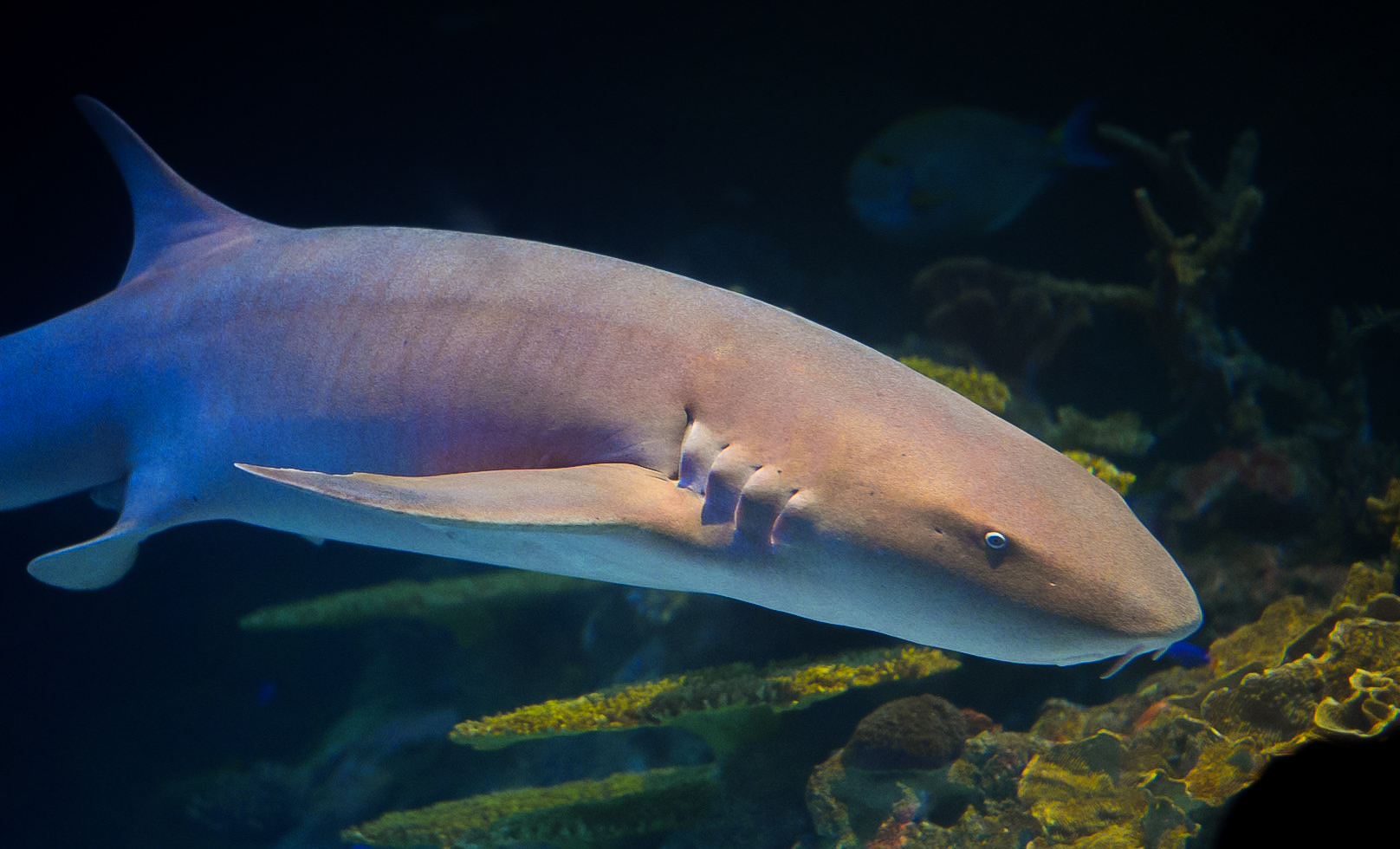
I should clarify that the Zoo has Nurse Sharks (Ginglymostoma cirratum), not Tawny Nurse Sharks, or that's what they claim which I believe since Tawny Nurse Sharks are pretty rare in US aquaria I think. Should've changed that when I had the chance
 
Thanks for the epic species list! I like Point Defiance Zoo and I've visited around a dozen times, but having only 19 mammal species, 6 bird species and 15 reptile/amphibian species had me double-checking the list as those numbers seem quite low. However, they are accurate and this zoo obviously has a huge amount of its species tied up in the two aquariums: Pacific Seas & Tropical Reef. It's a neat facility as some of the focus animals have traditionally been quite different from Woodland Park Zoo, which is an hour north.
 
I should clarify that the Zoo has Nurse Sharks (Ginglymostoma cirratum), not Tawny Nurse Sharks, or that's what they claim which I believe since Tawny Nurse Sharks are pretty rare in US aquaria I think. Should've changed that when I had the chance
Are you saying the zoo/aquarium signs them as tawnies? It's not completely impossible that they have them, but it would be a little surprising. Do you have any pictures of them? I could settle it pretty quickly with a quick look.
 
Are you saying the zoo/aquarium signs them as tawnies? It's not completely impossible that they have them, but it would be a little surprising. Do you have any pictures of them? I could settle it pretty quickly with a quick look.
Nah they sign them as G. cirratum, I just assumed they were Tawnies since it's an Indo-Pacific exhibit, I didn't take any pics today but this photo from a while ago should be okay (same individuals that's still on exhibit)

 
Nah they sign them as G. cirratum, I just assumed they were Tawnies since it's an Indo-Pacific exhibit, I didn't take any pics today but this photo from a while ago should be okay (same individuals that's still on exhibit)

That looks to me like a G. cirratum, but I can’t be 100% only because the two dorsal fins are the telltale sign and they’re not fully in profile in the photo. If they’re kind of extra pointy and/or sickle shaped when looked at from the side, and placed further back on the body, that’s a tawny. My assumption is they’re probably not because if they’ve really had em since 1970, I feel like I’d have heard about it by now.

EDIT: This image from their website confirms that at least one of the ones they have is a G. cirratum. I tend to assume they all are if they were all brought in at the same time. Nurses in captivity can definitely be tricky though lol - Mazatlán has two different species, and they were VERY hard to distinguish. I have to give full credit to one of their staffers for getting me a bunch of side profile photos that proved it.
TropicalReefAquarium_nurse-Tater.jpg
 
Last edited:
The Zoo finally opened the last bit of the Tropical Reef Aquarium renovation, being the "Coral Reef Close-up" exhibit which consists of 3 tanks, but this is where the Zoo's live Coral exhibits are. And with that, all of the ongoing renovations at the Zoo should be finished. I've been waiting to do an updated list till after this opened, so now is the time since there have been quite a few changes.

The same concepts apply as the ones I listed above:
  • Species in Green are those that are on exhibit, but not signed
  • Species in Red are those that are signed, but not on exhibit
  • A space between each species indicates that it's a separate enclosure
As of 29/6/25:
-------------------------------------------------------------------------------------------------------------------------------

'Kidz Zone' |

(Area 1)

  • Black and White Ruffed Lemurs (Varecia variegata)
  • African Meerkats (Suricata suricatta)
  • Damaraland Mole Rats (Fukomys damarensis)
  • Corn Snake (Pantherophis guttatus)
  • Madagascar Hissing Cockroaches (Gromphadorhina portentosa)
  • Solomon Island Leaf Frog (Cornufer guentheri)
  • Emerald Tree Boa (Corallus caninus)
  • New Caledonia Giant Gecko (Rhacodactylus leachianus)
  • Vinegarroon / Tailless Whip Scorpion (Acanthophrynus coronatus)
  • Lake Malawi Peacock Cichlids (Aulonocara sp.)
  • Kenya Sand Boa (Eryx colubrinus)
  • Dominio Roaches (Therea petiveriana)
  • Chacoan Horned Frog (Ceratophrys cranwelli)
  • Magnificent Tree Frogs (Ranoidea splendida)
  • White's Tree Frogs (Ranoidea caerulea)
  • Home's Hingeback Tortoise (Kinixys homeana)
  • Pancake Tortoise (Malacochersus tornieri)
(Area 2)
  • Red Belly Pirahna (Pygocentrus nattereri)
  • Green Tree Python (Morelia viridis)
  • Prehensile Tailed Skink (Corucia zebrata)
  • Black Breasted Leaf Turtle (Geoemyda spengleri)
  • Golden Poison Dart Frogs (Phyllobates terribilis)
  • Blue Poison Dart Frogs (Dendrobates azureus 'maculatus')
  • Nigerian Dwarf Goats (Capra aegagrus hircus)
'Red Wolf Woods' |
  • North American Red Wolves (Canis rufus)
'Arctic Tundra' |
  • Muskox (Adult pair + two calves) (Ovibos moschatus) (The only ones in the mainland US)
  • Polar Bears (Twin Sister Duo) (Ursus maritimus)
  • Arctic Foxes (Young Male + Female pair) (Vulpes lagopus)
'Rocky Shores' |
  • Southern Sea Otters (3 females) (Enhydra lutris nereis)
  • California Sea Lions (Adult pair + 1 pup) (Zalophus californianus)
  • Harbor Seals (3 females) (Phoca vitulina)
  • Horned Puffins (Fratercula corniculata)
  • Tufted Puffins (Fratercula cirrhata)
  • Common Murres (Uria aalge)
  • Pacific Walrus (2 males) (Odobenus rosmarus) (Some of the only in the US)
'Penguin Point' |
  • Magellanic Penguins (Spheniscus magellanicus)
'Asian Forest Sanctuary' |
  • Sumatran Tigers (Felis tigris sondaicus)
  • Clouded Leopards (Neofelis nebulosa)
  • Malayan Tapirs (Tapirus indicus) (Pair + Calf)
  • Asian Small Clawed Otters (Aonyx cinereus) (2 Pairs)
  • Lowland Anoa (Bubalus depressicornis) (Only one in an AZA institution I believe)
  • Lar Gibbons (Hylobates lar)
  • Siamangs (Symphalangus syndactylus)
  • Wrinkled Hornbill (Aceros corrugatus) (Might be retired BTS since I've never seen him on exhibit, but the Zoo still posts him from time to time)
  • (Former Asian Elephant habitat is still empty, and will be for a while before they decide on what species to take the spot)
'Discovery Hut' |
  • Barn Owl (Tyto alba)
  • Rhinoceros Iguana (Cyclura cornuta)
'Tropical Reef Aquarium' (Based on the Coral Triangle in the Indo-Pacific, this Aquarium is home to a majority of the Zoo's Sharks, Rays, and tropical fish species). |

'
Shallow Beach Lagoon' (None of the rays are signed, but they are easy to ID)
  • Blue Spotted Ribbontail Rays (Taeniura lymma) (3 total)
  • Bullseye Round Ray (Urobatis concentricus) (Potentially the only one in captivity, afaik)
'Shallow Fish Lagoon' (None of the species are signed, but they're mainly common species that are easy to ID)
  • Blue-Green Chromis (Chromis viridis)
  • Zebra Dartfishes (Ptereleotris zebra)
  • Orange Stripe Cardinalfishes (Ostorhinchus cyanosoma)
  • Coral Catfishes (Plotosus lineatus)
  • Checkerboard Wrasse (Halichoeres hortulanus)
  • Powder Blue Tang (Acanthurus leucosternon)
  • Longnose Hawkfish (Oxycirrhites typus)
'Tropical Touch Pool'
  • Skunk Cleaner Shrimps (Lysmata amboinensis)
  • Cerith Snails (Cerith sp.)
  • Blue Linkia Seastars (Linckia laevigata)
  • Yellow Mesh Seastars (Fromia monilis)
  • Burrowing Urchins (Echinometra mathaei)
  • Decorator Urchins (Tripneustes gratilla)
  • Prickly Black Sea Cucumbers (Thelenota ananas)
  • Black & Pink Sea Cucumbers (Holothuria edulis)
'The Lagoon'
  • Australian Epaulette Sharks (Hemiscyllium ocellatum) (2 total)
  • White Spotted Bamboo Sharks (Chiloscyllium plagiosum) (2 total)
  • Scrawled Filefish (Aluterus scriptus)
  • Oriental Sweetlips (Plectorhinchus vittatus)
  • Fivestripe Wrasses (Thalassoma quinquevittatum)
  • Bluehead Wrasses (Thalassoma amblycephalum)
  • Paddlefin Wrasse (Thalassoma lucasanum)
  • Blue Streak Cleaner Wrasses (Labroides dimidiatus)
  • Orange Lined Triggerfish (Balistapus undulatus)
  • Wedgetail Triggerfish (Rhinecanthus rectangulus)
  • Clown Triggerfish (Balistoides conspicillum)
  • Porcupine Pufferfish (Diodon holocanthus)
  • Naso Tangs (Naso lituratus)
  • Yellow Tangs (Zebrasoma flavescens)
  • Blue Hippo Tangs (Paracanthurus hepatus)
  • Coral Rabbitfishes (Siganus corallinus)
  • Foxface Rabbitfishes (Siganus vulpinus)
  • Tomato Clownfishes (Amphiprion frenatus)
  • Bicolor Goatfishes (Parupeneus barberinoides)
  • Manybar Goatfishes (Parupeneus multifasciatus)
  • Monocle Breams (Scolopsis bilineata)
  • Threadfin Butterflyfishes (Chaetodon auriga)
  • Pearl Scale Butterflyfishes (Chaetodon xanthurus)
  • Raccoon Butterflyfishes (Chaetodon lunula)
  • Lattice Butterflyfishes (Chaetodon rafflesii)
  • Dusky Butterflyfishes (Chaetodon flavirostris)
  • Scribbled Angelfish (Chaetodontoplus duboulayi)
  • Orange-dotted Tuskfish (Choerodon anchorago)
  • Blackfin Hogfish (Bodianus loxozonus)
  • Spot-nape Butterflyfishes (Chaetodon oxycephalus) (Potentially some of the only in captivity, afaik)
  • Dot-dash Butterflyfishes (Chaetodon pelewensis)
  • Mertensii Butterflyfishes (Chaetodon mertensii)
  • Koran Angelfish (Pomacanthus semicirculatus)
  • Panther Grouper (Cromileptes altivelis)
  • Orbicular Batfish (juveniles) (Platax orbicularis)
'The Blue Hole' (None of these species are signed either, so this is to the best of my knowledge by observation and ID)
  • Caribbean Spiny Lobster (Panulirus argus)
  • Bigscale Soldierfishes (Myripristis berndti) (Assuming they're the same species as in the 'Baja Bay' Tank in the Pacific Seas Aquarium)
  • Sabre Squirrelfishes (Sargocentron spiniferum)
  • Blackfin Squirrelfishes (Neoniphon opercularis)
  • Purple Square Anthias (Males and Females) (Pseudanthias pleurotaenia)
  • Porcupine Pufferfish (Diodon holocanthus)
  • Annularis Angelfish (Pomacanthus annularis)
  • Longfin Bannerfishes (Heniochus acuminatus)
  • Raccoon Butteflyfishes (Chaetodon lunula)
  • Powder Brown Tang (Acanthurus japonicus)
  • Sailfin Tang (Zebrasoma velifer)
  • Harlequin Tusk Wrasse (Choerodon fasciatus)
  • Birdnose Wrasse (Gomphosus caeruleus)
  • Red Breasted Wrasse (Cheilinus fasciatus)
  • Blackbar Wrasse (Thalassoma nigrofasciatum)
  • Orbicular Batfish (juveniles) (Platax orbicularis)
  • Spectacled Filefish (Cantherhines fronticinctus) (Potentially the only one in captivity, afaik)
'The Outer Reef'
  • Black-tip Reef Sharks (Carcharhinus melanopterus) (5 total)
  • Grey Reef Sharks (Carcharhinus amblyrhynchos) (3 total)
  • Zebra Sharks (Stegostoma tigrinum) (3 total)
  • White-tip Reef Sharks (Triaenodon obesus) (2 total)
  • Tasseled Wobbegong Shark (Eucrossorhinus dasypogon) (1 total, who I finally saw for the first time today)
  • Australian Whipray (Himantura australis) (Confirmed to be a true H. australis)
  • Potato Grouper (Epinephelus tukula)
  • Napoleon Wrasse (Cheilinus undulatus)
  • Red Emperor Snappers (Lutjanus sebae)
  • Red Belly Yellowtail Fusiliers (Caseio cuning)
  • Orbicular Batfishes (Platax orbicularis)
  • Golden Trevally's (Gnathanodon speciosus)
  • Bluefin Trevally's (Caranx melampygus)
  • Unicorn Tangs (Naso unicornis)
  • Humphead Unicorn Tangs (Naso tuberosus)
  • Spotted Unicorn Tangs (Naso brevirostris)
  • Sailfin Tangs (Zebrasoma velifer)
  • Red Sea Sailfin Tangs (Zebrasoma desjardini)
  • Eyestripe Tangs (Acanthurus dussumieri)
  • Chocolate Tangs (Acanthurus pyroferus)
  • Clown Tangs (Acanthurus lineatus)
  • Blue Streak Cleaner Wrasses (Labroides dimidiatus)
  • Pink Tail Triggerfishes (Melichthys vidua)
  • Barrier Reef Chromis' (Chromis nitida)
  • Monocle Breams (Scolopsis bilineata)
  • Indo-Pacific Sergeant Major Damselfishes (Abudefduf vaigiensis)
  • Orange Tail Damselfishes (Chrysiptera cyanea)
  • Sapphire Damselfishes (Chrysiptera springeri)
'Coral Reef Close-up'
  • Orange Ocellaris Clownfish (Amphiprion ocellaris)
  • Rainbow Bubble Tip Anemone (Entacmaea quadricolor)
  • Dispar Anthias (Nemanthias dispar) (Males and Females)
  • Bicolor Anthias (Pseudanthias bicolor) (Males and Females)
  • Grooved Razorfishes (Centriscus scutatus) (They're signed as "Striped Shrimpfish" "Aeoliscus strigatus", but I'm pretty sure they're Razorfish)
  • Copperband Butterflyfish (Chelmon rostratus)
  • Longnose Hawkfish (Oxycirrhites typus)
  • Red Firefish (Nemateleotris magnifica)
  • Purple Firefish (Nemateleotris decora)
  • Lawnmower Blenny (Salarias fasciatus) (Not on exhibit yet from what I saw)
  • Scopas Tang (Zebrasoma scopas) (Not on exhibit yet from what I saw)
  • Lemonpeel Angelfish (Centropyge flavissima) (Not on exhibit yet from what I saw)
  • (Blue Leg Hermit Crabs, Nassarius Snails, and Coral Banded Shrimp are also on exhibit)
  • (Various Stony corals are also on exhibit, of course)
  • Pacific Crown-of-Thorns Sea Star (Acanthaster cf. solaris)
'Pacific Seas Aquarium' (The Second Aquarium on the property, this Aquarium highlights habitats along the Pacific Coast such as our local waters (Puget Sound), California, Japan, and Baja). |

'Crashing Waves' Tank is the wave simulator tank that's outside of the entrance to the Pacific Seas Aquarium. Home to juvenile Coho Salmon and various algae

'Japanese Spider Crabs' (Which is actually being used as a Sunflower Sea Star tank at the moment since the Zoo hasn't acquired any new Spider Crabs after the last one passed. All of the Japanese deepwater fish were also taken out too).

  • Sunflower Sea Stars (Pycnopodia helianthoides)
'Schooling Fish'
  • Pacific Herrings (Clupea pallasii)
'Jellies Gallery'
  • Egg-Yolk Jellies (Phacellophora camtschatica)
  • Cross Jellies (Mitrocoma cellularia)
  • Pacific Sea Gooseberries (Pleurobrachia bachei)
  • Canadian Comb Jellies (Bolinopsis microptera)
  • Dryodora glandiformis (Comb Jelly, it has no common name)
  • Umbrella Jellies (Eutonina indicans)
  • Japanese Sea Nettles (Chrysaora pacifica)
  • Upside-Down Jellies (Cassiopea sp.)
  • Greater Moon Jellies (Aurelia labiata)
'California Kelp Forest'
  • California Sheephead (Bodianus pulcher)
  • Flag Rockfish (Sebastes rubrivinctus)
  • Tree Rockfish (Sebastes serriceps)
  • Halfmoons (Medialuna californiensis)
  • Opaleyes (Girella nigricans)
  • Blacksmith's (Chromis punctipinnis)
  • Garibaldis (Hypsypops rubicundus)
  • Kelp Bass (Paralabrax clathratus)
  • Rock Wrasses (Halichoeres semicinctus)
  • California Moray (Gymnothorax mordax) (it's a very small individual but it is in there)
'Northwest Waters'
  • Spotted Ratfish / Chimeras (Hydrolagus colliei) (3 total)
  • Big Skates (Beringraja binoculata) (2 total)
  • White Sturgeon (Acipenser transmontanus)
  • Yellowtail Rockfishes (Sebastes flavidus)
  • Canary Rockfishes (Sebastes pinniger)
  • China Rockfishes (Sebastes nebulosus)
  • Black Rockfishes (Sebastes melanops)
  • Tiger Rockfishes (Sebastes nigrocinctus)
  • Striped Surfperches (Embiotoca lateralis)
  • Starry Flounders (Platichthys stellatus)
  • Sablefishes (Anoplopoma fimbria)
  • Fish-eating Anemones (Urticina piscivora)
  • Giant Green Anemones (Anthopleura xanthogrammica)
  • Beaded Anemones (Urticina coriacea)
  • Giant Plumose Anemones (Metridium farcimen)
  • Ochre Stars (Pisaster ochraceus)
The Wall of various displays that showcase different local ecosystems in the area
  • Wolf Eels (Anarrhichthys ocellatus)
  • Kelp Greenlings (Hexagrammos decagrammus)
  • Quillback Rockfishes (Sebastes maliger)
  • Black Rockfishes (Sebastes melanops)
  • Red Irish Lord (Hemilepidotus hemilepidotus)
  • Painted Anemones (Urticina crassicornis)
  • Ochre Stars (Pisaster ochraceus)
  • Sunflower Stars (Pycnopodia helianthoides)
  • Fish-Eating Anemones (Urticina piscivora)
  • Basket Stars (Gorgonocephalus eucnemis)
  • Feather Stars (Florometra serratissima)
  • Pacific Spiny Lumpsuckers (Eumicrotremus orbis)
  • Mosshead Warbonnets (Chirolophis nugator)
  • Sailfin Sculpins (Nautichthys oculofasciatus)
  • Grunt Sculpins (Rhamphocottus richardsonii)
  • Orange Sea Cucumbers (Cucumaria miniata)
  • Lined Chitons (Tonicella lineata)
  • Tubesnouts (Aulorhynchus flavidus)
  • Striped dogwinkle snail (Nucella ostrina)
  • Dock Shrimps (Pandalus danae)
  • Sidestripe Shrimps (Pandalopsis dispar) (Confirmed via the Zoo's Facebook)
  • Striped Sun Stars (Solaster stimpsoni)
  • Giant Plumose Anemones (Metridium farcimen)
  • Northern Feather Duster Worms (Eudistylia vancouveri)
  • California Mussels (Mytilus californianus)
  • Pacific Acorn Barnacles (Balanus glandula)
  • Giant Pacific Octopus (Enteroctopus dofleini)
  • Sunflower Stars (Pycnopodia helianthoides)
  • Fish-Eating Anemones (Urticina piscivora)
  • California Spot Prawns (Pandalus platyceros)
  • California Sea Cucumbers (Apostichopus californicus)
  • Yellow Boring Sponges (Cliona celata)
  • Blood Stars (Henricia leviuscula)
  • Swimming Scallops (Chlamys hastata)
  • Strawberry Anemones (Corynactis californica)
  • Painted Anemones (Urticina crassicornis)
  • Blackeye Goby (Rhinogobiops nicholsii)
  • Puget Sound Rockfishes (Sebastes emphaeus)
  • Roughback Sculpins (Chitonotus pugetensis)
  • Northern Spearnose Poacher (Agonopsis vulsa)
  • Sand Dollars (Dendraster excentricus)
  • Orange Sea Pens (Ptilosarcus gurneyi)
  • Slender Sea Pens (Stylatula elongata)
  • Burrowing Tube Anemones (Pachycerianthus fimbriatus)
'Tidepool Touch Zone' (None of these species are signed, so this is to the best of my observation)
  • Fish Eating Anemones (Urticina piscivora)
  • Beaded Anemones (Urticina coriacea)
  • Painted Anemones (Urticina crassicornis)
  • Giant Plumose Anemones (Metridium farcimen)
  • Ochre Stars (Pisaster ochraceus)
  • California Sea Cucumbers (Apostichopus californicus)
  • Black Eye Hermit Crab (Pagurus armatus)
  • Purple Sea Urchins (Strongylocentrotus droebachiensis)
  • Blood Stars (Henricia leviuscula)
'Baja Bay'
  • Atlantic Nurse Sharks (Ginglymostoma cirratum) (4 of them) (As stand-ins for the Tawny Nurse Shark that'd be more accurate for the exhibit)
  • Ocellated Eagle Rays (Aetobatus ocellatus) (4 of them)
  • Green Sea Turtles (Chelonia mydas) (3 of them total, 2 Pacific / 1 Atlantic)
  • Moorish Idols (Zanclus cornutus)
  • Cortez Angelfishes (Pomacanthus zonipectus)
  • Clarion Angelfish (Holacanthus clarionensis) (Uncommon CITES II fish)
  • Lookdowns (Selene vomer)
  • Convict Tangs (Acanthurus triostegus)
  • Bigscale Soldierfishes (Myripristis berndti)
  • Panamic Porkfishes (Anisotremus taeniatus)
  • King Angelfishes (Holacanthus passer)
  • Blue & Gold Snappers (Lutjanus viridis)
  • Barred Pargo (Hoplopagrus guentherii)
 
Back
Top