Popular Zoo Mammals and Their Best Exhibits

Today's post will be dedicated to a mammal much smaller than the last few: Prairie Dogs! In many ways, prairie dogs are similar to meerkats, as they are similarly sized mammals that burrow and live in large colonies. As a result, there are a lot of similarities between the exhibitry styles used for both species. That being said, they are not close relatives (meerkats are a carnivoran, prairie dogs are a rodent) and have very different diets as well.

The criteria I used for this post are almost identical to the criteria for the meerkat, as their habitat needs are both very similar. The biggest difference I found is prairie dogs are more often exhibited outdoors and the habitats tend to be slightly larger:
  • Naturalistic Substrate and Digging Opportunities: As a burrowing species, it is extremely important for zoos to feature a natural substrate in the exhibit, in particular one that allows the prairie dogs to dig. While there may not be one specific substrate that is ideal (e.g. sand vs. dirt), the ability to dig is essential if providing prairie dogs the ability to express natural behaviors.
  • Social Group: Yet again, this thread focuses on a social species. Like the others, having a naturalistic social grouping is very high on the priorities for a great prairie dog exhibit. There are a decent number of zoos with large prairie dog colonies, however there are also plenty of zoos to unfortunately keep much smaller colonies. This criteria is not the highest, however, primarily because prairie dogs are a short-lived animal so colony size can change quickly.
  • Tunnel Systems: As a burrowing species, it's important for the prairie dogs to be able to have access to a tunnel system in their exhibit. The best exhibits for prairie dogs allow them multiple entrances and exits to a tunnel system, either built into the exhibit or built by the prairie dogs.
  • Size: This one was added since the meerkat post, primarily because there are a lot more prairie dog exhibits to choose from, and size is one of the major differentiations between them.
The habitats I chose to feature for prairie dogs are:
  • In their first mention in this thread, the Arizona-Sonoran Desert Museum has a very large, impressive exhibit for prairie dogs. While unfortunately the most recent USDA inspection report lists ASDM as only having two prairie dogs, reports as recently as 2021 had fifteen prairie dogs at the museum, so hopefully they are going to increase their numbers again soon. This is a large, naturalistic exhibit- highlighting the more deserted portions of the prairie dog range. This exhibit features a natural substrate and has a large set of tunnels for the prairie dogs to access. Luckily, a mesh top was added to this habitat so the days of raptors predating on prairie dogs is over for ASDM:
full
Photo by: @Coelacanth18
full
Photo by: @Coelacanth18
full
Photo by: @Ituri
full
Photo by: @Ituri
  • It's not very common for impressive exhibits to be located in Children's Zoos, however prairie dogs are a species often relegated to these portions of the zoo. Ten prairie dogs share a unique mixed-species exhibit with burrowing owls in San Diego Zoo's Wildlife Explorer's Basecamp. This exhibit is a very different style than the others on the list (likely due to the full-flighted owls) and has a big focus on some impressive rockwork, however it provides an excellent home for the prairie dogs regardless. From an educational perspective, this exhibit provides an excellent interpretive message on different animals who utilize prairie dog tunnels:
full
Photo by: @snowleopard
full
Photo by: @Coelacanth18
full
Photo by: @Julio C Castro
full
Photo by: @Julio C Castro
  • The most recent USDA inspection report of the Minnesota Zoo listed an impressive colony of fifty-one prairie dogs. This is a grassy exhibit meant to replicate the prairie, and allows the prairie dogs a lot of opportunities to dig and create their own tunnel systems. This is a very large prairie dog exhibit, and provides some nice sightlines with the bison exhibit in the background:
full
Photo by: @Moebelle
full
Photo by: @pachyderm pro
full
Photo by: @Dhole dude
full
Photo by: @snowleopard
  • A colony of thirty-three prairie dogs lives at the Lee Simmons Conservation Park, in their large Prairie Dog Town exhibit. This is another very grassy exhibit, providing plenty of room for the prairie dogs to build their own tunnels. The tall walls on the side are fairly unappealing, however that doesn't change the fact it's a great home for prairie dogs:
full
Photo by: @Pleistohorse
full
Photo by: @Dhole dude
full
Photo by: @Dhole dude
full
Photo by: @TinoPup
  • One common occurrence in prairie dog exhibits are tunnels to allow children to get an up-close look at the prairie dogs. However, one of the easiest for adults to access is the tunnels of the prairie dog exhibit at New Jersey's Turtle Back Zoo. That alone isn't enough to qualify for the list, however it does provide a large home for prairie dogs regardless and is home to an impressive colony of forty-one prairie dogs:
full
Photo by: @TinoPup
full
Photo by: @Neil chace
Just want to note that the monorail track seen in the Minnesota photos was recently converted into an elevated walking path, meaning that there is now a path going straight over the exhibit.
And while this is a USA thread, I have to mention Zoo Sauvage in Quebec. Prairie dogs as far as you can see. They might as well be wild, I have no idea if the zoo manages them at all. They're all within these large fields, though. I could post a dozen pictures at different spots and they'd all look like this.


Despite how it looks, these prairie dogs are in fact heavily managed, although I don't know the details of how this is accomplished.
 
I originally had a different post planned for today, however I learned that yesterday was International Tiger Day (which I unfortunately missed), meaning I think it's about time to get a big cat featured in this thread, specifically the Tiger! There are three tiger subspecies present in US Zoos- the Amur, Malayan, and Sumatran Tigers. The Amur Tiger is the largest and is native to Russia, making it the usual tiger of choice for cold-weather zoos. The Sumatran and Malayan Tigers are both much smaller, and given their tropical location, tend to be the tigers of choice for warm-weather zoos. Some US Zoos also exhibit generic (or hybridized) tigers, and these are the most common tigers outside of the AZA. However, none of the most impressive tiger exhibits I found are home to generic tigers.

The criteria I used for this post are:
  • Space: Big cats have historically gotten the short end of the stick in terms of exhibit size (as have a lot of animals). As such, one major criteria for this post was how much space was given to the zoo's tigers.
  • Water Feature: Tigers are surprisingly adept swimmers, as far as cats are concerned, and benefit from exhibits that include a water feature for the tigers to access.
  • Presence of Multiple Exhibit Spaces: Tigers are solitary animals, and while many zoos do keep multiple tigers for breeding or exhibit purposes, ideally the tigers should have the ability to access their own space away from other tigers. As such, many of the best tiger complexes either contain multiple tiger exhibits or have extensive behind-the-scenes areas included.
  • Habitat Obstacles: Tigers can be shy animals that benefit from the opportunity to hide. Whether this be due to plants in the exhibit, rockwork, or other natural elements, the ideal tiger exhibit features a number of different obstacles that create visual barriers between the tigers and both visitors and conspecifics. Habitat obstacles are also beneficial in reducing stereotypical pacing. While some pacing is normal given the species' territoriality, creating more habitat obstacles will allow the pacing that does occur to be more positive for the animal's welfare. While some animals do benefit from having wide open exhibits with few obstacles, tigers are not one of those animals.
The five exhibits I chose for tigers are:
  • @pachyderm pro chose to feature the Tiger Base Camp at the Minnesota Zoo in his 100 Must-See Exhibits thread. This is certainly one of the nation's best tiger exhibits, and now makes Minnesota Zoo the first to get six exhibits mentioned in my thread (another zoo will reach this number later in this post). This habitat is a spacious, naturalistic home for the zoo's amur tigers. A large water feature is present at the front of the exhibit, and much of the back of the exhibit looks like little more than a fenced off section of forest, which is certainly an excellent way to exhibit tigers:
full
Photo by: @Dhole dude
full
Photo by: @Dhole dude
full
Photo by: @Pleistohorse
full
Photo by: @pachyderm pro
  • The second zoo to now be mentioned six times is the Nashville Zoo, home of the impressive Tiger Crossroads exhibit for Sumatran Tigers. This exhibit provides an incredibly green and lush home for the tigers, and contains a very large water feature near the front as well. This is one of the newer tiger exhibits in the US, only opening a few years ago in 2019:
full
Photo by: @pachyderm pro
full
Photo by: @pachyderm pro
full
Photo by: @Coelacanth18
full
Photo by: @Moebelle
  • The incredible Bronx Zoo has not received many entries on the list so far (this is only its second), despite having a number of very impressive habitats for a wide variety of species. One of their most impressive stand-alone habitats, however, is the Tiger Mountain, home to both Amur and Malayan Tigers on a rotational basis. This is one of two places the Bronx Zoo houses tigers, along with the equally excellent habitat on the Wild Asia Monorail, and these habitats are incredibly naturalistic, well-planted homes for the largest of big cats. The Tiger Mountain contains two separate tiger habitats, meaning there are a total of three exhibits for tigers at the Bronx Zoo, all of which are amongst the best of their kind anywhere. The Tiger Mountain exhibits are built on an incline so that the back barrier is completely invisible from visitors, which is a nice, impressive touch to make the exhibits seem like the wild. Underwater viewing of the exhibit's pond, which is home to fish is also a nice touch:
full
Photo by: @TinoPup
full
Photo by: @Milwaukee Man
full
Photo by: @Zoo fanatic
full
Photo by: @red river hog
  • An impressive, lush exhibit for Sumatran Tigers can be found at the Dallas Zoo, which is now making its first appearance on this thread. This is a large exhibit featuring both a large water feature and plenty of trees and other plants, to create an all-around excellent home for tigers. Simulated bamboo might make viewing a little difficult for visitors, however this does create some nice privacy for the cat residents:
full
Photo by: @snowleopard
full
Photo by: @snowleopard
full
Photo by: @Pleistohorse
full
Photo by: @Pleistohorse
  • San Diego Zoo Safari Park may be best known for ungulates, however that doesn't mean it can't have impressive exhibits for other species. The Tiger Trail's Sumatran Tiger exhibits are a great example of this, as they are easily some of the country's best tiger habitats. While slightly less naturalistic than some of the others mentioned on this list, this habitat provides an excellent home for tigers nonetheless:
full
Photo by: @Julio C Castro
full
Photo by: @Julio C Castro
full
Photo by: @Julio C Castro
full
Photo by: @Julio C Castro
 
I originally had a different post planned for today, however I learned that yesterday was International Tiger Day (which I unfortunately missed), meaning I think it's about time to get a big cat featured in this thread, specifically the Tiger! There are three tiger subspecies present in US Zoos- the Amur, Malayan, and Sumatran Tigers. The Amur Tiger is the largest and is native to Russia, making it the usual tiger of choice for cold-weather zoos. The Sumatran and Malayan Tigers are both much smaller, and given their tropical location, tend to be the tigers of choice for warm-weather zoos. Some US Zoos also exhibit generic (or hybridized) tigers, and these are the most common tigers outside of the AZA. However, none of the most impressive tiger exhibits I found are home to generic tigers.

The criteria I used for this post are:
  • Space: Big cats have historically gotten the short end of the stick in terms of exhibit size (as have a lot of animals). As such, one major criteria for this post was how much space was given to the zoo's tigers.
  • Water Feature: Tigers are surprisingly adept swimmers, as far as cats are concerned, and benefit from exhibits that include a water feature for the tigers to access.
  • Presence of Multiple Exhibit Spaces: Tigers are solitary animals, and while many zoos do keep multiple tigers for breeding or exhibit purposes, ideally the tigers should have the ability to access their own space away from other tigers. As such, many of the best tiger complexes either contain multiple tiger exhibits or have extensive behind-the-scenes areas included.
  • Habitat Obstacles: Tigers can be shy animals that benefit from the opportunity to hide. Whether this be due to plants in the exhibit, rockwork, or other natural elements, the ideal tiger exhibit features a number of different obstacles that create visual barriers between the tigers and both visitors and conspecifics. Habitat obstacles are also beneficial in reducing stereotypical pacing. While some pacing is normal given the species' territoriality, creating more habitat obstacles will allow the pacing that does occur to be more positive for the animal's welfare. While some animals do benefit from having wide open exhibits with few obstacles, tigers are not one of those animals.
The five exhibits I chose for tigers are:
  • @pachyderm pro chose to feature the Tiger Base Camp at the Minnesota Zoo in his 100 Must-See Exhibits thread. This is certainly one of the nation's best tiger exhibits, and now makes Minnesota Zoo the first to get six exhibits mentioned in my thread (another zoo will reach this number later in this post). This habitat is a spacious, naturalistic home for the zoo's amur tigers. A large water feature is present at the front of the exhibit, and much of the back of the exhibit looks like little more than a fenced off section of forest, which is certainly an excellent way to exhibit tigers:
full
Photo by: @Dhole dude
full
Photo by: @Dhole dude
full
Photo by: @Pleistohorse
full
Photo by: @pachyderm pro
  • The second zoo to now be mentioned six times is the Nashville Zoo, home of the impressive Tiger Crossroads exhibit for Sumatran Tigers. This exhibit provides an incredibly green and lush home for the tigers, and contains a very large water feature near the front as well. This is one of the newer tiger exhibits in the US, only opening a few years ago in 2019:
full
Photo by: @pachyderm pro
full
Photo by: @pachyderm pro
full
Photo by: @Coelacanth18
full
Photo by: @Moebelle
  • The incredible Bronx Zoo has not received many entries on the list so far (this is only its second), despite having a number of very impressive habitats for a wide variety of species. One of their most impressive stand-alone habitats, however, is the Tiger Mountain, home to both Amur and Malayan Tigers on a rotational basis. This is one of two places the Bronx Zoo houses tigers, along with the equally excellent habitat on the Wild Asia Monorail, and these habitats are incredibly naturalistic, well-planted homes for the largest of big cats. The Tiger Mountain contains two separate tiger habitats, meaning there are a total of three exhibits for tigers at the Bronx Zoo, all of which are amongst the best of their kind anywhere. The Tiger Mountain exhibits are built on an incline so that the back barrier is completely invisible from visitors, which is a nice, impressive touch to make the exhibits seem like the wild. Underwater viewing of the exhibit's pond, which is home to fish is also a nice touch:
full
Photo by: @TinoPup
full
Photo by: @Milwaukee Man
full
Photo by: @Zoo fanatic
full
Photo by: @red river hog
  • An impressive, lush exhibit for Sumatran Tigers can be found at the Dallas Zoo, which is now making its first appearance on this thread. This is a large exhibit featuring both a large water feature and plenty of trees and other plants, to create an all-around excellent home for tigers. Simulated bamboo might make viewing a little difficult for visitors, however this does create some nice privacy for the cat residents:
full
Photo by: @snowleopard
full
Photo by: @snowleopard
full
Photo by: @Pleistohorse
full
Photo by: @Pleistohorse
  • San Diego Zoo Safari Park may be best known for ungulates, however that doesn't mean it can't have impressive exhibits for other species. The Tiger Trail's Sumatran Tiger exhibits are a great example of this, as they are easily some of the country's best tiger habitats. While slightly less naturalistic than some of the others mentioned on this list, this habitat provides an excellent home for tigers nonetheless:
full
Photo by: @Julio C Castro
full
Photo by: @Julio C Castro
full
Photo by: @Julio C Castro
full
Photo by: @Julio C Castro
Absolutely love every single entry this very popular species! Having seen Tiger Trail many times, it’s my favorite exhibit. My fiancé and I first walked through the Safari Park 4 years, falling in love with how awesome Tiger Trail is. And it certainly helps that I almost always get some memorable shots of the tigers when visiting each time :p
 
I originally had a different post planned for today, however I learned that yesterday was International Tiger Day (which I unfortunately missed), meaning I think it's about time to get a big cat featured in this thread, specifically the Tiger! There are three tiger subspecies present in US Zoos- the Amur, Malayan, and Sumatran Tigers. The Amur Tiger is the largest and is native to Russia, making it the usual tiger of choice for cold-weather zoos. The Sumatran and Malayan Tigers are both much smaller, and given their tropical location, tend to be the tigers of choice for warm-weather zoos. Some US Zoos also exhibit generic (or hybridized) tigers, and these are the most common tigers outside of the AZA. However, none of the most impressive tiger exhibits I found are home to generic tigers.

The criteria I used for this post are:
  • Space: Big cats have historically gotten the short end of the stick in terms of exhibit size (as have a lot of animals). As such, one major criteria for this post was how much space was given to the zoo's tigers.
  • Water Feature: Tigers are surprisingly adept swimmers, as far as cats are concerned, and benefit from exhibits that include a water feature for the tigers to access.
  • Presence of Multiple Exhibit Spaces: Tigers are solitary animals, and while many zoos do keep multiple tigers for breeding or exhibit purposes, ideally the tigers should have the ability to access their own space away from other tigers. As such, many of the best tiger complexes either contain multiple tiger exhibits or have extensive behind-the-scenes areas included.
  • Habitat Obstacles: Tigers can be shy animals that benefit from the opportunity to hide. Whether this be due to plants in the exhibit, rockwork, or other natural elements, the ideal tiger exhibit features a number of different obstacles that create visual barriers between the tigers and both visitors and conspecifics. Habitat obstacles are also beneficial in reducing stereotypical pacing. While some pacing is normal given the species' territoriality, creating more habitat obstacles will allow the pacing that does occur to be more positive for the animal's welfare. While some animals do benefit from having wide open exhibits with few obstacles, tigers are not one of those animals.
The five exhibits I chose for tigers are:
  • @pachyderm pro chose to feature the Tiger Base Camp at the Minnesota Zoo in his 100 Must-See Exhibits thread. This is certainly one of the nation's best tiger exhibits, and now makes Minnesota Zoo the first to get six exhibits mentioned in my thread (another zoo will reach this number later in this post). This habitat is a spacious, naturalistic home for the zoo's amur tigers. A large water feature is present at the front of the exhibit, and much of the back of the exhibit looks like little more than a fenced off section of forest, which is certainly an excellent way to exhibit tigers:
full
Photo by: @Dhole dude
full
Photo by: @Dhole dude
full
Photo by: @Pleistohorse
full
Photo by: @pachyderm pro
  • The second zoo to now be mentioned six times is the Nashville Zoo, home of the impressive Tiger Crossroads exhibit for Sumatran Tigers. This exhibit provides an incredibly green and lush home for the tigers, and contains a very large water feature near the front as well. This is one of the newer tiger exhibits in the US, only opening a few years ago in 2019:
full
Photo by: @pachyderm pro
full
Photo by: @pachyderm pro
full
Photo by: @Coelacanth18
full
Photo by: @Moebelle
  • The incredible Bronx Zoo has not received many entries on the list so far (this is only its second), despite having a number of very impressive habitats for a wide variety of species. One of their most impressive stand-alone habitats, however, is the Tiger Mountain, home to both Amur and Malayan Tigers on a rotational basis. This is one of two places the Bronx Zoo houses tigers, along with the equally excellent habitat on the Wild Asia Monorail, and these habitats are incredibly naturalistic, well-planted homes for the largest of big cats. The Tiger Mountain contains two separate tiger habitats, meaning there are a total of three exhibits for tigers at the Bronx Zoo, all of which are amongst the best of their kind anywhere. The Tiger Mountain exhibits are built on an incline so that the back barrier is completely invisible from visitors, which is a nice, impressive touch to make the exhibits seem like the wild. Underwater viewing of the exhibit's pond, which is home to fish is also a nice touch:
full
Photo by: @TinoPup
full
Photo by: @Milwaukee Man
full
Photo by: @Zoo fanatic
full
Photo by: @red river hog
  • An impressive, lush exhibit for Sumatran Tigers can be found at the Dallas Zoo, which is now making its first appearance on this thread. This is a large exhibit featuring both a large water feature and plenty of trees and other plants, to create an all-around excellent home for tigers. Simulated bamboo might make viewing a little difficult for visitors, however this does create some nice privacy for the cat residents:
full
Photo by: @snowleopard
full
Photo by: @snowleopard
full
Photo by: @Pleistohorse
full
Photo by: @Pleistohorse
  • San Diego Zoo Safari Park may be best known for ungulates, however that doesn't mean it can't have impressive exhibits for other species. The Tiger Trail's Sumatran Tiger exhibits are a great example of this, as they are easily some of the country's best tiger habitats. While slightly less naturalistic than some of the others mentioned on this list, this habitat provides an excellent home for tigers nonetheless:
full
Photo by: @Julio C Castro
full
Photo by: @Julio C Castro
full
Photo by: @Julio C Castro
full
Photo by: @Julio C Castro

Agree with these, from what I've seen (Nashville's was sadly closed on my visit). The first Bronx photo is from the monorail exhibit, the Tiger Mountain one is mostly flat land. It opened 20 years ago, btw.
 
Today's post will be dedicated to a very unique pachyderm: the Pygmy Hippo! Much smaller than river hippos, pygmy hippos are also more endangered and less common in US Zoos. Only in recent years has this species started to pop up more outside the AZA, and the population outside the AZA has been quickly growing. Overall, pygmy hippos are a species that likely could be much better choices for most zoos than the river hippo. Not only are they smaller and more in need of conservation help, but being a solitary species means the spatial requirements are much smaller.

The criteria for pygmy hippos are:
  • Water/Land Space: While many zoos excel in one of these two criteria, pygmy hippos are a semi-aquatic species. As such, ample water and land space should be provided in an ideal pygmy hippo exhibit. Overall, however, pygmy hippos tend to be more terrestrial than aquatic, meaning that ideally the habitat should be primarily land with a decent-sized pool rather than the other way around.
  • Shady Areas: Pygmy hippos are a rainforest species. Due to this, it's important for the exhibit to include plenty of shady areas. While live plants are ideal, this criteria could also be achieved due to artificially produced shade as well.
The exhibits chosen for pygmy hippos are:
  • Sometimes, the best exhibit for a species in the country is not at one of the larger, well-known zoos. In the case of pygmy hippos, that zoo is Mississippi's Jackson Zoo. Jackson Zoo exhibits a pair of pygmy hippos in a large outdoor exhibit that resembles a heavily forested, swampy area- akin to where pygmy hippos would live in the wild. While oftentimes small zoos can have exhibits praised with backhanded compliments (e.g. it's good for a small zoo), this exhibit is proof that even smaller, lesser-known, financially-limited zoos can build exhibits that are best of their kind:
full
Photo by: @SwampDonkey
full
Photo by: @SwampDonkey
full
Photo by: @SwampDonkey
full
Photo by: @snowleopard
  • Louisville Zoo won an AZA Exhibit Award for its Gorilla Forest, which also includes a very impressive pygmy hippo exhibit. Home to a pair of pygmy hippos, this exhibit includes both a spacious pool (featuring a waterfall) and access to ample land area. This is a well-planted exhibit, allowing plenty of shaded areas for the hippos to enjoy:
full
Photo by: @Moebelle
full
Photo by: @Milwaukee Man
full
Photo by: @blospz
full
Photo by: @Moebelle
  • For a newer, but still impressive, take on a pygmy hippo exhibit, one should look at the Greensboro Science Center. This exhibit isn't necessarily as naturalistic as the others on the list, but the outdoor yard does still include both a spacious pool and some nice land areas. One nice feature in this exhibit is the inclusion of an indoor exhibit that's accessible to the public as well, which allows the hippos the added choice of where to spend their time. In addition to a pair of pygmy hippos, this exhibit is also home to a recently born baby, which is always a great sight to see:
full
Photo by: @TinoPup
full
Photo by: @TinoPup
full
Photo by: @Arizona Docent
full
Photo by: @OkapiFan
  • Some zoos have had success mixing pygmy hippos with various species of primate. One great example of this is the exhibit at the San Diego Zoo, home to both a pygmy hippo pair and some guenon monkeys. This exhibit includes a very large, impressive underwater viewing area, along with a decent amount of land space. The incorporation of monkeys into this habitat makes for a more dynamic display for both visitors and animals as well, by creating both arboreal and ground-level interest:
full
Photo by: @snowleopard
full
Photo by: @twilighter
full
Photo by: @Moebelle
full
Photo by: @geomorph
  • One very interesting, albeit not geographically accurate, mixed species exhibit involving pygmy hippos can be found at Alabama's Montgomery Zoo. At Montgomery Zoo, pygmy hippos have access to a multi-acre savanna along with giraffes and other African hoof stock. A large water feature is present in this exhibit for the hippos, and the large size of the exhibit means there is plenty of room for them to escape from the larger residents even when on land. Unfortunately, being a savanna exhibit there isn't as much shade as the others on the list, however it still made the list due to its large size and uniqueness. One other interesting feature of this exhibit is that six pygmy hippos call Montgomery Zoo home, a much larger number than what most other zoos have:
full
Photo by: @snowleopard
full
Photo by: @snowleopard
full
Photo by: @snowleopard
full
Photo by: @snowleopard
 
Another "under the radar" pygmy hippo habitat is the impressive exhibit at Wildlife World in Litchfield Park/Phoenix Metro AZ.
 
Pygmy hippos are one of my favorites so this is a treat. Louisville is way up my list to visit now and the San Diego exhibit has always really drawn my curiosity.
 
I would love Nile Hippo exhibits with Jackson Zoo style gets incorporated. Would be nice to get non beach like hippo exhibits for once.
 
While a few days ago the largest of all cats, the tiger, was covered, today's post will be a much smaller cat species: the Canada Lynx! While one of the larger small cat species, Canada Lynx are significantly smaller than any of the Panthera species. This species, as the name suggests, is native to Canada and the Northern United States, and is the larger relative to the bobcat, which has already been featured in the thread. Unlike the bobcat and cougar, Canada lynx are managed by the AZA as part of the SSP program, and there have been a number of captive births in recent years.

Lynx have very similar needs to bobcats, and other than being slightly larger, there aren't many differences. As such, the same criteria used for bobcats will be used for the lynx as well:
  • Climbing Opportunities: Like most felid species, lynx benefit from the ability to choose between various heights of their exhibit. While they can be a primarily ground-dwelling species, they will also readily climb trees, rock structures, and other habitat features. While the type of climbing structure may vary based on the type of habitat (i.e. I'd expect different climbing structures in one representing a deciduous forest than one representing the Sonoran desert), it is still important to ensure the lynx have adequate climbing opportunities in any style of exhibit.
  • Exhibit Size: Small carnivores have historically been kept in small exhibits, oftentimes of an inadequate size. While size of an exhibit is not everything, I did prioritize exhibits that are larger when other design factors are equivalent.
  • Hiding Opportunities: Lynx can be shy animals, like many felids. Exhibits that provide opportunities for the lynx to hide, while not necessarily ideal for the public, were prioritized since hiding opportunities do improve the welfare of animals involved.
The exhibits chosen for lynx are:
  • Some zoos are known for having consistently good exhibits for certain types of animals, and in the case of native cats, one of those zoos is Northwest Trek Wildlife Park, who has now been officially mentioned for all three native cat species. This exhibit is very similar to the other two, with an array of tall trees providing an excellent home for the species, in an exhibit that amounts to little more than a fenced-in section of forest. A pair of Canada lynx share this exhibit, which is certainly impressive:
full
Photo by: @snowleopard
full
Photo by: @Ituri
full
Photo by: @snowleopard
full
Photo by: @snowleopard
  • Also in the state of Washington, Woodland Park Zoo opened a new Canada lynx exhibit in 2022. This exhibit is a very spacious, meshed-in home that includes a number of natural elements including large logs and rocks that create some large climbing structures in the center of this exhibit:
full
Photo by: @snowleopard
full
Photo by: @snowleopard
  • A very rocky exhibit for lynx is present at the Minnesota Zoo, now the first zoo to receive seven mentions on this thread. This rocky exhibit includes some very impressive climbing opportunities due to the tall rockwork present in the exhibit. This is another mesh-topped exhibit, and is home to a pair of lynx:
full
Photo by: @Pleistohorse
full
Photo by: @Pleistohorse
full
Photo by: @pachyderm pro
full
Photo by: @Dhole dude
  • Another naturalistic, mesh-topped exhibit for lynx is at the Cheyenne Mountain Zoo. This exhibit houses three Canada lynx, and has both live trees and impressive rockwork to provide plenty of climbing opportunities for the lynx:
full
Photo by: @MGolka
full
Photo by: @snowleopard
full
Photo by: @Baldur
  • The Northeastern Wisconsin Zoo has another impressive lynx exhibit, in this case though the exhibit is open-topped. This exhibit contains live trees that are completely accessible to the lynx, something that I wish was more common in zoo exhibits:
full
Photo by: @snowleopard
full
Photo by: @Milwaukee Man
 
While a few days ago the largest of all cats, the tiger, was covered, today's post will be a much smaller cat species: the Canada Lynx! While one of the larger small cat species, Canada Lynx are significantly smaller than any of the Panthera species. This species, as the name suggests, is native to Canada and the Northern United States, and is the larger relative to the bobcat, which has already been featured in the thread. Unlike the bobcat and cougar, Canada lynx are managed by the AZA as part of the SSP program, and there have been a number of captive births in recent years.

Lynx have very similar needs to bobcats, and other than being slightly larger, there aren't many differences. As such, the same criteria used for bobcats will be used for the lynx as well:
  • Climbing Opportunities: Like most felid species, lynx benefit from the ability to choose between various heights of their exhibit. While they can be a primarily ground-dwelling species, they will also readily climb trees, rock structures, and other habitat features. While the type of climbing structure may vary based on the type of habitat (i.e. I'd expect different climbing structures in one representing a deciduous forest than one representing the Sonoran desert), it is still important to ensure the lynx have adequate climbing opportunities in any style of exhibit.
  • Exhibit Size: Small carnivores have historically been kept in small exhibits, oftentimes of an inadequate size. While size of an exhibit is not everything, I did prioritize exhibits that are larger when other design factors are equivalent.
  • Hiding Opportunities: Lynx can be shy animals, like many felids. Exhibits that provide opportunities for the lynx to hide, while not necessarily ideal for the public, were prioritized since hiding opportunities do improve the welfare of animals involved.
The exhibits chosen for lynx are:
  • Some zoos are known for having consistently good exhibits for certain types of animals, and in the case of native cats, one of those zoos is Northwest Trek Wildlife Park, who has now been officially mentioned for all three native cat species. This exhibit is very similar to the other two, with an array of tall trees providing an excellent home for the species, in an exhibit that amounts to little more than a fenced-in section of forest. A pair of Canada lynx share this exhibit, which is certainly impressive:
full
Photo by: @snowleopard
full
Photo by: @Ituri
full
Photo by: @snowleopard
full
Photo by: @snowleopard
  • Also in the state of Washington, Woodland Park Zoo opened a new Canada lynx exhibit in 2022. This exhibit is a very spacious, meshed-in home that includes a number of natural elements including large logs and rocks that create some large climbing structures in the center of this exhibit:
full
Photo by: @snowleopard
full
Photo by: @snowleopard
  • A very rocky exhibit for lynx is present at the Minnesota Zoo, now the first zoo to receive seven mentions on this thread. This rocky exhibit includes some very impressive climbing opportunities due to the tall rockwork present in the exhibit. This is another mesh-topped exhibit, and is home to a pair of lynx:
full
Photo by: @Pleistohorse
full
Photo by: @Pleistohorse
full
Photo by: @pachyderm pro
full
Photo by: @Dhole dude
  • Another naturalistic, mesh-topped exhibit for lynx is at the Cheyenne Mountain Zoo. This exhibit houses three Canada lynx, and has both live trees and impressive rockwork to provide plenty of climbing opportunities for the lynx:
full
Photo by: @MGolka
full
Photo by: @snowleopard
full
Photo by: @Baldur
  • The Northeastern Wisconsin Zoo has another impressive lynx exhibit, in this case though the exhibit is open-topped. This exhibit contains live trees that are completely accessible to the lynx, something that I wish was more common in zoo exhibits:
full
Photo by: @snowleopard
full
Photo by: @Milwaukee Man

NEW actually has two Canada Lynx exhibits, the one you showed off and this one:

full

(photo credit @snowleopard)
 
Since today is International Golden Lion Tamarin Day, I figured it'd be appropriate to do a post dedicated to one of my favorite families of primates, the Callitrichids! I considered doing a post uniquely for GLTs, however I decided to lump this group together since there are a lot of great species that don't have enough holders to warrant a unique post. The two most commonly kept callitrichid species are the Golden Lion and Cottontop Tamarins, however in addition to these two there are also populations for Goeldi's Monkeys, Geoffroy's Marmosets, Emperor Tamarins, Pied Tamarins, Golden-Headed Lion Tamarins, and more. This post will look at exhibits for all of these species indiscriminately.

Criteria:
  • Natural Light: Especially for lion tamarins, this is a big one. When lion tamarins are housed in exhibits that lack natural light, their signature golden color will fade into more of an off-white coloration. As such, it's important from a welfare perspective to give these animals the natural lighting needed for a great exhibit, either in an outdoor exhibit or through extensive windows/a geodesic roof.
  • Space: Despite being small primates, callitrichids can be very active and will utilize as much space as they are given. Due to this, many of the exhibits on this list are mixed-species exhibits where the callitrichids share a very large space with other species, such as what's often found in indoor Rainforests.
  • Social Structure: Callitrichids tend to live in family groups, so they ideally will be housed in groups larger than two or three individuals. While it's understandable for some zoos to have two, since family groups require breeding success, many of the zoos on this list are ones to successfully create much larger groups of their callitrichids.
The zoos chosen for this list are:
  • Cottontop Tamarins recently returned to the Brookfield Zoo, where they share the impressive Tropic World South America exhibit with Geoffroy's Marmosets and some non-callitrichid primates. This exhibit has two cottontop tamarins and four Geoffroy's marmosets, and it is great to see these monkeys have access to such a large home. While the exact lineup of callitrichids in this exhibit has changed over the years, they have remained a staple of Tropic World, and Brookfield Zoo has a long history with this group, especially the Goeldi's Monkey which they were one of the first US zoos to house:
full
Photo by: @pachyderm pro
full
Photo by: @pachyderm pro
full
Photo by: @Moebelle
  • While walk-through primate exhibits are a rarity in US Zoos, there are multiple great examples of Rainforest buildings with free-roaming callitrichids. One of the best is Moody Gardens, which has Cottontop Tamarins free-ranging in their Rainforest Pyramid (as well as Saki Monkeys, which aren't callitrichids). This is an extremely large and naturalistic exhibit for the primates, which they share with free-ranging birds as well:
full
Photo by: @geomorph
full
Photo by: @geomorph
full
Photo by: @geomorph
full
Photo by: @geomorph
  • Another excellent walk-through with tamarins is the Faces of the Rainforest exhibit at Roger Williams Park Zoo. A family group of five golden lion tamarins have access to this large exhibit, and they can often be found running across vines directly over the visitor path! This makes for an incredibly engaging display, and the tamarins also have access to the spacious center portion of this building as well. Roger Williams Park Zoo has had great success breeding this species, with births being essentially an annual occurrence in recent years:
full
Photo by: @TinoPup
full
Photo by: @Andrew_NZP
full
Photo by: @TinoPup
full
Photo by: @TinoPup
  • While many northern zoos featured on this list keep their callitrichids in spacious indoor exhibits, an excellent outdoor exhibit can be found by going south to the Jacksonville Zoo, where seven cottontop tamarins can be found in a very lush section of the Emerald Forest Aviary. While these tamarins aren't free-ranging (instead kept in one portion of the aviary), it remains an impressive exhibit for them regardless and one that has plenty of naturalistic elements and climbing opportunities:
full
Photo by: @Moebelle
full
Photo by: @Moebelle
  • Sometimes, smaller zoos can be the best places to find impressive exhibits for smaller animals. When it comes to callitrichids, in recent years the largest groups in the country of Goeldi's Monkeys and Bearded Emperor Tamarins could both be found at the very small Buttonwood Park Zoo in Massachusetts, along with three other callitrichid species. These callitrichids have the ability to rotate between four indoor and two outdoor habitats in the Rainforests, Rivers, and Reefs Building. All of these habitats are very dynamic mixed-species exhibits, home to a variety of birds, fish, and reptiles alongside seven species of primate and a pair of two-toed sloths. Each of these indoor exhibits are very tall with sky lights to allow the primates plenty of climbing room and natural sunlight, while there is also a water feature in each habitat for some of the other species. It's always great to see small zoos exceling, and Buttonwood makes a compelling case for small zoos specializing in certain smaller groups of animals:
full
Photo by: @Pleistohorse
full
Photo by: @CuseZoofan
full
Photo by: @CuseZoofan
full
Photo by: @CuseZoofan
full
Photo by: @CuseZoofan
full
Photo by: @CuseZoofan
 
Since today is International Golden Lion Tamarin Day, I figured it'd be appropriate to do a post dedicated to one of my favorite families of primates, the Callitrichids! I considered doing a post uniquely for GLTs, however I decided to lump this group together since there are a lot of great species that don't have enough holders to warrant a unique post. The two most commonly kept callitrichid species are the Golden Lion and Cottontop Tamarins, however in addition to these two there are also populations for Goeldi's Monkeys, Geoffroy's Marmosets, Emperor Tamarins, Pied Tamarins, Golden-Headed Lion Tamarins, and more. This post will look at exhibits for all of these species indiscriminately.

Criteria:
  • Natural Light: Especially for lion tamarins, this is a big one. When lion tamarins are housed in exhibits that lack natural light, their signature golden color will fade into more of an off-white coloration. As such, it's important from a welfare perspective to give these animals the natural lighting needed for a great exhibit, either in an outdoor exhibit or through extensive windows/a geodesic roof.
  • Space: Despite being small primates, callitrichids can be very active and will utilize as much space as they are given. Due to this, many of the exhibits on this list are mixed-species exhibits where the callitrichids share a very large space with other species, such as what's often found in indoor Rainforests.
  • Social Structure: Callitrichids tend to live in family groups, so they ideally will be housed in groups larger than two or three individuals. While it's understandable for some zoos to have two, since family groups require breeding success, many of the zoos on this list are ones to successfully create much larger groups of their callitrichids.
The zoos chosen for this list are:
  • Cottontop Tamarins recently returned to the Brookfield Zoo, where they share the impressive Tropic World South America exhibit with Geoffroy's Marmosets and some non-callitrichid primates. This exhibit has two cottontop tamarins and four Geoffroy's marmosets, and it is great to see these monkeys have access to such a large home. While the exact lineup of callitrichids in this exhibit has changed over the years, they have remained a staple of Tropic World, and Brookfield Zoo has a long history with this group, especially the Goeldi's Monkey which they were one of the first US zoos to house:
full
Photo by: @pachyderm pro
full
Photo by: @pachyderm pro
full
Photo by: @Moebelle
  • While walk-through primate exhibits are a rarity in US Zoos, there are multiple great examples of Rainforest buildings with free-roaming callitrichids. One of the best is Moody Gardens, which has Cottontop Tamarins free-ranging in their Rainforest Pyramid (as well as Saki Monkeys, which aren't callitrichids). This is an extremely large and naturalistic exhibit for the primates, which they share with free-ranging birds as well:
full
Photo by: @geomorph
full
Photo by: @geomorph
full
Photo by: @geomorph
full
Photo by: @geomorph
  • Another excellent walk-through with tamarins is the Faces of the Rainforest exhibit at Roger Williams Park Zoo. A family group of five golden lion tamarins have access to this large exhibit, and they can often be found running across vines directly over the visitor path! This makes for an incredibly engaging display, and the tamarins also have access to the spacious center portion of this building as well. Roger Williams Park Zoo has had great success breeding this species, with births being essentially an annual occurrence in recent years:
full
Photo by: @TinoPup
full
Photo by: @Andrew_NZP
full
Photo by: @TinoPup
full
Photo by: @TinoPup
  • While many northern zoos featured on this list keep their callitrichids in spacious indoor exhibits, an excellent outdoor exhibit can be found by going south to the Jacksonville Zoo, where seven cottontop tamarins can be found in a very lush section of the Emerald Forest Aviary. While these tamarins aren't free-ranging (instead kept in one portion of the aviary), it remains an impressive exhibit for them regardless and one that has plenty of naturalistic elements and climbing opportunities:
full
Photo by: @Moebelle
full
Photo by: @Moebelle
  • Sometimes, smaller zoos can be the best places to find impressive exhibits for smaller animals. When it comes to callitrichids, in recent years the largest groups in the country of Goeldi's Monkeys and Bearded Emperor Tamarins could both be found at the very small Buttonwood Park Zoo in Massachusetts, along with three other callitrichid species. These callitrichids have the ability to rotate between four indoor and two outdoor habitats in the Rainforests, Rivers, and Reefs Building. All of these habitats are very dynamic mixed-species exhibits, home to a variety of birds, fish, and reptiles alongside seven species of primate and a pair of two-toed sloths. Each of these indoor exhibits are very tall with sky lights to allow the primates plenty of climbing room and natural sunlight, while there is also a water feature in each habitat for some of the other species. It's always great to see small zoos exceling, and Buttonwood makes a compelling case for small zoos specializing in certain smaller groups of animals:
full
Photo by: @Pleistohorse
full
Photo by: @CuseZoofan
full
Photo by: @CuseZoofan
full
Photo by: @CuseZoofan
full
Photo by: @CuseZoofan
full
Photo by: @CuseZoofan
There appears to be some confusion here regarding the exhibit at Brookfield. The tamarins do not have access to the main exhibit with the larger monkeys, but instead live with a sloth on a connected series of smaller peninsulas close to the visitor area. There also are no longer Geoffrey's marmosets and haven't been for several years.
 
There appears to be some confusion here regarding the exhibit at Brookfield. The tamarins do not have access to the main exhibit with the larger monkeys, but instead live with a sloth on a connected series of smaller peninsulas close to the visitor area. There also are no longer Geoffrey's marmosets and haven't been for several years.
My bad, I thought the tamarins and marmosets had access to the whole thing. It's interesting that there aren't any more Geoffroy's marmosets since recent USDA and AZA documents both show them still having the species. Are they housed elsewhere in the zoo and/or behind the scenes, perhaps?

I will then be retracting Brookfield Zoo from the callitrichids and instead replacing them with another exhibit:
  • New Jersey's Cape May County Zoo keeps a large group of six cottontop tamarins in a large outdoor exhibit filled with various climbing opportunities. A similar exhibit is also home to two more callitrichid species: Golden-Headed Lion Tamarins and Common Marmosets, whereas a third exhibit holds a pair of Bearded Emperor Tamarins. While not the most naturalistic of exhibits, these exhibits are very large and contain a decent amount of plants in addition to the climbing structures:
full
Photo by: @red river hog
full
Photo by: @red river hog
full
Photo by: @TinoPup
full
Photo by: @TinoPup
 
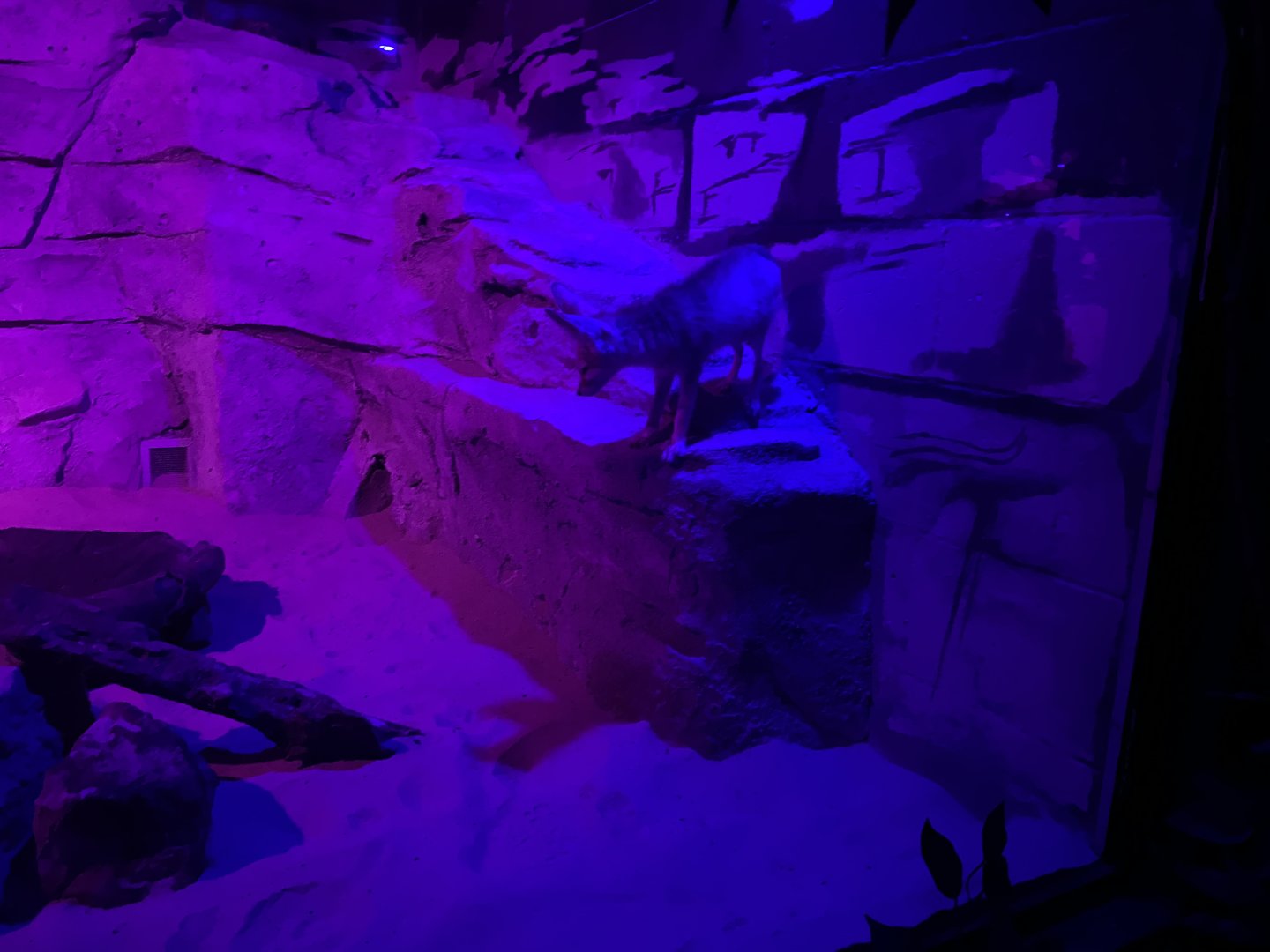
Today's post will be about a small mammal that's very common in zoos, both AZA and unaccredited, and is even prevalent in the exotic pet world. The species I'm talking about is the fennec fox! The smallest of all canids, fennecs are a desert species known for their comically large ears. While common as ambassador animals (including by the Bronx Zoo), this post is specifically looking at zoos that have fennecs on regular display.

The criteria I used for this post are:
  • Space: Small, typically nocturnal, mammals commonly receive the short end of the stick exhibit wise. Therefore, one of the major criteria in this post is having an adequate amount of space for these fairly active small canids.
  • Natural Substrate: This is a common occurrence on this list, especially for burrowing species. It's important for fennecs to have a natural substrate in order to dig and exhibit these natural behaviors in captivity.
  • Exhibit Furnishings: Fennecs will often be found perching at high spots in exhibits. While not necessarily big climbers in the wild, it is still beneficial for their welfare to include rock work and/or climbing structures in a way that allows the fennecs access to different exhibit heights.
The five exhibits chosen for fennecs are:
  • Hawaii's Honolulu Zoo has a nice, sandy exhibit for their fennecs, complete with impressive rock work along the exhibit edges. Three fennecs share this large exhibit:
full
Photo by: @Nile Hippo Expert
full
Photo by: @Ituri
full
Photo by: @Hix
  • An impressive exhibit for fennecs can be found in San Diego Zoo's Wildlife Explorer's Basecamp. This is a large exhibit, complete with impressive rockwork in a tall, meshed-in structure. This exhibit features both natural substrate and live plants, creating a very nice home for the foxes that reside here:
full
Photo by: @IndianRhino
full
Photo by: @Julio C Castro
full
Photo by: @Julio C Castro
full
Photo by: @snowleopard
  • The Phoenix Zoo is home to another impressive fennec exhibit, and given the desert climate of Phoenix it's understandable why they'd choose to highlight this species. The fennec exhibit here is very large, and while less heavy on the rockwork does contain some large logs and some plants as natural elements:
full
Photo by: @Arizona Docent
full
Photo by: @Arizona Docent
full
Photo by: @snowleopard
full
Photo by: @Ituri
  • The Southwestern United States is a hotspot for fennec exhibits, as a third great exhibit can be found at the Los Angeles Zoo. Despite in both cases being relegated to a Children's Zoo, Los Angeles and San Diego Zoos both have some of the best fennec fox exhibits in the country. The Los Angeles Zoo exhibit is smaller, however it does have some nice tall grasses, a number of rocky ledges for the fennecs, and natural substrate that allows the foxes to dig their own dens:
full
Photo by: @mstickmanp
  • Heading to the opposite coast, the Virginia Zoo is home to a very nice exhibit for fennecs. This exhibit contains natural substrate for the fennecs, along with some nice rockwork (most of which unfortunately doesn't appear to be accessible to the foxes). This exhibit also has some live plants, which is great to see:
full
Photo by: @blospz
full
Photo by: @blospz

Overall, I was saddened at how difficult it was to find five exhibits to feature in this post. For being a very common species, it was really difficult to find good exhibits for fennecs. Could it be that they've often received sub-par exhibits seeing as they are nocturnal, small carnivores traditionally housed indoors? Or perhaps since some major zoos house them as ambassadors they receive larger and better behind-the-scenes accommodations? Hopefully there are some better fennec exhibits I missed, as this is a species common outside the AZA and at zoos that aren't necessarily well-documented on here.
 
  • The Southwestern United States is a hotspot for fennec exhibits, as a third great exhibit can be found at the Los Angeles Zoo. Despite in both cases being relegated to a Children's Zoo, Los Angeles and San Diego Zoos both have some of the best fennec fox exhibits in the country. The Los Angeles Zoo exhibit is smaller, however it does have some nice tall grasses, a number of rocky ledges for the fennecs, and natural substrate that allows the foxes to dig their own dens:
full

That photo is from 2009, and that enclosure has not held Fennec Fox for many years AFAIK (they now live in the Nursery building nearby). It was home to Roadrunners a few years ago, and now holds Pygmy Falcons (that status pictured below). It's also quite a small enclosure if you're using space as a criteria?

full

Taken by me 2022

I haven't seen a Fennec enclosure that blew me away or anything, but Living Desert and Santa Barbara Zoo (both in the Southwest also) have what I think are decent exhibits (both photos taken by me as well):

full

Living Desert 2019 (looked the same in 2022)

full

Santa Barbara 2022
 
That photo is from 2009, and that enclosure has not held Fennec Fox for many years AFAIK (they now live in the Nursery building nearby). It was home to Roadrunners a few years ago, and now holds Pygmy Falcons (that status pictured below). It's also quite a small enclosure if you're using space as a criteria?

full

Taken by me 2022

I haven't seen a Fennec enclosure that blew me away or anything, but Living Desert and Santa Barbara Zoo (both in the Southwest also) have what I think are decent exhibits (both photos taken by me as well):

full

Living Desert 2019 (looked the same in 2022)

full

Santa Barbara 2022
The fennec exhibit looked larger in the photo I saw than the one you included. That was the most recent fennec photo in the LA Zoo Gallery, and I knew from AZA/USDA documents that LA still kept fennec, so didn't realize the exhibit changed. I will be retracting this choice later in the post.

As for the others you mentioned, Santa Barbara wasn't on my radar, and Living Desert wasn't included mainly because it's a rotational exhibit rather than a permanent exhibit for fennecs (for instance recent photos by @snowleopard showed a sand cat in the exhibit. I do like @Bactrian Deer's idea though of Mesker Park, it wasn't an exhibit on my radar but seems like one of the better indoor exhibits from the looks of it. That being said, fennecs are one of those kinds of animals (I forgot to mention this in the original post) that nocturnal exhibits are not ideal for. Natural light and the associated vitamins has been shown to be really important for fennecs and limiting skin issues, so much so that I know of at least one zoo who at times would remove their fennecs from exhibit so they could go to a behind-the-scenes off exhibit spot. Ideally, this wouldn't be necessary and the fennecs would have outdoor access (or an indoor exhibit with natural light) as much as possible, rather than only as an attempt to remedy skin issues.

As such, I think I will end up replacing Los Angeles with the Santa Barbara Zoo, at the recommendation of @Coelacanth18, who took this photo of the impressive space:
full
 
Back
Top