Discovery Cove is a medium-sized aquatic and aviary park with a focus on animal interaction. It is a separate gated attraction adjacent to SeaWorld Orlando and owned and operated by that company. It is set in a beautiful subtropical landscape of exotic trees and plants where palms predominate, with wide man-made white sandy beaches lining the low rocky walls of the waterways; visitor services are located in scattered bright stucco buildings or woodsy shelters with thatch roofs. Its main attractions are a large dolphin lagoon, a large resort pool with a looping lazy river attached, a large and lush walk-through aviary complex, and a large snorkel-through tropical reef environment. The intent of the park is for visitors to spend all day in their bathing suits, swimming and exploring the park as well as relaxing on its beaches; it is an all-inclusive attraction where a limited number of visitors are allowed in each day by reservation only. Snorkel gear, towels, lockers, a souvenir photo, breakfast, lunch, drinks, and snacks are all included. Visitors have the option of standard entry or entry plus a dolphin interaction session in the water. A day here is truly memorable and feels miles away from the theme park madness of many of the other local parks.
The single entry from the parking lot is the Check-In Lobby, the largest building in the park, with a large thatched peaked roof and a spacious lobby lined with registration desks that features a dolphin pod sculpture suspended from the ceiling. There are no ticket windows and turnstiles here; it feels more like a classy hotel registration, and laminated picture ID cards are made here that visitors wear on lanyards throughout their visit. The ID Cards are used to identify visitors, approve those of legal age to consume alcohol, and as photo identifiers for the photographers scattered around the park who take candid shots of the animal interactions. After check-in, exiting the building reveals a nice view of the park, including the first of several tile wayfinding maps inlaid in rockwork. The printed map that can be obtained is a small card-sized laminated version. Everything is sensibly laminated here! Visitors can also obtain three different sets of species identification cards that are ringed together and attached to plastic wristbands for wearing; these are for the plants, the tropical reef, and the aviary. Plants are the focus of the entry walkway, a twisting route through the most jungle-like part of the park, crossing several wood bridges and stucco-walled bridges over a small waterway, past a riot of bromeliads and palms. Then three visitor services buildings are encountered: one for photo pick-up, one for information (also for checking out prescription masks) and the small store called Tropical Gifts, and one for Laguna Grill, the restaurant that features counter-service and extensive outdoor dining areas on each side. Scattered around the rest of the park are two round thatched shelters that serve as bars and snack stands, three locker shelters, three adjoining wetsuit and snorkel check-out shelters, and three adjoining changing area and restroom buildings.
The dolphin interaction area is touted as the main attraction and a dolphin and swimmer are featured in the park logo. It is called Dolphin Lagoon and houses an incredible 47 Atlantic bottlenose dolphins in its 3 million gallons at 77F! The scenic lagoon varies in depth from 0 to 12 feet and is subdivided into three main lobes, each with its own curving beach entry on one side, while the curving side and back walls of the lagoon are lined with low rocky walls. Each lobe is separated by rocky peninsulas and underwater barriers, and each is named: Sand Dollar, Seahorse, and Starfish. Dolphin interactions last about a half hour and are preceded by an orientation in one of three educational cabanas corresponding to the three lagoon lobes; the assigned cabana location dictates which lobe a visitor will enter. I did not take part in a dolphin interaction, but it appeared that small groups of 4 to 8 were assigned to a single dolphin and trainer and photographer for their interactions, in the shallower parts of the lagoon where people could stand on the bottom. These experiences are done in shifts so that there are not always humans in the lagoon; in fact it was so uncrowded when I visited that most of the time there were no people in the water. Those not paying for a dolphin interaction are welcome to walk right up to the waters edge and view the dolphins; in addition, a wheelchair ramp on one side of the lagoon leads to an open-air underwater window that several dolphins enjoyed frequenting (and splashing over its edge). The back area of the lagoon has several smaller holding pens, separated from each other and the main lagoon by bars that emerge a few feet out of the water, in an odd branch-like design.
The resort pool (Serenity Bay) and tropical river (Wind-away River) are connected; in fact the pool is simply a wide spot in the 1600-foot long looping river circuit. They are kept at a balmy 86F and are very fun and relaxing. Rather than a formal geometric design with steep-walled sides, the pool has varying depths and a low rocky-walled or beach-lined shore, with a few rocky outcrops in the middle. To one side is a larger long outcrop with several thundering waterfalls; behind these is a stalactite-filled cave with a dark grotto and several openings to the back of the waterfalls and the sky above. The river floats through this cave, and it also varies in depth from 3 to 8 feet along its course; rather than a regular flume shape for similar attractions elsewhere, this lazy river is a highly detailed naturalistic course through various rock or gravel-lined coves and jungle-shaded stretches, dotted with some underwater artifacts such as a rusty cannon or some ancient pots. Also unique to this river is that there are no inner tubes allowed (although noodles are provided if needed) which makes for a more naturalistic experience while swimming or floating or snorkeling through.
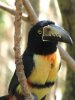
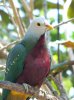
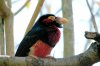
When was the last time you saw a swim-through aviary? Discovery Cove has one! My favorite part of the park is Explorer’s Aviary, and a section of the Wind-away River actually enters it. This is accomplished by a low rocky arch entrance and exit for the river, both of which have curtains of waterfalls all the way across to effectively keep the inhabitants from flying out. A wide stairway leads out of the river onto the aviary pathways so that visitors can swim through and emerge out of the water for a closer look. The aviary also has a few rocky entrances from land, into a series of three walkthrough steel-and-mesh enclosures. The largest is the one that the river enters as well as a dry entrance; a medium sized one also has a dry entrance, and a smaller one is connected to the other two by a rocky masonry passage. The three habitats are lush and feature scenic touches such as a large fallen log and rustic masonry fountain and rocky outcrops and a stream. They are filled with colorful birds, some large and some small, primarily from the worlds tropical regions, fairly evenly represented. This fine aviary complex would be notable as it is, but adding to its memorable quality is the fact that most of the birds can be hand-fed. There are plenty of lorikeet or cockatiel walkthrough aviaries now with feeding at other facilities; this one offers free cups of fruit, nectar, seeds, or even handfuls of worms for the numerous tame inhabitants. I personally fed a wide variety, including very friendly Lady Ross’ and red-crested turaco, white-bellied go-away, sun conure, and black-necked aracari who all landed on my arms. There were several speckled mousebird and guira cuckoo that landed on my shoulders or hands and just wanted to cuddle! Vulturine guineafowl, ocellated turkey, sunbittern, and red-legged sereima were amenable to eating from my cup while they stayed on the ground. Each of the three habitats has a refrigerated cart with the food, staffed by a knowledgeable employee. Two of the habitats have a tawny frogmouth, but I could not convince them to let me feed them their meat! The two laminated identification cards for the three aviary sections list 50 species of birds (not listed on the cards but ones I saw were roseate spoonbill and helmeted guineafowl) and 1 species of mammal: (an * denotes species that I can confirm seeing)
Abdim’s Stork*
Beautiful Fruit Dove
Black-billed Magpie
Black-naped Fruit Dove
Black-necked Aracari*
Bleeding Heart Dove
Blue Dacnis
Blue-naped Mousebird
Budgerigar
Bush Thicknee
Chestnut-breasted Malcoha
Crested Screamer
Crested Wood Partridge*
Common Peafowl*
Great Curassow*
Green Imperial Pigeon*
Green-rumped Parrotlet
Guira Cuckoo*
Hadada Ibis
Hammerkop*
Inca Tern*
Jambu Fruit Dove
Lady Amherst’s Pheasant*
Lady Ross’ Turaco*
Laughing Kookaburra
Nicobar Pigeon*
Ocellated Turkey*
Pied Imperial Pigeon*
Purple Gallinule
Racquet-tailed Roller*
Red-billed Hornbill
Red-capped Cardinal
Red-crested Turaco*
Red-legged Seriema*
Reeve’s Muntjac* (she was all alone with all those birds!)
Reichenow’s Weaver
Speckled Mousebird*
Speckled Pigeon
Sunbittern*
Sun Conure*
Tawny Frogmouth*
Violaceous Euphonia
Von der Decken’s Hornbill
Vulturine Guineafowl*
White-bellied Bustard*
White-bellied Go-away*
White-cheeked Turaco
White-faced Ibis
White-throated Bee-eater
Wing-barred Seedeater
Yellow-billed Hornbill
Another fantastic attraction is the Tropical Reef. It is a four-habitat complex comprised of 2 million gallons of 77F, most of which is in the main reef habitat itself. The complex is circled by the Wind-away River, and in one stretch the two waterways are adjacent, separated by a rocky wall that has an underwater viewing window about 15 feet long into the main habitat. A much smaller shallow lagoon is the first habitat encountered, for about 20 cownose rays, and visitors can enter it but must keep their feet on the bottom at all times. A rocky outcrop separates this from the main reef; both are entered from several beach entries and are lined by low rocky walls. The main habitat is essentially a naturalistic figure-8 layout for snorkeling, with two small islands in the middle. It is absolutely brimming with tropical fish who cling to its simulated coral shelves and walls, dart about its rocky nooks, and venture into its shallows or 12 foot depths. In addition, rays abound here – not just cownose, but large Southern stingrays and spotted eagle rays that are a joy to swim with and touch. One of the islands is a simulated shipwreck, stranded on a rocky outcrop and emerging from the water; below the surface, three underwater windows set in the ship frame reveal views into a smaller habitat for about 15 great barracuda (this habitat can not be entered by visitors). On one edge of the main habitat is a similar set of two underwater windows that look into a shark lagoon that can not be entered. I spotted about 10 nurse sharks and 3 blacktip reef sharks inside, and there may be others too. For those not expecting these two underwater habitats, they can be alarming, especially since the big fish look even larger with underwater distortion! Unfortunately, there are no surface or dry underwater views of the barracuda and shark habitats, only underwater views while one is submerged. The same can be said for the main reef habitat as far as dry underwater views go, and these would make this fine complex even better. The two laminated identification cards for the four tropical reef habitats list 39 species of fish:
Atlantic Blue Tang
Atlantic Porkfish
Atlantic Spadefish
Bannerfish
Bermuda Chub
Blacktip Reef Shark
Blue Parrotfish
Blue-ringed Angelfish
Bluestriped Grunt
Common Hogfish
Cownose Ray
Crevalle Jack
Doctorfish
French Angelfish
French Grunt
Great Barracuda
Guineafowl Puffer
Indian Ocean Sailfin Tang
Japanese Wobbegong
Lookdown
Midnight Parrotfish
Moonyfish
Naso Tang
Nurse Shark
Ocean Surgeon
Panther Grouper
Powder Blue Tang
Queen Angelfish
Queensland Grouper
Raccoon Butterflyfish
Rainbow Parrotfish
Red-lined Butterflyfish
Red-tail Butterflyfish
Spotted Eagle Ray
Southern Stingray
Striped Mullet
Threadfin Butterflyfish
Whitetip Reef Shark
Yellow Tang
A smaller attraction is a tent for small animal interactions, where they are brought out from behind-the-scenes for short periods for informal interpretation. The animals vary through the day, I saw a few parrots and an owl but did not spend much time here.
The great quality of attractions and private feeling of this park make it easy to recommend. In my list of the 36 aquariums I have visited, I rank its aquatic habitats at number 17, mostly due to its limited number of exhibits. In my list of the 47 zoos I have visited, I rank it at number 41, simply because its single zoo part (the aviary), as excellent as it is, does not compare favorably to the wider variety of exhibits at most other zoos. However, in my list of top 15 individual bird exhibits, Explorer’s Aviary is number 8. Tropical Reef (main habitat) is number 15 in my top 25 of individual fish exhibits, and Dolphin Lagoon is number 12 in my top 15 individual aquatic mammals list. Admission is slightly complex, varying with high and low seasons and whether a dolphin interaction is wanted. I visited in a low season, where admission was $99. I believe admission plus a dolphin interaction would have been $179, a price I could not justify. At any time of year, a 14-day admission is included to either SeaWorld Orlando, Aquatica (their adjacent waterslide park that has a Commerson’s dolphin exhibit and another tropical reef aquarium, that one viewed from a lazy river), or Busch Gardens Tampa. Since I wanted to go to SeaWorld and its general adult admission is $79, spending $99 for Discovery Cove plus SeaWorld was a much better value. They keep their prices a bit mysterious, often encouraging people to go through the reservation process to find out the whopping pricetag rather than clearly stating it on their website. It is difficult to compare the admission here with other facilities since it is all-inclusive; someone with a hefty appetite (and the lunch food was good) would perceive a better value than others. I probably handed out more bird food in the aviary feedings than I ate! At any rate, I would say that $99 was 30 dollars overpriced for the experience if it was the only park visited. On the other hand, having experienced it, I would regret missing it, knowing how wonderful swimming with the rays and feeding the avian wonders is! I have posted pictures in the SeaWorld Orlando gallery since a separate gallery for Discovery Cove does not exist.
The single entry from the parking lot is the Check-In Lobby, the largest building in the park, with a large thatched peaked roof and a spacious lobby lined with registration desks that features a dolphin pod sculpture suspended from the ceiling. There are no ticket windows and turnstiles here; it feels more like a classy hotel registration, and laminated picture ID cards are made here that visitors wear on lanyards throughout their visit. The ID Cards are used to identify visitors, approve those of legal age to consume alcohol, and as photo identifiers for the photographers scattered around the park who take candid shots of the animal interactions. After check-in, exiting the building reveals a nice view of the park, including the first of several tile wayfinding maps inlaid in rockwork. The printed map that can be obtained is a small card-sized laminated version. Everything is sensibly laminated here! Visitors can also obtain three different sets of species identification cards that are ringed together and attached to plastic wristbands for wearing; these are for the plants, the tropical reef, and the aviary. Plants are the focus of the entry walkway, a twisting route through the most jungle-like part of the park, crossing several wood bridges and stucco-walled bridges over a small waterway, past a riot of bromeliads and palms. Then three visitor services buildings are encountered: one for photo pick-up, one for information (also for checking out prescription masks) and the small store called Tropical Gifts, and one for Laguna Grill, the restaurant that features counter-service and extensive outdoor dining areas on each side. Scattered around the rest of the park are two round thatched shelters that serve as bars and snack stands, three locker shelters, three adjoining wetsuit and snorkel check-out shelters, and three adjoining changing area and restroom buildings.
The dolphin interaction area is touted as the main attraction and a dolphin and swimmer are featured in the park logo. It is called Dolphin Lagoon and houses an incredible 47 Atlantic bottlenose dolphins in its 3 million gallons at 77F! The scenic lagoon varies in depth from 0 to 12 feet and is subdivided into three main lobes, each with its own curving beach entry on one side, while the curving side and back walls of the lagoon are lined with low rocky walls. Each lobe is separated by rocky peninsulas and underwater barriers, and each is named: Sand Dollar, Seahorse, and Starfish. Dolphin interactions last about a half hour and are preceded by an orientation in one of three educational cabanas corresponding to the three lagoon lobes; the assigned cabana location dictates which lobe a visitor will enter. I did not take part in a dolphin interaction, but it appeared that small groups of 4 to 8 were assigned to a single dolphin and trainer and photographer for their interactions, in the shallower parts of the lagoon where people could stand on the bottom. These experiences are done in shifts so that there are not always humans in the lagoon; in fact it was so uncrowded when I visited that most of the time there were no people in the water. Those not paying for a dolphin interaction are welcome to walk right up to the waters edge and view the dolphins; in addition, a wheelchair ramp on one side of the lagoon leads to an open-air underwater window that several dolphins enjoyed frequenting (and splashing over its edge). The back area of the lagoon has several smaller holding pens, separated from each other and the main lagoon by bars that emerge a few feet out of the water, in an odd branch-like design.
The resort pool (Serenity Bay) and tropical river (Wind-away River) are connected; in fact the pool is simply a wide spot in the 1600-foot long looping river circuit. They are kept at a balmy 86F and are very fun and relaxing. Rather than a formal geometric design with steep-walled sides, the pool has varying depths and a low rocky-walled or beach-lined shore, with a few rocky outcrops in the middle. To one side is a larger long outcrop with several thundering waterfalls; behind these is a stalactite-filled cave with a dark grotto and several openings to the back of the waterfalls and the sky above. The river floats through this cave, and it also varies in depth from 3 to 8 feet along its course; rather than a regular flume shape for similar attractions elsewhere, this lazy river is a highly detailed naturalistic course through various rock or gravel-lined coves and jungle-shaded stretches, dotted with some underwater artifacts such as a rusty cannon or some ancient pots. Also unique to this river is that there are no inner tubes allowed (although noodles are provided if needed) which makes for a more naturalistic experience while swimming or floating or snorkeling through.
When was the last time you saw a swim-through aviary? Discovery Cove has one! My favorite part of the park is Explorer’s Aviary, and a section of the Wind-away River actually enters it. This is accomplished by a low rocky arch entrance and exit for the river, both of which have curtains of waterfalls all the way across to effectively keep the inhabitants from flying out. A wide stairway leads out of the river onto the aviary pathways so that visitors can swim through and emerge out of the water for a closer look. The aviary also has a few rocky entrances from land, into a series of three walkthrough steel-and-mesh enclosures. The largest is the one that the river enters as well as a dry entrance; a medium sized one also has a dry entrance, and a smaller one is connected to the other two by a rocky masonry passage. The three habitats are lush and feature scenic touches such as a large fallen log and rustic masonry fountain and rocky outcrops and a stream. They are filled with colorful birds, some large and some small, primarily from the worlds tropical regions, fairly evenly represented. This fine aviary complex would be notable as it is, but adding to its memorable quality is the fact that most of the birds can be hand-fed. There are plenty of lorikeet or cockatiel walkthrough aviaries now with feeding at other facilities; this one offers free cups of fruit, nectar, seeds, or even handfuls of worms for the numerous tame inhabitants. I personally fed a wide variety, including very friendly Lady Ross’ and red-crested turaco, white-bellied go-away, sun conure, and black-necked aracari who all landed on my arms. There were several speckled mousebird and guira cuckoo that landed on my shoulders or hands and just wanted to cuddle! Vulturine guineafowl, ocellated turkey, sunbittern, and red-legged sereima were amenable to eating from my cup while they stayed on the ground. Each of the three habitats has a refrigerated cart with the food, staffed by a knowledgeable employee. Two of the habitats have a tawny frogmouth, but I could not convince them to let me feed them their meat! The two laminated identification cards for the three aviary sections list 50 species of birds (not listed on the cards but ones I saw were roseate spoonbill and helmeted guineafowl) and 1 species of mammal: (an * denotes species that I can confirm seeing)
Abdim’s Stork*
Beautiful Fruit Dove
Black-billed Magpie
Black-naped Fruit Dove
Black-necked Aracari*
Bleeding Heart Dove
Blue Dacnis
Blue-naped Mousebird
Budgerigar
Bush Thicknee
Chestnut-breasted Malcoha
Crested Screamer
Crested Wood Partridge*
Common Peafowl*
Great Curassow*
Green Imperial Pigeon*
Green-rumped Parrotlet
Guira Cuckoo*
Hadada Ibis
Hammerkop*
Inca Tern*
Jambu Fruit Dove
Lady Amherst’s Pheasant*
Lady Ross’ Turaco*
Laughing Kookaburra
Nicobar Pigeon*
Ocellated Turkey*
Pied Imperial Pigeon*
Purple Gallinule
Racquet-tailed Roller*
Red-billed Hornbill
Red-capped Cardinal
Red-crested Turaco*
Red-legged Seriema*
Reeve’s Muntjac* (she was all alone with all those birds!)
Reichenow’s Weaver
Speckled Mousebird*
Speckled Pigeon
Sunbittern*
Sun Conure*
Tawny Frogmouth*
Violaceous Euphonia
Von der Decken’s Hornbill
Vulturine Guineafowl*
White-bellied Bustard*
White-bellied Go-away*
White-cheeked Turaco
White-faced Ibis
White-throated Bee-eater
Wing-barred Seedeater
Yellow-billed Hornbill
Another fantastic attraction is the Tropical Reef. It is a four-habitat complex comprised of 2 million gallons of 77F, most of which is in the main reef habitat itself. The complex is circled by the Wind-away River, and in one stretch the two waterways are adjacent, separated by a rocky wall that has an underwater viewing window about 15 feet long into the main habitat. A much smaller shallow lagoon is the first habitat encountered, for about 20 cownose rays, and visitors can enter it but must keep their feet on the bottom at all times. A rocky outcrop separates this from the main reef; both are entered from several beach entries and are lined by low rocky walls. The main habitat is essentially a naturalistic figure-8 layout for snorkeling, with two small islands in the middle. It is absolutely brimming with tropical fish who cling to its simulated coral shelves and walls, dart about its rocky nooks, and venture into its shallows or 12 foot depths. In addition, rays abound here – not just cownose, but large Southern stingrays and spotted eagle rays that are a joy to swim with and touch. One of the islands is a simulated shipwreck, stranded on a rocky outcrop and emerging from the water; below the surface, three underwater windows set in the ship frame reveal views into a smaller habitat for about 15 great barracuda (this habitat can not be entered by visitors). On one edge of the main habitat is a similar set of two underwater windows that look into a shark lagoon that can not be entered. I spotted about 10 nurse sharks and 3 blacktip reef sharks inside, and there may be others too. For those not expecting these two underwater habitats, they can be alarming, especially since the big fish look even larger with underwater distortion! Unfortunately, there are no surface or dry underwater views of the barracuda and shark habitats, only underwater views while one is submerged. The same can be said for the main reef habitat as far as dry underwater views go, and these would make this fine complex even better. The two laminated identification cards for the four tropical reef habitats list 39 species of fish:
Atlantic Blue Tang
Atlantic Porkfish
Atlantic Spadefish
Bannerfish
Bermuda Chub
Blacktip Reef Shark
Blue Parrotfish
Blue-ringed Angelfish
Bluestriped Grunt
Common Hogfish
Cownose Ray
Crevalle Jack
Doctorfish
French Angelfish
French Grunt
Great Barracuda
Guineafowl Puffer
Indian Ocean Sailfin Tang
Japanese Wobbegong
Lookdown
Midnight Parrotfish
Moonyfish
Naso Tang
Nurse Shark
Ocean Surgeon
Panther Grouper
Powder Blue Tang
Queen Angelfish
Queensland Grouper
Raccoon Butterflyfish
Rainbow Parrotfish
Red-lined Butterflyfish
Red-tail Butterflyfish
Spotted Eagle Ray
Southern Stingray
Striped Mullet
Threadfin Butterflyfish
Whitetip Reef Shark
Yellow Tang
A smaller attraction is a tent for small animal interactions, where they are brought out from behind-the-scenes for short periods for informal interpretation. The animals vary through the day, I saw a few parrots and an owl but did not spend much time here.
The great quality of attractions and private feeling of this park make it easy to recommend. In my list of the 36 aquariums I have visited, I rank its aquatic habitats at number 17, mostly due to its limited number of exhibits. In my list of the 47 zoos I have visited, I rank it at number 41, simply because its single zoo part (the aviary), as excellent as it is, does not compare favorably to the wider variety of exhibits at most other zoos. However, in my list of top 15 individual bird exhibits, Explorer’s Aviary is number 8. Tropical Reef (main habitat) is number 15 in my top 25 of individual fish exhibits, and Dolphin Lagoon is number 12 in my top 15 individual aquatic mammals list. Admission is slightly complex, varying with high and low seasons and whether a dolphin interaction is wanted. I visited in a low season, where admission was $99. I believe admission plus a dolphin interaction would have been $179, a price I could not justify. At any time of year, a 14-day admission is included to either SeaWorld Orlando, Aquatica (their adjacent waterslide park that has a Commerson’s dolphin exhibit and another tropical reef aquarium, that one viewed from a lazy river), or Busch Gardens Tampa. Since I wanted to go to SeaWorld and its general adult admission is $79, spending $99 for Discovery Cove plus SeaWorld was a much better value. They keep their prices a bit mysterious, often encouraging people to go through the reservation process to find out the whopping pricetag rather than clearly stating it on their website. It is difficult to compare the admission here with other facilities since it is all-inclusive; someone with a hefty appetite (and the lunch food was good) would perceive a better value than others. I probably handed out more bird food in the aviary feedings than I ate! At any rate, I would say that $99 was 30 dollars overpriced for the experience if it was the only park visited. On the other hand, having experienced it, I would regret missing it, knowing how wonderful swimming with the rays and feeding the avian wonders is! I have posted pictures in the SeaWorld Orlando gallery since a separate gallery for Discovery Cove does not exist.