I see your point, but I never said the exhibits were similar. I was comparing them to try and ascertain exactly what is causing the massive gulf in cost, trying to eliminate factors from the conversation such as high construction costs, changes in infrastructure, population size and heavy theming, given that London is arguably the more extreme example in all four of these categories. I was in no way saying the exhibits were similar in terms of species.
As for the species list, there are admittedly a select few nice species, particularly in the hummingbird aviary (incidentally the part of the development that I referenced as interesting, at least to me).
I stand by what I said. Just because they are ambassador animals, doesn't mean they should have enclosures without any privacy. The exhibit depicted is entirely unsuitable for Ocelots, one of the shyer felids, given it has essentially not a single hiding place from public view; while if a tamandua were to be displayed there, the exhibit has not a single climbing opportunity. Even the boxes presumably to give the animal respite from public view are both oriented in such a way that visitors can still see the animal! I don't care whether a habitat is pretty or not, but when an animal's basic needs aren't met it doesn't exactly fill me with confidence about the rest of the basecamp.
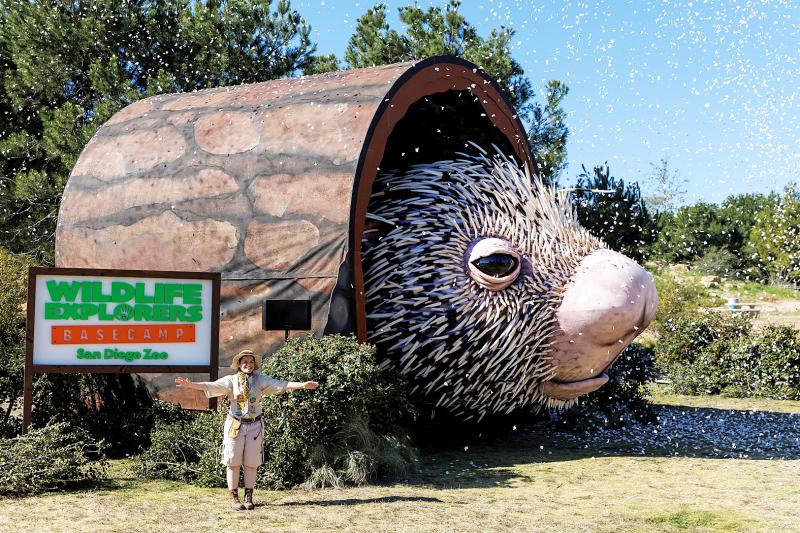
I never said I expected a world class reptile house or invert house - and either way neither of us have actually seen either of the buildings, so I will reserve my judgement for now - but for now I've seen absolutely nothing (other than, in part, perhaps the hummingbird house) that justifies the obscene amount of money that was spent on it. And thanks for pointing out the porcupine statue

, not sure what they were thinking there but that thing result in far more nightmares than wildlife education.
I might be being a bit tough on the zoo, but I think this is also in part a disservice to zoos across the US and worldwide. First off, it and Columbus's monstrosity create a precedent of spending outlandish sums of money on exhibits instead of working more with what they have and trying to tweak and renovate it in a way that won't set them back a tenth of a billion dollars. If Schoenbrunn can do it with 200+ year old buildings, I'm sure American zoos can. Secondly it just adds fuel to the anti-zoo sentiment's fire. From their perspective, they see a high profile zoo spending $88 million on an exhibit housing animals almost entirely of no conservation interest and that is something that they might, and probably will, pounce on.
It's not only this particular exhibit on its own that worries me but also the repercussions it could have or the narrative it could create. I understand why the spending of such a sum could well be a good investment but it does frustrate me on a number of levels.