Species we have lost over the last quarter of a century

Maybe there is a need of a similar thread: last chance to see: species we are about to lose from Europe?

Besides animals avialable from rescue centres and private keepers, there is a worrying number of endangered species which are down to few collections and are unlikely to be replaced. Bawean Deer, Andean and James Flamingos are examples.

I am happy that I made a visit to Dvur Kralove especially to see Northern White Rhino. Next year she died, and it looks like this animal will never ever be seen in Europe and soon will die out.
 
Maybe there is a need of a similar thread: last chance to see: species we are about to lose from Europe?

As a matter of fact this very thread is a spin-off from one very much along the lines you suggest, but with a UK-specific focus.

Feel free to create a Europe-wide thread if you like :)
 
All 3 species of minlas we have lost in European zoos:
Bar-Throated minla- lAST SEEN IN NORTH ZEALAND BIRD PARK (DENMARK)
Blue-Winged Minla
Red-Tailed Minla (Last seen in Walsrode in 2016)

Luckily, these three species are not extinct in captivity, some European and Asian private collections has them, and the most common is the red-tailed, bred in many collections.
 
A broad and paraphyletic group of passerines next......

Babbler and Laughingthrush taxa lost since 1990

Golden Babbler (Stachyridopsis chrysaea) - last held in 2005 at Leipzig. There are no images of this taxon within the Zoochat gallery.

Rufous-capped Babbler (Stachyridopsis ruficeps) - last held in 2011 at Tierpark Berlin. There are no images of this taxon within the Zoochat gallery.

Pearl-cheeked Babbler (Stachyris melanothorax) - last held in 2000 at Moscow. There are no images of this taxon within the Zoochat gallery.

White-bibbed Babbler (Stachyris thoracica) - last held in 2007 at Walsrode. There are no images of this taxon within the Zoochat gallery.

Chestnut-capped Babbler (Timalia pileata) - last held in 2012 at Colchester. There is a single image of this taxon within the Zoochat gallery, taken at Tierpark Berlin in 2011:


Large Wren-babbler (Turdinus macrodactylus) - last held in the early 2000s at Walsrode. There are no images of this taxon within the Zoochat gallery.

Spectacled Barwing (Actinodura ramsayi) - last held in 2011 at Moscow Breeding Nursery. There are no images of this taxon within the Zoochat gallery.

Streaked Barwing (Actinodura souliei) - last held in 2003 at Plzen. There are no images of this taxon within the Zoochat gallery.

Grey-cheeked Fulvetta (Alcippe morrisonia) - last held in 2011 at Amazon World. There is a single image of this taxon within the Zoochat gallery, taken at this collection in 2010:


Mountain Fulvetta (Alcippe peracensis) - last held in 1998 at Chester. There are no images of this taxon within the Zoochat gallery.

Chestnut-tailed Minla (Chrysominla strigula) - last held in c.2009 at North Zealand Birdpark. The only image of this taxon within the Zoochat gallery is of a wild individual in Thailand.

Spotted Crocias (Crocias albonotatus) - last held in 2008 at Augsburg. There are no images of this taxon within the Zoochat gallery.

Wynaad Laughingthrush (Dryonastes delesserti) - last held in 2005 at Lotherton. There are no images of this taxon within the Zoochat gallery.

Rufous-vented Laughingthrush (Dryonastes gularis) - last held in c.2005 at Grangewood. A single photograph of this taxon, taken at said collection, has been uploaded to the Zoochat gallery:


Rusty Laughingthrush (Dryonastes poecilorhynchus) - last held in c.2012 at Taman Indonesia. There are no images of this taxon within the Zoochat gallery.

Rufous-necked Laughingthrush (Dryonastes ruficollis) - last held in the late 2000s at Lotherton. There are no images of this taxon within the Zoochat gallery.

Masked Laughingthrush (Garrulax perspicillatus) - last held in 2010 at Paulton's Park. There are no images of this taxon within the Zoochat gallery.

Striated Laughingthrush (Grammatoptila striata) - last held in the early 1990's at Zoo Berlin. There are no images of this taxon within the Zoochat gallery.

Rufous-chinned Laughingthrush (Ianthocincla rufogularis) - last held in 1993 at Tierpark Berlin. There are no images of this taxon within the Zoochat gallery.

Steere's Liocichla (Liocichla steerii) - last held in 2001 at Antwerp. There are no images of this taxon within the Zoochat gallery.

Golden-breasted Fulvetta (Lioparus chrysotis) - last held in the late 1990s at Zoo Berlin. There are no images of this taxon within the Zoochat gallery.

White-eared Sibia (Malacias auricularis) - last held in 2001 at Plzen. There are no images of this taxon within the Zoochat gallery.

Black Laughingthrush (Melanocichla lugubris) - last held in 2004 at Walsrode. There are no images of this taxon within the Zoochat gallery.

Rufous-winged Fulvetta (Pseudominla castaneceps) - last held in 1997 at Augsburg. There are no images of this taxon within the Zoochat gallery.

Chestnut-fronted Shrike-babbler (Pteruthius aenobarbus) - last held in 2000 at Moscow. There are no images of this taxon within the Zoochat gallery.

Red-winged Shrike-babbler (Pteruthius flaviscapis) - last held in 2002 at Moscow. There are no images of this taxon within the Zoochat gallery.

Black-faced Laughingthrush (Trochalopteron affine) - last held in 2013 at Plzen. There are no images of this taxon within the Zoochat gallery.

Chestnut-crowned Laughingthrush (Trochalopteron erythrocephalum) - last held in 2008 at Waddesdon. Despite several collections holding this species within the timespan in question, there are no images of this taxon within the Zoochat gallery.

Variegated Laughingthrush (Trochalopteron variegatum) - last held in 1997 at Prague. There are no images of this taxon within the Zoochat gallery.

Common Babbler (Turdoides caudata) - last held in the early 1990s at Paulton's Park. There are no images of this taxon within the Zoochat gallery.

Northern Pied-Babbler (Turdoides hypoleuca) - last held in c.2012 at Pairi Daiza. The only images of this taxon within the Zoochat gallery are of wild individuals in Africa.

Arrow-marked Babbler (Turdoides jardineii) - last held in 2015 at Tierpark Berlin. There are no images of this taxon within the Zoochat gallery, although I have a feeling some were lost in the Great Purge.

Black-lored Babbler (Turdoides melanops) - last held in c.1995 at Pairi Daiza. There are no images of this taxon within the Zoochat gallery.

Sudan Brown Babbler (Turdoides plebejus) - last held in 2014 at Veldhoven. There are several images of this taxon within the Zoochat gallery, including the following photograph taken at Veldhoven:


Blackcap Babbler (Turdoides reinwardtii) - last held in 2005 at Heidelberg. There are no images of this taxon within the Zoochat gallery.

Arabian Babbler (Turdoides squamiceps) - last held in 2014 at Tierpark Berlin. There are no images of this taxon within the Zoochat gallery.

Rusty-cheeked Scimitar Babbler (Pomatorhinus erythrogenys) - last held in the early 1990s at Zoo Berlin. There are no images of this species within the Zoochat gallery.

Coral-billed Scimitar-babbler (Pomatorhinus ferrruginosus) - last held in 2015 at Zurich Voliere. There are a handful of images of this taxon present within the Zoochat gallery, including the following photograph taken in 2012:


Black-streaked Scimitar Babbler (Pomatorhinus gravivox) - last held c.2013 at Amazon World. The individual in question is misidentified as P. erythrogenys on Zootierliste and listed as still present; however I suspect it may have passed away as it was extremely elderly when last referred to on Zoochat in June 2013. A single image of this taxon is present within the Zoochat gallery:


Streak-breasted Scimitar Babbler (Pomatorhinus ruficollis) - last held in c.2010 at Zoo Berlin. There is a single image of this taxon within the Zoochat gallery, taken in 2009:


White-browed Scimitar Babbler (Pomatorhinus schisticeps) - last held in 1996 at Bristol. There are no images of this taxon within the Zoochat gallery.

Indochinese Wren-babbler (Rimator danjoui) - last held in 2005 at Amazon World. There are no images of this taxon within the Zoochat gallery.

Thrush-babbler (Ptyrticus turdinus) - last held in 2008 at Pafos Zoo. There are no images of this taxon within the Zoochat gallery.


Yuhina taxa lost since 1990

Striated Yuhina (Staphida castaniceps) - last held in 2005 at Warsaw. There are no images of this taxon within the Zoochat gallery.

Chestnut-collared Yuhina (Staphida torqueola) - last held in 2011 at Plzen. There are no images of this taxon within the Zoochat gallery.

White-naped Yuhina (Yuhina bakeri) - last held in 1993 at Harewood. There are no images of this taxon within the Zoochat gallery.

Whiskered Yuhina (Yuhina flavicollis) - last held in 2005 at Jesperhus Blomsterpark. There are no images of this taxon within the Zoochat gallery.

Stripe-throated Yuhina (Yuhina gularis) - last held in 2010 at Birdworld. A single image of this taxon has been uploaded to the Zoochat gallery, taken at said collection in 2009:


Black-chinned Yuhina (Yuhina nigrimenta) - last held in 2010 at Wilhelma. A single image of this taxon has been uploaded to the Zoochat gallery, taken at Wilhelma shortly before the last individual in Europe passed away:


Rufous-vented Yuhina (Yuhina occipitalis) - last held in the late 1990's at Tierpark Berlin. There are no images of this taxon within the Zoochat gallery.


Parrotbill taxa lost since 1990

Vinous-throated Parrotbill (Paradoxornis webbianus) - last held in 2012 at Plzen. There are a few images of this taxon within the Zoochat gallery, including the following photograph taken at Plzen in 2011:

We also got the Golden babbler, Rufous-capped babbler, Chestnut-capped babbler, Streak-Breasted Scimitar Babbler, Chestnut Yuhina, Black-Chinned Yuhina and Vinous-Throated Parrotbill are common pet birds in China.

References:
【视频】今年养的红头穗鹛长大了!!【鸟吧】_百度贴吧 (With Video)
此鸟全身金黄,非常漂亮,小弟想养,不知叫口如何,求高手告知鸟名?叫口如何,小弟再次谢过| 笼鸟百科 - 青鸟,花鸟鱼虫网 鸟|鸟类|鸟具|花鸟|猫狗|水族|文玩|根雕|玉器|紫砂|收藏
【图片】可惜是母的,,【画眉鸟吧】_百度贴吧 (Surprise when you scroll down)
棕颈钩嘴鹛叫声之一 (Video)
尾羽正在长出【棕颈钩嘴鹛吧】_百度贴吧
【图片】栗耳凤鹛【老郝鸟吧吧】_百度贴吧
黑额凤鹛还真是不错,值得拥有!| 笼鸟百科 - 青鸟,花鸟鱼虫网 鸟|鸟类|鸟具|花鸟|猫狗|水族|文玩|根雕|玉器|紫砂|收藏
请教黒额凤鹛的饲养| 笼鸟百科 - 青鸟,花鸟鱼虫网 鸟|鸟类|鸟具|花鸟|猫狗|水族|文玩|根雕|玉器|紫砂|收藏
https://tieba.baidu.com/p/5009703566
 
This is an important example of a species that was apparently doing well and then the population collapsed and the species died out. Since it is an island endemic with a relatively small population, I can see that many collections would have liked to keep it especially when they were rather unusual in collections.

In a previous discussion on this thread, it was suggested that it died out due to inbreeding depression, and was hybridised with the common moorhen, which would have diluted its appeal. A common cause of population collapse in captivity is because of institutional and keeper fatigue, and the urge to keep something different. In my experience zoo marketing people are always looking for new stories. With the Pink Pigeon many zoos tired with it and wanted a species that was more spectacular for the public, and easier to keep, and some shifted to some of the rarer Bleeding-heart Doves.

Zoos will always keep populations of the popular high profile animals, such as giraffes, meercats, gorillas, lions, tigers, macaws and peafowl, but the more obscure species, that appeal to fewer visitors, will I suspect always go through boom and bust cycles.

I agree, and there is an additional reason: such "low-profile" species are often kept in a zoo because of the interest of a single person, which could be a curator, head keeper, a department head or even just a single animal keeper with an exceptional interest. With a change of staff, other employees often feel no attachment to these species, because they do not see a commercial value to keep them. The animals are still routinely cared for, but nobody does more than a general maintenance protocol prescribes and this is usually not enough for those species to breed. Couple of years later, the said species is lost from the ZOO collection and nobody really cares, until years later another single employee regrets this and does an extensive effort to get it back. Same happens in private collections. There are very few exceptional people who are interested in keeping the same species for several decades when that species is not getting a lot of attention and they also donćt earn anything with it (often not even appreciation from colleagues!).

Also, in my experience, there are animal keepers who are also keen observers of their animals, and this is what you need to get many species to breed. The majority of animal keeper work on routine, and they are not necessarily to blame for that, because for observing animals you need time, which is often lacking (or misused with taking some extra breaks in some cases). How many directions allow keepers "observation time" on a daily basis? Keepers who keep observing those non-commercial animals regularly are the first to be overburdened with work and to leave the zoo-world :(
 
One of the reasons we began our Bird Park was because we felt finches were appearing very little in large public zoos and even in other bird parks. While finances, health problems and lack of time have made it nigh on impossible for us to have the privilege of visiting many zoos, this has been our experience. Finches are becoming as endangered as other more 'popular' species and need attention too. Many of these birds are difficult to come by and expensive to attain (at least for us) in groups large enough and not genetically too close to be able to make up a good breeding group.
Many have been bred in small cages and therefore haven't the resistance and fortitude for coping with more natural surroundings; something which we feel is necessary for their continuity in captivity or in the wild, should they ever be needed for reintroduction. It's no good waiting until they're nearly extinct to do this. I hope there will be many more who will try to help finches in this way
 
One of the reasons we began our Bird Park was because we felt finches were appearing very little in large public zoos and even in other bird parks. While finances, health problems and lack of time have made it nigh on impossible for us to have the privilege of visiting many zoos, this has been our experience. Finches are becoming as endangered as other more 'popular' species and need attention too. Many of these birds are difficult to come by and expensive to attain (at least for us) in groups large enough and not genetically too close to be able to make up a good breeding group.
Many have been bred in small cages and therefore haven't the resistance and fortitude for coping with more natural surroundings; something which we feel is necessary for their continuity in captivity or in the wild, should they ever be needed for reintroduction. It's no good waiting until they're nearly extinct to do this. I hope there will be many more who will try to help finches in this way
Where is this Bird Park please?
 
This is exactly what I mean by my post. Too many times with small species, it is an initiative from a single person in a single ZOO. In the plant cultivation world, it is much the same with very few people long-term interested in maintaining particular species. I do not have a solution, but it is clear that, when it comes to small animals, ZOO's only in some cases can maintain strains/species, mostly as a dedicated efford in a special breeding station in a ZOO. Otherwise, they just obtain a few individuals which may or may not breed, but which are not forming a sustainable population without constant new accessions. This is, I dare say, the case with most small reptiles, most fish and most of the birds which are smaller than a starling/mynah.

I had a dream, long ago, to start up a society of people who are interested in maintaining wild-type animals and plants, as much as possible in their natural form, in captivity. From small fish to tropical plants and -indeed- finches, I think that we all face the same basic problems of too few people who are really dedicated for more than a couple of years. Many people are willing to move heaven and earth to obtain something, then, if you ask a couple of years later, they no longer have the species. Mainly because something new came on their way. This is much the same in ZOO's and in private collections.
 
Other than corvids, butcherbirds and birds-of-paradise I haven't really dealt with passerines so far.... let's fix that a bit:

Broadbill taxa lost since 1990

Banded Broadbill (Eurylaimus javanicus) - this taxon was last held in the early 2000's at Tierpark Berlin. There are no images of this taxon within the Zoochat gallery.

Black-and-Yellow Broadbill (Eurylaimus ochromalus) - this taxon was last held in 2004 at Walsrode. The only images of this taxon within the Zoochat gallery are of wild individuals in Asia.

Long-tailed Broadbill (Psarisomus dalhousiae) - this taxon was last held in 2010 at Wuppertal. There are several images of the last individual in Europe within the Zoochat gallery, including the following photograph:


Pitta taxa lost since 1990

Indian Pitta (Pitta brachyura) - this taxon was last held in 1996 at Zoo Hannover. There are no images of this taxon within the Zoochat gallery.

Giant Pitta (Pitta caerulea) - this taxon was last held in 2010 at Walsrode. There are several images of the last individual in Europe within the Zoochat gallery, including the following photograph:


Elegant Pitta (Pitta elegans) - this taxon was last held in 2004 at Koln. There are no images of this taxon within the Zoochat gallery.

Bar-bellied Pitta (Pitta ellioti) - this taxon was last held in 1996 at Tierpark Berlin. There are no images of this taxon within the Zoochat gallery.

Blue-rumped Pitta (Pitta soror) - this taxon was last held in 2004 at Vogelpark Avifauna. There are no images of this taxon within the Zoochat gallery.

Graceful Pitta (Pitta venusta) - this taxon was last held in 2010 at Plzen. There is a single image of this taxon within the Zoochat gallery, taken in 2006 at Vogelpark Avifauna:


Antbird taxa lost since 1990

Barred Antshrike (Thamnophilus doliatus) - this taxon was last held in 2001 at Frankfurt. There are no images of this taxon within the Zoochat gallery.


Manakin taxa lost since 1990

Long-tailed Manakin (Chiroxiphia linearis) - this taxon was last held in 2008 at Kobenhavn. The only image of this taxon within the Zoochat gallery is of a captive individual in Costa Rica.

White-bearded Manakin (Manacus manacus) - this taxon was last held in 2005 at Tierpark Berlin. The only image of this taxon within the Zoochat gallery is of a captive individual in the USA.

Crimson-hooded Manakin (Pipra aureola) - this taxon was last held in 2001 at Tierpark Berlin. There are no images of this taxon within the Zoochat gallery.

Wire-tailed Manakin (Pipra filicauda) - this taxon was last held in 2009 at Veldhoven NOP. There is a single image of this taxon within the Zoochat gallery, taken in 2007:


Red-headed Manakin (Pipra rubrocapilla) - this taxon was last held at Walsrode in 2001. There are no images of this taxon within the Zoochat gallery.

Just discovered we have one species back :). At Amneville the Long-tailed broadbill is kept again since this year, the bird(s) being confiscated.
 
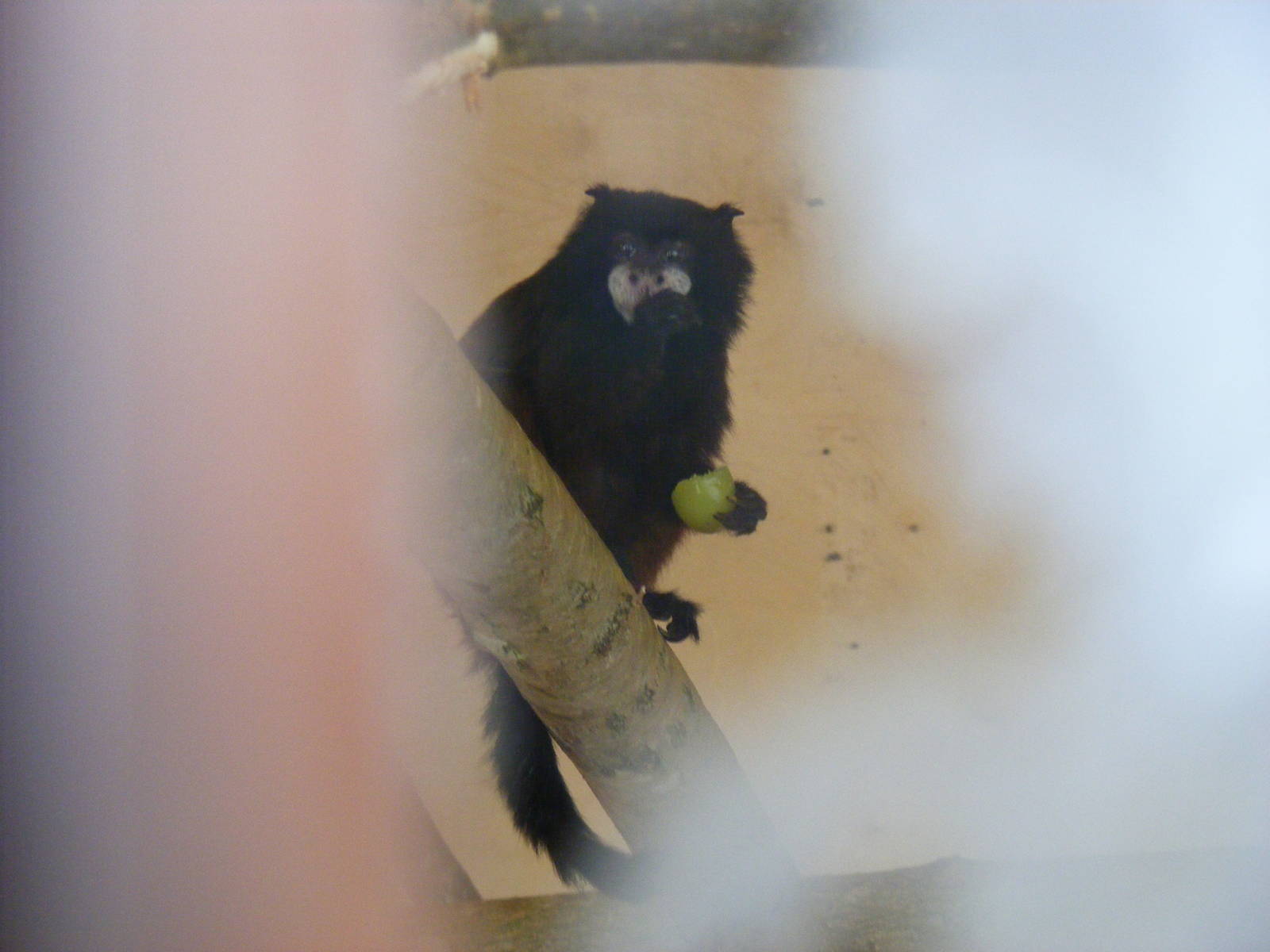
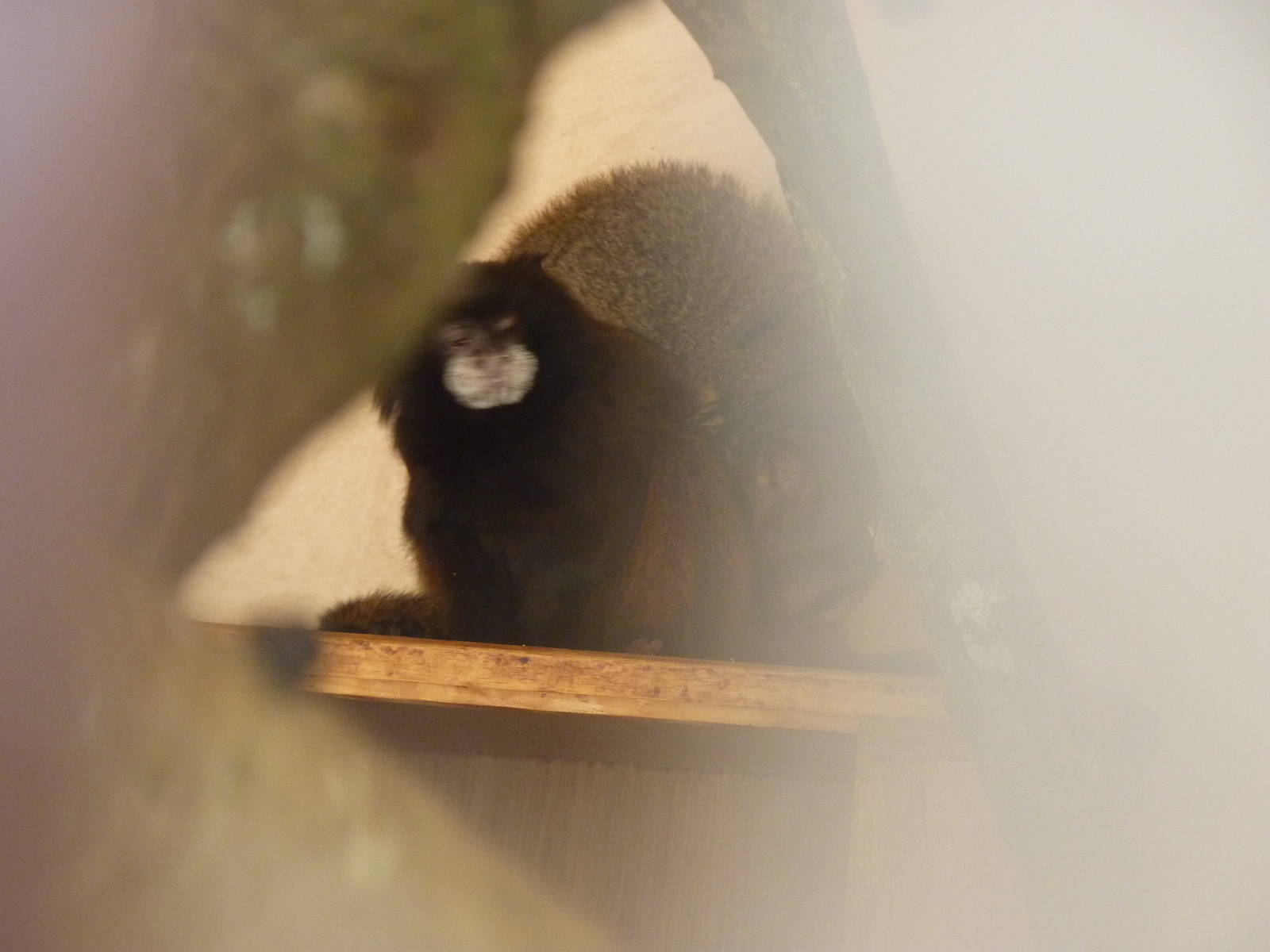
Illiger's Saddleback Tamarin (Saguinus illigeri) - last held in 2014 at Marwell. No images of this taxon have been uploaded to the Zoochat gallery.

The gallery-trawling required for the photographic guides to mammals which myself and @Chlidonias have been posting has thrown up a nice little bonus - a pair of photographs representing this species which I had previously missed:


Amazing thread really. Such a great work !
Why not a “Species we won/won again in Europe in the last X years”?
It’s a lot of work I know but if someone has the knowledge and the time, I’d be really happy to read it.
 
Are you sure? I can't remember ever seeing this species in Artis in the 1990's or 2000's.

It appears that at some time in the last few years someone has deleted this entry from ZTL, so it is possible the information was inaccurate.
 
According to ZTL, Europe's last swift fruit bat (Thoopterus nigrescens) was no longer at Berlin Tierpark at the end of 2017.
 
Back
Top