Day 10 Sunshine Coast to Gold Coast (2hr, 197km) – Part 2
Grab a coffee and settle in. This long post covers in detail what is an extremely large facility
Leaving Sea Life Sunshine Coast around 10.30am I set off for Australia Zoo. I had mixed feelings about this visit. I had always followed Steve Irwin and marvelled at his work. Since his death though it seemed like Australia Zoo had stagnated and I wondered if I would see enough to make it worth the entry fee. One thing to take in to consideration is that I only paid $5 for entry and I’m not sure I would have been as impressed had I spent $60.
I needn’t have worried. By the end of my day at Australia Zoo, in fact within the first hour I was hooked. I wanted to play around with plans and get a second day at this fantastic zoo and I was even considering applying for the next job that came up there. It’s not without fault but it sure is the closest I have ever seen.
Everything here is oversize and that begins as soon as you turn off the highway in to the carpark. There would easily be over 1.000 car parks here and by the time I arrived at 11.30am it was already a quarter full.
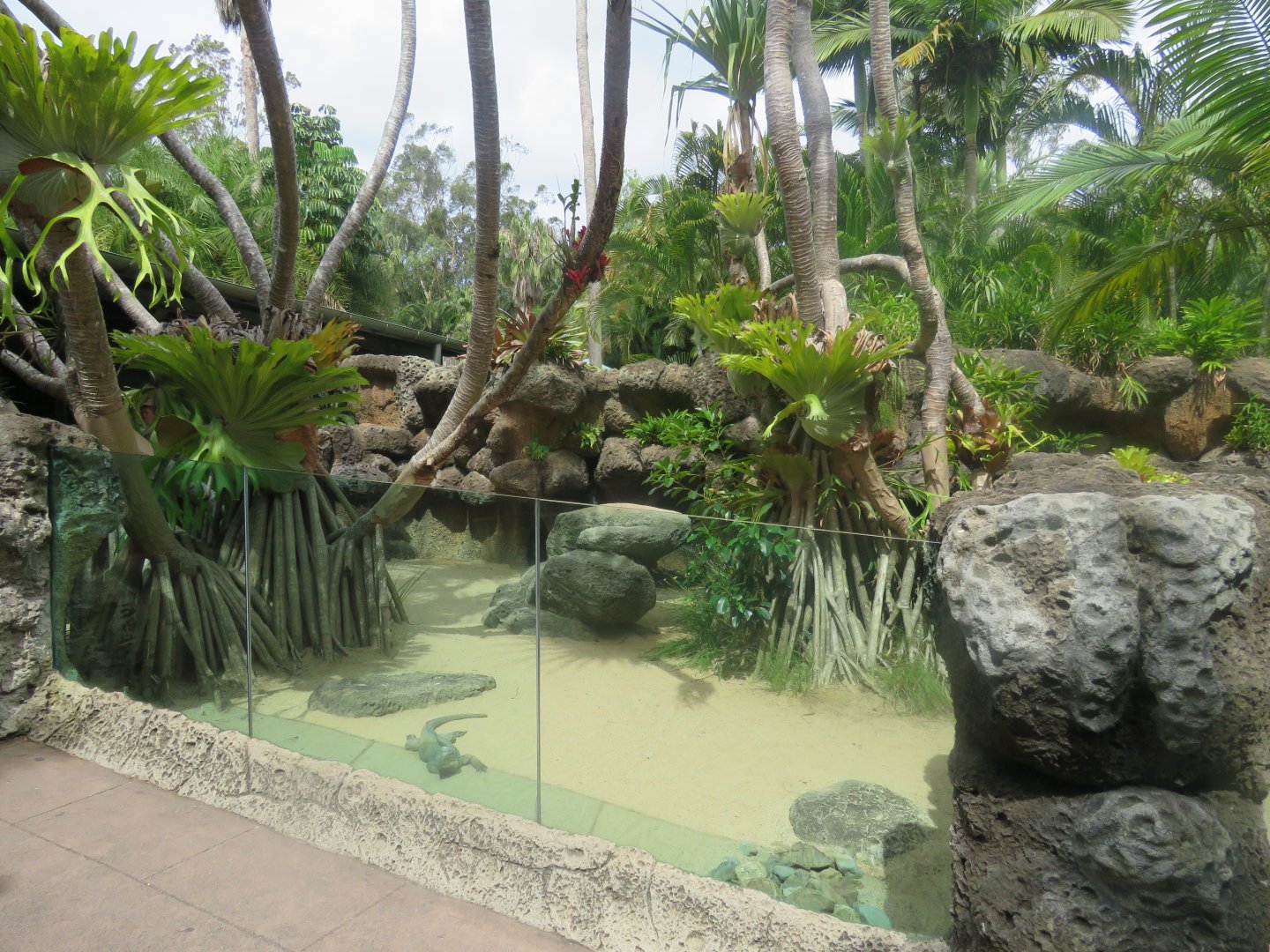
The entrance was by Australia Zoo standards fairly modest with an undercover area with 5 ticket desks. I got bounced around between these for a while as they worked out how to process my membership card. Once this was done I entered the zoo and was already amazed. The first enclosure you see for rhinoceros iguana. This is a stone walled yard with some glass viewing panels inserted. It is pleasingly landscaped and split in to 2 sections with a lizard visible in each.
From here I decided to head straight to the crocoseum and the nearby food court to get my lunch and a seat ready for the wildlife warriors show. On the way I came across the first of the roving wildlife, a brahminy kite. This was out with a handler and I spent a bit of time talking to him and viewing the bird. In this time a small crowd started to build and the bird started to look slightly uncomfortable and I was impressed that the presenter took the bird back to his enclosure at this point.
Arriving at the crocoseum just showed me how crazy this place was going to get. I expected something big but this place is massive. I walked through the main corridor past the photo kiosk, a gift shop, the animal photo area, the information desk and then up the stairs to the food court. This area has a few hundred tables and about 10 different food outlets serving different varieties of food.
I got some lunch and then went to the crocoseum where I got a seat. I had expected that over the 15 minutes I was there the stadium would fill ready for the show. But when it began the stadium wasn’t more than a quarter full. While this would be impressive for most zoos on a Tuesday I can’t help but feel its not enough to maintain the number of staff the zoo had.
The show is very impressive if not slightly annoying. It starts with a crickey off which involves everyone pretending they are animals and yelling Steve Irwin’s signature catchphrase. Then a range of macaws are free flighted, followed by a pair of kites. After this some snakes were walked through the audience followed by a jabiru walking across the centre of the arena and an Andean condor free flying. A red tailed black cockatoo is then brought out to pretend he is stealing some money from an audience member. The star of the show, the saltwater crocodile then swam out in to the middle of the stadium and the handlers proceeded to feed it and talk about crocodiles.
From here I went to the information desk as I had decided while waiting for the show to take the Wildlife hospital tour at 2.30pm. I booked this and enquired as to when would be a good time to see the cheetah. The man at the desk informed me they should be out right then, so I made way up to the Africa section of the zoo.
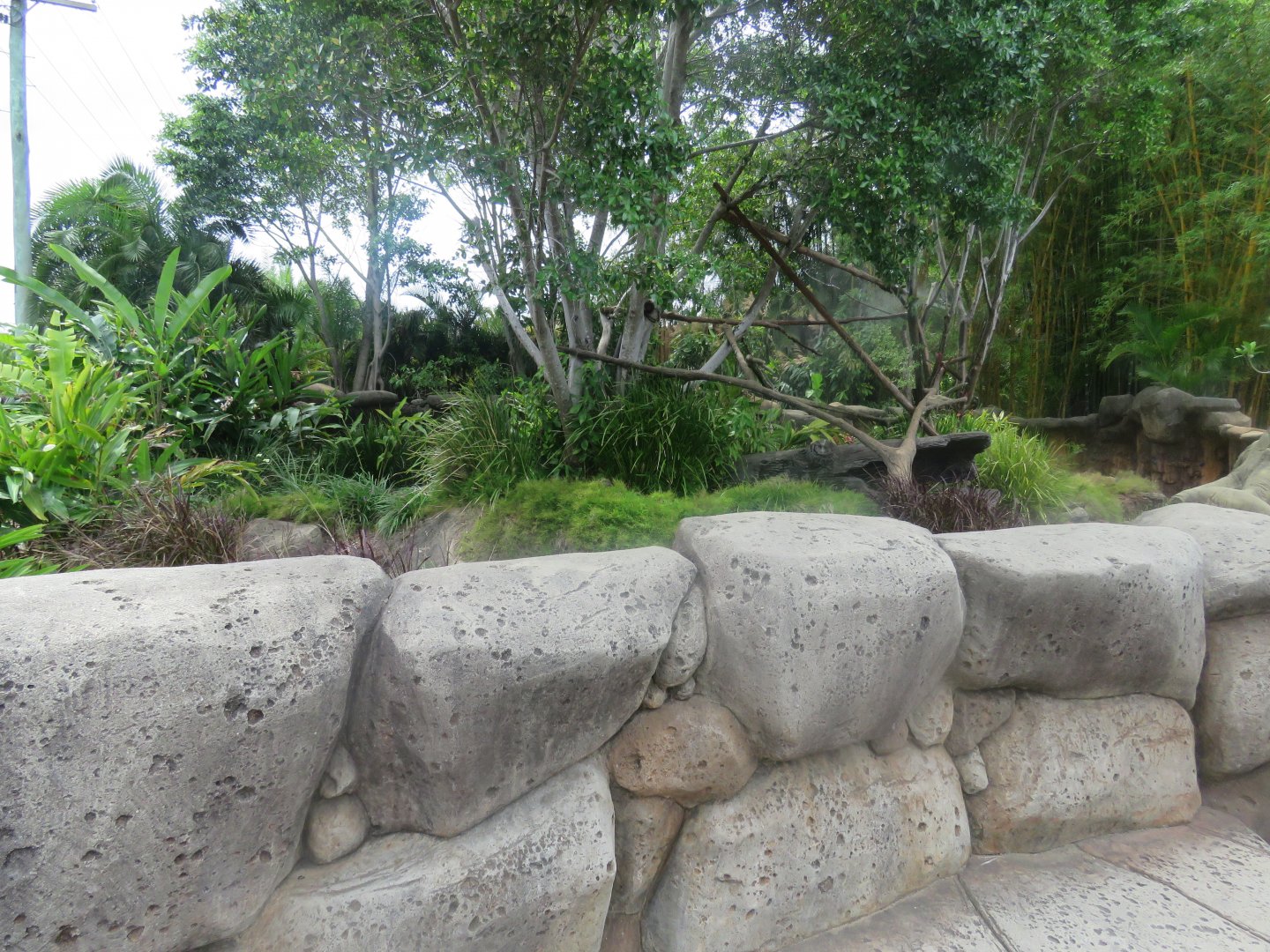
The rest of the area’s I walked through I would explore again later in the day I did explore the Asian area which I was not able to return too later. This area begins with the red panda yard. This is a fantastic enclosure with rock walls and several mature trees for the red pandas to climb. The floor of the enclosure includes a range of plants.
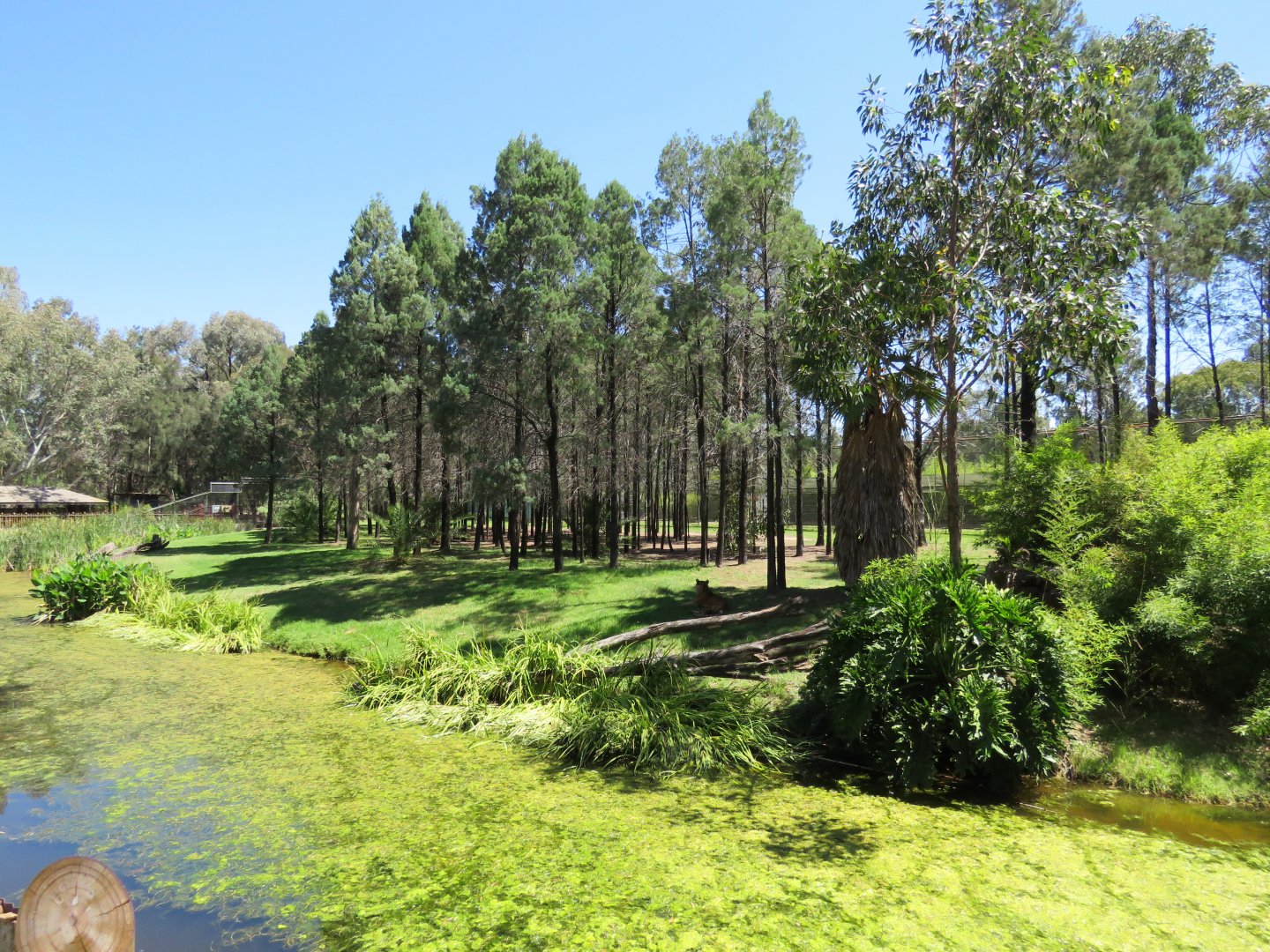
Following the path, you enter the tiger exhibit. This feature’s a pair of undercover viewing area’s and also a grandstand to watch the daily tiger presentation in front of the underwater viewing window. The enclosure feature’s grass and bark areas with the back wall’s screened with bamboo. There are also some platforms for the tigers to lay on. Interestingly on my visit the tigers were all asleep and a pair of handlers were just sitting against one wall talking.
Making my way up through the zoo I reached the gate to Africa and sitting just there under a tree was a cheetah with 3 handlers. It was just licking an iceblock while the keepers spoke to visitors about them.
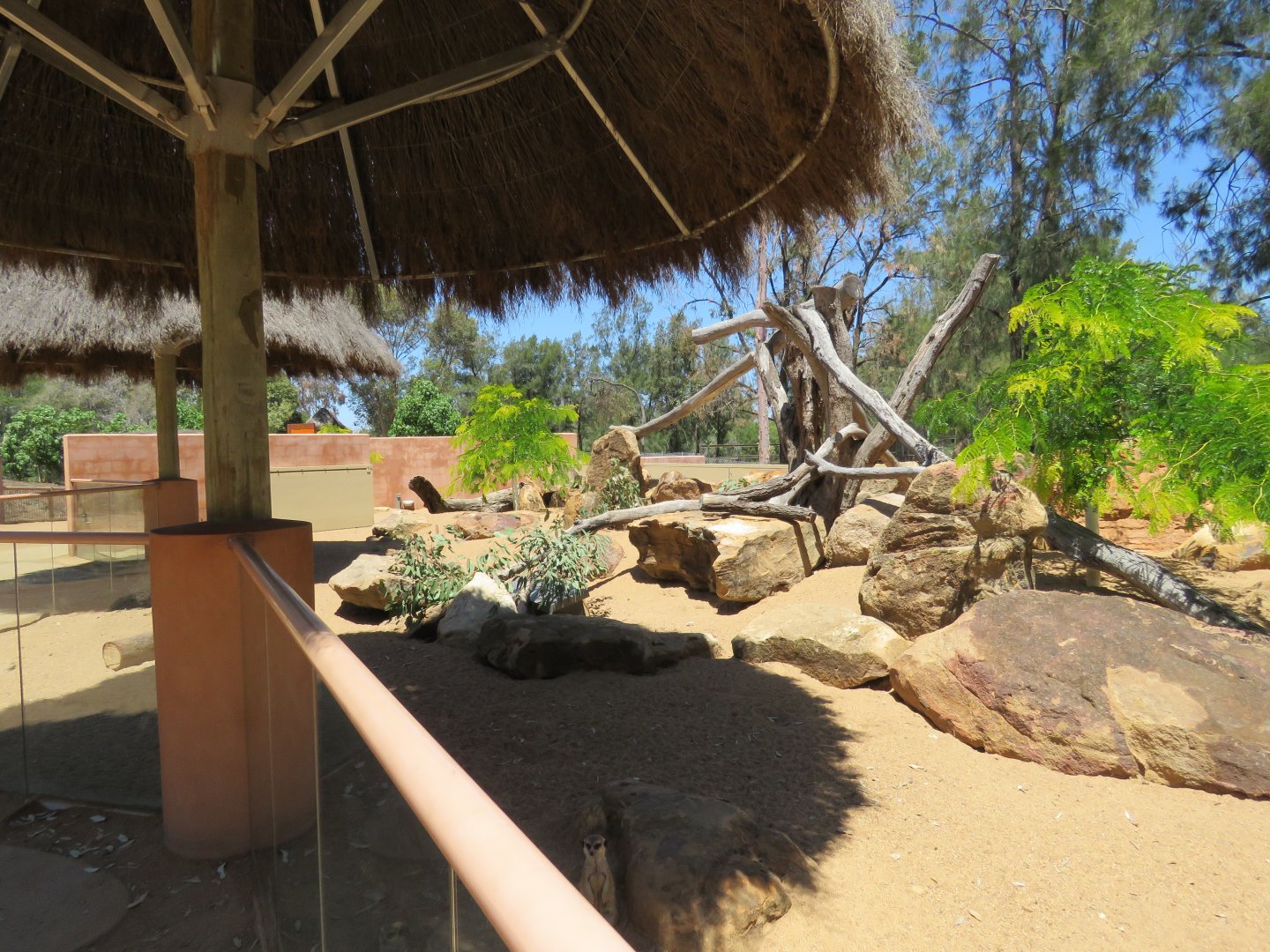
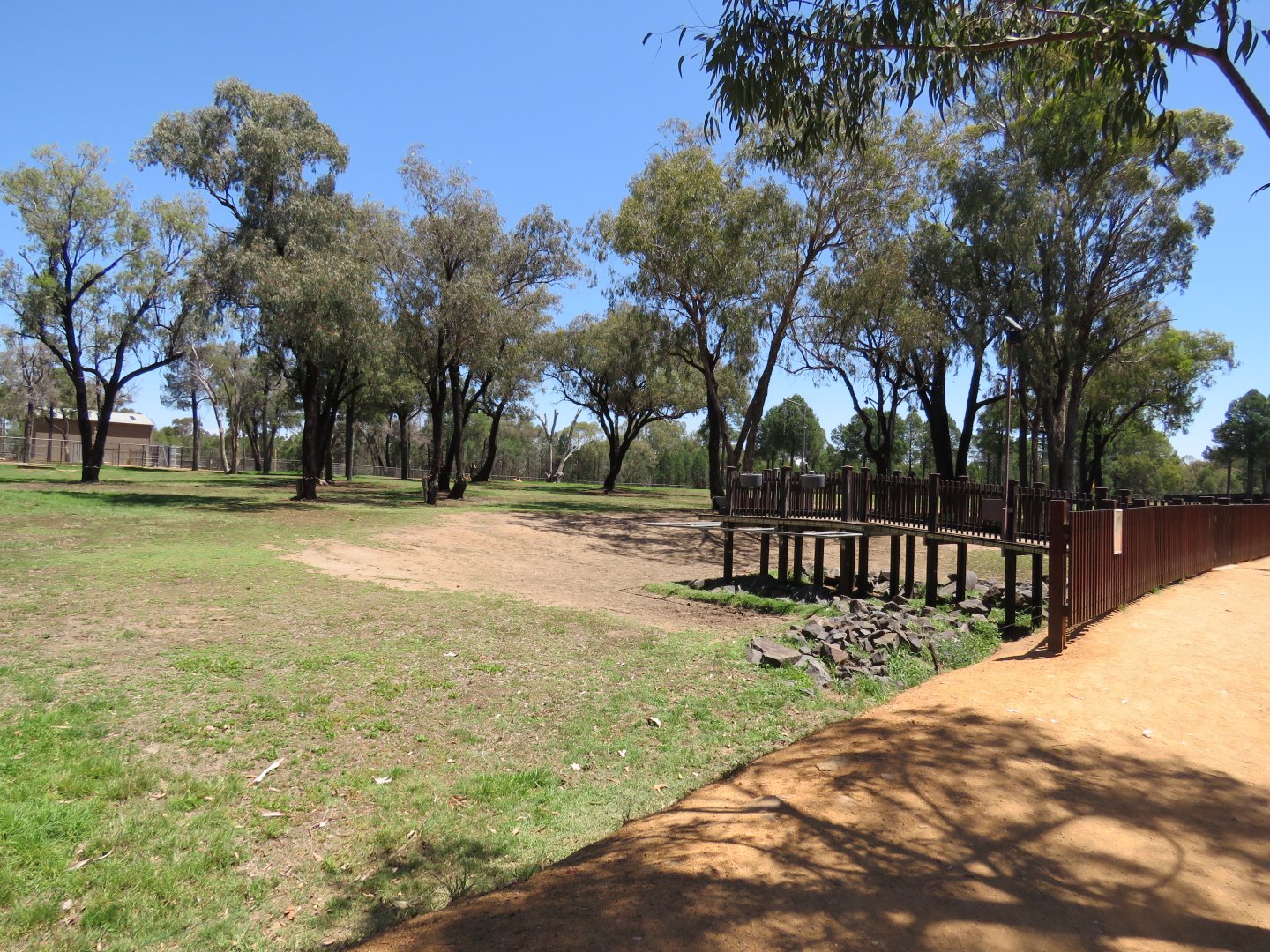
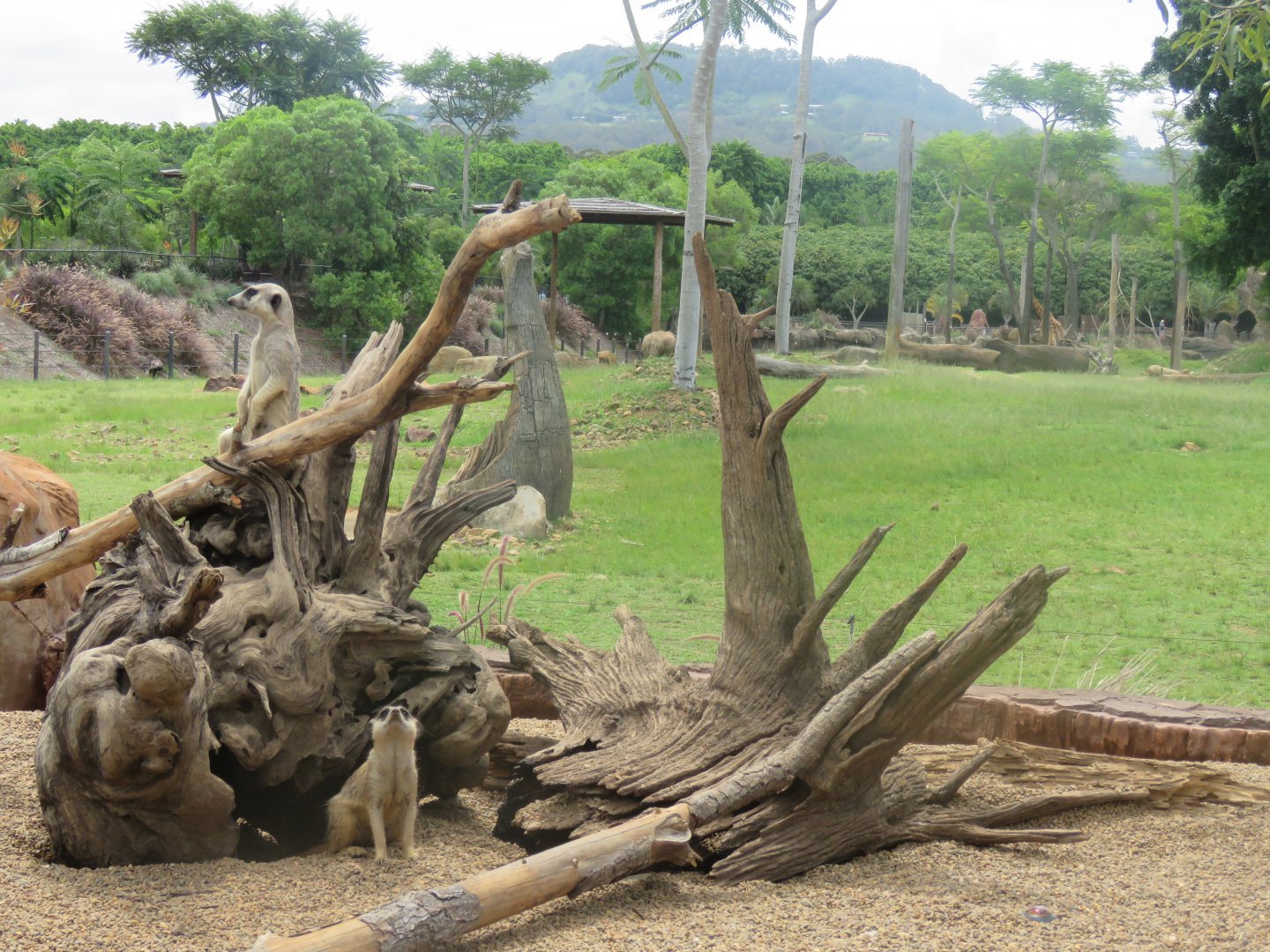
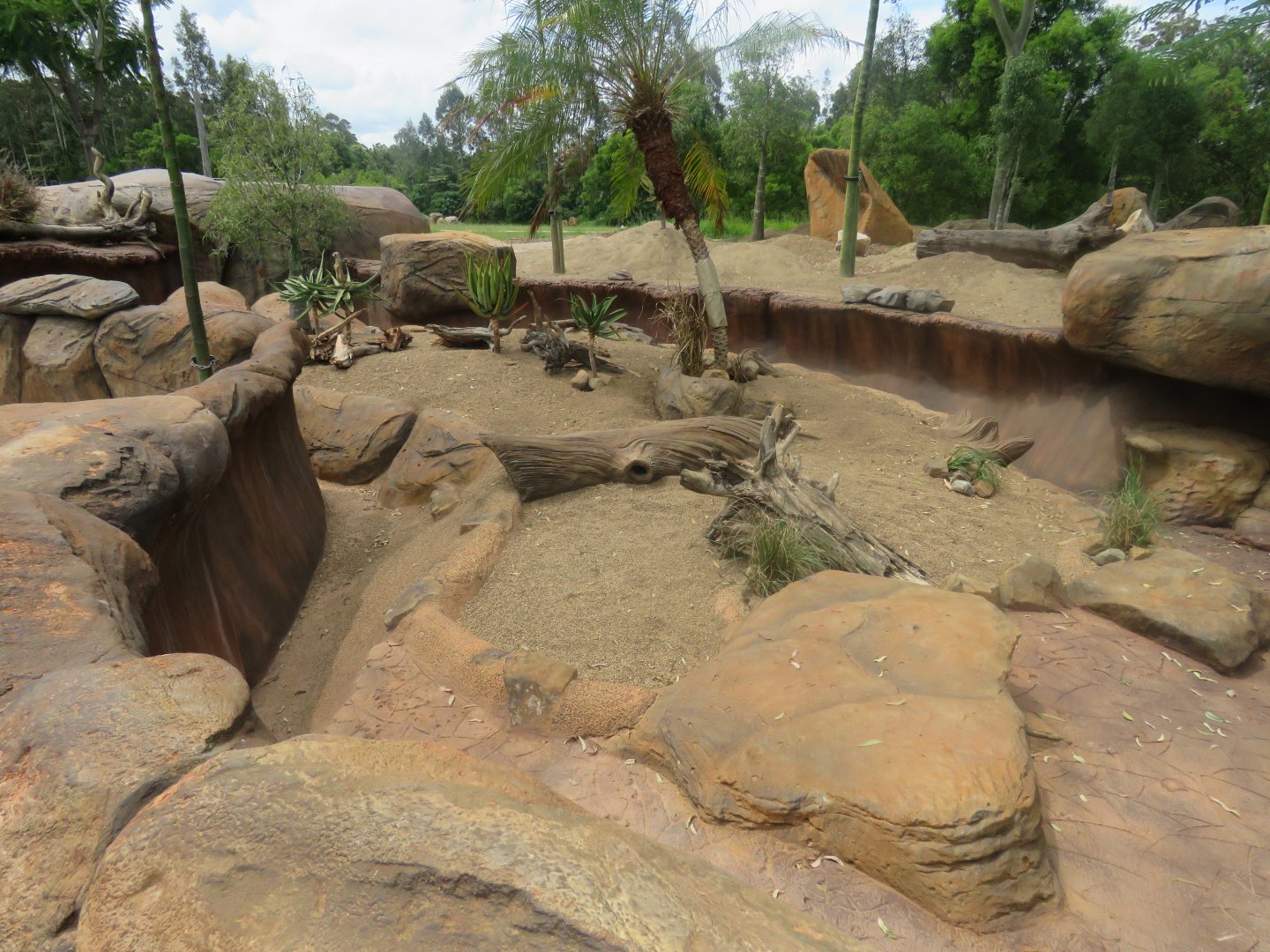
Continuing through the oversized archway I was greeted by the large savannah exhibit which is grassy and features zebra, giraffe and southern white rhinoceros. The yard is a great size and still has a range of trees and uninterrupted views across the exhibit. At the end is the zoo’s newest exhibit’s which are a pair of meerkat habitat’s. These are well designed to provide views across the habitat’s out across the savannah habitat. These enclosures are made of mock-rock and feature a dug down moat with a central platform. I was initially worried that these were entirely concrete but the centre is filled with soil topped with stones and a range of plants and logs providing climbing opportunities. The platform’s also feature a range of tunnels for the meerkats to climb through.
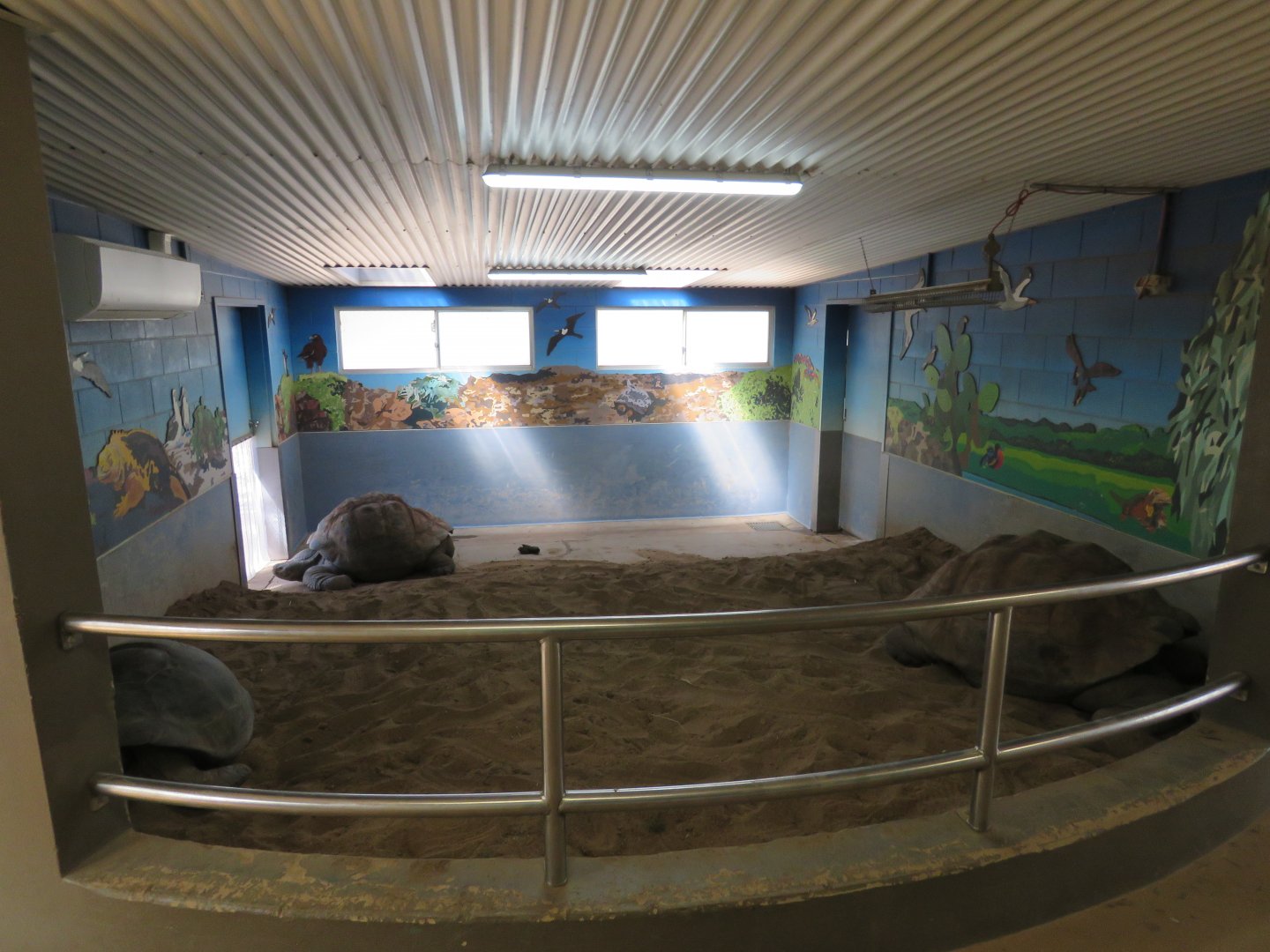
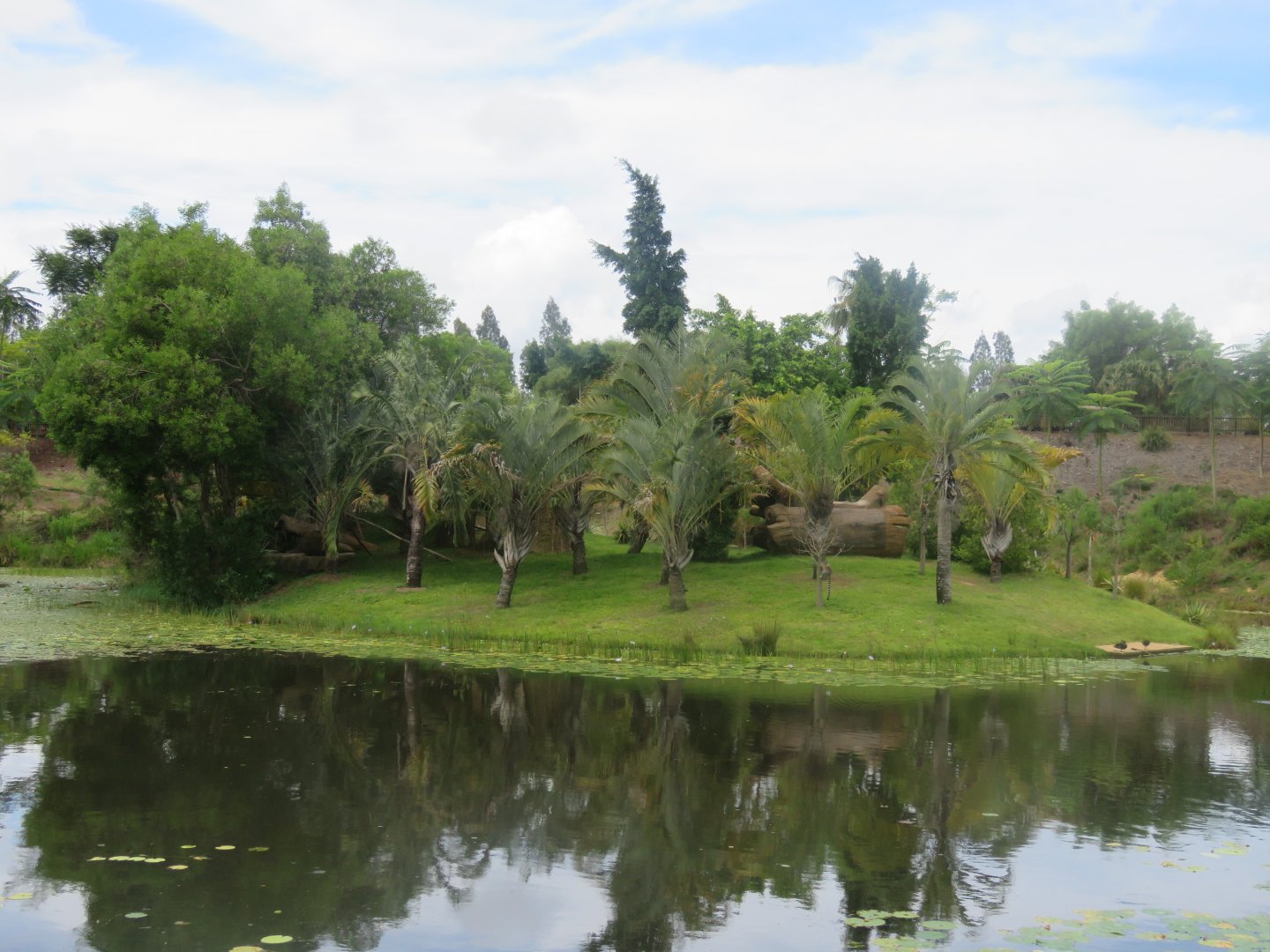
Leaving this area, it is a decent walk back down the same path to reach bindi’s island. This is a walk-through enclosure for ring tailed lemurs with a range of smaller habitat’s within. Access is through a ship-wreck with double doors which are staffed to ensure the lemurs do not escape. Walking around the island you first come to Aldabra tortoise yard where a couple of these animal’s have a nice grassy yard with some trees to roam. Across from this yard was where I saw my first lemurs. The lemurs are watched by a number of keepers at all times to prevent unwanted visitor interactions.
Continuing around the island you to come to bindi’s treehouse. On the approach you pass a low-walled yard with a range of sticks along which macaws can climb. The treehouse is three levels and under two of the staircase’s are enclosures are enclosures for an alligator snapping turtle and some boa constrictor’s. The alligator snapping turtle enclosure was in my opinion too small though that seems to be a common theme with these. Also viewable from the treehouse is a second island which house’s another group of ring tailed lemurs. From here you return the entrance and exit once again through the ship wreck.
From here I quickly walked back to the zoo entrance and across the car park to the Australian wildlife hospital where I was going on the hospital tour. This was a good hour long guided tour around the behind the scene’s areas of the hospital. This included a range of impressive off display holding areas for the koala’s which are being rehabilitated at the hospital.
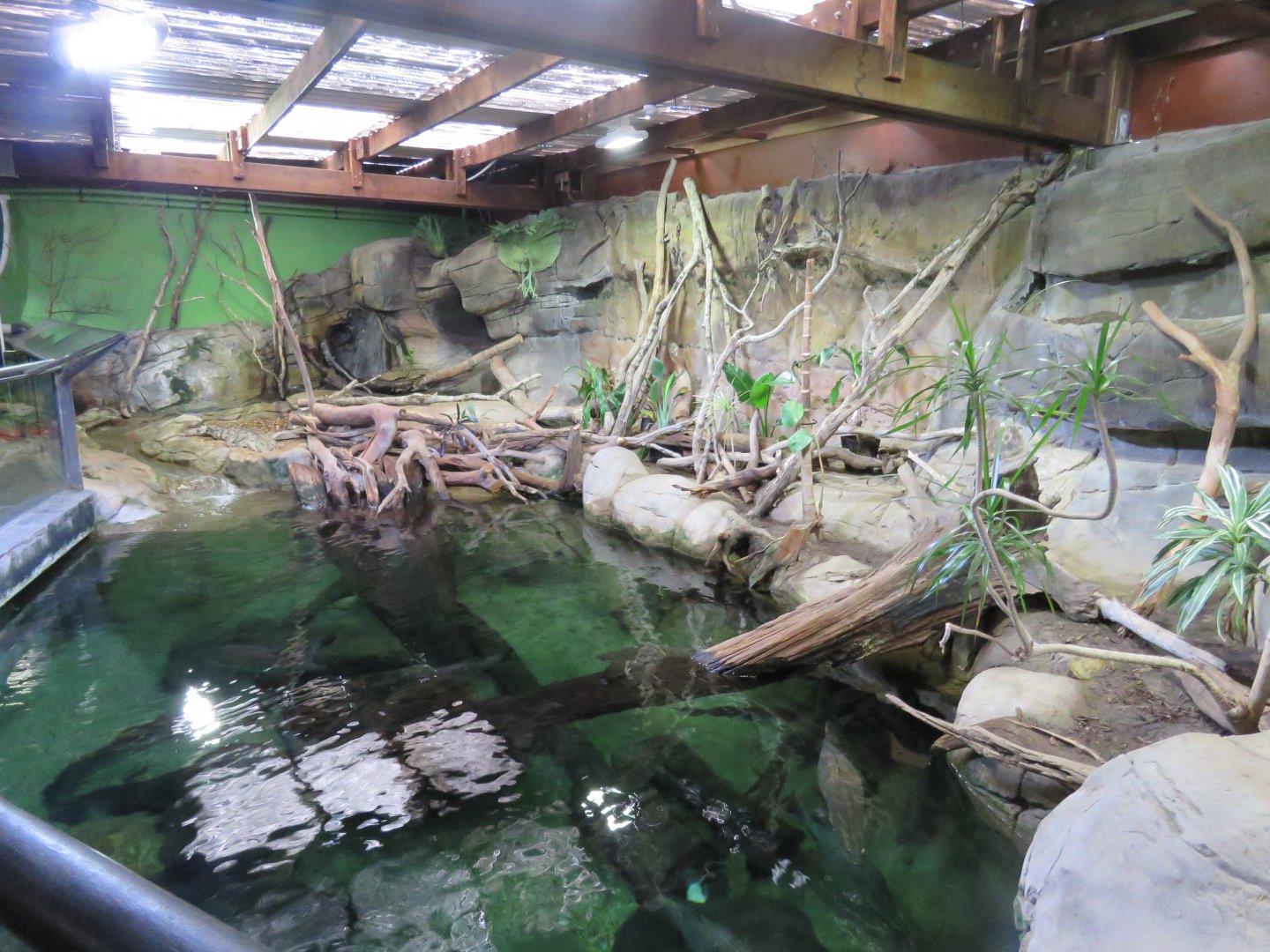
From here I returned to the entrance and started to explore the rest of the zoo. I started with the komodo dragon’s which live in a yard with high rock wall’s with glass window’s for viewing. Next door a similar but slightly larger yard is home to a perentie. Both are furnished with sand a range of plantings. Next door a yard with rock walls the whole way around and a pond and waterfall home to mertens water monitors, water dragons, bearded dragons and blue tongues.
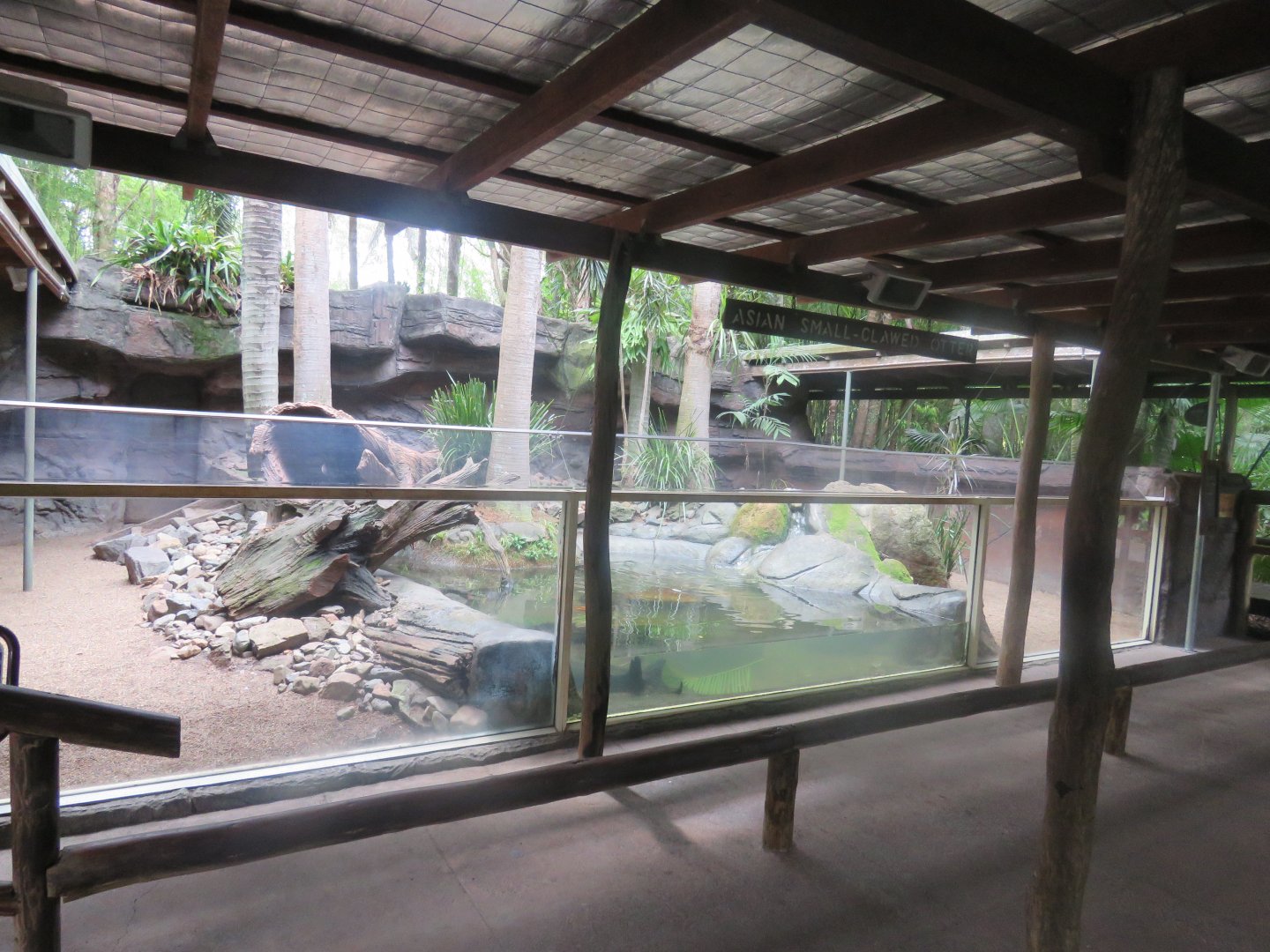
Across the path is an enclosure for Asian small clawed otters. Their exhibit feature’s a mock rock back wall with viewing on three sides through glass windows. At the front a pond provides underwater viewing and the exhibit is furnished with a range of plants.
Tucked in the bottom corner of the park a small pine log walled yard housed some tawny frogmouths.
Next I explored the crocodile environmental park. This is the section where most of the park’s crocodiles live. The yard’s are all of a similar design with chain-link fencing surrounding a yard with grass, some plants and a pond for them to swim in. Most of the ponds are natural while three are concrete ponds with clear water.
In total this section had 6 saltwater crocodile enclosure’s and 1 enclosure each for freshwater crocodile’s and American alligators.
Also in this section in the back corner was the kid’s zoo with a range of small pens for domestic goats and sheep. A nearby yard house’s some alpacas.
Following the path you see the enclosure for binturong. This feature’s a back mock rock wall with a range of spots for the animals to rest A large shelter extends out over the rest of the enclosure from the rock wall. Running from this are a series of branches for them to climb. Viewing is either through a large glass window in a shelter or over the wooden posts which make up the rest of the fence.
From here a path runs between the cassowary and dingo yards. The cassowary exhibit is made of three large chain link pens. This area is particularly lush with a range of mature trees forming a canopy and a pond.
The dingo yard is similar but also features a large area of sand. At the centre of the enclosure is a mock rock mound where they can sit. In front of this is the glass viewing window’s.
Next is the Tasmanian devil enclosure. This is a pair of glass and mock rock walled yard’s with a central mock rock house with indoor viewing. Also attached to the outside of this house is a small yard for shinglebacks.
From here I walked back to the crocoseum to view the saltwater crocodile pens at the back of this area. These are 7 similar pens with brick walls and a large concrete pond in the middle. This is surrounded by grass. Each of these is connected to a raceway which the crocodile’s use to enter the crocoseum for the Wildlife Warriors Show.
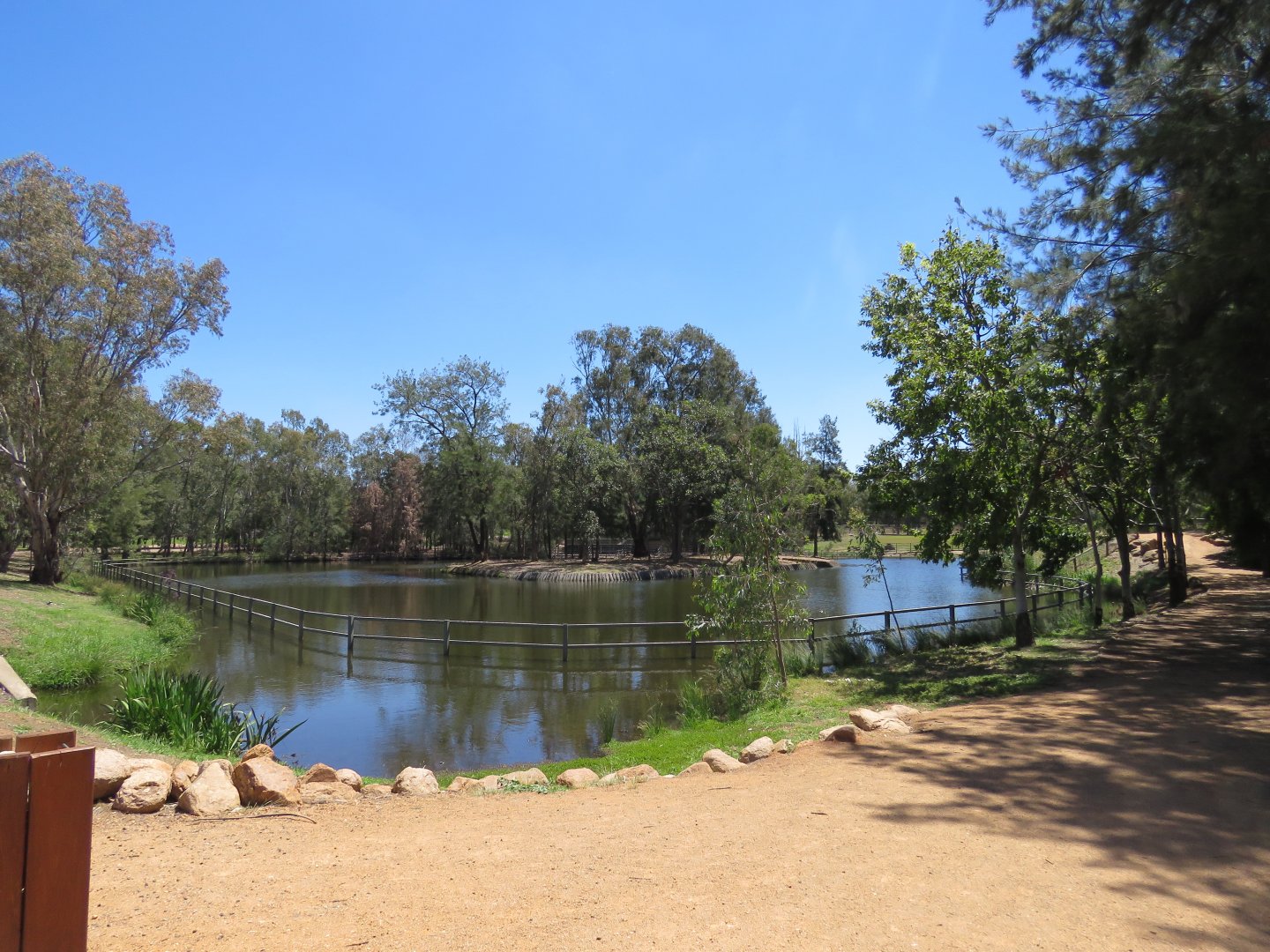
Going down the other side I entered roo heaven the large walk through habitat for kangaroos and wallabies. At the centre is an odd mock rock mound with a small yard made of pine logs at the front for short beaked echidna. Inside the walls are painted with large murals on the kangaroo’s life history. The yard is massive with a creek running through the middle and a range of rock mounds for the wallabies to climb.
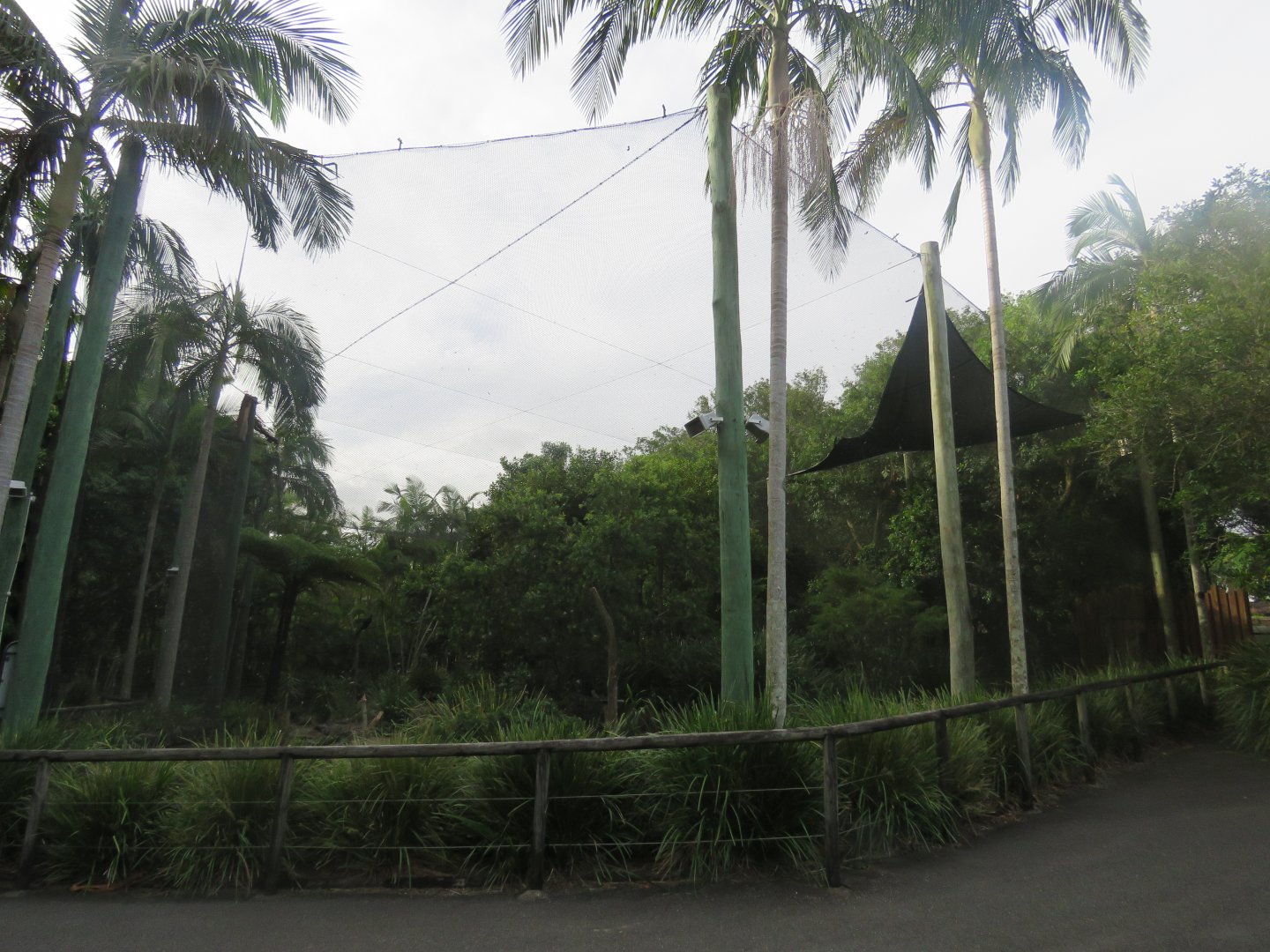
Leaving this area you enter the wetlands zone which features large chain-link walled yards with ponds and lush tropical planting for jabirus and brolgas. Another more open yard is home to emus.
From this area I went to the koala walk-through. This is one of my favourite display’s of this species in Australia. A number of mature trees are fully accessible to the koalas with only a low fence separating visitor’s from these trees. At the centre of the enclosure some perches provide an area for up close interaction. I especially like the signs under each tree which had a koala in it to help you find them.
You exit this yard in to walkthrough grassy yard for red kangaroo’s. This area then exits in to the rainforest aviary. This is an incredibly large aviary with a central wide path providing ample space on either side for the bird’s and a range of plantings along with a waterfall feature. Species present include eclectus parrot, figbird, star finch, satin bowerbird, king parrot, Burdekin duck and glossy ibis.
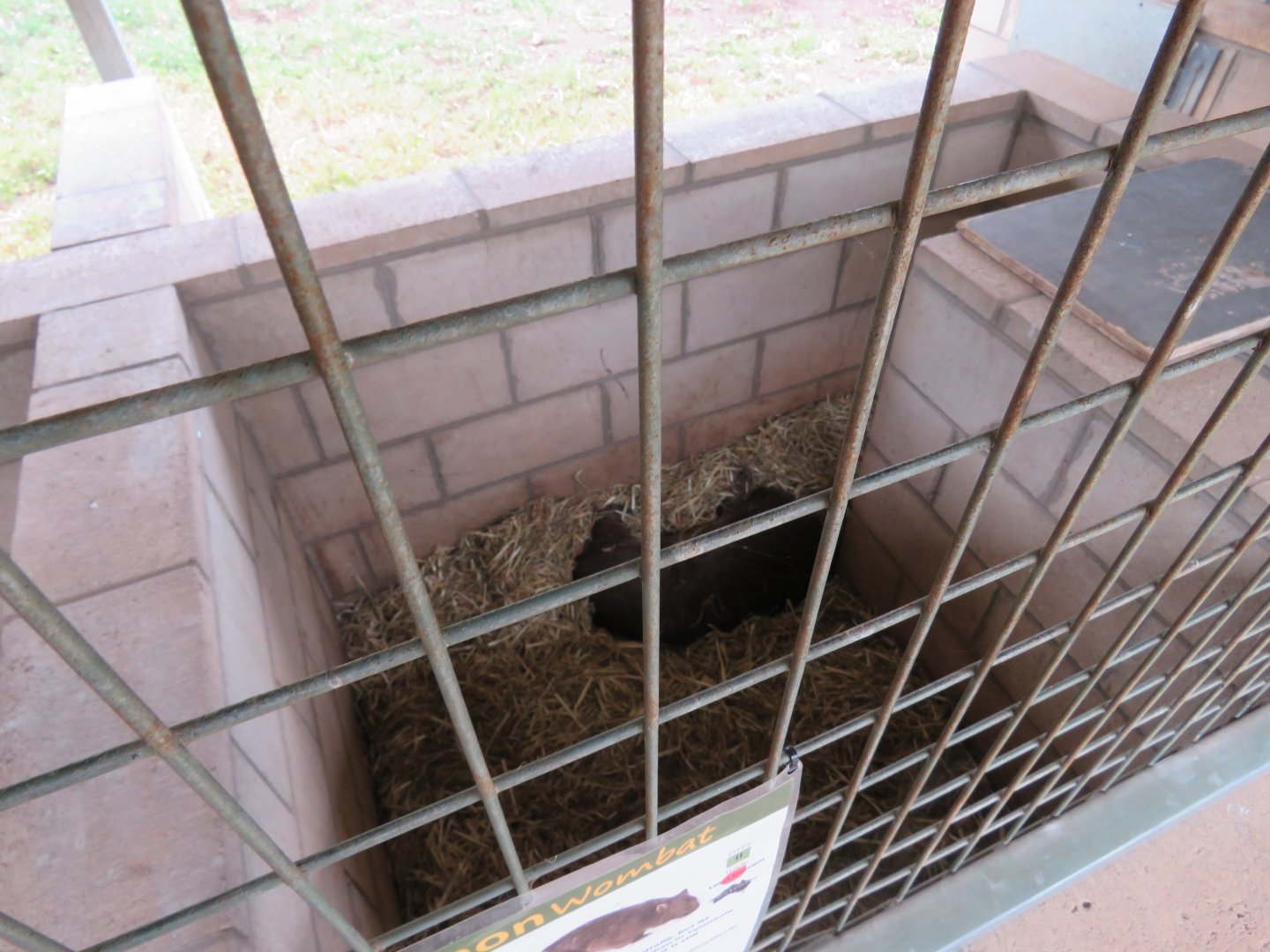
Next are the two absolutely massive wombat yard’s. These are amazing to view with varied area’s of leaf litter, grass and sand for the animal’s to explore. An inside tunnel provides viewing of the wombats within their large den’s.
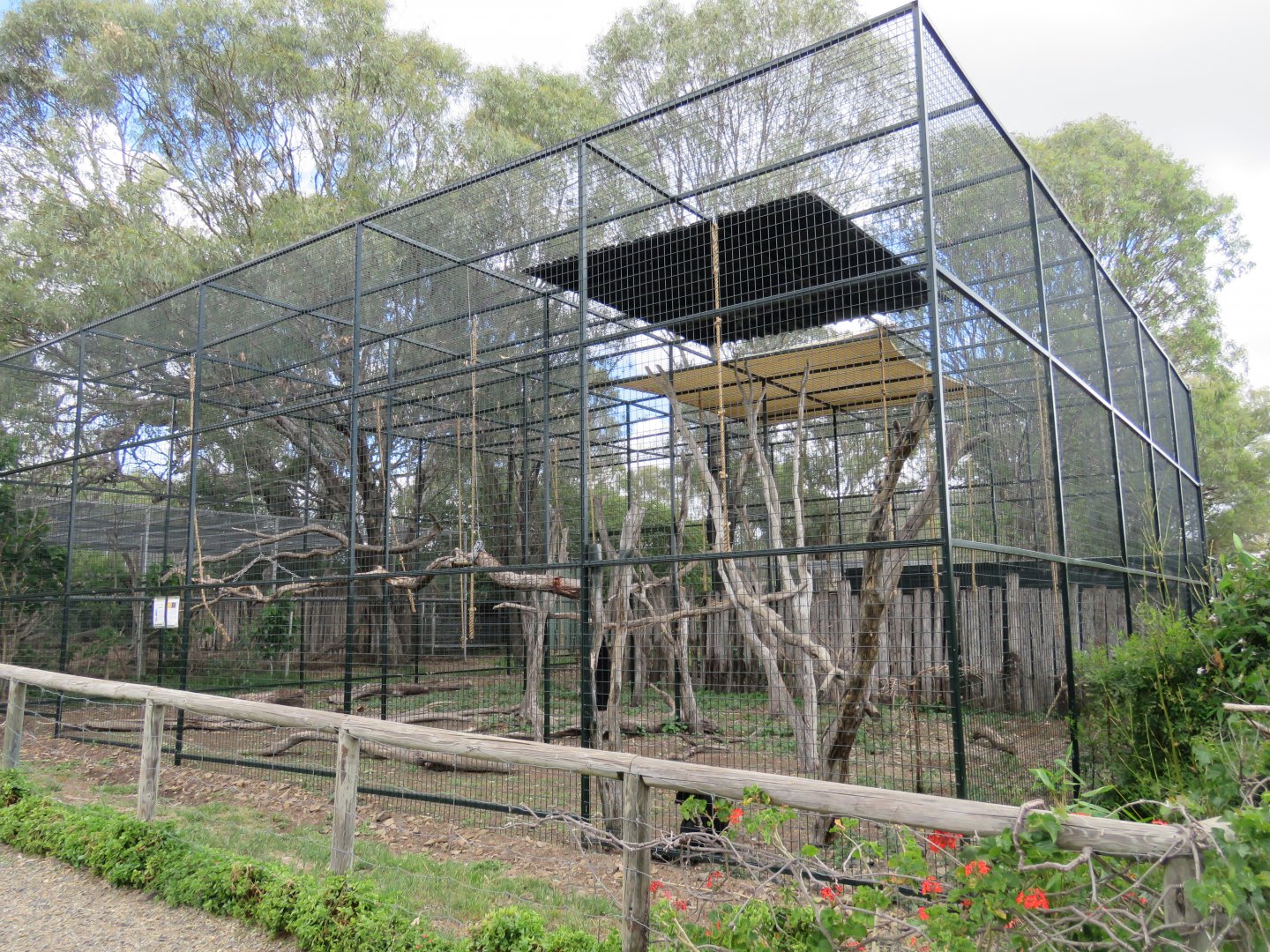
A small side path takes you round the wedge tailed eagle. This is the best habitat for these species I have seen. It is easy to see even a flighted eagle being happy in here with plenty of room to move and perches for them to rest on and it is certainly adequate for what I believe to be rescued individuals.
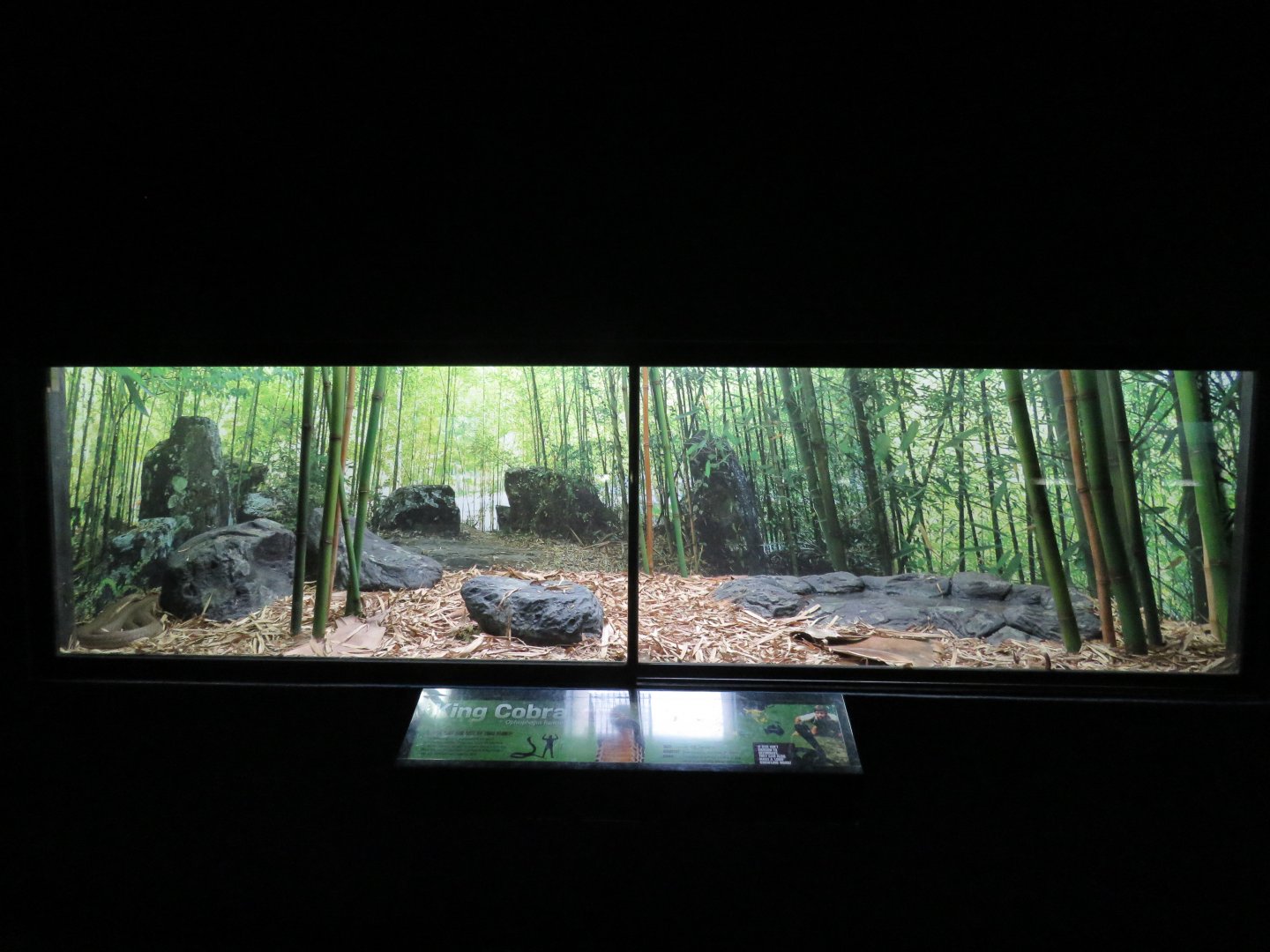
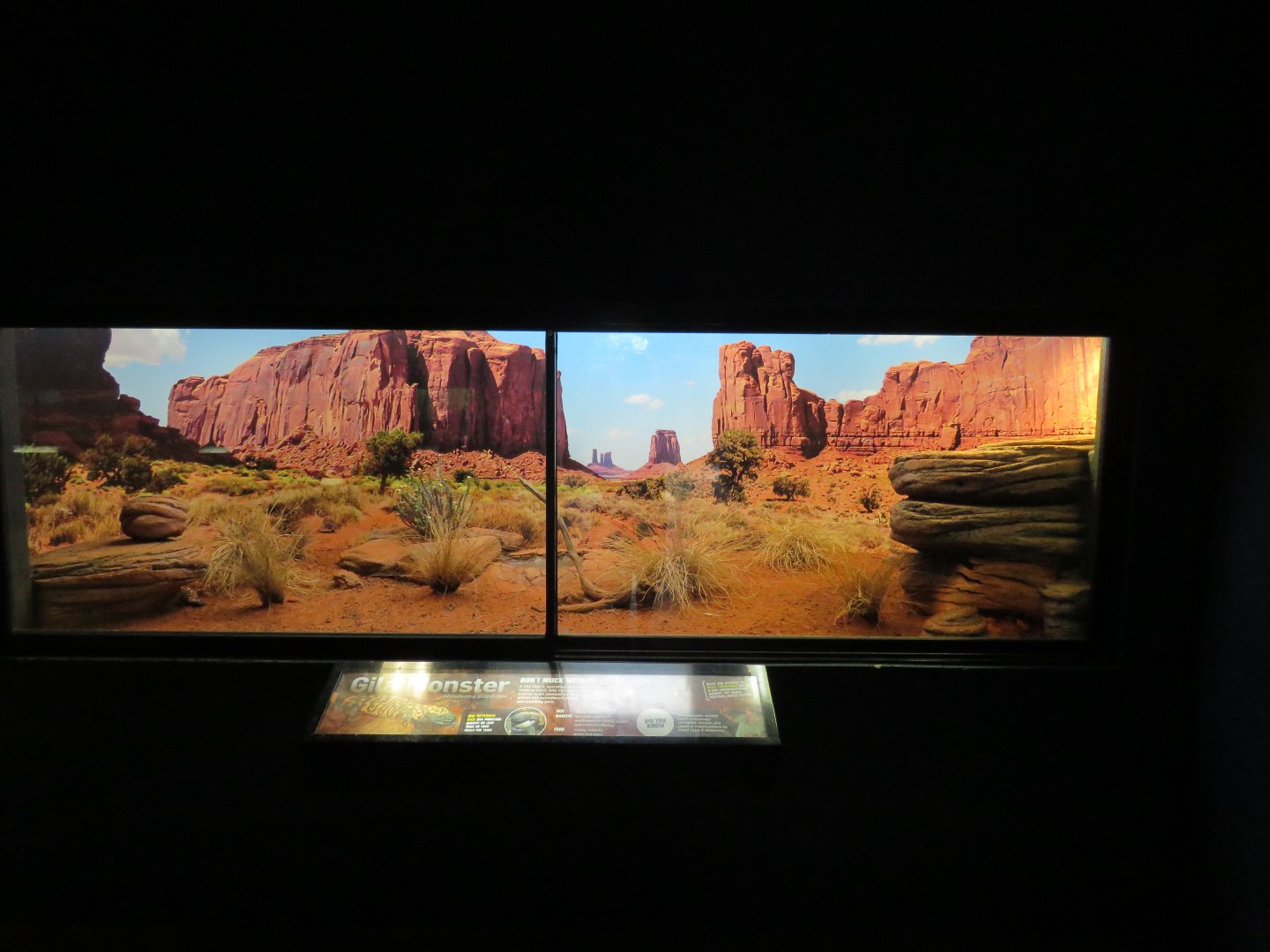
Following the path you come to the snake house which has recently become home to some lizards as well. This is the least exciting portion of the zoo with the exhibits being mostly the standard fare seen in most other zoo’s. Species on display included king cobra, western diamond back rattlesnake, taipan, eastern tiger snake, black tiger snake, gila monster, fierce snake, king brown, red-bellied black snake, green tree python, woma python, spotted python.
Exiting the reptile house I came to the koala exhibit in front of the crocoseum this is a nice wood walled yard with a boardwalk around three sides. In the centre a range of perches provide a nice habitat for the koala’s.
My final exhibit to explore was the American alligator yard’s which is a series of 6 pens running either side of a central walkway housing one alligator per yard.
As I left I visited the gift shop and got a few souvenirs of my visit. I had an absolute ball at Australia Zoo. There were very few other zoo’s on this trip where I couldn’t find an exhibit which could do with some improvement but Australia Zoo bucked that trend. While I expected a bit more from the reptile house they are certainly not bad enclosure’s.
If Australia Zoo can continue to develop new habitat’s and improve it will be great but if they had the same enclosure’s in 20 years I’m not sure they would seem outdated its just how to keep enough guests coming through to ensure the funds to run what is a very large facility.
Following my visit, I made my way back to my previous nights’ accommodation to pick up the deposit which I had left behind and then drove 2 hours south towards the Gold Coast where I was staying for the night.