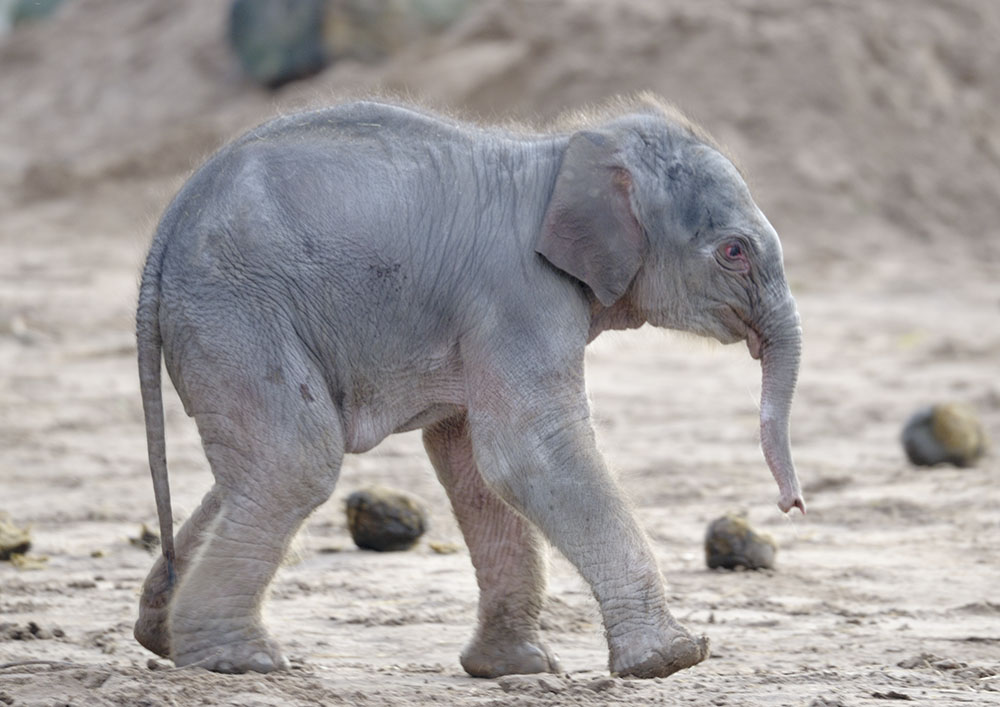
Chester Zoo The Future of Chester's Elephant Breeding Program

Forgive my ignorance, but why would Chester breed from her if she’s the offspring of an incestuous mating? Surely that’s not good genetically or for the breeding programme?

She isn't. Sithami is the offspring of Thi X Chang. Sundara = Sithami X Upali

The confusion arose because they originally thought Chang was Sundara's father.

Sundara's first calf (Hari) was sired by Upali. They didn't get the results of the paternity test back until she was already pregnant
 
Forgive my ignorance, but why would Chester breed from her if she’s the offspring of an incestuous mating? Surely that’s not good genetically or for the breeding programme?

As pointed out, it wasn't "incestuous".

I have placed "incestuous" in inverted commas as, although not ideal, such a mating is not necessarily deleterious.

I can think of some cattle breeds (already - by definition - closely-bred) where father-daughter matings have been quite widely carried out. Grandfather-grand daughter more so. The breeds survive ...

Where such a mating has occurred (and, as mentioned, it's not ideal) it would generally be followed by outcrossing to unrelated mates.

(Taun beat me to it!)
 
I was at the zoo the day after she was born, so I can say that she will be 2 on December 16th.

Thanks, by the earlier comment I assumed she was around 6 if she was only a few years of breeding age....but she is miles off and just hitting the prime age to worry for 4 years.
 
Last edited:
Before we get too "down" on Chester's breeding lets remember that two of their earlier male calves have gone elsewhere and become breeding animals.

So - in founder representation terms - both Thi and Jangoli have contributed to the current genetic make-up of the European herd.
 
I have placed "incestuous" in inverted commas as, although not ideal, such a mating is not necessarily deleterious.....


Where such a mating has occurred (and, as mentioned, it's not ideal) it would generally be followed by outcrossing to unrelated mates.

(Taun beat me to it!)

Agree. I think I heard eventually that Sithami wasn't in fact inbred but I had forgotten that part. But as you suggest, if an inbred female is then mated by an unrelated male, little harm is done. There are a few gorillas breeding in Europe that come into that category, maybe in other species too.
 
Thanks, by the earlier comment I assumed she was around 6 if she was only a few years of breeding age....but she is miles off and just hitting the prime age to worry for 4 years.

It seems there is strong indication that suckling calves are protected from EEHV by their mother's milk. If Sundara is not allowed to breed again, and therefore produce a younger calf, until this calf is past the danger age, may be that would help protect it.
 
It seems there is strong indication that suckling calves are protected from EEHV by their mother's milk. If Sundara is not allowed to breed again, and therefore produce a younger calf, until this calf is past the danger age, may be that would help protect it.

The problem is the danger age can be as high as 7 or 8! So by then the calf doesn’t need their mother milk as on solids, like Nandita was so that isn’t a solution to solve EEHV!! As both whipsnade had a calf Scott and Worburn calf Tarli survived EEHV so it’s not impossible if caught early enough.
 
Sundara's first calf (Hari) was sired by Upali. They didn't get the results of the paternity test back until she was already pregnant

We were told by one of the elephant team, at a Chester seminar, that they had balanced the risk to Sundara’s health of preventing her from breeeding for an unknown period until they got a new bull, against the risk to a baby from Upali being Sundara’s father, and felt that allowing Sundara’s to conceive was the best decision.
 
Wha males you beliefert that the elephant breeding may come to a "naturally close"? As you mentions yourself, there is still Sundara who is not even 15 years old and has many reproductive years left. She may not be the most maternal female, but she is raising her calves sucessfully (or would if they didnt die from EEHV). She will have many more calves unless the zoo decides otherwise. Plus they have Indali, who - in case she survives EEHV - will be ready to have babies in just a few years.

Regarding Thi's arthritis, I don't believe it is possible to look into the future. She is unlikely to become 50, though.

Just that it is impossible to pin the future of a breeding programme on one reproductive female, even if Indali does (fingers crossed) survive it is still a bit of a stretch, and even if Indali does survive they would hopefully bring in a new male so she does not breed with her own father. Also is it possible the fault could lie with Aung Bo as if I am not mistaken it is all his calves that succumbed to the virus and prior to his arrival Chester did have calves that survived to adulthood.
 
Non-breeding female can mean several different things, I have visited several zoos recently where it has been explained as:
- Genes are over represented in the world population and as a result animals have been placed on contraceptives (either temporarily or permanently) but keepers have to weigh the risks as even temporary contraceptives can cause issues with reproduction should the time come that the studbook wants them to breed.
- Animals are not pure subspecies and therefore hold no value to the worldwide captive breeding programme and are either spayed or permanently put on contraceptives
- Individuals have been observed mating but have never become pregnant
- An animal, for whatever reason has not been able to carry a pregnancy to term
- Or an animal has never, or stopped, cycling normally
 
Sorry, didn't check back far enough (I've only researched the Hi Way family so not sure if there were others before this):
Hari (M) (born 25/11/12) (died 27/10/15) (35 months (2 years, 11 months)) (Sundara x Upali)
Nayan (M) (born 18/07/10) (died 29/7/13) (36 months (3 years, 0 months)) (Sithami x Upali)
Bala (F) (born 21/01/13) (died 14/09/15) (32 months (2 years, 8 months)) (Sithami x Upali)
Aayu (M) (born 18/01/17) (died 25/10/18) (21 months (1 year, 9 months)) (Sithami x Aung Bo)
Raman (M) (born 12/11/06) (died 23/07/09) (32 months (2 years, 8 months)) (Thi x Upali)
Jamilah (F) (born 22/01/11) (died 03/07/13) (30 months (2 years, 6 months)) (Thi x Upali)
Nandita (F) (born 20/08/15) (died 25/10/18) (38 months (3 years, 2 months)) (Thi x Aung Bo)
all died from EEHV so maybe not Aung Bo as both his and Upali's calves have died

Nandita, Nayan, Hari, Raman, Bala, Jamilah, Aayu (age at death)
 
With the death of several elephant calves from EEHV, the future of the Chester Zoo’s elephant breeding program is uncertain. The Chester Zoo has been very successful in the reproduction of Asian elephants. Since 2006, nine elephant calves have been born. Sadly, seven of those nine have succumbed to EEHV. Given the current circumstances, the Chester Zoo should consider one of the following two options to ensure the viability of their elephant breeding program:

Option 1: Maintain the current herd dynamics and continue to breed the current herd of elephants.

Despite the passing of Sithami, Nandita, and Aayu, the Chester Zoo should continue to breed the current herd. The current herd now includes 1.0 Aung Bo, 0.1 Maya, 0.1 Thi Hi Way, 0.1 Sundara, 0.1 Indali, and 1.0 Anjan. The future of Chester Zoo’s elephant breeding program rest upon Sundara as Maya is post reproductive, Thi Hi Way is no longer being bred, and Indali is too young to be bred. Since Sundara is the only breeding female, the Chester Zoo will only be able to produce a calf every few years. It’s not practical to breed a single female in an elephant breeding program but the Chester Zoo has no other option if they wish to continue breeding the current herd. Ultimately, the Chester Zoo will have to grow the herd through Sundara as she’s the only reproductively viable female.

Option 2: Relocate the current herd of elephants to another institution and acquire a new breeding herd.

Despite the success of the current breeding herd, the Chester Zoo should relocate the current herd and acquire a new breeding herd. Nine elephant calves have been born since 2006 but seven of those nine have succumbed to EEHV. Because of the high mortality rate in their elephant calves, the Chester Zoo should relocate the current herd of elephants to another institution. Since the current herd has lost a significant number of herd members from EEHV, the Hi Way herd should be transferred to a non breeding facility. By transferring the Hi Way herd to another facility, it’ll enable the Chester Zoo to acquire a new breeding herd. The acquisition of a new breeding herd will enable the Chester Zoo to breed a herd of elephants that are not affected by EEHV. Ultimately, the Chester Zoo will need to relocate the current herd and acquire a new breeding herd to establish a successful breeding program.

Ultimately, the Chester Zoo should continue to participate in the reproduction of Asian elephants as their breeding program has been very successful. The next few years will determine whether the Chester Zoo will continue to breed the current herd of elephants or relocate the current herd of elephants and acquire a new breeding herd.
 
Did Ramon not die from the virus

If you’re referring to 1.0 Ramon (Mohti x Mapalay) 1970-12-07 (Hannover Zoo), then no. Ramon died on April 24, 1998 at the Rotterdam Zoo from Intracerebral Hemorrhage. By blowing dirt and dust into the open root of his tusk, Ramon could have caused his death. In addition, Ramon underwent two surgeries to remove his infected left tusk which could have lead to his death.
 
If you’re referring to 1.0 Ramon (Mohti x Mapalay) 1970-12-07 (Hannover Zoo), then no. Ramon died on April 24, 1998 at the Rotterdam Zoo from Intracerebral Hemorrhage. By blowing dirt and dust into the open root of his tusk, Ramon could have caused his death. In addition, Ramon underwent two surgeries to remove his infected left tusk which could have lead to his death.

Sorry I meant Raman (thi x upali) I think
 
Having just watched the latest episode of Secret Life of the Zoo (21st Feb) I found the Herpes storyline seemed to be rather rushed, not taking precedence over the other threads (jaguar, gibbons etc).

Obviously the keepers didn’t appear overly keen to be interviewed, and fair play to them. It just seemed to me that previous episodes dealing with the subject were much more involved and in-depth.

Should they have dedicated a whole episode to the subject? In that way viewers could have seen the work being done not only at the zoo but in the field as well.
 
Back
Top