The German Adventures Of A Tea-Loving Dave - April 2014

Plus I'm off to Magdeburg in just over a week so I'm hoping this writers block is only temporary.............

As the recently-posted Aquarium writeup was giving me so much trouble, and in light of the quoted message by chizlit, I am going to try shaking things up a little: I will begin writing and posting my account of Zoo Magdeburg in the linked thread I just created, as I have already written much of this account through the copious notes I took as I went around the collection. This will serve two purposes: firstly, it will get me back into the flow of writing and hopefully snap me out of my writers block. Secondly, it will allow me to provide chizlit with as much advice and information as possible before they visit Magdeburg themselves. Obviously I will then resume my account of Zoo Berlin.

I will cross-post the Magdeburg posts into this thread upon my completion of my account of Zoo Berlin, so that my account in this thread remains in chronological order.

http://www.zoochat.com/109/magdeburg-adventures-tea-loving-dave-5-a-363833/
 
@TeaLovingDave, do you mind posting the full species lists of the reptiles, amphibians, and possibly fish and invertebrate species, if you have them? I can see that you for practical reasons did not take the whole lists in the post, but if you have some complete inventory list of the Aquarium, can you post it?

Not much negative to say about the trip reports themselves though. You are an excelent writer.:D And when I read your posts, it feels like I actually see the aquarium with my own eyes. And also the collection itself is magnificent, what other aquarium have six species of jellyfish?:p
 
As the recently-posted Aquarium writeup was giving me so much trouble, and in light of the quoted message by chizlit, I am going to try shaking things up a little: I will begin writing and posting my account of Zoo Magdeburg in the linked thread I just created, as I have already written much of this account through the copious notes I took as I went around the collection. This will serve two purposes: firstly, it will get me back into the flow of writing and hopefully snap me out of my writers block. Secondly, it will allow me to provide chizlit with as much advice and information as possible before they visit Magdeburg themselves. Obviously I will then resume my account of Zoo Berlin.

I will cross-post the Magdeburg posts into this thread upon my completion of my account of Zoo Berlin, so that my account in this thread remains in chronological order.

http://www.zoochat.com/109/magdeburg-adventures-tea-loving-dave-5-a-363833/

Thanks so much TLD, I await with interest........
 
TeaLovingDave said:
However, there were a great deal of other oddities and treasures found on this floor of the building; one of the most notable of which was a display of six different jellyfish taxa, with further taxa held offshow according to what I was told by Markus. Considering the fact that even large aquariums seldom display more than one jellyfish taxon, this was rather impressive.
that's interesting; in the big Asian aquariums I am used to, there are almost always multiple species of jellyfish displayed (usually whole halls of tanks, with neon disco lighting).
 
that's interesting; in the big Asian aquariums I am used to, there are almost always multiple species of jellyfish displayed (usually whole halls of tanks, with neon disco lighting).

The smallest aquarium I've been to even had multiple jellies:p I'm pretty sure every place I've been to with jellies has had at least two species.

~Thylo:cool:
 
Until the last five years or so it was very hard to find anything other than Aurelia aurita in Europe. It's got a lot better more recently though.
 
As I have now completed my report on Magdeburg, I will be resuming my account of my first day at Zoo Berlin imminently :)

Once I have finished the Zoo Berlin report, I will (as noted previously) cross-post my Magdeburg trip reports over here so that this thread represents a full and chronological account of my trip overall - although I will likely omit the attached images and combine some of the shorter segments, with links to the original posts so that people can view the attached images there.
 
Part III: Ape House

We next made our way to the Ape House, located just to the west of the Carnivore House. This sizable building comprises two distinct sections, more or less divided between monkeys and Great Apes, surrounded by a number of large outdoor enclosures for certain of the inhabitants and a number of pond enclosures and aviaries for a variety of bird species.

The "monkey" portion of the house contained the following primate species:

Siamang (Symphalangus syndactylus)
Grey Langur (Semnopithecus entellus)
Black Tufted-ear Marmoset (Callithrix penicillata)
Geoffroy's Marmoset (Callithrix geoffroyi)
White Tufted-ear Marmoset (Callithrix jacchus)
Graell's Black-mantled Tamarin (Saguinus nigricollis graellsi)
Cotton-top Tamarin (Saguinus oedipus)
Goeldi's Monkey (Callimico goeldii)
Javan Lutung (Trachypithecus auratus)
Mandrill (Mandrillus sphinx)
Colombian Black Spider Monkey (Ateles fusciceps rufiventris)
Black-and-gold Howler Monkey (Alouatta caraya)
Red Titi (Callicebus cupreus)
Common Squirrel Monkey (Saimiri sciureus)
Stump-tailed Macaque (Macaca arctoides)
Toque Macaque (Macaca sinica)
Weeper Capuchin (Cebus olivaceus)
Hamlyn's Guenon (Cercopithecus hamlyni)
White-fronted Lemur (Eulemur albifrons)

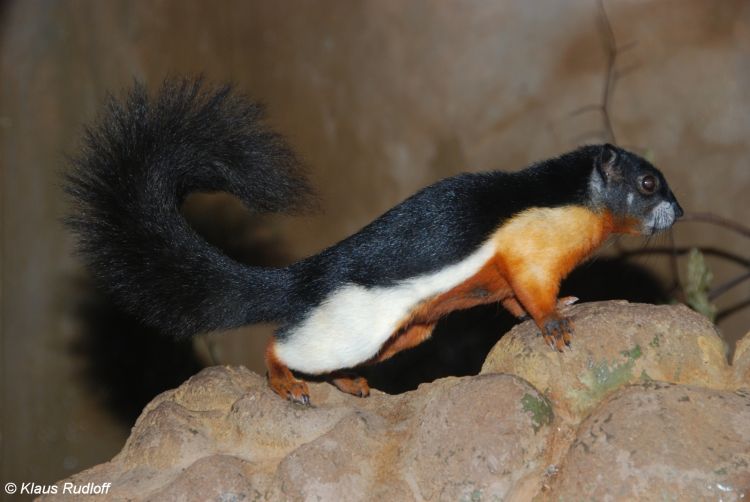
I was, all in all, rather pleased with the quality of the indoor enclosures in this section of the house; although undeniably built along functional and relatively cheap lines, they were attractive and relatively spacious, providing plenty of climbing opportunities for the species held within. The largest of these enclosures - and the first we came to on entry into the house - was that for Grey Langur, containing a large and highly active group of animals. They also possessed a large and pleasant external enclosure, which we had passed on our way into the house itself. The Red Titi enclosure is also worthy of further mention, as the individuals held within - uniquely among the primate taxa in this house - were mixed with two non-primate species; Linnaeus' Two-toed Sloth (Choloepus didactylus) and Greenish Acuchy (Myoprocta pratti). I was particularly pleased to see the latter, as it represented a long-awaited lifetick for both myself and Hel. Just around the corner from here was another enclosure, which held a mixture of Bangka Prevost's Squirrel (Callosciurus prevostii bangkanus) and Sumatra Prevost's Squirrel (C. p. rafflesi) - both of which were subspecies of this very attractive squirrel species which I had never seen up to that point in time. This enclosure is also notable through being the only indoor enclosure in the whole Ape House which did not hold any primates.

Just beyond here, the path through the house forked - one route led directly out of the house towards the external monkey and ape housing, whilst the other led towards the indoor housing for the great apes. At this point we once again met up with Markus, and made our way towards the ape enclosures; as such we did not manage to see these outdoor enclosures until later.

The great ape portion of the house held the following species:

Common Chimpanzee (Pan troglodytes)
Bonobo (Pan paniscus)
Western Lowland Gorilla (Gorilla gorilla gorilla)
Sumatran Orangutan (Pongo abelii)

Until recently, of course, this is the house which held the Bornean Orangutan male "Kevin", of whom there has been much talk on Zoochat in the past few years; I am given to understand that when he was present in the collection he was mixed with the Siamang which are now kept in the other end of the house. The indoor enclosures for the great apes were of similar design and quality to those given the monkeys held in the Ape House, albeit correspondingly larger. None equal enclosures which I have seen in the UK - particularly the Realm of the Red Ape at Chester, or the Budongo enclosures at Edinburgh - but they were entirely suited for the purpose and I found little to complain about. It was also rather pleasant to once again be able to view Bonobo, a species which is held in only one collection in the UK and as such a rare treat even for someone such as myself whose interest in Great Apes - barring a genuine liking for both species of Orangutan - can be described as fleeting at *best*.

Overall, I was rather pleased with the Ape House as a whole - it was certainly infinitely superior to the Monkey House we had visited at Tierpark Berlin the day prior, in terms of the design and feel of both the animal enclosures and the public spaces, as well as the range of species represented. A number of species we had never seen before, such as the Grey Langur and Toque Macaque, were displayed alongside species which we had seldom seen in the past, such as the Bonobo and the White-fronted Lemur, and species which are rapidly diminishing in captive collections such as the Hamlyn's Guenon. Moreover, disregarding collections such as Twycross or Apenheul which are heavily focused on primates, I would argue that this house represents the most comprehensive demonstration in a European collection of the range of diversity found within the primates. Barring a complete lack of any species of colobus, and only a single species to represent the prosimians, it is hard to think of any major group of primate which is left ignored; the latter omission is entirely understandable when one considers how many prosimian taxa are held within the nocturnal basement of the Carnivore House.

Naturally this would tend to lead into the argument about whether a collection which is highly representative of a group of animals is merely a "stamp collection" or a valid and valuable way of displaying the diversity found within the animal world. As a rule I agree that if attempts to display many different species impacts on the welfare of the taxa held, such a mindset *can* be detrimental. However, in this case I feel that the enclosure quality entirely compensates for such fears; most of the species held within were large and successfully breeding groups, but I certainly did not get the impression that the space provided was too small for such groups, nor did I feel that the enclosures were unpleasant to look at.

On leaving the Ape House, it was suggested by Markus that we make our way to the Antelope House opposite.
 
Last edited:
TeaLovingDave said:
Just around the corner from here was another enclosure, which held a mixture of Bangka Prevost's Squirrel (Callosciurus prevostii bangkanus) and Sumatra Prevost's Squirrel (C. p. rafflesi) - both of which were subspecies of this very attractive squirrel species which I had never seen up to that point in time.
these are non-breeding or being hybridised?
 
these are non-breeding or being hybridised?

I seem to recall they are a mixed and breeding group; the zoo treats bangkanus as a synonym of rafflesi and labels them accordingly - as I do not know if this is accurate I have mentioned both taxa, as I know animals ascribed to each are present.
 
Part III: Ape House

Just around the corner from here was another enclosure, which held a mixture of Bangka Prevost's Squirrel (Callosciurus prevostii bangkanus) and Sumatra Prevost's Squirrel (C. p. rafflesi) - both of which were subspecies of this very attractive squirrel species which I had never seen up to that point in time.

Were either noticeably different to the usually encountered version or was this just a ticking sub-species situation?
 
Were either noticeably different to the usually encountered version or was this just a ticking sub-species situation?

They were; a lot of the animals found within the UK are the borneoensis subspecies, which has a grey tail and blurrier margins between the areas of colour, as per this photo taken at Blackpool by JordanJaguar97:


The others within the UK are ssp-hybrid forms, or individuals of no known subspecies, and tend to fit the above description to a greater or lesser extent - especially in terms of how vivid the markings are.

The animals at Zoo Berlin have *very* vivid and clearly delineated markings, and an entirely black tail, as per this photo I managed to find online:

172271.jpg


Barring the particular size and shape of the white saddle-marking - which could be individual variation - I could see little difference between the various Zoo Berlin animals.
 
just as an example of the extreme differences in colouration between the subspecies of Prevost's squirrel, the following is C. p. pluto from Sabah: almost entirely black with a red belly. (Photo by me).

 
TeaLovingDave said:
On leaving the Ape House, it was suggested by Markus that we make our way to the Antelope House opposite.
so.... is this thread still ongoing or what? Just how far is it to the Antelope House??! :p
 
I'm still working on it :p :) loss of momentum is a frustrating thing and tends to become self-sustaining.....

I think I will polish off the bit I am working on and upload it to get some momentum back.
 
Last edited:
The latter half of this segment has been giving me trouble for some time, but in the name of getting things going I'm just uploading it as-is :)

Part IV: Antelope House and Hoofstock Paddocks

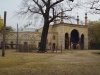
The Antelope House at Zoo Berlin is one of the oldest surviving structures in the collection, dating back to 1872, and also one of the most attractive in my opinion. In former days, I believe the paddocks surrounding the house held up to a dozen different taxa - however these days the house contains only four taxa, which are each allotted more space as a result. The paddocks were reasonably well planted and pleasant in appearance, with a number of mature trees growing within them, but were by no means unusual as hoofstock paddocks go. The taxa we observed in the paddocks were as follows:

Western Sitatunga (Tragelaphus spekii gratus)
Defassa Waterbuck (Kobus ellipsiprymnus defassa)
Giraffe (no ssp status) (Giraffa camelopardalis)
Kafue Lechwe (Kobus leche kafuensis)

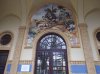
However, the main attraction of the house is as a piece of architecture in its own right; constructed in a Moorish style with yellow-gold stonework complemented by blue and red tiling, topped by minarets surrounding a central glass roof. Within, the indoor viewing area was well-planted - particularly in the central area of the house, a bright and airy room which performed a primarily decorative function. Moreover, there were a number of rather pleasant-looking paintings and other such decorations over the doors into the interior of the house.

After leaving the Antelope House, we followed Markus on a roundabout route through various hoofstock enclosures which he had not had the chance to visit whilst myself and Hel had still been within the Aquarium, on our way to the extension to the zoo which had opened in 1987.

We first briefly passed by one corner of the Ibex Mountain enclosure, which comprised a set of rocky cliffs and peaks very reminiscent in appearance to the Mappin Terraces at ZSL London Zoo, albeit in rather better condition and much more realistic, being apparently constructed with the use of real stone. We intended to visit this portion of the collection properly later in the day, housing as it did a number of species which rather interested us. However, whilst passing the enclosure we took the time to observe the group ofWest Caucasian Tur (Capra caucasica) which had recently arrived into the collection, having replaced a group of Cretan Wild Goat. The Tur were making full use of the enclosure, demonstrating very well the prodigious ability of caprines to ascend near-vertical cliff-faces and slopes with ease.

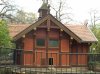
We next passed through another of the oldest remaining parts of Zoo Berlin, the Deer Territory, which comprised a number of deer paddocks and houses more or less located in the centre of the collection. Although much of the zoo had to be restored or rebuilt following the damage inflicted by World War II, three of the deer houses still remain in their original condition having been built in the closing years of the 19th century. The area as a whole was reasonably well-vegetated, being located in a shady wooded area of the zoo, and contained the following species:

Taiga Musk Deer (Moschus moschiferus)
Chinese Water Deer (Hydropotes inermis inermis)
Reeve's Muntjac (Muntiacus reevesi)
Chital (Axis axis)
Visayan Spotted Deer (Rusa alfredi)
Indian Swamp Deer (Rucervus duvaucelii)
Japanese Sika Deer (Cervus nippon nippon)
Fallow Deer (Dama dama)
Pere David's Deer (Elaphurus davidianus)
Southern Pudu (Pudu puda)
Eurasian Forest Reindeer (Rangifer tarandus fennicus)

We next briefly passed the Cattle Section, which lies just north of the Deer Territory and like the aforementioned area is one of the oldest parts of the collection, albeit with much less remaining of the original structures. This area contains a rather decent collection of cattle taxa, although the rarest taxon held - the Mountain Anoa (Bubalus quarlesi) - is permanently offshow. The selection of taxa held on-display is, however, no less rich for this omission, comprising the following:

Hornless Domestic Yak (Bos grunniens)
South European Waterbuffalo (Bubalus bubalis)
Plains Buffalo (Bison bison bison)
European Wisent (Bison bonasus)
Indian Gaur (Bos gaurus gaurus)
Javan Banteng (Bos javanicus javanicus)
Congo Buffalo (Syncerus caffer nanus)
Lowland Anoa (Bubalus depressicornis)

Our route next took us past one side of the Seal Enclosure, a complex of three pools with sandstone cliffs providing a backdrop. The two pools which we observed at this point in time contained Eastern Atlantic Harbour Seal (Phoca vitulina vitulina) in one, and a mix of Northern Fur Seal (Callorhinus ursinus) and Cape Fur Seal (Arctocephalus pusillus pusillus) in the other. The latter enclosure had formerly contained a group of Cape Fur Seal, but all but one animal had recently left the collection due to the arrival of two female Northern Fur Seal. This turn of events had rather pleased myself and Hel, as it meant our trip would still provide us with a pinniped lifetick - something which had been in doubt due to the passing of the final Baikal Seal at Leipzig in late 2013. The two Fur Seal taxa were mixed when we visited, and seemed to interact well and with no conflict visible, and the pools seemed reasonably spacious and pleasant to look at.

We next walked past a relatively large paddock containing Grant's Zebra (Equus quagga boehmi) and Common Eland (Taurotragus oryx), before reaching a thickly planted area for African ungulate species known as the "Earth House". I rather liked this area, as the thick vegetation and trees of the enclosure worked quite well in giving an impression of the natural habitat of the largely forest-living taxa housed in this area. One portion of the area housed a group of Eastern Bongo (Tragelaphus eurycerus isaaci), whilst another comprised a mixed enclosure for Okapi (Okapia johnstoni) and Natal Red Duiker (Cephalophus natalensis). The latter of these, of course, is a species combination which I have seen previously at Chester Zoo, and is one which seems to work very well both in terms of suitability of species and the frictionless interaction of the taxa involved. I did, however, notice that the Duikers in this collection were significantly more bold and active when compared with those I had seen previously.

Just around the corner from here, we came to a mixed enclosure for breeding groups of two antelope taxa; Black Sable Antelope (Hippotragus niger niger) and Kirk's Dik-dik (Madoqua kirkii), followed by a large breeding complex for Eastern Black Rhinoceros (Diceros bicornis michaeli). The indoor housing for the rhino breeding complex is off-display, but some of the outdoor enclosures for the taxon were visible to the public. The latter were pretty standard as rhinoceros enclosures go, being pleasing enough to the eye but nothing special.

Just prior to crossing the Lichtenstein Brücke, which crosses the Landwehrkanal in order to reach the zoo extension, we saw a small but no less pleasant enclosure which housed Giant Anteater (Myrmecophaga tridactyla).

(Attached are images of the Antelope House, a closeup of artwork over the entrance to the Antelope House, one of the houses in the Deer Territory, an example of signage from the Deer Territory, one of the paddocks surrounding the Cattle House and a statue immediately prior to the Lichtenstein Brücke)
 

Attachments

  • DSCF9403.jpg
    DSCF9403.jpg
    1.9 MB · Views: 32
  • DSCF9413.jpg
    DSCF9413.jpg
    1.4 MB · Views: 27
  • DSCF9418.jpg
    DSCF9418.jpg
    1.6 MB · Views: 25
  • DSCF9426.jpg
    DSCF9426.jpg
    1.3 MB · Views: 34
  • DSCF9431.jpg
    DSCF9431.jpg
    2 MB · Views: 27
  • DSCF9456.jpg
    DSCF9456.jpg
    1.8 MB · Views: 24
Last edited:
Part V: Expansion Area to Penguin House

We crossed the Lichtenstein Brücke to reach the expansion area of the zoo, opened in 1987 under the directorship of Heinz-Georg Klös. Broadly speaking, this area consisted of six enclosures, two of which were significantly larger than the others. As the map showed that a single circular route would take us past all six enclosures, we elected to walk around the area in a counter-clockwise direction, which would lead us back to the bridge and into the main body of the zoo once again.

The first enclosure we reached was a sizeable and very pleasant South American pampas enclosure, which planted with trees in areas and contained a small waterfowl lake at one end, but otherwise consisted solely of large expanses of grass. This enclosure held the following taxa:

Patagonian Mara (Dolichotis patagonum)
Capybara (Hydrochoerus hydrochaeris)
Guanaco (Lama guanicoe)
Darwin's Rhea (Rhea pennata)
Southern Screamer (Chauna torquata)
Coscoroba Swan (Coscoroba coscoroba)

This combination of taxa seemed to work rather well, with no averse interaction between the animals observed, and overall I rather liked this enclosure even if the taxa held within were all relatively commonplace.

The next enclosure we reached was smaller, and fronted by a cobbled area roughly 4 metres wide, but overall of similar style and quality to the pampas enclosure, and held a group of Red Kangaroo (Macropus rufus) – a pleasant enough species but not one I have ever been overly fond of. However, this was more than compensated for by the taxon held in the next enclosure, Japanese Serow (Capricornis crispus). As may have already been gathered in prior portions of this thread, I am rather fond of unusual caprines and as such, any chance to see this taxon – on the verge of disappearing from European collections – is never something to be sneezed at. The enclosure itself was rather large and well-planted, much like the other enclosures in this area, but the terrain was significantly more irregular with a number of rocky outcrops protruding from the ground. Overall I thought it entirely suitable for the taxon.
Opposite this enclosure was a small paddock with a general “Australian” theme, containing Emu (Dromaius novaehollandiae) and Parma Wallaby (Macropus parma). Although similar in quality and general enclosure design to the other enclosures in the expansion area, and entirely suited to the taxa held within, something about this enclosure fell flat for me. I suspect this was partially due to the fact that both of the taxa held within are extremely commonplace, but in addition it struck me as almost an afterthought when compared with the other enclosures. Next to the paddock containing the Japanese Serow was a large and sandy paddock for a group of Przewalski's Wild Horse (Equus ferus przewalskii), a taxon which rather demonstrates how contradictory and random the tastes of an individual may be; despite being just as commonplace as both of the aforementioned taxa, I am always pleased to see this particular taxon. The paddock itself was, as noted, bare and sandy unlike the preceding enclosures, with a small handful of logs and felled trees dotted around the enclosure, but was reasonably large and seemed to be suited to the animals held within.

The final and largest of the enclosures in the expansion area was an African Savannah paddock, very similar in design to the Pampas paddock but lacking the waterfowl lake and containing rather more trees and vegetation. The enclosure contained the following taxa:

Domestic Helmeted Guineafowl (Numida meleagris domestica)
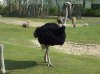
South African Ostrich (Struthio camelus australis)
Springbock (Antidorcas marsupialis)
Blesbok (Damaliscus pygargus phillipsi)
Greater kudu (Tragelaphus strepsiceros)

I was very pleased by both the selection of taxa held in this enclosure, and the enclosure itself; the inhabitants of the enclosure interacted without any observed problems, and represent a range of less commonly-seen taxa with the exception of the domestic guineafowl. One of the taxa – the Springbock – was in point of fact a lifetick, although I was unable to get any decent photographic opportunities of those found in the enclosure and thus resolved to return to the enclosure at a later point to try again.
Overall, although with the exception of the Japanese Serow there were no taxa held in the extension area which qualify for the title of a real rarity or oddity in a captive collections, I felt that this area of Zoo Berlin was a very solid and high-quality set of enclosures, which were very much the equal of some of the best enclosures for these taxa I had seen in the UK – if not the better. Certainly the South American pampas enclosure benefited from not including a taxon like the South American Tapir, which would almost invariably be found in a similar enclosure in the UK and which would as a result produce a rather less attractive enclosure.

We then made our way back over the bridge and into the main body of the zoo, intending to roughly follow the perimeter of the zoo towards the Fasanerie. The first area we reached whilst doing so were the three paddocks around the Horse House, a rather attractive building constructed in 1909 in a similar style to the Antelope House previously discussed. The paddocks themselves were relatively stark and functional, albeit of a decent size, and separated from the public footpaths by a narrow moat. The taxa held in these paddocks were as follows:

Scimitar-horned Oryx (Oryx dammah)
Grevy's Zebra (Equus grevyi)
Gemsbok (Oryx gazella)

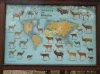
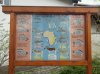
One thing I rather liked in this area was a sign displaying the difference between the various taxa of wild equine found in Africa, including the extinct Quagga and the almost-certainly extinct Nubian Wild Ass. As has been noted already, the quality and quantity of signposting and noticeboards discussing taxonomic groups and differences at both Tierpark and Zoo Berlin had seriously impressed me; as such, this noticeboard only continued the trend.

We then continued along to the third of the pools comprising the Seal Enclosure, which contained California Sea Lion (Zalophus californianus) and was in design and quality very much akin to the two already discussed, albeit rather larger. Next to this was a fourth enclosure, technically part of the same overall complex, which contained Asian Short-clawed Otter (Aonyx cinerea). Although this species is one with which I am not particularly enamoured, considering the fact it is near-ubiquitous in zoological collections, I did find the enclosure to be an unusual and interesting means of displaying the taxon. Through use of glass-fronted raised pools, rockwork, moats and logs the otters were able to move around and swim on a number of levels, something which to my recollection I do not believe I have seen elsewhere.

Around the corner from the otter exhibit, we came to the Penguin House – one of the newer areas of the zoo, having opened in 2002 at the same time as the renovated Seal Enclosure, it comprised a large inside enclosure and two smaller outdoor enclosures. The internal enclosure comprised a large dome structure with rockwork at the rear, and a substantial pool for the inhabitants at the front, and held a combination of King Penguin (Aptenodytes patagonicus) and Northern Rockhopper Penguin (Eudyptes moseleyi). I was very much impressed with both the design and the content of this enclosure, having as I do something of a soft spot for both of these penguin taxa further to observing them on many occasions at Edinburgh Zoo. In some ways, this enclosure was more suited to the taxa when compared to the penguin enclosures at Edinburgh to my eyes. The two external penguin enclosures, holding Humboldt Penguin (Spheniscus humboldti) and Jackass Penguin (Spheniscus demersus), were slightly less impressive. Although very much suited to the taxa they held, providing them with plenty of space and being appealing enough to look at – being designed more or less along similar lines to the Seal Enclosure they backed onto – these enclosures provided nothing that I have not seen many times before, being similar to the many other enclosures I have seen for both taxa.

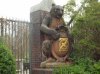
(Attached are photographs of the South African Ostrich in the African Savannah enclosure, an example of signage discussing African equine taxa, the Horse House with Grevy's Zebra, and a statue at the otter enclosure)
 

Attachments

  • DSCF1260.jpg
    DSCF1260.jpg
    1.4 MB · Views: 20
  • DSCF9466.jpg
    DSCF9466.jpg
    1.6 MB · Views: 34
  • DSCF9468.jpg
    DSCF9468.jpg
    1.8 MB · Views: 25
  • DSCF9470.jpg
    DSCF9470.jpg
    1.5 MB · Views: 22
Is the Nubian wild ass the founder of the common donkey? it looks to typical of the domesticated ass I could imagine it was domesticated rather early on.
I enjoy these threads TLD but they must take a lot of putting together for you thanks for doing them.
 
The thread lives! :D

Now all we need is for zooboy28 to restart his In America thread and everything will be back on track... :p
 
Is the Nubian wild ass the founder of the common donkey? it looks to typical of the domesticated ass I could imagine it was domesticated rather early on.

I believe both the Nubian and Somali subspecies contributed to the creation of the domestic donkey - although morphologically the domestic strain does indeed resemble the Nubian more.
 
Back
Top