The German Adventures Of A Tea-Loving Dave - April 2014

Certainly the South American pampas enclosure benefited from not including a taxon like the South American Tapir, which would almost invariably be found in a similar enclosure in the UK and which would as a result produce a rather less attractive enclosure.

Would the enclosure be less attractive simply because it also contained a commonly displayed species? Or because that species would have done something to make the enclosure unattractive? I'm not sure I can really follow the logic of the former, especially as tapirs are such awesome animals.

I found the extension area of the Berlin Zoo rather odd, given its very different display style to the rest of the zoo. The serow were very cool though.
 
Would the enclosure be less attractive simply because it also contained a commonly displayed species? Or because that species would have done something to make the enclosure unattractive? I'm not sure I can really follow the logic of the former, especially as tapirs are such awesome animals.

I found the extension area of the Berlin Zoo rather odd, given its very different display style to the rest of the zoo. The serow were very cool though.

the enclosure used to held brocket deer too.....
 
I found the extension area of the Berlin Zoo rather odd, given its very different display style to the rest of the zoo. The serow were very cool though.

I also dislike the layout/overall feel of this area and usually avoid it, unless there is spare time.
@tld. Really enjoyed this thread and even though I know Berlin reasonably well, the amount and accuracy of detail is great and helpful.
 
Would the enclosure be less attractive simply because it also contained a commonly displayed species? Or because that species would have done something to make the enclosure unattractive? I'm not sure I can really follow the logic of the former, especially as tapirs are such awesome animals.

In my experience, mixed South American enclosures containing tapir tend to become quite muddy and unkempt in appearance, especially if there is already a pond or pool in the enclosure - as such, considering I was very much taken by how well-kept the enclosure looked, I thought the addition of tapir would detract somewhat. This would be the case to my mind even if the Baird's Tapir held at Zoo Berlin (a vanishingly unusual taxon on this side of the Atlantic) had been in this enclosure.

And tapirs *are* indeed awesome - you'll get my thoughts on the tapirs of Zoo Berlin anon :)

the enclosure used to held brocket deer too.....

And Pampas Deer until 2002 or thereabouts!
 
I forgot about the Marsh Deer..... quite a lot of neotropical deer lost to European collections in the past decade or so :( as far as I know we now just have the still-common Southern Pudu and a single holder of Grey Brocket in Spain.
 
Part VI: Condor Aviary to Seabird Aviary

The next enclosure we reached was a sizeable aviary for Andean Condor (Vultur gryphus). I was rather pleased to see this species, as it is one with which I am rather fond, and even more pleased to note the fact that the individuals at Zoo Berlin seemed to have a decent amount of space; however the aviary was not quite as large as other aviaries for the taxon which I have seen. In my opinion, the excellent vulture aviary already discussed at Tierpark Berlin would have made a far better enclosure for this species, even if the condors were to share with those taxa already present within.

The aviary next to that of the condors comprised a large and rather pleasant wetland enclosure, holding the following taxa:

Patagonian Crested Duck (Lophonetta specularioides specularioides)
Black-faced Ibis (Theristicus melanopis)
Eurasian Spoonbill (Platalea leucorodia)
Egyptian Goose (Alopochen aegyptiacus)
Black Stork (Ciconia nigra)
Common Goldeneye (Bucephala clangula clangula)
White-faced Whistling Duck (Dendrocygna viduata)
Magpie Goose (Anseranas semipalmata)
Asian Woolly-necked Stork (Ciconia episcopus episcopus)
Scarlet Ibis (Eudocimus ruber)
Maguari Stork (Ciconia maguari)

All of these taxa represented very nice species, and in the case of the Maguari Stork, a taxon I had never seen before. Unfortunately my view of this species was rather limited, as when I visited the animals were kept in an adjoining semi-offshow cage - as I know the species has bred a few times at the collection, it is possible they were separated for this reason. However, the two species I was most pleased to see within this enclosure were in fact the Black-faced Ibis and Woolly-necked Stork; although I have seen both species on a number of occasions they just have *something* that appeals to me.

We next passed an enclosure for African Hunting Dog (Lycaon pictus); a pleasant and reasonably-sized paddock seperated from the path by a moat fed by the "Hop Ditch" flowing through the preceding enclosure as well as several of the surrounding enclosures. The paddock was planted with a number of mature trees, no doubt present prior to the current occupants of the enclosure, as well as a number of tree trunks and bushes. From here, our path started to run behind the Fasanerie, with large enclosures coming off the back of the building to the left of us, and the occasional aviary to the right of us, against the border of the zoo perimeter. The external Fasanerie enclosures contained the following taxa:

Flightless Steamer Duck (Tachyeres pteneres)
European Eagle-owl (Bubo bubo bubo)
Southern Cassowary (Casuarius casuarius)
Greater Rhea (Rhea americana)
Wild-form Muscovy Duck (Cairina moschata)
Indian Sarus Crane (Grus antigone antigone)

These enclosures were all pleasant enough, thickly planted with vegetation, and contained taxa which I find rather appealing - particularly the wild-form Muscovy Duck and the Flightless Steamer Duck. However, I did find myself rather wishing that rather than the commonplace Southern Cassowary, they had held Dwarf or Northern :p however, this was but a fleeting thought, as I knew that the Fasanerie proper and Bird House would, between them, more than sate my appetite for unusual avian taxa.

Against the perimeter of the zoo, and facing some of these enclosures, we came to a large and well-designed enclosure for Waldrapp Ibis (Geronticus eremita); unlike the enclosure for the same taxon at Tierpark Berlin, which I had felt was a little out-of-place where it was situated and resembled more or less every other enclosure for the taxon which I have seen, I was rather more impressed with this one. It looked much the same as the sister enclosure at Tierpark, true, but somehow it "fit" where the other had not. The aviary was thickly vegetated and, at the back of the enclosure, featured a stonework wall with alcoves dotted here and there, mimicking the natural habitat of the taxon.

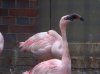
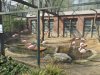
Next to this enclosure were two flamingo aviaries, tucked away and to an uneducated eye nothing of great note - they were perfectly adequate for the animals held within, comprising a small pool and vegetated external enclosure and an off-display indoor enclosure, but I daresay that the average zoo-goer would dismiss them as much the same as the other flamingos held at the zoo - or indeed the many other flamingos held in collections throughout Europe. However, to zoo enthusiasts such as ourselves, the inhabitants of these enclosures were of much more note than any of the taxa held in the large Fasanerie aviaries already mentioned. The first of these held a species which, although very unusual as far as myself and Helly were concerned as natives of the UK, is admittedly much more commonplace on the Continent; Lesser Flamingo (Phoeniconaias minor). These flamingos were mixed with a handful of Black-necked Stilt (Himantopus mexicanus). However, the second flamingo aviary held a mixed group of two very unusual taxa indeed; Puna Flamingo (Phoenicoparrus jamesi) and Andean Flamingo
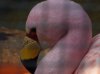
(Phoenicoparrus andinus), both of which are successfully breeding at the collection and are only found in one other public collection within Europe, Slimbridge WWT in the United Kingdom. As such, with our visit to Zoo Berlin myself and Helly were able to say we had seen every single individual of these two taxa held on public display within Europe - and as the population of both taxa is severely diminished in the UK, to the point of only a single geriatric Puna remaining, I fear that even the breeding population at Berlin will not be sufficent to ensure either taxon remains in Europe for much longer.

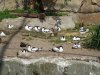
Prior to viewing the Fasanerie proper, we decided to take the opportunity to visit a small seabird aviary which was opposite the northern end of the Fasanerie building. This aviary included a large, deep pool in the middle, with rockwork, pebbles and sand, and vegetated areas surrounding the pool on all sides, barring a small portion of path which - through a gate into the aviary - the public were able to access in order to watch the inhabitants with more ease.

This seabird aviary was both very pleasant and stocked with a rather impressive array of taxa; although biased towards native seabirds and shorebirds of northern Europe, taxa from the New World were also represented. The aviary held the following taxa:

Bufflehead (Bucephala albeola)
Garganey (Anas querquedula)
Smew (Mergellus albellus)
Common Goldeneye (Bucephala clangula clangula)
European Eider (Somateria mollissima mollissima)
Eurasian Green-winged Teal (Anas crecca crecca)
Arctic Tern (Sterna paradisaea)
Ruddy Turnstone (Arenaria interpres)
Ruff (Philomachus pugnax)
Pied Avocet (Recurvirostra avosetta)
Common Redshank (Tringa totanus)
Inca Tern (Larosterna inca)
Eurasian Curlew (Numenius arquata)
Squacco Heron (Ardeola ralloides)
Black-necked Stilt (Himantopus mexicanus)

Being rather fond of shorebirds, and having seen many of these taxa in the wild, I was rather pleased overall by this aviary.

We then turned our attention to the Fasanerie, one of the points of the day which I had most been looking forward to.

(Attached are photographs of a Lesser Flamingo, the Andean and Puna Flamingo aviary, a Puna Flamingo and some of the shorebirds within the Seabird Aviary)
 

Attachments

  • DSCF9489.jpg
    DSCF9489.jpg
    975.9 KB · Views: 20
  • DSCF1120.jpg
    DSCF1120.jpg
    2.1 MB · Views: 30
  • DSCF1124.jpg
    DSCF1124.jpg
    945.4 KB · Views: 21
  • DSCF1109.jpg
    DSCF1109.jpg
    1.9 MB · Views: 21
I particularly enjoyed that corner of the zoo TLD, very quiet and peaceful, with some very exciting birds on display, not least the flamingoes. I note you didn't mention anything about waves in the seabird aviary. When I visited the most interesting feature was the wave machine which created a dynamic and active exhibit, was this not in use on your visit?
 
Part VII: Fasanerie

In many ways, the Pheasantry at Zoo Berlin was one of the features of the collection which I had most been looking forward to seeing; granted my taste for small carnivores and nocturnal species meant that I had been greatly anticipating the Carnivore House we had viewed earlier in the day, but all my discussions with members of Zoochat in preparation for this trip had given me the distinct impression that it was this portion of Zoo Berlin which truly held the most treasures.

The Fasanarie comprised, as has already been alluded, a long narrow building stretching on a south-east to north-west axis along a significant portion of the upper perimeter of the zoo defined by the Landwehrkanal, with larger enclosures on the rear of the building which contained a number of larger avian taxa, as already discussed. The front portion of the building contained a number of smaller aviaries and enclosures running along the exterior with interior access available to their inhabitants, and all thickly planted with vegetation where appropriate for the taxon in hand. In the centre of this row of aviaries, there was an entrance to the interior of the Fasanarie - however the indoor portion of the building ran in only the one direction, towards the south-east end of the building. As such, the indoor enclosures for those taxa displayed in the north-west end of the Fasanarie were strictly offshow - as, incidentally, were all the indoor enclosures for those taxa displayed in the rear of the building. As a result, those taxa displayed in the south-east end of the Fasanerie were viewable both inside and outside, thus giving us multiple opportunities to spot the treasures within.

I rather suspect that much of the offshow half of the Fasanerie comprises additional breeding pairs for many of the species held within the onshow half, as well as offshow breeding for species held in the Bird House proper. Certainly I know that multiple pairs of North Island Brown Kiwi are held effectively off-display in this area, being granted outside access to various of the enclosures running along the rear of the Fasanerie but only taking advantage of said access at night, when the collection is closed. However, when we entered the Fasanerie we noticed that signposts were displayed in the entranceway, discussing the fact that a Kiwi had very recently hatched and displaying the nestbox through a window into a small indoor enclosure. The nestbox contained a video camera, the images from which were playing on a screen on top of the nest box - infuriatingly, the adult animal inside the nestbox was not only awake, but rooting at the closed door leading from the nestbox to the indoor enclosure as if it wanted to leave the nestbox. Needless to say, I dearly wished I had the nerve to find a keeper and request the nestbox be opened up!

The best way to further discuss the Fasanerie, I feel, would be to present the list I took during my visit of all the taxa displayed onshow which I was able to view, and then discuss various highlights or thoughts which occurred to me afterward. There is one caveat of course; one would not be surprised to learn that a number of other taxa may well be held solely off-display and therefore being unlisted. I have included the aforementioned Kiwi in the following list, as although the animal itself is not truly viewable unless one has more nerve or luck than myself, it is still "on-display" in some form.

Asian Pied Starling (Gracupica contra)
Bare-faced Curassow (Crax fasciolata)
Bare-faced Go-away Bird (Corythaixoides personatus)
Black Francolin (Francolinus francolinus)
Blue-bellied Roller (Coracias cyanogaster)
Bronze-tailed Peacock-Pheasant (Polyplectron chalcurum)
Brown-hooded Kingfisher (Halcyon albiventris)
Common Scops-owl (Otus scops)
East African White-bellied Bustard (Eupodotis senegalensis erlangeri)
Fire-crowned Bishop (Euplectes hordeaceus)
Freckled Duck (Stictonetta naevosa)
Great Curassow (Crax rubra)
Greater Hill Mynah (Gracula religiosa intermedia)
Greater Roadrunner (Geococcyx californianus)
Green-backed Heron (Butorides striata)
Green-winged Pytilia (Pytilia melba)
Grey Junglefowl (Gallus sonneratii)
Grey Peacock-Pheasant (Polyplectron bicalcaratum)
Guira Cuckoo (Guira guira)
Hottentot Teal (Anas hottentota)
Java Mouse Deer (Tragulus javanicus)
Javan Pond-heron (Ardeola speciosa)
Kagu (Rhynochetos jubatus)
Laughing Dove (Streptopelia senegalensis)
Little Bittern (Ixobrychus minutus)
Long-toed Lapwing (Vanellus crassirostris)
Luzon Bleeding-heart (Gallicolumba luzonica)
Madagascar Crested Ibis (Lophotibis cristata)
Madagascar Teal (Anas bernieri)
Malayan Crested Fireback (Lophura ignita rufa)
Malaysian Great Argus (Argusianus argus argus)
Masked Lapwing (Vanellus miles)
North Island Brown Kiwi (Apteryx australis mantelli)
Ocellated Turkey (Meleagris ocellata)
Palawan Peacock-Pheasant (Polyplectron napoleonis)
Pink-necked Green-pigeon (Treron vernans)
Plush-crested Jay (Cyanocorax chrysops)
Purple-backed Starling (Agropsar sturninus)
Purple-throated Fruitcrow (Querula purpurata)
Red-billed Starling (Poliopsar sericeus)
Red-collared Widowbird (Euplectes ardens ardens)
Red-legged Seriema (Cariama cristata)
Red-winged Pytilia (Pytilia phoenicoptera)
Ring-necked Teal (Callonetta leucophrys)
Rufous-crowned Roller (Coracias naevius)
Scarlet-rumped Cacique (Cacicus uropygialis)
Siamese Fireback Pheasant (Lophura diardi)
Spotted Thick-knee (Burhinus capensis)
Sri Lankan Junglefowl (Gallus lafayettii)
Superb Starling (Lamprotornis superbus)
Tawny Frogmouth (Podargus strigoides)
Trumpet manucode (Manucodia keraudrenii)
Venezuelan Blue-throated Piping-guan (Pipile cumanensis cumanensis)
Village Weaver (Ploceus cucullatus)
Wattled Starling (Creatophora cinerea)
White-backed Magpie (Gymnorhina tibicen hypoleuca)
White-bellied Canary (Serinus dorsostriatus)
White-cheeked Turaco (Tauraco leucotis leucotis)
White-crested Laughingthrush (Garrulax leucolophus)
White-headed Buffalo-Weaver (Dinemellia dinemelli)

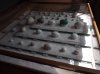
One feature within the indoor portion of the Fasanerie with which I was rather taken was, just beyond the entrance, a table displaying a wide variety of bird eggs; when one considers how frowned-upon and discouraged showing an interest in bird eggs is these days - for understandable reasons - it is a rare and interesting treat to be able to see the great range in colour, shape and appearance found in bird eggs.

Needless to say, the species held within the Fasanerie gave me a great number of lifeticks; some represent taxa which I never expected to see in my life, and which I doubt I shall ever see again. The Trumpet Manucode and Fruitcrow fall into this category, both individuals being rather geriatric and in the case of the former, the only individual known to exist in captivity worldwide. As such, I took full advantage of the opportunity I had to view and photograph these treasures. It is almost certainly no exaggeration to say, in retrospect, that the Manucode is the most precious and unusual species held within Zoo Berlin - and quite possibly within the Berlin collections as a whole.

Other, slightly more commonplace taxa which were particular highlights in my eyes included the Kagu, a species which I have wanted to see for a long time due to their taxonomic and morphological distinctiveness among birds, and which I dearly hope the collection manages to breed successfully one day. Another such highlight was the presence of a number of unusual junglefowl and pheasant taxa, appropriately enough when one considers the name of the building.

However, in a strange way one of the biggest highlights of all was the fact I was able to see two species which represented clades of bird which I was long-overdue seeing for the first time - the Black Francolin and the White-bellied Bustard. The latter was particularly satisfying considering my failure the previous day to spot the newly arrived Great Bustards at Tierpark Berlin.

Overall, I left the Fasanerie completely satisfied that it had lived up to my hopes and my expectations - of the 60 taxa listed above, almost half represent species I had never seen before. Certainly it was one of my favorite parts of the collection thus far, tied only with the Carnivore and Nocturnal House and in some regards - particularly those pertaining to the quality of the enclosures and the sheer number of treasures held within - was better; the only reason for the overall tie being, if I am brutally honest, my general liking for small carnivores and nocturnal taxa running a little deeper-ingrained than my liking for unusual birds.

With a feeling of anticipation and a significant level of curiosity at how it would measure up to the Fasanerie, ostensibly the "secondary" bird exhibit at Zoo Berlin, we then made our way to the Bird House itself, which stood just opposite the Fasanerie.

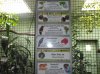
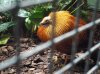
(Attached are photographs of the Kiwi video footage, the "egg table", an example of interior signage, a bald Ceylon Junglefowl cock and a statue of a Kiwi in front of the Fasanerie)
 

Attachments

  • DSCF1212.jpg
    DSCF1212.jpg
    2 MB · Views: 18
  • DSCF1153.jpg
    DSCF1153.jpg
    1.1 MB · Views: 18
  • DSCF9535.jpg
    DSCF9535.jpg
    1.7 MB · Views: 26
  • DSCF9542.jpg
    DSCF9542.jpg
    1.6 MB · Views: 20
  • DSCF1240.jpg
    DSCF1240.jpg
    1.9 MB · Views: 20
When I visited the most interesting feature was the wave machine which created a dynamic and active exhibit, was this not in use on your visit?

It was, actually! I thought I remembered a wave machine running but somehow all my photographs made the water appear still, so I didn't dare mention it in case my memory was playing tricks on me...... :p

Be interested to hear your thoughts on the review of the Fasanerie which I just posted, by the by :) the long delays to my updates have, in part, been due to my wanting to really do this part of Zoo Berlin justice.
 
It was, actually! I thought I remembered a wave machine running but somehow all my photographs made the water appear still, so I didn't dare mention it in case my memory was playing tricks on me...... :p

Be interested to hear your thoughts on the review of the Fasanerie which I just posted, by the by :) the long delays to my updates have, in part, been due to my wanting to really do this part of Zoo Berlin justice.

I think that was the first time I had seen an aviary with a wave pool, so that was likely why it stood out so much for me. :cool:

My experience of the Fasanerie was different to yours in two main ways I guess, firstly there was no Bird House at the time, so I think a few other species had been added, and secondly it was nearing the end of winter, sp there were very few species in the outside aviaries. And obviously, I yawned at the very thought of North Island browns.

My first impression of the fasanerie was one of warmth, but after that I remember being surprised by its "emptiness". The building had plenty of visitor space, with the functional aviaries being squeezed along one edge, which contrasted strongly with their "fullness". They were all very well stocked, and basically it was a case of trying to figure out what everything was and if I could get a photo of it. The Kagu, Manucode and Fruitcrow were the most exciting species, although I didn't realise the latter two species' captive rarity at the time.

I saw 45 species, of which almost a third you didn't list, suggesting a number have gone to the Bird House (or off-display/left collection at least). It would be great to go back now and see the new additions.
 
I saw 45 species, of which almost a third you didn't list, suggesting a number have gone to the Bird House (or off-display/left collection at least). It would be great to go back now and see the new additions.

I believe a fair few species which were previously kept in the Bird House did indeed spend some time on display in the Fasanerie whilst the former was rebuilt, and have since returned to the new Bird House; however I do know a few treasures have left the collection in recent years, including the Pied Heron and Nocturnal Curassow.

One thing you may have seen - depending on when your visit was - is Crinkle-collared Manucode (Manucodia chalybatus), as I believe the mate of the Manucode currently present in the Fasanerie was discovered to actually belong to this species after it died in early 2009.
 
I suspect a lot of first-time visitors wouldn't have noticed the Pheasantry wasn't the intended main bird display while the Bird House was being rebuilt. Puts many a zoo's Bird House to shame for diversity.
 
I suspect a lot of first-time visitors wouldn't have noticed the Pheasantry wasn't the intended main bird display while the Bird House was being rebuilt. Puts many a zoo's Bird House to shame for diversity.

It does at that.

Hard at work on my report on said main Bird House now :)
 
I believe a fair few species which were previously kept in the Bird House did indeed spend some time on display in the Fasanerie whilst the former was rebuilt, and have since returned to the new Bird House; however I do know a few treasures have left the collection in recent years, including the Pied Heron and Nocturnal Curassow.

One thing you may have seen - depending on when your visit was - is Crinkle-collared Manucode (Manucodia chalybatus), as I believe the mate of the Manucode currently present in the Fasanerie was discovered to actually belong to this species after it died in early 2009.

None of the additional species I saw were particularly rare I don't think, and I saw neither of those two species. And my visit was in 2012, so well after that death (sadly).
 
Part VIII: Bird House

The Bird House at Zoo Berlin is the newest structure in the collection, having only opened to the public roughly a year previously subsequent to the “old” Bird House being demolished some years before with the intention of rebuilding it from scratch. In point of fact, I am given to understand that the only remaining portion of the old house still remaining is a rather pleasant looking mosaic located in the entrance to the building, which was preserved when the old house was demolished and returned to the new structure. The old house itself had been constructed after the Second World War, as a replacement for the original house destroyed in the war.

The old house, from what I had been given to understand, had been divided into four wings; one devoted to parrots, one to tropical birds, one to hornbills and toucans, and a walkthrough free-flight enclosure for south-east Asian and Australasian taxa. In some regards, the new house is designed along similar lines, retaining four distinct wings; however, these are defined along a stricter zoogeographic basis, comprising an Asian wing, African wing, Australian wing and South American wing – the latter of these also including a large collection of parrot taxa unrestrained by geographic location. The key difference from the design of the preceding Bird House is that each of these wings erupts from a central hub, comprising three separate walkthrough free-flight enclosures – again, each defined by a distinct geographic focus. One drawback, of course, of viewing a structure which so recently opened to the public is that I was aware that the vegetation and planting within the house was liable to be rather more minimal than it ultimately will become once time has passed and the plants and vegetation within the house have been able to grow. However, as I knew this was likely to be an issue, I resolved to take this into account when judging the house.

Markus suggested the best method of viewing the Bird House was as follows; firstly, to make our way through the walkthrough enclosures in the hub of the Bird House starting with the Australian Walkthrough, before moving into the African Walkthrough and concluding with the Asian Walkthrough. Secondly, we would then view each wing of the Bird House, starting with the African before moving onto the Australian, then the Asian and finally the joint South American and Parrot wing. It is prudent, I feel, to discuss the individual elements of the Bird House in the same order.

We first entered the Australian Walkthrough enclosure, which was pretty clearly themed towards emulating a dry scrubland verging on light woodland, with imitation rockwork, sandy areas and suitably selected vegetation all contributing to this overall effect. The enclosure held the following taxa:

Budgerigar (Melopsittacus undulatus)
Channel-billed Cuckoo (Scytrops novaehollandiae)
Gouldian Finch (Cloebia gouldiae)
Masked Lapwing (Vanellus miles)
Wonga Pigeon (Leucosarcia melanoleuca)
Zebra Finch (Poephilia guttata)

The selection of taxa on display in this walkthrough enclosure struck me as faintly disappointing considering the sheer level of unusual and attractive taxa which I had very recently seen within the Fasanerie; the only truly unusual taxon on display was the Channel-billed Cuckoo, a striking species which rather put me in mind of a hornbill. However by the standards of any other such walkthrough enclosure the range of species was still pretty good, and as noted the design and vegetation of the enclosure was well-suited to the intended purpose; as such, I still regarded the exhibit as being good and of high-quality.

We next came to the African Walkthrough enclosure, which was somewhat more richly planted when compared with the preceding walkthrough and seemed to be aiming towards emulating an open woodland; again, the blend of rockwork and vegetation did a good job of conveying this effect, although I rather suspect it will take a few more years for the latter to truly come into its own for the reasons mentioned above. The enclosure held the following taxa:

African Yellow White-eye (Zosterops senegalensis)
Blue-capped Cordonbleu (Uraeginthus cyanocephalus)
Capped Wheatear (Oenanthe pileata)
Emerald Starling (Coccycolius iris)
Golden-breasted Starling (Lamprotornis regius)
Lemon-breasted Canary (Serinus citrinipectus)
Long-toed Lapwing (Vanellus crassirpstris)
Red-fronted Barbet (Tricholaema diademata)
Speckled Mousebird (Colius striatus)
Violet Plantain-eater (Musophaga violacea)
White-browed Coucal (Centropus superciliosus)

This selection of species was immediately of much more interest and appeal to me when compared to the preceding exhibit; not only was the African walkthrough rather more speciose overall, but a higher proportion of the taxa displayed were unusual to a greater or lesser extent – the highlights undoubtedly being the Red-fronted Barbet and the Lemon-breasted Canary. The higher level of vegetation also meant that spotting and observing the species held within the exhibit required a greater level of attention and patience; something which always appeals to me where walkthrough enclosures of any form are concerned.

Finally we came to the Asian Walkthrough enclosure. This was even more thickly-planted with lush vegetation at multiple levels than the African exhibit had been, with a wide variety of bushes and trees supplemented by bamboo thickets, giving a very distinct impression of a rainforest environment – as, no doubt, was the intention. When one considers how recently the Bird House had opened, and hence how recently this vegetation had been put in place, it is clear that given a good few years this walkthrough exhibit will hopefully be even more impressive. The exhibit held the following taxa:

Asian Glossy Starling (Aplonis panayensis)
Bali Mynah (Leucopsar rothschildi)
Chestnut-backed Ground-thrush (Zoothera dohertyi)
Crested Wood Partridge (Rollulus roulroul)
Fairy Bluebird (Irena puella)
Green-naped Pheasant-pigeon (Otidiphaps nobilis nobilis)
Grey Peacock-Pheasant (Polyplectron bicalcaratum)
Red-billed Leiothrix (Leiothrix lutea)
Sulawesi Ground-dove (Gallicolumba tristigmata)
White-winged Duck (Asarcornis scutulata)

Although not quite as heavily stocked with rarities as the African walkthrough exhibit, the range of taxa displayed in this exhibit was still very respectable – and needless to say, the level of vegetation present meant that once again, viewing the species held within was rather challenging and rather more enjoyable. Having something of a soft spot for the Chestnut-backed Ground Thrush, I particularly enjoyed searching for, and then observing, this taxon within the exhibit.

Having viewed all the walkthrough exhibits, we now made our way to the outer wings of the Bird House, starting with the African Wing. The aviaries within were very obviously built on functional lines, providing plenty of space for the taxa within and all more or less following the same general design, albeit differing in internal layout. All the aviaries led to external aviaries around the outer perimeter of the House; however we had already seen that access to the outside had not been granted to the inhabitants that day when walking around the perimeter of the Bird House prior to entering, and as such we were able to fully focus on the internal accommodation for the taxa held within. However, it was apparent that the short period of time since the House had been completed, and hence the limited period of time that had elapsed for enclosure planting to grow, meant that the aviaries were much starker in appearance than they ultimately may do in the fullness of time. This observation applied, unfortunately, to all four outer wings of the Bird House – to fully assess this aspect of the Bird House, one would have to return to the matter in a few years. The African Wing held the following taxa:

Amethyst Starling (Cinnyricinclus leucogaster)
Bearded Barbet (Lybius dubius)
Blacksmith Plover (Vanellus armatus)
Copper Sunbird (Nectarinia cuprea)
Decken’s Hornbill (Tockus deckeni)
Grey-headed Social Weaver (Pseudonigrita arnaudi)
Harlequin Quail (Corturnix delegorguei)
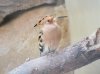
Hoopoe (Upupa epops)
Long-tailed Fiscal (Lanius cabanisi)
Namaqua Dove (Oena capensis)
Northern Carmine Bee-eater (Merops nubicus)
Purple Roller (Coracias naevius)
Silvery-cheeked Hornbill (Bycanistes brevis)
Spotted Morning Thrush (Cichladusa guttata)
Spotted Thick-knee (Burhinus capensis)
Tambourine Dove (Turtur tympanistria)
Taveta Golden-weaver (Ploceus castaneiceps)
Yellow-eyed Canary (Serinus mozambicus)
Wattled Starling (Creatophora cinerea)
White-headed Buffalo Weaver (Dinemelli dinemelli)

As may be observed from the above list, the taxa held within the African Wing primarily comprised smaller species, the largest on display by far being the Silvery-cheeked Hornbill. However, I felt that this was overall a good decision, permitting a large range of taxa covering a number of avian groups to be displayed whilst still permitting the inhabitants of the enclosures sufficient space. Although not displaying any “showstopper” taxa of similar rank to the highlights of the Fasanerie, a great number of unusual and attractive species were to be found in this exhibit; a number of which were taxa I had previously never seen.

It was at this point that Helly and myself bid farewell and our many thanks to Markus, who had to leave having a prior engagement, leaving us to view the rest of the Bird House on our own. The Australia Wing, the next portion of the Bird House which we visited having parted ways with our newfound friend and guide, held the following taxa:

Asian Blue Quail (Coturnix chinensis)
Black-throated Finch (Poephilia cincta)
Blue-faced Honey-eater (Entomyzon cyanotis)
Blue-winged Kookaburra (Dacelo leachii)
Crested Pigeon (Ocyphaps lophotes)
Emerald Dove (Chalcophaps indica)
Hooded Parrot (Psephotus dissimilis)
Kea (Nestor notabilis)
Laughing Kookaburra (Dacelo noveguineae)
Long-tailed Finch (Poephilia acuticauda)
Masked Finch (Poephilia personata)
Star Finch (Bathilda ruficauda)
Tawny Frogmouth (Podargus strigoides)
Turquoise Parrot (Neophema pulchella)
White-eared Catbird (Ailuroedus buccoides)
Wonga Pigeon (Leucosarcia melanoleuca)

Again, a great number of the species held within this wing of the Bird House were entirely new to us, whilst others were taxa we were familiar with but no less fond of – the latter category including the Kea, one of my favourite bird species and easily the largest taxon displayed in this wing of the House. The range of species on display was once again solid, and housed in aviaries which seemed entirely suited for their purpose. However, the biggest treasure in this portion of the Bird House, taxonomically speaking, was certainly the White-eared Catbird; although we had seen this taxon the day before at Tierpark Berlin, as a bowerbird and hence a member of a group of birds seldom seen in European collections we knew it would be folly to take it for granted.

We next reached the Asian Wing, which held the following taxa:

Black-naped Fruit Dove (Ptilinopus melanospila)
Blue-faced Parrotfinch (Erythrura trichroa)
Brahminy Starling (Temenuchus pagodarum)
Chinese Bulbul (Pycnonotus sinesis)
Cinnamon Ground Dove (Gallicolumba rufigula)
Crested Wood-partridge (Rollulus roulroul)
Fairy Bluebird (Irena puella)
Goldie’s Lorikeet (Psitteuteles goldiei)
Greater Yellownape (Picus flavinucha)
Java Sparrow (Padda oryzivora)
Luzon Bleeding-heart (Gallicolumba luzonica)
Mindano Bleeding-heart (Gallicolumba criniger)
Orange-bellied Fruit Dove (Ptilinopus iozonus)
Orange-fronted Fruit Dove (Ptilinopus aurantiifrons)
Oriental Pied Hornbill (Anthracoceros albirostris)
Pink-necked Green Pigeon (Treron vernans)
Tarictic Hornbill (Penelopides panini)
Three-coloured Parrotfinch (Erythrua tricolor)
White-eared Bulbul (Pycnonotus leucotis)

Arguably, this portion of the Bird House held the most treasures thus far – certainly it gave Helly and myself a high number of lifetick species. By far the most unusual taxon held in this wing, both in terms of rarity as an individual species in captivity and in terms of how unusual it was to see a member of its family in captivity, was the Greater Yellownape; in point of fact, this was the first woodpecker I had ever seen in captivity. However, my favourite species displayed in this exhibit were the three Gallicolumba doves, purely for reasons of personal taste and sentiment.

Finally we came to the South American Wing, which as previously noted also contained a large specialised collection of parrot taxa from around the world. As such, this wing was slightly larger than the preceding three, although in all other regards both the public areas and aviaries were much of a kind with all others found in the sister wings. As a result of the dichotomy inherent in this wing of the Bird House, the following list of taxa holds the parrot collection distinct from the South American exhibit:

Black-and-White Seedeater (Sporophila luctuosa)
Black-necked Aracari (Pteroglossus aracari)
Blue-and-Yellow Tanager (Thraupis bonariensis)
Blue-grey Tanager (Thraupis episcopus)
Crested Quail-dove (Geotrygon versicolor)
Cuban Grassquit (Tiaris canora)
Mountain Parakeet (Psilopsiagon aurifrons)
Northern Cardinal (Cardinalis cardinalis)
Pale-mandibled Aracari (Pteroglossus erythropygius)
Plain-breasted Ground-dove (Columbina minuta)
Ruddy Ground-dove (Columbina talpacoti)
Saffron Finch (Sicalis flaveola)
Scarlet-headed Blackbird (Amblyramphus holosericeus)
Sunbittern (Eurypyga helias)

------------

Citron-crested Cockatoo (Cacatua sulphurea citronocristata)
Eclectus Parrot (Eclectus roratus)
Goffin’s Cockatoo (Cacatua goffini)
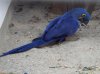
Hyacinth Macaw (Anodorhynchus hyacinthinus)
Illiger’s Macaw (Ara maracana)
Major Mitchell’s Cockatoo (Cacatua leadbeateri)
Mexican Green Military Macaw (Ara militaris mexicana)
Palm Cockatoo (Probosciger aterrimus)
Rainbow Lorikeet (Trichoglossus haematodus)
Red-tailed Black Cockatoo (Calyptorhynchus banksii)
White Cockatoo (Cacatua alba)

In terms of rarity in captivity, the highlight of this wing of the Bird House was certainly the Pale-mandibled Aracari, a taxon only recently deemed distinct from the more common Collared Aracari; in point of fact, the labelling on the aviary in question still follows the incorrect taxonomy. However, the wing as a whole once again represented a wide range of small to mid-size avian taxa, with some of the parrot species tending towards the largest end of the scale. In point of fact, the Hyacinth Macaws – a particular favourite taxon of mine – were in all likelihood the largest and heaviest species held within the house as a whole, rivalled only by the Channel-billed Cuckoo.

Overall, the Bird House struck me as a fantastic demonstration of the wide variety and diversity among the avian taxa of the world, with a particular focus on smaller species of passerine. When taken together with the range of species displayed in the Fasanerie, the bird collection is certainly world-class; possibly the best such collection outside of specialist establishments focused solely on birds. Many people argue that a “stampbook” approach to displaying the diversity of the animal kingdom, in functional and not overly-intricate enclosures, has no place in modern zoological practice, and that the only way forward is to display a smaller number of species in immersion exhibits; this argument has been debated many a time on this website! However, I would tend to argue that the Bird House and Fasanerie at Zoo Berlin certainly show that a collection with a high number of species belonging to a given group of animals need not be deemed excessively speciose, nor against the welfare of the taxa displayed.

However, this does not mean that the Bird House in particular struck me as beyond criticism; although as noted above any issues regarding the low density of vegetation in portions of the walkthrough exhibits and the four outer wings of the house can partially be ascribed to the recent construction of the Bird House, and patience in this regard may be merited, I felt that other than the walkthrough exhibits – which were excellent – the public portions of the house seemed a bit sterile and stark. This is even more noticeable when one views the Bird House immediately after seeing the more pleasant and “comfortable-feeling” Fasanerie. Equally, although the number of species displayed in the Bird House is close to twice the amount displayed in the Fasanerie - many of which are unusual or of some interest to the zoo enthusiast - the quality-to-quantity ratio of the species displayed in the Fasanerie strikes me as higher. As such, I rather think I prefer the smaller and “secondary” bird house at Zoo Berlin to the official Bird House – although as noted I believe they are truly meant to be seen as an intrinsically-connected pair. One hopes that the new management regime will see matters in the same light; however considering the open desire of Andreas Kniereim to cut down on superfluous and unnecessary taxa and exhibits at both Zoo Berlin and Tierpark Berlin, I fear the days of Zoo Berlin holding two bird houses once again are finite.

Having left the Bird House, we elected to return to the Fasanerie in order to briefly take further photographs of certain species – there we encountered Chris and Ang once again, and decided to continue making our way around Zoo Berlin with our fellow Zoochatters.

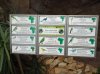
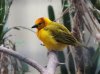
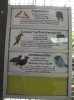
(Attached are photographs of signage in the African Walkthrough, a Taveta Golden Weaver, signage in the Asian Wing, a Hoopoe and a Hyacinth Macaw)
 

Attachments

  • DSCF9593.jpg
    DSCF9593.jpg
    1.3 MB · Views: 22
  • DSCF8216.jpg
    DSCF8216.jpg
    1.9 MB · Views: 16
  • DSCF8311.jpg
    DSCF8311.jpg
    1.8 MB · Views: 20
  • DSCF8896.jpg
    DSCF8896.jpg
    1.8 MB · Views: 16
  • DSCF1099.jpg
    DSCF1099.jpg
    1.4 MB · Views: 16
Back
Top