The Piebald Canada Lynx & Rientroduction Program

Newt

Well-Known Member
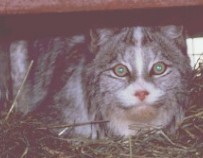
This is a piebald Canada Lynx released in Colorado as part of the rientroduction program.
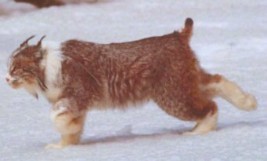
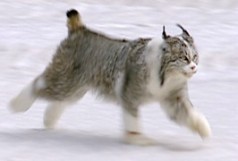
tumblr_mwk20pEWIY1qilpw0o2_400.jpg
tumblr_mwk20pEWIY1qilpw0o1_250.jpg


To make this more towards nature and wildlife conservation, the Canada Lynx was completely wiped out in Colorado by 1974 due to trapping, poisoning, and habitat loss. This began in the 1800's when European settlers sought out their thick and lush fur, which was sold on the international market. Throughout the 1800's and early 1900's their numbers declined significantly. The last one was illegally trapped near Vail in 1974, just a year after it was deemed endangered. However, in 1999 they were rientroduced in the San Juan Mountains, in a 5.2 million acre core reintroduction area. 41 individuals were placed there, and this rare specimen was aswell. By 2010 the program was declared a success. Now, there are over 150 - 250 indiviuals in Colorado today, and counting. Laws now make it illegal to hunt them, as they're part of the Endangered Species Act. Although I'm not sure what happened to this individual, it's definitely possible that if it were to breed it's babies could carry on these traits. Despite this, this was the last one documented altogether (for what I know).
 
I'd be so curious to know more about the background of this individual, especially whether they were bred in captivity or simply caught and transferred. As given their unique colouration, I'd imagine a facility might be inclined to keep them for display.

Also, I happen to know of a third photo of this individual, which gives a somewhat closer look at the facial markings:

tumblr_mwk20pEWIY1qilpw0o3_250.jpg


The source goes on to say that the "pattern corresponds closely to the bicolour pattern in domestic cats - white facial markings, white legs, white chest and belly and might be due to a similar gene mutation in the lynx rather than partial albinism. If so, the white spotting gene can be expected to manifest in the lynx's offspring."
 
I'd be so curious to know more about the background of this individual, especially whether they were bred in captivity or simply caught and transferred. As given their unique colouration, I'd imagine a facility might be inclined to keep them for display.
The lynx used in the reintroductions were all wild-caught in Alaska and Canada. It would be strange if they released almost 100 wild-caught lynx and then just threw in one random captive lynx as well, especially when it is a mutation.

Having said that - I can't actually see any evidence this lynx is part of the Colorado reintroductions. There's no mention of any aberrant specimens in the reports, and (as usual) Messy Beast does not provide any credits for photos or references for claims. All I've been able to find are those three photos and the exact same claim repeated on different sites with no sources.
 
The lynx used in the reintroductions were all wild-caught in Alaska and Canada. It would be strange if they released almost 100 wild-caught lynx and then just threw in one random captive lynx as well, especially when it is a mutation.

Having said that - I can't actually see any evidence this lynx is part of the Colorado reintroductions. There's no mention of any aberrant specimens in the reports, and (as usual) Messy Beast does not provide any credits for photos or references for claims. All I've been able to find are those three photos and the exact same claim repeated on different sites with no sources.
Interesting! With this added context, I'm more inclined to believe this is a captive individual, though whether they were privately owned or part of a zoological collection is unknown (for now). Really is frustrating how little reference material Messy Beast provides at times, though I'm inclined to shoot them an e-mail and see what I can dig up (if anything)...
 
The lynx used in the reintroductions were all wild-caught in Alaska and Canada. It would be strange if they released almost 100 wild-caught lynx and then just threw in one random captive lynx as well, especially when it is a mutation.

Having said that - I can't actually see any evidence this lynx is part of the Colorado reintroductions. There's no mention of any aberrant specimens in the reports, and (as usual) Messy Beast does not provide any credits for photos or references for claims. All I've been able to find are those three photos and the exact same claim repeated on different sites with no sources.

Messybeast is where I got the info from, it says:
"A piebald lynx was released in Colorado as part of a reintroduction scheme. The pattern corresponds closely to the bicolour pattern in domestic cats - white facial markings, white legs, white chest and belly and might be due to a similar gene mutation in the lynx rather than partial albinism. If so, the white spotting gene can be expected to manifest in the lynx's offspring."

Heres the link if needed: COLOUR AND PATTERN VARIATIONS IN OTHER BIG CATS
 
Interesting! With this added context, I'm more inclined to believe this is a captive individual, though whether they were privately owned or part of a zoological collection is unknown (for now). Really is frustrating how little reference material Messy Beast provides at times, though I'm inclined to shoot them an e-mail and see what I can dig up (if anything)...

Well looking back at the whole pseudo-melanistic jaguar situation I definitely have faith in you! Only possibility I can think of is wether they quarantined the lynx or observed them beforehand to ensure they were ready to be released, however, Im unsure how the rientroduction process works, letalone in 1999. Going with Pertinax, if they were infact transports from Alaska and Canada they would have to remain somewhere for the time being, and then be released (I think).
 
Only possibility I can think of is wether they quarantined the lynx or observed them beforehand to ensure they were ready to be released, however, Im unsure how the rientroduction process works, letalone in 1999. Going with Pertinax, if they were infact transports from Alaska and Canada they would have to remain somewhere for the time being, and then be released (I think).
Initially females were to be released as soon as veterinary checks had been completed in Colorado in order that they could establish territories before males were released, but survival was poor so all animals were instead held for at least three weeks and fed a high-quality diet for weight gain before release. This was modified again so that releases were not until May or later, due to starvation deaths in winter-releases.
 
Initially females were to be released as soon as veterinary checks had been completed in Colorado in order that they could establish territories before males were released, but survival was poor so all animals were instead held for at least three weeks and fed a high-quality diet for weight gain before release. This was modified again so that releases were not until May or later, due to starvation deaths in winter-releases.

Interesting. No information was provided via MessyBeast regarding dates, sex, or location of the specimen. So for now it’s all speculation until a response arises. Judging based off the photos of the animal actually running, it appears to be a male, looking at the size of the cheek tufts and ruff of the neck (I’m not confirming anything, just a guess). I’m just now learning about the info you’re providing so that does definitely provide a possible answer.
 
What do you mean?

Initially females were to be released as soon as veterinary checks had been completed in Colorado in order that they could establish territories before males were released, but survival was poor so all animals were instead held for at least three weeks and fed a high-quality diet for weight gain before release. This was modified again so that releases were not until May or later, due to starvation deaths in winter-releases.

I was referring to this. To elaborate more what you said gives more evidence into the fact this wasn’t a random captive specimen. Also, my apologies for referring to you as Pertinax I have no clue where that came from :confused:
 
I was referring to this.
Yes, I know. You already quoted it. But how does that provide an answer? You already were of the opinion the lynx is one of the animals introduced to Colorado because that's what Messy Beast says, and what I posted is simply information about how the reintroduction worked.
 
Yes, I know. You already quoted it. But how does that provide an answer? You already were of the opinion the lynx is one of the animals introduced to Colorado because that's what Messy Beast says, and what I posted is simply information about how the reintroduction worked.

I knew that the pictures I provided originally were of a specimen released in Colorado, however, the photograph Kermoedi provided looks like it could either be the same specimen, or rather a random captive individual, which is not very likely but still a rare possibility. So the information you gave regarding the rientroduction process made it more clear that it most likely was infact the same specimen. My apologies if I’m not very clear, my mind is a little foggy today
 
I knew that the pictures I provided originally were of a specimen released in Colorado
You don't know anything of the sort. You only know that is what Messy Beast says about it. It may be one of those animals or it may have nothing to do with them - there is no corroborating evidence provided.

So the information you gave regarding the rientroduction process made it more clear that it most likely was infact the same specimen.
It doesn't mean that at all. The information about how the reintroductions were conducted has zero bearing on the individual animal in the photos.
 
But you are sure these pictures are real photos, not CG art?

Although I have no information regarding the authenticity of the photos since I didn’t take them, I doubt they’re fake. I mean they could be, but that’s some damn good CG art.
 
A little update. I sent off an e-mail to the creator of Messy Beast, asking if she recalls where she found the photos, as well as the suggestion that they show a lynx used in the aforementioned reintroduction program. I don't expect a rapid reply over the holidays, but fingers crossed we get something eventually!
 
Update from Sarah (creator of Messy Beast)! The photo dates back to the 1990’s and was taken my a government official while on duties. The specimen was captured and re-released, hence the photo that was taken of it in captivity. It was also confirmed that it was released in Colorado.
 
Another update, after relooking at some sources she claims the photo was actually from 2005. I have more pictures she provided me, I’ll post them below.

IMG_3097.jpeg IMG_3098.jpeg
 

Attachments

  • IMG_3097.jpeg
    IMG_3097.jpeg
    48 KB · Views: 36
  • IMG_3098.jpeg
    IMG_3098.jpeg
    83.3 KB · Views: 36
Update from Sarah (creator of Messy Beast)! The photo dates back to the 1990’s and was taken my a government official while on duties. The specimen was captured and re-released, hence the photo that was taken of it in captivity. It was also confirmed that it was released in Colorado.
Another update, after relooking at some sources she claims the photo was actually from 2005. I have more pictures she provided me, I’ll post them below.
Did she actually provide you with any source?
 
After digging around all I could find was this statement from messybeast.com

“A piebald lynx was released in Colorado as part of a reintroduction scheme. The pattern corresponds closely to the bicolour pattern in domestic cats - white facial markings, white legs, white chest and belly and might be due to a similar gene mutation in the lynx rather than partial albinism. If so, the white spotting gene can be expected to manifest in the lynx's offspring.”

Sorry if this doesn’t help :oops:
 
Back
Top