The Wilder Zoo

Austin the Sengi

Well-Known Member
5+ year member
Welcome everyone, for over a year after the conclusion of my previous zoo thread, I am proud to introduce the debut of a new project which has been a longtime coming regarding its design. Similar to Rembrandt Park, the scheduling of each post is set to be sporadic, which itself is a response to my daily hassles of college life; and with all that being said, welcome to the Wilder Zoo.


Zoo Background

The Wilder Zoo is established in a location somewhere in the Midwestern United States, and is one of the area’s premiere attractions. It is an institution that covers less than 100 acres in size, and is divided into six established zones and two dedicated buildings; with the majority having a primary focus on different environments, no matter where the animals come from. As of November 2024, the zoo is home to a diverse roster of nearly 150 species of animals from every continent, including Antarctica:

Mammals - 48
Birds - 30
Reptiles - 19
Amphibians - 2
Fish - 4
Invertebrates - 45

Grand Total - 148

As a small part of its developing lore, the origins of the zoo’s name derive from a generous philanthropist whose last name was Wilder. After their passing, the Wilder Family would continue to support the zoo financially, and a direct relative of theirs now serves as the zoo’s president and CEO.


What’s To Come
Beginning with the zoo’s entrance, I will periodically post semi-detailed descriptions of every current attraction; and as a reminder, don’t expect the majority of posts to be made in quick succession. In the meantime, our first ventures into the zoo will begin momentarily with a short description of the Main Plaza… So stay tuned.
 
When you enter through the turnstiles and make it through security, visitors like yourself are welcomed into the Main Plaza. This is the zoo’s established common area, with every attraction being connected by many winding pathways. It is here where visitors can get themselves a bite to eat at the Beastly Bistro counter-service restaurant, use the restrooms, and to shop for souvenirs. Excluding the adjacent buildings, the only live animals you will find in this part of the zoo are housed inside of the Formal Pond; for it is here where visiting wild birds and a school of Common Carp inhabit this manmade lagoon.

(1 fish taxa)

Directly ahead of the pond is an expansive playground, with an emphasis on nature-based play being a notable feature. This widely popular hotspot for families also intersects between the zoo’s insectarium to the left (more on this later), and the nearest major complex to the right; with both buildings appearing to cast down over this section of the zoo.


What’s To Come

As a result of winning the Wilder Zoo’s poll, winding left from the plaza’s centerpiece is where the closest major sector is located; yet, when the eventual wait is over, we will soon travel over to the islands represented by the Island Odyssey!

Coming soon…

IMG_8213.jpeg
Image Credit: pachyderm pro
 

Attachments

  • IMG_8213.jpeg
    IMG_8213.jpeg
    174.3 KB · Views: 323
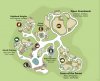
While it may be a while before I post any further details for Island Odyssey. In the meantime, as you can see here, I have recently uploaded the zoo’s map into the media gallery and will help to look forward as to how things are coming along.

IMG_5746.jpeg

Until then, our trip to the islands will continue later this December; so stay tuned…
 

Attachments

  • IMG_5746.jpeg
    IMG_5746.jpeg
    110.9 KB · Views: 320
While it may be a while before I post any further details for Island Odyssey. In the meantime, as you can see here, I have recently uploaded the zoo’s map into the media gallery and will help to look forward as to how things are coming along.

View attachment 751432

Until then, our trip to the islands will continue later this December; so stay tuned…
What software do you use to create this map?
 
With progress being significantly lacking, I figured that a separate post that briefly describes the attractions to come will suffice for how things are coming along in completing Island Odyssey. In any case, listed below are the eight current sectors that one will expect from this zoo:
  • Island Odyssey: The first to be covered, focuses on the flora and fauna from notable islands and archipelagos which include (but not restricted to) Indonesia, Madagascar, New Zealand, etc.
  • Faces of the Forest: Revolving around the deciduous, taiga/boreal, and tropical forests of the world; the following contains the largest number of charismatic megafauna in one sector.
  • Living Deserts: An unusual complex themed around the world’s deserts, the plants and animals that guests can see are displayed in an indoor/outdoor setting year-round; no matter the weather or times of year.
  • Open Grasslands: A larger complex themed around the grassland ecosystems of Africa and the Americas.
  • Polar Panorama: Themed around the polar regions, the following includes an attached outdoor exhibit for seals; with the remaining fraction being reserved for fish, seabirds, and sub-antarctic penguins.
  • Spineless Wonders of the World: The zoo’s original reptile house which would later be renovated into an award-winning insectarium.
  • Highland Heights: A relatively small complex that is themed around the mountainous regions of Eurasia and South America.
  • Creatures of the Crypt: The zoo’s famed nocturnal house which includes a few rarities not seen in many American zoos.
Disclaimer: I still have plans to (eventually) complete the description of Island Odyssey; just note that I will now post these attractions on my own time without having to feel rushed in meeting any deadline. Until then, I hope you all have had a wonderful holiday season and have a happy new year!
 
Last edited:
You can be your own jury if you want. My zoo will be looking at a "most species" award if I ever finish it. As well as "most immersive", if that's a thing.
Is it really a worthy award if awarded by yourself?
I understand self-critique but this is self-entitlement.
 
StellarChaser, in addition to foreign facilities; many of the rarities seen in Creatures of the Crypt are individuals that are past their median lifespan.
 
Island Odyssey: - (8 exhibits)

At long last, without further delay, our well-awaited island odyssey has officially begun!

Beginning with walking past the building foreshadowed in the original teaser, this rather imposing structure is actually one of two nocturnal buildings present on zoo grounds, (with the following containing only one species).

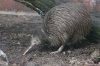
If we choose to turn around and head indoors, remember to spare some time to allow your eyes to adjust to the immediate darkness. For the interior area accessible to visitors is as a dimly-lit as the exhibit of focus. You see, following their importation from a certain island nation, the Wilder Zoo’s original pair of North Island Brown Kiwi were temporarily housed in a behind-the-scenes area within Creatures of the Crypt. It wasn’t until the construction of the so-called “kiwi building” that the birds were relocated and could finally be seen by the general public. Years later, this original kiwi pair would leave behind two surviving offspring, with the parents passing away unexpectedly shortly thereafter. Today, one of these two descendants remains with us, and is considered the one and only star attraction of the kiwi building.

IMG_8217.jpeg
North Island Brown Kiwi (Apteryx mantelli)
Photo Credit: @HOMIN96


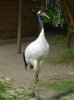
After adjusting your eyes to the daylight once again, and after walking a few good steps towards your right. Up ahead within a small, open enclosure with synthetic metal bars disguised as bamboo for fencing, is where you will soon find our Red-Crowned Cranes. There’s not too much to add about the animals and their surroundings, but no matter the weather or times of year; these relatively hardy birds are proven to have handled said conditions throughout their lives here. During the warmer summer months, other exotic waterfowl endemic to various islands cohabitate with these cranes. But for now, during the winter, only the cranes can be seen as they serenade one another with their signature calls.

IMG_8218.jpeg
Red-Crowned Crane (Grus japonensis)
Photo Credit: @ralph


From here, visitors can walk left, then straight ahead towards the sheltered dining areas that are attached to one of the zoo’s two signature restaurants. This is Komodo Kitchen, which itself is a seasonal restaurant that is only open during the spring-summer season, with a seasonal closure that usually begins in September and ends between March and April, depending on the amount of snowfall the zoo receives that season.

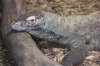
You see, the Komodo Kitchen was initially named in correspondence to their nearby neighbors, for which, we face towards our right with the possibility of approaching one of the largest lizards on Earth! As seen with most zoos that display the species, the zoo’s single Komodo Dragon has a toasty indoor room viewable to the public, and a separate outdoor yard that is only accessible during the warmer times of year. Compared to other zoos, the outdoor dragon habitat is most notable for having a rather spacious body of water designed to show off their swimming capabilities; and is thus touted as one of the largest exhibits for this species anywhere in the nation.

IMG_4767.jpeg
Komodo Dragon (Varanus komodoensis)
Photo Credit: myself, Austin the Sengi


Sharing the same building as the dragon, while having separate holding quarters for rather obvious reasons. Directly next door is a seasonal outdoor aviary humorously referred to as Pigeon’s Paradise. To be clear, this is not a walkthrough aviary, even though you can see the residents more clearly via, a bird-friendly viewing area that is currently roped off.

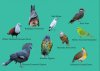
To counterbalance the relatively basic design of this “paradise”, the assembly of birds and bats help to showcase these island endemics more effectively; as evidenced with the image below:

IMG_5844.jpeg
Provided by yours truly, Austin the Sengi

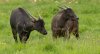
A little ways nearby, we will soon come across the indoor quarters for a personal favorite of mine; for directly ahead after turning left from the mixed aviary is a visually impressive barn and paddock for an unproven breeding pair of Lowland Anoa. These two are some of the largest animals we will encounter on this odyssey, which is rather ironic for a species often regarded as a “dwarf buffalo”. Nonetheless, the attention driven by the anoa barn is enough to entice us further ahead, with the exterior architecture taking culturally-respective inspiration from traditional architecture associated with the anoa’s natural range.

Around this time of year, the main paddock is only accessible to the anoa as long as the animals have direct access to their temperate-controlled holding stalls; otherwise, especially on extremely cold spells, the anoa are then confined exclusively to their barn. If you are worried of not seeing our pair, worry not, for visitors can still view the animals from their barn via, an indoor viewing area akin to what is often used for far bigger setups associated with larger mammals like giraffes and elephants.

Admittedly, while the following is not exactly related to our usual format. I must confess that anoa are one of my favorite even-toed ungulates, and to give them a setup that truly highlights the best of the species and the island they represent is a dream come true; even if you have to imagine the majority of this dream. What’s not a dream, however, is what I consider to be one of the best photos of the species I’ve seen anywhere on this website, which is why I am glad to showcase it here to give this species the attention they deserve.

IMG_8214.jpeg
Lowland Anoa (Bubalus depressicornis)
Photo Credit: @ro6ca66


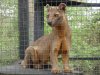
If we carry on our odyssey from the outdoor paddock, then not far from our right is the first of two enclosures dedicated to the island fauna of Madagascar. While the Wilder’s Zoo collection of Malagasy fauna is a far cry from Rembrandt Park’s, I’d say the exhibitry for the respective animals is more or less the same for either facility. Anyways… general visitors may have a tricky time in finding them at first, but once you know where to look, then perhaps, you might spot a Fossa that might’ve been secretly observing you the entire time!

Here at the Wilder Zoo, we have a male-female pair that periodically rotate between the main exhibit and a separate enclosure inaccessible to visitors. Depending on your plans, you might see the male on one or two occasions, and on another occasion, the female may be present. Either way, this systematic rotation is nothing new among captive carnivorans; but nonetheless, it provides the individuals with the occasional change of direction and scenery. Much like our anoa, the pair have not had any offspring thus far, even though, in this case, the chances are slightly better.

IMG_8215.jpeg
Fossa (Cryptoprocta ferox)
Photo Credit: @MagpieGoose


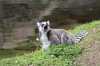
Not far from the fringes of the fossa enclosure, is a spacious, tree-covered island entirely surrounded by a shallow moat. This island, unsurprisingly, contains two species of the ever-iconic, endemic icons that are lemurs. Currently, you will encounter a larger, breeding conspiracy of the ubiquitous Ring-Tailed Lemur and an older, smaller conspiracy of the not so common Red-Fronted Lemur. This combination is not the first time the island has seen multiple species of lemur mixed together, for the practice has been mostly maintained with various other species since the attraction first opened. The only notable point in history where only one species of lemur was present was when it the island was inhabited by a trio of Red-Ruffed Lemurs, which have since left the collection.

IMG_0961.jpeg
Ring-Tailed Lemur (Lemur catta)
Photo Credit: myself, Austin the Sengi


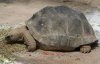
As we begin to reach our final destination, it won’t take us long (both figuratively and literally) to arrive at the last major exhibit the odyssey has to offer. What lies ahead is relatively basic paddock with shade trees aplenty, and some slight levels of varying elevation; with the inhabitants of this enclosure hailing from what is technically an atoll, rather than an island. Regardless, the inhabitants that hail from this atoll may slowly wander into your hearts in the form of our Aldabra Giant Tortoises.

Historically, when the odyssey first opened, the exhibit you see before you contained a group of Galapagos Giant Tortoises with a disputed genetic history; which were even accompanied by a small, sheltered kiosk that highlighted the significance of Galapagos fauna through the centuries of research initially pioneered by Charles Darwin and his contemporaries. In the years since, the tortoises never produced offspring during their time here, and have since moved on to other facilities across the country; with the kiosk being removed around the same time. It wasn’t until a few years ago when we received our current tortoises, and our hopes of successfully breeding these threatened giants were soon resurged upon their arrival.

IMG_8216.jpeg
Aldabra Giant Tortoise (Aldabrachelys gigantea)
Photo Credit: @vogelcommando


By reaching the end of our time with our newfound friends, it is at this point of the pathway where you could either head back towards the kiwi building to restart your journey, or perhaps, choose to return back towards the Formal Pond and the rest of the zoo. For it is the latter option that we ultimately decide upon as to mark the conclusion of this odyssey.

(5 mammal taxa)
(10 bird taxa)
(2 reptile taxa)


What’s To Come

With the completion of our island odyssey, another anticipated stop awaits at the Wilder Zoo; for by heading over to the complete opposite end of the zoo, it won’t take us long to run into some familiar faces by visiting Faces of the Forest!

Until then…

IMG_8662.jpeg
Image Credit: KevinB
 

Attachments

  • IMG_8217.jpeg
    IMG_8217.jpeg
    120.9 KB · Views: 244
  • IMG_8218.jpeg
    IMG_8218.jpeg
    87.7 KB · Views: 243
  • IMG_4767.jpeg
    IMG_4767.jpeg
    141 KB · Views: 243
  • IMG_5844.jpeg
    IMG_5844.jpeg
    72.8 KB · Views: 247
  • IMG_8214.jpeg
    IMG_8214.jpeg
    98.7 KB · Views: 248
  • IMG_8215.jpeg
    IMG_8215.jpeg
    195.2 KB · Views: 252
  • IMG_0961.jpeg
    IMG_0961.jpeg
    149.5 KB · Views: 248
  • IMG_8216.jpeg
    IMG_8216.jpeg
    158.3 KB · Views: 245
  • IMG_8662.jpeg
    IMG_8662.jpeg
    283.6 KB · Views: 238
Last edited:
Faces of the Forest: - (9 exhibits)

Into the woods we go, for without further delay, we will begin to run into some familiar Faces of the Forest!

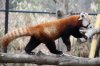
The first of the many faces we will meet are displayed in an area intentionally placed between the beginning and end of the looped pathway we will follow momentarily. The following is an enclosure that is average in size but makes up for it with an assortment of exceptionally tall trees; perfect for the zoo’s Nepalese Red Pandas to climb and explore. Additionally, the red pandas are also mixed with a Tufted Deer, who, at the moment, is nowhere to be seen. Don’t worry about it though, for this mixed-species exhibit is the first and last enclosure we will see on today’s travels.

IMG_8988.jpeg
Nepalese / “Western” Red Panda (Ailurus fulgens fulgens)
Photo Credit: @ThylacineAlive


Across the pathway, we will then run into a rather simple aviary with an interesting mix of Eurasian birds. Unfortunately, since we have a wonderful selection of well-taken photographs to go through, there will not be an image depicting the birds listed in this aviary. However, I have listed the following species below, which should help to soften the blow:
  • Azure-Winged Magpie
  • Black-Throated Laughingthrush
  • Bank Myna
  • Mountain Bamboo-Partridge
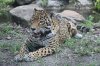
From this point on, we will now transition from the deciduous forests of Eurasia to the warmer subtropical rainforests of Central and South America; for surrounding us to our left, right, and even above, are two spacious enclosures that rotate between a pair of Jaguars, which are one of the few large carnivores that we have here at the zoo.

IMG_2376.jpeg
Jaguar (Panthera onca)
Photo Credit: myself, Austin the Sengi


Quite notably, the two enclosures represent some of the different habitats that jaguars occupy in the wild: with the first to our right being densely forested and having more places for the cats to hide. While the second to our left feels more open and features a man-made pool with an underwater viewing area provided for visitors.

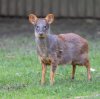
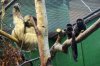
Rounding to our right and following alongside the extent of the next enclosure, we are greeted with an enclosure that is currently undergoing a change of species. Originally, this was once the home to a seldom-seen pair of Wolverines, which have since left for other facilities due to an SSP-related recommendation. After the original tenants departed, the zoo would modify the existing exhibit to make it more suitable for a pair of Southern Pudu, which are still present to this day. Until recently, only the pudu have called this enclosure their home, but beginning this spring, we are going to commence a mix between them, a Linnaeus’s Two-Toed Sloth, and a pair of Goeldi’s Monkeys; with the latter two having arrived this past October.

IMG_9011.jpeg
Southern Pudu (Pudu puda)
Photo Credit: @hmb_zoo


IMG_8989.jpeg
Linnaeus’s Two-Toed Sloth (Choloepus didactylus) + Goeldi’s Monkey (Callimico goeldii)
Photo Credit: @Babyrousa


Once the weather warms up, attempts to mix all three species will begin, in the meantime; each animal is currently housed in separate holding areas behind-the-scenes. If, for some reason, the sloth doesn’t tolerate the monkeys whatsoever, the possibility of a future sloth encounter is also being considered, which mainly depends on the sloth’s tolerance towards us and the other animals.

Similar to the pudu, who are currently off-display due to the colder temperatures; the same is true for the inhabitants of this next enclosure, which, during the warmer times of year, is home to an inquisitive Matschie’s Tree Kangaroo. Like the red panda enclosure, the outdoor enclosure also contains several tall trees for climbing, in addition to some man-made climbing frames placed closer to the ground.

IMG_8996.jpeg
Matschie’s Tree Kangaroo (Dendrolagus matschiei)
Photo Credit: @Zoological Point


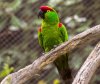
To no avail, we carry on to the next exhibit, which, at this point on the trail, we are beginning to head back towards the attraction’s exit. Before we come to any conclusions, an enclosed aviary containing a lively flock of Thick-Billed Parrots quickly turns our attention toward their charismatic antics. While the aviary has contained several species of parrot over the years, we felt that becoming an additional holder of this endangered species was a bigger priority when compared to the more well-known macaws, which we do have as ambassador animals.

IMG_8991.jpeg
Thick-Billed Parrot (Rhynchopsitta pachyrhyncha)
Photo Credit: @Julio C Castro


The setup we have for our parrots is remarkably similar to that of the Queens Zoo, in that it features a large viewing shelter that looks out into a netted aviary, with the landscape being modeled after the mature pine-oak forests of the parrot’s native range.

Coming around from the parrot viewing shelter, we are given a first glimpse of the neighboring exhibit, which, if we continue to follow the main pathway; will be easier to see a rather famous face of the forest. As we reach the nearest overlook, it allows us to look towards the largest exhibit in this sector; for this is the cornerstone enclosure for the charismatic men of the forest, better known to us as our Sumatran Orangutans. Compared to other exhibits for orangutans in the United States, ours is unique for its exceptional space and impressively tall towers, specifically designed to get the apes off the ground as much as possible. Paralleling the Toronto Zoo’s outdoor exhibit for the species, we were able to bring in the same contractors that helped construct theirs into completely transforming our own exhibit into something never before seen elsewhere in the Midwest.

IMG_8999.jpeg
Sumatran Orangutan (Pongo abelii)
Photo Credit: @marmolady


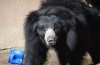
Last but certainly not least, as we slowly begin to reach the sector’s conclusion. Not too far away from the red apes is another spacious enclosure that contains instead, a slothful pair of Sloth Bears. While it lacks the flashiness of the neighboring exhibit and is more comparable to other standard enclosures for most bears in general. Hopefully, this should not detract you from the wonderful weirdness that these bears are known for upon seeing one for the first time. The bears that we have on display are related siblings, who for now, are housed together as we are a designated holder for surplus individuals of the species. That is, until we and the AZA can find suitable partners and/or a new facility for either sibling.

IMG_8997.jpeg
Sloth Bear (Melursus ursinus)
Photo Credit: @Leaf Productions


Coming back to the first habitat we came across, we can now see the zoo’s lone Tufted Deer more easily, for this individual tends to be rather secretive, thus making them a gamble to see, even if you decided to visit multiple times on a single visit. By returning to this habitat, we have effectively reached the end of this sector, which thus concludes our time with our new-found friends of this recreated forest.

IMG_9018.jpeg
Tufted Deer (Elaphodus cephalophus)
Photo Credit: @zoo_enthusiast


(9 mammal taxa)
(5 bird taxa)


What’s To Come

With our walk among the glade complete, another anticipated stop awaits at the Wilder Zoo; for when the trees of the forest recede, and the grasses are most prominent; our upcoming adventure into the Open Grasslands will soon commence!

Until then…

IMG_9002.jpeg
Image Credit: pachyderm pro
 

Attachments

  • IMG_8988.jpeg
    IMG_8988.jpeg
    118.2 KB · Views: 221
  • IMG_2376.jpeg
    IMG_2376.jpeg
    174.9 KB · Views: 222
  • IMG_9011.jpeg
    IMG_9011.jpeg
    108.1 KB · Views: 220
  • IMG_8989.jpeg
    IMG_8989.jpeg
    150.2 KB · Views: 217
  • IMG_8996.jpeg
    IMG_8996.jpeg
    66 KB · Views: 220
  • IMG_8991.jpeg
    IMG_8991.jpeg
    138.4 KB · Views: 209
  • IMG_8999.jpeg
    IMG_8999.jpeg
    145 KB · Views: 220
  • IMG_8997.jpeg
    IMG_8997.jpeg
    109 KB · Views: 218
  • IMG_9018.jpeg
    IMG_9018.jpeg
    157.8 KB · Views: 213
  • IMG_9002.jpeg
    IMG_9002.jpeg
    244.9 KB · Views: 218
Open Grasslands: - (6 exhibits)

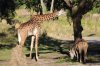
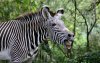
Immediately upon entry, the complex begins to draw out with the first and last exhibit that we will see on today’s tour. If any of this sounds familiar, you would be right; for much like the previous entry, this attraction consists of a large looping trail that begins and ends exactly where you started. In either case, you are always drawn to the East African Savanna, an impressive, 2.5 acre / 1.012-hectare paddock that is the largest enclosure in the entire zoo. Given that this is a zoo savanna, you can expect to see some familiar ungulates mixed together in the same space. Currently, our savanna displays an all-female dazzle of Grevy’s Zebras, a smaller, mixed-sex herd of Common Eland, and lastly, (1.0) Miombo and (0.1) Arusha, our beloved pair of Masai Giraffes. Normally, we wouldn’t mention the individual names of any of our animals, but in the case of our giraffes, today’s the exception.

IMG_5316.jpeg
Masai Giraffe (Giraffa tippelskirchi) + Common Eland (Taurotragus oryx)
Photo Credit: myself, Austin the Sengi


IMG_6742.jpeg
Grevy’s Zebra (Equus grevyi)
Photo Credit: @RatioTile


The savanna itself is rather standard in terms of appearance, with the atypical grassy fields (though, not quite a dustbowl), a panoramic watering hole, and an assortment of shade trees just beyond the reach of our giraffes. Nearby is a modest holding building that is most comparable to the Houston Zoo’s own giraffe barn. Quite notably, our indoor quarters will be viewable to guests during the colder months of the year; although, we sometimes like to go the extra mile, which is why this building is sometimes referred to as the Giraffe Gallery.

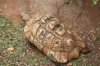
Heading back outdoors, looking to your right from the entry doors is an empty enclosure that is usually home to some Leopard Tortoises during the summer months. However, since we are going to pass by this currently-vacant exhibit in a moment’s notice, this description will be kept brief for the time being.

IMG_2705.jpeg
Leopard Tortoise (Stigmochelys pardalis ssp.)
Photo Credit: myself, Austin the Sengi


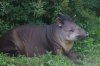
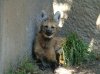
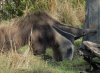
Turning around right from the savannas of Africa, is a different type of grassland from the opposite end of the Atlantic; for we have now approached the Las Pampas Argentinas, (aka, the Argentine Pampas). Much like the savanna we saw before, this 1 1/2-acre large enclosure is another mixed-exhibit which is home to a comparatively stranger cast of creatures that the average visitor would be baffled by upon first sight. To increase any chances of success, the three species that are mixed here consist of either one and/or two, non-breeding individuals. The first of these three is a female Giant Anteater, who was retired from the Anteater-SSP for being a descendant of a pair that is overly represented in the American population. Second is our male Maned Wolf, who was brought here for similar reasons to our anteater; although, in his case, it is because of his age. Last, but not least, is our brother-sister pair of Lowland Tapirs, who (for obvious reasons) won’t be producing offspring anytime soon. Also, given that this is a species that is being phased out of the AZA, there is a chance that these tapirs might be the last of their species in our current collection.

IMG_6737.jpeg
Lowland Tapir (Tapirus terrestris)
Photo Credit: @Prochilodus246


IMG_6738.jpeg
Maned Wolf (Chrysocyon brachyurus)
Photo Credit: mstickmanp


IMG_6739.jpeg
Giant Anteater (Myrmecophaga tridactyla)
Photo Credit: @geomorph


Past the pampas and making a brief return to East Africa, a turn to our left brings us towards a meshed aviary of an adequate size. In the recent past, this was home to some servals and other smaller cats; but nowadays, it has become the home to a pair of Africa’s heaviest flying birds. Which, as you will soon see, are better known to us as our Kori Bustards.

IMG_3864.jpeg
Kori Bustard (Ardeotis kori)
Photo Credit: myself, Austin the Sengi


Not too far from the bustards, another meshed enclosure awaits ahead, although, with this exhibit, it begins the start of the short, but still impressive American Prairie. Speaking of the prairie, the following safely confines our coterie of Black-Tailed Prairie Dogs, which are displayed in this type of exhibit for safety reasons regarding our local predators. Until recently, this was yet another mixed exhibit, for there were once a few Burrowing Owls which lived alongside our prairie dogs. Nowadays, even if the owls are physically gone, their presence lives on through interpretive signage relating to the flora and fauna of the Great Plains, and the species that benefit from prairie dog towns.

IMG_6740.jpeg
Black-Tailed Prairie Dog (Cynomys ludovicianus)
Photo Credit: @Hammerheadshark409


Across from the prairie dogs, another interruption from Africa appears in the form of the aforementioned tortoise yard and Giraffe Gallery entrance; but since we have already mentioned these two before, we will continue on our way, uninterrupted.

While this next exhibit is technically the last “new” area guests will see on this loop, this will not be the final enclosure we’ll see (as teased above). Contrary to the previous displays, this has always contained the same species throughout its existence; for this second (and final) display of the American Prairie highlights a mixed-sex herd of Pronghorn, a living icon of the plains that I have had the fortune of seeing both in the wild and, for now, one zoo in the United States.

IMG_6741.jpeg
Pronghorn (Antilocapra americana ssp.)
Photo Credit: @Green_mamba


Looping around from the pronghorn, we have now returned to the main loop of these grasslands, which brings us back to where we first began with the East African Savanna. As we nearly reach the attraction’s end, directly nearby is a snaking wooden platform (not depicted on the map), that is best known to visitors as the place to feed Arusha and Miombo. In other words, this is our giraffe feeding deck, which can get quite busy at certain times of the day and week, so be prepared to arrive early.

To close out today’s treat of a tour, you are given another look at the main savanna, which brings us back together to when we first began; and to all of my fellow ZooChatters who celebrate the holiday, have a Happy Valentine’s Day!

(8 mammal taxa)
(1 bird taxa)
(1 reptile taxa)


What’s To Come

Now that we have reached the end of our excursion through the grasslands, our next stop will take us closer back towards the Formal Pond. From there, we will begin an expedition through the first of three (predominantly) indoor sectors, beginning with the Polar Panorama!

Coming soon…

IMG_6744.jpeg
Image Credit: JigerofLemuria
 

Attachments

  • IMG_5316.jpeg
    IMG_5316.jpeg
    170 KB · Views: 165
  • IMG_6742.jpeg
    IMG_6742.jpeg
    153.3 KB · Views: 169
  • IMG_2705.jpeg
    IMG_2705.jpeg
    207.8 KB · Views: 172
  • IMG_6737.jpeg
    IMG_6737.jpeg
    116.8 KB · Views: 169
  • IMG_6738.jpeg
    IMG_6738.jpeg
    164.5 KB · Views: 172
  • IMG_6739.jpeg
    IMG_6739.jpeg
    223.6 KB · Views: 169
  • IMG_3864.jpeg
    IMG_3864.jpeg
    101.8 KB · Views: 174
  • IMG_6740.jpeg
    IMG_6740.jpeg
    96.3 KB · Views: 171
  • IMG_6741.jpeg
    IMG_6741.jpeg
    154.4 KB · Views: 168
  • IMG_6744.jpeg
    IMG_6744.jpeg
    124.1 KB · Views: 169
Last edited:
Polar Panorama: - (10 exhibits)

To begin our trip to the poles, we will first walk past the main pathway that leads from the previous exhibits we toured, and closer towards the zoo’s main entrance. Next door from where we concluded the Faces of the Forest tour is a branching path that leads towards the entrance of today’s building of focus.

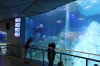
The following building is unique as it is the only indoor exhibit that contains two levels, thus, making it a sight to see, no matter where in the zoo you are at. Entering through a set of sliding doors on ground-level, you immediately face a blast of cold air coming from an air vent hidden above. Once inside, you are soon greeted with a floor-to-ceiling tank for a school of Arctic Char to your right, and a thematic mural that evokes a welcoming feeling for visitors on your left. Also to your left, we are soon greeted by an impressive underwater area that spans both levels of the building and follows the shape of the exhibit’s layout. This will be a common theme throughout the three major exhibits, so I’ll only cover this feature here, as it is the biggest of these viewing areas. As to what this viewing area looks into, that will be left for this tour’s finale, as you also see this enclosure beyond the confines of this building. Otherwise, you will have a choice to make from there, whether we will head outside or towards the upper level is all up to you. However, it’s best to stick to the ground level, for there are three other tanks present on this level. Walking towards the base of the building’s stairs, escalators, and elevators (all of which are ADA-graded), the aforementioned set of aquariums is present along a curved portion of this room. From left to right (top-to-bottom), listed below are the inhabitants of these tanks:
  • Sea Angel / Clione limacina
  • Giant Pacific Octopus
  • Arctic Cod + Northern Sunstar / Solaster endeca
All three aquariums were designed to be as spacious for their inhabitants as possible, while acknowledging the limitations of the building’s floor space. As for what else can be seen on this level, there are two multi-level exhibits that include underwater viewing to wow visitors. For reference, here below is a sample image that summarizes these underwater viewing areas, which are rectangular in shape and length for those who are curious.

IMG_6779.jpeg
Photo Credit: Miss Gulch

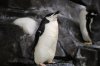
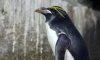
After exploring what there is to see on the base level, we will head upstairs to the second level. Whether you choose the stairs, escalators, and/or elevators to reach this level is up to your imagination. Either way, once you do reach the building’s upper level, the grand reveal of the first exhibit we’ll see on this level immediately draws us and other visitors towards it. For what is arguably considered to be the building’s main attraction, it’s no surprise that said space is dedicated to the always-popular lineage of flightless birds that are penguins. Here at the Wilder Zoo, we currently display four species of penguin, and if we have our way from SeaWorld San Diego’s upcoming closure of their Penguin Encounter; the numbers of our current colonies might increase in the near future. For now, we are grateful for the number of penguins we have, especially since we are one of the few traditional zoos in the country that consistently maintain such large colonies of sub-Antarctic penguins. At the moment, you can expect to see equally sizable numbers of Gentoo, Chinstrap, Macaroni, and Rockhopper Penguins* in this enclosure; and while this area is entirely indoors, both this and the neighboring habitat contain a Berlin-inspired set of skylights that help provide natural lighting into this space.

IMG_6789.jpeg
Macaroni Penguin (Eudyptes chrysolophus)
Photo Credit: @RatioTile


IMG_0834.jpeg
Chinstrap Penguin (Pygoscelis antarcticus)
Photo Credit: myself, Austin the Sengi


IMG_6783.jpeg
Gentoo Penguin (Pygoscelis papua ssp.)
Photo Credit: @MagpieGoose


*Out every depicted species, only the Rockhoppers are not represented in image form.

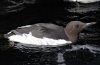
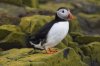
In addition to our charismatic colony of penguins, a separate habitat for seabirds that call the opposite end of the Earth are also present on this level. While this next exhibit is half the size of the previous enclosure, it is still just as naturalistic, with skylights, artificial cliffs with (mostly) real guano, and a multi-level pool to dive into being the main highlights. Like the penguins next-door, this is yet another mixed exhibit, with the most notable inhabitants being our Atlantic Puffins. Being one of the few holders of this species in the country, we are grateful to have a successful breeding colony, which ultimately replaced the Tufted Puffins that were formerly present. Since most of our founding stock came from the Montreal Biodome, we are hopeful that the genes present in these birds will be better established in our colony going forward. So far, we have had three successful breeding seasons over the past six years, with the latest being this past summer. Along with our puffins, the following mix also contains Common Murres and Common Eiders respectively, two birds with rather standard names that are far from common, especially when it comes to their presence in zoos.

IMG_6786.jpeg
Atlantic Puffin (Fratercula arctica)
Photo Credit: @Maguari


IMG_6785.jpeg
Common Murre (Uria aalge ssp.)
Photo Credit: @Daniel Sörensen


IMG_6784.jpeg
Common Eider (Somateria mollissima ssp.)
Photo Credit: @Maguari (again)


After admiring our assembly of seabirds, there are three more tanks left to see, for much like their counterparts downstairs, these aquariums are intentionally designed to prioritize space for their inhabitants. Again, listed from left to right (top-to-bottom) are the inhabitants of these last three tanks:
  • White-Spotted Rose Anemone / Urticina eques
  • Polar Shrimp / Lebbeus polaris + Antarctic Sea Star / Odontaster validus
  • Arctic Grayling
Next door to these tanks is a small interpretive area where volunteers provide “bio-facts” about the neighboring penguins, along with a wall that is dedicated to the polar expeditions of the past century, and how they would go on to directly impact the environment leading up to the present day and beyond.

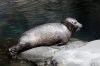
Once we head back towards the penguin viewing area, we will soon descend the same way we came and directly return to the ground level. Afterwards, it is time we show you the one exhibit we have saved for the end, for we are soon led outside to an outdoor viewing shelter adjacent to the exit. The viewing opportunities aren't as spectacular as the underwater viewing indoors, but this does provide an uninterrupted look at the exhibit’s land area. Furthermore, since there is no direct cross-viewing to be found, we can finally turn our attention towards the zoo’s Harbor Seals. While they are not exclusive to the Arctic Ocean, the seals we have on display represent their polar cousins and are often used by other zoos for a similar reason.

IMG_6788.jpeg
Harbor Seal (Phoca vitulina ssp.)
Photo Credit: @Ding Lingwei


From this point on, we have now reached the end of our time indoors and out, for it is at this point in the main pathway that leads you back to the main play area mentioned at the very beginning, alongside the Formal Pond and the zoo’s main entrance. However, our next tour requires us to loop back towards the main pathway, to where the next two sections of the zoo await, which from there, marks the conclusion of this polar expedition.

(1 mammal taxa)
(7 bird taxa)
(3 fish taxa)
(6 invertebrate taxa)


What’s To Come

From the coldest parts of the zoo to its hottest, our next venture in the Wilder Zoo will take us back towards yet another indoor/outdoor complex. However, this time around, be prepared to feel the heat when we cover the Living Deserts!


Coming soon…

IMG_6778.jpeg
Image Credit: geomorph
 

Attachments

  • IMG_6778.jpeg
    IMG_6778.jpeg
    124.8 KB · Views: 148
  • IMG_6788.jpeg
    IMG_6788.jpeg
    109.6 KB · Views: 146
  • IMG_6784.jpeg
    IMG_6784.jpeg
    84 KB · Views: 148
  • IMG_6785.jpeg
    IMG_6785.jpeg
    87.5 KB · Views: 150
  • IMG_6786.jpeg
    IMG_6786.jpeg
    88.8 KB · Views: 152
  • IMG_6783.jpeg
    IMG_6783.jpeg
    87.1 KB · Views: 146
  • IMG_0834.jpeg
    IMG_0834.jpeg
    71.4 KB · Views: 149
  • IMG_6789.jpeg
    IMG_6789.jpeg
    85.8 KB · Views: 144
  • IMG_6779.jpeg
    IMG_6779.jpeg
    97.7 KB · Views: 147
Last edited:
Now while it’s going to be a few more days until the release of our next tour. It came to my attention that with every new post I release, it seems to get one less like than the post that came before. I’m not sure if this nothing more than a sheer coincidence, but if there’s any way to resolve this situation for the remaining posts; feel free to share any critiques and feedback that you may have.
 
April Fools! :p

In all seriousness, since I am in the middle of a writers block regarding The Living Deserts. I made the last-minute decision to swap out the order of these two exhibits as to prevent a possible burnout.


Highland Heights: - (6 exhibits)

As it was explained on our previous tour, we begin today’s venture by backtracking our way from the Formal Pond and Polar Panorama, respectively. Once we approach the layout that will lead us in and out of this complex, the path meanders to our right and directs us towards a peculiar rock-like structure.

Serving as both the proper entrance and the gateway towards the first enclosure, an impressively large and widened rock archway towers over us as we enter. Underneath this sheltered archway and looking towards our left, an indoor enclosure that we can view from the outside lies ahead. At the moment, this climate-controlled exhibit is home to a charismatic group of Long-Tailed Chinchillas, who are the first of two animals on this tour that represent the Andes Mountains of South America.

IMG_0113.jpeg
Long-Tailed Chinchilla (Chinchilla lanigera)
Photo Credit: @Giant Eland


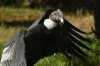
Now in order to reach the next enclosure, we have to head outside of the shelter of the archway and straight out into the elements once again, for a tall, imposing aviary for a pair of Andean Condors are what we can expect to see by looking left around the corner. Going into a bit about the behind-the-scenes areas of this attraction, the holding areas for both the condors and chinchillas are in fact under the same roof, albeit, in separate rooms to avoid maintaining any inadequate temperatures.

IMG_0123.jpeg
Andean Condor (Vultur gryphus)
Photo Credit: @Therabu


From the condors, the path drastically bends downward on our right, which soon directs us straight towards the next enclosure. Following this route, the path then makes a gradual turn to our left; but before we can kid ourselves by skipping this next exhibit. Don’t forget to stick around for a short while, for you might be entertained by the active antics that derive from a fission-fusion troop of Hamadryas Baboons. While some visitors may not directly associate these primates with a mountainous environment, the design of this habitat and the interpretive signage that accompanies it should help to give them a better idea of the baboon’s preferred choice of habitat.

IMG_0121.jpeg
Hamadryas Baboon (Papio hamadryas)
Photo Credit: @Astrotom3000


Now if your attention span was suddenly drawn towards a not-so-hidden mesh structure, especially when that said enclosure follows the route and length of the leftward-facing path. You can't help but feel curious enough to follow down this route and see what may be looking for us in a moment’s notice.

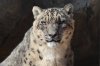
Just by drawing our attention when facing right, you may have a slight feeling that something is already watching our group; long before we can say the same when looking towards it. In any case, one of our two watchful Snow Leopards are bound to attract a decent crowd. At the moment, both leopards can be switched back and forth between two public enclosures that just so happen to be enclosed under the same meshed roof. Since each enclosure contains a single public viewing area that accompanies the respective exhibit, there is only so much to say about each one without having to repeat the same details.

As for the actual enclosures themselves, they are practically similar in terms of habitat design; with the focus being spent on lush, hilly landscapes and tall, vertical meshed walls that provide a sense of blended complexity and simplicity at the same time. Additionally, since the only visual obstacle that stands in the two leopards’ way is a dividing wall of mesh; there is always the rare chance that visitors can see the pair hear, smell, and see themselves directly.

IMG_0112.jpeg
Snow Leopard (Panthera uncia)
Photo Credit: @Brayden Delashmutt


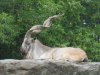
After trying several times to see either snow leopard in both habitats, a quick skip towards the next enclosure brings us toward another, open-topped exhibit that parallels the one used for the baboons further back. This time, however, you will find instead, a far less prolific herd of Markhor, which have been slowly dying off one by one, especially, as the years progress. However, don't be too disappointed, for the while our markhor program hasn't been the most successful in recent years; a future investment in bringing a new species into this enclosure may one day be as successful, if not, more so if all goes well.

IMG_0116.jpeg
Markhor (Capra falconeri ssp.)
Photo Credit: @TheGerenuk


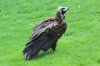
Next door to the first of two viewing areas for our markhor, another large aviary can be seen, just by us looking in the opposite direction. In an identical fashion to that of the condors, the following enclosure is yet another vertical aviary that features a downward-sloping hill near the back of this aviary. However, while you will find yet another species of vulture in this aviary; the birds that we’ll see in this enclosure are instead, a breeding pair of Cinereous Vultures and their comparatively adorable hatchling, who just so happens to be the first-generation hatching of this species on the Wilder Zoo premises.

IMG_0117.jpeg
Cinereous Vulture (Aegypius monachus)
Photo Credit: @pachyderm pro


Looking back towards our left, a final opportunity to view the markhor presents itself. However, if you didn't decide to take a quick glance, then from there, we have now reached the end of our venture through these rechighlands.

(4 mammal taxa)
(2 bird taxa)


What’s To Come

Whether or not I will finish the description for The Living Deserts remains to be seen, so for this time around; there will be no teasers for the foreseeable month. Eventually, I will return to focus on the completion for each of the remaining exhibits (including Living Deserts), but as of right now, this is where I will sign off.


Until next time…
 

Attachments

  • IMG_0113.jpeg
    IMG_0113.jpeg
    109.3 KB · Views: 102
  • IMG_0123.jpeg
    IMG_0123.jpeg
    72.3 KB · Views: 105
  • IMG_0121.jpeg
    IMG_0121.jpeg
    142 KB · Views: 102
  • IMG_0112.jpeg
    IMG_0112.jpeg
    103.9 KB · Views: 106
  • IMG_0116.jpeg
    IMG_0116.jpeg
    167.5 KB · Views: 103
  • IMG_0117.jpeg
    IMG_0117.jpeg
    150.7 KB · Views: 102
Whether or not I will finish the description for The Living Deserts remains to be seen, so for this time around; there will be no teasers for the foreseeable month. Eventually, I will return to focus on the completion for each of the remaining exhibits (including Living Deserts)
Yeah, about that “next time”…

Hello everyone, since I’m going to be transparent about the lack of recent activity on this thread. I must confess that I’ve lost interest in continuing this project all together.

However, while there won’t be any more tours to look forward to. I am planning to follow this announcement with a separate species list (which will include the sectors that were never given a dedicated post) that will serve as a compensation for this abrupt end of the zoo’s development.


What’s to Come

As for my presence in the spec zoo forums, I will continue to occasionally post an entry for my exhibit showcase thread; as well as to provide insight for other forum members. With that being said, this post officially marks the end of the Wilder Zoo; and I’m glad I was able to share parts of this concept with those who’ve been following along.


[Edit] Stay tuned for the species list…
 
Back
Top