
littleRedPanda
Well-Known Member
BBC iPlayer buffering during live sports is bugging me now. Been doing it for a few months but I've only found the advice to pause it for a few seconds to compensate.


That sloth is freaky, it looks like its about to jump down and slowly claw me to deathSocial media posts of those overly cute and fluffy model animals that people share as if they're real and people believe are real.

Yeah, a lot of these things can get into uncanny valley territory.That sloth is freaky, it looks like its about to jump down and slowly claw me to death


Things like this in zoos irritate me (never actually seen this in person).

1. Why is there actually a need to give "trigger warnings" to visitors that they will observe totally natural behaviour like an animal feeding on carrion ?
2. Why do zoos feel that they have to give "trigger warnings"?
If people don't want to watch an animal feeding on carrion then quite simply they should not be in a zoo or indeed in any natural area where they may see natural phenomenon that doesn't conform to their clinical and cuddly middle class worldview.
If zoos feel the need to give "trigger warnings" to the public and to airbrush out whatever people may feel "repulsive" about nature the hell does this mean for effective environmental education to visitors about the reality of the natural world ?
Photo credit to @Arizona Docent.
I'm afraid this would be done for fear of legal action in some countries with a litigious culture, where people could try suing a zoo for a "distressing" display. Even if a judge were to decide in favor of a zoo on such a lawsuit, lawyer fees would cost a lot more than some signage.
From what I understand this is more of an issue in North American zoos than it is in European zoos. I have seen carcass feedings being done frankly and without a forewarning. It is not that unusual here to see for example large carcass pieces (ribcages, large bones, skulls) or (remains of) entire prey items (like rodents, rabbits or chickens) in exhibits of predatory or scavenging species.

Amen!Social media posts of those overly cute and fluffy model animals that people share as if they're real and people believe are real.
Well that is pathetic in my opinion.
Who cares if people get offended / outraged / triggered by natural phenomenon ?
The natural world does not conform or revolve around suburban American middle class squeamishness or aversion to reality.
I actually like and admire what the European zoos do in terms of feeding the meat of deceased hoofstock of their collections to their carnivores and the frankness / openness in the way that they do this.
Social media posts of those overly cute and fluffy model animals that people share as if they're real and people believe are real.
I agree that zoos should shy away from showing that nature is often "red in tooth and claw", but that message also has to balanced with instilling curiousness about and respect and wonder for the natural world. So I can understand to an extent why squeamishness would be a concern. But the sign is unnecessary and if they put up a sign about this stuff they should have put one explaining why they are doing this and why it is good for their animals.
But why do you believe that zoos should shy away from showing that predation and scavenging occurs in nature and that carnivorous and scavenger species kept within zoos consume carcasses as part of their diet ?
Personally I just don't think that kind of airbrushing by zoos can ever be progressive / constructive.
I'm sorry, I made a mistake in my post and didn't catch it before you responded. I meant to say that zoos should NOT shy away from showing the predatory and scavenging parts of nature.
I apologize for causing confusion.
With regards to feeding methods used I think zoos should first opt for methods that help improve animal welfare.
You mean this thing?There's a fake baby platypus one too that pops back up on social media every couple weeks to couple months. I can't stand these inaccurate representations either.
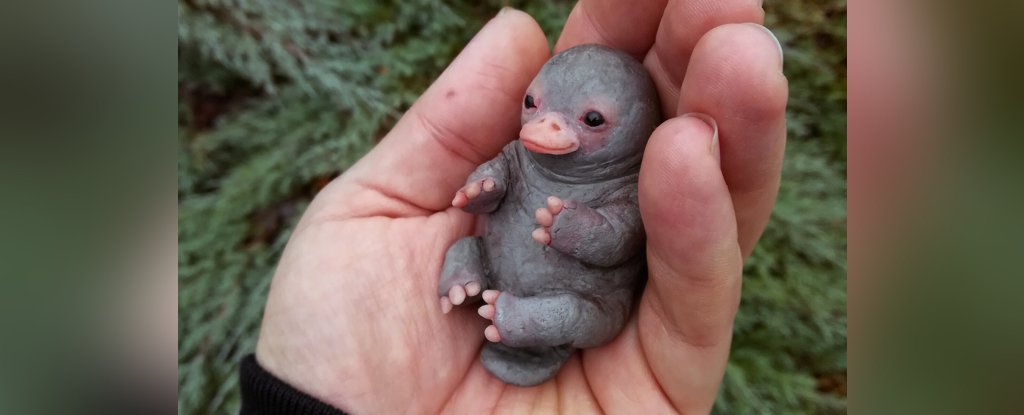
You mean this thing?
You mean this thing?

Things like this in zoos irritate me (never actually seen this in person).
1. Why is there actually a need to give "trigger warnings" to visitors that they will observe totally natural behaviour like an animal feeding on carrion ?
2. Why do zoos feel that they have to give "trigger warnings"?
If people don't want to watch an animal feeding on carrion then quite simply they should not be in a zoo or indeed in any natural area where they may see natural phenomenon that doesn't conform to their clinical and cuddly middle class worldview.
If zoos feel the need to give "trigger warnings" to the public and to airbrush out whatever people may feel "repulsive" about nature what the hell does this mean for effective environmental education to visitors about the reality of the natural world ?
Photo credit to @Arizona Docent.
I was at a zoo once and they fed the tigers a horse’s head. A school party was visiting and the girls were crying; the boys were cheering! The zoo has since put up a warning to any such visitor who wants to shield themselves from the reality of how animals eat/live.
I personally agree it’s ridiculous. I rode horses as a kid; I watch the Melbourne Cup; but I have no issue with seeing a humanely killed one get ripped to pieces by the carnivores at the zoo.
If it’s not already been said, these people the warning are there for are the ones who can’t handle a nature doco unless it has a happy ending for the gazelle that’s getting chased by the lioness.
I actually like and admire what the European zoos do in terms of feeding the meat of deceased hoofstock of their collections to their carnivores and the frankness / openness in the way that they do this.
This is illegal in the UK.
ANY animal dying in a zoo (from ANY cause) or on any other site under the Zoo's control, is classed as a Category 2 Animal BY-Product and cannot be fed out. All such remains must be incinerated, disposed of to a licenced distributor, or a licenced end destination such as a museum.
A paper-trail for every such individual has to be kept for scrutiny by DEFRA, Zoo Licence inspectors or anyone under their authority.
I just don't understand how zoos can or even want to shield visitors from that reality.
Are people really that soft that they cannot acknowledge that predation and death are an integral and necessary part of life on earth for all living organisms?
Ughh...I suppose that with kids that kind of reaction isn't exactly unexpected, when it is an adult with that attitude though I do find it very cringey and pathetic.
The greater the realism and less the censorship the better the documentary in my opinion.