Wingspan
I visited Wingspan six days after my three zoos in a day trip, but I thought I would combine it with this review rather than doing an independent review. I visited with my two of my children and their mother, who were visiting Rotorua this week and were looking for an attraction to visit. We’ve visited Paradise Valley Springs (which is further down the road) before, but none of us had never visited Wingspan, so thought we’d check it out.
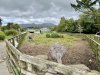
Wingspan was founded as a charitable trust in 1992, with the first centre initially opened at a site further along Paradise Valley Road. Wingspan relocated to the current site in 2023. It’s a picturesque location on the slopes of Mount Ngongotahā, with Lake Rotorua visible on the horizon. Wingspan is open once a day from 11am-1pm, which includes a one hour flight demonstration.
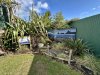
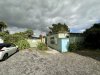
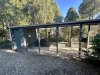
Entrance:

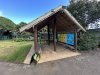
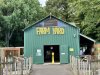
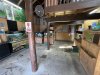
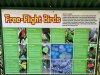
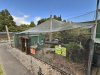
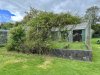
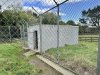
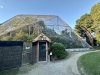
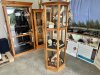
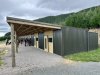
Upon arrival, visitors gather at the assembly point in the carpark, before being led up the hill to the ticket office and museum. The museum features a handful of items including stuffed birds of prey and a cast of Haast’s eagle’s foot.
Ticket Office/Museum:
 Museum (Interior):

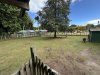
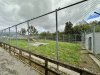
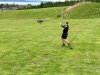
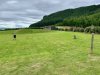
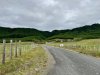
Once you’ve bought your tickets, you’re invited to find your seats ahead of the flight demonstration starting at 11.30am. It doesn’t take half an hour to find your seat, rather half a minute; but there was a clear advantage to getting there early and choosing where to sit. With a range of available seats to choose from, we sat in the front row, which ultimately proved fortuitous when the first bird (a male New Zealand falcon named Arohaki) was taken past the front row so we could get a closer look.
Flight Demonstration Field:
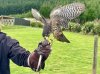
 Arohaki (Male New Zealand Falcon):

Over the next half an hour, the handler told us countless facts about New Zealand falcons and ran the bird through a range of behaviours including lure training and flying up on to targets. A couple of interesting facts are that the New Zealand falcon goes from hatching to fledgling in 38 days; and the current New Zealand $20 note (2016 edition) features a New Zealand falcon, based on one held at Wingspan named Atareta.
The next bird out was a female New Zealand falcon named Star. She was an adolescent female, but noticeably larger than the male and it was interesting to compare and contrast the two, both in appearance and behaviour. Due to her youth, Star was not as well trained as the preceding bird and without warning, would fly straight into the crowd. She showed a strong bias for those in the back row and perched on the head of a teenage boy for about three minutes until she could be tempted off.
Star (Female New Zealand Falcon):

A further 10 minutes into the demonstration and she flew into the crowd again, but her intended target screamed and dove for cover, so she changed course and sat on a child’s head. He was wearing a cap and seemed amused by the experience, as were the crowd. I felt the tips of the falcon’s wings as she flew past, but as mentioned, she seemed to favour those in the back row and so she didn’t land on me.
Star participated in lure training and was clearly making progress in target training. She has a GPS tracker, which has been used to assist in retrieving her when she’s flown off site on occasion, including at least once down to Rotorua Lake. She handler brought her past the front row and then the back, giving everyone an opportunity to see the falcon up close.
Lure Training:

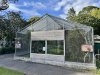
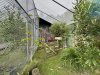
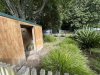
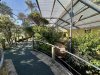
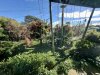
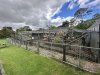
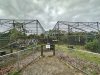
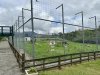
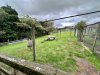
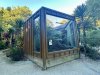
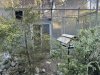
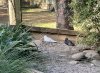
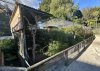
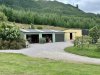
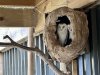
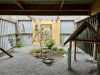
This concluded the demonstration, at which point visitors were invited to cross the field and view the aviaries before leaving. The cage block contained six aviaries and an encounter space. Two of the aviaries were empty; two housed a male and female New Zealand falcon respectively; one housed a pair of Barn owl; and one housed a Morepork. More birds were housed off display as evidenced by neither Arohaki or Star being accommodated in this cage block.
Aviaries:
 Morepork Aviary:
 Barn Owls:

It’s a mixed review of Wingspan from me. They do fantastic conservation work, particularly with regards to rescue and rehabilitation; but I was underwhelmed by seeing only a male and female New Zealand falcon in a one hour show. When I visited Taronga Zoo’s bird show last November, a new bird species was brought out every five minutes; and at a presentation of native species held at Auckland Zoo, we saw five species in half an hour.
It was good enjoyed seeing some different species in the aviaries that have been recently built, though they weren’t naturalistically landscaped like the aviaries I saw last week at the Otorohanga Kiwi House.
I personally thought the admission price of $33 for an adult was too high, both in comparison to the other facilities I visited in this review (see the first post); and New Zealand’s main zoos (Auckland Zoo - $35; Hamilton Zoo - $26; Wellington Zoo - $24; and Orana Wildlife Park - $39.5), all of which be considered a minimum of a half-day out or more.