As far as I'm aware this has always been a part of the design.
I was sure I'd seen photos of a less fortress-like moat when the cheetah exhibit first opened, then read of an escape, so when I saw it the whole concept of a moat seemed slightly pointless for this species.
These are standard-issue enclosures for turtle 'arks' - they are practical and provide everything the inhabitants need as well as ease of access and cleaning. The priority in these areas is to maintain and breed the turtles, so aesthetics are not heavily invested in.
I was more thinking about choice of movement/privacy/substrate, as well as enrichment, rather than aesthetics, but its a fair point that many off-show areas are little more than this, so kudos to them for putting this work on-show.
If I was a walking guest, how many miles roughly would you expect to cover in a day (approx).
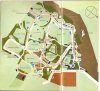
I have no idea, but we did the outer walk (anti-clockwise around the perimeter) first, but on leaving I realised that you could see most things without taking this route, as the biggest paddocks can be viewed from the back, which is more in the centre of the park. However, most visitors were clearly driving between different parts of the zoo and getting out to see the exhibits in each part.
I think the Chimps are regarded as some sort of draw for them but the group is small and imbalanced in favour of males, yet the outdoor encloure is probably larger than somewhere like Chester's who have about 25+ Chimps in theirs. I wish they made them into a larger group.
I'm guessing they're generic chimps though, and on contraception? I can't imagine them wanting to breed from them any further, and I would be surprised if they attempted to follow Edinburgh in mixing pure-bred animals into the group, given how male-heavy it is together with the fact they'd want an introduced subspecific male to breed (assuming their males aren't 'pure'). I think they'll leave them looking reasonably content on that island for quite a while and let the numbers dwindle a bit before any changes are made.
Rhinos of Nepal building - given its underusage, maybe that's why this new building is gathering dust! Agree about the moats but economy probably dictated the design. I think soft substrate is used in other GI Rhino houses on the Continent- Basel and Rotterdam spring to mind. Whipsnade have it in some(?) of the yards but as you noted, not in the newer house which is concrete floored.
That's interesting, it seems a real oversight to have no soft substrate. The dust/cobwebs wasn't because of under-use, more the way the heating/lighting apparatus is visible up in the apex of the house. I'm not suggesting they should be cleaning it, it was more a point that even a fancy ungulate barn takes on the appearance of a barn before long, so any attempt to dress it up as a tropical house is going to look ridiculous after a while. My point was similar to the hippos, using the houses as optional indoor shelter the zoo wouldn't really need to make them look like exhibits, I think that changes when animals are shut in but on display. When I look into the antelope sheds, I don't lament the lack of cheese plants or rainforest murals, its just an indoor shelter, which the animals can clearly leave.
I also like how you can go in some of those rather empty-looking Antelope/Ungulate houses which usually don't appear to be open to the public, but are, and then find various odd animals resting therein.
One thing I noticed when we came across some antelope at the sheds is that they reacted to us like antelope, by which I mean, in so many zoos, a deer or antelope may visually/phenotypically resemble its species, but in many cases its behaviour and posture is no different to the goats in the children's farm, given the size of enclosure, feeding regime or exposure to people. What was special was seeing a family group of waterbuck slightly (but not overly) startled by our approaching the yards by the house, resulting in their rushing out, with the bull stopping between us and the females/calves to check us out. It felt as if they were 'wild' enough to still be wary of humans they don't know.