ZSL Whipsnade Zoo Whipsnade visit

More than once there've been ungulate species I'd have missed altogether if I weren't checking every one! :D

I used to get a similar feeling in the old Cattle sheds at Paignton, though there two out of every three stalls seemed to have just bales of straw or a mounted display of some dead animal skeleton! Not surprising that building disappeared.
 
As far as I'm aware this has always been a part of the design.

I was sure I'd seen photos of a less fortress-like moat when the cheetah exhibit first opened, then read of an escape, so when I saw it the whole concept of a moat seemed slightly pointless for this species.

These are standard-issue enclosures for turtle 'arks' - they are practical and provide everything the inhabitants need as well as ease of access and cleaning. The priority in these areas is to maintain and breed the turtles, so aesthetics are not heavily invested in.

I was more thinking about choice of movement/privacy/substrate, as well as enrichment, rather than aesthetics, but its a fair point that many off-show areas are little more than this, so kudos to them for putting this work on-show.

If I was a walking guest, how many miles roughly would you expect to cover in a day (approx).
I have no idea, but we did the outer walk (anti-clockwise around the perimeter) first, but on leaving I realised that you could see most things without taking this route, as the biggest paddocks can be viewed from the back, which is more in the centre of the park. However, most visitors were clearly driving between different parts of the zoo and getting out to see the exhibits in each part.

I think the Chimps are regarded as some sort of draw for them but the group is small and imbalanced in favour of males, yet the outdoor encloure is probably larger than somewhere like Chester's who have about 25+ Chimps in theirs. I wish they made them into a larger group.

I'm guessing they're generic chimps though, and on contraception? I can't imagine them wanting to breed from them any further, and I would be surprised if they attempted to follow Edinburgh in mixing pure-bred animals into the group, given how male-heavy it is together with the fact they'd want an introduced subspecific male to breed (assuming their males aren't 'pure'). I think they'll leave them looking reasonably content on that island for quite a while and let the numbers dwindle a bit before any changes are made.

Rhinos of Nepal building - given its underusage, maybe that's why this new building is gathering dust! Agree about the moats but economy probably dictated the design. I think soft substrate is used in other GI Rhino houses on the Continent- Basel and Rotterdam spring to mind. Whipsnade have it in some(?) of the yards but as you noted, not in the newer house which is concrete floored.

That's interesting, it seems a real oversight to have no soft substrate. The dust/cobwebs wasn't because of under-use, more the way the heating/lighting apparatus is visible up in the apex of the house. I'm not suggesting they should be cleaning it, it was more a point that even a fancy ungulate barn takes on the appearance of a barn before long, so any attempt to dress it up as a tropical house is going to look ridiculous after a while. My point was similar to the hippos, using the houses as optional indoor shelter the zoo wouldn't really need to make them look like exhibits, I think that changes when animals are shut in but on display. When I look into the antelope sheds, I don't lament the lack of cheese plants or rainforest murals, its just an indoor shelter, which the animals can clearly leave.

I also like how you can go in some of those rather empty-looking Antelope/Ungulate houses which usually don't appear to be open to the public, but are, and then find various odd animals resting therein.

One thing I noticed when we came across some antelope at the sheds is that they reacted to us like antelope, by which I mean, in so many zoos, a deer or antelope may visually/phenotypically resemble its species, but in many cases its behaviour and posture is no different to the goats in the children's farm, given the size of enclosure, feeding regime or exposure to people. What was special was seeing a family group of waterbuck slightly (but not overly) startled by our approaching the yards by the house, resulting in their rushing out, with the bull stopping between us and the females/calves to check us out. It felt as if they were 'wild' enough to still be wary of humans they don't know.
 
Last edited:
A very detailed an well thought out review Johnstoni, though i don't agree with all your points, some are certainly valid. It's quite strange that despite your many criticisms, you still seem to quite like the place overall, most seem to love it or hate it!
Most of your questions seem to have been answered, but the rhea are at the far side of the childrens zoo by the road and more or less opposite the bird garden , the location of which has been given by Pertinax.

I agree with Pertinax re: chimps, the enclosure could easily hold 5 or 6 more, other than Edinburgh, i haven't seen a better one in the UK! Twycross probably have a few who'd love it, and the old cage area allows for seperation/integration of additions but not so sure on the indoors.. I'm not too fond of chimps but i always go to the feed at Whipsnade and i'd hate them to phase them out!
 
It's quite strange that despite your many criticisms, you still seem to quite like the place overall, most seem to love it or hate it!
Most of your questions seem to have been answered, but the rhea are at the far side of the childrens zoo by the road and more or less opposite the bird garden , the location of which has been given by Pertinax.

I think its important to be, constructively, as critical as you can, but no I found Whipsnade really enchanting, steeped in history, not tacky/patronising, and not too polished.

I still have a few questions actually, in case anyone is interested in answering them. If not, don't worry:

- Are there any forest buffalo left? If so/not where were/are they?
- What was the glass-fronted housing by the first pond built for? (before the flamingos, kind of opposite the overnight lodges)
- Were the flamingos from London (they had this species in the 1980s), and have they bred at Whipsnade?
- Where were the wildebeest, Thompson's gazelle and Musk oxen held when last kept here?
- Until how recently did Whipsnade keep timber wolves?
- One of the smaller zebra/oryx paddocks had a very solid metal barrier around it, as if designed for buffalo/rhino. Does anyone know what this is/was for?
 
One thing I noticed when we came across some antelope at the sheds is that they reacted to us like antelope,......... a family group of waterbuck slightly (but not overly) startled by our approaching the yards by the house, resulting in their rushing out, with the bull stopping between us and the females/calves to check us out. It felt as if they were 'wild' enough to still be wary of humans they don't know.

I have had similar experiences there, going into those Houses sometimes startles the animals resting in the stalls sufficiently to make them get up and run outside. I am sure this is because the animals aren't used to seeing people apart from keepers inside the sheds or close to the yards, because so few visitors bother to (or even know they can) enter those areas.
 
- Where were the wildebeest, Thompson's gazelle and Musk oxen held when last kept here?
- Until how recently did Whipsnade keep timber wolves?
- One of the smaller zebra/oryx paddocks had a very solid metal barrier around it, as if designed for buffalo/rhino. Does anyone know what this is/was for?

1. I think the Wildebeest may have been in the large Paddock on the other side of the bend in the road above the Hippos-it probably has Scimitar horned oryx in now, or alternatively in the one where the Grevy Zebra are. They have not had Wildebeest for a very long time now- 1960's? -but I am not absolutely sure about either of those facts. Thompson's gazelle were in a small triangular shaped paddock somewhere near the Giraffes- it seems to have disappeared now. Musk Oxen- adjacent to the Wisent, the paddock at the 'front' (nearest to the central Avenue) if you can envisage that. It may have Moose in now?

2.Timber wolves- Tim May should be able to help you there and probably on the Wildebeest too..

3.The paddock with a strong barrier is probably the one that was the last housing for Black Rhino before they left Whipsnade. It also held the Gaur for a while afterwards.(The indoor building is the one near the Giraffes).
 
whipsnade

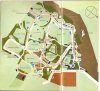
I attach a 1970 map of whipsnade , this was still the original park as it was laid out and developed.
white tailed gnu were in central paddock next to cape buffalo, gazelle were in the small paddocks on miss joans ride.The query about walking around the park; I used to walk from the bottom of Studham lane where it joined the Hemel/leightonbuzzard ro, spend 2-3 hours walking round the park and returning to catch the bus at the Studham lane junction.
 

Attachments

  • hpqscan0001.jpg
    hpqscan0001.jpg
    1.8 MB · Views: 36
white tailed gnu were in central paddock next to cape buffalo,

Tht's interesting, though I was actually referring to the earlier White-bearded & Brindled Gnu. The paddock I was referring to above(from your map) was 'Hallcraft'- may they have been in there perhaps?

I have always loved the names of all of Whipsnade's paddocks although I am not sure they are often in usage anymore.
 
re: chimps, the enclosure could easily hold 5 or 6 more, other than Edinburgh, i haven't seen a better one in the UK! Twycross probably have a few who'd love it, and the old cage area allows for seperation/integration of additions but not so sure on the indoors.. I'm not too fond of chimps but i always go to the feed at Whipsnade and i'd hate them to phase them out!

I doubt they will phase them out, they only enlarged and water-moated the Island and redid the indoor 'gymnasium' area a few years ago. The indoors, which before its revamp incidentally was a perfect example of a 'London Zoo' building set down in a rural area, probably isn't big enough to hold a really big group like Chester or Edinburgh, but certainly they could hold up to a dozen I feel. I agree a small cohort from somewhere like Twycross could perhaps be added to make a more interesting display. If they don't want to breed from crossbred Chimps they could contracept any breeding age females, or just retain the skewed sex ratio they have now in favour of males e.g. 8:4 or similar ratio. There is no set rule the sexes have to be equally numbered as long as they have some companions of each.
 
I think its important to be, constructively, as critical as you can, but no I found Whipsnade really enchanting, steeped in history, not tacky/patronising, and not too polished.

I still have a few questions actually, in case anyone is interested in answering them. If not, don't worry:

- Are there any forest buffalo left? If so/not where were/are they?
- What was the glass-fronted housing by the first pond built for? (before the flamingos, kind of opposite the overnight lodges)
- Were the flamingos from London (they had this species in the 1980s), and have they bred at Whipsnade?
- Where were the wildebeest, Thompson's gazelle and Musk oxen held when last kept here?
- Until how recently did Whipsnade keep timber wolves?
- One of the smaller zebra/oryx paddocks had a very solid metal barrier around it, as if designed for buffalo/rhino. Does anyone know what this is/was for?
I don't remember ever seeing forest buffalo during the 6 years that I became a regular visitor again.
I assume the pond is the one backing onto the white rhino paddock at the top of the park? I've often wondered what this building was used for. It looks like a flamingo house, but looking back at old maps it never seems to be labelled and the flamingos are always marked elsewhere.
If I remember correctly there is a photo in the Whipsnade gallery and noone seems to have a definitive answer!
 
'Wild Asia'. To give you some idea of numbers, the Deer Herds in the first half(not the Yak/Pere David section) paddock include; Swamp deer/Barasingha (approx 30) Sika (maybe fifty+) Chital(maybe fifty +) Menil Fallow Deer (maybe fifty+) Nilgai(few) Blackbuck(less than 3)+ assorted Hog Deer,(maybe 20/30) Chinese Water Deer and Muntjac. I think that's all of them.

Bird Garden( the original Children's Zoo) was/is(the derelict site is still there) just before bend between Elephants and Children's Farm, on the same side as Elephants.

Whipsnade's general appearance and the traces of old enclosures, buildings, fences etc from the past are all part of its charm as you have now discovered. I also like how you can go in some of those rather empty-looking Antelope/Ungulate houses which usually don't appear to be open to the public, but are, and then find various odd animals resting therein.

I don't think they have any Nilgai left, at least I haven't seen any in the last 4 years.

The bird garden isn't actaually derelict, just closed. Most of the cages are still there. They have put bamboo fencing around it , but on a recent visit I saw ground hornbill and some (grey coloured) cranes in there and several other enclosures were in use.
What I think was the penguin nursery is still there too.
 
I doubt they will phase them out, they only enlarged and water-moated the Island and redid the indoor 'gymnasium' area a few years ago. The indoors, which before its revamp incidentally was a perfect example of a 'London Zoo' building set down in a rural area, probably isn't big enough to hold a really big group like Chester or Edinburgh, but certainly they could hold up to a dozen I feel. I agree a small cohort from somewhere like Twycross could perhaps be added to make a more interesting display. If they don't want to breed from crossbred Chimps they could contracept any breeding age females, or just retain the skewed sex ratio they have now in favour of males e.g. 8:4 or similar ratio. There is no set rule the sexes have to be equally numbered as long as they have some companions of each.
I hope your right about phasing them out, I think a zoo of Whipsnade's size should have at least one great ape, and preferably a few more primates in general. Gelada would be a good addition as you mentioned earlier.
The last chimp birth must have been around 5 years ago, so either they are contracepted or most are too old to breed from the current group.
 
I don't think they have any Nilgai left, at least I haven't seen any in the last 4 years.

Sadly there are now no nilgai at Whipsnade; according to the ZSL species lists there were three females as at 31st December 2007; none were there on 31st December 2008.
 
I don't remember ever seeing forest buffalo during the 6 years that I became a regular visitor again.

There are no longer any forest buffalo at Whipsnade. To answer Johnstoni's original question they were last kept in an enclosure near the giraffes that, long ago, once housed Indian rhinos. This enclosure no longer exists.
 
Couple of points:

The floors in all the Asian rhino houses, as well as the yards on the old house, are not concrete but rubber. Though this isn't as good as softer substrates such as sand, it is rubber so that it's softer on their feet than concrete...

I've also always wondered what that pond with the glass-fronted building was for! About a month ago there was a pair of whooper swans on it, which are now on the main lake with all the other waterfowl. I'm don't know if these are wild birds or zoo birds, though the fact that they were moved suggests to me that they are zoo birds?

Chimps are one species which we almost never see when we go as we run out of time and just don't get round to seeing them. I've always thought Whipsnade lacks in primates, but then it does have the ability to do hoofstock and large animals well so doesn't really need a huge variety of primates. Primates are very popular with the public though...

Overall, I was struck by how run-down much of the Whipsnade infrastructure was, but actually found this to be part of its magic.

Interesting that the old buildings aspect has been mentioned. Many of the buildings have recently been undergoing painting to spruce them up (they were looking very shabby) and now look much better. Access-wise I only realised you could go into the oryx house about a year ago!

Nile lechwe were visible behind the kudu paddock, but were also labelled on Asian plains paddock fence alongside the signs for various deer species, camels and blackbuck.

Nile lechwe wouldn't have been behind the kudu, that would be more kudu! The group is currently split three ways for breeding.

I saw two bears, likely to be the two London-bred animals rather than the old female (she is held separately?).

Yes Lanka, the older female, is seperate in the paddock behind/to the left of the main paddock.

I noticed a gate that could connect the gaur paddock to the old Indian rhino paddock. Does this ever get used?

At the moment it is used twice a day! Mohan, the male gaur, is currently housed in one of the stalls in the old Asian rhino house while the female and young male have the two stalls in the gaur house. He is moved through the gate between the paddocks iin the morning so that he can spend the day with the others in the paddock/bark yard then moved back in the afternoon to go back down to his own area.
 
The floors in all the Asian rhino houses, as well as the yards on the old house, are not concrete but rubber. Though this isn't as good as softer substrates such as sand, it is rubber so that it's softer on their feet than concrete...

Isn't the flooring in both new and old Indian Rhino houses actually concrete but with some rubber (matting) overlay?

As you seem to know quite a bit about the workings here, do you know exactly the reason(s) why ever since it was built the 'Rhinos of Nepal' building only seems to house(mainly) the bull rhino 'Hugo' while the females and calves still mostly use the old sheds?

Dangerous water moats and/or insufficient yards and access to the paddocks have all been suggested in the past but never confirmed.
 
Last edited:
Sadly there are now no nilgai at Whipsnade; according to the ZSL species lists there were three females as at 31st December 2007; none were there on 31st December 2008.

I think this has been pointed out before and I overlooked it.:o
 
Back
Top