Yoshi does Far North Queensland

Yoshistar888

Well-Known Member
5+ year member
Hi all, thought I'd share my trip to Cairns and surrounds in April 2023. The trip encompasses lots of wildlife watching from birding, snorkelling and everything in between at several noteworthy locations such as the Cairns Esplanade, Lake Eacham and the Marrdja Boardwalk (and plenty of others!) as well as touring the major zoological facilities in the area, those being; Cairns Aquarium, Birdworld Kuranda, Kuranda Koala Gardens, Wildlife Habitat Port Douglas and Hartley's Crocodile Adventure. I'll preface first that this was a family holiday, I couldn't go everywhere and there were places and experiences I would have loved to partake in, but couldn't due to various reason. Some parts will have photos, others won't, hoping release the first part tonight, a review of probably my favourite facility I visited, the excellent Cairns Aquarium.
 
Day One, Part One.

Cairns Aquarium - Part One

I'll be splitting the review of Cairns Aquarium into two parts, the first containing the freshwater and terrestrial animals and exhibits, and the latter containing saltwater animals. The entry fee for the Aquarium is 52 AUD (At the time of writing this roughly equates to 34 USD, 31 Euro, 27 Pound), which is quite high, for me however, it was well worth it. Species as of 4/23

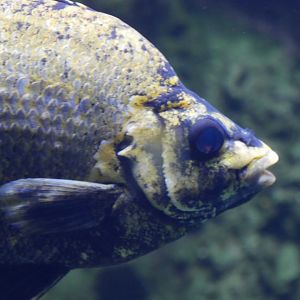
The first row of tanks consists of seven wall tanks and a circular tank for freshwater fish of the Wet Tropics region. The first tank contains Jungle Perch, other exhibits have species such as Long-finned Eel, Freshwater Moray Eel, Tandanus Catfish, Sleepy Cod, Pig-nosed Turtle, and the very rare Khaki (Tully River) Grunter. A diverse array of fish kept in generally spacious aquaria.

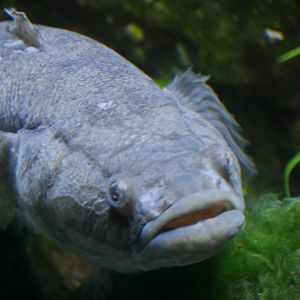
Exiting the bend, there are four more tanks before the main attraction of the area, the first tank is a circular exhibit containing tropical Eel-tailed Catfish species and Rainbowfish. While the signage may at first glance appear to be for Lake Eacham Rainbowfish, these are actually just Eastern Rainbowfish. The other three exhibits are box shaped, the first houses a Bullrout, sometimes known as the 'freshwater stonefish' and although they aren't deadly, they are still highly venomous and should be treated with great respect. At the time of visiting the other two contained aquatic invertebrates, one with a species of Macrobranchium shrimp and the other a Red-Claw Crayfish. These Crayfish are found invasive in tropical and sub-tropical parts of the world on at least three continents.

The crowning jewel of the zone, River Monsters is Australia's largest indoor tank entirely dedicated to freshwater fish, while a few of the species such as Khaki Grunter, Barramundi, Barcoo Grunter and Northern Saratoga, would have been seen in prior exhibits there are also Mangrove Jack, a Silver Grunter, Forktail Catfish and most impressively, Australian Freshwater Whiprays, one of the most interesting Stingray species that can be seen in Aquariums globally, as the name suggests, they inhabit full freshwater and often are found in the same rivers as large predators such as Bull Sharks, Saltwater Crocodiles and Sawfish. Speaking of Sawfish, there was once an individual held in this exhibit, however it outgrew the tank. The educational material throughout this whole section, and the Aquarium as a whole is well presented and generally informative, however, the same cannot be said for the animal signage, as is the case with Australian Aquariums, very few species are signed, however in the Freshwater section, the coverage rate is very good since there are few species per tank.

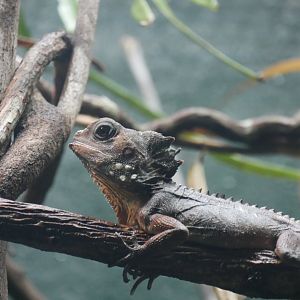
Up the elevator and into the Rainforest of the Wet Tropics, there is an abundance of educational material pertaining to the rainforests of the area. The first exhibit is that of one of North Queensland's most common snake species the Freshwater Keelback, one of Australia's few colubrids and can famously consume Cane Toads without ill effect. Next is tank for turtles, specifically Cann's Snake-necked Turtle and the pretty Jardine River Turtle. There are then five wall exhibits for herps, including Eastern Water Dragon, Carpet Python, Water Python, Australian Mangrove Monitor, Boyd's Forest Dragon and Pink Tongued Skink.


Another large exhibit with turtles, this time Kreft's River Turtle, also accompanied by fish in Coal Grunter and Australian Snakehead Gudgeon and also a juvenile Freshwater Crocodile. Afterwards is another set of this time, somewhat smaller terrariums containing more wet tropics species such as Common Tree Snake, Northern Leaf Tailed Gecko, Orange Thighed Tree Frog, Green Tree Frog, Wilcox's Frog, Crowned Stick Insect, Common Tree Snake, Spotted Tree Monitor, Northern Barred Frog, Spotted Python and others. In between the Crocodile enclosure and this next enclosure viewable on both sides is an enclosure for Green Tree Python. Undoubtedly the highlight for the rainforest is a large mixed species terrarium for Emerald Tree Monitors and Major Skinks. There is also an enclosure with Scrub Python around here but I can't remember exactly where and what it's held with. The final exhibit is another mixed species enclosure this time with Common Blue Tongue Lizards and Frilled Lizards. Stay tuned for Part 2, where we cover the reef!
 
Day One, Part One.

Cairns Aquarium - Part One

I'll be splitting the review of Cairns Aquarium into two parts, the first containing the freshwater and terrestrial animals and exhibits, and the latter containing saltwater animals. The entry fee for the Aquarium is 52 AUD (At the time of writing this roughly equates to 34 USD, 31 Euro, 27 Pound), which is quite high, for me however, it was well worth it. Species as of 4/23

The first row of tanks consists of seven wall tanks and a circular tank for freshwater fish of the Wet Tropics region. The first tank contains Jungle Perch, other exhibits have species such as Long-finned Eel, Freshwater Moray Eel, Tandanus Catfish, Sleepy Cod, Pig-nosed Turtle, and the very rare Khaki (Tully River) Grunter. A diverse array of fish kept in generally spacious aquaria.


Exiting the bend, there are four more tanks before the main attraction of the area, the first tank is a circular exhibit containing tropical Eel-tailed Catfish species and Rainbowfish. While the signage may at first glance appear to be for Lake Eacham Rainbowfish, these are actually just Eastern Rainbowfish. The other three exhibits are box shaped, the first houses a Bullrout, sometimes known as the 'freshwater stonefish' and although they aren't deadly, they are still highly venomous and should be treated with great respect. At the time of visiting the other two contained aquatic invertebrates, one with a species of Macrobranchium shrimp and the other a Red-Claw Crayfish. These Crayfish are found invasive in tropical and sub-tropical parts of the world on at least three continents.


The crowning jewel of the zone, River Monsters is Australia's largest indoor tank entirely dedicated to freshwater fish, while a few of the species such as Khaki Grunter, Barramundi, Barcoo Grunter and Northern Saratoga, would have been seen in prior exhibits there are also Mangrove Jack, a Silver Grunter, Forktail Catfish and most impressively, Australian Freshwater Whiprays, one of the most interesting Stingray species that can be seen in Aquariums globally, as the name suggests, they inhabit full freshwater and often are found in the same rivers as large predators such as Bull Sharks, Saltwater Crocodiles and Sawfish. Speaking of Sawfish, there was once an individual held in this exhibit, however it outgrew the tank. The educational material throughout this whole section, and the Aquarium as a whole is well presented and generally informative, however, the same cannot be said for the animal signage, as is the case with Australian Aquariums, very few species are signed, however in the Freshwater section, the coverage rate is very good since there are few species per tank.

Up the elevator and into the Rainforest of the Wet Tropics, there is an abundance of educational material pertaining to the rainforests of the area. The first exhibit is that of one of North Queensland's most common snake species the Freshwater Keelback, one of Australia's few colubrids and can famously consume Cane Toads without ill effect. Next is tank for turtles, specifically Cann's Snake-necked Turtle and the pretty Jardine River Turtle. There are then five wall exhibits for herps, including Eastern Water Dragon, Carpet Python, Water Python, Australian Mangrove Monitor, Boyd's Forest Dragon and Pink Tongued Skink.


Another large exhibit with turtles, this time Kreft's River Turtle, also accompanied by fish in Coal Grunter and Australian Snakehead Gudgeon and also a juvenile Freshwater Crocodile. Afterwards is another set of this time, somewhat smaller terrariums containing more wet tropics species such as Common Tree Snake, Northern Leaf Tailed Gecko, Orange Thighed Tree Frog, Green Tree Frog, Wilcox's Frog, Crowned Stick Insect, Common Tree Snake, Spotted Tree Monitor, Northern Barred Frog, Spotted Python and others. In between the Crocodile enclosure and this next enclosure viewable on both sides is an enclosure for Green Tree Python. Undoubtedly the highlight for the rainforest is a large mixed species terrarium for Emerald Tree Monitors and Major Skinks. There is also an enclosure with Scrub Python around here but I can't remember exactly where and what it's held with. The final exhibit is another mixed species enclosure this time with Common Blue Tongue Lizards and Frilled Lizards. Stay tuned for Part 2, where we cover the reef!
Awesome review thus far! It's nice to read about a region that is vastly under appreciated here on Zoochat. Cairns certainly has a lot of cool wildlife experiences to offer from what I've seen.

Also nice to have you back on Zoochat too.;)
 
Day One, Part One.

Cairns Aquarium - Part One

I'll be splitting the review of Cairns Aquarium into two parts, the first containing the freshwater and terrestrial animals and exhibits, and the latter containing saltwater animals. The entry fee for the Aquarium is 52 AUD (At the time of writing this roughly equates to 34 USD, 31 Euro, 27 Pound), which is quite high, for me however, it was well worth it. Species as of 4/23

The first row of tanks consists of seven wall tanks and a circular tank for freshwater fish of the Wet Tropics region. The first tank contains Jungle Perch, other exhibits have species such as Long-finned Eel, Freshwater Moray Eel, Tandanus Catfish, Sleepy Cod, Pig-nosed Turtle, and the very rare Khaki (Tully River) Grunter. A diverse array of fish kept in generally spacious aquaria.


Exiting the bend, there are four more tanks before the main attraction of the area, the first tank is a circular exhibit containing tropical Eel-tailed Catfish species and Rainbowfish. While the signage may at first glance appear to be for Lake Eacham Rainbowfish, these are actually just Eastern Rainbowfish. The other three exhibits are box shaped, the first houses a Bullrout, sometimes known as the 'freshwater stonefish' and although they aren't deadly, they are still highly venomous and should be treated with great respect. At the time of visiting the other two contained aquatic invertebrates, one with a species of Macrobranchium shrimp and the other a Red-Claw Crayfish. These Crayfish are found invasive in tropical and sub-tropical parts of the world on at least three continents.


The crowning jewel of the zone, River Monsters is Australia's largest indoor tank entirely dedicated to freshwater fish, while a few of the species such as Khaki Grunter, Barramundi, Barcoo Grunter and Northern Saratoga, would have been seen in prior exhibits there are also Mangrove Jack, a Silver Grunter, Forktail Catfish and most impressively, Australian Freshwater Whiprays, one of the most interesting Stingray species that can be seen in Aquariums globally, as the name suggests, they inhabit full freshwater and often are found in the same rivers as large predators such as Bull Sharks, Saltwater Crocodiles and Sawfish. Speaking of Sawfish, there was once an individual held in this exhibit, however it outgrew the tank. The educational material throughout this whole section, and the Aquarium as a whole is well presented and generally informative, however, the same cannot be said for the animal signage, as is the case with Australian Aquariums, very few species are signed, however in the Freshwater section, the coverage rate is very good since there are few species per tank.

Up the elevator and into the Rainforest of the Wet Tropics, there is an abundance of educational material pertaining to the rainforests of the area. The first exhibit is that of one of North Queensland's most common snake species the Freshwater Keelback, one of Australia's few colubrids and can famously consume Cane Toads without ill effect. Next is tank for turtles, specifically Cann's Snake-necked Turtle and the pretty Jardine River Turtle. There are then five wall exhibits for herps, including Eastern Water Dragon, Carpet Python, Water Python, Australian Mangrove Monitor, Boyd's Forest Dragon and Pink Tongued Skink.


Another large exhibit with turtles, this time Kreft's River Turtle, also accompanied by fish in Coal Grunter and Australian Snakehead Gudgeon and also a juvenile Freshwater Crocodile. Afterwards is another set of this time, somewhat smaller terrariums containing more wet tropics species such as Common Tree Snake, Northern Leaf Tailed Gecko, Orange Thighed Tree Frog, Green Tree Frog, Wilcox's Frog, Crowned Stick Insect, Common Tree Snake, Spotted Tree Monitor, Northern Barred Frog, Spotted Python and others. In between the Crocodile enclosure and this next enclosure viewable on both sides is an enclosure for Green Tree Python. Undoubtedly the highlight for the rainforest is a large mixed species terrarium for Emerald Tree Monitors and Major Skinks. There is also an enclosure with Scrub Python around here but I can't remember exactly where and what it's held with. The final exhibit is another mixed species enclosure this time with Common Blue Tongue Lizards and Frilled Lizards. Stay tuned for Part 2, where we cover the reef!

Cairns Aquarium Part Two

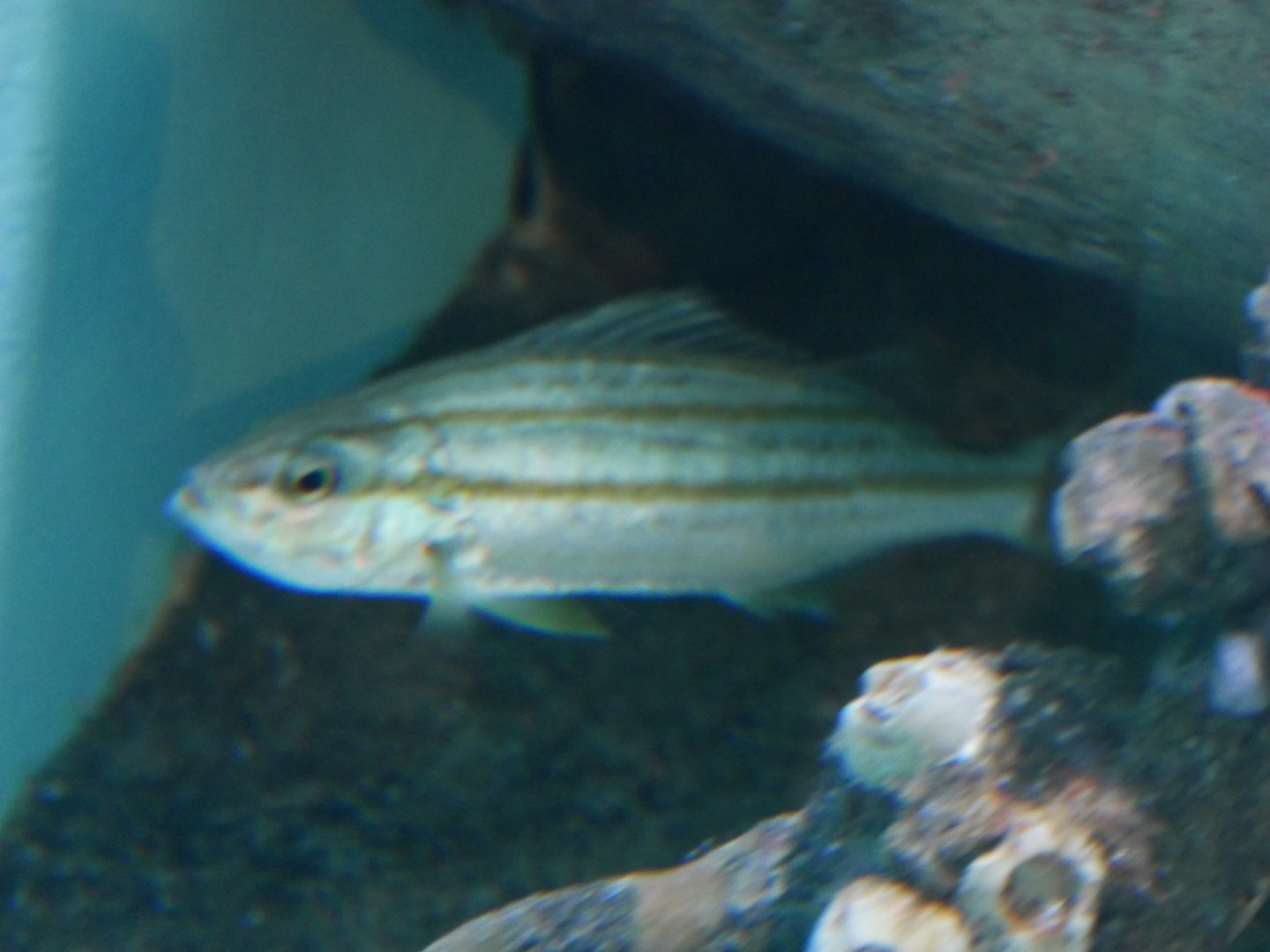
After exiting the rainforest, the next section is the Mangroves, which consists of five wall tanks and a circular tank, most of these species can be seen wild at the Cairns Esplanade, Mowbray River Bridge and other mangrove locales throughout the wet tropics. Fish displayed include Threadfin Silverbiddy, Striped Scat, Spotted Scat, Squaretail Mullet, Pinnate Batfish, Largescale Grunter, Sevenspot Archerfish and a species of Glassfish, additionally one tank has a Giant Mud Crab, another has Upside Down Jellyfish and one even has a juvenile Saltwater Crocodile!


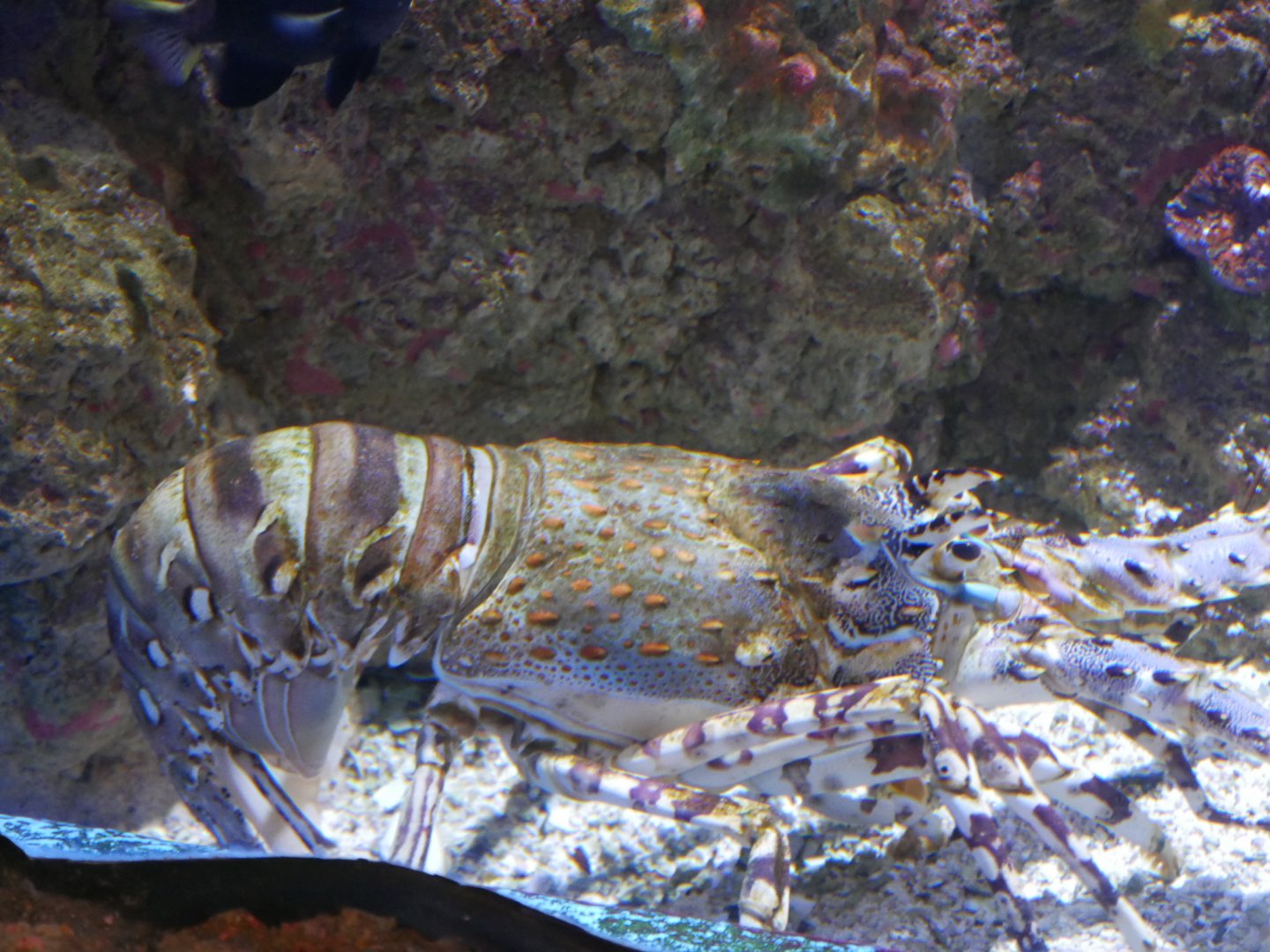
Afterwards there's a tank with a pop-up tunnel containing saltwater fish, Bluespotted Ribbontail Rays and Ornate Rock Lobsters. I really liked the presentation of the tank, almost as if the viewer was snorkelling in a shallow reef. There is also a shallow pool where many types of starfish can be seen.


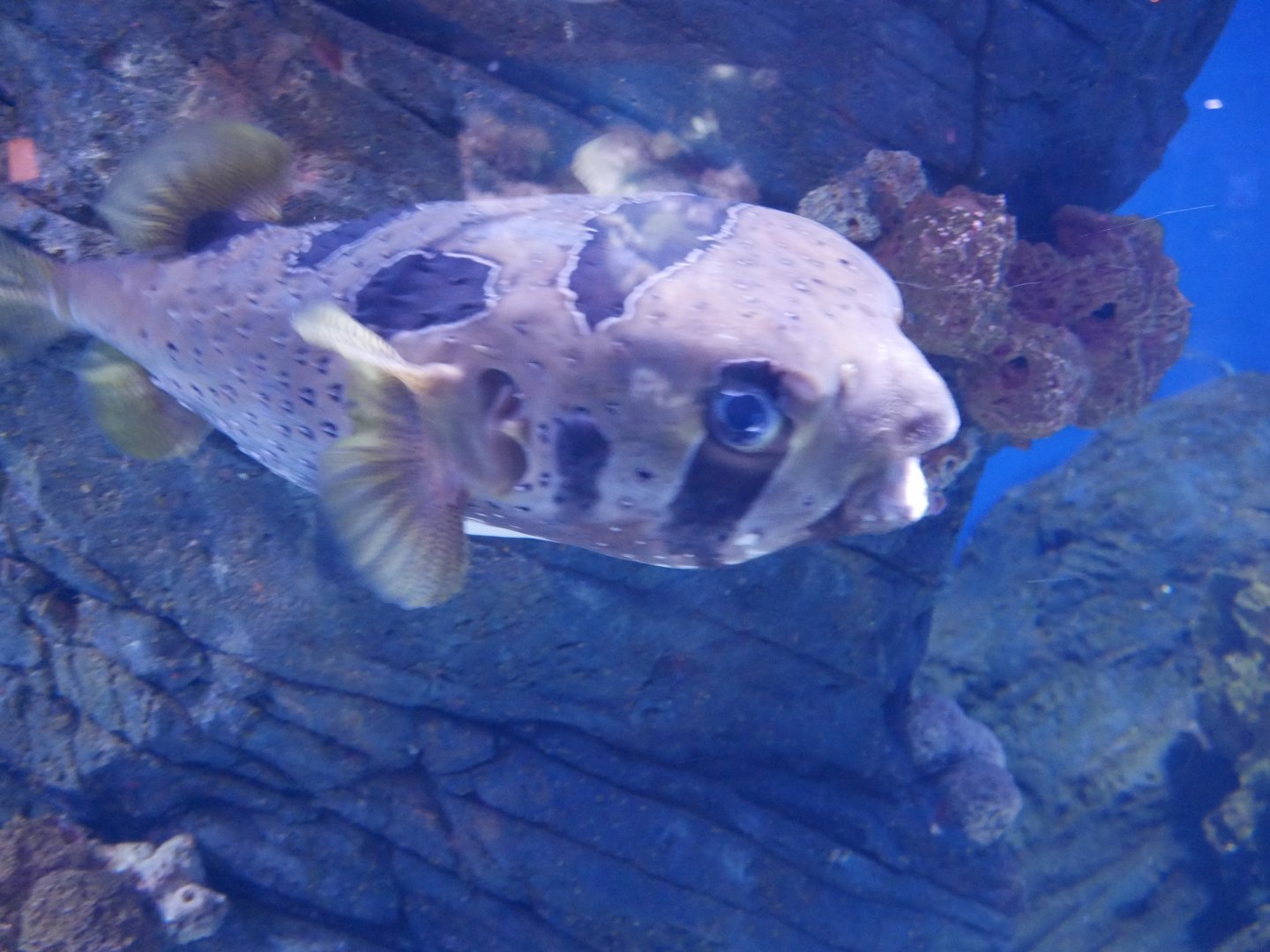
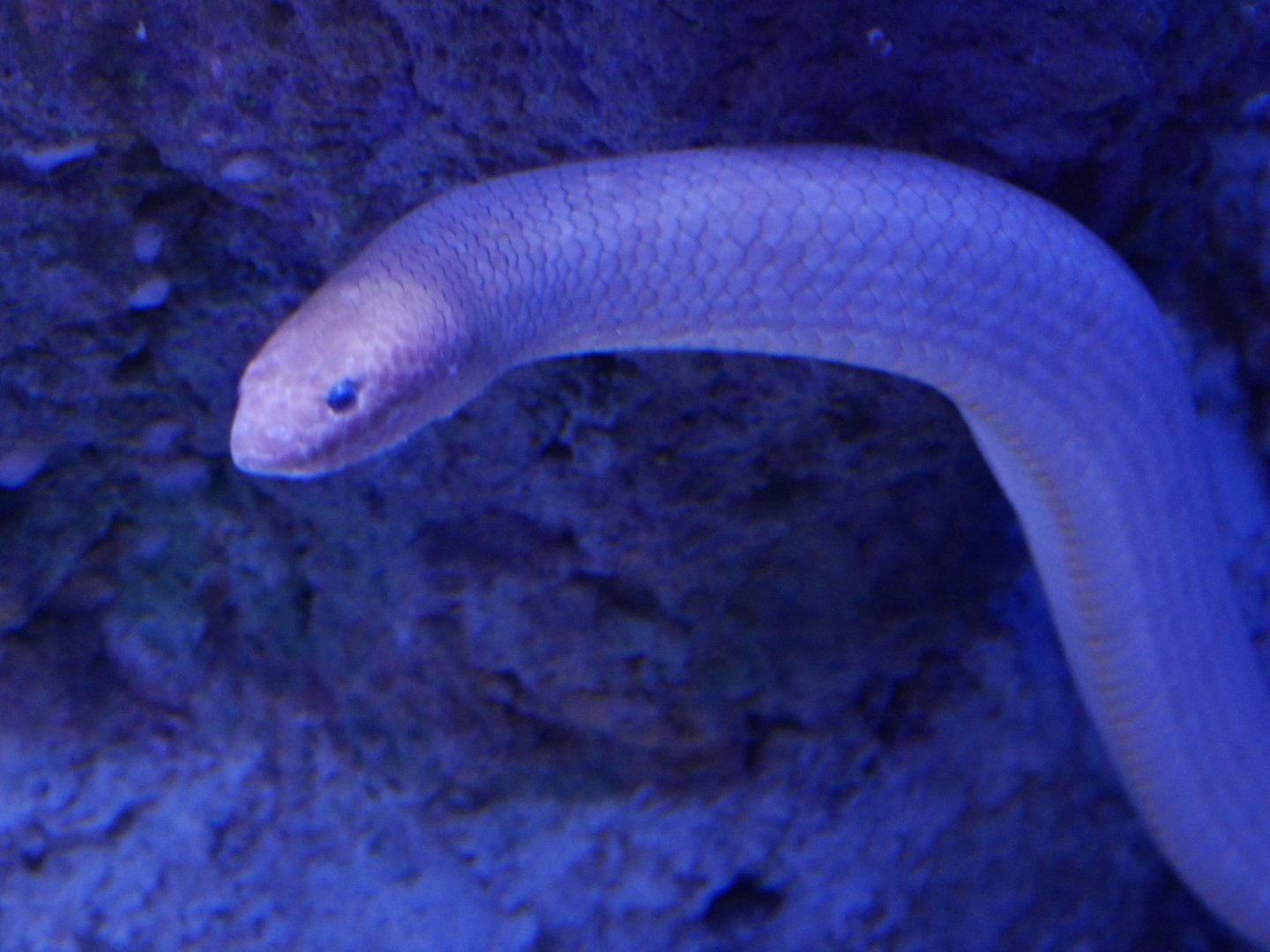
Continuing on, you'll get a glimpse of the massive Deep Reef tank which is better viewed downstairs, however, there are at least fifteen (although I think the number is around sixteen or seventeen) tanks plus a touch-pool which are apart of the Barrier Reef display. There are several themed tanks, there are a set of tanks based on colours, (Red fish, yellow fish, blue fish etc) tanks based on different types of reef (Inshore, offshore), a nocturnal tank with Squirrelfish and Soldierfish. My only minor complaint in this section is that some of the predator tanks are too small for their inhabitants, notably the Moray Eel tank which houses Giant, Undulate and Honeycomb Moray Eels, and the tank containing Speckled Carpetsharks. The array of species throughout the Barrier Reef section is astounding, highlights include Blue Blanquillo, Reef Stonefish, False Stonefish, Barbour's Seahorse (Which funnily enough is not found in Australia), Grooved Razorfish, Moon Jellyfish, Red Lionfish, Map Pufferfish, Black Blotched Porcupinefish, Longhorn Cowfish, Crown of Thorns Sea Star and most notably, the Olive Sea Snake, I was quite happy to see one for the first time, a beautiful animal.


Heading down the escalator is the aquarium's crown jewel, the 1.8 million litre Oceanarium, a fantastic display of large tropical fish, it doesn't have that wow factor of say Melbourne Aquarium's Oceanarium (before the renovations) but its an impressive tank regardless housing some of the most iconic reef fish such as Queensland Grouper, Common Coral Trout, Humphead Batfish, Malabar Grouper, Flowery Rockcod and two notorious carriers of Ciguatera, the Red Bass and Chinamanfish. However, the Oceanarium shines most with it's diversity of shark and ray species. Blacktip, Whitetip and Grey Reef Shark, Tawny Nurse Shark, Zebra Shark, Blotched Fantail Ray, Porcupine Ray, Mangrove Whipray, Cownose Ray, Reticulated Whipray and Giant Guitarfish.

Finally, there is the Deep Reef, a large vertical tank with an array of colourful reef fish such as Humphead Maori Wrasse, Bluespotted Ribbontail Rays, White-spotted Pufferfish, Blackback Butterflyfish, Half and Half Wrasse and many more. Both on the upper and lower viewing levels of this exhibit I found it fairly challenging to view due to the tanks size and position. It's a nice tank but design wise it leaves a bit to be desired.

There is also a tank in the Restaurant that has Brown-banded Bamboo Sharks, however, I was out of time, had already been through the Aquarium twice.

Closing Thoughts

I really liked Cairns Aquarium and hope to visit again in the future, it's not perfect, no facility is, but I find it to be worth it's price and it does a great job at advertising both the rainforest and the reef to domestic and international tourists. My personal highlight was seeing the Olive Sea Snake, what a gorgeous animal.
 
Looks like Cairns Aquarium has an excellent collection of native aquatic life! Many very nice species here, including quite a few which I think are scarce or absent from North America, and other parts of the world too, I'd imagine. Thanks for sharing.
 
Cairns Aquarium Part Two

After exiting the rainforest, the next section is the Mangroves, which consists of five wall tanks and a circular tank, most of these species can be seen wild at the Cairns Esplanade, Mowbray River Bridge and other mangrove locales throughout the wet tropics. Fish displayed include Threadfin Silverbiddy, Striped Scat, Spotted Scat, Squaretail Mullet, Pinnate Batfish, Largescale Grunter, Sevenspot Archerfish and a species of Glassfish, additionally one tank has a Giant Mud Crab, another has Upside Down Jellyfish and one even has a juvenile Saltwater Crocodile!


Afterwards there's a tank with a pop-up tunnel containing saltwater fish, Bluespotted Ribbontail Rays and Ornate Rock Lobsters. I really liked the presentation of the tank, almost as if the viewer was snorkelling in a shallow reef. There is also a shallow pool where many types of starfish can be seen.


Continuing on, you'll get a glimpse of the massive Deep Reef tank which is better viewed downstairs, however, there are at least fifteen (although I think the number is around sixteen or seventeen) tanks plus a touch-pool which are apart of the Barrier Reef display. There are several themed tanks, there are a set of tanks based on colours, (Red fish, yellow fish, blue fish etc) tanks based on different types of reef (Inshore, offshore), a nocturnal tank with Squirrelfish and Soldierfish. My only minor complaint in this section is that some of the predator tanks are too small for their inhabitants, notably the Moray Eel tank which houses Giant, Undulate and Honeycomb Moray Eels, and the tank containing Speckled Carpetsharks. The array of species throughout the Barrier Reef section is astounding, highlights include Blue Blanquillo, Reef Stonefish, False Stonefish, Barbour's Seahorse (Which funnily enough is not found in Australia), Grooved Razorfish, Moon Jellyfish, Red Lionfish, Map Pufferfish, Black Blotched Porcupinefish, Longhorn Cowfish, Crown of Thorns Sea Star and most notably, the Olive Sea Snake, I was quite happy to see one for the first time, a beautiful animal.


Heading down the escalator is the aquarium's crown jewel, the 1.8 million litre Oceanarium, a fantastic display of large tropical fish, it doesn't have that wow factor of say Melbourne Aquarium's Oceanarium (before the renovations) but its an impressive tank regardless housing some of the most iconic reef fish such as Queensland Grouper, Common Coral Trout, Humphead Batfish, Malabar Grouper, Flowery Rockcod and two notorious carriers of Ciguatera, the Red Bass and Chinamanfish. However, the Oceanarium shines most with it's diversity of shark and ray species. Blacktip, Whitetip and Grey Reef Shark, Tawny Nurse Shark, Zebra Shark, Blotched Fantail Ray, Porcupine Ray, Mangrove Whipray, Cownose Ray, Reticulated Whipray and Giant Guitarfish.

Finally, there is the Deep Reef, a large vertical tank with an array of colourful reef fish such as Humphead Maori Wrasse, Bluespotted Ribbontail Rays, White-spotted Pufferfish, Blackback Butterflyfish, Half and Half Wrasse and many more. Both on the upper and lower viewing levels of this exhibit I found it fairly challenging to view due to the tanks size and position. It's a nice tank but design wise it leaves a bit to be desired.

There is also a tank in the Restaurant that has Brown-banded Bamboo Sharks, however, I was out of time, had already been through the Aquarium twice.

Closing Thoughts

I really liked Cairns Aquarium and hope to visit again in the future, it's not perfect, no facility is, but I find it to be worth it's price and it does a great job at advertising both the rainforest and the reef to domestic and international tourists. My personal highlight was seeing the Olive Sea Snake, what a gorgeous animal.

Cairns Esplanade

I visited the Cairns Esplanade specifically for wildlife watching four times, I would have gone more but I only had a few days in Cairns proper, it's a wonderful spot with some of the best urban wildlife in the country, it's most well known as a significant migratory wader site however, as it was April, only a handful of wader species were sighted across my four trips. I'll detail my first and fourth trips (Fourth Trip at the end of the thread) and provide a list of additional species I saw during the second and third.

First Trip

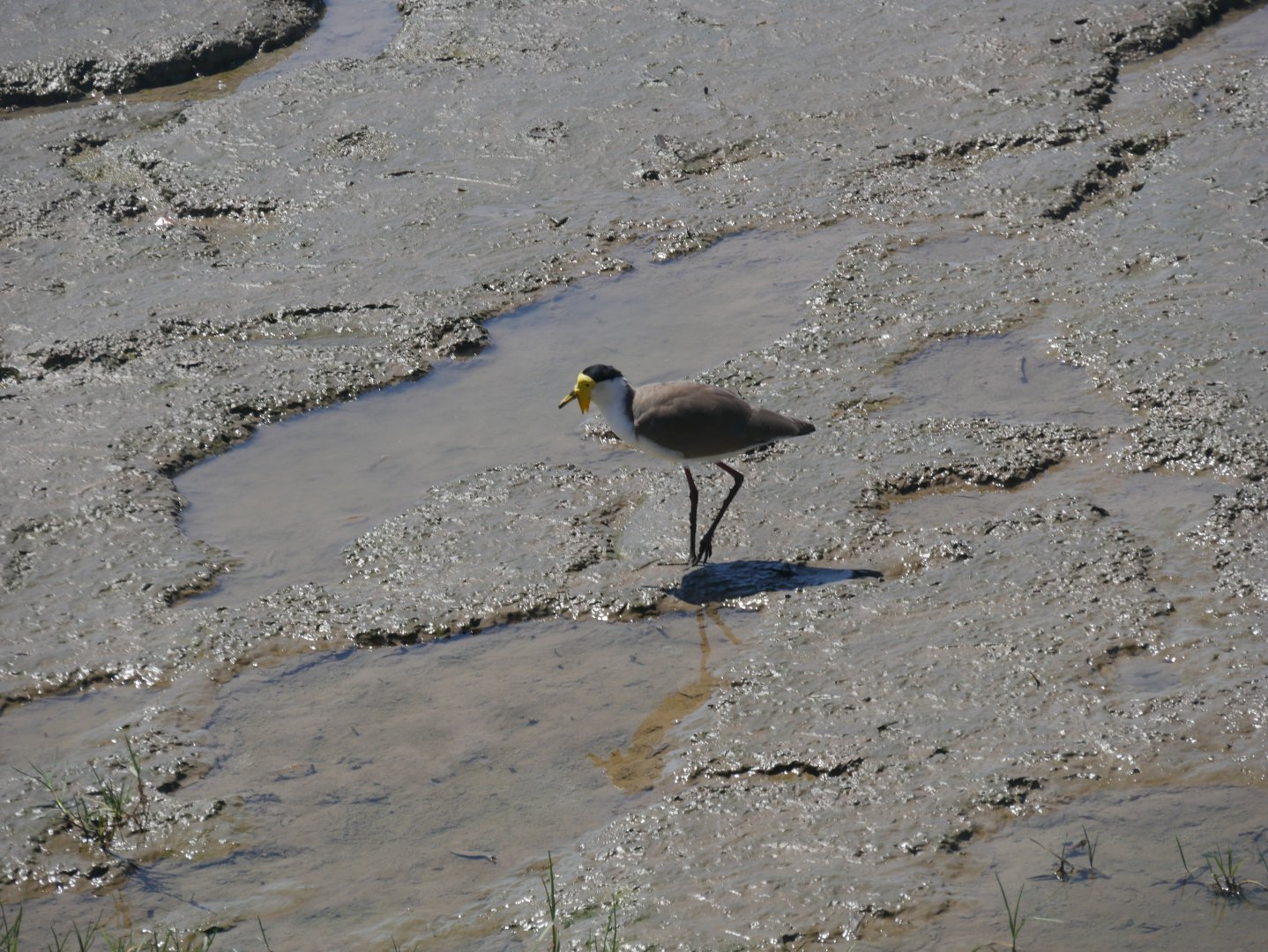
After exiting Cairns Aquarium, before reaching the Esplanade, I saw a couple birds in the trees which were lifers for me, Sahul Sunbird (Formerly Olive Backed Sunbird) and Brown Honeyeater, both are plentiful species in Cairns and in habitat in and around the area. Then after a short rest at my accommodation, I headed to the South End of the Esplanade to start birding, it was late afternoon so I didn't expect too many birds but I was surprised with the diversity and numbers of birds. I didn't visit the marina, I only found out about it till later on in my visit. While walking along the main trail I spotted a small 'stream' of water amongst the mud which contained Purple Climber Crab, Silverline Mudskipper, and Targetfish, continuing on there was a small flock of Silver Gulls and Whimbrels, a bit further out. Masked Lapwing were especially numerous.


Once I reached a playground which had several overhanging trees I got my first ever look at the beautiful Australian Figbird, while common in most of Eastern Australia, it is rare in Melbourne. Peaceful Doves were common on the ground, I just loved the way they moved around, I'm much more used to the larger pigeon and dove species such as Spotted Doves, Crested Pigeons and Bronzewings so it was nice seeing them. White Breasted Woodswallows were common on trees with sparse amounts of leaves, another common species in urban and suburban areas throughout North Queensland that is absent in Melbourne, however, I had seen them previously earlier in the year in Northern Victoria. Waders were quiet, I only spotted a few Great Knots. Other wildlife seen include Orange Clawed Fiddler Crabs, a Nassarius snail, and heaps of crabs in the mud.

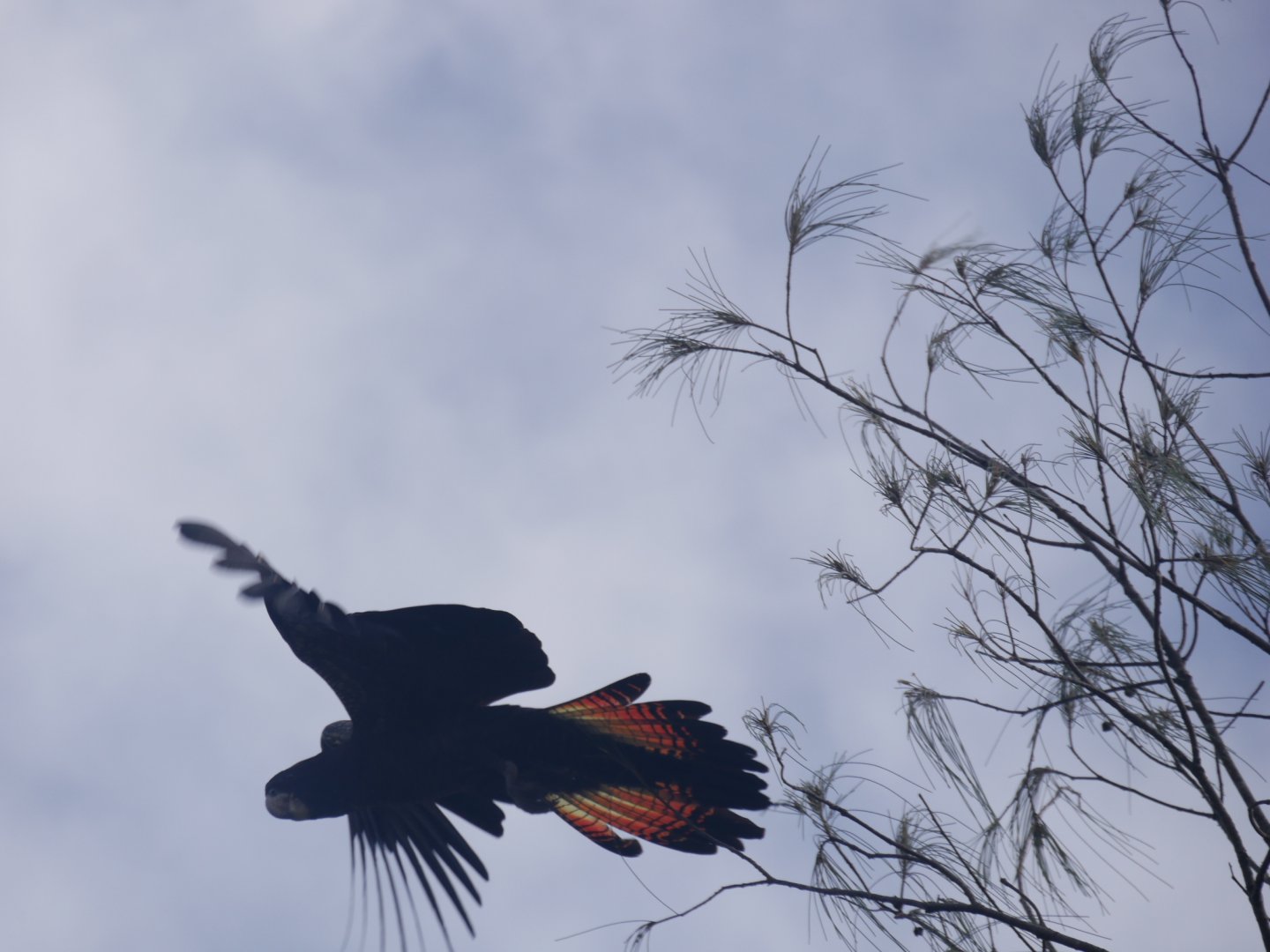
Up at the North End, on the right side the habitat was still urban parkland, however on the left side, in addition to the mudflats towards the end there were mangroves. Using my binoculars to scope out the mangroves, I saw a Mangrove Robin, my first and only of the trip, as well as a couple Varied Honeyeaters, a specialist mangrove species of Honeyeater. All of a sudden I heard loud calls ringing up in the sky, I was amazed when I saw a flock of Red-Tailed Black Cockatoos land on a tree nearby, one of the big wow moments of my first day in Cairns. I desperately searched the trees up in North End looking for Rose-Crowned Fruit Doves to no avail.

 
Cairns Esplanade

I visited the Cairns Esplanade specifically for wildlife watching four times, I would have gone more but I only had a few days in Cairns proper, it's a wonderful spot with some of the best urban wildlife in the country, it's most well known as a significant migratory wader site however, as it was April, only a handful of wader species were sighted across my four trips. I'll detail my first and fourth trips (Fourth Trip at the end of the thread) and provide a list of additional species I saw during the second and third.

First Trip

After exiting Cairns Aquarium, before reaching the Esplanade, I saw a couple birds in the trees which were lifers for me, Sahul Sunbird (Formerly Olive Backed Sunbird) and Brown Honeyeater, both are plentiful species in Cairns and in habitat in and around the area. Then after a short rest at my accommodation, I headed to the South End of the Esplanade to start birding, it was late afternoon so I didn't expect too many birds but I was surprised with the diversity and numbers of birds. I didn't visit the marina, I only found out about it till later on in my visit. While walking along the main trail I spotted a small 'stream' of water amongst the mud which contained Purple Climber Crab, Silverline Mudskipper, and Targetfish, continuing on there was a small flock of Silver Gulls and Whimbrels, a bit further out. Masked Lapwing were especially numerous.


Once I reached a playground which had several overhanging trees I got my first ever look at the beautiful Australian Figbird, while common in most of Eastern Australia, it is rare in Melbourne. Peaceful Doves were common on the ground, I just loved the way they moved around, I'm much more used to the larger pigeon and dove species such as Spotted Doves, Crested Pigeons and Bronzewings so it was nice seeing them. White Breasted Woodswallows were common on trees with sparse amounts of leaves, another common species in urban and suburban areas throughout North Queensland that is absent in Melbourne, however, I had seen them previously earlier in the year in Northern Victoria. Waders were quiet, I only spotted a few Great Knots. Other wildlife seen include Orange Clawed Fiddler Crabs, a Nassarius snail, and heaps of crabs in the mud.

Up at the North End, on the right side the habitat was still urban parkland, however on the left side, in addition to the mudflats towards the end there were mangroves. Using my binoculars to scope out the mangroves, I saw a Mangrove Robin, my first and only of the trip, as well as a couple Varied Honeyeaters, a specialist mangrove species of Honeyeater. All of a sudden I heard loud calls ringing up in the sky, I was amazed when I saw a flock of Red-Tailed Black Cockatoos land on a tree nearby, one of the big wow moments of my first day in Cairns. I desperately searched the trees up in North End looking for Rose-Crowned Fruit Doves to no avail.


Lake Eacham and the Curtain Fig

It was a new day in Cairns and I set out up to the Atherton Tablelands for some rainforest exploration, unfortunately my time on the Tablelands was quite limited, there are a lot of great birdwatching sites that I missed out on such as Hastie's Swamp and Mt Hypipamee and the big one further north, Mt Lewis. I also didn't get to do any dry habitat birding or birding on the tablelands outside the rainforest. Despite that, I ended up with a lot of lifers and some of the coolest experiences I had in my time up north. A couple notable birds on the drive up, one pretty stock standard but was a lifer for me, that being Bar-shouldered Dove, and one not so stock standard, one of the two highlight birds of the day just crossing the road in the middle of the rainforest, a Noisy Pitta, no photos unfortunately as it quickly scurried across the road.

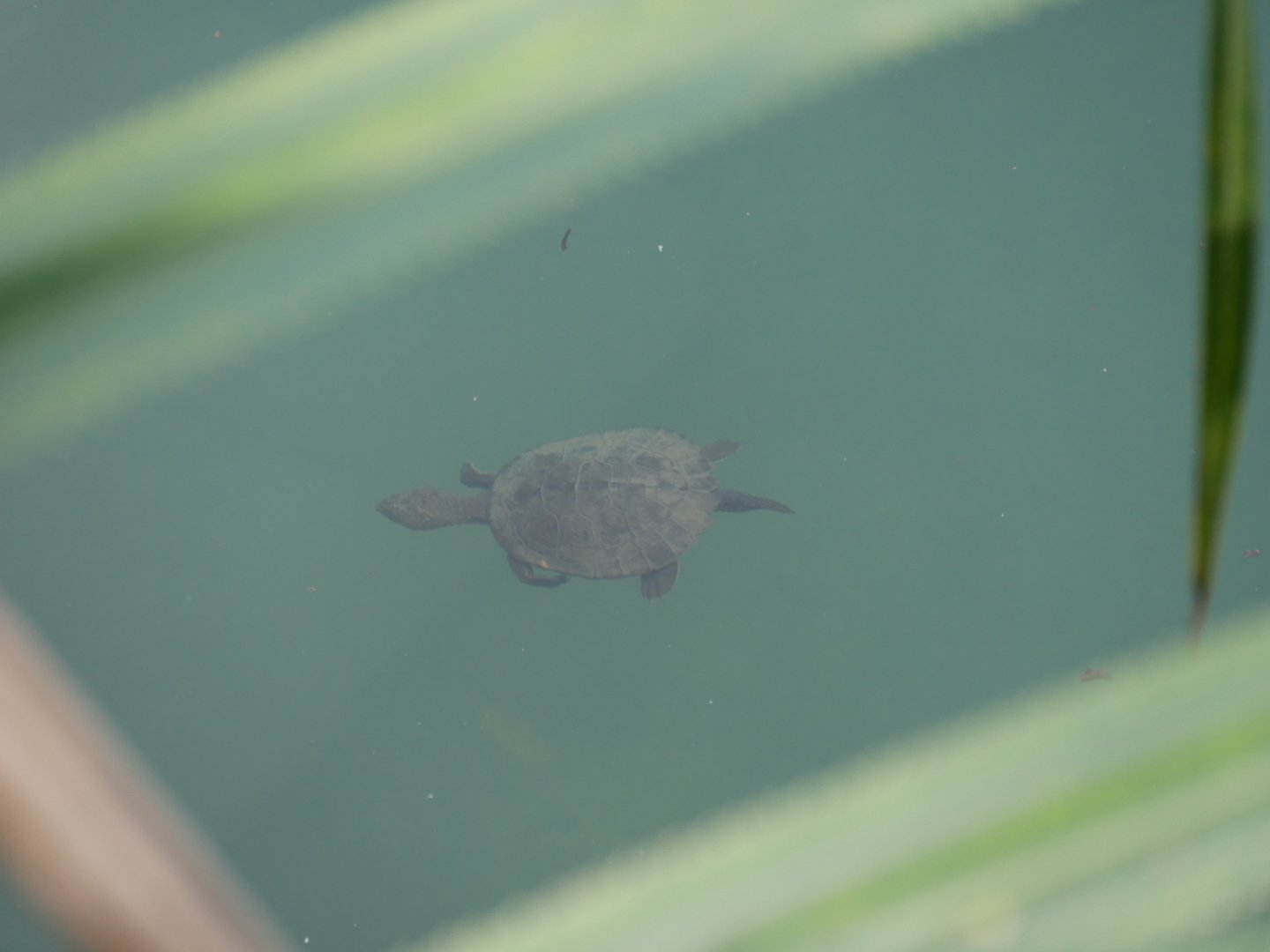
Arriving at Lake Eacham I was blown away by the scenery, however, as it is a popular tourist spot and was extremely busy I didn't expect to see many birds, or much wildlife at all, yet the place was teeming with wildlife, although some of it not native to the lake. In the 1980's several fish species were illegally moved into the lake, most of which are now extremely common and vastly outnumber the native fish species, Eastern Rainbowfish, Barred Grunter, Sevenspot Archerfish, were the three species I saw, however, Bony Bream and Mouth Almighty do occur too. Amazingly, there were tons of turtles, all Saw-Shelled Turtles!


I hadn't seen any birds up until this point, completely focused on the aquatic life, all of a sudden one of the most special moments of the entire trip, a Buff-breasted Paradise Kingfisher, dived out of a tree and into the water before coming back up again, not the greatest of views but easily well enough to distinguish this unmistakable bird. Amazingly my first ever time in tropical rainforest I saw one and yet I know someone who's been searching for years for them, ever the vagaries of birdwatching.

After that I took a walk in the rainforest, it was full of birds, although mostly the common rainforest birds such as Rufous Fantails and my lifer Brown Gerygones. I saw my two Tablelands endemic species, the Grey-headed Robin and Atherton Scrubwren, I also saw a Spectacled Monarch, some Pale Yellow Robins, a Rufous Shrike-thrush and a Northern Fantail. A nice outing, not particularly a lot of species but all but the Rufous Fantail were lifers for me so I couldn't complain.

There were also lots of Butterflies at Lake Eacham, Common Crow, Orchard Swallowtail, Cruiser, Australian Lurcher, Lemon Migrant, Common Bluebottle, most abundant were the Orange Bush Browns, and there were also the magnificent Ulysses Butterfly, a very large and blue Swallowtail species, I was afraid I was going to miss them as it was April, however, my worries were unfounded.

After exiting Lake Eacham, I had a quick stop in Yungaburra to look for Platypus, unsurprisingly, there were no Platypus, however, I did see a Lewin's Honeyeater, a species that is rare in Melbourne, restricted to wet forest such as the Dandenong Ranges or Yarra Ranges, however, they are quite abundant up on the Tablelands and I saw a few while exploring Yungaburra.

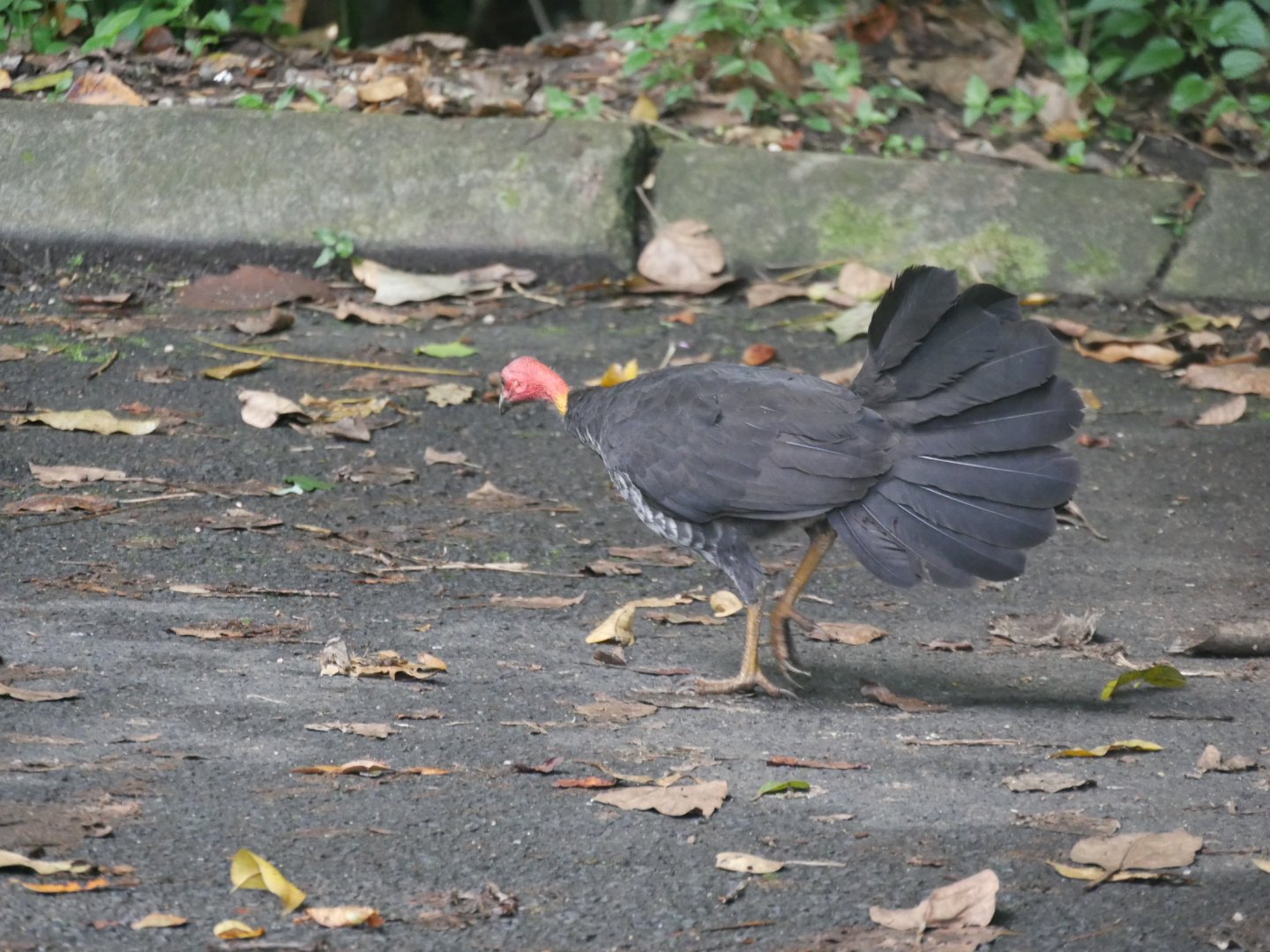
Afterwards I headed to Curtain Fig National Park, not so much for wildlife watching but mostly to see the gigantic fig tree that the national park is named after, it was a sight to behold, I did see a weird Crane Fly, a species of skink and my first ever Australian Brush Turkey, a species much maligned by those on the East Coast but I find them quite fascinating. They're a megapode, meaning they build mounds for nests and it definitely wasn't the last time I would see one. Gorgeous animal.

 
Cairns Botanic Gardens


While most of the time, I prefer to birdwatch either by myself or with casual birdwatchers, every Tuesday morning, Cairns Birders runs a free, guided birdwatching walk of the Cairns Botanic Gardens and nearby Centenary Lakes, and I am really glad that I took that opportunity.

Before the tour had even started, while we were waiting for a couple people, a Varied Triller flew above us although it was too quick for my camera, that would be the only Varied Triller I'd see for the remainder of the trip. The tour began in the Botanic Gardens which exhibits plants from tropical environments from all over the world as well as local species. The opening portions of the tour focused mostly on the botanical side, showing us cool plants, it was my first time ever seeing an African Sausage Tree and that was quite amazing. Flying past was not a bird but a butterfly, a Cairns Birdwing in fact, while I'd seen them before at the Melbourne Zoo, it never really occurred to me just how big they are. There weren't very many birds in the gardens, as to be expected, we birded the outskirts and saw a large flock of Metallic Starlings, some Willie Wagtails, a Green Oriole, a pair of Bush Stone Curlews, and most excitingly, the ever reliable Papuan Frogmouth pair that reside in the gardens.

On our way to Centenary Lakes, we saw several more species hanging out in the trees, all of which were lifers for me, first was the Black Butcherbird, a common predator of tropical Australia with a powerful build and sharp beak, nearby was a Spangled Drongo, my first ever Drongo species, they have beautiful 'fish like' tails and a myriad of different calls. While we were watching some Double-eyed Fig Parrots, in the trees, a rather uncommon visitor emerged from the tree, an Oriental Cuckoo!

Continuing on were more Willie Wagtails, Common Mynas, Magpie Larks and Masked Lapwings, as well as my first ever Orange Footed Scrubfowl, making it two megapodes in two days, we got to see a humongous mound that the Scrubfowl had built. Crossing over the creek there were some fish, Greenback Mullet and Northern River Garfish, in the trees over the creek were some more birds, Brush Cuckoo, White-Bellied Cuckooshrike, Sacred Kingfisher and Little Bronze-Cuckoo, a three Cuckoo day!


Kingfishers are some of my favourite birds and my main target of the day was the Little Kingfisher, a tiny species restricted in Australia to tropical regions, however there were none to be seen, but as a consolation, there were two Forest Kingfishers, up in the trees, a very pretty bird. Alongside the creek there was a Striated Heron hunting, however, I would get much better views of a Striated Heron later on in the trip.

After walking for a bit, we hit a major road and surprisingly for me, there was an Osprey, sitting on a nest constructed on a telephone pole, I love watching birds of prey, they always move with such grace and power. Also present on the powerlines were some Welcome Swallows. Heading to Freshwater Lake, there were a couple birds, some beautiful Rainbow Bee Eaters, while not a lifer for me as I had seen them in Yarrawonga-Mulwala a month prior, was still a very special moment despite being a very common bird up north, these are very active and entertaining birds gorgeous colours. Also at the lake was an Australasian Darter and a dumped Domestic Duck

Finally a walk through the Rainforest trail afforded some looks at a young Black Butcherbird, and some Australian Brush Turkeys, but not much else.


While I didn't see everything I wanted to, I picked up plenty of lifers and memories that I'll treasure, highly recommend the Tuesday morning birdwalks for anyone interested
 
Birdworld Kuranda

Kuranda is a tourist town, around thirty minutes from Cairns and has no less than four zoological attractions. I was unaware of Rainforestation during my visit and elected not to visit the Australian Butterfly Sanctuary (had seen most of the species wild up to this point) which leaves Birdworld Kuranda and Kuranda Koala Gardens, both within the same complex.

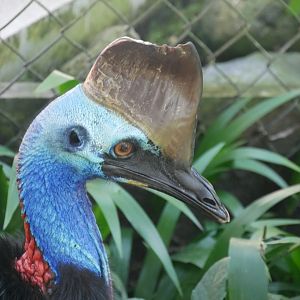
Birdworld Kuranda is a very simple facility, it has a large walkthrough aviary with many different species of native and exotic birds, a smaller aviary for small birds such as finches and within the netted aviary there is also a Cassowary enclosure which from what I can remember is quite small.


The pathway is a loop descending down and then going back up, I went around three times to ensure I saw as many different species as possible. By the entrance there were some Ring-necked Parrots, Eclectus Parrots, Pink Cockatoo, Red-tailed Black Cockatoo, Common Bronzewing, Blue and Yellow Macaw and Scarlet Macaw. The finch aviary was well stocked and had common aviculture species such as Turquoise Parrot, Gouldian Finch, Diamond Dove, Red-faced Parrotfinch, Bourke's Parrot, Java Sparrow, Red Fody, Black Throated Finch and what was a lifer for me, Spinifex Pigeon.

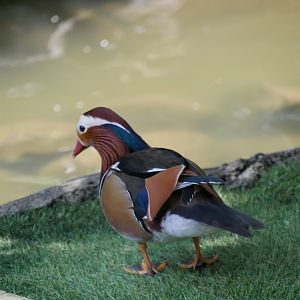
Opposite the finch aviary is a small pond with water dwelling species such as Pied Heron, Plumed Whistling Duck, Wandering Whistling Duck (Lifer) , Glossy Ibis, Black Swan, Rajdah Shelduck and Mandarin Duck. Also some Kreft's Turtles which inhabit the pond.


Continuing further down is the enclosure for Southern Cassowary, despite the Cassowary being there, some birds weren't afraid to share space with it including Pale-headed Rosella and Golden Pheasant. Some more birds spotted on my first walk around are Pacific Emerald Dove, Black-capped Lory (Lifer), Alexandrine Parrot and a very talkative Moustached Parrot (Lifer).

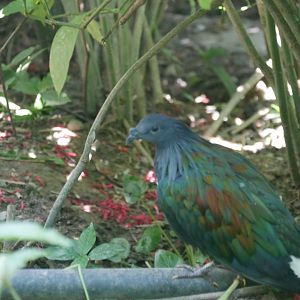
On my second and third walkthroughs I got to see three more lifers for the day, Hahn's Macaw, the stunning Nicobar Pigeon and a White Breasted Ground Dove.


Overall Birdworld Kuranda is just okay, it has a good selection of native and exotic birds but the way they are housed is far from optimal, worth the 20$ though.
 
Cairns Aquarium Part Two

After exiting the rainforest, the next section is the Mangroves, which consists of five wall tanks and a circular tank, most of these species can be seen wild at the Cairns Esplanade, Mowbray River Bridge and other mangrove locales throughout the wet tropics. Fish displayed include Threadfin Silverbiddy, Striped Scat, Spotted Scat, Squaretail Mullet, Pinnate Batfish, Largescale Grunter, Sevenspot Archerfish and a species of Glassfish, additionally one tank has a Giant Mud Crab, another has Upside Down Jellyfish and one even has a juvenile Saltwater Crocodile!


Afterwards there's a tank with a pop-up tunnel containing saltwater fish, Bluespotted Ribbontail Rays and Ornate Rock Lobsters. I really liked the presentation of the tank, almost as if the viewer was snorkelling in a shallow reef. There is also a shallow pool where many types of starfish can be seen.


Continuing on, you'll get a glimpse of the massive Deep Reef tank which is better viewed downstairs, however, there are at least fifteen (although I think the number is around sixteen or seventeen) tanks plus a touch-pool which are apart of the Barrier Reef display. There are several themed tanks, there are a set of tanks based on colours, (Red fish, yellow fish, blue fish etc) tanks based on different types of reef (Inshore, offshore), a nocturnal tank with Squirrelfish and Soldierfish. My only minor complaint in this section is that some of the predator tanks are too small for their inhabitants, notably the Moray Eel tank which houses Giant, Undulate and Honeycomb Moray Eels, and the tank containing Speckled Carpetsharks. The array of species throughout the Barrier Reef section is astounding, highlights include Blue Blanquillo, Reef Stonefish, False Stonefish, Barbour's Seahorse (Which funnily enough is not found in Australia), Grooved Razorfish, Moon Jellyfish, Red Lionfish, Map Pufferfish, Black Blotched Porcupinefish, Longhorn Cowfish, Crown of Thorns Sea Star and most notably, the Olive Sea Snake, I was quite happy to see one for the first time, a beautiful animal.


Heading down the escalator is the aquarium's crown jewel, the 1.8 million litre Oceanarium, a fantastic display of large tropical fish, it doesn't have that wow factor of say Melbourne Aquarium's Oceanarium (before the renovations) but its an impressive tank regardless housing some of the most iconic reef fish such as Queensland Grouper, Common Coral Trout, Humphead Batfish, Malabar Grouper, Flowery Rockcod and two notorious carriers of Ciguatera, the Red Bass and Chinamanfish. However, the Oceanarium shines most with it's diversity of shark and ray species. Blacktip, Whitetip and Grey Reef Shark, Tawny Nurse Shark, Zebra Shark, Blotched Fantail Ray, Porcupine Ray, Mangrove Whipray, Cownose Ray, Reticulated Whipray and Giant Guitarfish.

Finally, there is the Deep Reef, a large vertical tank with an array of colourful reef fish such as Humphead Maori Wrasse, Bluespotted Ribbontail Rays, White-spotted Pufferfish, Blackback Butterflyfish, Half and Half Wrasse and many more. Both on the upper and lower viewing levels of this exhibit I found it fairly challenging to view due to the tanks size and position. It's a nice tank but design wise it leaves a bit to be desired.

There is also a tank in the Restaurant that has Brown-banded Bamboo Sharks, however, I was out of time, had already been through the Aquarium twice.

Closing Thoughts

I really liked Cairns Aquarium and hope to visit again in the future, it's not perfect, no facility is, but I find it to be worth it's price and it does a great job at advertising both the rainforest and the reef to domestic and international tourists. My personal highlight was seeing the Olive Sea Snake, what a gorgeous animal.
I'm glad you liked the Cairns Aquarium, it is one of the few independent, privately owned aquariums left in Australia.
 
Back
Top