Hopefully they won't have to *serval* the internet to find lynx to the manul...
[serval, surf - all... I'll see myself out..]
[serval, surf - all... I'll see myself out..]

They probably meant Sloth Bears. Maybe it got cut off?I read an advert about a holiday in India, where there is a chance to see wild leopards and sloths.


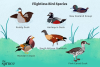
What's weird is that the article actually lists the extant flightless bird species, and none of those ducks are on the list. I'm betting the author opened the article after it got published, looked at the picture the editor had added to it, and face-palmed.The image can be found here: What Birds Don't Fly? Get the Complete Flightless Bird List!


I asked for information on the Plzen Zoo's website to be translated into English. Supposedly Angolan colobus monkeys are guerillas, while bee-eaters are wolves, which 'hunt insects in flight' (Forests and primeval forests of Africa | Pilsen Zoo (zooplzen.cz). Fat-tailed dwarf lemurs are thick-tailed macaques, lesser hedgehog tenrecs are thistles and Malagasy tree boas are dog-headed boars (Madagascar | Pilsen Zoo (zooplzen.cz). Spiny mice are stings, brush-tailed porcupines are aspens, jerboas are tarbis and galagos are combos (The mysterious night and day world of Africa | Pilsen Zoo (zooplzen.cz). There are also heatless zebras (Savannahs of Africa | Pilsen Zoo (zooplzen.cz), sneakers and spinning wheelbarrows (African Pavilion | Pilsen Zoo (zooplzen.cz).


I feel like you may be misremembering what was written. The first part of the generic name was given deliberately to have a double meaning, partly in reference to the word "serendipity" and partly because Arthur C. Clarke, who was a friend of the describers, lived in Sri Lanka. The word "serendipity" comes directly from the old Arabic name for Sri Lanka, Serendip (or Serendib).I remember that Thomas Holtz’s “complete, up-to-date” encyclopedia says that Serendipaceratops was found in Sri Lanka (not Australia) and that its name originates not from the English word “serendipity” but after a “legendary” name for Sri Lanka. This statement may come from the coincidental fact that the namesake of the species’s specific epithet (arthurcclarkei) immigrated to Sri Lanka. I don’t have a photo though, and I only had it as a library book quite some years ago.
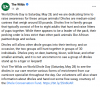
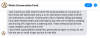
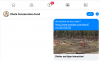
I've said before that the Dhole Conservation Fund is basically a group of liars. Yesterday I finally called them out on it and naturally got caught up in a tangle. But they ended up proving their dishonesty.
That may be, but it appears I am correct. This was the only etymology given for the name. I can prove it with this Google search:I feel like you may be misremembering what was written. The first part of the generic name was given deliberately to have a double meaning, partly in reference to the word "serendipity" and partly because Arthur C. Clarke, who was a friend of the describers, lived in Sri Lanka. The word "serendipity" comes directly from the old Arabic name for Sri Lanka, Serendip (or Serendib).
I haven't read Holtz's book but I suspect he was merely pointing this out and you misinterpreted it.

That's just the appendix of names, not what he wrote in the actual text (and the location of the genus is also given specifically as Australia in that appendix, which is at odds with your claim that the author states it was found in Sri Lanka).That may be, but it appears I am correct. This was the only etymology given for the name. I can prove it with this Google search:
View attachment 550682
Unfortunately, I cannot look into it any further, as scribd.com has a paywall.
I was not sure. I tried to look further, but as I said, there is a paywall and I could not see or find that part.That's just the appendix of names, not what he wrote in the actual text (and the location of the genus is also given specifically as Australia in that appendix, which is at odds with your claim that the author states it was found in Sri Lanka).