Zoological inaccuracies & mistakes

Hopefully they won't have to *serval* the internet to find lynx to the manul...
[serval, surf - all... I'll see myself out..]
 
I read an advert about a holiday in India, where there is a chance to see wild leopards and sloths.
 
Last edited:
Far too many examples to list, but badgers are almost always depicted like the European ones in North American contexts. Ratels don’t count as badgers.
As a toy collector, I can attest that there are only about 3 clear American Badgers represented in the form of toys: the Douglas stuffed badger, the Play Visions figure from the mustelids set, and the recently retired Safari Limited toy. All the rest of the badgers made by North American brands are Europeans. The same goes for characters in animation. Side note: badgers as a whole are more popular in Europe than in North America. Perhaps that’s because American badgers are less conspicuous in their range than European badgers (which are common in a wider variety of habitats, including not only wild open country, but also forests, farmlands, and semi-urban areas). It appears that they get overshadowed by the North American medium-sized “forest” or “urban” mammals such as opossums, raccoons, or skunks. Therefore, Americans are so unfamiliar with American Badgers that they mistake them for the larger, fiercer Wolverine, which, besides being another relatively large, stocky mustelid, looks nothing like a badger.
 
Last edited:
I asked for information on the Plzen Zoo's website to be translated into English. Supposedly Angolan colobus monkeys are guerillas, while bee-eaters are wolves, which 'hunt insects in flight' (Forests and primeval forests of Africa | Pilsen Zoo (zooplzen.cz). Fat-tailed dwarf lemurs are thick-tailed macaques, lesser hedgehog tenrecs are thistles and Malagasy tree boas are dog-headed boars (Madagascar | Pilsen Zoo (zooplzen.cz). Spiny mice are stings, brush-tailed porcupines are aspens, jerboas are tarbis and galagos are combos (The mysterious night and day world of Africa | Pilsen Zoo (zooplzen.cz). There are also heatless zebras (Savannahs of Africa | Pilsen Zoo (zooplzen.cz), sneakers and spinning wheelbarrows (African Pavilion | Pilsen Zoo (zooplzen.cz).
 
I asked for information on the Plzen Zoo's website to be translated into English. Supposedly Angolan colobus monkeys are guerillas, while bee-eaters are wolves, which 'hunt insects in flight' (Forests and primeval forests of Africa | Pilsen Zoo (zooplzen.cz). Fat-tailed dwarf lemurs are thick-tailed macaques, lesser hedgehog tenrecs are thistles and Malagasy tree boas are dog-headed boars (Madagascar | Pilsen Zoo (zooplzen.cz). Spiny mice are stings, brush-tailed porcupines are aspens, jerboas are tarbis and galagos are combos (The mysterious night and day world of Africa | Pilsen Zoo (zooplzen.cz). There are also heatless zebras (Savannahs of Africa | Pilsen Zoo (zooplzen.cz), sneakers and spinning wheelbarrows (African Pavilion | Pilsen Zoo (zooplzen.cz).


That looks like the result of any modern taxonomist research.
 
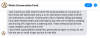
Great. It appears the Dhole Conservation Fund's lunacy is infecting The Wilds now. I really wanted to go to The Wilds, but since they're apparently fine with spreading misinformation on these animals I guess I can eliminate that from my bucket list. I've already gone over why the two pieces of misinformation are wrong here. Just another way for them to get them to seem cooler so they can make more money. And yes, I know I said I wouldn't post on these people anymore, but this is something I just came on my Facebook feed and not from them.


Screenshot 2022-05-22 12.50.54 PM.png
 

Attachments

  • Screenshot 2022-05-22 12.50.54 PM.png
    Screenshot 2022-05-22 12.50.54 PM.png
    71.2 KB · Views: 51
Last edited by a moderator:
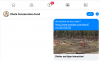
I've said before that the Dhole Conservation Fund is basically a group of liars. Yesterday I finally called them out on it and naturally got caught up in a tangle. But they ended up proving their dishonesty.

Screenshot 2022-05-23 10.02.54 AM.png

Screenshot 2022-05-23 11.31.49 AM.png


Screenshot 2022-05-23 11.27.01 AM.png


That said, here's the video. Watch the whole thing, and you'll see just how dishonest these people are.
 

Attachments

  • Screenshot 2022-05-23 10.02.54 AM.png
    Screenshot 2022-05-23 10.02.54 AM.png
    43.6 KB · Views: 51
  • Screenshot 2022-05-23 11.31.49 AM.png
    Screenshot 2022-05-23 11.31.49 AM.png
    127.9 KB · Views: 52
  • Screenshot 2022-05-23 11.27.01 AM.png
    Screenshot 2022-05-23 11.27.01 AM.png
    5.9 KB · Views: 50
I remember that Thomas Holtz’s “complete, up-to-date” encyclopedia says that Serendipaceratops was found in Sri Lanka (not Australia) and that its name originates not from the English word “serendipity” but after a “legendary” name for Sri Lanka. This statement may come from the coincidental fact that the namesake of the species’s specific epithet (arthurcclarkei) immigrated to Sri Lanka. I don’t have a photo though, and I only had it as a library book quite some years ago.
 
I remember that Thomas Holtz’s “complete, up-to-date” encyclopedia says that Serendipaceratops was found in Sri Lanka (not Australia) and that its name originates not from the English word “serendipity” but after a “legendary” name for Sri Lanka. This statement may come from the coincidental fact that the namesake of the species’s specific epithet (arthurcclarkei) immigrated to Sri Lanka. I don’t have a photo though, and I only had it as a library book quite some years ago.
I feel like you may be misremembering what was written. The first part of the generic name was given deliberately to have a double meaning, partly in reference to the word "serendipity" and partly because Arthur C. Clarke, who was a friend of the describers, lived in Sri Lanka. The word "serendipity" comes directly from the old Arabic name for Sri Lanka, Serendip (or Serendib).

I haven't read Holtz's book but I suspect he was merely pointing this out and you misinterpreted it.
 
I've said before that the Dhole Conservation Fund is basically a group of liars. Yesterday I finally called them out on it and naturally got caught up in a tangle. But they ended up proving their dishonesty.

You may need to be careful, Pantheraman. To call the Dhole Conservation Fund 'a group of liars' is libel. Are you implying that all the members are liars?
 
I feel like you may be misremembering what was written. The first part of the generic name was given deliberately to have a double meaning, partly in reference to the word "serendipity" and partly because Arthur C. Clarke, who was a friend of the describers, lived in Sri Lanka. The word "serendipity" comes directly from the old Arabic name for Sri Lanka, Serendip (or Serendib).

I haven't read Holtz's book but I suspect he was merely pointing this out and you misinterpreted it.
That may be, but it appears I am correct. This was the only etymology given for the name. I can prove it with this Google search:
7ACDADCE-F3BB-4F7B-84EB-263BDB2B4807.jpeg
Unfortunately, I cannot look into it any further, as scribd.com has a paywall.
 

Attachments

  • 7ACDADCE-F3BB-4F7B-84EB-263BDB2B4807.jpeg
    7ACDADCE-F3BB-4F7B-84EB-263BDB2B4807.jpeg
    53.8 KB · Views: 46
That may be, but it appears I am correct. This was the only etymology given for the name. I can prove it with this Google search:
View attachment 550682
Unfortunately, I cannot look into it any further, as scribd.com has a paywall.
That's just the appendix of names, not what he wrote in the actual text (and the location of the genus is also given specifically as Australia in that appendix, which is at odds with your claim that the author states it was found in Sri Lanka).
 
That's just the appendix of names, not what he wrote in the actual text (and the location of the genus is also given specifically as Australia in that appendix, which is at odds with your claim that the author states it was found in Sri Lanka).
I was not sure. I tried to look further, but as I said, there is a paywall and I could not see or find that part.
 
Back
Top