
You are using an out of date browser. It may not display this or other websites correctly.
You should upgrade or use an alternative browser.
You should upgrade or use an alternative browser.
Zoological inaccuracies & mistakes
- Thread starter Elephas Maximus
- Start date

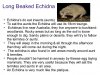
How does the echidna distinguish the aunts from the uncles? There are lots of spelling mistakes and no mention of earthworms.

It depends if your auntie is an earthworm. Does Ollie Gokeeta still contribute to Zoochat?

I know this is an oldish post, but this is just a tiny fraction of the nonsense this book features. Among other things, it lists mousebirds (Coliiformes) as part of the Ciconiiformes!National Geographic Animal Encyclopaedia
View attachment 469414
American Badger labelled as Wolverine
View attachment 469415
Uuhh...

A bit of a less troubling book: Jerry Pallota's Extinct Animal Alphabet Book.

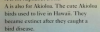
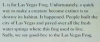
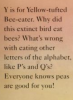
I'm a bit nitpicky that they didn't specify which Akioloa, but based on the imagery I'm going with the Kauai Akioloa. Akioloa could actually indicate any species. It seems that it wasn't just one that died of a non-specific 'bird disease' as the book puts it, but a few disappeared like this. As a side note, some think there may be a possibility that the Kauai Akioloa still exists, albeit in fragmented populations.

Whilst Bluebucks were hunted to extinction, I couldn't find anything specifying dog food as being a root cause of hunting.

I couldn't actually find what species of bat the book was referring to. There are some critically endangered bats of Jamaica, but I couldn't find anything about this extinct one.

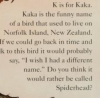
This I think is actually a half error, because the book seems to be talking about the Norfolk Kaka specific. However, other Kaka species still survive, despite what may be indicated.
*Error Removed, in name of retroactive fairness*

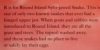
Yes, but which split-jawed snake species? One of them is still extant.

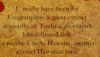
From what I could find, Urogomphus does not refer to a 'giant extinct dragonfly', and is not even a genus name. It seems to refer to 'a paired structure, in the larvae and/or pupae of certain coleopterans, which grows out of the tergum of the last body segment and projects beyond the tip' as Wiktionary puts it.

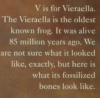
Vieraella actually lived ~200 million years ago.
*Error removed, as the study was done several decades later*

Again, I'm not sure what exact species Pallotta is referring to.
I'm a bit nitpicky that they didn't specify which Akioloa, but based on the imagery I'm going with the Kauai Akioloa. Akioloa could actually indicate any species. It seems that it wasn't just one that died of a non-specific 'bird disease' as the book puts it, but a few disappeared like this. As a side note, some think there may be a possibility that the Kauai Akioloa still exists, albeit in fragmented populations.
Whilst Bluebucks were hunted to extinction, I couldn't find anything specifying dog food as being a root cause of hunting.
I couldn't actually find what species of bat the book was referring to. There are some critically endangered bats of Jamaica, but I couldn't find anything about this extinct one.
This I think is actually a half error, because the book seems to be talking about the Norfolk Kaka specific. However, other Kaka species still survive, despite what may be indicated.
*Error Removed, in name of retroactive fairness*
Yes, but which split-jawed snake species? One of them is still extant.
From what I could find, Urogomphus does not refer to a 'giant extinct dragonfly', and is not even a genus name. It seems to refer to 'a paired structure, in the larvae and/or pupae of certain coleopterans, which grows out of the tergum of the last body segment and projects beyond the tip' as Wiktionary puts it.
Vieraella actually lived ~200 million years ago.
*Error removed, as the study was done several decades later*
Again, I'm not sure what exact species Pallotta is referring to.
Attachments
-
 upload_2020-12-24_11-27-57.png74 KB · Views: 65
 -
 upload_2020-12-24_11-31-40.png147.8 KB · Views: 68
 -
 upload_2020-12-24_11-32-50.png108.6 KB · Views: 64
 -
 upload_2020-12-24_11-34-21.png126 KB · Views: 67
 -
 upload_2020-12-24_11-35-34.png127.7 KB · Views: 3
 -
 upload_2020-12-24_11-40-59.png82 KB · Views: 64
 -
 upload_2020-12-24_11-44-16.png146.2 KB · Views: 66
 -
 upload_2020-12-24_11-50-53.png130.7 KB · Views: 70
 -
 upload_2020-12-24_11-52-47.png120.5 KB · Views: 3
 -
 upload_2020-12-24_11-54-53.png121.9 KB · Views: 65
Last edited:
Hmm. There were two species of Round Island Boa, the arboreal species is still extant, the burrowed believed extinct. Although one meaning of Urogomphus is the appendage, another meaning is as a generic name for Solnhofen fossil dragonflies. I suspect the bee-eater is a reference to oo species, which I could see being originally classified as bee-eaters based on superficial similarity, and the poor joke is just too tempting to include.
I don't think it's fair to criticise a book for zoological inaccuracies if the information was correct at the time of printing. In 1927, Lilian Gask wrote the following in 'All about Animals': "In Java and Sumatra there are so many tigers that some years ago Dutch merchants complained that they interfere with the delivery of coffee by lurking along their routes."I think that this is referring to the Vegas Valley Leopard Frog. That said, whilst this was accurate when the book was printed, it has since become inaccurate as of 2011, as DNA taken from Chiricahua Leopard Frogs seems to be identical to the Vegas Valley Leopard Frog DNA, rendering the species still extant.


A bit of a less troubling book: Jerry Pallota's Extinct Animal Alphabet Book.
The book was published in 1993, when the Akioloa were generally treated as being one species with several subspecies, so the book is correct with the then-current taxonomy.I'm a bit nitpicky that they didn't specify which Akioloa, but based on the imagery I'm going with the Kauai Akioloa. Akioloa could actually indicate any species.
Pretty much any account of the Bluebuck's extinction will say that while the antelope were being hunted for their skins, the meat was fed to dogs because it tasted too bad to be eaten by people.Whilst Bluebucks were hunted to extinction, I couldn't find anything specifying dog food as being a root cause of hunting.
Here are you seriously asking "Of the two species, which one is extinct? The extinct one or the extant one?"Yes, but which split-jawed snake species? One of them is still extant.
As @Tetzoo Quizzer says, Urogomphus is a genus of fossil dragonflies.From what I could find, Urogomphus does not refer to a 'giant extinct dragonfly', and is not even a genus name. It seems to refer to 'a paired structure, in the larvae and/or pupae of certain coleopterans, which grows out of the tergum of the last body segment and projects beyond the tip' as Wiktionary puts it.
This is the only one of your "errors" which is actually an error. The author means "Yellow-tufted Honeyeater", which is an alternative name for the Oahu O'o. He has mistakenly called it "bee eater" and then compounded that mistake with the joke about the letters of the alphabet.Again, I'm not sure what exact species Pallotta is referring to.

Umm.........Yes, but which split-jawed snake species? One of them is still extant
Couldn't you answer that yourself? If one is extinct, than it has to be the extinct one.

Bolyeria.
What I intended here was that the name given here could be applied to either snake species, they didn't specify if it was the burrowing one or the arboreal one.Yes, but which split-jawed snake species? One of them is still extant.
Yes, but the fact is one is extinct and one is not, so if their talking about an extinct species it doesn't matter if its the burrowing one or arboreal one.What I intended here was that the name given here could be applied to either snake species, they didn't specify if it was the burrowing one or the arboreal one.

Elephas Maximus
Well-Known Member
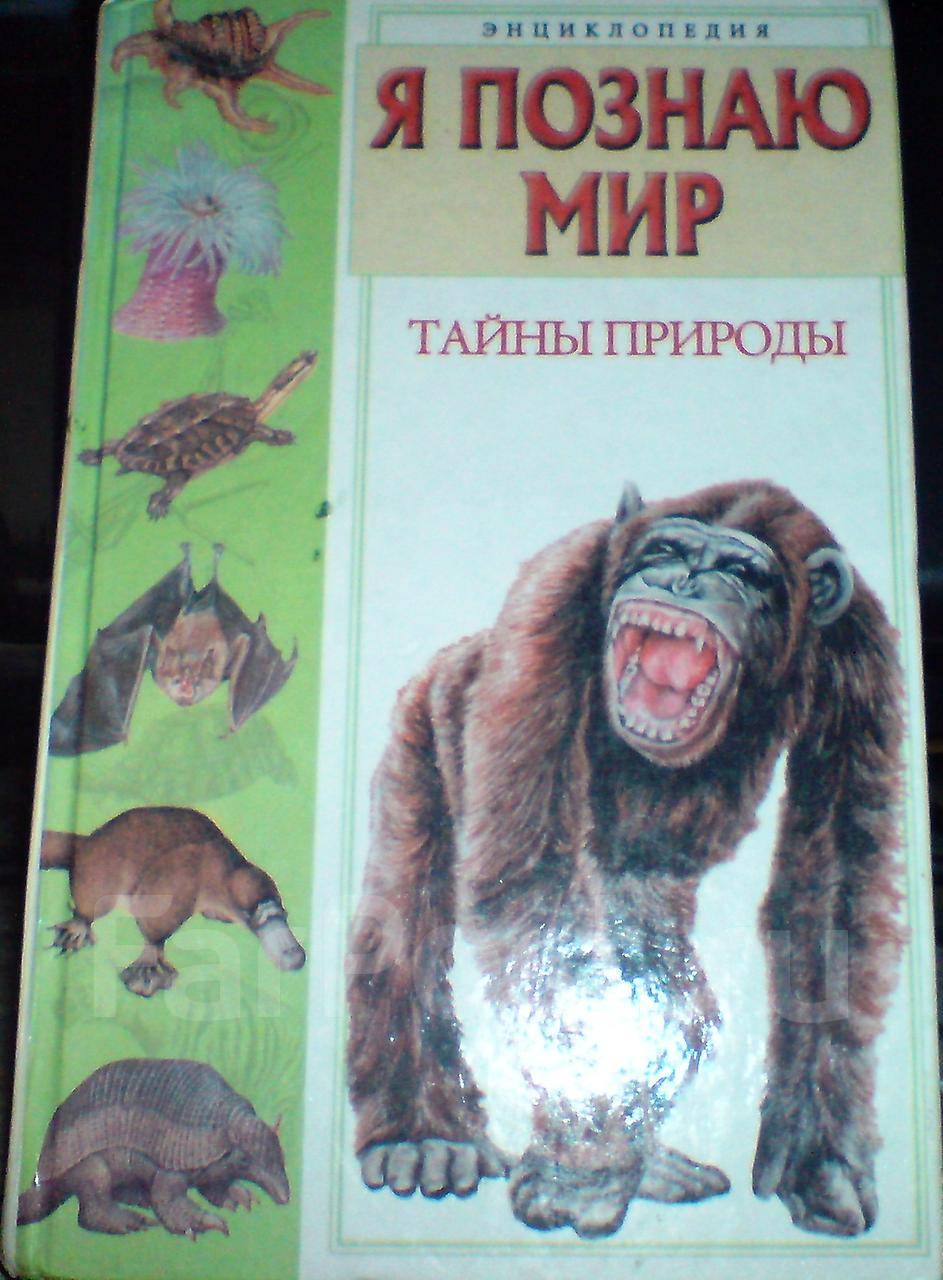
6 incisors in upper jaw

Elephas Maximus
Well-Known Member
Rostov Zoo in Russia has African elephant on the logo, this species was never kept here


The Cassowary
Well-Known Member
Adult ostriches in Planet Zoo make baby ostrich sounds



The logo of the New Zealand Pet & Animal Expo includes an iguana. Iguanas cannot be kept as pets in New Zealand, nor can zoo staff bring them to these events.
View attachment 471677
I’m still trying to work out what the hell that bird’s meant to be? A Sulfur crested cockatoo that had it’s yellow crest shaved off?
Given how popular the species is in captivity here, I agree that the bird in the logo is most likely to be a poor depiction of a sulphur-crested cockatoo. To be honest, the first thing that I thought it could be is a white rose-ringed parakeet. It could also be an umbrella cockatoo or a corella, I suppose.I’m still trying to work out what the hell that bird’s meant to be? A Sulfur crested cockatoo that had it’s yellow crest shaved off?
Elephas Maximus
Well-Known Member
In Dora and the Lost City of Gold movie there are pygmy elephants in South America