You are using an out of date browser. It may not display this or other websites correctly.
You should upgrade or use an alternative browser.
You should upgrade or use an alternative browser.
Zoological inaccuracies & mistakes
- Thread starter Elephas Maximus
- Start date


Lota lota
Well-Known Member
They said that "These also live wild in the andes" while holding a pet guinea pig.And no @Chlidonias ,they didn't reffer to the them using the scientific name.I just wanted to specify that they were talking about normal guinea pigs and not species of the cavia genus in general.I strongly suspect they merely said "wild guinea pigs" and @Lota lota has decided to go with the most cynical interpretation possible in order to have a pretext to post a complaint in this thread
Last edited:

I mean, without even being there it seems pretty likely that they were just saying that wild guinea pigs live in the Andes, which is true. Domestic guinea pigs are descended from wild guinea pigs in the Andes. Doing a talk on pet guinea pigs isn't going to be including a discussion on the taxonomy of Cavia and the various theories on the origin of the domestic form, because it is going to be aimed at the comprehension level of all visitors including (or even predominantly, in this case) children.They said that "These also live wild in the andes" while holding a pet guinea pig.And no @Chlidonias ,they didn't reffer to the them using the scientific name.I just wanted to specify that they were talking about normal guinea pigs and not species of the cavia genus in general.
They're all listed as guinea pigs here: Cavia - WikipediaAll members of the genus Cavia more broadly are referred to as guinea pigs, right?

I was recently looking through a Japanese book that I own which is about extinct animals from around the world and was published in 1995. I noticed that the book contains a few pieces of information that I believe to be incorrect.
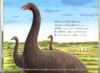
This page says that the Giant Moa (exact species not specified) still existed 250 years ago. The opposite page gives the date of extinction for this bird as, "approximately 1770".

This page depicts the male Huia without white tips to what can be seen of its tail feathers, despite the fact that hunting of the Huia for these feathers is perhaps the most infamous reason for why this species became extinct. Also strange is that the accompanying text says nothing about the extreme sexual bill dimorphism that made the Huia unique among all birds. "Deforestation", is the only cause that this book gives for the extinction of the Huia.

Also:
The Laysan Rail is claimed to have gone extinct due to predation from cats and mongooses. No mention is made of rabbits or rats.
The diet of the Lyall's Wren is said to have included crabs and shrimps.
This page says that the Giant Moa (exact species not specified) still existed 250 years ago. The opposite page gives the date of extinction for this bird as, "approximately 1770".
This page depicts the male Huia without white tips to what can be seen of its tail feathers, despite the fact that hunting of the Huia for these feathers is perhaps the most infamous reason for why this species became extinct. Also strange is that the accompanying text says nothing about the extreme sexual bill dimorphism that made the Huia unique among all birds. "Deforestation", is the only cause that this book gives for the extinction of the Huia.
Also:
The Laysan Rail is claimed to have gone extinct due to predation from cats and mongooses. No mention is made of rabbits or rats.
The diet of the Lyall's Wren is said to have included crabs and shrimps.
Attachments
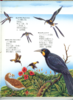
In the second picture they also seem to have modeled the O'o after tropicbirds, and the Mamo (I guess) after hummingbirds.
If the giant moa became extinct in approximately 1770, it would still existed until about 250 years agoThis page says that the Giant Moa (exact species not specified) still existed 250 years ago. The opposite page gives the date of extinction for this bird as, "approximately 1770".
.
I am reading 'Lost Animals' by John Whitfield. It includes a picture of Arsinotherium, described as an extinct rhinoceros. The genus belonged to a separate order, Embrithopoda, more closely related to elephants.
The book also describes synapsids as reptiles. Considering the book was written in 2020, it should have been proofread more efficiently.
The book also describes synapsids as reptiles. Considering the book was written in 2020, it should have been proofread more efficiently.

There is some evidence that Upland Moa may have survived into the 18th and possibly even 19th centuries. Of course, that species was far from giant, being only about the size of a turkey.I was recently looking through a Japanese book that I own which is about extinct animals from around the world and was published in 1995. I noticed that the book contains a few pieces of information that I believe to be incorrect.
This page says that the Giant Moa (exact species not specified) still existed 250 years ago. The opposite page gives the date of extinction for this bird as, "approximately 1770".
View attachment 610538
This page depicts the male Huia without white tips to what can be seen of its tail feathers, despite the fact that hunting of the Huia for these feathers is perhaps the most infamous reason for why this species became extinct. Also strange is that the accompanying text says nothing about the extreme sexual bill dimorphism that made the Huia unique among all birds. "Deforestation", is the only cause that this book gives for the extinction of the Huia.
View attachment 610539
Also:
The Laysan Rail is claimed to have gone extinct due to predation from cats and mongooses. No mention is made of rabbits or rats.
The diet of the Lyall's Wren is said to have included crabs and shrimps.




Was looking for pictures of the forests of Sikhote-Alin in Russia for a personal project, and found the picture below on this mountain guide website: Sikhote-Alin Nature Reserve

This animal is described as a 'grey deer', but seems to be a picture of a waterbuck with antlers photo-shopped on before it was then plonked into the mountain photo.
This animal is described as a 'grey deer', but seems to be a picture of a waterbuck with antlers photo-shopped on before it was then plonked into the mountain photo.
Rudolph would have to be female, as male reindeer drop their antlers before ChristmasView attachment 612870
A number of Christmas movies are filmed around the Summer time, meaning that reindeer used in the movie typically have attributes they probably would not at Christmas Eve - such as velvety antlers / rough coat.

Gelded males (used as draught animals) retain their antlers into the new yearRudolph would have to be female, as male reindeer drop their antlers before Christmas

The Q&A section in April 2023's BBC Wildlife says that all female marsupials have pouches; the numbat, shrew opossums and some mouse opossums never have pouches. The answer includes echidnas as marsupials with temporary pouches. Echidnas are monotremes.

Birdsage
Well-Known Member
Various children’s media
Who would Win? Wolverine vs. Tasmanian Devil by Jerry Pallotta
A cuscus is listed as a mustelid instead of as a marsupial.
The premolars on the S. harrisii skull are labeled as carnassials; only carnivorans have true carnassials.
The “possum” listed as a prey item of S. harrisii is an American opossum.
Rainforest, song by Shane DeRolf
Acharia stimulea does not occur in (tropical) rainforests.
“Bushbaby” is a tarsier with very small ears.
Children’s song about the five oceans by unknown author
Sharks do not occur in the Southern Ocean.
African Animal Alphabet, song adaptation of a National Geographic book
Vervet Monkey is hanging from its tail.
Brachiosaurus, song by Howdytoons
Brachiosaurus’s status as the largest known dinosaur was already long outdated by the time of this song’s production.
A cuscus is listed as a mustelid instead of as a marsupial.
The premolars on the S. harrisii skull are labeled as carnassials; only carnivorans have true carnassials.
The “possum” listed as a prey item of S. harrisii is an American opossum.
Acharia stimulea does not occur in (tropical) rainforests.
“Bushbaby” is a tarsier with very small ears.
Sharks do not occur in the Southern Ocean.
Vervet Monkey is hanging from its tail.
Brachiosaurus’s status as the largest known dinosaur was already long outdated by the time of this song’s production.
Last edited:
Various children’s media
Who would Win? Wolverine vs. Tasmanian Devil by Jerry Pallotta
A cuscus is listed as a mustelid instead of as a marsupial.
The premolars on the S. harrisii skull are labeled as carnassials; only carnivorans have true carnassials.
The “possum” listed as a prey item of S. harrisii is an American opossum.
Rainforest, song by Shane DeRolf
Acharia stimulea does not occur in (tropical) rainforests.
“Bushbaby” is a tarsier with very small ears.
Children’s song about the five oceans by unknown author
Sharks do not occur in the Southern Ocean.
African Animal Alphabet, song adaptation of a National Geographic book
Vervet Monkey is hanging from its tail.
I'm not a fan of how that video shows some animals and not others ... I can understand maybe in the case of some lesser known animals sure .. but elephants? lions, surely?
I recall also the book had an error - on the 'X' page it has 'xenopus bullfrog'. No bullfrogs belong to genus Xenopus, so the picture is of a regular African Bullfrog.
And so the page inevitably describes habits of bullfrogs which are not those of Xenopus...
Xenopus bullfrogs like to sit in water that is extra shallow. [Real Xenopus seldom ever come onto land] If you could x-ray them, you would see tha they have extremely sharp teeth. [Xenopus lack a tongue or teeth.] Xenopus bullfrogs bury themselves in mud and live underground until the rainy season comes. [Something bullfrogs do, but Xenopus do not.] And, inevitably, on the 'Animal Facts' page, the animal size is given to be 'about the length of an avocado'. I recall that the Xenopus I saw in 2016 at Jerusalem Biblical Zoo were far, far, smaller than an avocado ...
Xenopus vary greatly in size depending on the species. Some do reach the size of an avocado.I'm not a fan of how that video shows some animals and not others ... I can understand maybe in the case of some lesser known animals sure .. but elephants? lions, surely?
I recall also the book had an error - on the 'X' page it has 'xenopus bullfrog'. No bullfrogs belong to genus Xenopus, so the picture is of a regular African Bullfrog.
And so the page inevitably describes habits of bullfrogs which are not those of Xenopus...
Xenopus bullfrogs like to sit in water that is extra shallow. [Real Xenopus seldom ever come onto land] If you could x-ray them, you would see tha they have extremely sharp teeth. [Xenopus lack a tongue or teeth.] Xenopus bullfrogs bury themselves in mud and live underground until the rainy season comes. [Something bullfrogs do, but Xenopus do not.] And, inevitably, on the 'Animal Facts' page, the animal size is given to be 'about the length of an avocado'. I recall that the Xenopus I saw in 2016 at Jerusalem Biblical Zoo were far, far, smaller than an avocado ...
Birdsage
Well-Known Member
One of the selections on the 2022 STAAR English I high-school test contained a clear factual error; it refers to the World Animal Foundation (apparently a highly anti-zoo organization, for the record) as offering symbolic animal adoptions, which does not appear to be the case in reality. The references to the WAF are probably the result of confusion with the World Wildlife Fund. 
Attachments