ZooSC at Myrtle Beach: A New Spec Zoo Project

Van Beal

Well-Known Member
Hi, and welcome to my new spec zoo project.
My initial spec zoo (Tchentlo Lake Zoo (My Dream Zoo)) met its downfall due to my lack of research and realism in its design. However, ZooSC at Myrtle Beach will be much more researched and as realistic as possible. So let's get started shall we?

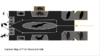
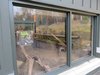
ZooSC at Myrtle Beach's ticket booths are just a few meters off the shores of a beautiful river, which visitors travel over by way of an arching wooden bridge from the parking lot. The river provides an opportunity to view some of the native wildlife, such as waterfowl, fish, and turtles. After passing by the ticket booths, you are officially into the Entry Plaza, an open-air plaza featuring gardens of native flora, as well as the two Plaza Pond exhibits.

Plaza Ponds
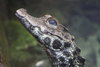
The first animal attractions are twin 200 sq. m enclosures, which are slightly below the ground level visitors stand on. These enclosures are surrounded by waist-height wooden barriers, decorated with ivy and other creepers. Each habitat has 40 sq. m of water, which varies from 1/4 ft deep, to 1.5 ft deep. The rest of the enclosures feature native bushes and trees, and rock slabs allowing the inhabitants to sunbathe on warm days. The first of these enclosures houses a small group of Cuvier's Dwarf Caiman Paleosuchus palpebrosus (1.2), while the second provides a home to one of our breeding pairs of North American River Otters Lontra canadensis (1.1). Both species have alternate housing in different sectors of the zoo, which will be covered later on.
 
Last edited by a moderator:
Now, the next section that will be covered will be the Conservation, Invasion, and Extinction Centre, but before I delve into that, I will provide a list of all the sectors of my zoo. If anyone has any alternate ideas for sector names, feel free to let me know.

All Zoo Sectors:
Conservation, Invasion and Extinction Centre
Nocturnal House
District of Europe and West Asia
China and the Islands
Australasia
Native Lands
Polar Reaches
Amazonia
Patagonian Trek
African Wilds
Madagascar

A map of the zoo is currently being designed, it will probably be available upon the project's completion!
Images from this site will also be used to give a visual of the enclosures starting in the Nocturnal House!
 
Last edited:
Conservation, Invasion and Extinction Centre: Conservation Module

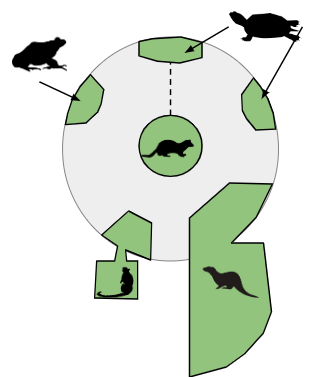
If you turn to your left, and travel along the paved but still dirt-covered trail through the woods, you will eventually find yourself slowly sloping upwards toward the overgrown entrance to the building's first module. However, before you enter the building, a look to either side through ivy-covered mesh will give you a glimpse into two enclosures for South American mammals. To your left, a 10 sq. m enclosure, featuring trees and artificial climbing frames for what is currently a pair of Pied Tamarins Saguinus bicolor (1.1) which we hope will breed in the coming years. Meanwhile, to your right is a much larger exhibit, at 550 sq. m in total size, with around 110 sq. m of that being taken up by water with depths ranging between 1.5ft and 5ft to sufficiently provide diving opportunities for our pair of Giant Otters Pteroneura brasiliensis, while rocks are provided for sunbathing, and trees and low-lying growth act as shade.

Officially entering the Conservation Module, to your left and right are the indoor quarters for the two species you saw outside, 10 sq. m indoor for the tamarins, and 220 sq. m for the otters. Meanwhile, dead ahead is a 200 sq. m desert plateau, raised on a 1m-high sandstone pedestal and surrounded by 1.5m-high glass walls. The plateau has reinforced tunnels running through it, as well as scrubby bushes and dead tree limbs scattered throughout, all in all providing a very immersive home to the endangered but well-known Black-footed Ferret Mustela nigripes (1.1) pair housed. Toward the back of the room, as well as the two doorways leading to the other modules, are three open-topped paludarium enclosures, each approx. 50gals in size. The one between the doors features very little terrestrial space, with much of the tank being water-filled, and acting as a home to a group of Lake Titicaca Water Frogs Telmatobius culeus (6.6). The two other tanks, one to the left of the door to the Invasion Module, the other to the right of the Extinction Module door, each feature significantly more terrestrial space than the central paludarium, while still having a fair amount of aquatic space. To the left of the Invasion Module door you can see Blanding's Turtles Emydoidea blandingii (2.4) and Spiny Softshell Turtles Apalone spinifera (1.1), while the tank beside the Extinction Module door houses a pair of Common Musk Turtles Sternotherus odoratus (1.1).

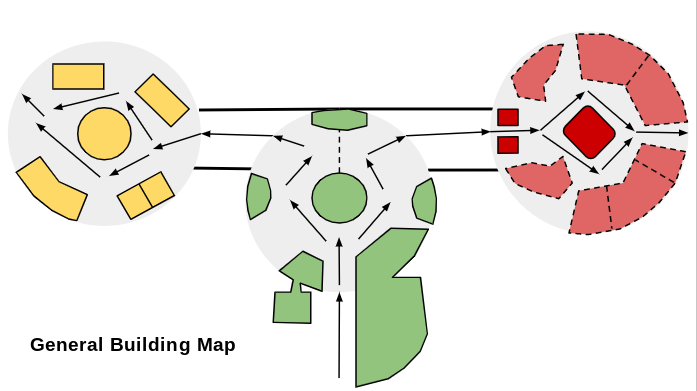
From this point, visitors can choose to either visit the Extinction Module, or the Invasion Module... one of which will be selected to display next!
 
Conservation, Invasion and Extinction Centre: Extinction Module
(yes I'm aware I am not going in order of the building name)

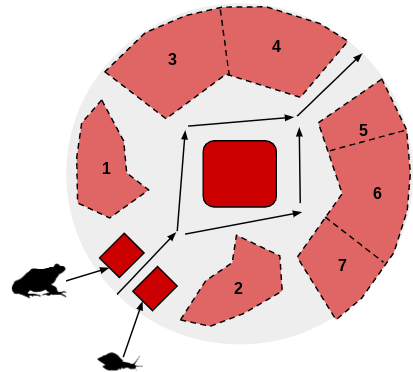
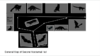
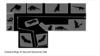
By living population, the smallest of the three, however it is intended to function more as a museum and educational facility than an actual zoo exhibit. Specifically, it is meant to educate guests on many of the species which once lived on this planet, but were wiped out from all existence but photographs. Well, and our dioramas. Seven total dioramic displays are found around the room, taking up almost all of the wall space (besides the doorway, and the two terrariums on either side of this doorway), while an educational pedestal and holographic display stands in the center of the room (more on the holographic display when our Interactive Experiences are discussed). The dioramas display (from left of the doorway all the way around) Quagga, Dodo, Passenger Pigeon, Tasmanian Tiger or Thylacine, Baiji, Steller's Sea Cow, and a mixed display of Moa and Haast's Eagle. The terrarium to the left of the door, being approximately 20 gallons, mimics the harsh environment the housed Wyoming Toad Anaxyrus baxteri (1.1) have made their return to. Meanwhile, the terrarium to the right, also being approximately 20 gallons, mimics the Polynesian forests, and houses Partula Snails Partula nodosa (0.0.10) which are unfortunately extinct in the wild.

To reach the last module in the zoo's first major section, you'll have to backtrack through the Conservation Module, and enter the doorway you decided to ignore the first time around...
 
Invasion Module

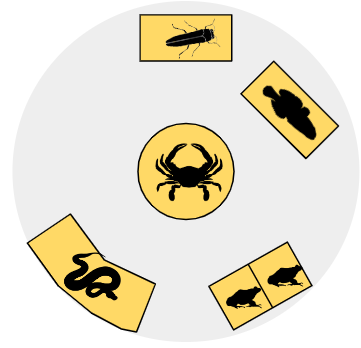
Passing through the door between the paludariums for the water frogs and mixed turtles, you officially enter the last (or second-last, if you decide to go against the order this tour takes you) module of the first building in the zoo. This section does not feature a single mammal or bird species, so the five terrariums are spread around the room, with each having a rather sizeable display on their negative impacts on the territory they have invaded.

The first two of these exhibits each house a larger amphibian species, and are each 5 sq. meters in surface area ('surface' meaning the bottom of the tank) and an additional half meter in height. The respectively housed Cane Toads Rhinella marina (1.1) and American Bullfrog Lithobates cateisbeianus (1.1) cause massive ecosystem shifts in their invasive ranges (Australia for the Cane Toads, and Western Canada for the Bullfrogs). Following this display of large amphibians is a 40 sq. meter glass enclosure, designed to replicate the Everglades where this Burmese Python Python bivittatus (1.0) would be considered invasive due to release into the wild when they became 'too large to handle' as pets, and then wreaking havoc on the Everglades' ecosystem.

In the center of the room is a rather sizeable tank of 40 sq. meters and about half a meter in depth. This is not a touch pool, no matter how inviting the open top of the tank is. Rather, reaching in this tank would potentially lead to one of our European Green Crabs Carcinus maenas (0.0.20) to pinch your finger. These invasive crustaceans have, much like other aquatic invaders, ruined the aquatic biodiversity of North American waters. On the opposite side of the room from the amphibian and python displays are a pair of 6 sq. meter by 2 meter tall terrariums, one of which features a large hive for Asian Giant Hornets Vespa mandarina (0.0.10), while the other replicates the ash forests where Emerald Ash Borers Agrilus planipennis (0.0.20) does the majority of its damage.

After this, guests can exit the building, into a nice, well-planted garden seating area, where guests can be surrounded by the native species of 'pollinators' and other non-damaging animals. From here, you can perhaps catch a glimpse of the Nocturnal House through the woods. This is where we will head next, so stay tuned!
 
one of which features a large hive for Asian Giant Hornets Vespa mandarina (0.0.10),
Invasion Module Update
This tank will stay the same in terms of size, but will instead be filled up about halfway with water (so approx. 1m-deep water, and approx. 1590 gallons in the tank) with a rather sandy bottom, featuring few rocks and small aquatic plants, while the inhabitants are changed to Round Goby Neogobius melanostomus (2.6).
 
The one between the doors features very little terrestrial space, with much of the tank being water-filled, and acting as a home to a group of Lake Titicaca Water Frogs Telmatobius culeus (6.6). The two other tanks, one to the left of the door to the Invasion Module, the other to the right of the Extinction Module door, each feature significantly more terrestrial space than the central paludarium, while still having a fair amount of aquatic space. To the left of the Invasion Module door you can see Blanding's Turtles Emydoidea blandingii (2.4) and Spiny Softshell Turtles Apalone spinifera (1.1), while the tank beside the Extinction Module door houses a pair of Common Musk Turtles Sternotherus odoratus (1.1).
The tanks have been switched positionally, with the Titicaca Frogs now being to the left of the Invasion Module door, the Musk Turtles now being in between the two doors, and the Blanding's/Spiny Softshell mix being to the right of the Extinction Module door.
 
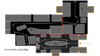
General Map of the Conservation, Invasion and Extinction Building
General Map of the Conservation Module
General Map of the Extinction Module
General Map of the Invasion Module
 
Nocturnal House: Part One

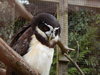
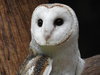
Having left the first building behind, the forest begins to get denser as guests head toward the Nocturnal House (name may be changed in the future). The first enclosures here are outdoor, being twin 40 sq. m aviaries, with mesh tops 3m above the ground, one aviary on either side of the path. These aviaries are visible through windows at eye-level for the average adult person, and the view mostly unobstructed until the back of the aviaries, which are shrouded in trees and hide away the entrances into backstage staff areas and the indoor areas inside the Nocturnal House. The aviary on the left-hand side of the entrance houses Spectacled Owls Pulsatrix perspicillata (2.0) while the right-hand aviary houses a lone female Barn Owl Tyto alba (0.1).

DSCN9609.JPG
Spectacled Owl -> image by @gulogulogulo

EEA5EAF9-5D60-48B5-8325-571B527A900E.jpeg
Barn Owl -> image by @OskarGC

Officially entering the Nocturnal House, visitors can turn to their left or right and view the indoor quarters for our two owl species, but the big draw of the first hall is the 450 sq. m enclosure in the center of the room. An elongated oval shape, this exhibit is about a 250 sq. m land/200 sq. m water surface area split, with water depths varying from 1ft to about 5.5 ft. The enclosure is viewable on all sides by way of inward-angled glass topping of 1m-high wooden log fences. The showstopper housed in this enclosure is the exciting Black Caiman Melanosuchus niger (1.1).

DSCN0228.JPG

Black Caiman -> image by @David Matos Mendes

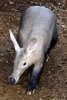
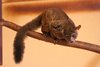
Now, venturing around the caiman enclosure can lead to one of two exhibits. Head to the right of the caimans and you come up to a window into a 200 sq. m indoor desert space. The enclosure features a pair of pre-created burrows, and various dead trees scattered throughout. This desert enclosure also features a 100 sq. m outdoor part, not visible to guests from anywhere in the zoo. This 300 sq. m total surface habitat is home to our bachelor Aardvark Orycteropus afer (1.0) and the group of Garnett's Greater Galago Otolemur garnetti (3.3) he shares with. Meanwhile, if you go left from the caimans, the window in this wall allows a semi-underwater view into an African rainforest pool. The logs and branches in the water and on the shore allow our bachelor trio of West African Dwarf Crocodiles Osteolamus tetraspis (3.0) to hide in plain sight while relaxing.

4141F1F9-EBAF-4F3C-9A03-F42DC09587C8.jpeg Possible Look of Aardvark and Galago Enclosure -> image by @Dhole dude

Aardvark; Whipsnade; 27th October 2022.JPG
Aardvark -> image by @Tim May

IMG_7468.JPG
Garnett's Greater Galago -> image by @HOMIN96

P1420868.JPG
Possible View from Front of Dwarf Croc Habitat -> image by @MagpieGoose

IMG_4523.JPG
West African Dwarf Crocodile -> image by @Andrew_NZP

Past either the Aardvark or Dwarf Croc enclosure, visitors can view either of two tanks, the one past the crocs featuring Carpenter Ants Camponotus ocreatus (colony uncounted), while the one past the aardvarks is a 150-gallon aquarium for Mexican Cave Characin Astyanax mexicanus (0.0.50). At the end of the hall are four terrariums, two to either side of the door to the next section of the Nocturnal House. On the left, the closest to the door houses an uncounted group of Madagascan Hissing Cockroaches Gromphadorhina portentosa, while further from the door on the left lives a trio of Chinese Cave Geckos Goniurasaurus hainanensis (1.2). The closest tank to the door on the right houses another uncounted group, this time of Trinidad Bat-cave Cockroaches Eublaberus distanti, while the furthest from the door houses a small group of House Centipedes Scutigera coleoptatra (0.0.6).

This ends part one of the Nocturnal House, and with that I leave the map of the Nocturnal House's first hall as well.
Screenshot 2023-07-11 2.21.43 PM.png
 

Attachments

  • 4141F1F9-EBAF-4F3C-9A03-F42DC09587C8.jpeg
    4141F1F9-EBAF-4F3C-9A03-F42DC09587C8.jpeg
    127.5 KB · Views: 481
  • DSCN0228.JPG
    DSCN0228.JPG
    101.5 KB · Views: 479
  • DSCN9609.JPG
    DSCN9609.JPG
    148.5 KB · Views: 474
  • EEA5EAF9-5D60-48B5-8325-571B527A900E.jpeg
    EEA5EAF9-5D60-48B5-8325-571B527A900E.jpeg
    105.4 KB · Views: 485
  • Aardvark; Whipsnade; 27th October 2022.JPG
    Aardvark; Whipsnade; 27th October 2022.JPG
    118.5 KB · Views: 472
  • IMG_7468.JPG
    IMG_7468.JPG
    88.2 KB · Views: 457
  • P1420868.JPG
    P1420868.JPG
    203.7 KB · Views: 483
  • IMG_4523.JPG
    IMG_4523.JPG
    123.3 KB · Views: 493
  • Screenshot 2023-07-11 2.21.43 PM.png
    Screenshot 2023-07-11 2.21.43 PM.png
    43.5 KB · Views: 503
Having left the first building behind, the forest begins to get denser as guests head toward the Nocturnal House (name may be changed in the future).
If you need any help in finding a good name for the nocturnal house. I hope that my suggestion of the name “Twilight World” will be helpful for what you have planned in mind.
 
Head to the right of the caimans and you come up to a window into a 200 sq. m indoor desert space. The enclosure features a pair of pre-created burrows, and various dead trees scattered throughout. This desert enclosure also features a 100 sq. m outdoor part, not visible to guests from anywhere in the zoo. This 300 sq. m total surface habitat is home to our bachelor Aardvark Orycteropus afer (1.0) and the group of Garnett's Greater Galago Otolemur garnetti (3.3) he shares with. Meanwhile, if you go left from the caimans, the window in this wall allows a semi-underwater view into an African rainforest pool. The logs and branches in the water and on the shore allow our bachelor trio of West African Dwarf Crocodiles Osteolamus tetraspis (3.0) to hide in plain sight while relaxing.

The sides of the caiman enclosure for these habitats have been switched, the aardvark habitat is to the left, and the dwarf crocodile to your right. This change has been made to better align with the layout I have planned.
 
Nocturnal House: Part Two
Screenshot 2023-07-11 9.22.10 PM.png
Dubbed the 'Small Mammal Hall' of the Nocturnal House, we begin as you leave the opening hall, between the terrariums. From here, you enter a natural-feeling cave tunnel, which has various peepholes in the wall to your left. These are your initial glimpses into the smaller half of a 300 sq. m lush cavern enclosure. The path curves, and suddenly two floor-to-ceiling windows of one-way glass allow a more direct view into the caverns, which link together above your head. A bachelorette group of Common Vampire Bats Desmodus rotundus (0.12) is the lone species calling these caverns home.

Having exited the Vampire Caverns, guests are now in a sizeable room, featuring a total of ten enclosures for various smaller mammals.

The first is directly in front of you, in the form of a simple 5 sq. m hollow pedestal, punched at 3-inch intervals with airholes. The entire pedestal is Plexiglass, and features a total of three small dens and a series of intertwining tunnels for our colony of Naked Mole Rats Heterocephalus glaber (14.10) to explore while guests watch these unique mammals.

From here on, the remaining nine enclosures can be found around the room, starting with six from the left of the mole rat pedestal to the door into the final hall of the Nocturnal House:
- a simple 20 sq. m habitat, replicating a North American forest, providing a home for a pair of Striped Skunks Mephitis mephitis (1.1)
- a habitat double the size of the skunk habitat, designed around the arid rock formations of the Southern United States, and home to another breeding pair, this one of Ringtails Bassariscus acutus (1.1)
000.png.jpg
Possible look of the Ringtail enclosure -> image by @Mr Gharial

- 200 sq. m of Madagascan rainforest for two species on the more shy side of the spectrum when it comes to the Nocturnal House's species, with a small group of Gray Mouse Lemurs Microcebus murinus (2.3) and a pair of Lesser Hedgehog Tenrecs Echinops telfairi (1.1)
- a 75 sq. m enclosure made to replicate the African woodlands for the arboreal White-bellied Pangolin Manis tricuspis (1.1)
- a 250 sq. m enclosure of dense rainforest, representing the Amazon, which harbors a solitary bachelor Ocelot Leopardis pardalis (1.0) in the shroud of greenery
P1250696.JPG
Possible Look of Ocelot Enclosure (besides glass back walls) -> image by @snowleopard

- an enclosure identical to that of the pangolin, this time for our pair of African Civets Civetticis civetta (1.1)

The three habitats on the opposite side of the door, continuing back to the right of where you started, are as follows:
- a 200 sq. m grove of fruit trees, providing proper nutrition for flocks of Egyptian Fruit Bat Rousettus aegypticus (4.4) and Malayan Flying Fox Pteropus vampyrus (4.4)
45706EB8-20DC-4896-9F81-E725A3472886.jpeg
Possible Fruit Bat/Flying Fox Enclosure -> image from @Pleistohorse

- a 40 sq. m enclosure representing Africa's highland forests, and providing plenty of climbing opportunities for our Cape Genets Genetta tigrina (1.1)
- a 20 sq. m Sahara replicating enclosure, bare of anything but a pair of rock shelves with various crannies for our Black-footed Cats Felis nigripes (1.1) to hide in when they need to.
IMG_3203.JPG
Possible Look of Black-footed Cat Enclosure -> image by @Coelacanth18

From most angles around the room, visitors can see the door leading to the final, and smallest, of the halls in the Nocturnal House, which will be toured later today. From there, mapping of the first geographical area begins: the District of Europe and West Asia!
IMG_3979.jpg
Possible View to End of the Second Hall -> image from @ZooElephantsMan
 

Attachments

  • Screenshot 2023-07-11 9.22.10 PM.png
    Screenshot 2023-07-11 9.22.10 PM.png
    40.6 KB · Views: 502
  • IMG_3979.jpg
    IMG_3979.jpg
    89.8 KB · Views: 461
  • 45706EB8-20DC-4896-9F81-E725A3472886.jpeg
    45706EB8-20DC-4896-9F81-E725A3472886.jpeg
    281.6 KB · Views: 477
  • IMG_3203.JPG
    IMG_3203.JPG
    135.1 KB · Views: 481
  • 000.png.jpg
    000.png.jpg
    100.9 KB · Views: 474
  • P1250696.JPG
    P1250696.JPG
    273.5 KB · Views: 481
Nice designs!

One thing I would mention with the Second nocturnal hall though is that you have to keep in mind that visitors are, well, stupid... When designing a zoo you essentially have to treat your crowd like herding animals.

In your second hall, most visitors will be quick to walk past the mole rats on the left side, as to follow the "main route". Something that I see happen very often in my home zoo (Burgers' zoo) where people often miss the flashlightfish or the cotton rats because they're in an awkward corner and not on the "main route".

If you want your visitors to see all exhibits, I would suggest creating your second room more like this:
#.png
Blocking off the quicker road, and leading them past the Ringtails, Mouse lemurs and Pangolins.

This problem doesn't exist in your first hall, as the path is split directly down the middle, so it's clear to the visitors that there are two paths to take. Of course, it seems obvious to us that the second hall also has two routes, but this is because we're looking at a map. And because we're ZooChatters, of course :D
 

Attachments

  • #.png
    #.png
    94.1 KB · Views: 481
Nice designs!

One thing I would mention with the Second nocturnal hall though is that you have to keep in mind that visitors are, well, stupid... When designing a zoo you essentially have to treat your crowd like herding animals.

In your second hall, most visitors will be quick to walk past the mole rats on the left side, as to follow the "main route". Something that I see happen very often in my home zoo (Burgers' zoo) where people often miss the flashlightfish or the cotton rats because they're in an awkward corner and not on the "main route".

If you want your visitors to see all exhibits, I would suggest creating your second room more like this:
View attachment 635904
Blocking off the quicker road, and leading them past the Ringtails, Mouse lemurs and Pangolins.

This problem doesn't exist in your first hall, as the path is split directly down the middle, so it's clear to the visitors that there are two paths to take. Of course, it seems obvious to us that the second hall also has two routes, but this is because we're looking at a map. And because we're ZooChatters, of course :D
Thanks for this advice. Probably going to end up doing that now that I see how it makes guests see everything.
 
Nocturnal House: Part 2 Update
The second hall has had a rework (enclosure sizes have changed, as well as shapes and species placement). The rework is visible in the updated map (seen below)Screenshot 2023-07-12 6.40.12 PM.png
There is no longer a split in the path, visitors now have one route through this hall. The Cape Genet has been moved to what was originally the housing of the Black-footed Cat, and the enclosure has been expanded to approx. 65 sq. m. Meanwhile the aforementioned Black-footed Cats move into what is, on the old map, the genet's 40 sq. m space.
 

Attachments

  • Screenshot 2023-07-12 6.40.12 PM.png
    Screenshot 2023-07-12 6.40.12 PM.png
    41 KB · Views: 479
Nocturnal House: Part Three

The third and final hall of the Nocturnal House is, without question, the smallest of the three.
Screenshot 2023-07-12 9.16.48 PM.png
(the red dotted line is a barrier that will prevent guests skipping out on the little box below the fox)
Guests can immediately view two small enclosures, each a wooden plank box of approximately 40 sq. m, with a double layered glass and mesh front. This glass extends to about a foot from the edge of the enclosure roof, to allow the inhabiting mammals to enjoy some fresh air... well, as fresh as it will be in this building. These two boxes house small groups of Sugar Gliders Petaurus breviceps (2.2) and Common Brushtail Possums Trichosurus vulpecula (2.2).
Beside these two boxes is an aviary covering roughly twice as much ground area, while extending nearly 4m high. The dense dark forest and mesh combine for a very good hiding place for both inhabiting bird species, being the solitary, ground-dwelling Northern Brown Kiwi Apteryx mantelli (1.0) and his roommates, a pair of Tawny Frogmouths Podargus strigoides (1.1) who spend most of their time in the branches above.
From here, you might think it's a straight shot to the exit, but there is a small enclosure, the same size as the first two in this hall, in the shadow of the aviary... though the room is almost entirely shadow. The exhibit here is, much like the other two, rather densely planted, allowing for the inhabitants, this time a pair of Pygmy Slow Loris Nycticebus pygmaeus (1.1), to hide away when they need to.
The final two enclosures are on either side of the 'straight shot' to the exit of the building, each being 100 sq. m of indoor space, with an additional 50 sq. m of outdoor space that is not viewable by visitors. The exhibit on your left is representative of the Kalahari region of Africa, featuring artificial termite mounds and pre-made burrows for our solitary male Aardwolf Proteles cristata (1.0) by the name of 'Apollo'. Meanwhile, the exhibit on your right is more representative of the European or North American temperate forests, which fits the pair of Red Foxes Vulpes vulpes (1.1), our male 'Zorro' and female 'Vixen,' very well.

And with that, you exit the Nocturnal House into daylight, and head off toward the first geographically themed zone: the District of Europe and West Asia. Posting from here on out might be a little slower than it has been, as I will have to create the maps, but for now here's an (unlabelled) map of the Nocturnal House.
Screenshot 2023-07-12 9.47.55 PM.png
 

Attachments

  • Screenshot 2023-07-12 9.16.48 PM.png
    Screenshot 2023-07-12 9.16.48 PM.png
    23.5 KB · Views: 480
  • Screenshot 2023-07-12 9.47.55 PM.png
    Screenshot 2023-07-12 9.47.55 PM.png
    28.1 KB · Views: 485
Back
Top