Kakapo's Photographic Collection of Endangered Species

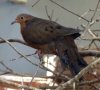
SOCORRO DOVE - Zenaida graysoni
Zenaida graysoni 2 (20-9-18 Burgers Zoo).jpg
Zenaida graysoni 3 (24-9-18 Artis).jpg

Photos taken at: Burgers zoo, Netherlands and Artis Royal Zoo, Netherlands

Short taxonomy: Aves > Columbiformes > Columbidae

Native range: Socorro Island, Revillagigedo islands, Mexico

Ex-situ frequence: Common

Danger factors: Mainly predation by introduced feral cats

Other comments: London Zoo was the first to breed the species after its extinction in nature, in 2006. The species is as easy to breed as other related species and soon the stock increased and many holders have them. The species has still not been released into the wild as the cats, as well as the domestic mice, are not still erradicated from the island.


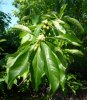
FRANKLIN TREE - Franklinia alatamaha
Franklinia alatamaha (24-7-19 Arnold Arboretum).jpg

Photo taken at: Arnold Arboretum, Massachusetts, USA

Short taxonomy: Magnoliopsida > Ericales > Theaceae

Native range: Alatamaha river valley, Georgia, USA

Ex-situ frequence: Rare

Danger factors: The extinction in nature is attributed to the dispersal of a fungal disease spreaded by cotton crops

Other comments: The only species of its genus, this tree is very showy and have fragrant big flowers, what leaded to be cultivated widely outside native range. Thanks to this, the species was saved. Probably if the tree was not showy, it would be completely extinct now. All specimens are descendants from the ones cultivated by the discoverers of the species in their botanical garden in Philadelphia. The species is not easy to cultivate as it have specific requeriment of soil and humidity, so it's not commonly seen in gardens.

With these two, I completed the Extinct in the Wild category. Next comes the Critically Endangered species.
 

Attachments

  • Zenaida graysoni 2 (20-9-18 Burgers Zoo).jpg
    Zenaida graysoni 2 (20-9-18 Burgers Zoo).jpg
    408.9 KB · Views: 44
  • Zenaida graysoni 3 (24-9-18 Artis).jpg
    Zenaida graysoni 3 (24-9-18 Artis).jpg
    203.7 KB · Views: 46
  • Franklinia alatamaha (24-7-19 Arnold Arboretum).jpg
    Franklinia alatamaha (24-7-19 Arnold Arboretum).jpg
    301.4 KB · Views: 43
These extinct in the wild species are very needed of ex-situ populations, but the next ones also need to be widely represented in zoos and botanical gardens, as they're in the brink of extinction. Let's know the Critically Endangered species:

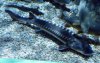
ADRIATIC STURGEON - Acipenser naccarii
Acipenser naccarii 1.jpg

Photo taken at: Sevilla aquarium, Spain

Short taxonomy: Osteichthyes > Acipenseriformes > Acipenseridae

Native range: Adriatic sea and the big rivers that feed it

Ex-situ frequence: Rare

Danger factors: Water contamination by industrial waste and river constriction by dams, also fishing of inmature individuals before they can breed.

Other comments: The species breed in fish farms and other facilities and there is a program that includes 25 adult fishes in breeding condition from which several juveniles were obtained and some released into the wild, however despite these efforts the breeding in the wild has not been observed since many years ago. The IUCN said that it's possibly functionally extinct in the wild.

SUNSET ALOE - Aloe dorotheae
Aloe dorotheae.jpg

Photo taken at: my garden, Zaragoza

Short taxonomy: Liliopsida > Asparagales > Xanthorrhoeaceae

Native range: Tanzania, in only two localities near Handeni

Ex-situ frequence: Rare

Danger factors: Overharvesting of the plants for medicinal purposes

Other comments: The species is showy due to the bright red tune that takes its foliage under dry/cold condirtions. That makes it attractive for collectors. It's well known in cultivation and have a secure population outside of native range, the species produces offsetts frequently, so the recollection for international plant collecting is not a threat. In the wild, the fact of growing in steep cliffs also protects the populations by making the plants not very accessible. There are 26 species of Aloe native to Tanzania and 16 of them are endemic, including this one.
 

Attachments

  • Acipenser naccarii 1.jpg
    Acipenser naccarii 1.jpg
    391.4 KB · Views: 38
  • Aloe dorotheae.jpg
    Aloe dorotheae.jpg
    65.3 KB · Views: 39
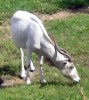
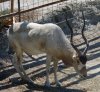
ADDAX - Addax nasomaculatus

Addax nasomaculatus 1.jpg
Addax nasomaculatus 3.JPG

Photos taken at: Tierpark Friedrichsfelde, Berlin, Germany and Oasys Mini Hollywood, Almeria, Spain

Short taxonomy: Synapsida > Artiodactyla > Bovidae

Native range: In the past, widely distributed in all south of Sahara desert. Nowadays resticted three small relict widely separated nuclei (in Nigeria, Chad and Mauritania), and reintroduced in Morocco and Tunisia.

Ex-situ frequence: Common

Danger factors: Overhunting for meat is what wiped out the species from many countries in the past. In a lesser exent, droughts, roadkills and habitat destruction by human settlements.

Other comments: While there are less than 500 individuals in the wild, there are hundreds of addax in zoos of the world, and thousands of them in private hands and ranches in the Middle East and North America. Some reintroduction programs were successful, while others are ongoing.
 

Attachments

  • Addax nasomaculatus 1.jpg
    Addax nasomaculatus 1.jpg
    112.4 KB · Views: 43
  • Addax nasomaculatus 3.JPG
    Addax nasomaculatus 3.JPG
    150.8 KB · Views: 37
LAYSAN'S TEAL - Anas laysanensis

Anas laysanensis 2.jpg

Photo taken at: Liberec zoo, Czech republic

Short taxonomy: Aves > Anseriformes > Anatidae

Native range: Laysan island, Hawaii Islands

Ex-situ frequence: Rare

Danger factors: The species was very close of extintion in the past due to random catastrophes. First was the rabbits, introduced to the island, that depleted resources. In 1987 the rabbits were succesfully erradicated from the island and population recovered to 500 individuals, but then in 1993 was a severe drought and disease spread. The species again recovered from it but then in 2008 an outbreak of avian botulism killed about half of the population. Then in 2011 the population was again decimated to the half due to a tsunami originated by an earthquake in Japan.

Other comments: The species was released successfully from Laysan to Midway Atoll and Kure and Lisianski islands, ensuring a growing and breeding population safely appart. Many actions have been made for recover the species population, including removal of exotic grasses and restoration of native ones, vaccination of sick birds, creation of wetlands, removal of duck carcasses for avoid disease spreading, and installation of snow fences for reduce the soil movement and restoration of native vegetation.


MEDUSA'S HEAD CACTUS - Astrophytum caput-medusae
Astrophytum caput-medusae en flor 2.jpg
Astrophytum caput-medusae flor.jpg

Photos taken at: a private collection in Zaragoza, Spain

Short taxonomy: Magnoliopsida > Caryophyllales > Cactaceae

Native range: Nuevo Leon, Mexico

Ex-situ frequence: Very rare

Danger factors: Illegal recolection for plant trade and grazing by goats

Other comments: The species was discovered as recently as 2003 (I remember well the news about it!), and being so drastically different from all other cactus known, it was put in a new genus, Digitostigma. Further analysis in 2006 realised that is not a new genus but an extremely derived morphology of a known genus, Astrophytum. The superexciting discovery leaded to many collectors trying to harvest the species from habitat, what decimated quickly the population. Fortunately it grows in steep barely accesible habitats and that saved the species. Now the plant is enough commonly propagated in cultivation as for being much easier to obtain from propagated plants than to the wild, so the danger of recollection diminished a lot. The species, despite being extremely spectacular and very wished for cacti collectors due to very unique morphology and appareance, is not common in collections because the plant is difficult to grow, especially sensitive to excess of water and prone to root rot (much more than the other Astrophytum species). Still no actions have been taken for diminishing the goat grazing, that is currently the main threat.
 

Attachments

  • Anas laysanensis 2.jpg
    Anas laysanensis 2.jpg
    69.9 KB · Views: 42
  • Astrophytum caput-medusae en flor 2.jpg
    Astrophytum caput-medusae en flor 2.jpg
    281.6 KB · Views: 43
  • Astrophytum caput-medusae flor.jpg
    Astrophytum caput-medusae flor.jpg
    195.4 KB · Views: 40
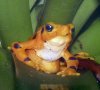
PANAMANIAN GOLDEN FROG - Atelopus zeteki

Atelopus zeteki.jpg

Photo taken at: Bronx zoo, New York, USA

Short taxonomy: Amphibia > Anura > Bufonidae

Native range: Panama

Ex-situ frequence: Rare

Danger factors: Chytidriomycosis (fungal disease that is whipping out several populations of amphibians). In a lesser exent, habitat loss and contamination.

Other comments: The species was last seen in the wild by the mythinal David Attemborough in 2006 and filmed. The specimens found here were collected for start a captive breeding program that continues today. The location was kept in secret for avoid poaching of the possibly remaining toads. The species is found in various North American collections that participate in the breeding program, but is almost absent from zoos outside North America. The individuals obtained from captive breeding were not released into the wild because the fungal disease threat has not been neutered.
 

Attachments

  • Atelopus zeteki.jpg
    Atelopus zeteki.jpg
    233.7 KB · Views: 43
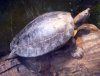
PAINTED TERRAPIN - Batagur borneoensis

Batagur borneoensis 2.jpg
Batagur borneoensis kiss.jpg

Photos taken at: Bronx zoo, New York, USA and Artis royal zoo, Netherlands

Short taxonomy: Sauropsida > Chelonia > Geoemydidae

Native range: near shore in Peninsular Malaysia, north Sumatra and western Borneo

Ex-situ frequence: Common

Danger factors: Illegal harvest of both adults and eggs for human consumption, sand mining

Other comments: The species is strictly protected and there are nesting patrols that make the eggs hatch in a secure place and release the hatchlings in original habitat. The conservation measures of this species are not so deep studied and further investigation is needed for know the effectivity of them in some areas.


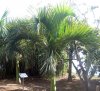
ANEYTIUM PALM - Carpoxylon macrospermum
Carpoxylon macrospermum.jpg

Photo taken at: Palmetum Tenerife, Canary Islands, Spain

Short taxonomy: Liliopsida > Arecales > Arecaceae

Native range: southern Vanuatu islands

Ex-situ frequence: Very rare

Danger factors: Logging both for wood harvest as for agricultural expansion wiped out the palm from native range and continues today. Besides that, it's very probably that the palm had an unknown supposed specific animal pollinator now extinct, as none of the native animals on the native range of the palm seems to act as pollinator of it.

Other comments: The palm was discribed in 1875 thanks to some fruits collected and left in the London Natural History Museum. The alive palm was not found until 112 years later! Wild palms was almost vanished and the palms of this species present in Vanuatu islands are not wild but rather cultivated in parks and gardens.
 

Attachments

  • Batagur borneoensis 2.jpg
    Batagur borneoensis 2.jpg
    272 KB · Views: 43
  • Batagur borneoensis kiss.jpg
    Batagur borneoensis kiss.jpg
    237.5 KB · Views: 37
  • Carpoxylon macrospermum.jpg
    Carpoxylon macrospermum.jpg
    107.6 KB · Views: 42
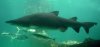
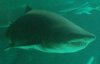
SAND TIGER SHARK - Carcharias taurus

Carcharias taurus 2.jpg
Carcharias taurus.jpg

Photos taken at: Madrid zoo-aquarium, Spain and La Rochelle Aquarium, France

Short taxonomy: Chondrichthyes > Lamniformes > Odontaspididae

Native range: near shore in Atlantic North America, Atlantic southern South America, Mediterranean, all African coasts, Red Sea, all of southern Asia, whole coast of Australia

Ex-situ frequence: Very common

Danger factors: Intentional fishing for meat and fins (still very strong despite being prohibited), bycatch fishing and tangling in nets, active prosecution and killing with spears in Australia, Brazil, Mediterranean, that whiped out the species from most of their range. In a much lesser exent, pollution, fish farming, and global warming that lead to coral reef bleaching.

Other comments: Despite being so rare nowadays in the wild, the sand tiger shark is the most common large sharks exhibited in aquarium worldwide. It's very docile temperament, fearsome appareance and easiness to care make it the ideal species of shark for impressionate child and adult aquarium visitors. This shark was the first shark species to be protected by law. The species breed well in captivity, but have low reproductive rate.
 

Attachments

  • Carcharias taurus 2.jpg
    Carcharias taurus 2.jpg
    64 KB · Views: 43
  • Carcharias taurus.jpg
    Carcharias taurus.jpg
    72.3 KB · Views: 42
SLENDER-SNOUTED CROCODILE - Crocodylus cataphractus

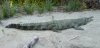
Crocodylus cataphractus.jpg

Photo taken at: San Diego zoo, California, USA

Short taxonomy: Sauropsida > Crocodilia > Crocodylidae

Native range: wide part of central and western tropical Africa

Ex-situ frequence: Common to Rare

Danger factors: In the past, mainly direct hunt for skin reduced severely the population. Nowadays, small-scale fisheries (that implies disminution of preys and occasional tangling in nets), as well habitat destruction for implement of plantations and settlements, are the main reasons that don't allow populations to recover.

Other comments: The species was not targeted for skin until the Nile crocodyle was wiped out by many sympatric areas, leading hunters to change the vanished Nile crocs by this smaller one. Now the own rarity of the species made the skin market disappear, but the species is still sometimes hunted for bushmeat. The politic instability and several local wars in the area where this animal lives, don't allow a proper study about it's ecology, population and conservation needs, resulting in this being the species of crocodilian whose ecology is least known. For example, the exent of impact of each threat for the species is totally unknown.


WADE'S PITOGO - Cycas wadei

Cycas wadei.jpg

Photo taken at: Prague botanical garden, Czech republic

Short taxonomy: Cycadopsida > Cycadales > Cycadaceae

Native range: Culion island, Philippines

Ex-situ frequence: Rare

Danger factors: Habitat destruction (grasslands) both due to expansion of human settlements and to burning for promote fresh new grass for cattle

Other comments: All plants of this species belongs to a single subpopulation, that counts with about 500 mature individuals. Seeds and seedlings of this species are often collected and sold in local fairs.
 

Attachments

  • Crocodylus cataphractus.jpg
    Crocodylus cataphractus.jpg
    196.6 KB · Views: 42
  • Cycas wadei.jpg
    Cycas wadei.jpg
    150.4 KB · Views: 44
Last edited:
SANTA CATALINA ISLAND RATTLESNAKE - Crotalus catalinensis

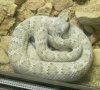
Crotalus catalinensis.jpg

Photo taken at: San Diego zoo, California, USA

Short taxonomy: Sauropsida > Squamata > Viperidae

Native range: Santa Catalina island, Mexico

Ex-situ frequence: Very rare

Danger factors: Illegal collection, direct killing, decline of it's main prey source. In the past, also predation by feral cats, but those were erradicated from the island in 2002.

Other comments: There are 10 reptile species in Santa Catalina island, and 7 of them are endemic. The isolation of this rattlesnake in the island made it evolve in a world with no predators, and as a consequence, the species have a more mild and docile temperament than other rattlesnakes, plus often rest exposed in low bushes instead hiding under logs or rocks. These ethological characteristicis leaded to be easier to kill or poach than other rattlesnakes, thus their population is in steep decline.
 

Attachments

  • Crotalus catalinensis.jpg
    Crotalus catalinensis.jpg
    83 KB · Views: 43
CENTRAL AMERICAN RIVER TURTLE - Dermatemys mawii

Dermatemys mawii 1 (17-9-21 Haus des Meeres).jpg

Photo taken at: Haus des Meeres, Austria

Short taxonomy: Sauropsida > Chelonia > Dermatemydidae

Native range: Central America

Ex-situ frequence: Very rare

Danger factors: The biggest threat is harvesting for its meat. Also habitat degradation but for this species,this danger is much smaller than the direct hunt.

Other comments: Despite selling these turtles or its parts is prohibited since 1975, there is no inforcement of this law and the species is still captured with nets, by free diving or with harpoons. The species is no more sold openly in public markets, but still its meat is frozen and available under request. This turtle is considered a living fossil and its extinction, that currently seems unavoidable, would mean the extinction of a whole testudine family, as this is the sole species of the family Dermatemydidae. Breeding colonies/couples exists at various facilities, most of them within its native countries.

(NO COMMON NAME) - Gadoria falukei
Gadoria falukei (24-7-21 Parador).jpg

Photo taken at: (best kept secret)

Short taxonomy: Magnoliopsida > Lamiales > Scrophulariaceae

Native range: Sierra de Gador, Almeria, Spain

Ex-situ frequence: Extremely rare (the one depicted above is very probably the only individual outside native range)

Danger factors: Grazing by Spanish ibex (Capra pyrenaica), an animal that is not native in these parts of the mountain. (Faluke comm. pers.)

Other comments: This plant was discovered in 2012 as new for science by my dear friend Faluke, an exceptional person that documented photographically the wildlife of Almeria like no one did before. Starting from zero, this handsome man entered in certain forums where I would identify the creatures he find, and for my surprise, his findings include many extremely wonderful wished rarities of very spectacular insects, either already known or totally unknown for me. He being rather an entomologist, the discovery of a new plant is even more surprising. But is not only a completely new species fo plant what he discovered, but a whole new genus, whose relationships lie close to Asarina and a bit more far with genus such as Linaria, Kicxkia and Cymbalaria. The plant reached soon a strong national interest and there are several articles in various blogs and websites as well as in press about this species. No measures have been taken by diminishing its only threat, the grazing by ibex.
 

Attachments

  • Dermatemys mawii 1 (17-9-21 Haus des Meeres).jpg
    Dermatemys mawii 1 (17-9-21 Haus des Meeres).jpg
    400.8 KB · Views: 44
  • Gadoria falukei (24-7-21 Parador).jpg
    Gadoria falukei (24-7-21 Parador).jpg
    96.1 KB · Views: 40
(NO COMMON NAME) - Gadoria falukei
View attachment 528672

Photo taken at: (best kept secret)

Short taxonomy: Magnoliopsida > Lamiales > Scrophulariaceae

Native range: Sierra de Gador, Almeria, Spain

Ex-situ frequence: Extremely rare (the one depicted above is very probably the only individual outside native range)

Danger factors: Grazing by Spanish ibex (Capra pyrenaica), an animal that is not native in these parts of the mountain. (Faluke comm. pers.)

Other comments: This plant was discovered in 2012 as new for science by my dear friend Faluke, an exceptional person that documented photographically the wildlife of Almeria like no one did before. Starting from zero, this handsome man entered in certain forums where I would identify the creatures he find, and for my surprise, his findings include many extremely wonderful wished rarities of very spectacular insects, either already known or totally unknown for me. He being rather an entomologist, the discovery of a new plant is even more surprising. But is not only a completely new species fo plant what he discovered, but a whole new genus, whose relationships lie close to Asarina and a bit more far with genus such as Linaria, Kicxkia and Cymbalaria. The plant reached soon a strong national interest and there are several articles in various blogs and websites as well as in press about this species. No measures have been taken by diminishing its only threat, the grazing by ibex.

I found a reference to the common name for this species being Gador's Snapdragon.
 
Thanks. Sadly, too late to edit for me.

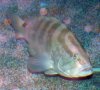
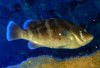
NASSAU GROUPER - Epinephelus striatus

Epinephelus striatus 2.jpg
Epinephelus striatus.jpg

Photos taken at: Sevilla aquarium, Spain

Short taxonomy: Osteichthyes > Perciformes > Serranidae

Native range: Caribbean sea

Ex-situ frequence: Rare

Danger factors: Mainly overfishing, overall in the spawning aggregations of the species. In a lesser exent, coral reef bleaching, decline of long-spined urchins that lead to overgrowth of algae that lead to coral dying, and competence for shelters with introduced lionfish.

Other comments: The species is protected, subject to fishing regulations and mostly banned to fishing in spawning areas, however there is little to no inforcement of these laws.
 

Attachments

  • Epinephelus striatus 2.jpg
    Epinephelus striatus 2.jpg
    248.1 KB · Views: 40
  • Epinephelus striatus.jpg
    Epinephelus striatus.jpg
    259.5 KB · Views: 41
RUFOUS-FRONTED LAUGHINGTHRUSH - Garrulax rufifrons

Garrulax rufifrons.jpg

Photo taken at: Plzen zoo, Czech republic

Short taxonomy: Aves > Passeriformes > Timaliidae

Native range: Java

Ex-situ frequence: Very rare

Danger factors: Overharvesting for the cage bird trade

Other comments: The Cikanaga Wildlife Center runs a captive breeding program and its the holder of which may be the last individual of subspecies slamatensis in the whole world, as said subspecies is probably extinct in the wild. The species disappeared from all the easily accesible areas of Java due to trapping, so it only thrives now in difficult to reach places.


BOTTLE PALM - Hyophorbe lagenicaulis
Hyophorbe lagenicaulis (14-11-06 Hsuan-tsang temple, Taiwan).jpg

Photo taken at: Hsuang-tsang temple, Taiwan

Short taxonomy: Liliopsida > Arecales > Arecaceae

Native range: Round Island, Mauritius

Ex-situ frequence: Common

Danger factors: Grazing by introduced rabbits and goats, that eliminate seedlings

Other comments: Goats and rabbits are now erradicated from the island, that means that the palm is since recently able to regenerate and the steep decline in population finished.
 

Attachments

  • Garrulax rufifrons.jpg
    Garrulax rufifrons.jpg
    65.7 KB · Views: 44
  • Hyophorbe lagenicaulis (14-11-06 Hsuan-tsang temple, Taiwan).jpg
    Hyophorbe lagenicaulis (14-11-06 Hsuan-tsang temple, Taiwan).jpg
    138.8 KB · Views: 43
Last edited:
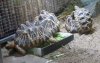
BURMESE STAR TORTOISE - Geochelone platynota
Geochelone platynota.jpg

Photo taken at: Cologne zoo, Germany

Short taxonomy: Sauropsida > Chelonia > Testudinidae

Native range: Myanmar

Ex-situ frequence: Common to Rare

Danger factors: Excessive harvest of juveniles from local and international pet trade (especially coming from China) and of adults for meat and traditional medicine beliefs.

Other comments: The turtle was harvested since ever, but a high increase in the pet supply demand from China in the 1990's made the wild populations to be almost depleted. The disappareance of wild populations leaded to strong decrease in harvest again. The populations are again increasing but the species is still so rare that a recent survey seeking for this species during 400 hours using especially trained dogs, only found 5 individuals in the whole native range. The species breeds quite well in captivity (and the two individuals in upper right part of my photo demonstrates it :P ) but the reintroduction programs must be strictly vigilated because risk of poaching: In 2007 the species was reintroduced to Minsontaung Wildlife Sanctuary but all individuals was poached or disappeared within six months.
 

Attachments

  • Geochelone platynota.jpg
    Geochelone platynota.jpg
    431.6 KB · Views: 43
EASTERN GORILLA - Gorilla beringei
Gorilla beringei graueri.jpg

Photo taken at: Antwerpen zoo, Belgium

Short taxonomy: Synapsida > Primates > Pongidae

Native range: eastern Congo

Ex-situ frequence: Extremely rare (only the individual depicted in the photo)

Danger factors: Poaching (completely forbiden but still strong), mainly for their meat. In a lesser exent, habitat degradation/destruction (mainly by illegal mining, but also by agricultural expansion and charcoal harvest), armed groups, war, rebels and politic instability (that lead both to habitat destruction and to easiness to obtain fire arms for poach gorillas), and transmision of diseases by human visitors.

Other comments: While one of the two subspecies (the most endangered one) is extremely famous and support an eco-tourism net that provides economic incoming to the country, the other subspecies is almost ignored by general media and people. The high effort in conservation of mountain subspecies meant that it's population is slowly increasing, but for the other subspecies the population is decreasing.


GOLDEN PARROT'S BEAK - Lotus maculatus
Lotus maculatus 1.jpg
Lotus maculatus 2.jpg

Photos taken at: my garden, Zaragoza, Spain

Short taxonomy: Magnoliopsida > Fabales > Fabaceae

Native range: Teneriffe island, Canary Islands, Spain

Ex-situ frequence: Common

Danger factors: Mainly grazing by introduces rabbits, tough these were successfully erradicated from the area where this plant grows. Still the plant is threatened by accidental destruction by hikers and fishermen, illegal collecting and overall, competence with ruderal (mainly non-native) nitrophile plants that are beneficiated from the excess of gull excrements.

Other comments: In the recent past it had two subpopulations, but one of them in the Anaga mountain seems to have been completely depleted since 2004. The remaining population lies within a protected space but it don't count with more than about 30 individuals and the zone where they grow is easily accesible. The plant rarely reproduces sexually, what lead to a poor genetic diversity.
 

Attachments

  • Gorilla beringei graueri.jpg
    Gorilla beringei graueri.jpg
    391.3 KB · Views: 42
  • Lotus maculatus 1.jpg
    Lotus maculatus 1.jpg
    113.2 KB · Views: 40
  • Lotus maculatus 2.jpg
    Lotus maculatus 2.jpg
    60.9 KB · Views: 41
GREATER BAMBOO LEMUR - Hapalemur simus

Hapalemur simus 1.jpg
Hapalemur simus 2.jpg

Photos taken at: Cologne zoo, Germany

Short taxonomy: Synapsida > Primates > Lemuridae

Native range: eastern Madagascar

Ex-situ frequence: Rare

Danger factors: Destruction of the montane rainforest with bamboo thickets that this species need for survive, via logging and burning for make arable land and extend cultivation. In a lesser exent, mining, direct hunt and global warming.

Other comments: Slash-and-burn agriculture is one of the most destructive practices of mankind ever, and sadly is quite frequent in Madagascar, more than in any other country in the world. The species is subject to strong conservation efforts run mainly by the Aspinall Foundation and in less degree by some smaller institutions. The combined efforts of all these conservation projects reached the very meritable success of multiplying the total wild population of this species for 10 within only a decade.
 

Attachments

  • Hapalemur simus 1.jpg
    Hapalemur simus 1.jpg
    257.1 KB · Views: 38
  • Hapalemur simus 2.jpg
    Hapalemur simus 2.jpg
    280.4 KB · Views: 43
ELONGATED TORTOISE - Indotestudo elongata
Indotestudo elongata (6-8-17 Zoo Köln).jpg

Photo taken at: Cologne zoo, Germany

Short taxonomy: Sauropsida > Chelonia > Testudinidae

Native range: South east Asia from northern India to Vietnam and continental Malaysia

Ex-situ frequence: Common

Danger factors: Massive harvest for its meat, especially for export to China. The species is also harvested for it's shell that are wrongly believed in traditional Chinese medicine to have aphrodisiac power.

Other comments: In Thailand there is a village called Ban Kok where these tortoises live together with people. The species breeds well in captivity. The Turtle Conservation Centre in Vietnam, amongst other institutions, holds confiscated elongated tortoises from illegal trade and rehabilitate them for release into the wild or keep them for breeding program.


SIERRA MADRE PINCUSHION CACTUS - Mammillaria laui
Mammillaria laui dasyacantha (7-5-09 Manuel M. Ramos).jpg

Photo taken at: my garden, Zaragoza, Spain

Short taxonomy: Magnoliopsida > Caryophyllales > Cactaceae

Native range: Tamaulipas, Mexico

Ex-situ frequence: Common

Danger factors: Threats for this species are not very studied. The species was assesed as Critically Endangered based mainly in the very small range. Harvest of individuals for the horticultural trade may be the most important threat.

Other comments: The species is divided in three overlapping subspecies that grows at different altitudinal ranges. The subspecies illustrated here, dasyacantha, is the most high altitude one. It forms colonies so it's very easy to reproduce asexually, it's a classical common cactus in cultivation, easy to grow.
 

Attachments

  • Indotestudo elongata (6-8-17 Zoo Köln).jpg
    Indotestudo elongata (6-8-17 Zoo Köln).jpg
    282.7 KB · Views: 40
  • Mammillaria laui dasyacantha (7-5-09 Manuel M. Ramos).jpg
    Mammillaria laui dasyacantha (7-5-09 Manuel M. Ramos).jpg
    88.8 KB · Views: 42
MOUNTAIN CHICKEN - Leptodactylus fallax
Leptodactylus fallax (27-9-18 Zoo Antwerpen).jpg
Leptodactylus fallax 2 (16-9-21 Tiergarten Schönbrunn).jpg

Photos taken at: Antwerpen zoo, Belgium and Tiergarten Schönbrunn, Austria

Short taxonomy: Amphibia > Anura > Leptodactylidae

Native range: Dominica and Montserrat (Caribbean islands)

Ex-situ frequence: Common

Danger factors: Formerly habitat destruction, but since 2002 the very main threat is chytidriomycosis (fungal disease that is whispering amphibians from whole world)

Other comments: Probably already extinct in Montserrat, the few remaining wild individuals (less than 200) are concentrated in Dominica. Many zoos are involved in captive breeding programs for this species. Some of the captive-breeding obtained individuals were returned to Montserrat and are living in an enclosure in semi-wild conditions. Until recently, the meat of the legs of this frog was the Dominica's national dish (hence the name of "mountain chicken", nicknamed for its flavour), but with the current danger status for the species hunting is banned since 2003.
 

Attachments

  • Leptodactylus fallax (27-9-18 Zoo Antwerpen).jpg
    Leptodactylus fallax (27-9-18 Zoo Antwerpen).jpg
    215 KB · Views: 40
  • Leptodactylus fallax 2 (16-9-21 Tiergarten Schönbrunn).jpg
    Leptodactylus fallax 2 (16-9-21 Tiergarten Schönbrunn).jpg
    521.3 KB · Views: 41
CELEBES CRESTED MACAQUE - Macaca nigra
Macaca nigra 2 (26-9-18 Pairi Daiza).jpg

Photo taken at: Pairi Daiza, Belgium

Short taxonomy: Synapsida > Primates > Cercopithecidae

Native range: Tip of the northern arm of Sulawesi. Introduced in the nearby Bacan, Indonesia.

Ex-situ frequence: Common

Danger factors: Main threat is hunting for meat. Dead macaques or parts of them are seen very often in the main markets in north Sulawesi. The species is also hunted because is seen as a crop pest. The species also suffer habitat destruction due to agricultural expansion, mining and forest fires.

Other comments: There is a conservation project called Selamatkan Yaki ("save Yaki", being Yaki the local name of this monkey), that involve local groups and conservation associations in Thailand, Germany and USA. Most zoos keeping captive breeding programs for this species are in Europe. In 2006 was created the "Macaca nigra project", carried by an association between the German Primate Center and Bogor Agroinstitute, that promote conservation of this species.

CONICAL TURK'S HEAD CACTUS - Melocactus conoideus
Melocactus conoideus (30-7-19 Botánico de Bronx).jpg

Photo taken at: Bronx botanical garden, New York, USA

Short taxonomy: Magnoliopsida > Caryophyllales > Cactaceae

Native range: Bahia, Brazil

Ex-situ frequence: Rare

Danger factors: Habitat destruction due to quarrying activities and urban expansion

Other comments: The species only grows in quartz soils and hence the quartz gravel extraction affect it very directly. In 1989 it was believed to be almost completely extinct, depleted from Serra do Periperi that is the type locality. Fortunately in 2002 it was found another population, adjacent to the first one, very healthy with several individuals. The new place is officially protected, but this didn't deterred the quartz gravel extraction that moved to this new place and depleted the once healthy population. The species is cultivated in worldwide collections but not subject to reproduction and reintroduction programs, is a not easy to grow species as it need a delicate and precise annual regime of water and temperatures, for this reason is not commonly seen in collections.

 

Attachments

  • Macaca nigra 2 (26-9-18 Pairi Daiza).jpg
    Macaca nigra 2 (26-9-18 Pairi Daiza).jpg
    290 KB · Views: 42
  • Melocactus conoideus (30-7-19 Botánico de Bronx).jpg
    Melocactus conoideus (30-7-19 Botánico de Bronx).jpg
    274 KB · Views: 40
Back
Top