ZSL London Zoo ZSL London Zoo News 2022

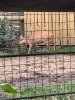
He came out for 3 minutes today the duiker.. unsure how many more their are within the group
Definitely a bachelor giraffe herd would be good..
i did enjoy the houses of animals which were definitely Better than any previously at whipsnade .. the butterfly tent was the only thing I would say needs to be bigger and as was crowded today ..
 

Attachments

  • 1F00835C-6F0A-400E-9D9A-B2299DC769E1.jpeg
    1F00835C-6F0A-400E-9D9A-B2299DC769E1.jpeg
    153.3 KB · Views: 12
He came out for 3 minutes today the duiker.. unsure how many more their are within the group
Definitely a bachelor giraffe herd would be good..
i did enjoy the houses of animals which were definitely Better than any previously at whipsnade .. the butterfly tent was the only thing I would say needs to be bigger and as was crowded today ..

Think there are two duikers, but one of them never shows at all and the other very occasionally steps out.
 
...I would favour bachelor male giraffe herd going forward...
Definitely a bachelor giraffe herd would be good...
The ZSL decided some years ago that male giraffes would no longer be kept in the old Giraffe House so, without a change of policy, a bachelor giraffe herd will not happen.
He came out for 3 minutes today the duiker.. unsure how many more their are within the group...
According to the most recent ZSL Animal Inventory, there is now only one red forest duiker at the zoo.
 
Further to Tim’s above statement, the decision taken based on the stables being unsafe to house a breeding Bull giraffe. I imagine modern zoo practices would have also played a part in this decision. God knows how they managed in the past!

So, for the foreseeable, it’s hybrids or nothing. A shame as a baby giraffe at London always made the news headlines and they were very successful breeders, more so than Whipsnade I believe.
 
Further to Tim’s above statement, the decision taken based on the stables being unsafe to house a breeding Bull giraffe. I imagine modern zoo practices would have also played a part in this decision. God knows how they managed in the past!

So, for the foreseeable, it’s hybrids or nothing. A shame as a baby giraffe at London always made the news headlines and they were very successful breeders, more so than Whipsnade I believe.
The main issue with keeping male giraffes was, I believe, the lack of remote controlled doors.

London Zoo's Giraffe House has held giraffes almost continuously since 1837 (apart from a short gap between 1892 and 1895 when the zoo was without giraffes). The world's first ever captive bred giraffe was born in this building in 1839 and numerous others have been successfully bred there since then.
 
Safety - the gates have to be operated manually and bull giraffes are going to be bigger and potentially more dangerous than their fellows.

There have been many instances in Zoos worldwide where bulls have been crushed by remote controlled doors. It's great that London have identified this and have decided to focus on a smaller all female herd instead.
 
I do wonder what the future of London zoo will be when these animals cease .. like the gorilla mother daughter and mother son.. don’t they need a male soon?

A Silverback is thought to bring stability to a troop, though the priority has been to get the juveniles to the age of independence rather than risk bringing in a new male. London Zoo have had the worst luck with gorilla and the last thing they need is a PR debacle.

Now Alika is seven and Gernot is six; they could look at shifting Gernot into a bachelor troop with other young males. He’s still 4-6 years away from being able to command his own troop and retaining him at London is simply delaying his mother (aged 29) and half sister from breeding again.

They could retain Alika to breed in the troop, though this would put Effie at a social disadvantage. Mjukuu has traditionally been the favourite female of previous silverbacks and would have a closer bond within the mother-daughter dyad she holds with Alika.
 
A Silverback is thought to bring stability to a troop, though the priority has been to get the juveniles to the age of independence rather than risk bringing in a new male. London Zoo have had the worst luck with gorilla and the last thing they need is a PR debacle.

Now Alika is seven and Gernot is six; they could look at shifting Gernot into a bachelor troop with other young males. He’s still 4-6 years away from being able to command his own troop and retaining him at London is simply delaying his mother (aged 29) and half sister from breeding again.

They could retain Alika to breed in the troop, though this would put Effie at a social disadvantage. Mjukuu has traditionally been the favourite female of previous silverbacks and would have a closer bond within the mother-daughter dyad she holds with Alika.

A new silverback has been recommended and is due.
 
Now Alika is seven and Gernot is six; they could look at shifting Gernot into a bachelor troop with other young males. He’s still 4-6 years away from being able to command his own troop and retaining him at London is simply delaying his mother (aged 29) and half sister from breeding again.

I'm wondering if Gernot might join similar-aged young males Shufai & Lope at Twycross when their new gorilla exhibits are completed, as bachelor quarters are planned. The problem is it that won't be for a while yet...seems the most logical as if not there, he would need to go abroad possibly.
 
Last edited:
They already have exactly these species( W.c Mangabey-breeding group, Diana Monkey- aged non-breeding pair(?), in adjacent exhibits to the gorillas.
I know that ..., just I feel their Primate Kingdom could do with some sort of revitalisation along the way.

In its heyday, they held a mish mash including lion-tailed macaque and ao. (capuchin monkey, the colobus monkeys, gibbons).
 
I know that ..., just I feel their Primate Kingdom could do with some sort of revitalisation along the way.

In its heyday, they held a mish mash including lion-tailed macaque and ao. (capuchin monkey, the colobus monkeys, gibbons).

Well, the elderly pair of non-breeding Dianas( if both are still alive) in one of the old Sobell cages are not a great exhibit, but the breeding Mangabeys are good in their more modernised exhibit. If that could be 'twinned' for a breeding group of Dianas (or another forest guenon sp.) it would be a big improvement. .
 
Not that simple - can't be done. Listed buildings are basically impossible to do anything to. They'd get fined into the stratosphere if they did anything to the Casson, Penguin Pool etc.
I do disagree as far as architecture and cultural heritage is concerned: both buildings are 20th century only, a far cry from the early zoo development at Regent's Park. It is a question of political and bureacracy will under law venture. It then needs public investment and in large quantaties (as it serves the zoo visiting public and the people of GLC and beyond).

The history of the Mappin Terraces structures goes back to 1913 architecture with the underground Aquarium built in 1921, so basically was a pre-+post-WWI New Century building. Now the Casson Pavillion - was built in 1961-1962 and essentially part of the New Zoo building period.

They would get slapped into the stratosphere with fines and all. Whereas I remain a firm supporter of cultural heritage in zoos in tasteful form for goodness sakes' if a building is no longer fit for purpose, is falling by the wayside, in danger of becoming a public health hazard or otherwise does not serve the needs of zoo animals nor animal welfare of any kind whatsoever ... than the arguments for cultural heritage become rather thin on the ground. If and when one wishes to preserve it provides an opportunity for access to national funds for cultural heritage to make it again fit for purpose and animal welfare. If not, at least the Casson bulldoze it and even the Mappins for all their former glory ... it has become an eyesore on the park and zoo grounds.

SOURCE:
Architecture at ZSL London Zoo, Regent's Park
 
Last edited:
Well, the elderly pair of non-breeding Dianas( if both are still alive) in one of the old Sobell cages are not a great exhibit, but the breeding Mangabeys are good in their more modernised exhibit. If that could be 'twinned' for a breeding group of Dianas (or another forest guenon sp.) it would be a big improvement. .
Well, I would concur that with an attractive breeding group of Diana monkeys and another for say owl-faced monkeys AND across somewhere an exhibit again with bongo AND their focus on conservation in Congo, Gabon and WAPCA West Africa the Sobell's would be a highlight. Mix in a few colourful bird spp. from the region (starlings, turacos and seedeaters), even Congo peacock would do nicely. Put up a few more interactive info panels a discovery path and kids play area ... Well, just ideas!
 
I do disagree as far as architecture and cultural heritage is concerned: both buildings are 20th century only, a far cry from the early zoo development at Regent's Park. It is a question of political and bureacracy will under law venture. It then needs public investment and in large quantaties (as it serves the zoo visiting public and the people of GLC and beyond).

The history of the Mappin Terraces structures goes back to 1913 architecture with the underground Aquarium built in 1921, so basically was a pre-+post-WWI New Century building. Now the Casson Pavillion - was built in 1961-1962 and essentially part of the New Zoo building period.

They would get slapped into the stratosphere with fines and all. Whereas I remain a firm supporter of cultural heritage in zoos in tasteful form for goodness sakes' if a building is no longer fit for purpose, is falling by the wayside, in danger of becoming a public health hazard or otherwise does not serve the needs of zoo animals nor animal welfare of any kind whatsoever ... than the arguments for cultural heritage become rather thin on the ground. If and when one wishes to preserve it provides an opportunity for access to national funds for cultural heritage to make it again fit for purpose and animal welfare. If not, at least the Casson bulldoze it and even the Mappins for all their former glory ... it has become an eyesore on the park and zoo grounds.

SOURCE:
Architecture at ZSL London Zoo, Regent's Park

it doesn’t matter how modern the buildings are it’s a matter of the listing regulations.

They are really strict and the expense of changing the buildings within them is why the elephant house at whipsnade is just standing around doing nothing for example.

It’s a matter of law not will.

What are Listed Buildings? How England's historic buildings are protected | Historic England

We used to live in the next designation down from listing and we had heavily regulations on what colour your doors could be and what windows you could have and even the size of a window box - frankly it was a pain in the neck. And that wasn’t as strict as listing is.

Of course the upside is it protects significant buildings from being turned into Mac Donald’s every 10 seconds but it’s not easily worked around and the costs are prohibitive.

Even if people think a building is modern and it sucks once it is listed in whatever grade there are very stringent protections and regulations in place backed up by the law. So the reality is these buildings can often sit pretty neglected particularly when not a danger to anyone and where they have no commercial interest.

Plus you can guarantee that as soon as anyone went to do anything to these buildings some body or other would whip the popular media into a frenzy over how it was all an outrage to the elephants that fought in the war and lived through the blitz - the usual horse crap people produce here when the idea of ‘history’ comes up.
 
Back
Top