Kakapo's Photographic Collection of Endangered Species

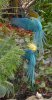
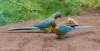
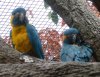
BLUE-THROATED MACAW - Ara glaucogularis
Ara glaucogularis 1.jpg
Ara glaucogularis 3.jpg
Ara glaucogularis 4.jpg
Ara glaucogularis 5.jpg

Photos taken at: Loro Park, Canary Islands, Spain

Short taxonomy: Aves > Psittaciformes > Psittacidae

Native range: Beni district, north-east Bolivia

Ex-situ frequence: Common

Danger factors: In the past main threat was being killed for their feathers, currently, the main threat is direct hunt of alive individuals for the pet trade (despite being banned since 1983). They also must face urban expansion and livestock pasture intensification.

Other comments: It's estimated a poblacion of only 50 to 250 birds in the wild (estimation of about 350 birds in 2013 and about 115 birds in 2014). A very low number if we take in account that just during the 80's were exported 1200 individuals captured from the wild. It was indeed believed extinct until 1992 when the current population, situated in the Moxos plains, was discovered. It's the second most endangered macaw species, after the Spix's. Its two small subpopulations are maybe separated because they were hunted to extinction by native tribes for use their feathers as ornaments. Toucans and opossum kill their chicks, and the bigger and more competitive blue-and-gold macaw often use the available nesting holes leaving the blue-throated homeless. In Trinidad was created the initiative "Blue-throated macaw conservation program" that studied the species need, spreaded information to local population and controlled the animal trade, planted Bolivian royal palms for increase the available nesting places, and put dozens of big nest boxes with a hole entrance designed especifically for the blue-throated macaw (too small for the bigger blue-and-gold macaw). Walsrode Vogelpark was the first to hold the species (1977), and Loro Park was the first to get breeding success (1984). Currently it's widespread in European and North American zoos as well as in private hands, and there is even individual exchange of these macaws between zoos of both continents for avoid consanguinity and keep a healthy genetic diversity. Locally, decomisated blue-throated macaws in Bolivia end usually in Noel Kempff South-American Municipal zoo, the most important zoo in Bolivia, that holds a large population of the species. The macaw breed as easily as any other big macaws in captivity.
 

Attachments

  • Ara glaucogularis 1.jpg
    Ara glaucogularis 1.jpg
    110.2 KB · Views: 17
  • Ara glaucogularis 3.jpg
    Ara glaucogularis 3.jpg
    95 KB · Views: 24
  • Ara glaucogularis 4.jpg
    Ara glaucogularis 4.jpg
    223.2 KB · Views: 18
  • Ara glaucogularis 5.jpg
    Ara glaucogularis 5.jpg
    107.8 KB · Views: 20
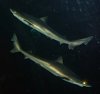
TOPE SHARK - Galeorhinus galeus
Galeorhinus galeus (17-9-21 Haus des Meeres).jpg

Photo taken at: Haus des Meeres, Austria

Short taxonomy: Chondrichthyes > Carcharhiniformes > Triakidae

Native range: Pacific coast of North America, Pacific & Atlantic coasts of Southern South America, north east Atlantic including Mediterranean, South Africa, Australian coasts except north, New Zealand coasts

Ex-situ frequence: Very rare

Danger factors: Extreme overfishing

Other comments: It was assessed as Vulnerable in 2000 and 2006, but quick diminishing in populations make it reassess as Critically Endangered. It's the most appreciated shark for fishing and food, being targeted for the flesh, the fins and the liver oil, overall in Spain, England, Greece, California, Mexico, Far East and Australia, and I remember having eaten it when I was younger and the species was not so endangered. Nowadays it's rarity make it being almost absent from supermarkets (and usually the meat sold with the common name of this species are actually from other related species). The appreciation of this shark as food even leaded it to wear "Soupfin Shark" as a common name for the species. In 2010, Greenpeace International added the tope shark to their seafood red list. There are several bans, quotas and other measures nationally and internationally for protect the species now, but maybe is too little too late.

MARQUESAS PALM - Pelagodoxa henryana
Pelagodoxa henryana (15-8-13 invernadero de Fata Morgana).jpg

Photo taken at: University of Prague Botanical Garden, Czech republic

Short taxonomy: Liliopsida > Arecales > Arecaceae

Native range: Nuku Hiva island, French Polynesia

Ex-situ frequence: Rare

Danger factors: Habitat destruction for agricultural and urban expansion, grazing by feral pigs.

Other comments: While IUCN classifies the palm as Critically Endangered (not updated since 1998), other sources such as Palm Specialist Group classifies it as Extinct in the Wild and probably this come closer to reality. According to said society, there are no known wild populations, but three anthropogenic populations in native range, with peculiar distribution pattern attributed to human dispersal. However, Palmpedia mentions that a single wild population remains in a valley in Nuku Hiva, consistent in only 12 mature individuals. Most of the island has been cleared for coconut plantations and native trees have been cut and pushed back to rugged slopes.

The IUCN page for the species, not updated since 1998, misses completely the "Conservation actions" part, but international botanical gardens both public and private works together for the lifeguard of this species.

Despite it's very showy appareance, this palm is not widely cultivated because is not easy to grow, it requires a wet tropical climate with constant and high temperatures and humidity, a deep and well drained soil rich in organic matter, constantly humid, and total lack of wind for keep the leaves entire. Seedlings are very susceptible to fungal attack and diseases. While seed banking protocols have recently been applied to palms, the large seed size of this species does not make it ideal for seed storage. The species relies heavily on cultivation to survive.
 

Attachments

  • Galeorhinus galeus (17-9-21 Haus des Meeres).jpg
    Galeorhinus galeus (17-9-21 Haus des Meeres).jpg
    239.4 KB · Views: 17
  • Pelagodoxa henryana (15-8-13 invernadero de Fata Morgana).jpg
    Pelagodoxa henryana (15-8-13 invernadero de Fata Morgana).jpg
    112.3 KB · Views: 25
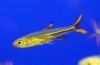
JELLY BEAN TETRA - Ladigesia roloffi
Ladigesia roloffi (5-8-17 Zoo Zajac).jpg

Photo taken at: a pet shop in Duisburg, Germany

Short taxonomy: Osteichthyes > Characiformes > Alestidae

Native range: Sierra Leona, possibly also Liberia

Ex-situ frequence: Very rare to Rare

Danger factors: Deforestation by agricultural expansion and logging, plus climatic change

Other comments: The native range is unclear, it's only known from type locality, the header of Gbangbaia river system in Kasewe forest, Sierra Leona. There is also a single record in the Du river drainage near Harbel, Liberia. More than 97% of the native rainforests of Sierra Leona have been destroyed, with only surviving pockets in protected reserves, including the Kasewe forest. The species is relatively well known in the aquarium trade but I considered it as "Very rare to Rare" because only one facility keeps it in Zootierliste. The lack of spreading of this species in public aquaria comes from lack of interest due to diminutive size as well as in difficulty to breed as the fry are quite sensitive to fluctuations in water chemistry.
 

Attachments

  • Ladigesia roloffi (5-8-17 Zoo Zajac).jpg
    Ladigesia roloffi (5-8-17 Zoo Zajac).jpg
    290.9 KB · Views: 22
Hmmm, maybe the source where I saw it is outdated. I can't find it now, but other similar sources repeat the same, such as Top 10 Mid-Year Sightings by Rockjumper Tour Leaders - Rockjumper Birding Tours (go to the end of the page for the Siberian crane). The 1 individual remaining is a very bad situation and I don't know why it's a so unknown fact, as I didn't found that when making the species factsheet for the thread. It would be relatively easy to restock the Western population with captive-bred specimens, hence the last wild survivor can teach the newcomers the migration routes and stopovers.
 
Hmmm, maybe the source where I saw it is outdated. I can't find it now, but other similar sources repeat the same, such as Top 10 Mid-Year Sightings by Rockjumper Tour Leaders - Rockjumper Birding Tours (go to the end of the page for the Siberian crane). The 1 individual remaining is a very bad situation and I don't know why it's a so unknown fact, as I didn't found that when making the species factsheet for the thread. It would be relatively easy to restock the Western population with captive-bred specimens, hence the last wild survivor can teach the newcomers the migration routes and stopovers.
That Rockjumper page is from 2015.
 
Hmmm, maybe the source where I saw it is outdated. I can't find it now, but other similar sources repeat the same, such as Top 10 Mid-Year Sightings by Rockjumper Tour Leaders - Rockjumper Birding Tours (go to the end of the page for the Siberian crane). The 1 individual remaining is a very bad situation and I don't know why it's a so unknown fact, as I didn't found that when making the species factsheet for the thread. It would be relatively easy to restock the Western population with captive-bred specimens, hence the last wild survivor can teach the newcomers the migration routes and stopovers.
i think they tried to do that. they dident end upp migrating or something like that
 
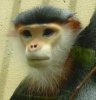
RED-SHANKED DOUC LANGUR - Pygathrix nemaeus
Pygathrix nemaeus 1 (6-8-17 Zoo Köln).jpg Pygathrix nemaeus portrait (6-8-17 Zoo Köln).jpg

Photos taken at: Cologne zoo, Germany

Short taxonomy: Synapsida > Primates > Cercopithecidae

Native range: central Vietnam and eastern Laos. Formerly present also in northern Cambodia and extreme southeast China, being extinct from these countries now.

Ex-situ frequence: Very rare

Danger factors: Major threat is poaching for food, for traditional Chinese medicine and for pet trade. They also face habitat destruction due to dam building, road construction, mining activities and agricultural expansion.

Other comments: During the Vietnam War its populations were decimated, and the soldiers used them for practice shooting. The current threats (hunting and habitat destruction) are ongoing and increasing. Many zoos and other institutions tried to stabilish breeding colonies of douc langur for conservation, but due to their sophisticated biology and physiology, especially dietary issues, the raising and breeding of this species is very difficult and captive colonies often end disappearing sooner or later. Local zoos such as Pata zoo and Dusit zoo had success in captive breeding, maybe due to availability of adequate food sources. Cologne zoo had a great success too, having raised 24 newborn douc langurs since 1970, but currently the colony they kept disappeared.

VON KUESTER'S HORNCONE - Ceratozamia kuesteriana
Ceratozamia kuesteriana.jpg

Photo taken at: Kew Royal Botanical Gardens, UK

Short taxonomy: Cycadopsida > Cycadales > Zamiaceae

Native range: southern Tamaulipas, Mexico

Ex-situ frequence: Rare

Danger factors: Habitat destruction (land clearing) and illegal recolection. Also, the global warming push this montane species to higher altitudinal range until it disappear from the mountain tops.

Other comments: There is no more than 300 plants of this narrowly endemic species. In plants so slow-growing and so low-reproducing as are the cycadas, this number is very alarming. The species was described in 1857 from individuals cultivated in the Leningrad botanical garden, with no precise collection place, and none individual were found in the wild until the discovery of their very small populations in 1982.
 

Attachments

  • Pygathrix nemaeus 1 (6-8-17 Zoo Köln).jpg
    Pygathrix nemaeus 1 (6-8-17 Zoo Köln).jpg
    55.1 KB · Views: 30
  • Pygathrix nemaeus portrait (6-8-17 Zoo Köln).jpg
    Pygathrix nemaeus portrait (6-8-17 Zoo Köln).jpg
    200 KB · Views: 18
  • Ceratozamia kuesteriana.jpg
    Ceratozamia kuesteriana.jpg
    57 KB · Views: 16
SOUTHERN RIVER TERRAPIN - Batagur affinis
Batagur affinis.jpg

Photo taken at: Prague zoo, Czech republic

Short taxonomy: Sauropsida > Chelonia > Geoemydidae

Native range: south Thailand, Malaysia, Sumatra and a relic population in Cambodia. Extinct in Vietnam and Singapore.

Ex-situ frequence: Very rare

Danger factors: Overhunting of adults and overharvest of eggs both for food as for use in traditional medicine. In a lesser exent, loss and degradation of native habitat due to sand mining, dam building and water pollution.

Other comments: It was given as extinct in Cambodia until a small relic population was rediscovered in 2001. In Thailand has been extirpated from almost whole country except a small relic population in Langun river area. In Malaysia, fortunately, religious beliefs and taboos give some protection to the turtles, avoiding hunt of them. Currently they're strictly protected in whole native range, adults are tagged with tracking devices and nests are monitorized. Despite these efforts, the species is still decreasing. Zoos and conservation centers in native range had some success in captive breeding. Out of native range, Prague zoo was the first in Europe to get success in get captive breeding, in 2019, but unfortunately they will get rid off the species soon.
 

Attachments

  • Batagur affinis.jpg
    Batagur affinis.jpg
    64.9 KB · Views: 17
PLOUGSHARE TORTOISE - Geochelone yniphora
Geochelone yniphora.jpg

Photo taken at: Pairi Daiza, Belgium

Short taxonomy: Sauropsida > Chelonia > Testudinidae

Native range: north east Madagascar

Ex-situ frequence: Very rare

Danger factors: Main threat are the provocked fires due to the barbary slash-and-burn agriculture so typical of Madagascar. Another important threat are the bush pigs, a species introduced in Madagascar that eats the eggs and hachtlings of the tortoises, being its main predator. Also the tortoises are illegally caught for the international pet trade.

Other comments: This is a very narrow endemic, found only in Baly bay near Soalala city. Is one of the scarcets chelonians of the world and possibly less than 200 wild individuals are left. In 2016 it was estimated only about 100 adults left in the wild. The threats that leaded to current situation are ongoing and increasing. For diminish the captures for the pet trade, conservationists mark the alive tortoise shell with identification signs that damage aesthetically the tortoises, making them unattractive for poachers. A breeding centre exclusive for this species was stabilished in Madagascar by the famous Gerald Durrell foundation. In 1996, 76 of the tortoises of this center (almost all hachtlings) were stolen, creating a very big impact on the tiny captive population of the species. It's believed that it will become extinct in the wild in next 10-15 years.

CONETO'S PINCUSHION CACTUS - Mammillaria theresae
Mammillaria theresae (27-8-17 Chema).jpg

Photo taken at: a private collection in Saragossa, Spain

Short taxonomy: Magnoliopsida > Caryophyllales > Cactaceae

Native range: Durango, Mexico

Ex-situ frequence: Rare

Danger factors: Illegal harvest for the international plant trade, also its tiny population is being mesmerized by the ampliation of a road.

Other comments: It's found only at its type locality, in the Coneto Pass area in West Sierra Madre. The population lies in a tiny area, less than 25 km², and does not count with more than about 200 individuals. Customs seized this species often in Mexico and also in the Netherlands.
 

Attachments

  • Geochelone yniphora.jpg
    Geochelone yniphora.jpg
    316.3 KB · Views: 18
  • Mammillaria theresae (27-8-17 Chema).jpg
    Mammillaria theresae (27-8-17 Chema).jpg
    292.2 KB · Views: 20
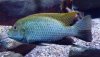
LAKE BERMIN TILAPIA - Tilapia snyderae
Tilapia snyderae (27-9-18 Zoo Antwerpen, det yo).jpg

Photo taken at: Antwerp zoo, Belgium

Short taxonomy: Osteichthyes > Perciformes > Cichlidae

Native range: Lake Bermin, Cameroon

Ex-situ frequence: Very rare

Danger factors: Water pollution and sedimentation from human activities (deforestation, palm oil plantation and slash-and-burn agriculture), and in a lesser exent, emissions of carbon dioxide from the bottom of the lake.

Other comments: The smallest of all Tilapias, it form part of a group of Tilapia species all endemic to Bermin lake and all endangered in greater or lesser degree, hence protecting the lake from the current threats of this species would benefit several species at once. The species is very easy to breed in captivity with no special measurements besides a cave for laying the eggs. It has even been called "the Convict cichlid of western Africa", meaning as easy to breed as the convict cichlid. However, it's dull colours and small size, it's similarity to other easier to get species, and its noteworthy aggresivity even towards bigger fishes, make it unpopular in aquaria.
 

Attachments

  • Tilapia snyderae (27-9-18 Zoo Antwerpen, det yo).jpg
    Tilapia snyderae (27-9-18 Zoo Antwerpen, det yo).jpg
    330.9 KB · Views: 17
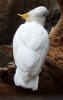
LESSER SULPHUR-CRESTED COCKATOO - Cacatua sulphurea
Cacatua sulphurea citrinocristata.jpg

Photo taken at: Loro Park, Canary Islands, Spain

Short taxonomy: Aves > Psittaciformes > Cacatuidae

Native range: Celebes (Sulawesi) and some smaller islands south of it, from Bali to Timor. Introduced in Singapore and Hong Kong.

Ex-situ frequence: Very common

Danger factors: Unsustainable capture for the pet trade, and in much lesser degree, habitat loss

Other comments: Just in 12 years (1980 to 1992) over 100000 of these cockatoos were exported legally from Indonesia. It already disappeared from many of the islands where it formerly inhabited, and it's soon to vanish from many of the remaining ones. The healthiest populations seems to be located at Sumba island, but even here only a 10% of the original forest remain, being fragmented in 34 isolated forest patches. Just on this island is calculated a diminishing of 500 cockatoos every year. The total wild population of the species is estimated at only about 7000 individuals in 2007, 2500 individuals in 2010 and 1000 to 2500 in 2016.

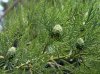
SPIRAL GINGER - Costus barbatus
Costus barbatus (19-8-11 Botánico de Berlín).jpg

Photo taken at: Berlin botanical garden, Germany

Short taxonomy: Liliopsida > Zingiberales > Costaceae

Native range: Costa Rica

Ex-situ frequence: Common

Danger factors: Habitat destruction by urban and agricultural expansion

Other comments: The species is endemic of the central valley of San Jose in Costa Rica, where it was reported in the 70's to grow in the eastern suburbs. The zone where it inhabited is now completely urbanized. It may be still present at Tapantí National Park, where it wast last seen in 1994, but several field trips to this (in 2006) and other places in Costa Rica failed to find the species recently. In 2011, the species was found thriving in a small forest patch in private land below Rancho Redondo, here were found mature plants but no seeds nor seedlings. This very small population was found at much higher altitude than the previous record of the species and it's suspected that the natural pollinator of the species (supposedly a hummingbird) is locally extinct here or not found at this altitudinal range. The current population of the plant in the wild is difficult to estimate but supposed to be below 50 plants. The two most recent places were the species have been found was turned now respectively in pasture lands and coffee crops.

 

Attachments

  • Cacatua sulphurea citrinocristata.jpg
    Cacatua sulphurea citrinocristata.jpg
    77.4 KB · Views: 16
  • Costus barbatus (19-8-11 Botánico de Berlín).jpg
    Costus barbatus (19-8-11 Botánico de Berlín).jpg
    90.6 KB · Views: 21
LESSER SULPHUR-CRESTED COCKATOO - Cacatua sulphurea
View attachment 539092

Photo taken at: Loro Park, Canary Islands, Spain

Short taxonomy: Aves > Psittaciformes > Cacatuidae

Native range: Celebes (Sulawesi) and some smaller islands south of it, from Bali to Timor. Introduced in Singapore and Hong Kong.

Ex-situ frequence: Very common

Danger factors: Unsustainable capture for the pet trade, and in much lesser degree, habitat loss

Other comments: Just in 12 years (1980 to 1992) over 100000 of these cockatoos were exported legally from Indonesia. It already disappeared from many of the islands where it formerly inhabited, and it's soon to vanish from many of the remaining ones. The healthiest populations seems to be located at Sumba island, but even here only a 10% of the original forest remain, being fragmented in 34 isolated forest patches. Just on this island is calculated a diminishing of 500 cockatoos every year. The total wild population of the species is estimated at only about 7000 individuals in 2007, 2500 individuals in 2010 and 1000 to 2500 in 2016.

SPIRAL GINGER - Costus barbatus
View attachment 539100

Photo taken at: Berlin botanical garden, Germany

Short taxonomy: Liliopsida > Zingiberales > Costaceae

Native range: Costa Rica

Ex-situ frequence: Common

Danger factors: Habitat destruction by urban and agricultural expansion

Other comments: The species is endemic of the central valley of San Jose in Costa Rica, where it was reported in the 70's to grow in the eastern suburbs. The zone where it inhabited is now completely urbanized. It may be still present at Tapantí National Park, where it wast last seen in 1994, but several field trips to this (in 2006) and other places in Costa Rica failed to find the species recently. In 2011, the species was found thriving in a small forest patch in private land below Rancho Redondo, here were found mature plants but no seeds nor seedlings. This very small population was found at much higher altitude than the previous record of the species and it's suspected that the natural pollinator of the species (supposedly a hummingbird) is locally extinct here or not found at this altitudinal range. The current population of the plant in the wild is difficult to estimate but supposed to be below 50 plants. The two most recent places were the species have been found was turned now respectively in pasture lands and coffee crops.
I saw C. sulphurea in the wild in Komodo National Park in November 2017, I am pretty sure on Komodo Island, in a flock of about a dozen birds. Have also seen one in Singapore Botanic Gardens in July 2018 tending a nest hollow high up a tree. In Australia captive C, galerita are easily rehabbed into wild flocks by wildlife carers. This would suggest there would be the prospect of using captive birds to reintroduce the species if the poaching issue can be overcome.
 
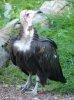
HOODED VULTURE - Necrosyrtes monachus
Necrosyrtes monachus (26-9-18 Pairi Daiza).jpg

Photo taken at: Pairi Daiza, Belgium

Short taxonomy: Aves > Accipitriformes > Accipitridae

Native range: subsaharian Africa

Ex-situ frequence: Very common

Danger factors: The same than for the other African vultures, mainly poisoning of carcasses directed both to kill livestock predators (lions and hyenas especially) and to kill directly the vultures for avoid drawing attention over poaching activities. The bird also faces hunting for traditional medicinal beliefs of for meat, impacts with electric lines and habitat destruction and degradation.

Other comments: As other African vultures, it suffered a very steep decline, being considered as Least Concern as recently as to 2009, directly to Endangered until 2012 and Critically Endangered since 2015. Despite it's extremely large native range, the species was totally depleted from a very big part of it, especially from large areas of Chad, Somalia, Congo, Angola, Zimbabwe and South Africa. In Nigeria this is the most heavily traded vulture and the 90% of the vulture parts found in food/medicinal markets are from this species. Similar percentage happens in West and Central Africa. Habitat destruction does not impact very heavilly this very adaptable species often associated with human settlements, but the logging of their favourite nesting trees make a significant impact on the species. The Hawk Conservancy and the Endangered Wildlife Trust are training teams for neutralize poisoned carcasses. The species breeds very well in captivity and is an usual sight in raptor shows and falconry centers.
 

Attachments

  • Necrosyrtes monachus (26-9-18 Pairi Daiza).jpg
    Necrosyrtes monachus (26-9-18 Pairi Daiza).jpg
    291.2 KB · Views: 17
PHILIPPINE CROCODILE - Crocodylus mindorensis
Crocodylus mindorensis 1.jpg Crocodylus mindorensis 2.jpg

Photos taken at: Cologne zoo, Germany

Short taxonomy: Sauropsida > Crocodilia > Crocodylidae

Native range: Philippines

Ex-situ frequence: Rare

Danger factors: Habitat destruction due to urban and agricultural expansion, overhunting for skin and meat, barbary fishing practices (such as dynamite fishing), entanglement in fishing nets, and invasive species (fire ants, that kill the hatchlings just as they come out of the nest).

Other comments: Now is just present in Mindanao and some of the Visayans and it has been exterminated from Samar, Jolo, Negros, Masbate and Busuanga islands. It's one of the most endangered crocodilians of the world together with the Cuban crocodile and the gharial. In 2011 only about 250 individuals left in the wild, and currently is estimated an average of about 100 individuals. The decline continues despite reintroduction attempts and complete banning to hunt this species since 2001. Krokodile Zoo (Denmark), Gladys Porter Zoo (USA) and Melbourne Zoo (Australia) runs captive breeding programs and the two latter collaborates with the local Philippine Crocodile Recovery Team. Various other facilities in Europe and USA have Philippine crocodiles on loan under the recovery programs. Locally, the Palawan Wildlife Rescue and Conservation Centre breeds the species in captivity since 1987, and released many of their captive-born individuals in adequate habitats in the wild. 7 zoos and several crocodile farms-private holders-other insitutions of Philippines also keeps captive stock of the species. Its loss would be a disaster as is a very ecologically important species: it feeds mainly in sick or dying fishes and hence it contributes in great exent to keep the fishes populations healthy.

CHINESE SWAMP CYPRESS - Glyptostrobus pensilis
Glyptostrobus pensilis.jpg

Photo taken at: Jardin des plantes d'Angers, France

Short taxonomy: Pinicae > Pinales > Taxodiaceae

Native range: south east China from Fujian to Yunnan, very locally in southern Vietnam. Probably extinct in China, and extinct in Laos.

Ex-situ frequence: Rare

Danger factors: Habitat destruction by expanding agriculture, and logging

Other comments: Formerly found in great extensions of China and Vietnam is has been now depleted from the vast majority of its range. Probably the last natural populations are just in Dac Lac province of Vietnam, having been completely depleted from China and Laos. The last wild population in Laos was destroyed by flooding by the building of Nam Theun II hydroscheme. The Vietnam populations are however in continuous decline and three of its five localities contains less than 10 trees each. More than 250 trees remain here in the wild, but very few of them if any produces viable seeds: no viable seeds have been collected from these trees in last 20 years. The last wild populations are surrounded by coffee crops, and the water table have been altered for aid in intensive agriculture, what may be related with the cypresses not producing fertile seeds. Logging affected severely the wild populations as the wood is extremely appreciated due to its resistence to rotting. In china, most if not all of the individuals are actually cultivated. There are more than 200000 individuals known in cultivation in China.
 

Attachments

  • Crocodylus mindorensis 1.jpg
    Crocodylus mindorensis 1.jpg
    367.1 KB · Views: 33
  • Crocodylus mindorensis 2.jpg
    Crocodylus mindorensis 2.jpg
    211.7 KB · Views: 34
  • Glyptostrobus pensilis.jpg
    Glyptostrobus pensilis.jpg
    142 KB · Views: 18
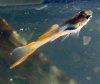
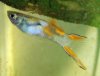
ENDLER'S LIVEBEARER - Poecilia wingei
Poecilia wingei 2 (2-3-11 Aquatec).jpg Poecilia wingei 3 (2-3-11 Aquatec).jpg

Photos taken at: my aquarium, Saragossa, Spain

Short taxonomy: Osteichthyes > Cyprinodontiformes > Poeciliidae

Native range: Venezuela

Ex-situ frequence: Very common

Danger factors: Contamination

Other comments: The species was discovered in the Patos lagoon in Venezuela in 1937, and has not been seen alive from this year to it's rediscovery by Dr. John Endler in 1975, hence the common name. Dr. Endler made the first individuals to arrive to the aquarium trade, and with posterior exportations, the species, as easy to breed as the closely related guppy (famous for be the easiest fish to breed for any beginner aquarists) spreaded quickly in ornamental aquaculture. However, the native population is severely endangred by the contamination coming from runoffs of a municipal garbage dump situated just up the Patos lagoon. The species was even belief to be exinct in the wild until more recently, some healthy subpopulations were found: in 2005 in the Campoma lagoon and the nearby El Tigre stream, and in 2009 in Cumana region. Despite its frequency in aquarium trade, it must be taken in account that a great proportion of what is sold under Endler's livebearer are actually hybrids with guppies, and hence are useless for rewilding.

BLUSHING BROMELIAD - Tillandsia dyeriana
Tillandsia dyeriana 1 (4-12-21 Zaragoza).jpg Tillandsia dyeriana 3 (4-12-21 Zaragoza).jpg

Photos taken at: my garden, Saragossa, Spain

Short taxonomy: Liliopsida > Bromeliales > Bromeliaceae

Native range: Guayas province, Ecuador

Ex-situ frequence: Rare

Danger factors: Habitat destruction by shrimp farming

Other comments: This extremely spectacular species, very different from most of other Tillandsia, is endemic to mangroves of Ecuador where it grows in two subpopulations. Mangroves are often logged here for make space for shrimp farms. None of its populations lies within protected areas and the habitat destruction keeps growing, as has been since the 1950's. The plant is not popular as ornamental despite it's showy appareance. Maybe the fact of being very prone to rotting is a factor for it's rarity in cultivation.

I never saw it in any botanical garden but I saw it when child nothing less than in a (now disappeared) flower shop, that is where I knew the species. Decades passed and then I was shocked when in 2019 a friend popped up with a photo of one at his home. I asked him, but in full rise of the pandemy I was unable to visit his home for photograph the plant, that was my favourite bromeliad ever. For the time when the pandemy went enough down for permit normal life, the plant of my friend died from rotting. Then came 2020 and 2021. At the very end of 2021 (December), said friend, remembering how crazy and enthusiast I went about the bromeliad he had, announced me that a local nursery near my city have this plant for sale. As soon as I can and fearing that the very few individuals put in stock for sale disappear soon, I took my bike and went to an adventurous trip, passing by dual carriageways (where bikes are not allowed) and unknown roads in a very windy day for reach the nursery. Got here and bought one plant and trying the minimal damage despite the strong wind, keeping the bag as tigthly closed as I can with one hand, I did the return trip to my home. The plant survived the disastrous travel and now is growing in my parents home. Once arrived, I looked for info about the species for provide the best care I can, and it was then when I learned that is a critically endangered species, what surprised me a lot. And this fact is indeed what leaded me to the idea of start this thread!!

It ended the blooming and the inflorescence is now dry. In bromeliads, this mean the death of the plant. But with great joy I saw that, unlike often collectors experiment with this species (as happened with my friend), the plant is emitting a new offset. As the old rosette dies I hope that the offset will grow and replace it.
 

Attachments

  • Poecilia wingei 2 (2-3-11 Aquatec).jpg
    Poecilia wingei 2 (2-3-11 Aquatec).jpg
    56.9 KB · Views: 16
  • Poecilia wingei 3 (2-3-11 Aquatec).jpg
    Poecilia wingei 3 (2-3-11 Aquatec).jpg
    62.1 KB · Views: 18
  • Tillandsia dyeriana 1 (4-12-21 Zaragoza).jpg
    Tillandsia dyeriana 1 (4-12-21 Zaragoza).jpg
    514.3 KB · Views: 16
  • Tillandsia dyeriana 3 (4-12-21 Zaragoza).jpg
    Tillandsia dyeriana 3 (4-12-21 Zaragoza).jpg
    320 KB · Views: 16
Last edited:
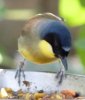
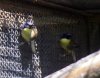
BLUE-CROWNED LAUGHINGTHRUSH - Garrulax courtoisi
Garrulax courtoisi.jpg
Garrulax courtoisi 3.jpg

Photos taken at: Prague zoo, Czech republic and San Diego zoo, USA

Short taxonomy: Aves > Passeriformes > Timaliidae

Native range: Jiangxi, China

Ex-situ frequence: Very common

Danger factors: Main threat is capture for the cage bird trade. Also the urban expansion and road building.

Other comments: 400 birds were captured from 1987 to 1992, and this number is higher than the total current population of the species. From 1992 forewards the capture of the species was banned and the rate of captures diminished a lot consequently but still continues illegally. The urban expansion and road building destroyed more than one breeding locality of the species and provocked that the birds abandoned other localities due to disturbances. The nominate subspecies was given as extinct, but was rediscovered alive in the 2000, however, less than 200 individuals are left. The other subspecies, simaoensis, was collected in Yunnan in 1956 and not seen since then, but the distinction between both subspecies is subjective and both could be the same. Little more than a hundred of individuals are kept in worldwide zoological parks and facilities, forming part of a captive breeding program, they are also often found in private aviculture.

SPINDLE PALM - Hyophorbe verschaeffelti
Hyophorbe verschaeffelti (23-3-15 Botánico Orotava).jpg

Photo taken at: Orotava botanical garden, Canary Islands, Spain

Short taxonomy: Liliopsida > Arecales > Arecaceae

Native range: Rodrigues island

Ex-situ frequence: Common

Danger factors: Habitat destruction, cattle grazing and hybridation with the introduced Round Island bottle palm, H. lagenicaulis

Other comments: In 1879 it was mentioned that this palm is widespread on the whole island except in coralline limestone, but currently, the total population consist of just isolated trees or very small groups in 9 very scattered localities over the island, as for 2019 only 19 wild individuals were found. The species is not showing regeneration because of heavy cattle grazing, and dead stump of old palms were found in various localties. However, more than a thousand of these palms were planted all over Rodrigues, overall in protected areas, and used as a landscape plant. Since these plants still are the first generation they're considered as cultivated and not included in the assessment criteria for the IUCN. Ex situ is a frequent ornamental plant with strong captive populations for example in Florida and in the Pacific Ocean islands.
 

Attachments

  • Garrulax courtoisi 3.jpg
    Garrulax courtoisi 3.jpg
    55.7 KB · Views: 16
  • Garrulax courtoisi.jpg
    Garrulax courtoisi.jpg
    70.7 KB · Views: 16
  • Hyophorbe verschaeffelti (23-3-15 Botánico Orotava).jpg
    Hyophorbe verschaeffelti (23-3-15 Botánico Orotava).jpg
    197.5 KB · Views: 17
WHITE-CHEEKED GIBBON - Hylobates leucogenys (but see text)
Hylobates leucogenys.jpg

Photo taken at: Apenheul, Apeldoorn, Netherlands

Short taxonomy: Synapsida > Primates > Hylobatidae

Native range: Laos and Vietnam. Extinct in China

Ex-situ frequence: Very common

Danger factors: Habitat destruction

Other comments: Formerly present also in Yunnan (China) but was depleted here in 2008. It should be considered as just a subspecies of Hylobates concolor. with minimal differences with nominate. Every of the subspecies of Hylobates concolor are Critically endangered, except the subspecies gabriellae that is Endangered, so the whole species probably should be considered as Endangered to Vulnerable, but IUCN treat every subspecies as species and hence do not offer a danger status for the whole species. Probably I should not publish this entry but I'm about to end the Critically Endangered section and modern taxonomists tend to consider this subspecies as a species due to maniac extreme divisionism so here is it.

BIZNAGUITA - Mammillaria duwei
Mammillaria duwei.jpg
Mammillaria duwei 2 (20-4-02).jpg

Photos taken at: my garden, Saragossa, Spain

Short taxonomy: Magnoliopsida > Caryophyllales > Cactaceae

Native range: Guanajuato, Mexico

Ex-situ frequence: Common

Danger factors: Overcollection and habitat destruction by urban development

Other comments: There are about 500 individuals in the wild, as it's a very narrow endemic species thriving in a 35 km2 area. It should ne considered as just a subspecies of Mammillaria crinita. Taking in account the 4 species that forms the species M. crinita, the whole species is not endangered.

These two species treated, the gibbon and the cactus, are fine examples of how IUCN artificially elevates infraspecific taxa to species level just for provide protection of them. Subspecies deserve absolutely protection as well as species, but this never should mean to artificially keeping a false taxonomy in public knowlegde.
 

Attachments

  • Hylobates leucogenys.jpg
    Hylobates leucogenys.jpg
    222 KB · Views: 17
  • Mammillaria duwei 2 (20-4-02).jpg
    Mammillaria duwei 2 (20-4-02).jpg
    71.3 KB · Views: 18
  • Mammillaria duwei.jpg
    Mammillaria duwei.jpg
    45.8 KB · Views: 16
Here will come 3 species in a very same message, two plants and one animal, because the other animal species pending to put, the ring-tailed lemur, has been downgraded to Endangered.

SUNFLOWER STARFISH
- Pycnopodia helianthoides
Pycnopodia helianthoides (12-7-16 Birch Aquarium).jpg

Photos taken at: Birch aquarium, California, USA

Short taxonomy: Asterioidea > Forcipulatida > Asteriidae

Native range: Pacific coast of North America

Ex-situ frequence: Very rare

Danger factors: Infectious viral disease, called the Sea Star Wasting Syndrome (SSWS)

Other comments: The largest starfish in the world and also the fastest one, it also is a very emportant species ecologically as its feeding activity on urchins keeps the kelp forests ungrazed and healthy. Hence, the loss of this species would be disastrous.The SSWS affects many starfish and other echinoderms and probably several other species are in the same threat situation than the sunflower sea star, but just they have not been evaluated by IUCN as only this highly distinctive and well known species has been looked. The disease causes mass mortalities. The disease is more prevalent and harmful in warm waters and hence the global warming poses a serious threat to many echinodermates. This disease was affecting severely the sunflower sea star since 2013. The Nature Conservancy and allied institutions and the University of Washington are working to start a captive breeding program for the species.

In 2014, just the same year than the viral nature of the disease was recognized for first time, Point Defiance Zoo lost the half of its 369 sea stars due to a SSWS strike. The same year the zoo treated the remaining starfishes with antibiotics, that proven to be effective. This measure could be applied to wild sunflower sea stars.

The SSWS affects different starfish species with unequal intensity. Most affected are Solaster dawsoni, Pisaster ochraceus, Pisaster brevispinus, Evasterias troschelii and the present sunflower star. IUCN by far didn't took in account any of the other species that may be in the same threat situation.

GOLD OF KINABALU ORCHID - Paphiopedilum rothschildianum
Paphiopedilum rothschildianum (Munich).jpg

Photo taken at: Munich botanical garden, Germany

Short taxonomy: Liliopsida > Asparagales > Orchidaceae

Native range: Kinabalu mountain, Borneo

Ex-situ frequence: Rare

Danger factors: Overcollection for ornamental plant trade and habitat destruction by mining activities, logging and degradation.

Other comments: Less than 50 individuals remain in the wild, in an area of just about 4 km2. The fact of being supposedly the most expensive orchid of the world doesn't help in avoid illegal harvest of the species. Probably this fact about the price refers only as being the most expensive cut flower of the world, rather than the live plant. This is due to the fact the orchid spend a minimum of 15 years from seedling to first blooming.

BIZNAGUITA - Turbinicarpus alonsoi
Turbinicarpus alonsoi (12-4-15 Chema).jpg

Photo taken at: A private collection in Saragossa, Spain

Short taxonomy: Magnoliopsida > Caryophyllales > Cactaceae

Native range: Guanajuato, Mexico

Ex-situ frequence: Very rare

Danger factors: Illegal harvest

Other comments: With less than 5000 individuals growing in the wild in an area of about 10km2, the populations are diminished quickly to about the half since the discovery of the population (the species was discribed as new to science just in 1996) to the present. The locality is well known amongst collectors and despite the CITES strong protection to the species, the area where it grows is not protected. The species is being propagated in Europe from originally illegal wild harvested plants. The Cadereyta Regional Botanic Gardens developed a succesful technique for propagate the tricky Turbinicarpus species, with 95% of soil adaptation success.


-----------------

With these trio, I finished the CRITICALLY ENDANGERED photographic guide. Next will come the ENDANGERED section, much more speciose. It has been 93 critically endangered animal and 49 endangered plant species. Enough numbers for keep a quite decent zoo and botanical garden with only these. I hope some zoos and botanicals will be inspired by this thread for choose what species try to keep and breed.
 

Attachments

  • Pycnopodia helianthoides (12-7-16 Birch Aquarium).jpg
    Pycnopodia helianthoides (12-7-16 Birch Aquarium).jpg
    90.6 KB · Views: 17
  • Paphiopedilum rothschildianum (Munich).jpg
    Paphiopedilum rothschildianum (Munich).jpg
    107.1 KB · Views: 18
  • Turbinicarpus alonsoi (12-4-15 Chema).jpg
    Turbinicarpus alonsoi (12-4-15 Chema).jpg
    63.7 KB · Views: 18
Back
Top