Kakapo
Well-Known Member
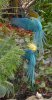
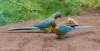
BLUE-THROATED MACAW - Ara glaucogularis


Photos taken at: Loro Park, Canary Islands, Spain
Short taxonomy: Aves > Psittaciformes > Psittacidae
Native range: Beni district, north-east Bolivia
Ex-situ frequence: Common
Danger factors: In the past main threat was being killed for their feathers, currently, the main threat is direct hunt of alive individuals for the pet trade (despite being banned since 1983). They also must face urban expansion and livestock pasture intensification.
Other comments: It's estimated a poblacion of only 50 to 250 birds in the wild (estimation of about 350 birds in 2013 and about 115 birds in 2014). A very low number if we take in account that just during the 80's were exported 1200 individuals captured from the wild. It was indeed believed extinct until 1992 when the current population, situated in the Moxos plains, was discovered. It's the second most endangered macaw species, after the Spix's. Its two small subpopulations are maybe separated because they were hunted to extinction by native tribes for use their feathers as ornaments. Toucans and opossum kill their chicks, and the bigger and more competitive blue-and-gold macaw often use the available nesting holes leaving the blue-throated homeless. In Trinidad was created the initiative "Blue-throated macaw conservation program" that studied the species need, spreaded information to local population and controlled the animal trade, planted Bolivian royal palms for increase the available nesting places, and put dozens of big nest boxes with a hole entrance designed especifically for the blue-throated macaw (too small for the bigger blue-and-gold macaw). Walsrode Vogelpark was the first to hold the species (1977), and Loro Park was the first to get breeding success (1984). Currently it's widespread in European and North American zoos as well as in private hands, and there is even individual exchange of these macaws between zoos of both continents for avoid consanguinity and keep a healthy genetic diversity. Locally, decomisated blue-throated macaws in Bolivia end usually in Noel Kempff South-American Municipal zoo, the most important zoo in Bolivia, that holds a large population of the species. The macaw breed as easily as any other big macaws in captivity.
Photos taken at: Loro Park, Canary Islands, Spain
Short taxonomy: Aves > Psittaciformes > Psittacidae
Native range: Beni district, north-east Bolivia
Ex-situ frequence: Common
Danger factors: In the past main threat was being killed for their feathers, currently, the main threat is direct hunt of alive individuals for the pet trade (despite being banned since 1983). They also must face urban expansion and livestock pasture intensification.
Other comments: It's estimated a poblacion of only 50 to 250 birds in the wild (estimation of about 350 birds in 2013 and about 115 birds in 2014). A very low number if we take in account that just during the 80's were exported 1200 individuals captured from the wild. It was indeed believed extinct until 1992 when the current population, situated in the Moxos plains, was discovered. It's the second most endangered macaw species, after the Spix's. Its two small subpopulations are maybe separated because they were hunted to extinction by native tribes for use their feathers as ornaments. Toucans and opossum kill their chicks, and the bigger and more competitive blue-and-gold macaw often use the available nesting holes leaving the blue-throated homeless. In Trinidad was created the initiative "Blue-throated macaw conservation program" that studied the species need, spreaded information to local population and controlled the animal trade, planted Bolivian royal palms for increase the available nesting places, and put dozens of big nest boxes with a hole entrance designed especifically for the blue-throated macaw (too small for the bigger blue-and-gold macaw). Walsrode Vogelpark was the first to hold the species (1977), and Loro Park was the first to get breeding success (1984). Currently it's widespread in European and North American zoos as well as in private hands, and there is even individual exchange of these macaws between zoos of both continents for avoid consanguinity and keep a healthy genetic diversity. Locally, decomisated blue-throated macaws in Bolivia end usually in Noel Kempff South-American Municipal zoo, the most important zoo in Bolivia, that holds a large population of the species. The macaw breed as easily as any other big macaws in captivity.