Kakapo's Photographic Collection of Endangered Species

These two species treated, the gibbon and the cactus, are fine examples of how IUCN artificially elevates infraspecific taxa to species level just for provide protection of them. Subspecies deserve absolutely protection as well as species, but this never should mean to artificially keeping a false taxonomy in public knowlegde.
Unfortunately for you the "artificial elevation" of Nomascus taxa to species level is due to clear differences in physiology, calls, and most importantly the genetics which show the north-to-south spread and genetic diversification of the genus over time. It is likely followed by every primatologist. Which is why the IUCN also follows it - because the IUCN follows the research, it doesn't just make stuff up and hope nobody looks into it. Anyone can go look up the papers on which their decisions are based, that's why they have bibliographies.
 
Good day zoochatters!

Once surpassed the milestone of the Critically Endangered species, now it's time to start showing the images and factsheets of ENDANGERED species. Not in so extremely urgent need of help as the previous ones, but in need anyway. Every of these species would benefit from a healthy captive population that helps to raise their numbers and ensure a widespread stock if threats continue for wild population. Let's go to enjoy and learn about Endangered species, hoping that this knowlegde publication can lead to more interest in each species and hence more protection to them.


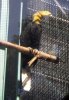
WRINKLED HORNBILL - Aceros corrugatus
Aceros corrugatus.jpg

.
Photo taken at: Liberec zoo, Czech republic

Short taxonomy: Aves > Coraciiformes > Bucerotidae

Native range: Borneo, Sumatra and peninsular Malaysia

Ex-situ frequence: Common

Danger factors: Deforestation

Other comments: It switched from Threatened to Vulnerable in 1994, then to Near Threatened in 2004 and then to Endangered in 2018. All the native range is subject to high rates of deforetation. Horbills are quite sensitive to deforestation as they need big trees with holes for nesting. It was first captive bred in 1988.

WHITE FORSYTHIA - Abeliophyllum distichum
Abeliophyllum distichum.jpg

Photo taken at: Berlin botanical garden, Germany

Short taxonomy: Magnoliopsida > Lamiales > Oleaceae

Native range: Korea

Ex-situ frequence: Common

Danger factors: Trampling, ruthless collection (mainly for medicinal purposes) and habitat destruction (urban and agricultural expansion, soil modification).

Other comments: Only seven colonies has been found in the wild. In 1998 it was considered as "close to extinction" and formally considered as Critically Endangered, but not evaluated officially by the IUCN. By 2015 the IUCN evaluated the species, and classified it as endangered. Since the first ex-situ cultivation attempts (seeds arrived to Arnold Arboretum in Boston in 1924, and the to Kew Gardens in UK in 1932) the species, easy to cultivate, spreaded well in temperate countries.
 

Attachments

  • Aceros corrugatus.jpg
    Aceros corrugatus.jpg
    110.5 KB · Views: 29
  • Abeliophyllum distichum.jpg
    Abeliophyllum distichum.jpg
    78.2 KB · Views: 29
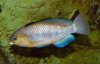
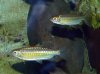
SODA CICHLID - Alcolapia alcalica
Alcolapia alcalica.jpg

Photo taken at: Saragossa fluvial aquarium, Spain

Short taxonomy: Osteichthyes > Perciformes > Cichlidae

Native range: Kenya and Tanzania

Ex-situ frequence: Very rare

Danger factors: Water level disminution, sedimentation by human activities

Other comments: This extreme specialist is only found in three small populations in hypersaline warm lakes, as the Natron lake and it's drainage basin and the Shombole wetlands and the streams that feed them. It has been introduced in Nakuru lake as a measure for prevent its extinction. This fish, that inhabit in waters that can surpass the 40ºC and very rich in sodium and chlorures, is difficult to keep and breed in captivity unless the specific conditions they need are provided.
 

Attachments

  • Alcolapia alcalica.jpg
    Alcolapia alcalica.jpg
    98.5 KB · Views: 29
Unfortunately for you the "artificial elevation" of Nomascus taxa to species level is due to clear differences in physiology, calls, and most importantly the genetics which show the north-to-south spread and genetic diversification of the genus over time. It is likely followed by every primatologist. Which is why the IUCN also follows it - because the IUCN follows the research, it doesn't just make stuff up and hope nobody looks into it. Anyone can go look up the papers on which their decisions are based, that's why they have bibliographies.

Indeed. I find this idea that taxonomic research was somehow 'completed' decades ago and no new information can be accepted very strange indeed. It's an exciting and dynamic area of study, not something that should be frozen in its 1980s state out of nostalgia. Particularly as animals are in a process of evolution anyway and particularly given the historic difference in taxonomic approaches taken as each continent was originally 'explored' by Europeans and the animals given taxonomic names - in Africa they tended to assume animals are the same across the continent even when they look completely different, while in North America they were merrily describing new species and subspecies every time they crossed a small hill and saw a slightly browner bear.
 
Last edited:
Trying to center again in the thread subject without derailing into the craziness of those that want to fight against the whole universe... more species to show:

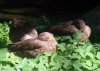
MADAGASCAR TEAL - Anas bernieri
Anas bernieri.jpg

Photo taken at: Berlin zoo-aquarium, Germany

Short taxonomy: Aves > Anseriformes > Anatidae

Native range: western Madagascar

Ex-situ frequence: Common

Danger factors: Habitat destruction

Other comments: This is a specialist species that inhabit only in mangroves and nests in the hole of a mangrove trunk. Mangroves in Madagascar are being brutally destroyed for wood and charcoal production as well as for expansion of rice pads and shrimp farms. In 1993, the Madagacar teal passed through a bottleneck that left only about 200-300 individuals. Currently, thanks to the ex-situ breeding efforts and reintroduction, there are about 1000-1700 in the wild, but the threats to the mangroves are ongoing.

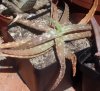
- Aloe ankoberensis
Aloe ankoberensis.jpg

Photo taken at: my garden, Saragossa, Spain

Short taxonomy: Liliopsida > Asparagales > Xanthorrhoeaceae

Native range: central Ethiopia

Ex-situ frequence: Very rare

Danger factors: Habitat destruction by logging and overgrazing

Other comments: It's a very narrow endemic confined to two nearby subpopulations in the high mountains of Shewa region, near Ankober, Ethiopia. It's a cliff specialist so the logging and overgrazing also leads to cliff erosion that is potentially fatal for these plants. According to the IUCN page the species is not known to be in cultivation in botanical gardens, tough this is probably not true.
 

Attachments

  • Anas bernieri.jpg
    Anas bernieri.jpg
    77.6 KB · Views: 30
  • Aloe ankoberensis.jpg
    Aloe ankoberensis.jpg
    75.9 KB · Views: 29
Unfortunately for you the "artificial elevation" of Nomascus taxa to species level is due to clear differences in physiology, calls, and most importantly the genetics which show the north-to-south spread and genetic diversification of the genus over time. It is likely followed by every primatologist. Which is why the IUCN also follows it - because the IUCN follows the research, it doesn't just make stuff up and hope nobody looks into it. Anyone can go look up the papers on which their decisions are based, that's why they have bibliographies.

Indeed. I find this idea that taxonomic research was somehow 'completed' decades ago and no new information can be accepted very strange indeed. It's an exciting and dynamic area of study, not something that should be frozen in its 1980s state out of nostalgia.

It's not even nostalgia for the 1980s, considering some of his prior claims revolved around not accepting splits between marsupial families (the Phalangeridae and the Phascolarctidae) which took place long-prior to the 1950s :rolleyes:

I have to admit to being somewhat amused that he accepts the 1989 split of New Guinea Crocodile and Philippine Crocodile without a second thought, whilst the taxonomic stance dating from the early 1980s that Nomascus is a distinct genus from Hylobates, and that the former contains multiple species, is deemed to be "the craziness of those that want to fight against the whole universe" and "maniac extreme divisionism". One would almost think he didn't realise the crocodiles were a split species......
 
Trying to center again in the thread subject without derailing into the craziness of those that want to fight against the whole universe...

It really might help if you engaged with the discussion and offered your response rather than just writing off those following actual scientific evidence as 'crazy'. It just feels like you personally never want any taxonomy to change so have decided nearly everyone else in the world is wrong, so of course people will want to address this.

So I'd like to understand. What about taxonomy for you makes any further research not only unnecessary in your view but actually undesirable? I would really like to understand the logic of your position but it just seems like stubbornness.

Regardless of your reasoning, if you do take this position then your personal vision of how things are will get more and more out of step with scientific consensus over time and you will get comments on this more and more from people who will mostly just be trying to help you, and some who will be aggravated. I'm afraid that is a consequence of trying to hold what most would consider a simply factually inaccurate opinion on the Internet. A climate-change denier (for example) would have to expect the same experience.
 
I will not lose my time in feeding trolls and replying in detailed way to them, but in case any one wonders, obviously I was aware of the taxonomic position and opinions about the New Guinea-Philippine crocodile pair - I even comment about it in the factsheet of this thread. I'm knowledgeable about animals, unlike those that keep extremely absolutely absurd taxonomy against the science and use that for ridiculize and aggraviate constantly those members who use the brain and the common sense in every occasion they can.

Hoping that there is no more derailing the thread only for harassing wantonly the members that keep a scientific and accurate way of thinking, I will continue with the factsheets:

AFRICAN RED-EYED TETRA - Arnoldichthys spilopterus
Arnoldichthys spilopterus.jpg

Photo taken at: Saragossa fluvial aquarium, Spain

Short taxonomy: Osteichthyes > Characiformes > Alestidae

Native range: Nigeria

Ex-situ frequence: Common

Danger factors: Deforestation, contamination and urban development

Other comments: Petrol extraction is damaging and contaminating the waters where they live, the low courses of the Niger and Ogun rivers. Continuous disminution in population make it pass from Vulnerable (assessed in 2010) to Endangered (in 2020). Many of the livestock kept in the aquarium trade comes from wild collections.

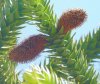
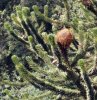
MONKEY PUZZLE - Araucaria araucana
Araucaria araucana Kew.jpg Araucaria araucana.jpg Araucaria araucana flores.jpg

Photos taken at: Royal Botanical Kew Gardens, London, UK, Berlin botanical garden, Germany, and Faunia Madrid, Spain

Short taxonomy: Pinicae > Pinales > Araucariaceae

Native range: Andes of Chile and Argentina

Ex-situ frequence: Very common

Danger factors: Forest fires, logging and overgrazing.

Other comments: This extremely iconic species is strictly protected, declared as natural monument, and gave the name of one of the geographical districts of Patagonia. The species was already venerated by the native tribe Mapuche, especially the Pehuenche, that took their name from the tree. It appears as a symbol of 6 different heraldic shields of Chile and Argentina. The population is reduced to a narrow area and is severely fragmented. In Argentina the 60% of the native Araucaria forests has been eliminated, and in Chile large areas of several national parks has been destroyed by fires in the last 25 years. Several private initiatives are helping to protec the local forests of this species.
 

Attachments

  • Arnoldichthys spilopterus.jpg
    Arnoldichthys spilopterus.jpg
    78.1 KB · Views: 29
  • Araucaria araucana flores.jpg
    Araucaria araucana flores.jpg
    85.8 KB · Views: 30
  • Araucaria araucana Kew.jpg
    Araucaria araucana Kew.jpg
    32.7 KB · Views: 29
  • Araucaria araucana.jpg
    Araucaria araucana.jpg
    131.3 KB · Views: 29
obviously I was aware of the taxonomic position and opinions about the New Guinea-Philippine crocodile pair - I even comment about it in the factsheet of this thread.

No, you quite literally didn't. Incredibly enough, we *can* read what you have written:

PHILIPPINE CROCODILE - Crocodylus mindorensis
crocodylus-mindorensis-1-jpg.539261
crocodylus-mindorensis-2-jpg.539262


Photos taken at: Cologne zoo, Germany

Short taxonomy: Sauropsida > Crocodilia > Crocodylidae

Native range: Philippines

Ex-situ frequence: Rare

Danger factors: Habitat destruction due to urban and agricultural expansion, overhunting for skin and meat, barbary fishing practices (such as dynamite fishing), entanglement in fishing nets, and invasive species (fire ants, that kill the hatchlings just as they come out of the nest).

Other comments: Now is just present in Mindanao and some of the Visayans and it has been exterminated from Samar, Jolo, Negros, Masbate and Busuanga islands. It's one of the most endangered crocodilians of the world together with the Cuban crocodile and the gharial. In 2011 only about 250 individuals left in the wild, and currently is estimated an average of about 100 individuals. The decline continues despite reintroduction attempts and complete banning to hunt this species since 2001. Krokodile Zoo (Denmark), Gladys Porter Zoo (USA) and Melbourne Zoo (Australia) runs captive breeding programs and the two latter collaborates with the local Philippine Crocodile Recovery Team. Various other facilities in Europe and USA have Philippine crocodiles on loan under the recovery programs. Locally, the Palawan Wildlife Rescue and Conservation Centre breeds the species in captivity since 1987, and released many of their captive-born individuals in adequate habitats in the wild. 7 zoos and several crocodile farms-private holders-other insitutions of Philippines also keeps captive stock of the species. Its loss would be a disaster as is a very ecologically important species: it feeds mainly in sick or dying fishes and hence it contributes in great exent to keep the fishes populations healthy.

And responding to the reasonable request by @Maguari for further clarification on your reasoning and sources by calling him (and everyone else who queries you) an unknowledgeable troll who holds "extremely absolutely absurd taxonomy against the science" and lacks "the brain and the common sense" says a *lot* more about you, than it does any of us :rolleyes:
 
I will not lose my time in feeding trolls and replying in detailed way to them, but in case any one wonders, obviously I was aware of the taxonomic position and opinions about the New Guinea-Philippine crocodile pair - I even comment about it in the factsheet of this thread. I'm knowledgeable about animals, unlike those that keep extremely absolutely absurd taxonomy against the science and use that for ridiculize and aggraviate constantly those members who use the brain and the common sense in every occasion they can.

Hoping that there is no more derailing the thread only for harassing wantonly the members that keep a scientific and accurate way of thinking, I will continue with the factsheets:

What is your background, that makes you the more knowledgeable one?
 
Ah yes, I wrote about the taxonomic situation of NW-Philippine crocodiles in my factsheet in another forum and I tought I put also it here, but I was wrong, I finally didn't put about it because it has little relevance conservation-wise.

By the way, this is my last post in this thread. Admins feel free also for delete the thread. Bye.
 
Back
Top