Day 83: Tierpark Hellabrunn (1995) - King Cheetah

Page count: 128 pages (including 20 pages of advertisements scattered throughout)
Photographs: 148 colour photographs (including 24 full-page images)
Illustrations/diagrams: N/A
Layout: Introduction, followed by discussion of the species held within the collection arranged by geozone.
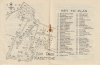
Map: Fold-out map located within interior rear cover.
Today, we shall be discussing one of the very first guidebooks to enter my collection; I obtained this particular guidebook when I attended the 2013 Zoohistorica event at Bristol Zoo, where I purchased around two dozen guidebooks and was given around the same number of guidebooks for free through the kindness of various collectors attending the meeting. It may well not surprise anyone to learn that I picked this guidebook up purely on the grounds of the cover image; at the time of publication, the individual depicted on the cover was one of only two or three king cheetah displayed within a European collection, and this is still probably one of the most eye-catching and unique cover images found throughout the various zoo guides located within my collection.

The guidebook opens with a fairly brief, but nonetheless quite detailed introduction to Tierpark Hellabrunn, discussing the history of the collection and the "Geo-Zoo" concept (displaying species by geographical and ecological habitat rather than taxonomic grouping) which the various exhibits and enclosures follow, along with a prelude giving details of the most recent developments and construction projects at the collection; although the main body of the guidebook is presented solely in German-language, an abridged form of these introductory segments (omitting the passages relating to current developments) is provided in English, French, Spanish and Italian. As such, this guidebook - and similar ones issued by Tierpark Hellabrunn over the course of the 1990s - is quite possibly one of the most multi-lingual in my collection, and certainly one of the longest to contain content in more than two languages. It is worth mentioning here that these introductory accounts are illustrated by small but colourful photographs depicting various of the exhibits and species located throughout the collection; the guidebook as a whole makes very good use of colour photographs to illustrate the content within, with many of the images encompassing full pages, leading to an attractive and eye-catching format wherein the text and imagery complement one another well.

The main body of the text comprises a species-by-species walkthrough of the collection, divided into the various geozones and exhibits present at Tierpark Hellabrunn as follows; the primate house; the aquarium and terrarium; the elephant house and associated exhibits; the Australia zone; the jungle house and associated exhibits; the Africa zone; the Polar zone; the children's zoo and associated exhibits; the Asian zone; the European zone; the free-flight aviary; and the New World zone. As can be seen in the examples above and below (which have been partially-cropped for clarity due to the fact that the page format of this guidebook meant that scanning double-page spreads in their entirety was infeasible and led to sections being cut off) the accounts are well-illustrated with colour photographs, and contain a wide amount of information; in part, this is presented within information boxes at the start of each account which relay information such as the habitat, diet, and conservation status of the taxa in question, with more specific information relayed within the main body of each account. These go into further detail about aspects such as the behaviour, physical attributes and range of the species, along with the threats facing them in the wild, captive breeding successes, lifespan and other such noteworthy points. For instance, the above account relating to the cheetahs held at the collection at the time of publication notes that the "King" morph is extremely scarce in captivity; however, as can be seen from both this account and the cover image of the guidebook there was in fact a single King present at Tierpark Hellabrunn at the time of publication.
Along with these accounts, there are more general discussions about the particular geographic or ecological zones represented at the collection throughout the main body of the guidebook, located at the start of each overall section, along with introductions to the various major exhibit complexes and houses; in the case of the latter, these convey a large amount of information about the history of these structures, their general dimensions and size, and where appropriate information such as the temperature maintained within, the volume of water and quantity of vegetation present, and so forth. As such these provide a very clear picture of the collection to which they pertain and, in conjunction with the quality of the species accounts, greatly increase the value of this guidebook both as a historical document and a zoological document.

The other key strength of this guidebook - as I noted for the previous edition from the 1950s I discussed some time ago - is the high quality of the map provided within the interior rear cover, the houses and exhibits are comprehensively labelled, with the overall design of the map being both aesthetically-pleasing and extremely clear and easy to reference. The fold-out section of the rear cover also contains detailed information on the feeding times for key species throughout the collection, making note of where these differ depending on day and time of year.. The only real downside of the map, as far as this review is concerned, is merely the fact that (as I have already observed) the format and size of the guidebook as a whole prevents double-page spreads from being scanned in their entirety; as such, the below scan is slightly incomplete, although I feel that it nonetheless fully conveys the high quality of the map as a whole.

Overall, I hope that this review has gone some way to demonstrating why I have long said that the guidebooks issued by Tierpark Hellabrunn in the late 20th century are some of the best German-language material of this nature published within the timespan in question; although not quite in the league of the guidebooks formerly published by Zoo Berlin or Tierpark Berlin, they are informative, easily-accessible and aesthetically-pleasing. As a result, it is gratifying to note that after several years where the collection ceased to publish guidebooks on the grounds that the director of the time deemed material of this sort to be antiquated and surplus to requirements, the collection has once again published a guidebook in recent years.
I'm fairly certain that I have omitted much that could be stated - as such, I am happy to receive any questions, feedback or criticism which those reading this thread may have to offerand of course, any general remarks and comments about this guidebook or any other discussed within this thread are always welcome!
A particularly fantastic post
 And now one of the first in my collection, as well! It would be a great cover if the cheetah had regular spots, but the king markings make it more unique. I agree with Sealy that the map is excellent and what a good map should look like. The paths are obvious and uncluttered, the species are easy to ID instead of generic silhouettes or stylized.